Summary Judgment For Plaintiff
Description
Get your form ready online
Our built-in tools help you complete, sign, share, and store your documents in one place.
Make edits, fill in missing information, and update formatting in US Legal Forms—just like you would in MS Word.
Download a copy, print it, send it by email, or mail it via USPS—whatever works best for your next step.
Sign and collect signatures with our SignNow integration. Send to multiple recipients, set reminders, and more. Go Premium to unlock E-Sign.
If this form requires notarization, complete it online through a secure video call—no need to meet a notary in person or wait for an appointment.
We protect your documents and personal data by following strict security and privacy standards.

Make edits, fill in missing information, and update formatting in US Legal Forms—just like you would in MS Word.

Download a copy, print it, send it by email, or mail it via USPS—whatever works best for your next step.

Sign and collect signatures with our SignNow integration. Send to multiple recipients, set reminders, and more. Go Premium to unlock E-Sign.

If this form requires notarization, complete it online through a secure video call—no need to meet a notary in person or wait for an appointment.

We protect your documents and personal data by following strict security and privacy standards.
Looking for another form?
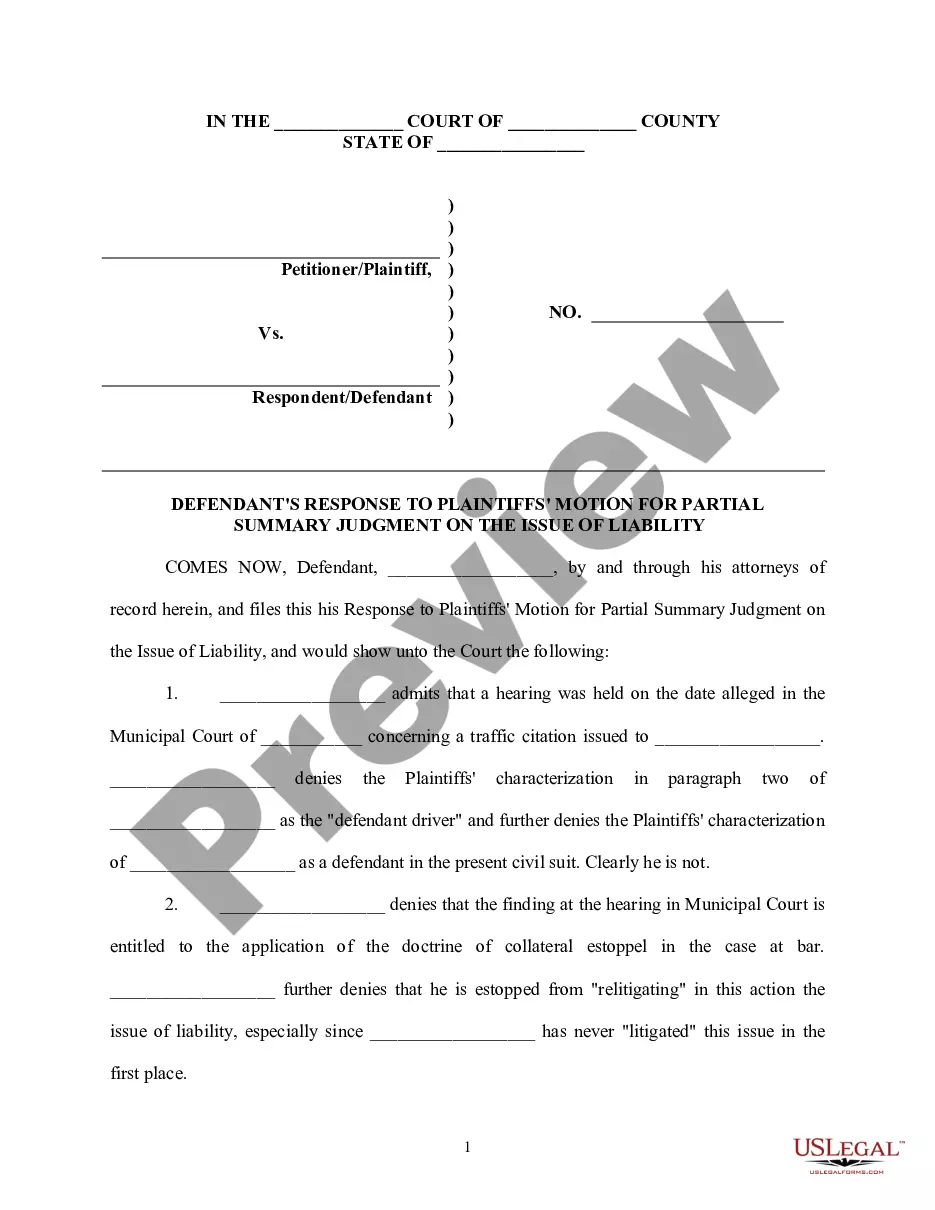
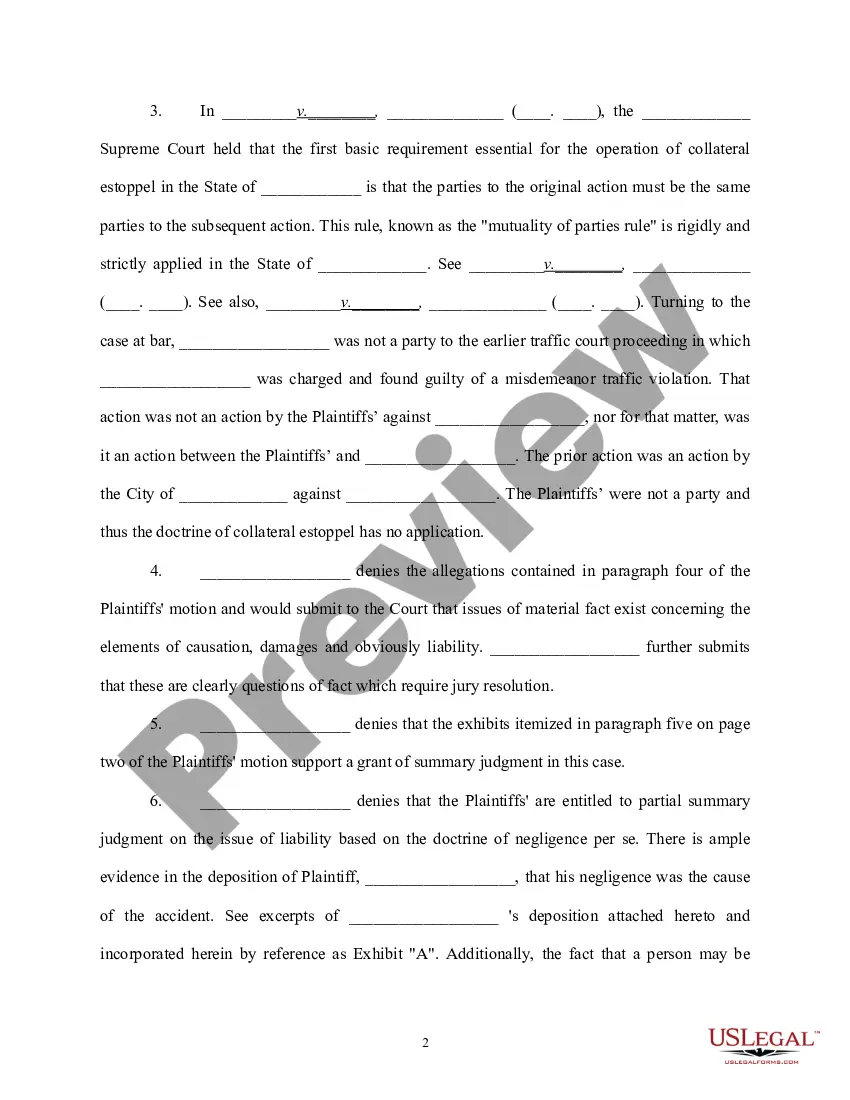
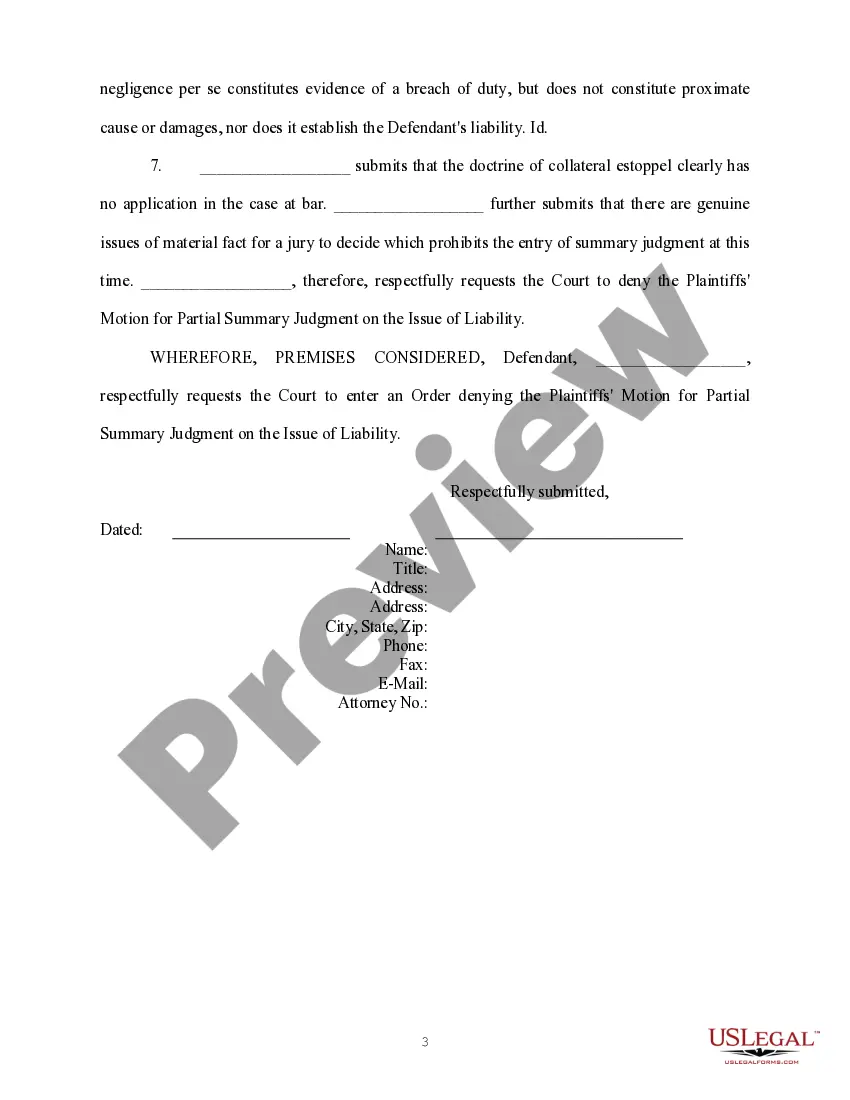
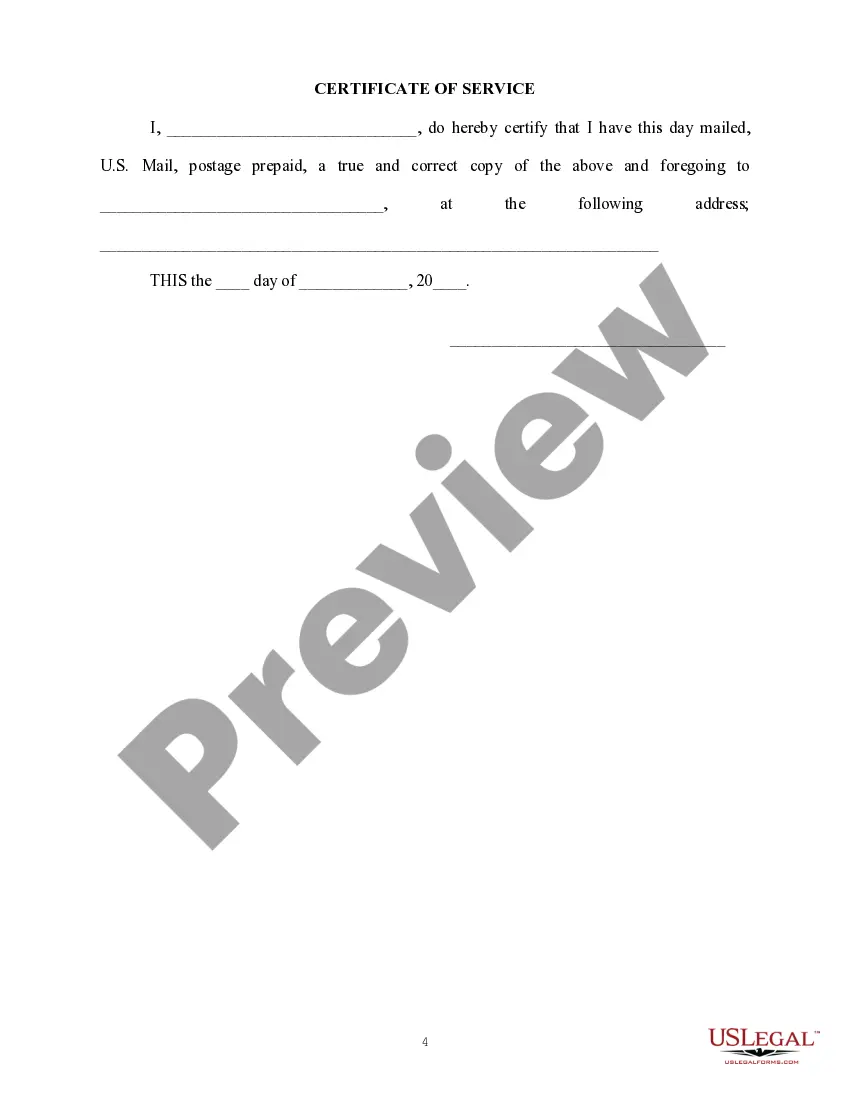
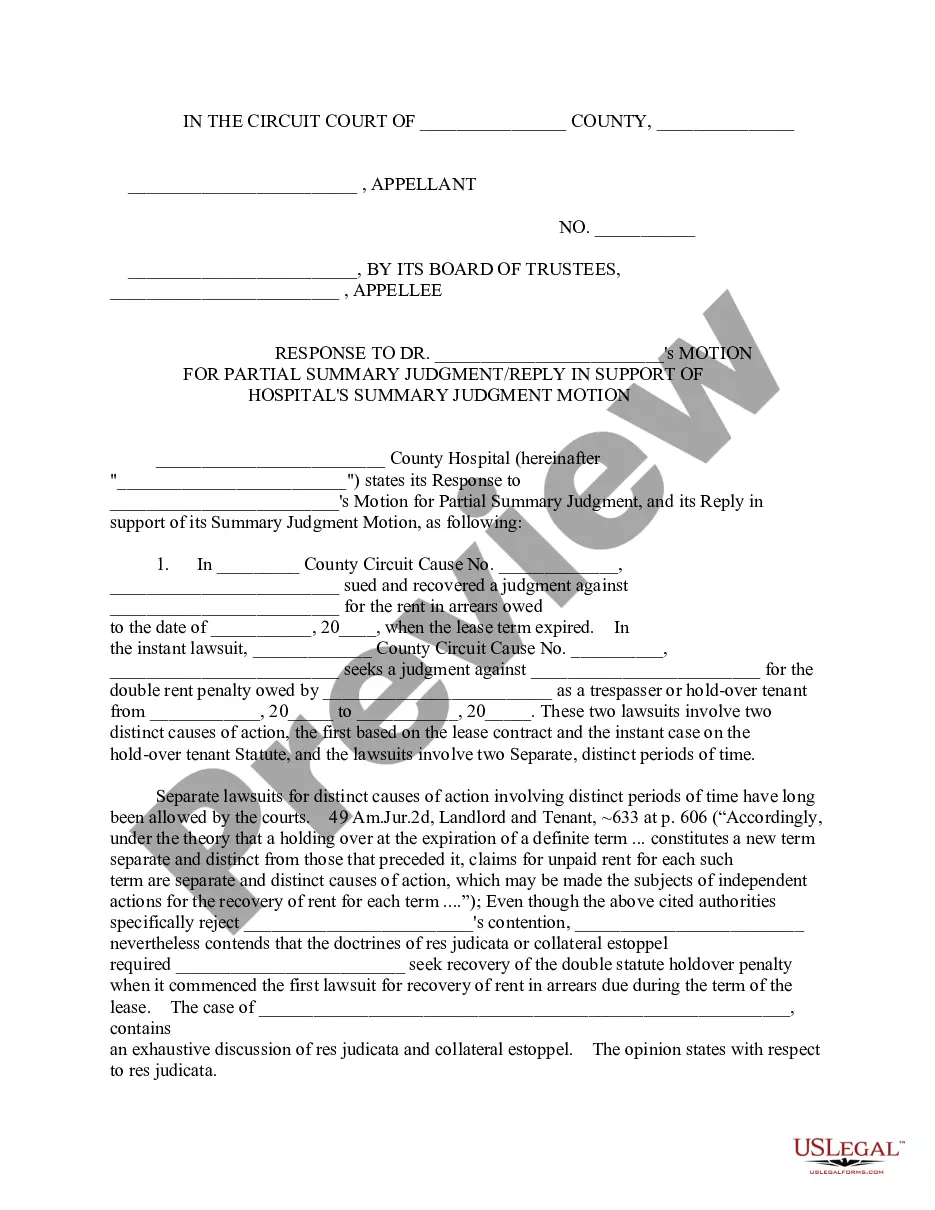
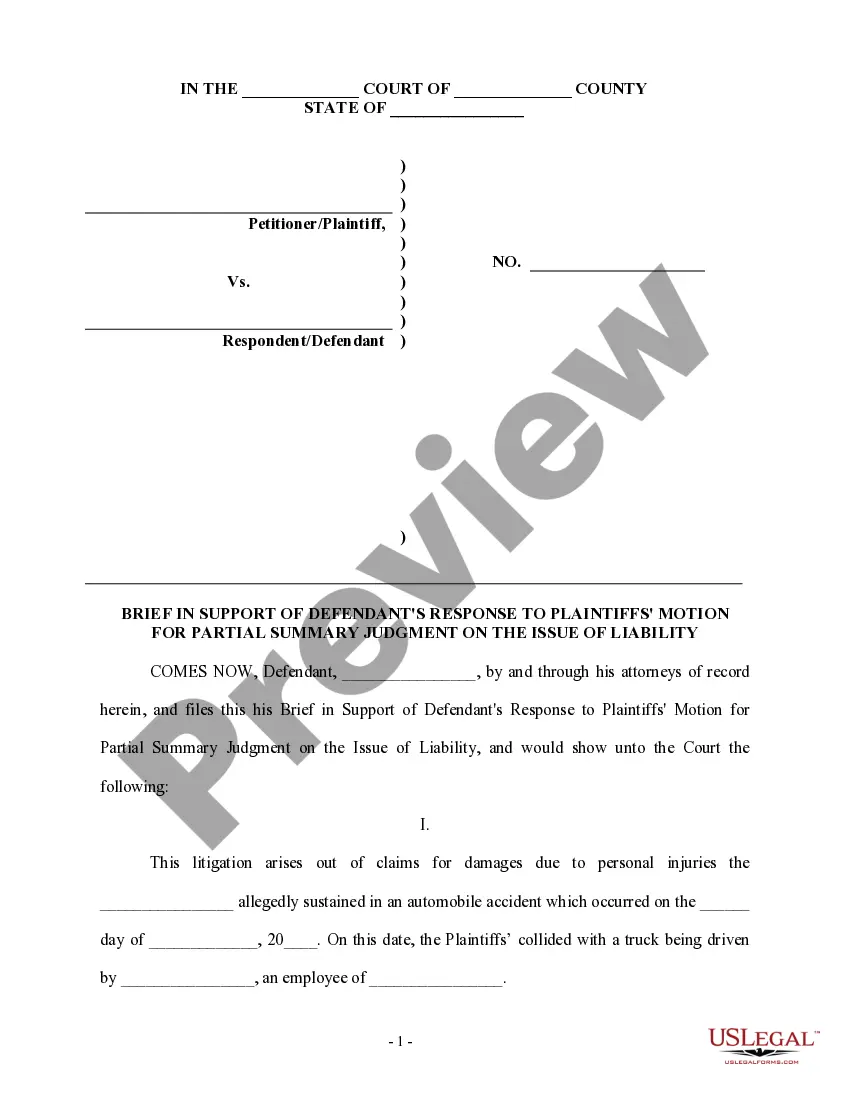
How to fill out Defendant's Response To Plaintiff's Motion For Summary Judgment On The Issue Of Liability?
- If you're a returning user, log into your account and access the needed form by clicking the Download button, ensuring your subscription is active.
- For new users, begin by reviewing the preview mode and description of your required form. Confirm it meets your needs and adheres to your jurisdiction's requirements.
- If necessary, utilize the Search tab to find an alternative template that fits your situation more appropriately.
- Once you have selected the right document, click the Buy Now button and select your preferred subscription plan. Registration will be required to access the complete library.
- Complete your purchase by entering your credit card details or using your PayPal account for the subscription.
- Finally, download the form to your device and access it anytime through the My Forms section of your profile.
By following these straightforward steps, you can ensure that you have the right legal documentation at your fingertips.
Start navigating the world of legal forms with confidence today! Visit US Legal Forms to get started.
Form popularity
FAQ
Plaintiffs win on summary judgment more often than many expect, especially when the evidence heavily favors them. However, success can vary depending on the jurisdiction and the nature of the case. Utilizing resources from platforms like US Legal Forms can help ensure that your motion is well-prepared, increasing your chances of winning a summary judgment for plaintiff.
Writing a good summary judgment requires a well-structured presentation of facts and supporting evidence. Begin with a clear statement of the issues and provide a thorough explanation of the relevant laws. It is vital to showcase how the evidence justifies granting summary judgment for plaintiff, thus minimizing ambiguities and bolstering your case.
To win a motion for summary judgment, a plaintiff must present solid evidence showing there are no material facts in dispute. This involves gathering credible documents, depositions, or affidavits that support your claims. Additionally, clearly articulating how the law applies to the facts can significantly strengthen your motion, highlighting the merits of your summary judgment for plaintiff.
A summary judgment for a plaintiff is a legal ruling that resolves a case in the plaintiff's favor before it goes to trial. This occurs when there are no genuine disputes over material facts, allowing the court to grant the plaintiff relief based on the law. Essentially, it streamlines the legal process and can lead to a quicker resolution.
To write a good judgment, focus on clarity and organization. Start by stating the facts, then outline the relevant law and how it applies to those facts. In summary judgment for plaintiff, ensure you address all necessary elements to demonstrate why a favorable ruling is appropriate, making it easy for the court to understand your argument.
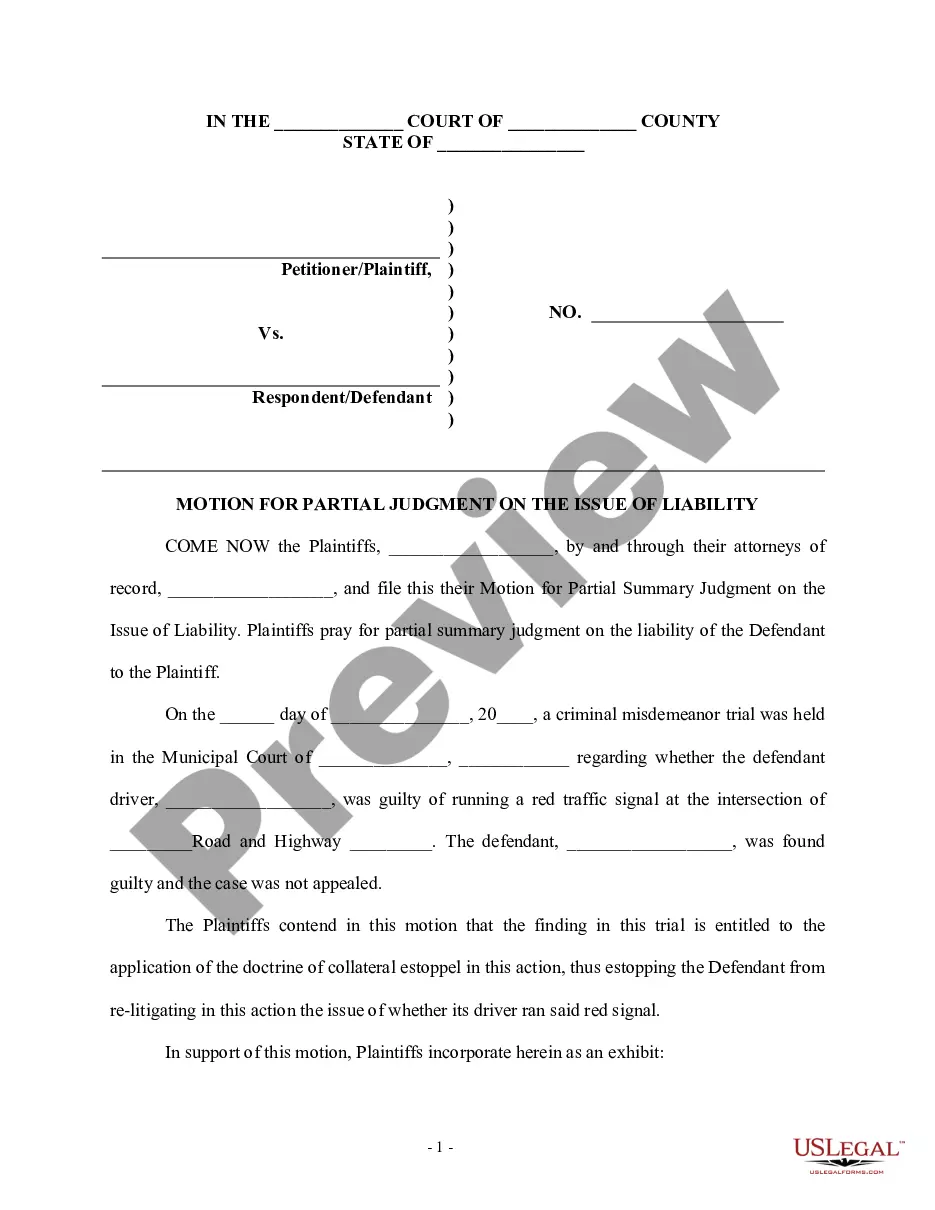
An example of a summary judgment for plaintiff occurs when one party requests the court to rule in their favor without a trial. This often happens when the evidence clearly supports the plaintiff’s position, making a trial unnecessary. For instance, if a defendant admits to liability but disputes the damages, the plaintiff could seek a summary judgment on liability.
When summary judgment is granted, the court officially recognizes that no factual disputes exist, allowing the case to move forward in a streamlined manner. It can result in a partial or full resolution of the lawsuit, depending on the findings. This decision can lead to quicker compensation for plaintiffs, emphasizing the efficiency of pursuing summary judgment.
When a plaintiff wins summary judgment, the court rules in your favor on the issues presented without going to trial. This ruling can pave the way for immediate remedies or damages, significantly advancing your legal position. Winning a summary judgment for plaintiff means that you can resolve certain aspects of your case efficiently.
The primary purpose of asking for a summary judgment is to simplify the litigation process and secure a swift resolution. It aims to eliminate unnecessary trials when the evidence is overwhelmingly in your favor. By requesting summary judgment for plaintiff, you assert that the facts are clear, allowing the court to rule without further delays.
The summary judgment standard for plaintiff requires demonstrating that there are no genuine disputes of material fact. You must show that the evidence overwhelmingly supports your position, leaving no room for reasonable disagreement. This high standard ensures that only clear-cut cases proceed without trial.