Take Deposition Subpoena Duces Tecum For State
Description
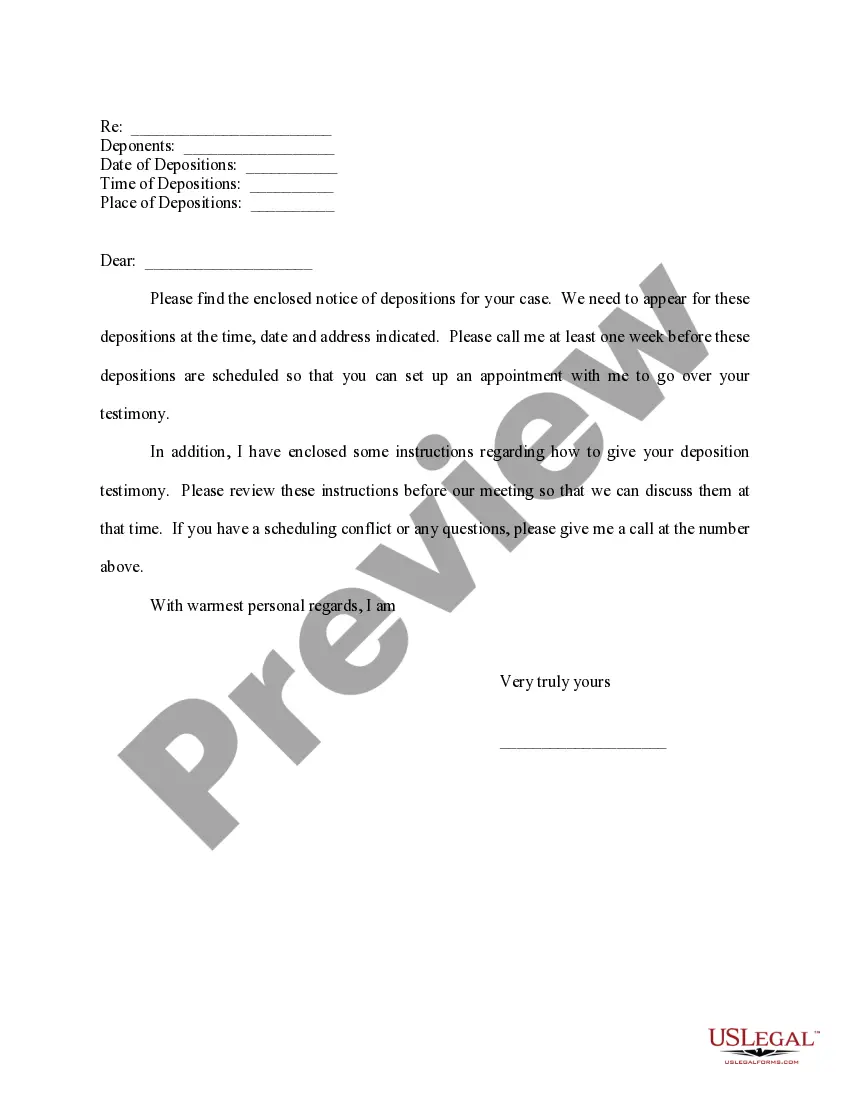
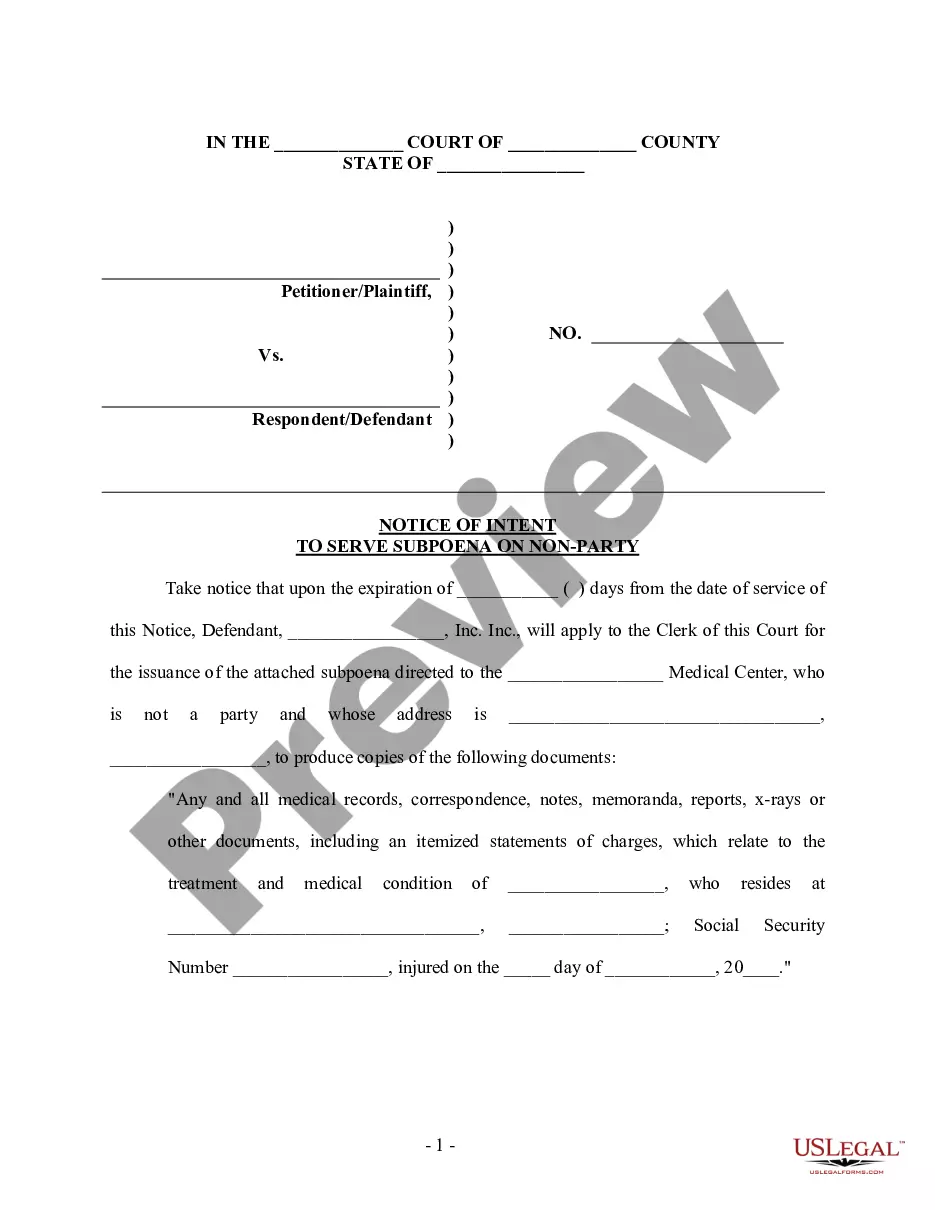
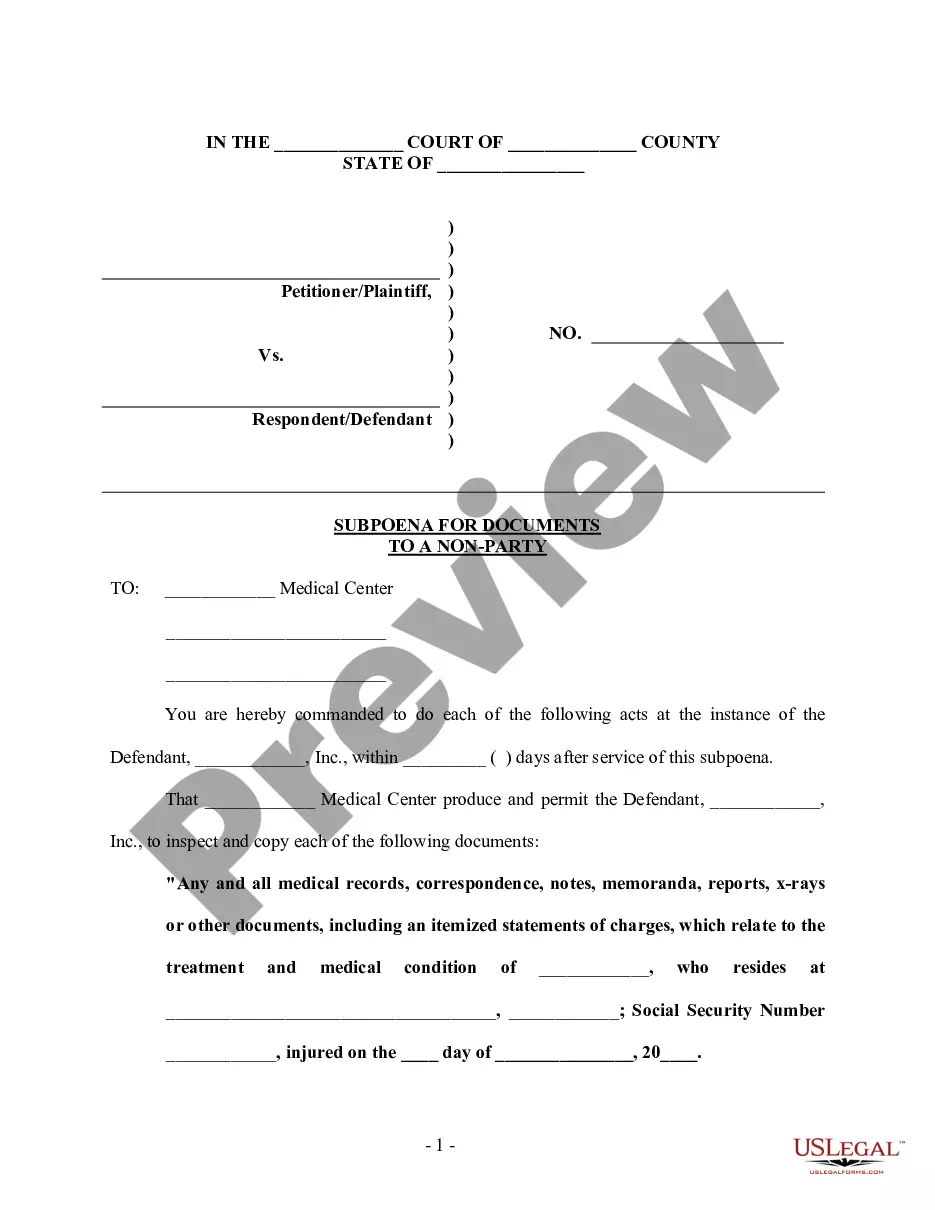
Get your form ready online
Our built-in tools help you complete, sign, share, and store your documents in one place.
Make edits, fill in missing information, and update formatting in US Legal Forms—just like you would in MS Word.
Download a copy, print it, send it by email, or mail it via USPS—whatever works best for your next step.
Sign and collect signatures with our SignNow integration. Send to multiple recipients, set reminders, and more. Go Premium to unlock E-Sign.
If this form requires notarization, complete it online through a secure video call—no need to meet a notary in person or wait for an appointment.
We protect your documents and personal data by following strict security and privacy standards.

Make edits, fill in missing information, and update formatting in US Legal Forms—just like you would in MS Word.

Download a copy, print it, send it by email, or mail it via USPS—whatever works best for your next step.

Sign and collect signatures with our SignNow integration. Send to multiple recipients, set reminders, and more. Go Premium to unlock E-Sign.

If this form requires notarization, complete it online through a secure video call—no need to meet a notary in person or wait for an appointment.

We protect your documents and personal data by following strict security and privacy standards.
Looking for another form?
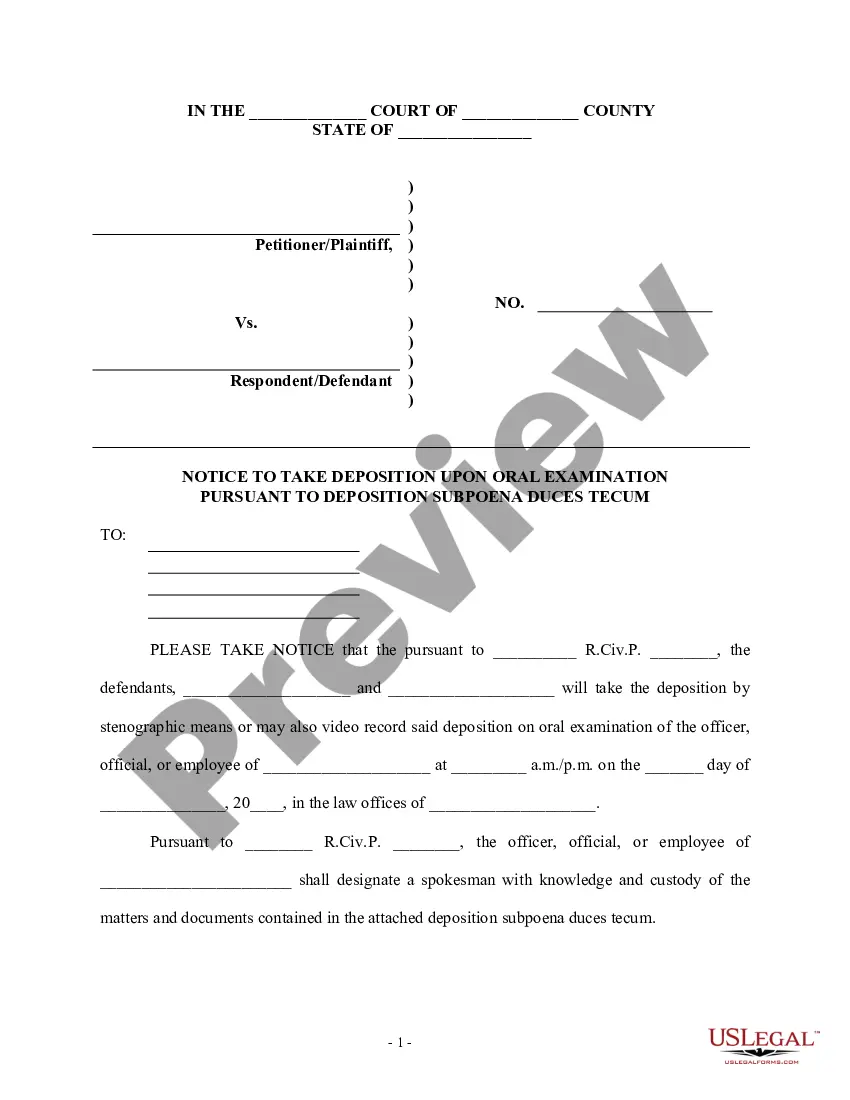
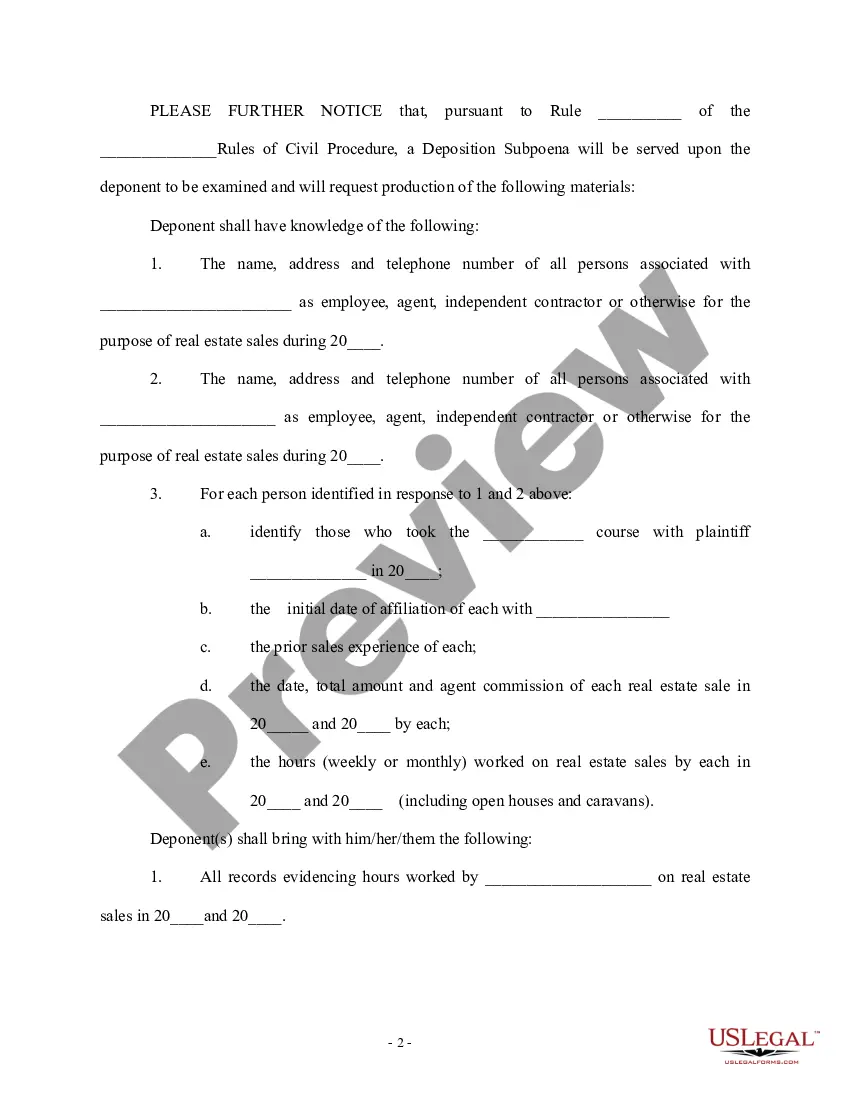
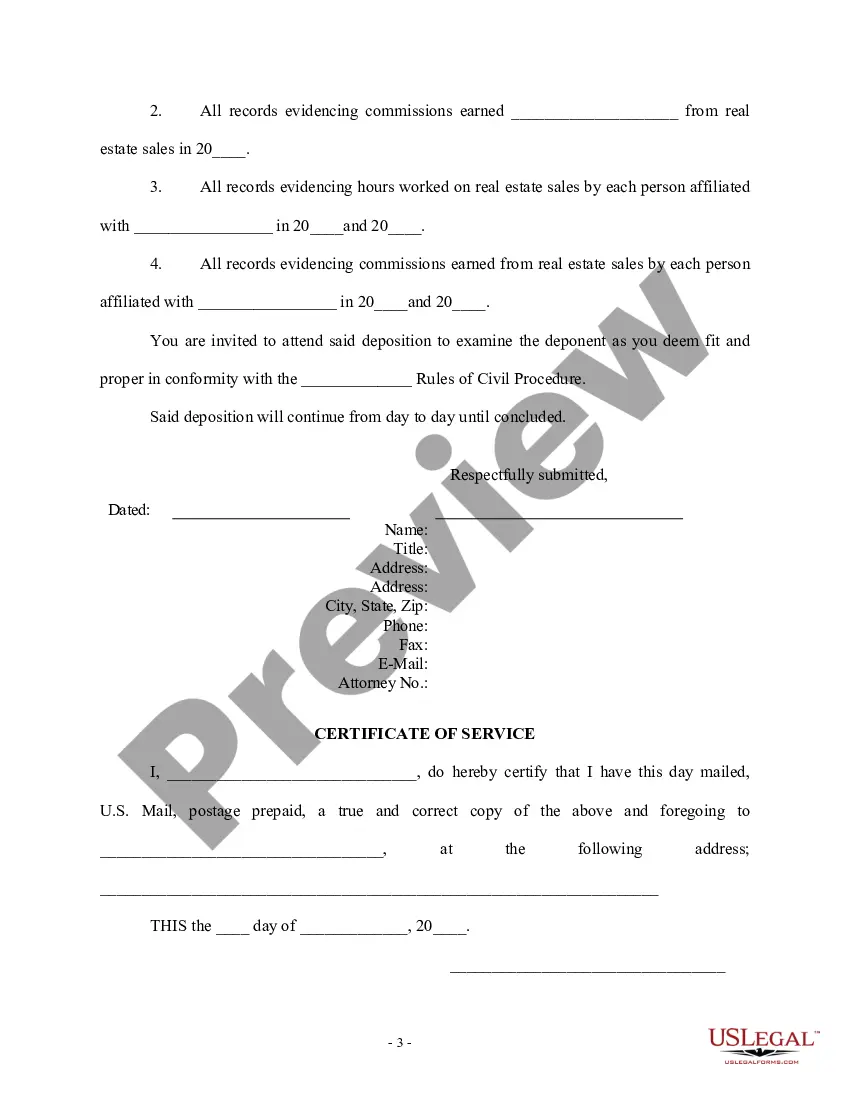
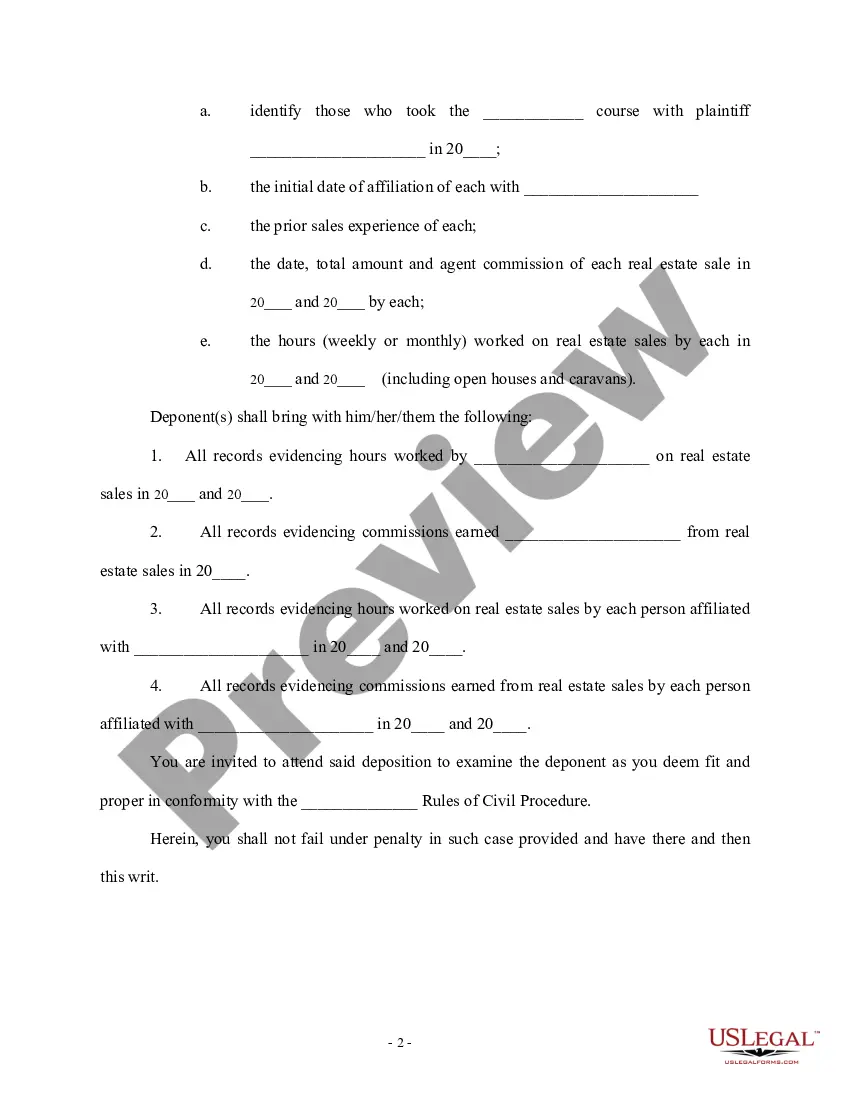
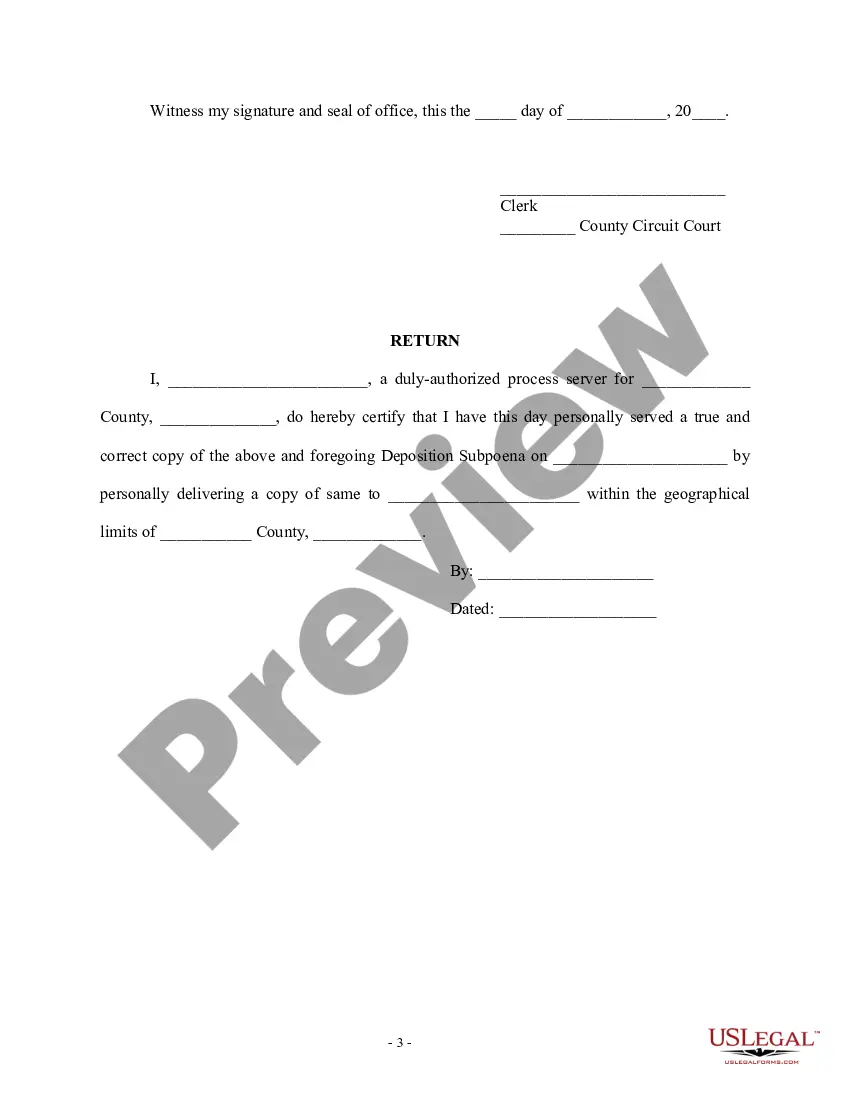
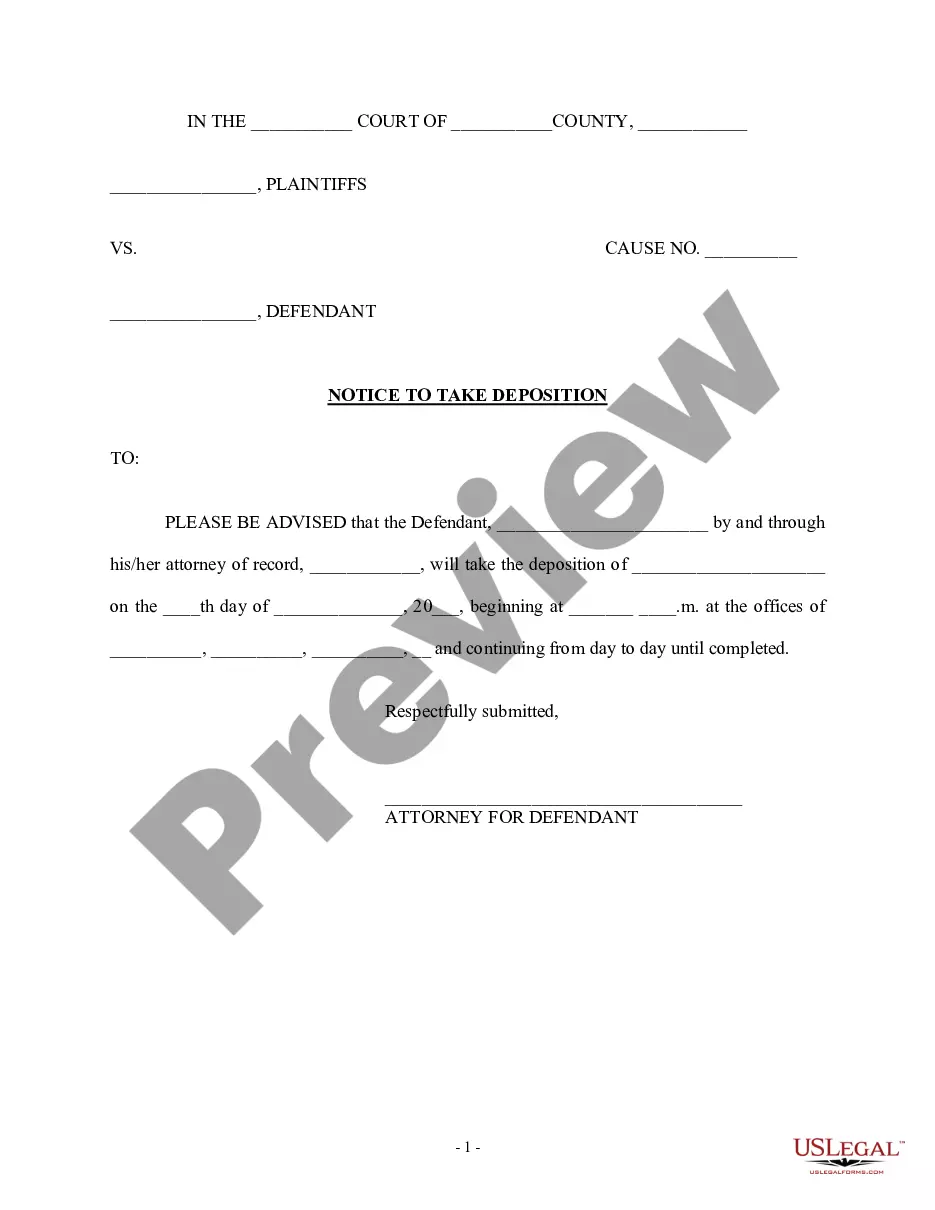
How to fill out Notice To Take Deposition Subpoena Duces Tecum?
Whether for corporate objectives or for individual affairs, everyone must handle legal circumstances sooner or later in their lives.
Completing legal documentation requires meticulous attention, starting from selecting the correct form template.
Once downloaded, you can complete the document using editing software or print it out and fill it in by hand. With a comprehensive US Legal Forms catalog available, you don’t have to waste time searching for the right template online. Take advantage of the library’s easy navigation to find the correct form for any circumstance.
- Locate the template you require using the search bar or catalog browsing.
- Review the document’s details to confirm it suits your case, state, and county.
- Click on the form’s preview to inspect it.
- If it is not the correct document, return to the search tool to find the Take Deposition Subpoena Duces Tecum For State template you need.
- Obtain the template if it aligns with your specifications.
- If you possess a US Legal Forms account, simply click Log in to access previously saved documents in My documents.
- If you do not have an account yet, you can acquire the form by clicking Buy now.
- Select the suitable pricing choice.
- Fill out the account registration form.
- Choose your payment option: you may use a credit card or PayPal account.
- Select the desired file format and download the Take Deposition Subpoena Duces Tecum For State.
Form popularity
FAQ
The main difference lies in their requirements. A standard subpoena instructs a person to testify in legal proceedings, while a subpoena duces tecum requests the production of specific documents or evidence. Understanding this distinction is vital when you wish to take deposition subpoena duces tecum for state, ensuring you collect the right materials for your case.
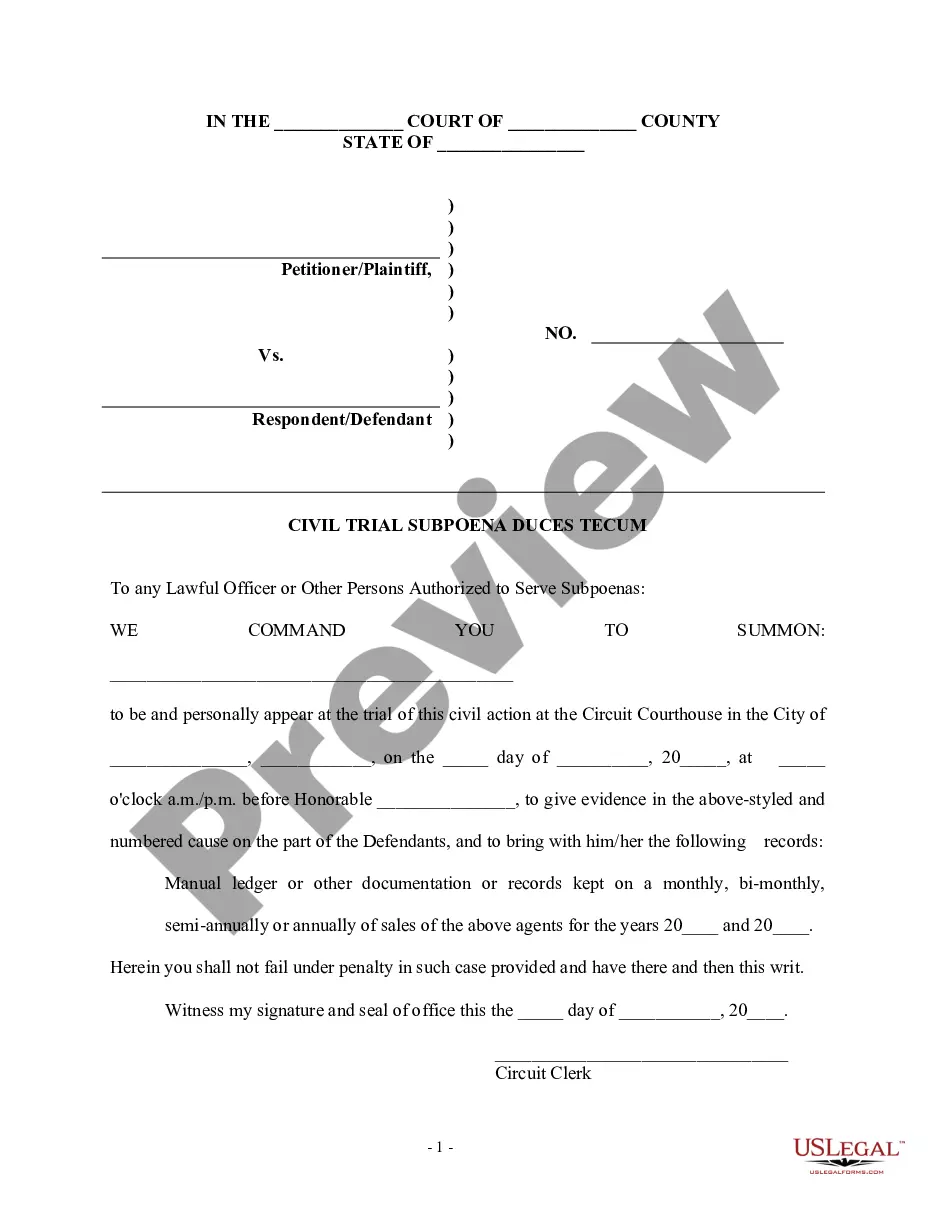
A subpoena duces tecum is a type of subpoena that requires the witness to produce a document or documents pertinent to a proceeding. From the Latin duces tecum, meaning "you shall bring with you". See, e.g., United States v. Nixon, 418 U.S. 683 (1974).
For example, if you are being investigated for a federal crime and investigators believe there is evidence on your computer, they may serve you with a subpoena duces tecum ordering you to produce the computer for inspection.
Subpoena Duces Tecum Details Slightly different from a standard subpoena, the Duces Tecum subpoena doesn't require any oral testimony or deposition at trial. Instead, it requires the named party to produce the necessary evidence or documents to an attorney or the courthouse before proceedings begin.
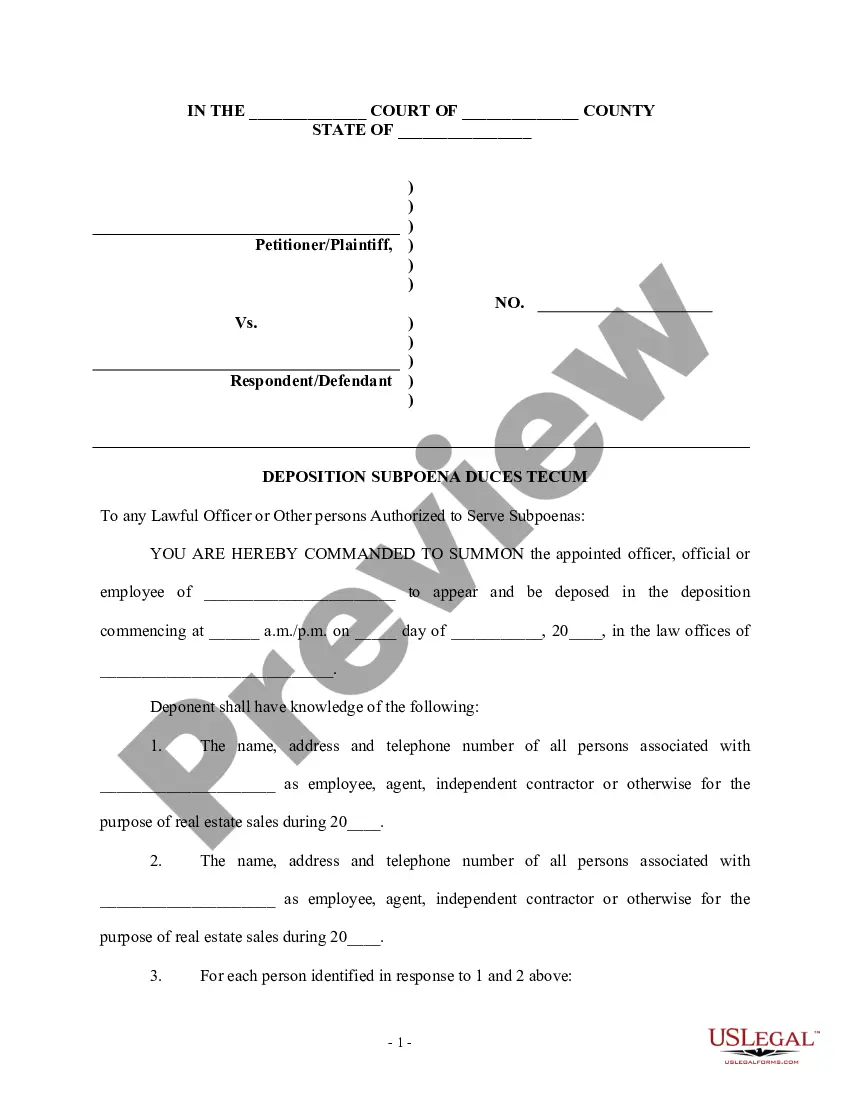
A Deposition Subpoena differs from the Subpoena DucesTecum in that the documents and testimony requested are part of the ?discovery process? before trial and may not be used in an actual court hearing.
A subpoena is an Order that is issued to require the attendance of a witness to testify at a particular time and place. A subpoena duces tecum is an Order that requires a witness to bring documents, books or other items under his, her or their control, that he she or they is bound by law to produce into evidence.