Notice Of Assignment Vs Deed Of Assignment
Description
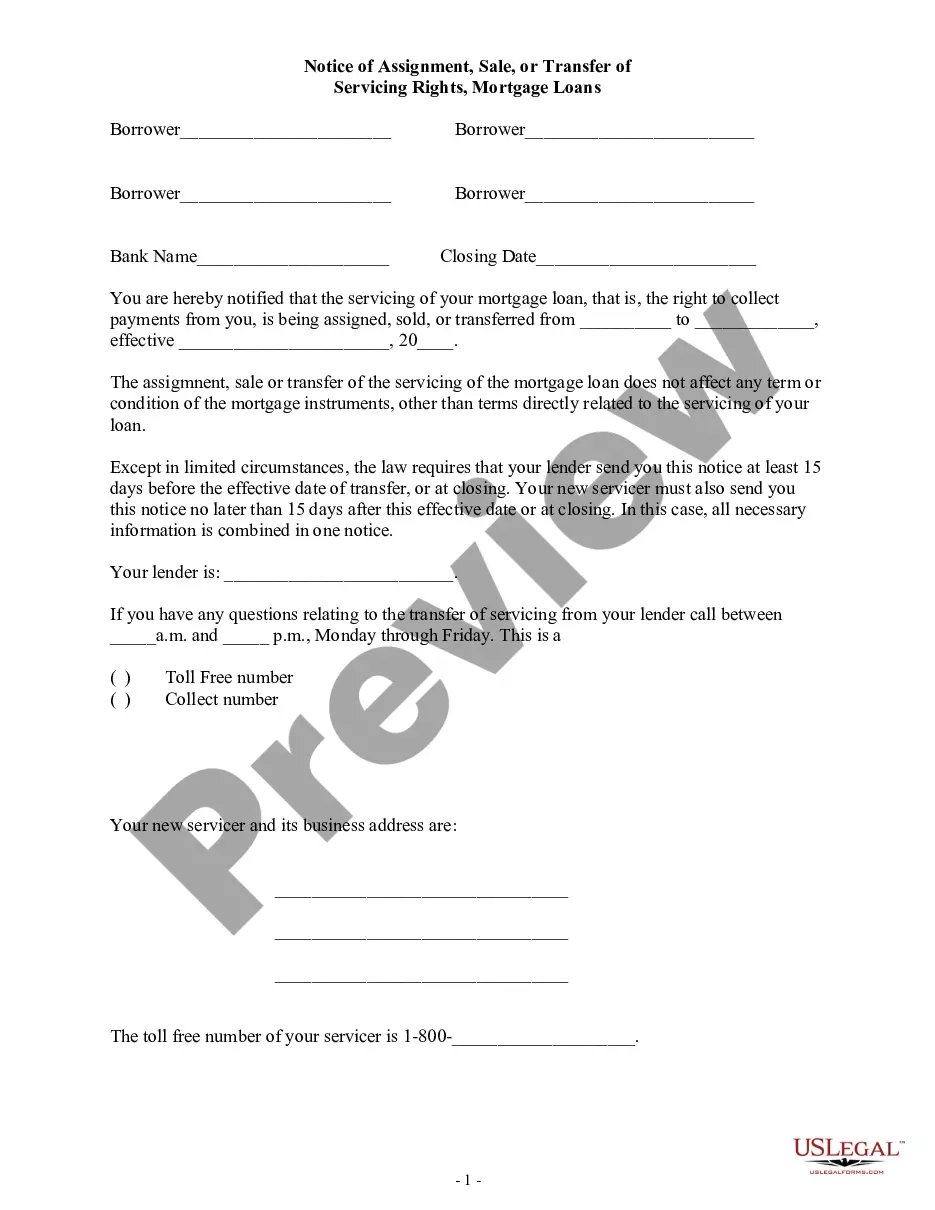

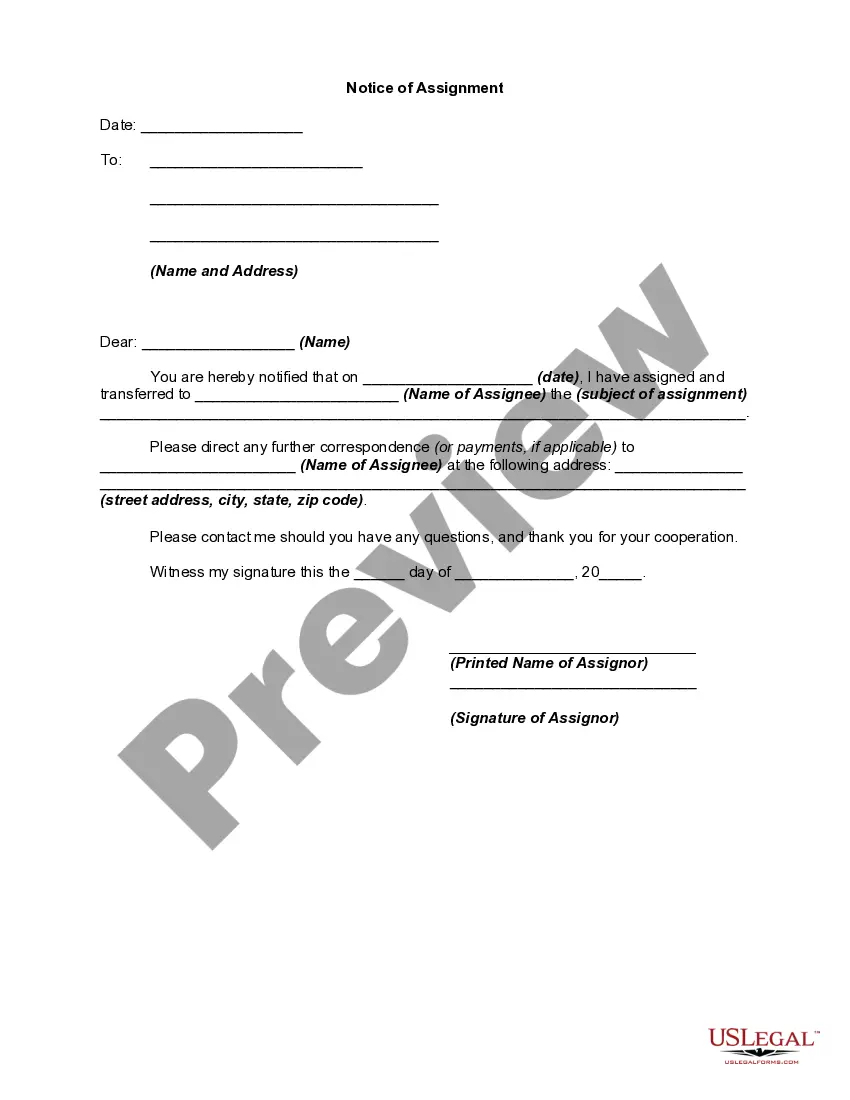
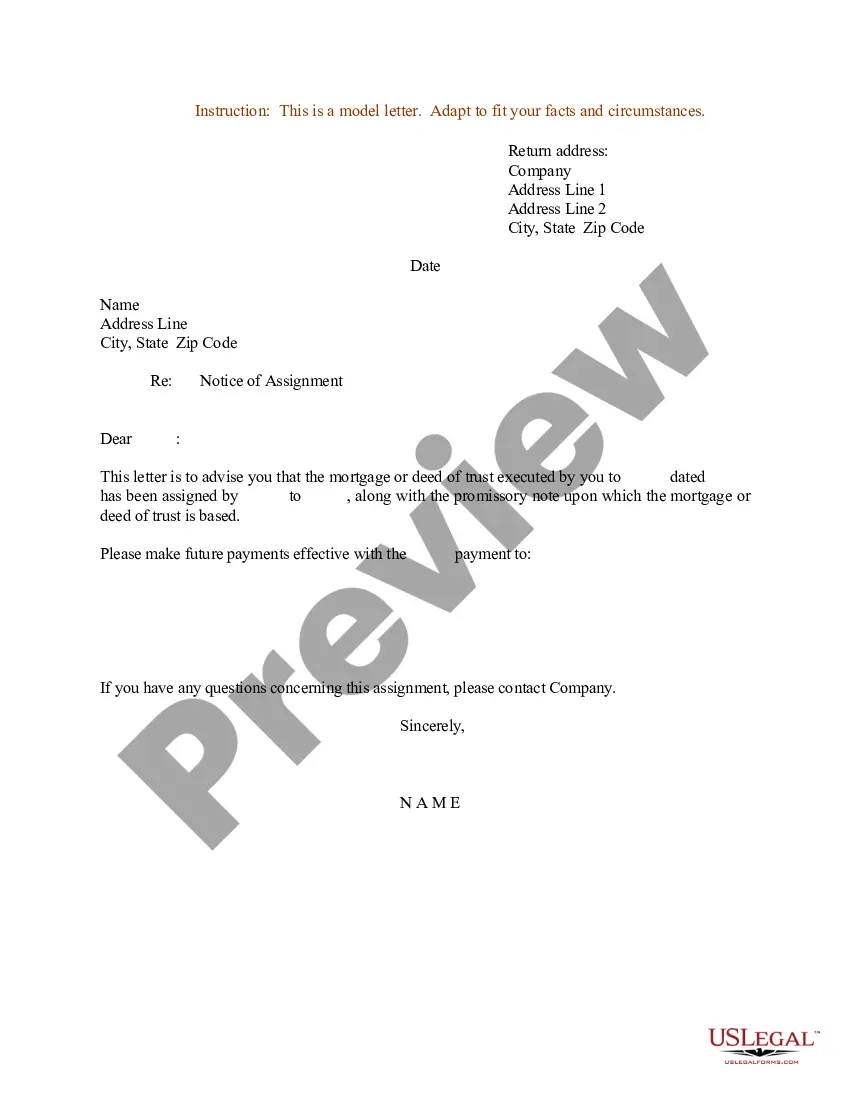
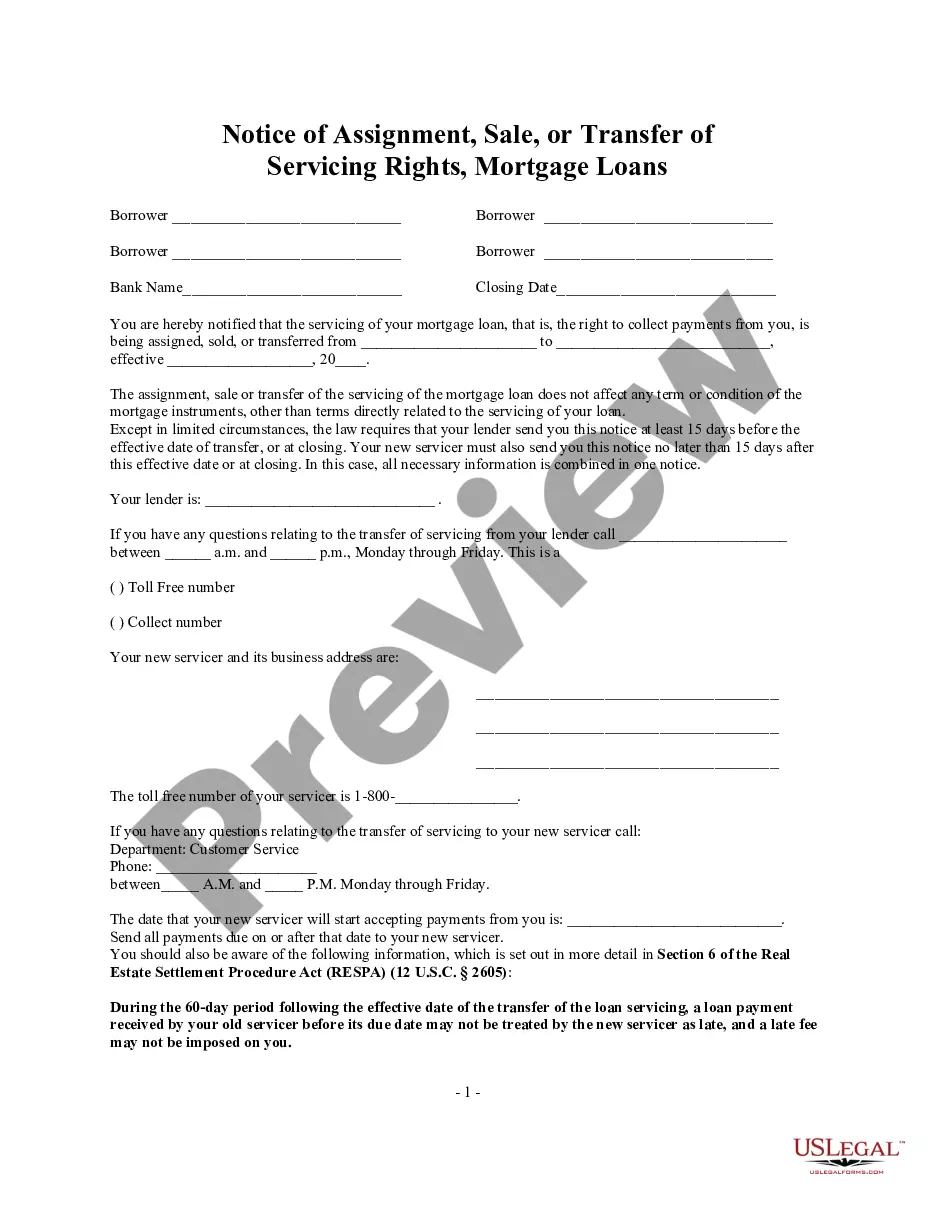
Get your form ready online
Our built-in tools help you complete, sign, share, and store your documents in one place.
Make edits, fill in missing information, and update formatting in US Legal Forms—just like you would in MS Word.
Download a copy, print it, send it by email, or mail it via USPS—whatever works best for your next step.
Sign and collect signatures with our SignNow integration. Send to multiple recipients, set reminders, and more. Go Premium to unlock E-Sign.
If this form requires notarization, complete it online through a secure video call—no need to meet a notary in person or wait for an appointment.
We protect your documents and personal data by following strict security and privacy standards.

Make edits, fill in missing information, and update formatting in US Legal Forms—just like you would in MS Word.

Download a copy, print it, send it by email, or mail it via USPS—whatever works best for your next step.

Sign and collect signatures with our SignNow integration. Send to multiple recipients, set reminders, and more. Go Premium to unlock E-Sign.

If this form requires notarization, complete it online through a secure video call—no need to meet a notary in person or wait for an appointment.

We protect your documents and personal data by following strict security and privacy standards.
Looking for another form?
How to fill out Notice Of Assignment - Sale Or Transfer Of Servicing Rights - Mortgage Loans?
Creating legal documents from the ground up can frequently feel somewhat daunting.
Certain situations may require extensive research and significant financial expenditure.
If you’re looking for a simpler and more economical method of generating Notice Of Assignment Vs Deed Of Assignment or any other documents without the hassle, US Legal Forms is always accessible.
Our digital repository of over 85,000 current legal forms encompasses nearly all facets of your financial, legal, and personal matters.
Review the form preview and descriptions to ensure you have identified the document you need. Verify if the template you choose complies with the regulations and laws of your state and county. Select the appropriate subscription plan to obtain the Notice Of Assignment Vs Deed Of Assignment. Download the document. Then complete, authorize, and print it. US Legal Forms boasts a solid reputation and more than 25 years of experience. Join us today and make document execution a straightforward and efficient process!
- With just a few clicks, you can swiftly obtain state- and county-compliant forms carefully prepared for you by our legal experts.
- Utilize our website whenever you need a dependable and trustworthy service through which you can conveniently locate and download the Notice Of Assignment Vs Deed Of Assignment.
- If you’re familiar with our site and have already created an account, just Log In, find the form, and download it or re-download it at any time later in the My documents section.
- Don’t have an account? No worries. It takes minimal time to create one and browse the library.
- But before you proceed directly to downloading Notice Of Assignment Vs Deed Of Assignment, adhere to these suggestions.
Form popularity
FAQ
You usually receive a notice of assessment via mail at your registered address or electronically through your online tax account. The method of delivery may depend on your preferences set with the tax agency. Ensure that your contact information is up to date to avoid missing important documents. Understanding the notice of assignment vs deed of assignment is helpful in navigating your legal responsibilities.
To get a copy of your notice of assessment, contact the tax authority or agency that issued it. Many jurisdictions allow you to download your notice directly from their online portal. If you cannot find it, consider reaching out to customer service for assistance. Familiarizing yourself with the notice of assignment vs deed of assignment can provide you with a better understanding of your obligations.
You can obtain your notice of assignment from the assignor or the party who issued it. It is also common to find this document included in your contract files or through your legal counsel. If you are unable to locate it, services like US Legal Forms can help you access or create necessary documents. Knowing the difference between a notice of assignment vs deed of assignment can aid in your comprehension of the document's significance.
To find your notice of assessment on your government website, first, visit the official site relevant to your state or locality. You may need to log in to your account or create one if you do not have it yet. Look for the section dedicated to tax assessments, where you can search by your personal details. Remember, understanding your notice of assignment vs deed of assignment can help clarify your rights in such matters.
A notice of assignment is typically issued by the assignor, which is the party transferring rights or interests in a contract. This document serves to inform the other party about the assignment. In many cases, legal counsel may assist in preparing this notice. Understanding the distinction between a notice of assignment vs deed of assignment is crucial for clarity.
Typically, the assignor, or the party transferring their rights, provides the Notice of Assignment. This individual or entity has the responsibility to inform all relevant parties about the change in rights or obligations. By doing so, they help to prevent misunderstandings and maintain a clear line of communication. When dealing with the Notice of Assignment vs Deed of Assignment, knowing who issues the notice can clarify responsibilities.
The meaning of a Notice of Assignment involves the communication of a transfer of rights from one party to another. This document ensures that all parties are informed about who is entitled to the rights or benefits under a contract. It plays a vital role in maintaining clear and effective communication among involved parties. Recognizing the significance of the Notice of Assignment vs Deed of Assignment can help streamline your legal processes.
The primary difference between a deed and an assignment lies in their legal functions. A deed is a formal legal document that typically requires witness signatures and may involve a transfer of property rights. In contrast, an assignment is a simpler process that involves transferring rights without the need for a formal deed. By understanding the distinctions in the Notice of Assignment vs Deed of Assignment, you can make more informed decisions about your legal transactions.
A Notice of Assignment is a formal document that notifies relevant parties that an assignor has transferred their rights under a contract to an assignee. This notice serves to protect the interests of all parties by clarifying who now holds the rights and obligations. It helps prevent confusion and ensures that payments or responsibilities are directed to the correct party. Familiarizing yourself with the Notice of Assignment vs Deed of Assignment can enhance your legal knowledge.
The purpose of a Notice of Assignment (NOA) is to inform parties involved that the rights or interests in a particular agreement have been transferred to another party. By providing this notice, it ensures that all relevant parties are aware of the new arrangement. This transparency is crucial for maintaining trust and avoiding disputes. Understanding the Notice of Assignment vs Deed of Assignment can help you navigate these legal processes effectively.