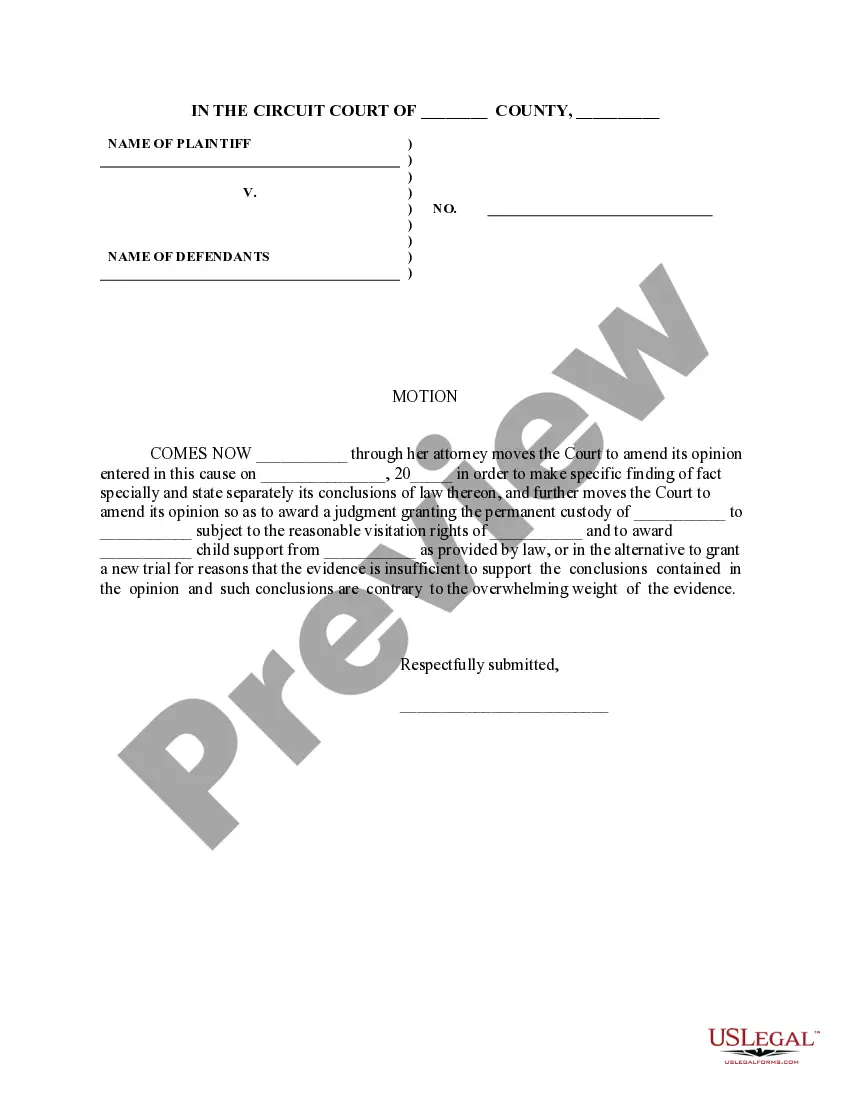
Findings Facts Conclusions Law With Evidence Based Practice
Description
Get your form ready online
Our built-in tools help you complete, sign, share, and store your documents in one place.
Make edits, fill in missing information, and update formatting in US Legal Forms—just like you would in MS Word.
Download a copy, print it, send it by email, or mail it via USPS—whatever works best for your next step.
Sign and collect signatures with our SignNow integration. Send to multiple recipients, set reminders, and more. Go Premium to unlock E-Sign.
If this form requires notarization, complete it online through a secure video call—no need to meet a notary in person or wait for an appointment.
We protect your documents and personal data by following strict security and privacy standards.

Make edits, fill in missing information, and update formatting in US Legal Forms—just like you would in MS Word.

Download a copy, print it, send it by email, or mail it via USPS—whatever works best for your next step.

Sign and collect signatures with our SignNow integration. Send to multiple recipients, set reminders, and more. Go Premium to unlock E-Sign.

If this form requires notarization, complete it online through a secure video call—no need to meet a notary in person or wait for an appointment.

We protect your documents and personal data by following strict security and privacy standards.
Looking for another form?
How to fill out Motion To Make Specific Findings Of Fact And State Conclusions Of Law - Domestic Relations?
The Results Details Determinations Regulation With Evidence-Informed Practice you observe on this page is a reusable legal template crafted by expert attorneys in compliance with federal and regional laws.
For over 25 years, US Legal Forms has offered individuals, enterprises, and lawyers with more than 85,000 confirmed, state-specific forms for any commercial and personal circumstance. It’s the fastest, easiest, and most reliable way to acquire the documents you require, as the service ensures the utmost level of data protection and anti-malware security.
Register for US Legal Forms to have verified legal templates for all of life’s scenarios readily available.
- Search for the document you require and review it.
- Browse through the example you looked for and preview it or check the form description to ensure it meets your requirements. If it does not, utilize the search bar to locate the right one. Click Buy Now when you have found the template you need.
- Register and Log In.
- Select the pricing plan that fits you and create an account. Use PayPal or a credit card for a quick payment. If you already possess an account, Log In and verify your subscription to continue.
- Obtain the editable template.
- Choose the format you prefer for your Results Details Determinations Regulation With Evidence-Informed Practice (PDF, DOCX, RTF) and save the sample on your device.
- Complete and sign the document.
- Print the template to fill it out manually. Alternatively, use an online multi-functional PDF editor to quickly and accurately fill out and sign your form with a legally-binding electronic signature.
- Re-download your documents.
- Make use of the same document again whenever necessary. Access the My documents tab in your profile to retrieve any previously downloaded forms.
Form popularity
FAQ
Findings by the court. (1) In all actions tried upon the facts without a jury or with an advisory jury, the court shall find the facts specially and state separately its conclusions of law thereon and direct the entry of the appropriate judgment.
Mention the proper case title and the citation in your case summary. Title: ... Name of the court, name of the judges and the parties to the case. Name of Court: ... Brief Facts. What were the facts of the Case? ... Issues involved. ... Important Arguments. ... Judgment. ... Present status of the judgment. ... Include other opinions.
Facts are the ?who, when, what, where, and why? of the case. Describe the history of the dispute, including the events that led to the lawsuit, the legal claims and defenses of each party, and what happened in the trial court. Do not merely copy the facts verbatim; not every detail is important.
Conclusion of fact (also referred to as finding of fact) refers to decisions made by the trier of fact on questions of fact in a case. Questions of fact arise when parties disagree on facts, and after presenting evidence, the trier of fact must decide what the facts actually are.
How to write a case brief Choose the right case brief format. There are several similar formats you might choose for your legal case. ... Start with the title, citation and author. ... State the facts of the case. ... Declare the legal issue. ... Outline the rule of law. ... Explain the holding and reasoning. ... Concurrences and dissents.