Wrongful Count Form Statement For Employer
Description
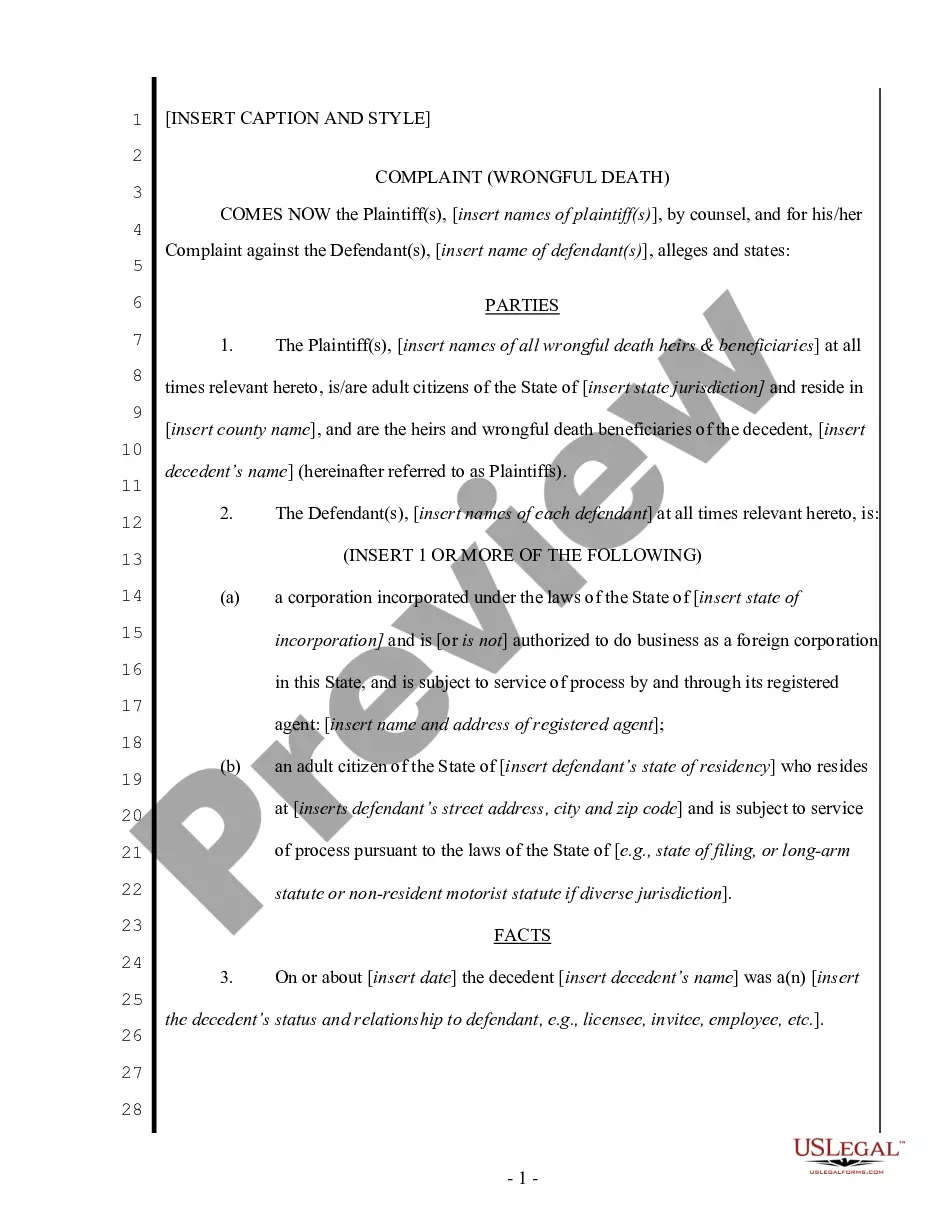

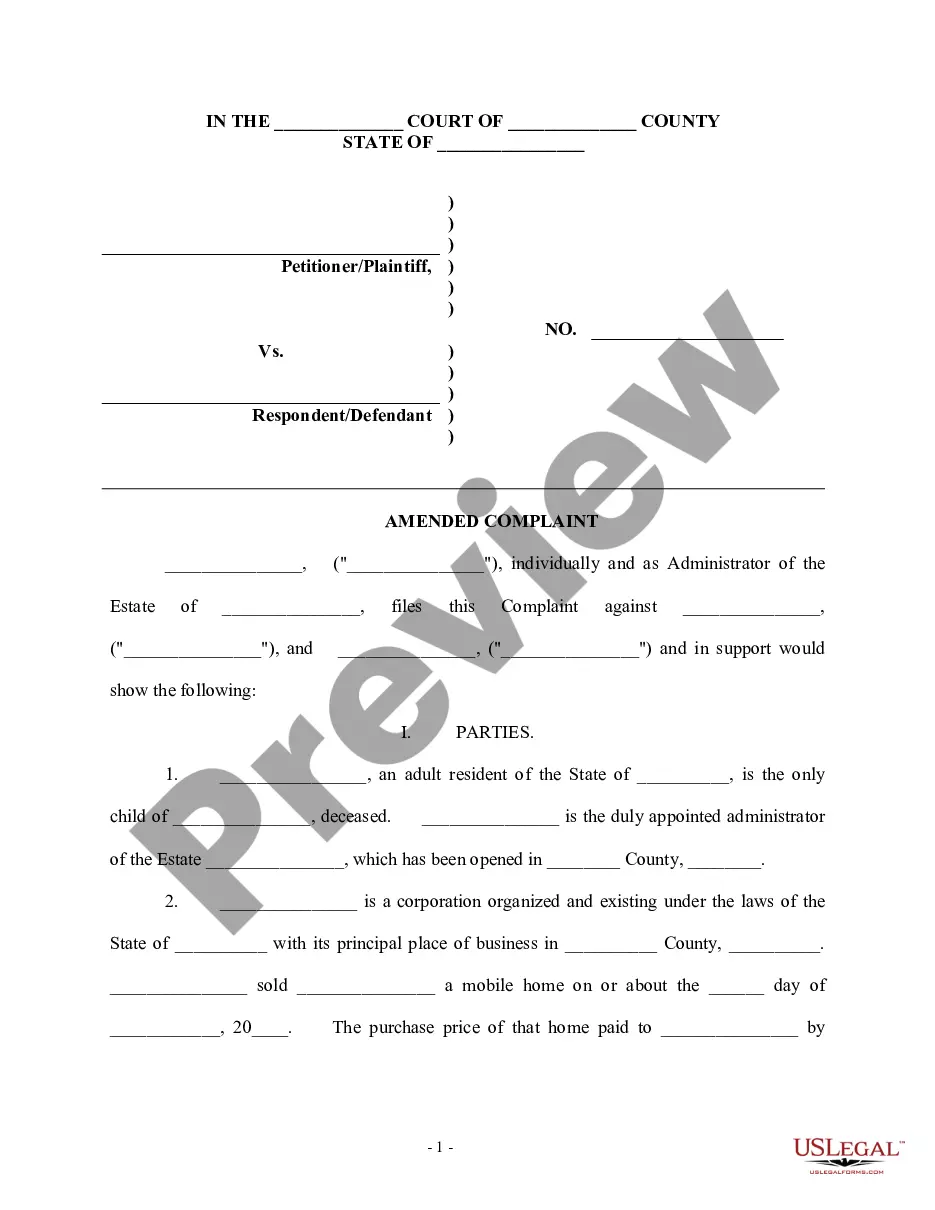
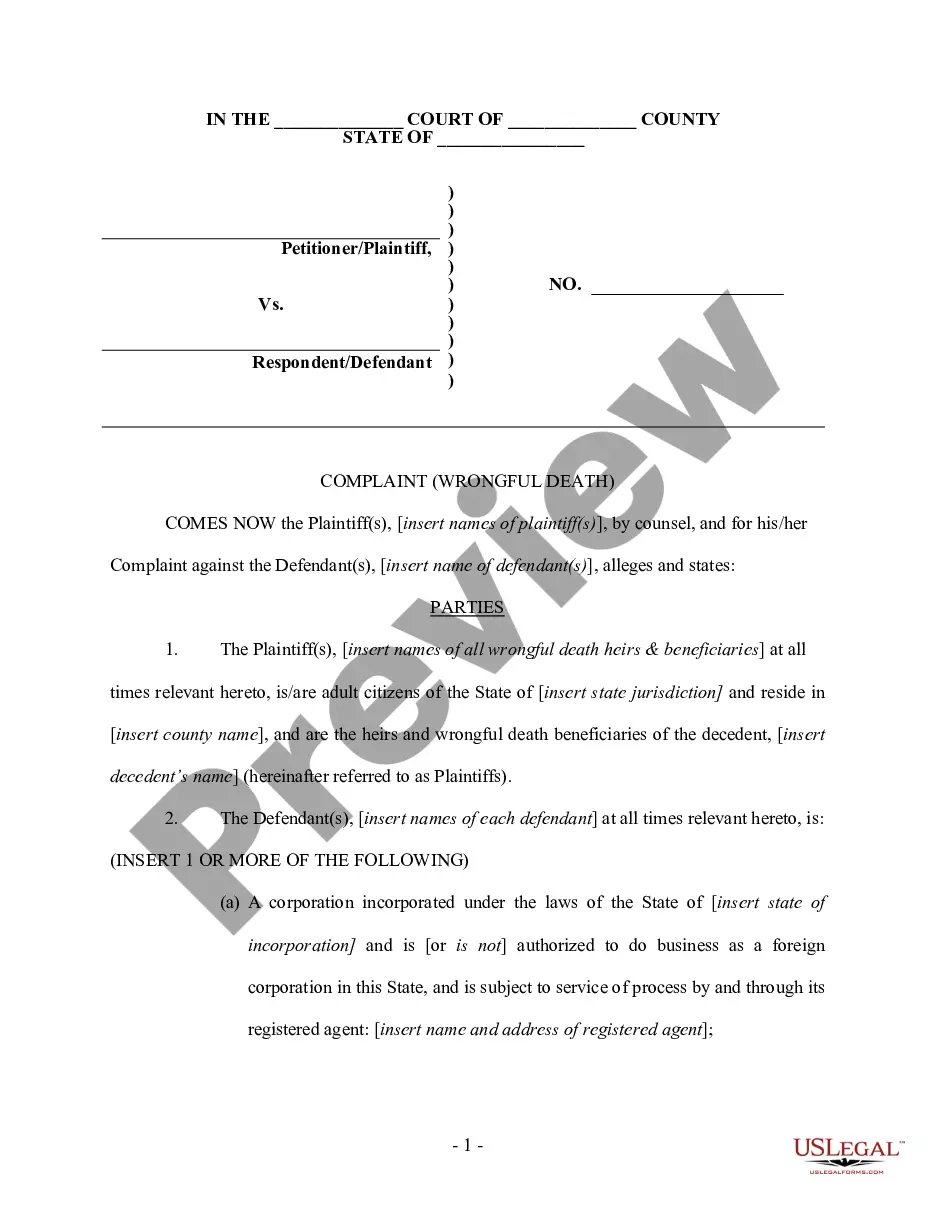
Get your form ready online
Our built-in tools help you complete, sign, share, and store your documents in one place.
Make edits, fill in missing information, and update formatting in US Legal Forms—just like you would in MS Word.
Download a copy, print it, send it by email, or mail it via USPS—whatever works best for your next step.
Sign and collect signatures with our SignNow integration. Send to multiple recipients, set reminders, and more. Go Premium to unlock E-Sign.
If this form requires notarization, complete it online through a secure video call—no need to meet a notary in person or wait for an appointment.
We protect your documents and personal data by following strict security and privacy standards.

Make edits, fill in missing information, and update formatting in US Legal Forms—just like you would in MS Word.

Download a copy, print it, send it by email, or mail it via USPS—whatever works best for your next step.

Sign and collect signatures with our SignNow integration. Send to multiple recipients, set reminders, and more. Go Premium to unlock E-Sign.

If this form requires notarization, complete it online through a secure video call—no need to meet a notary in person or wait for an appointment.

We protect your documents and personal data by following strict security and privacy standards.
Looking for another form?
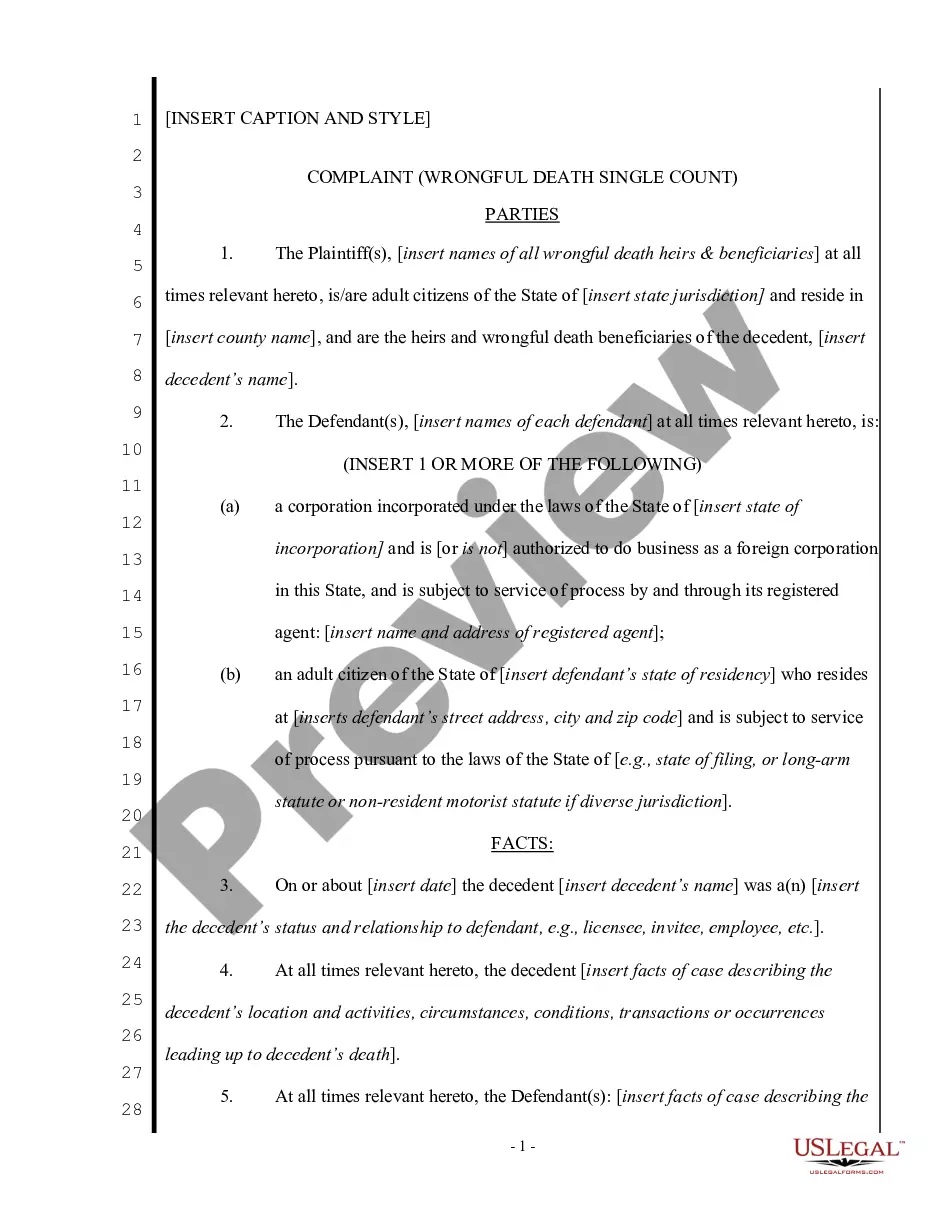
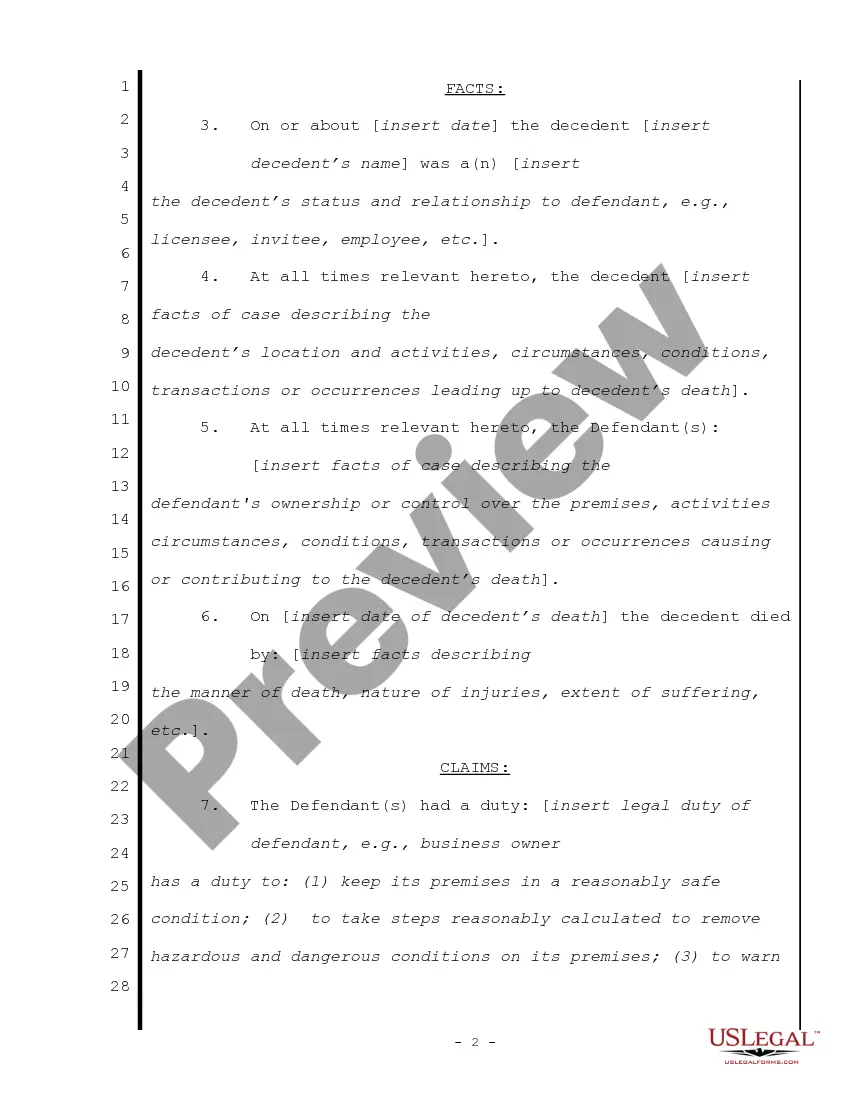
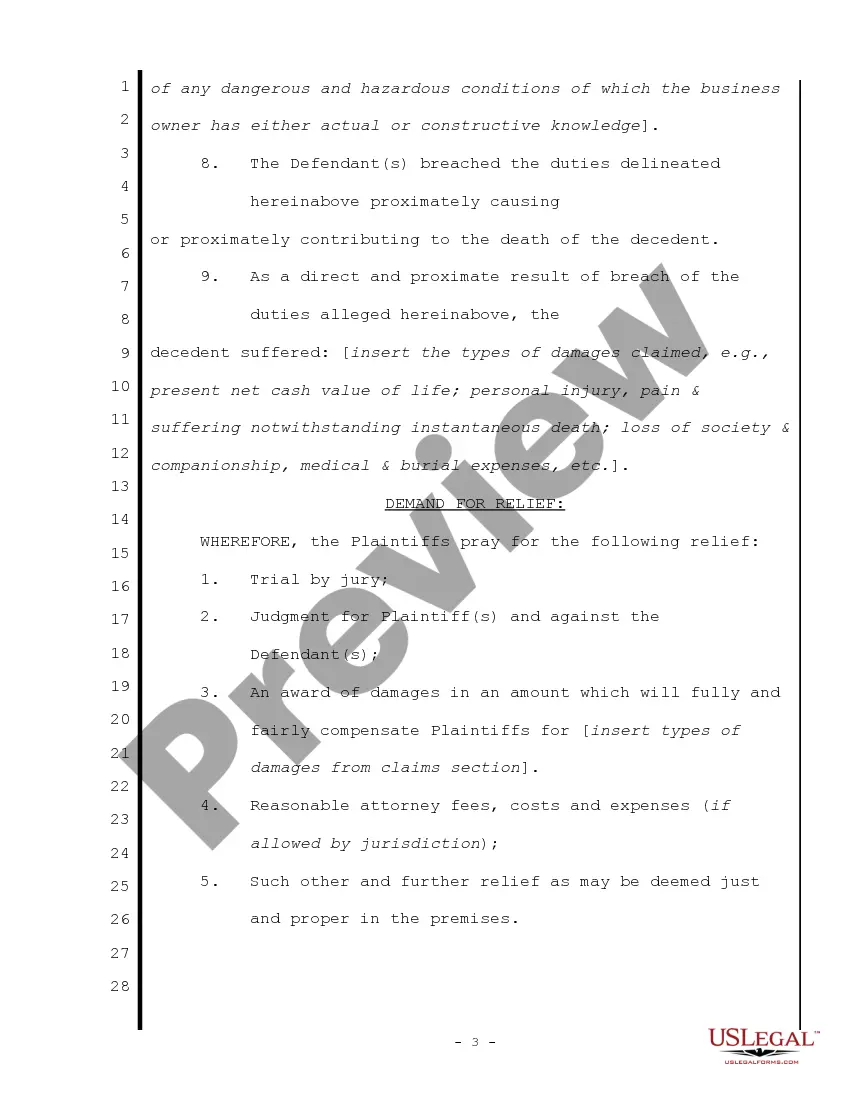
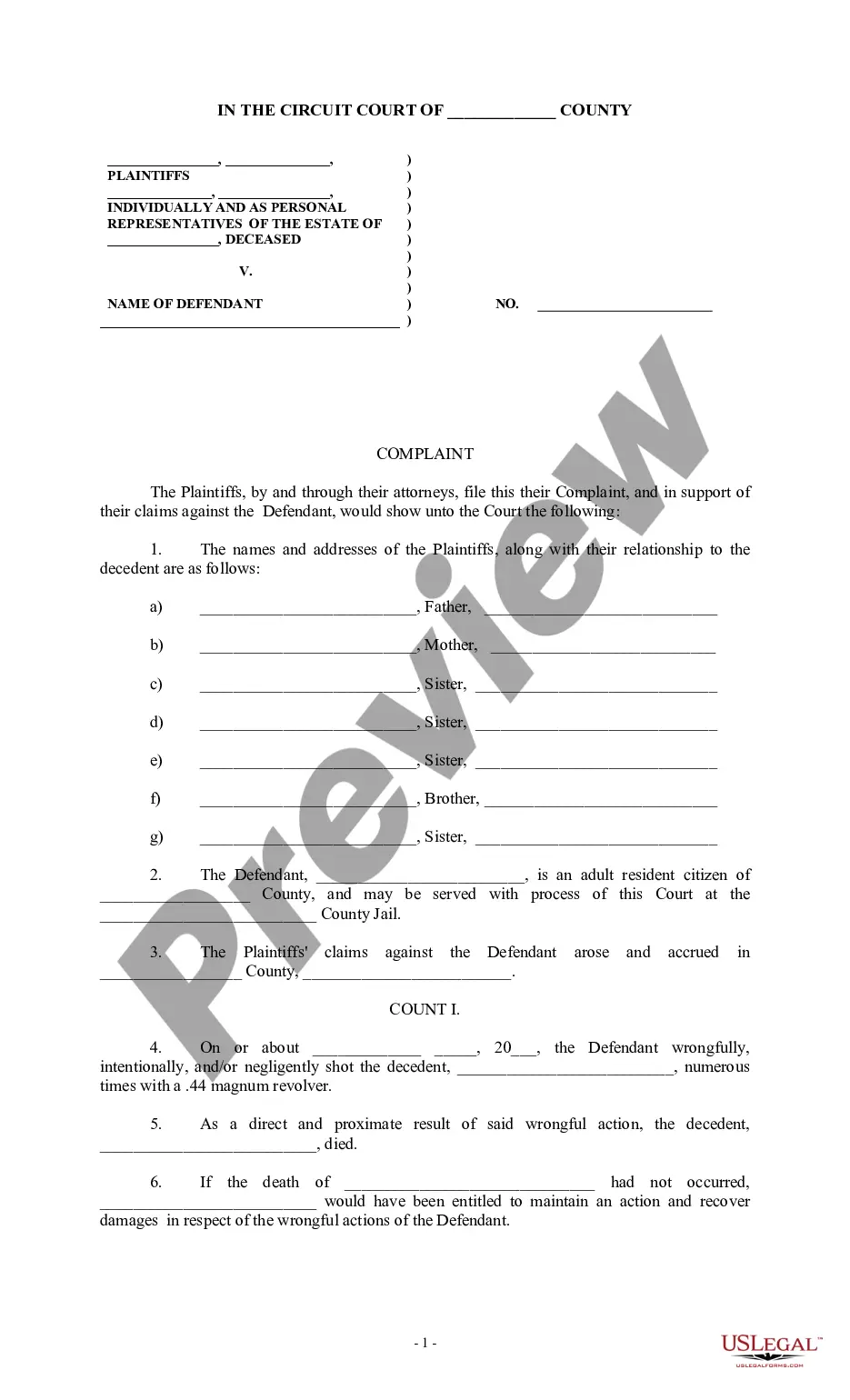
How to fill out Complaint For Wrongful Death - Single Count?
- Log into your US Legal Forms account if you've previously subscribed. Make sure your subscription is active to access your downloaded forms.
- If you're new to the service, start by browsing the extensive library and using the Preview mode to find the correct form that aligns with your local requirements.
- Utilize the Search tab to locate any additional templates you may need if the first option doesn’t fit your needs.
- Choose the desired document and click the Buy Now button. Select a subscription plan that works for you, and register for an account if you haven’t already.
- Complete the purchase by entering your payment details via credit card or PayPal.
- After your payment is processed, download your completed form. You can find it anytime in the My Forms section of your profile.
With US Legal Forms, you not only gain access to countless templates but also receive guidance from premium experts to ensure your documents are filled out correctly, giving you peace of mind.
Start simplifying your legal process today! Visit US Legal Forms to get your wrongful count form statement for employer and take the first step towards handling your legal matters with confidence.
Form popularity
FAQ
Much like writing a statement, you should not feel forced to give a statement unless company policy clearly outlines such a requirement. If you face pressure from your employer, it is essential to be aware of your rights. Resources like the wrongful count form statement for employer can provide insight into how to approach this delicate matter.
Writing a statement is generally not forced upon employees unless they are under a specific mandate from their employer. If you feel coerced, it's important to assert your rights and seek clarity on workplace policies. Understanding the wrongful count form statement for employer can guide your response in such situations.
Yes, you can refuse to provide a statement, particularly if you believe it could harm your position. Making this decision can have implications, so it is wise to weigh your options carefully. Engaging with a professional who understands the wrongful count form statement for employer can help you navigate this trigger.
You are not necessarily obligated to write a statement unless required by your company’s policy. However, it's important to review your employee handbook and understand any expectations set by your employer. When faced with this situation, consider the implications of a wrongful count form statement for employer and seek legal advice if needed.
Employers must refrain from asking questions that violate your privacy or bypass laws regarding discrimination. For instance, inquiries about personal life details or questions targeting your race, religion, or gender can be unacceptable. If you encounter such questions, it may be beneficial to reference the wrongful count form statement for employer to clarify your position.
Yes, you can pursue legal action against your employer if they make false accusations that damage your reputation or employment status. To strengthen your case, you will need evidence and a clear record of the events. Consulting with a legal expert can offer guidance on how a wrongful count form statement for employer might play a role in your case.
It is not uncommon for employers to request a statement from their employees during investigations. However, you should not feel compelled to provide a statement unless there is a clear policy that mandates it. If you feel pressured, it is wise to understand your rights regarding a wrongful count form statement for employer before complying.
To write a strong EEOC complaint, be precise and detailed about the events leading to your grievance. Include dates, witnesses, and any relevant documentation to substantiate your claims. By outlining your situation clearly and factually, you build a solid case, supplementing your wrongful count form statement for employer effectively.
When writing a wrongful termination complaint, begin by outlining your employment history and the circumstances surrounding your termination. Clearly state the reasons you believe your termination was unjust, referencing company policies or legal statutes where applicable. A well-structured complaint can greatly enhance your wrongful count form statement for employer, providing a clear narrative of the issue.
To effectively write a position statement, start by defining the issue at hand and the stance you wish to convey. Support your viewpoint with specific facts, data, and examples while ensuring clarity and coherence throughout the document. This meticulous approach is vital in constructing a compelling wrongful count form statement for employer.