Wrongful Count Form Statement For College
Description

Get your form ready online
Our built-in tools help you complete, sign, share, and store your documents in one place.
Make edits, fill in missing information, and update formatting in US Legal Forms—just like you would in MS Word.
Download a copy, print it, send it by email, or mail it via USPS—whatever works best for your next step.
Sign and collect signatures with our SignNow integration. Send to multiple recipients, set reminders, and more. Go Premium to unlock E-Sign.
If this form requires notarization, complete it online through a secure video call—no need to meet a notary in person or wait for an appointment.
We protect your documents and personal data by following strict security and privacy standards.

Make edits, fill in missing information, and update formatting in US Legal Forms—just like you would in MS Word.

Download a copy, print it, send it by email, or mail it via USPS—whatever works best for your next step.

Sign and collect signatures with our SignNow integration. Send to multiple recipients, set reminders, and more. Go Premium to unlock E-Sign.

If this form requires notarization, complete it online through a secure video call—no need to meet a notary in person or wait for an appointment.

We protect your documents and personal data by following strict security and privacy standards.
Looking for another form?
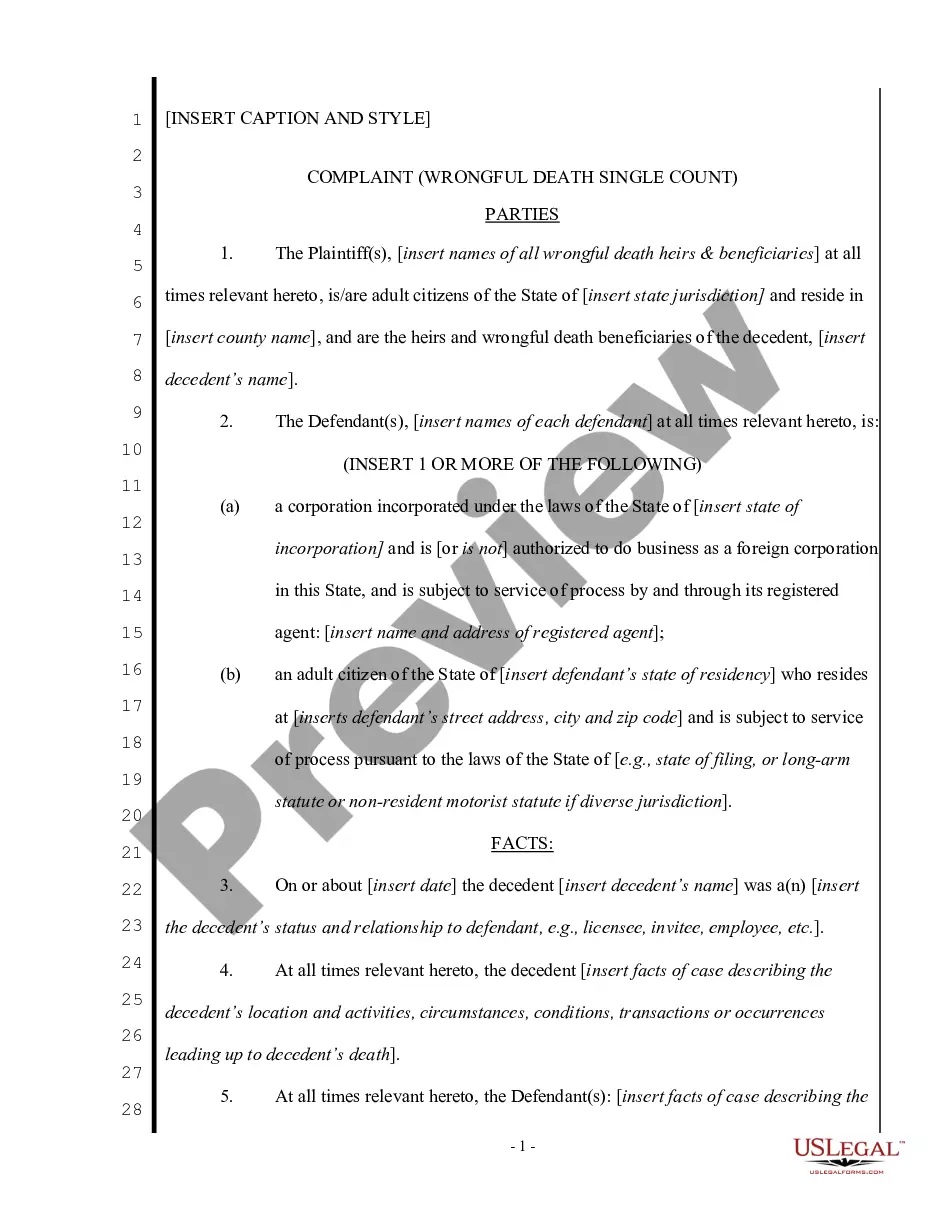
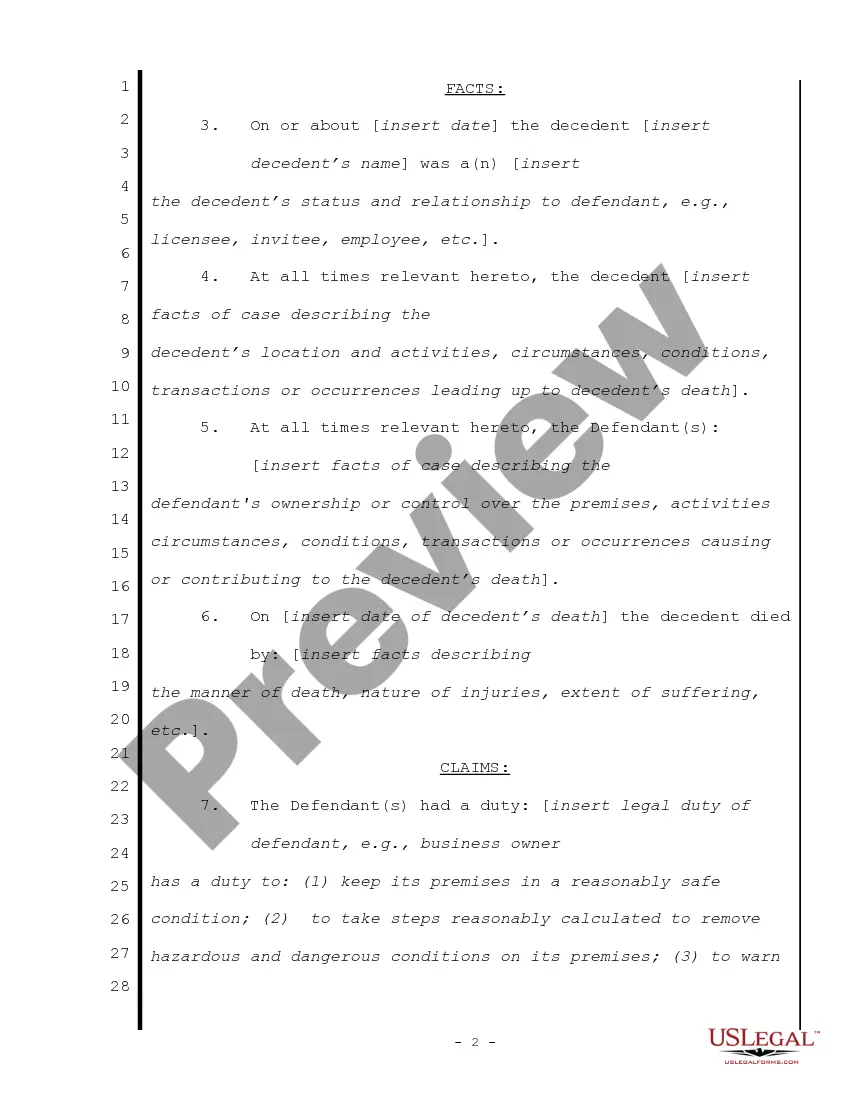
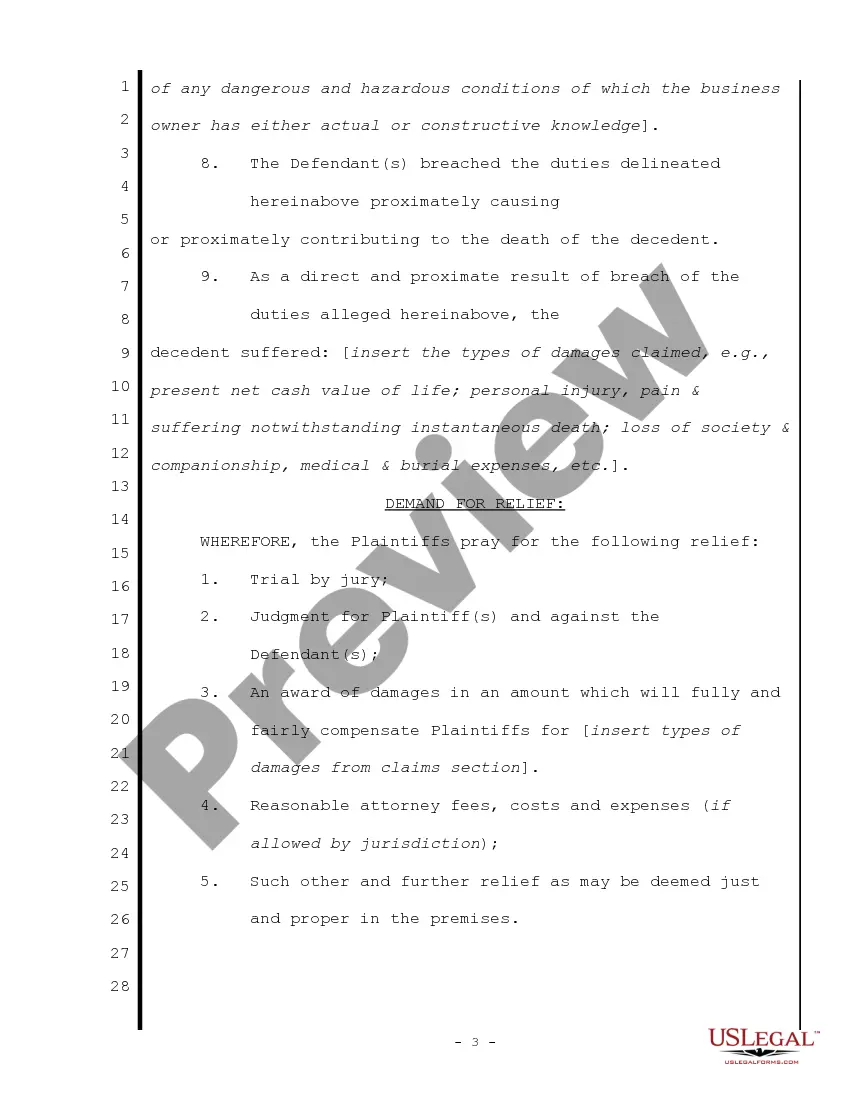
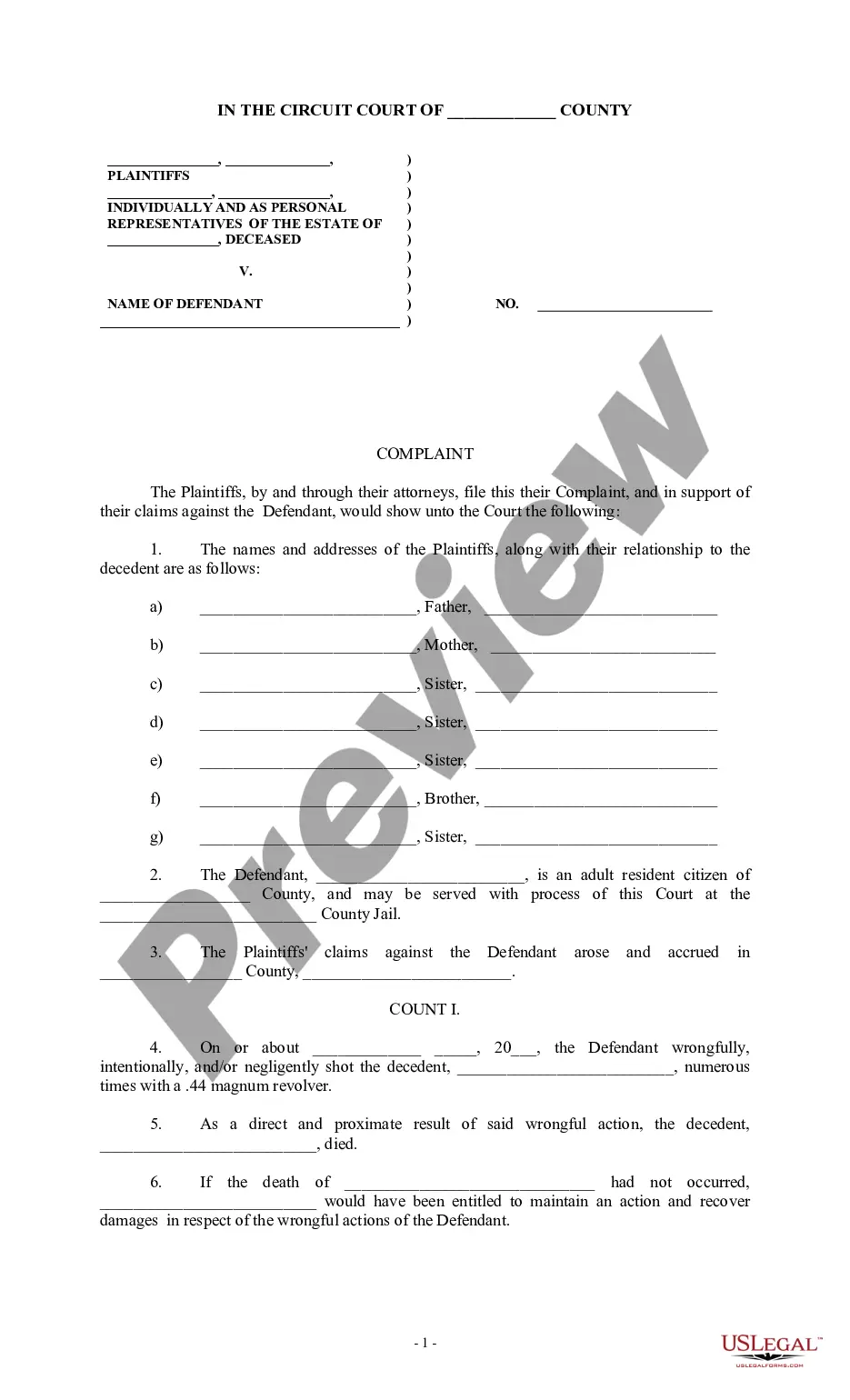
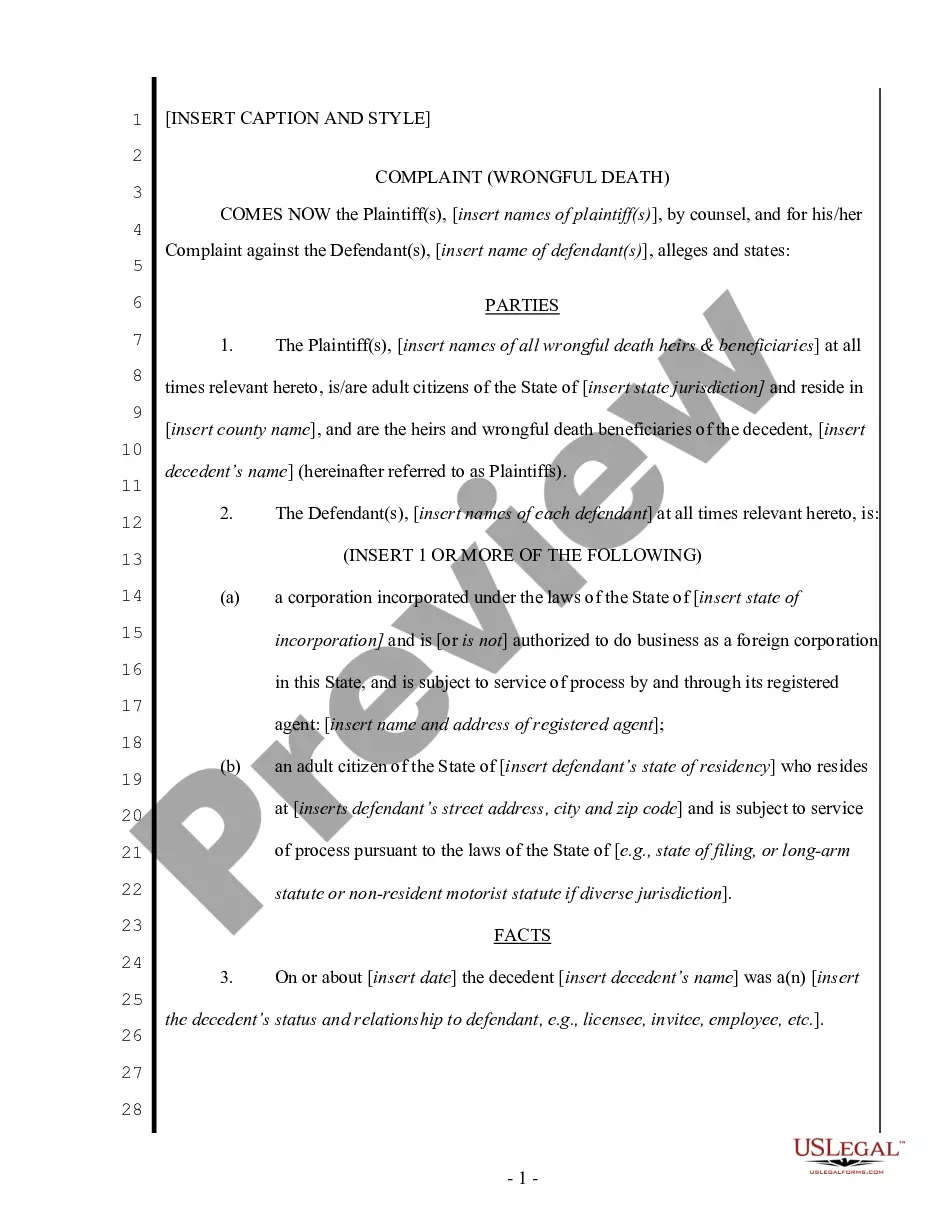
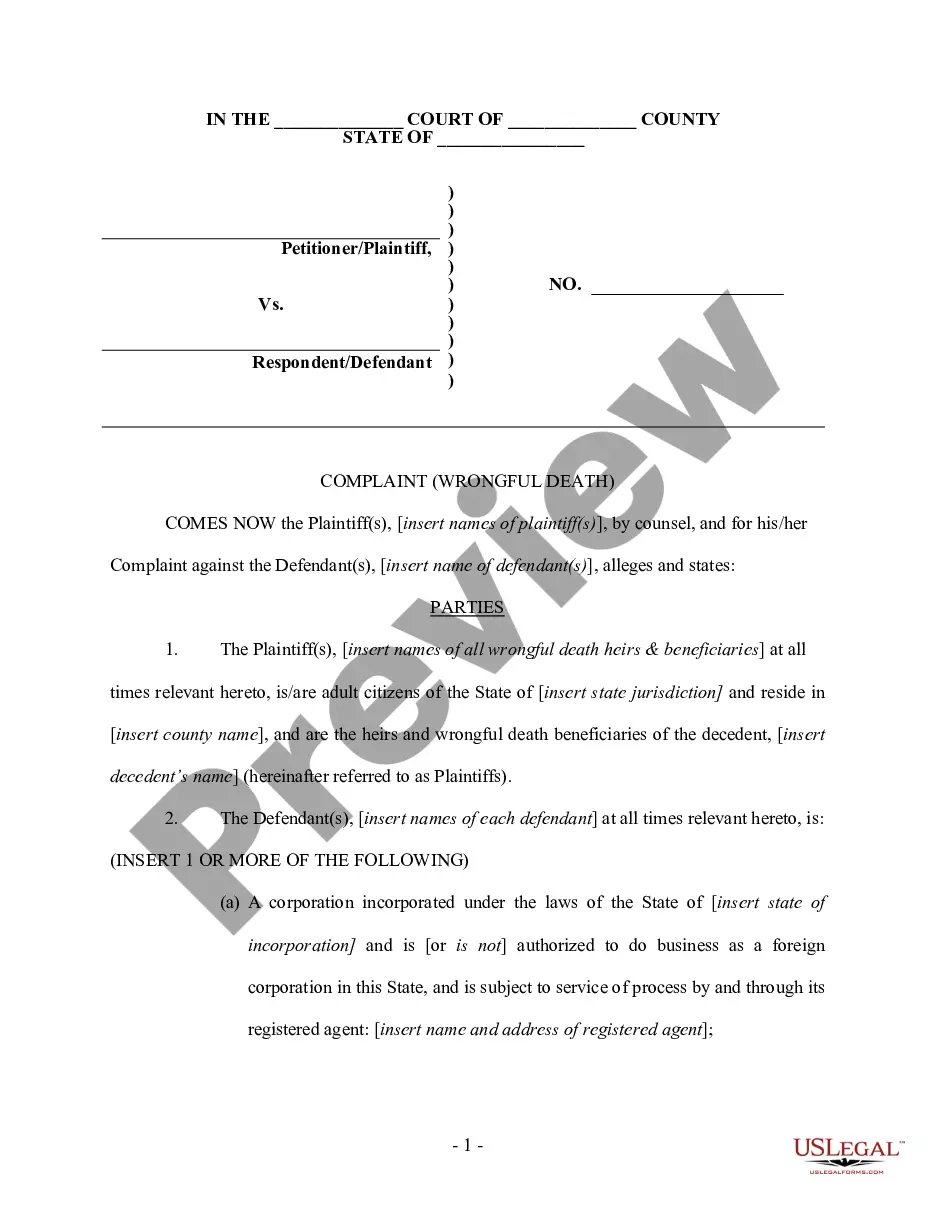
How to fill out Complaint For Wrongful Death - Single Count?
- If you are a returning user, log in to your account and download your required form template. Ensure your subscription remains active, and renew it if necessary.
- For new users, start by browsing available forms. Check the Preview mode and form descriptions to confirm it meets your local jurisdiction requirements.
- If needed, utilize the Search tab to find a suitable template if you encounter discrepancies.
- Once you've found the appropriate document, click on the Buy Now button to select your desired subscription plan and create an account.
- Complete your purchase using a credit card or PayPal, ensuring you have access to premium resources.
- Finally, download your form to your device for completion, or access it anytime via the My Forms menu in your profile.
US Legal Forms empowers users with its extensive library and support from experienced professionals, ensuring every document is accurate and tailored to individual needs.
Ready to simplify your legal documentation process? Visit US Legal Forms today and take the first step toward obtaining your rightful count form statement for college.
Form popularity
FAQ
Getting caught lying on a college application can lead to significant consequences, such as revocation of your admission or dismissal from the college. The implications can also extend beyond your college career, as it affects your academic integrity and trustworthiness. A wrongful count form statement for college can be a part of your appeal if approached honestly. Always be truthful in your applications to avoid these severe outcomes.
A good example of an appeal might involve a student explaining their poor academic performance due to a serious family issue, backed by relevant documentation. In this scenario, you can showcase how a wrongful count form statement for college accurately represents your struggle. Demonstrating growth and a plan for the future can enhance your appeal's effectiveness. Remember that authenticity and coherence are key in this communication.
A strong appeal letter for college should begin with a clear statement of purpose. You should outline the circumstances that led to your academic challenges concisely while referencing the wrongful count form statement for college if applicable. Provide supporting documents, express your commitment to improvement, and articulate your future goals. A well-crafted letter can make a lasting impression on the decision-makers.
If colleges discover that you lied on your application, they may take serious action, including rescinding your admission or expelling you if you are already enrolled. Academic integrity is critical, and a wrongful count form statement for college could result in severe repercussions. It's essential to maintain honesty throughout the application process. Owning up to any discrepancies can sometimes result in a more favorable outcome.
Good reasons for an academic appeal include significant extenuating circumstances, such as medical issues or personal crises that impacted your performance. You can also appeal if there was an error in grading or if disciplinary actions were disproportionately harsh. A wrongful count form statement for college can serve as a legitimate basis for your appeal, especially if it aligns with your evidence. Always support your claims with documentation to strengthen your case.
Yes, colleges often have mechanisms in place to recognize academic dishonesty. When evaluating applications or appeals, they can review disciplinary records and previous academic conduct. If your admission contains a wrongful count form statement for college, it may attract scrutiny. Transparency about your past will show integrity and may positively influence their decision.
Colleges typically seek honesty, clarity, and a strong rationale for your appeal. They want to understand your circumstances and why you believe a wrongful count form statement for college applies to your situation. A well-structured appeal letter should reflect informed reasoning and personal accountability. Providing relevant documentation can also bolster your case.
To write a compelling 250 word personal statement, start by clearly defining your main message. Include a brief introduction that captures your motivation and highlights relevant experiences. Then, focus on explaining how your journey connects to the wrongful count form statement for college, while ensuring your conclusion wraps up your thoughts cohesively. Remember, the key is to stay concise and focused, providing a clear narrative that reflects your unique perspective.
In most cases, it is advisable to stick to the prescribed word limit for college essays. Exceeding this limit could suggest a disregard for the application guidelines, which colleges view negatively. If you find it challenging to condense your ideas, consider using resources like the Wrongful count form statement for college to help you organize your thoughts effectively.
Suing a college for misleading information is possible, but it often requires substantial evidence of harm and misrepresentation. Consult with a legal expert familiar with education law to evaluate your case. If you believe you have a valid claim, be prepared to document how the misleading information affected your academic experience. The Wrongful count form statement for college offers insights on navigating such situations.