Wrongful Count Civil Actions With A Witness
Description

Get your form ready online
Our built-in tools help you complete, sign, share, and store your documents in one place.
Make edits, fill in missing information, and update formatting in US Legal Forms—just like you would in MS Word.
Download a copy, print it, send it by email, or mail it via USPS—whatever works best for your next step.
Sign and collect signatures with our SignNow integration. Send to multiple recipients, set reminders, and more. Go Premium to unlock E-Sign.
If this form requires notarization, complete it online through a secure video call—no need to meet a notary in person or wait for an appointment.
We protect your documents and personal data by following strict security and privacy standards.

Make edits, fill in missing information, and update formatting in US Legal Forms—just like you would in MS Word.

Download a copy, print it, send it by email, or mail it via USPS—whatever works best for your next step.

Sign and collect signatures with our SignNow integration. Send to multiple recipients, set reminders, and more. Go Premium to unlock E-Sign.

If this form requires notarization, complete it online through a secure video call—no need to meet a notary in person or wait for an appointment.

We protect your documents and personal data by following strict security and privacy standards.
Looking for another form?

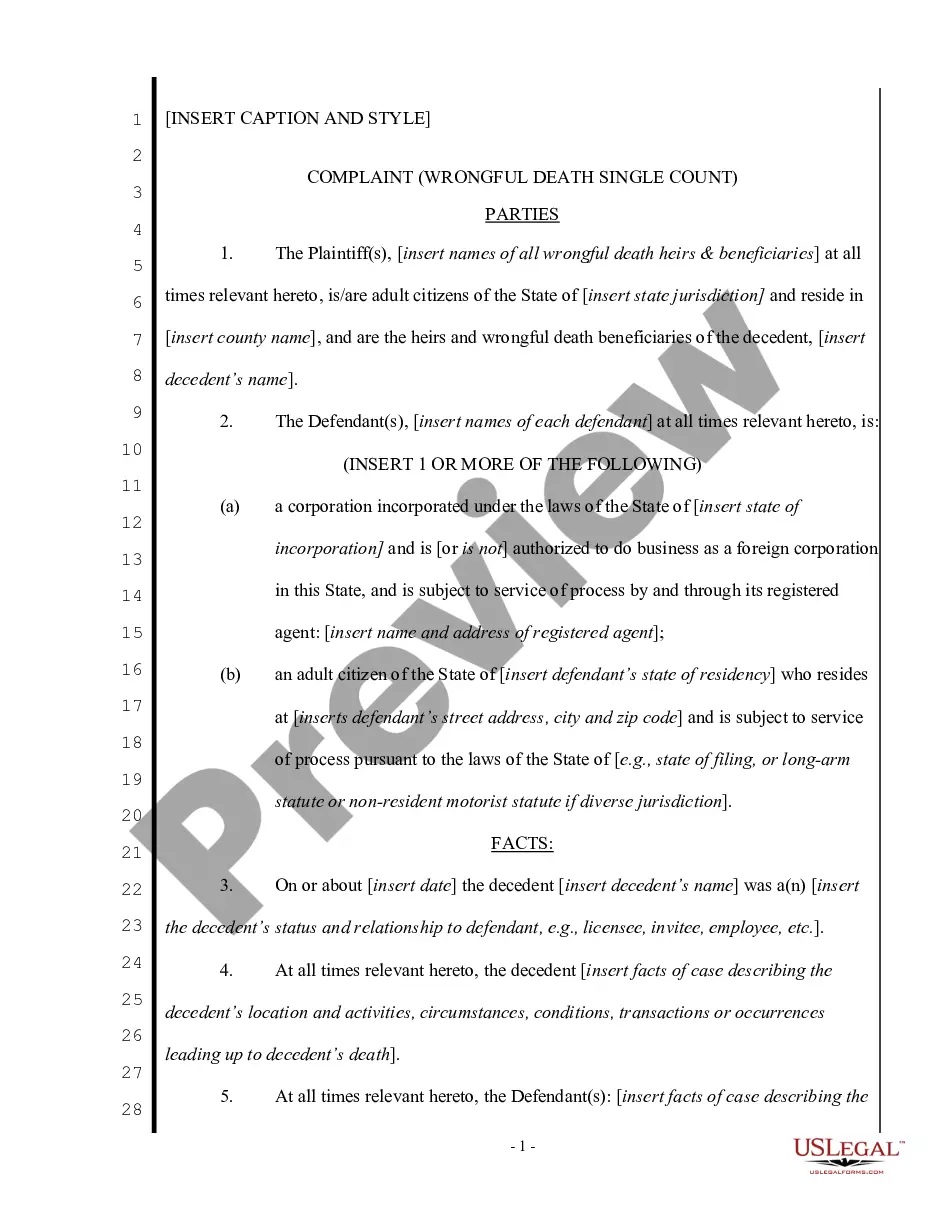
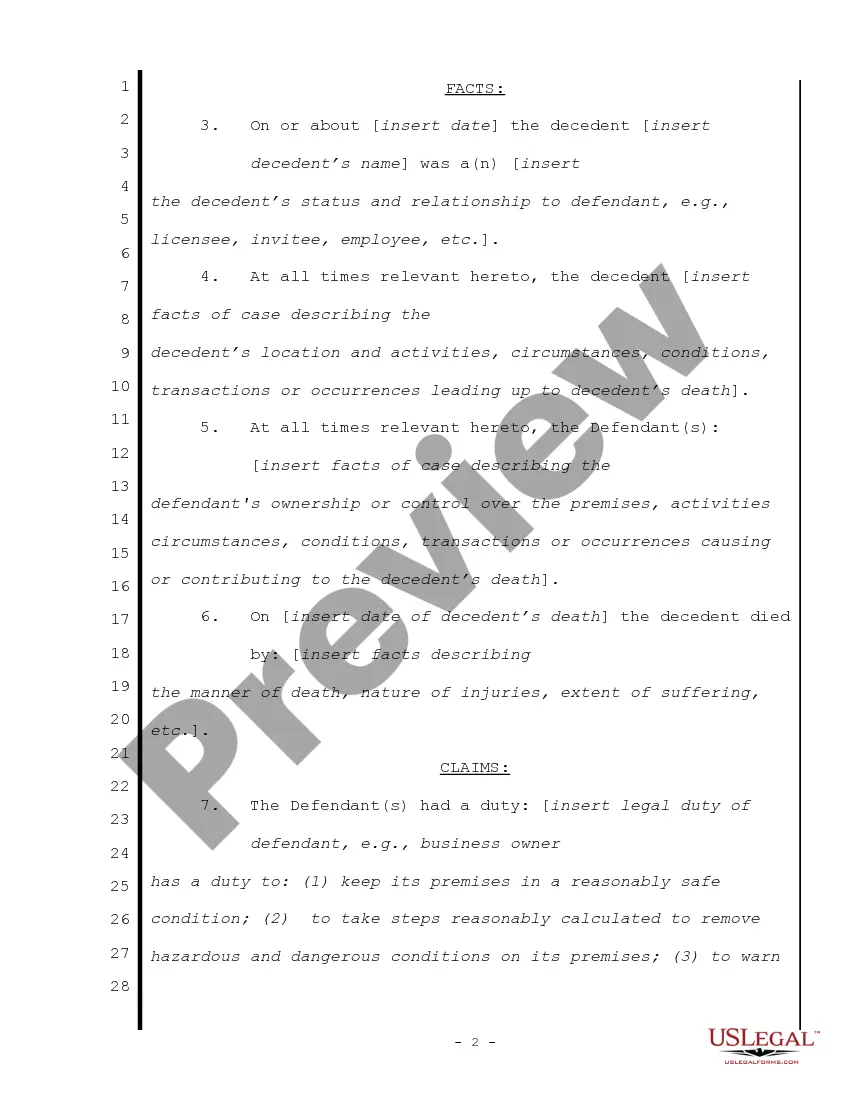
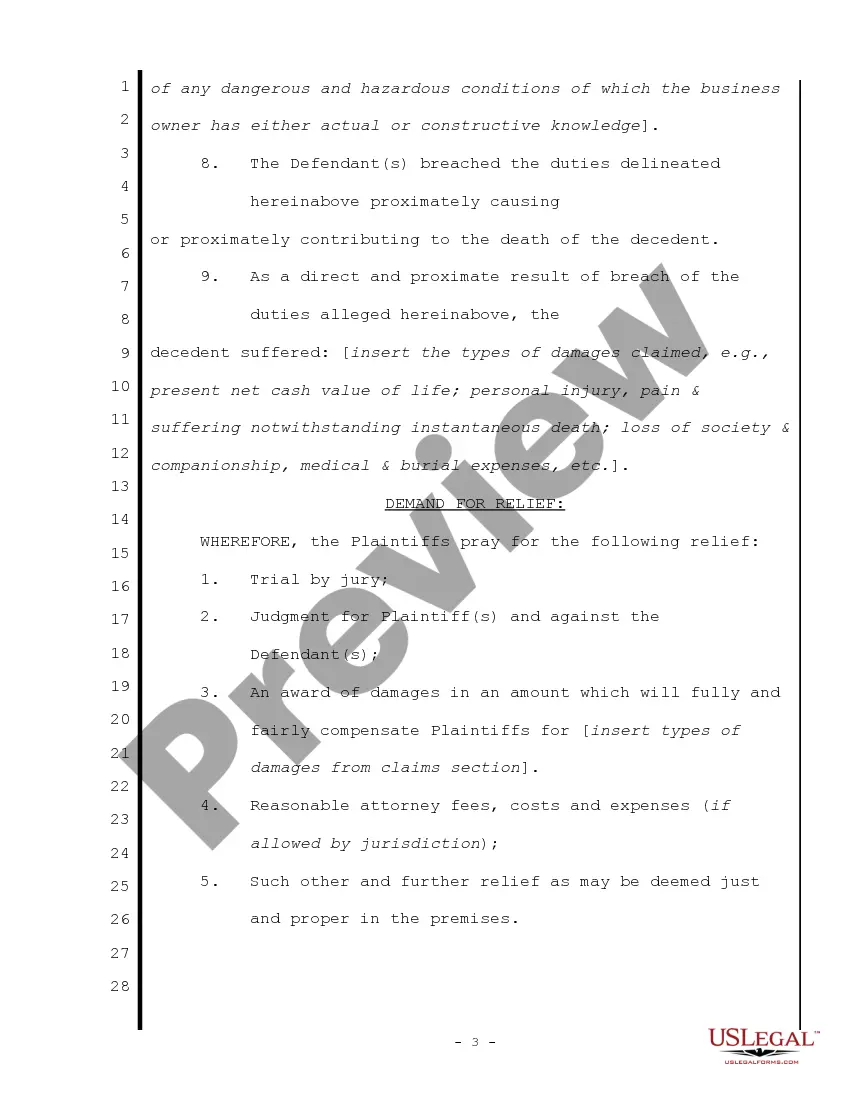
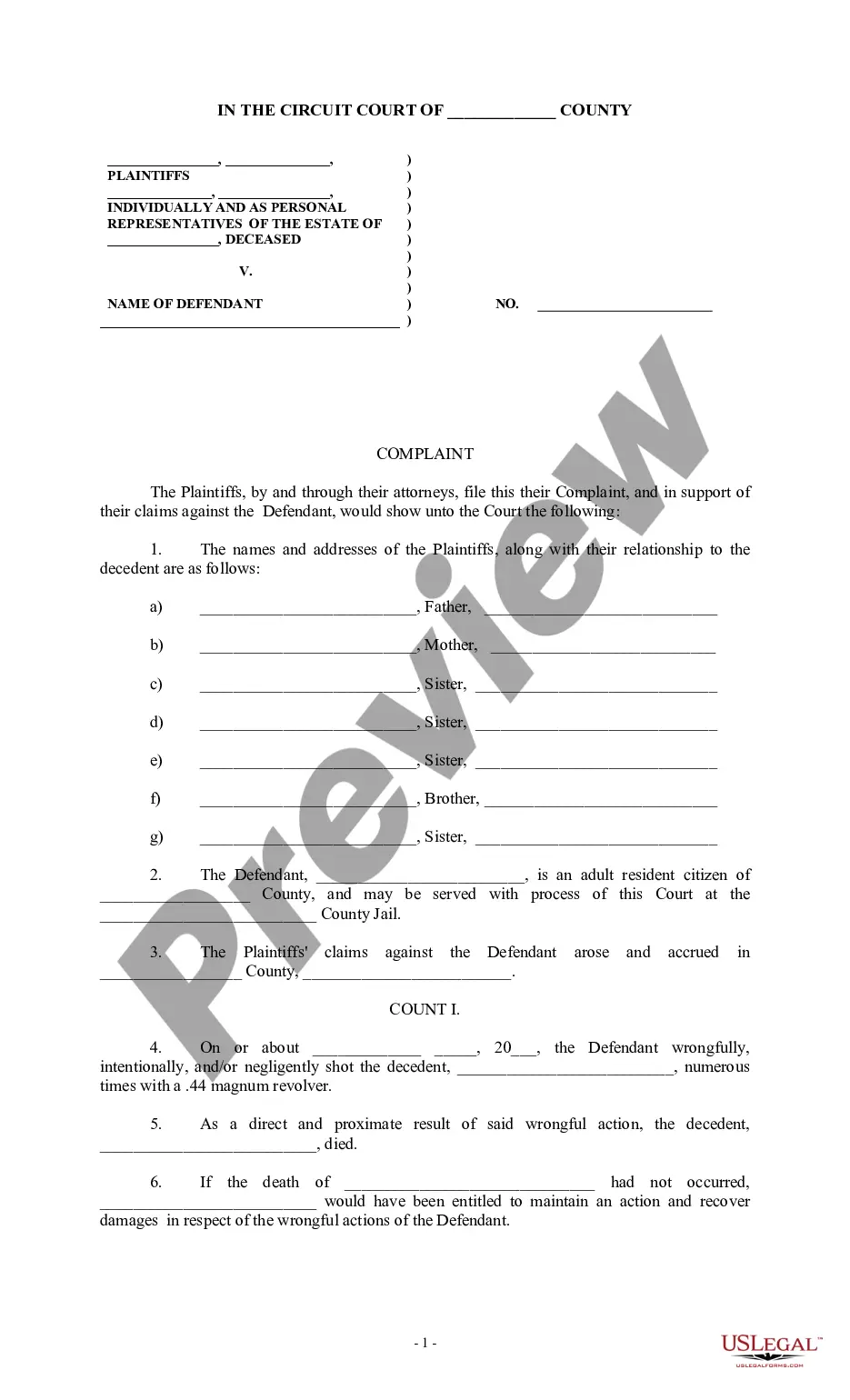
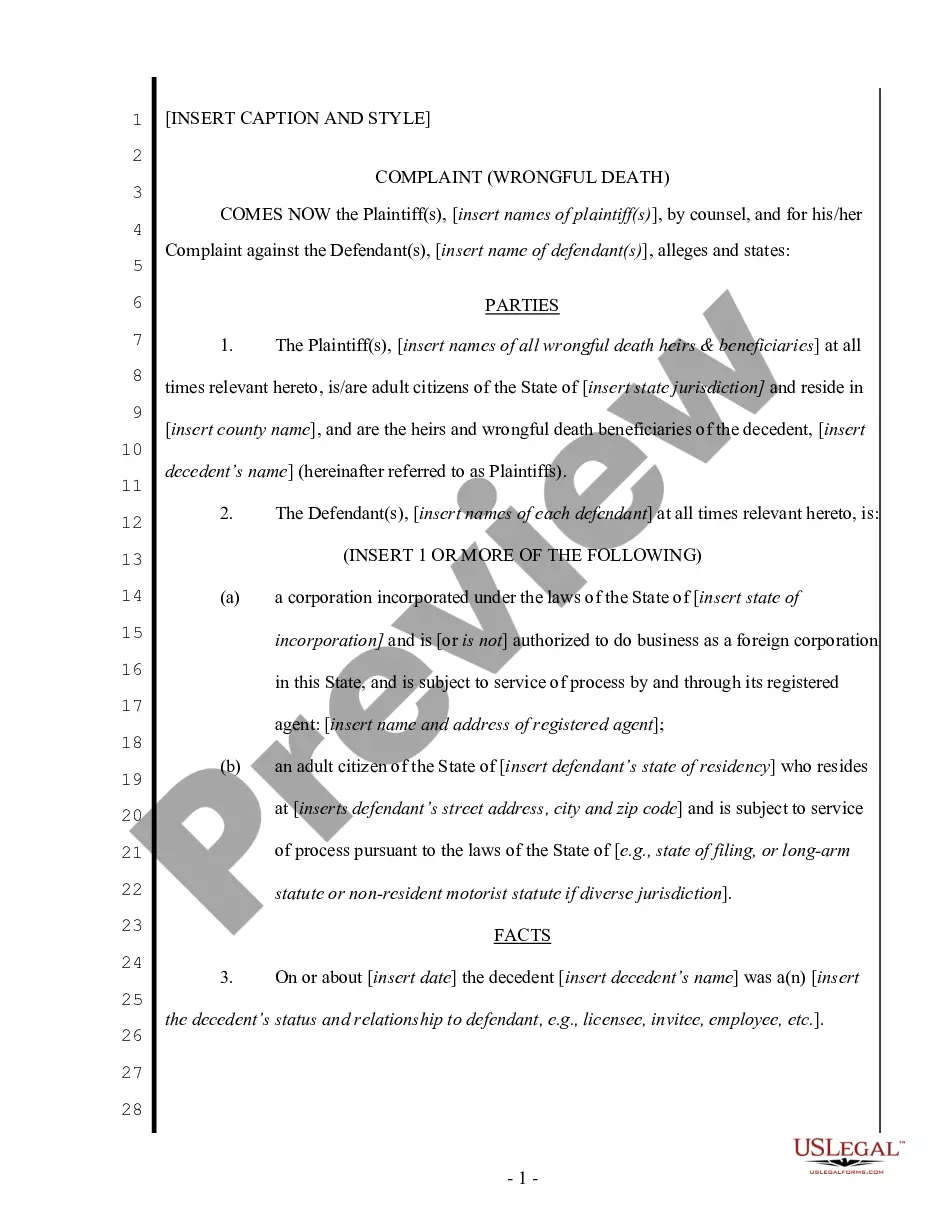
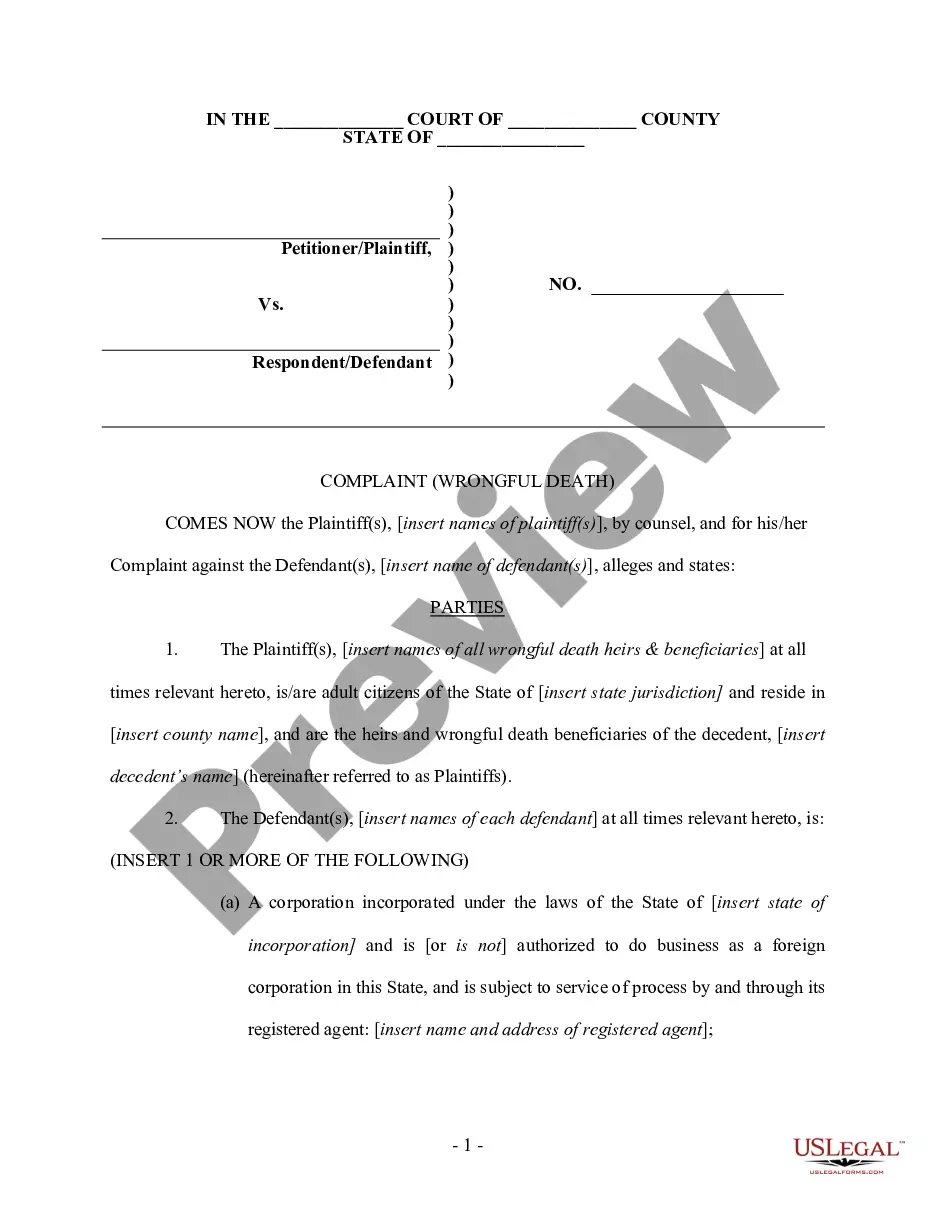
How to fill out Complaint For Wrongful Death - Single Count?
- If you're a returning user, log in to your account and download your required form by clicking the Download button. Ensure your subscription is active; if it’s not, renew it based on your payment plan.
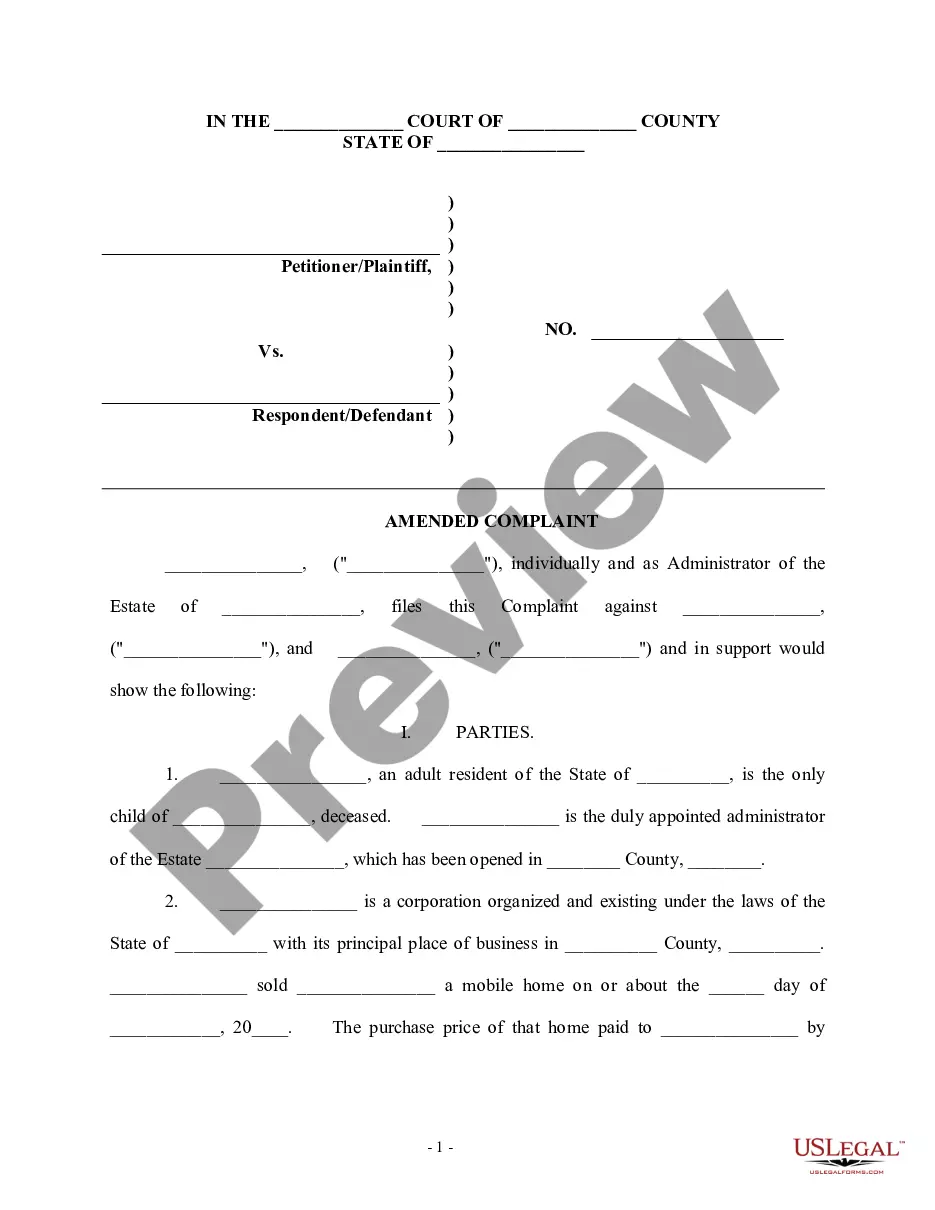
- For first-time users, start by reviewing the Preview mode along with the form description. Verify that you’ve selected a template that aligns with your needs and is compliant with local jurisdiction.
- If you need a different template, use the Search tab to find a suitable option. Ensure it meets your requirements before proceeding.
- Purchase the document by clicking on the Buy Now button and selecting a subscription plan that fits your needs. An account registration is necessary to access the document library.
- Complete your payment by providing your credit card information or opting for PayPal. Make sure the transaction is confirmed.
- After purchase, download the form to your device. You can later access it at any time through the My Forms section in your profile.
US Legal Forms is a powerful ally in the world of legal documentation, offering a robust library with over 85,000 editable forms and packages. Their extensive resources empower users to execute legal documents efficiently.
Don't navigate the complexities of legal forms alone. Explore US Legal Forms today for all your wrongful count civil action needs and get the legal assistance that ensures accuracy and compliance.
Form popularity
FAQ
An example of tampering with a witness includes threatening a witness to change their testimony or offering bribes to alter statements made in court. Such actions can significantly impact the outcome of legal proceedings. In wrongful count civil actions with a witness, maintaining transparency and honesty in witness interactions is vital for upholding justice.
The federal statute for tampering with a witness is outlined in 18 USC § 1512. This law prohibits any attempts to influence, intimidate, or disrupt a witness's testimony or cooperation in an investigation. In the context of wrongful count civil actions with a witness, this statute serves to protect the integrity of the judicial process and the safety of witnesses.
The federal statute for tampering with evidence is found in 18 USC § 1519. It outlines the illegal actions of document destruction and evidence alteration intended to cover up a crime. Understanding this statute is important for anyone involved in wrongful count civil actions with a witness, as it highlights the legal boundaries around interaction with evidence.
Yes, tampering with evidence is a federal offense under 18 USC. This law prohibits individuals from manipulating evidence in ways that could obstruct justice or mislead investigations. Engaging in such acts can have serious ramifications, especially in cases involving wrongful count civil actions with a witness, where the integrity of the evidence is crucial.
18 USC tampering with evidence refers to the illegal act of altering, destroying, or concealing physical evidence with the intent to obstruct an investigation. This statute aims to preserve the integrity of evidence in legal proceedings. In wrongful count civil actions with a witness, such tampering can complicate the case, potentially leading to severe consequences for the individuals involved.
To establish that a witness lacks credibility, you can gather evidence showing inconsistencies in their statements. Additionally, consider the witness's background, relationship to the parties involved, or any potential biases that could affect their testimony. In wrongful count civil actions with a witness, demonstrating these factors can significantly undermine the witness's reliability.
A witness may be deemed incredible if they provide inconsistent statements, have a criminal background related to dishonesty, or display bias due to relationships with involved parties. These factors can undermine the reliability of their testimony in wrongful count civil actions with a witness. Ensuring witness credibility is vital, as it significantly influences the outcome of legal proceedings.
Witness intimidation can take many forms, including threats, bribery, harassment, or coercion. These actions can severely impact the integrity of wrongful count civil actions with a witness by discouraging honest testimony. If you suspect witness intimidation, it's vital to reach out to legal authorities or services that specialize in protecting witnesses to address the situation appropriately.
Several factors can disqualify a person from serving as a witness, such as being underage, having a mental impairment, or having a vested interest in the outcome of the wrongful count civil action. Additionally, if a potential witness does not understand the obligation of truthfulness, they may also face disqualification. It's essential to evaluate any potential witnesses carefully before relying on their testimony.
To disqualify a witness, an attorney typically presents arguments or evidence to a judge demonstrating that the witness does not meet the necessary legal criteria. This process may involve questioning their credibility, knowledge, or potential conflicts of interest regarding the wrongful count civil actions with a witness. Proper legal counsel can guide you through this process effectively.