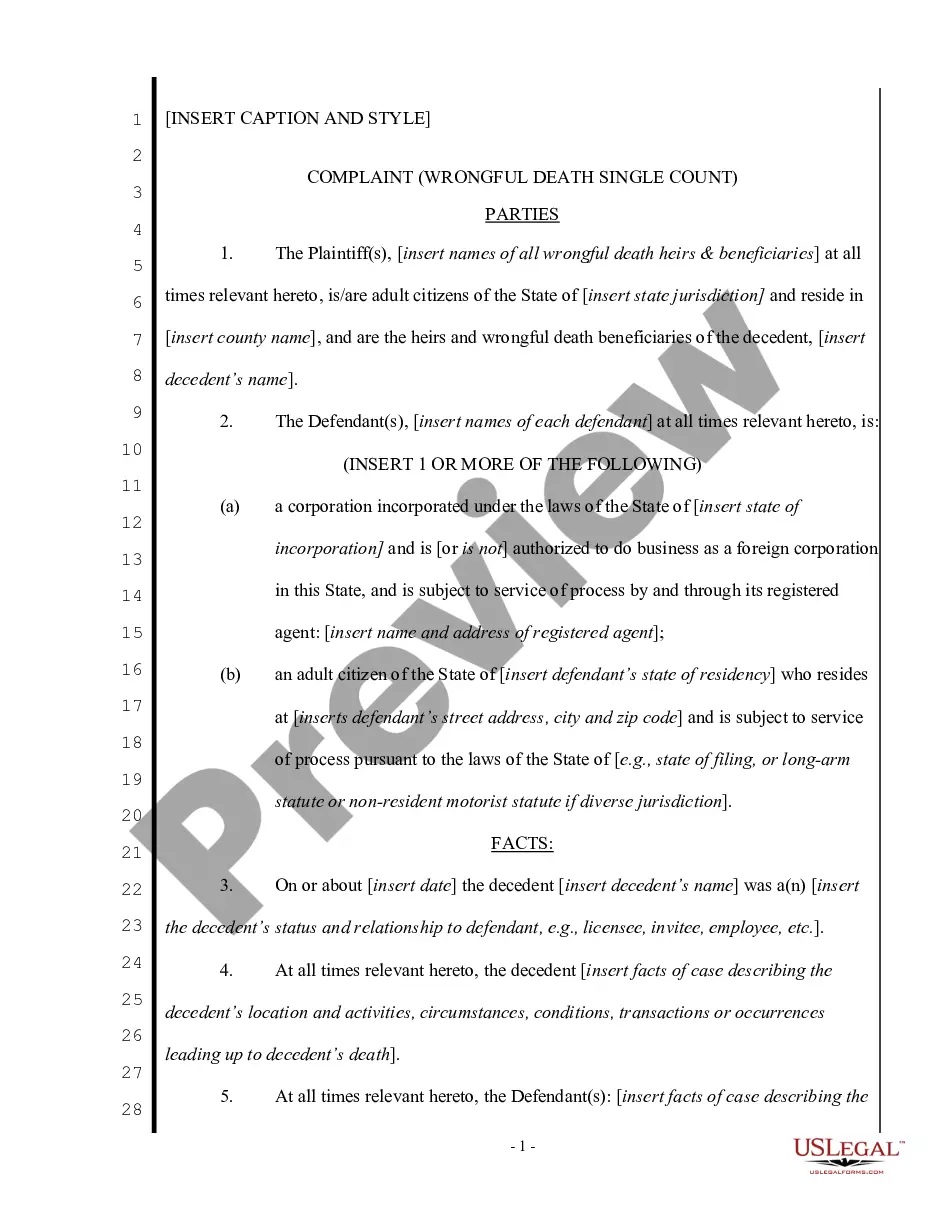
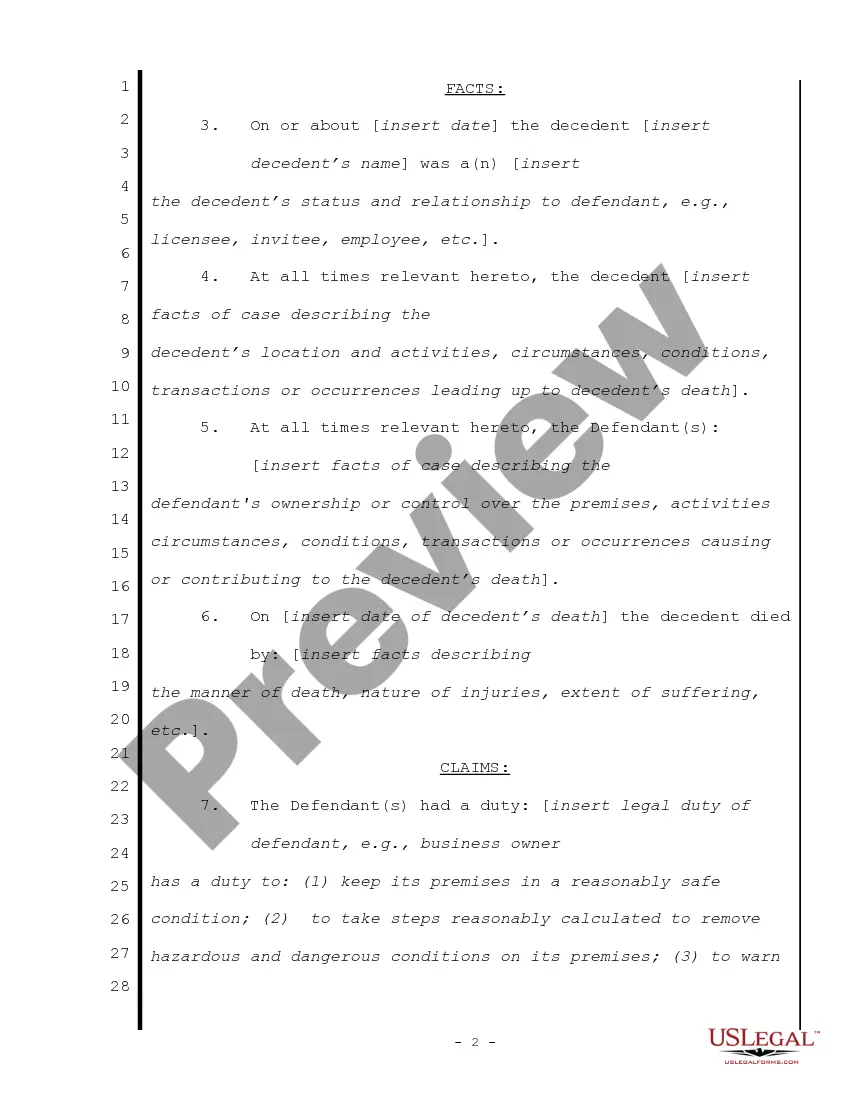
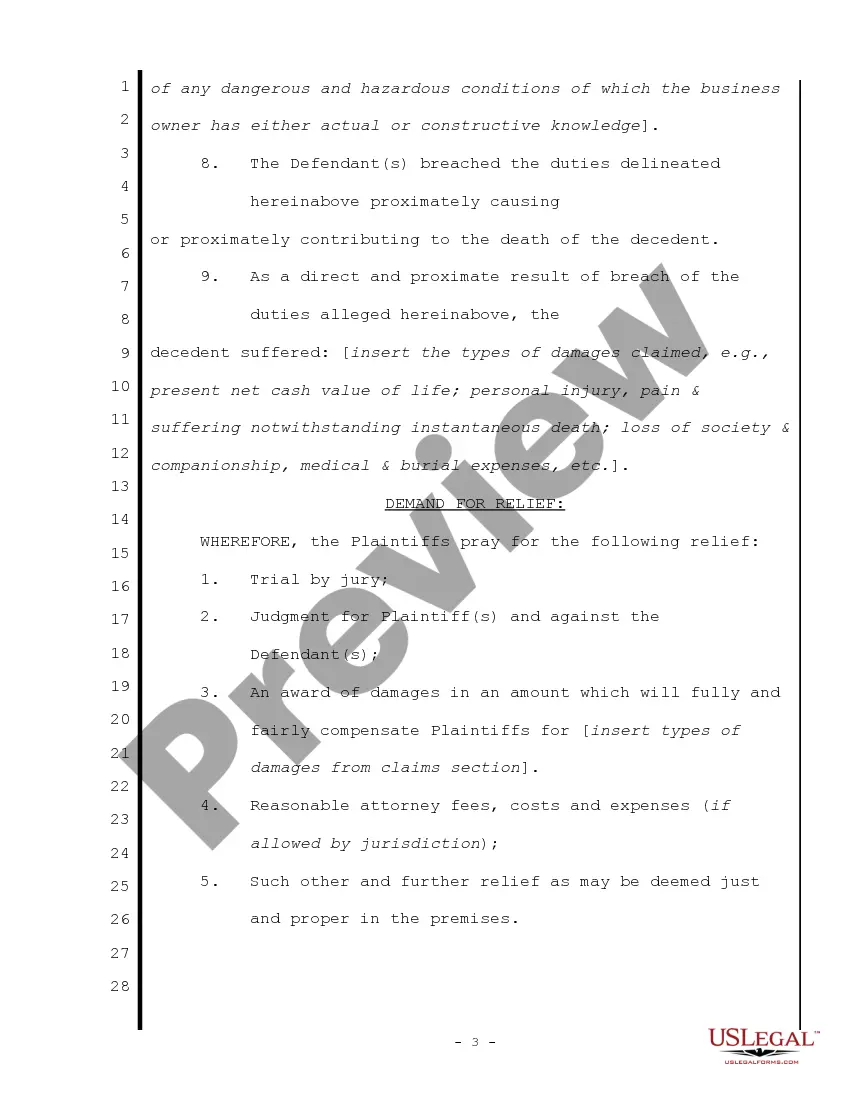
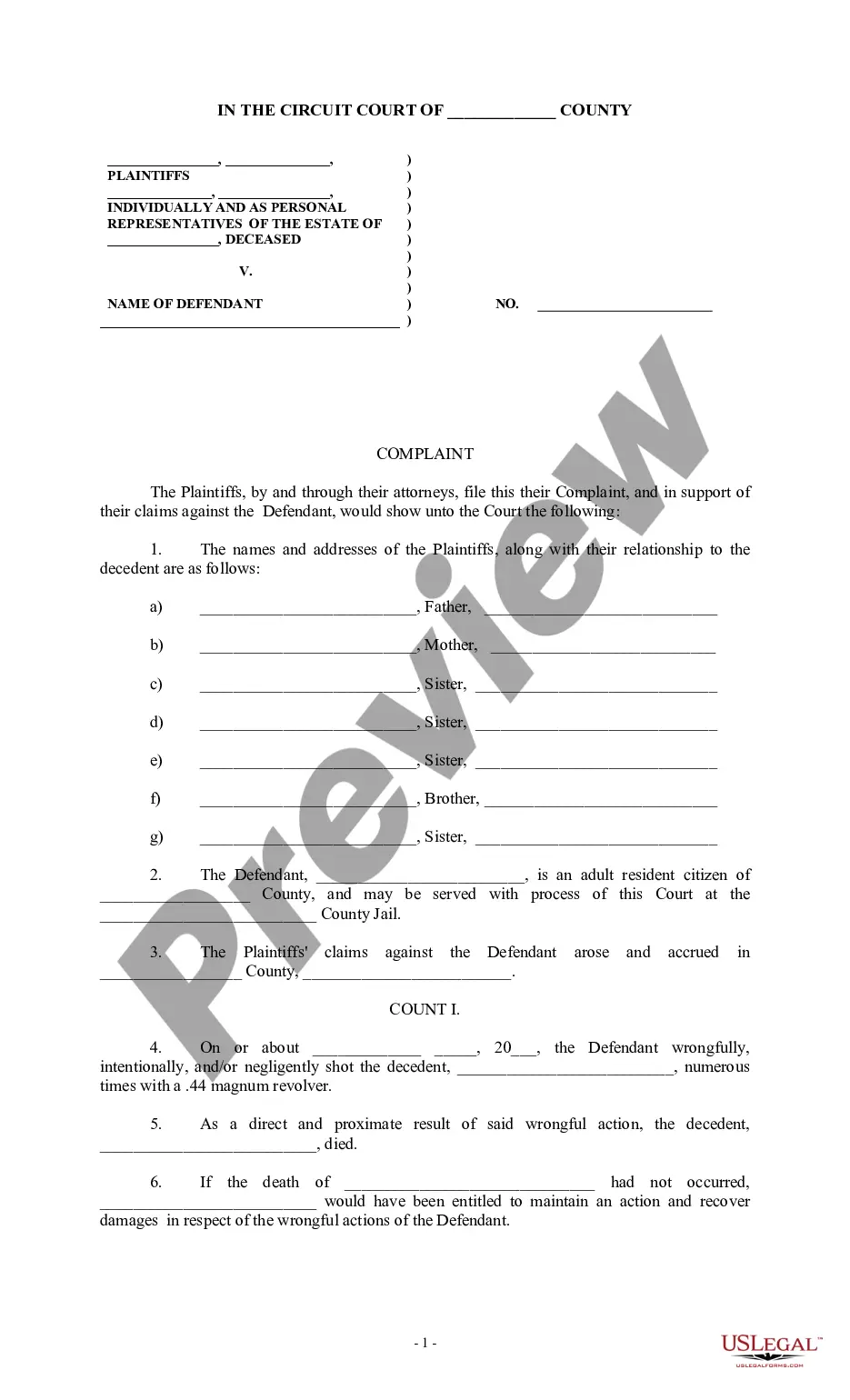
Wrongful Count Actions Paper With Axis
Description

Get your form ready online
Our built-in tools help you complete, sign, share, and store your documents in one place.
Make edits, fill in missing information, and update formatting in US Legal Forms—just like you would in MS Word.
Download a copy, print it, send it by email, or mail it via USPS—whatever works best for your next step.
Sign and collect signatures with our SignNow integration. Send to multiple recipients, set reminders, and more. Go Premium to unlock E-Sign.
If this form requires notarization, complete it online through a secure video call—no need to meet a notary in person or wait for an appointment.
We protect your documents and personal data by following strict security and privacy standards.

Make edits, fill in missing information, and update formatting in US Legal Forms—just like you would in MS Word.

Download a copy, print it, send it by email, or mail it via USPS—whatever works best for your next step.

Sign and collect signatures with our SignNow integration. Send to multiple recipients, set reminders, and more. Go Premium to unlock E-Sign.

If this form requires notarization, complete it online through a secure video call—no need to meet a notary in person or wait for an appointment.

We protect your documents and personal data by following strict security and privacy standards.
Looking for another form?
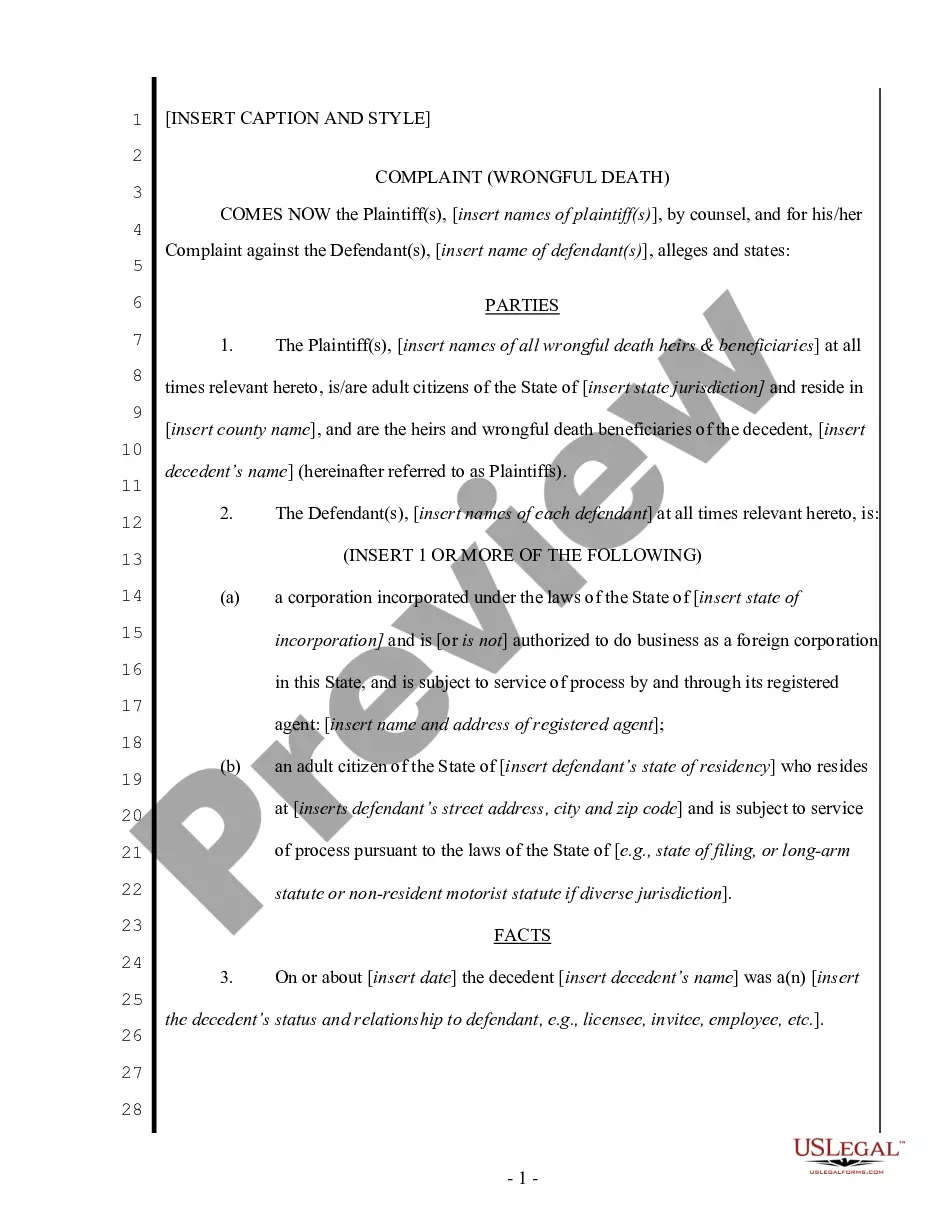
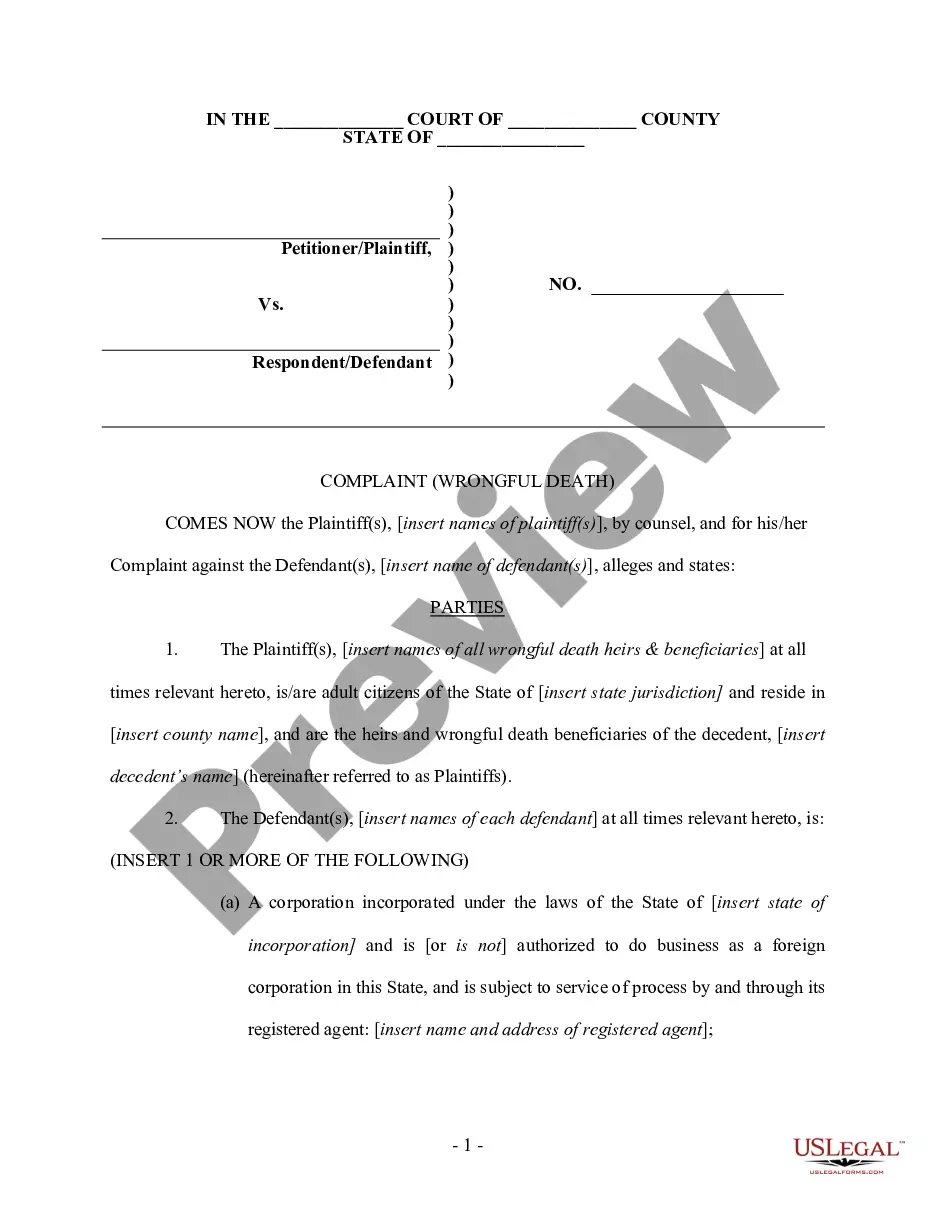
How to fill out Complaint For Wrongful Death - Single Count?
- If you're a returning user, log in and download the required form template by clicking the Download button. Ensure your subscription is current; otherwise, renew it as per your payment plan.
- For first-time users, start by previewing the available forms. Verify that you select the correct document that aligns with your local requirements.
- If you need a different template, utilize the Search tab to find the proper form. Once you find the right one, proceed to the next step.
- Purchase the document by clicking the Buy Now button. Choose your preferred subscription plan and register an account for access to the library’s resources.
- Complete your payment by providing your credit card information or using your PayPal account.
- Download your completed form to your device and find it anytime in the My documents section of your profile.
US Legal Forms sets itself apart with a rich collection of legal forms, offering more options than competitors at a similar cost. With over 85,000 easily fillable and editable legal templates, users can find exactly what they need quickly.
In conclusion, US Legal Forms simplifies the process of obtaining legal documents for wrongful count actions. Empower yourself with hassle-free access to expert legal assistance and ensure your forms are completed accurately. Start your journey today!
Form popularity
FAQ
Yes, writing the scale in a line graph is essential for conveying accurate information. The scale allows viewers to understand the difference in values and the relationship between data points. In your wrongful count actions paper with axis, including a clear scale ensures that the narrative behind the data is communicated effectively, fostering understanding and insights.
To accurately count units on a graph, begin by identifying each unit marked along the axes. Use the grid lines as references, ensuring you consistently measure the data points in relation to these units. This approach is crucial in your wrongful count actions paper with axis, as precise unit counting provides a clear representation of the data you wish to analyze.
Writing the scale in a graph requires you to select appropriate increments for your data. Start by labeling the axes with both the scale and the variables they represent. This practice adds clarity to your wrongful count actions paper with axis, allowing your audience to interpret the data implications confidently and accurately.
Using graph paper for math can greatly enhance your calculations and visualizations. Create plots for equations, sketch geometric figures, or organize data neatly. With its structured layout, graph paper simplifies the representation of complex data and is particularly useful in wrongful count actions paper with axis, ensuring accuracy in your mathematical assessments.
Writing the scale in graph paper starts with establishing clear dimensions for your axes. Indicate the scale using numbers and units of measurement, such as inches or centimeters. For your wrongful count actions paper with axis, this clarity enhances readability and comprehension of the data, allowing viewers to grasp the information quickly.
Labeling the scale on your graph involves clearly defining the variables being represented. Place labels at regular intervals along the axes, ensuring that each corresponds to the scale of the data. This practice is essential for your wrongful count actions paper with axis, as it helps viewers understand the context and significance of the information presented.
To effectively show scale on graph paper, first determine the range of values you'll represent. Then, decide on a consistent interval that fits within the measurements of the paper. Use the grid lines to mark these intervals clearly, so anyone viewing your wrongful count actions paper with axis can easily interpret the data represented.
Finding the unit rate on a graph involves comparing the values on one axis to those on another. For instance, you may calculate how many items correspond to one hour, particularly in contexts dealing with wrongful count actions paper with axis. This rate will help you understand trends and make informed decisions based on the data presented.
To count units on a graph, refer to the markings along the axes and determine the intervals represented by each mark. This process enables you to quantify the data points relevant to wrongful count actions paper with axis. By counting across the intervals, you can accurately assess how many units are present, leading to better data analysis.
Finding units from a graph involves closely examining the labels on each axis. Look for scale markings that indicate the measurement being used, such as time, distance, or quantity, which are essential in cases involving wrongful count actions paper with axis. Knowing the units helps you interpret the relationships between data points effectively.