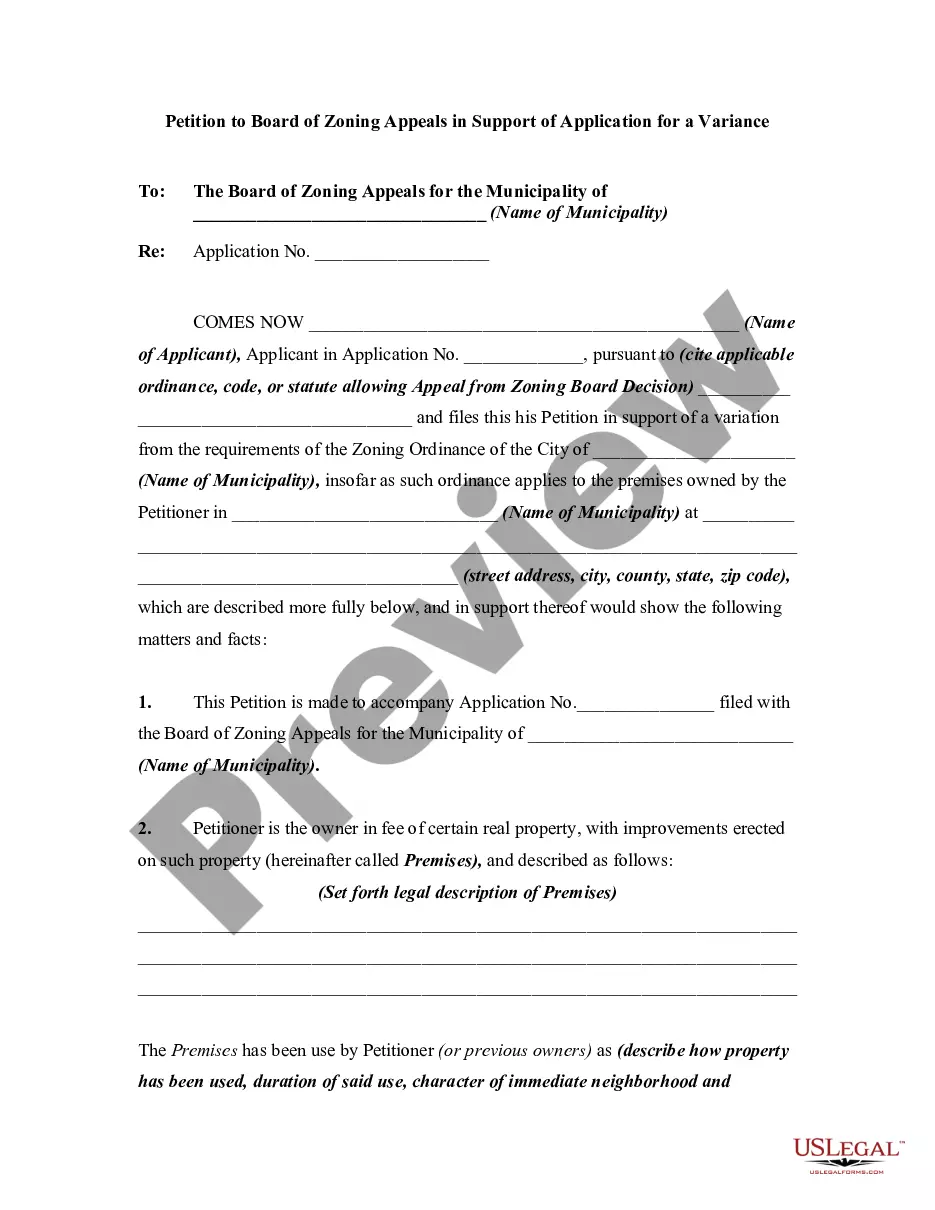
Application Variance Document Format
Description
Get your form ready online
Our built-in tools help you complete, sign, share, and store your documents in one place.
Make edits, fill in missing information, and update formatting in US Legal Forms—just like you would in MS Word.
Download a copy, print it, send it by email, or mail it via USPS—whatever works best for your next step.
Sign and collect signatures with our SignNow integration. Send to multiple recipients, set reminders, and more. Go Premium to unlock E-Sign.
If this form requires notarization, complete it online through a secure video call—no need to meet a notary in person or wait for an appointment.
We protect your documents and personal data by following strict security and privacy standards.

Make edits, fill in missing information, and update formatting in US Legal Forms—just like you would in MS Word.

Download a copy, print it, send it by email, or mail it via USPS—whatever works best for your next step.

Sign and collect signatures with our SignNow integration. Send to multiple recipients, set reminders, and more. Go Premium to unlock E-Sign.

If this form requires notarization, complete it online through a secure video call—no need to meet a notary in person or wait for an appointment.

We protect your documents and personal data by following strict security and privacy standards.
Looking for another form?
How to fill out Application For Variance?
Locating a reliable source for the latest and suitable legal templates is a significant part of navigating bureaucracy.
Selecting the correct legal documents requires precision and careful consideration, which is why it's essential to obtain samples of Application Variance Document Format solely from trustworthy sources, such as US Legal Forms. An incorrect template will squander your time and hinder your current situation. With US Legal Forms, you can have peace of mind.
Eliminate the inconvenience associated with your legal documentation. Explore the extensive US Legal Forms library to find legal templates, assess their suitability for your situation, and download them instantly.
- Utilize the catalog navigation or search option to locate your sample.
- Access the form’s details to verify if it meets the criteria of your state and local area.
- View the form preview, if available, to confirm that it is the form you are seeking.
- Continue searching for the appropriate template if the Application Variance Document Format does not fulfill your needs.
- If you are confident about the form’s applicability, download it.
- As a registered customer, click Log in to verify your identity and access your selected forms in My documents.
- If you do not yet have an account, click Buy now to acquire the template.
- Choose the pricing option that aligns with your needs.
- Proceed with the registration to finalize your acquisition.
- Complete your purchase by selecting a payment method (credit card or PayPal).
- Choose the document format for downloading the Application Variance Document Format.
- Once you have the form on your device, you can modify it with the editor or print it and fill it out by hand.
Form popularity
FAQ
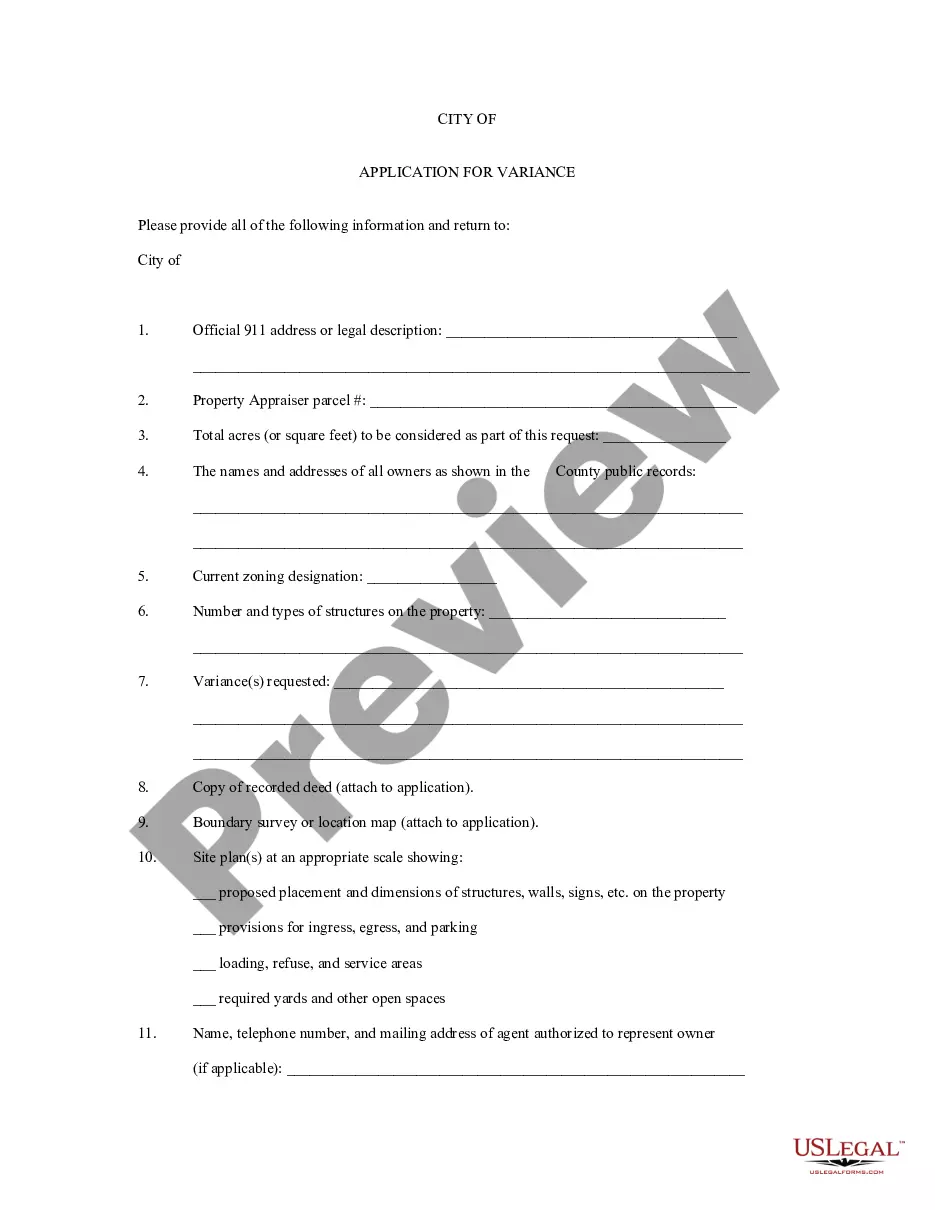
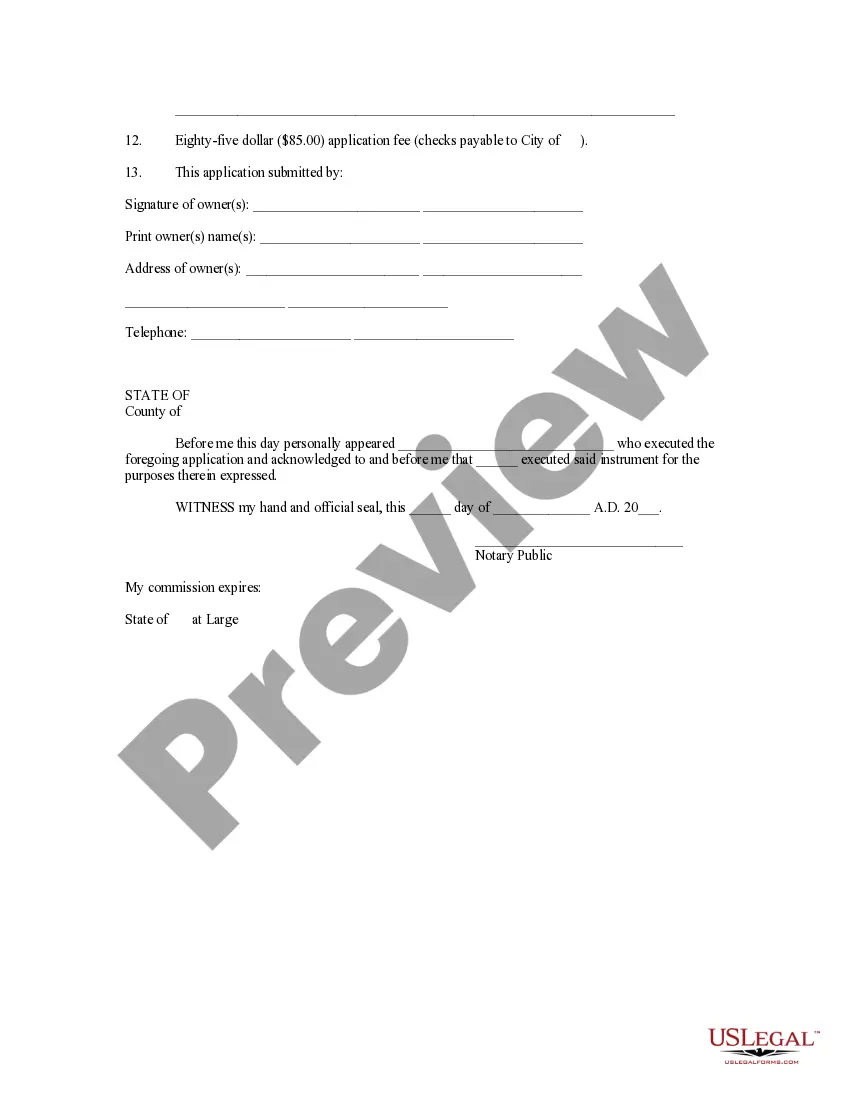
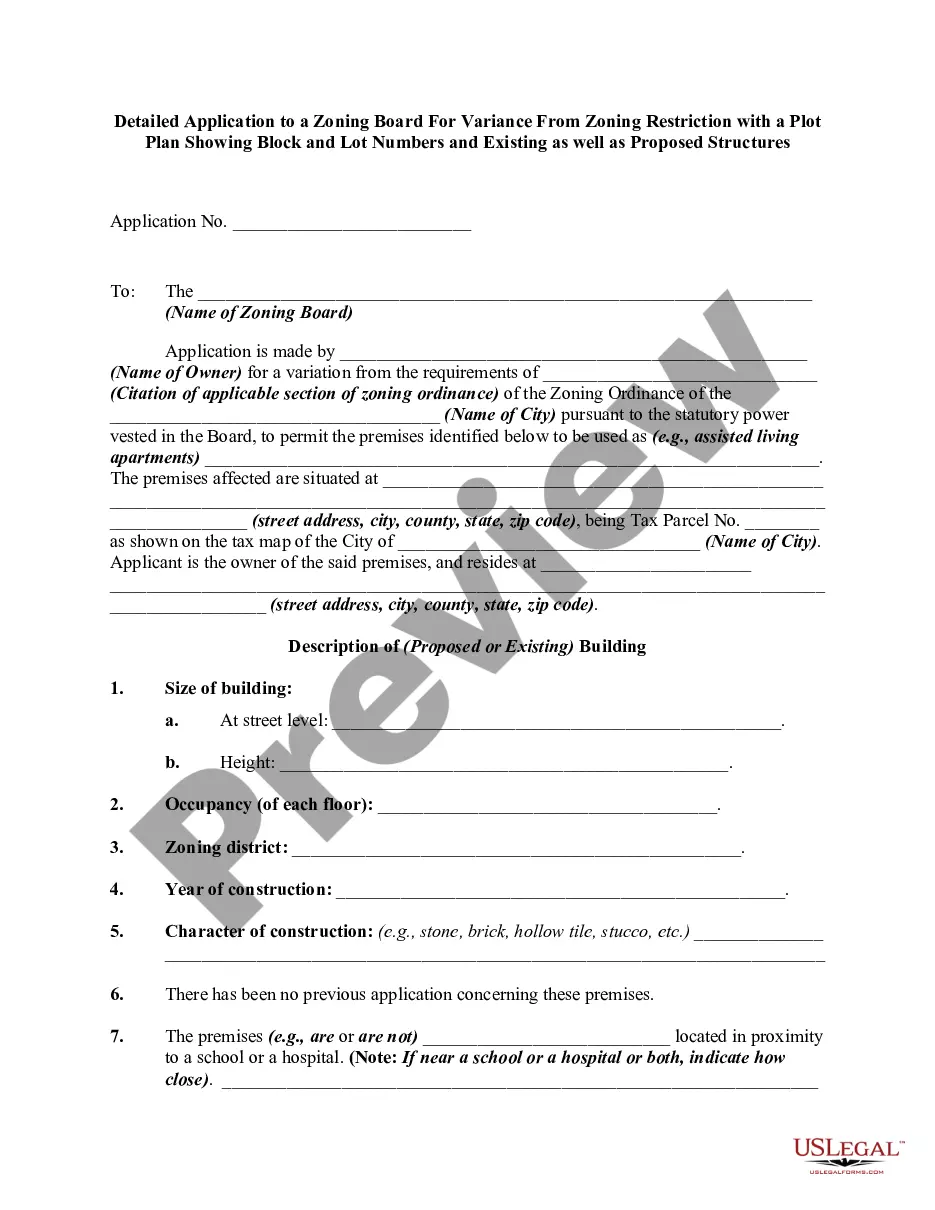
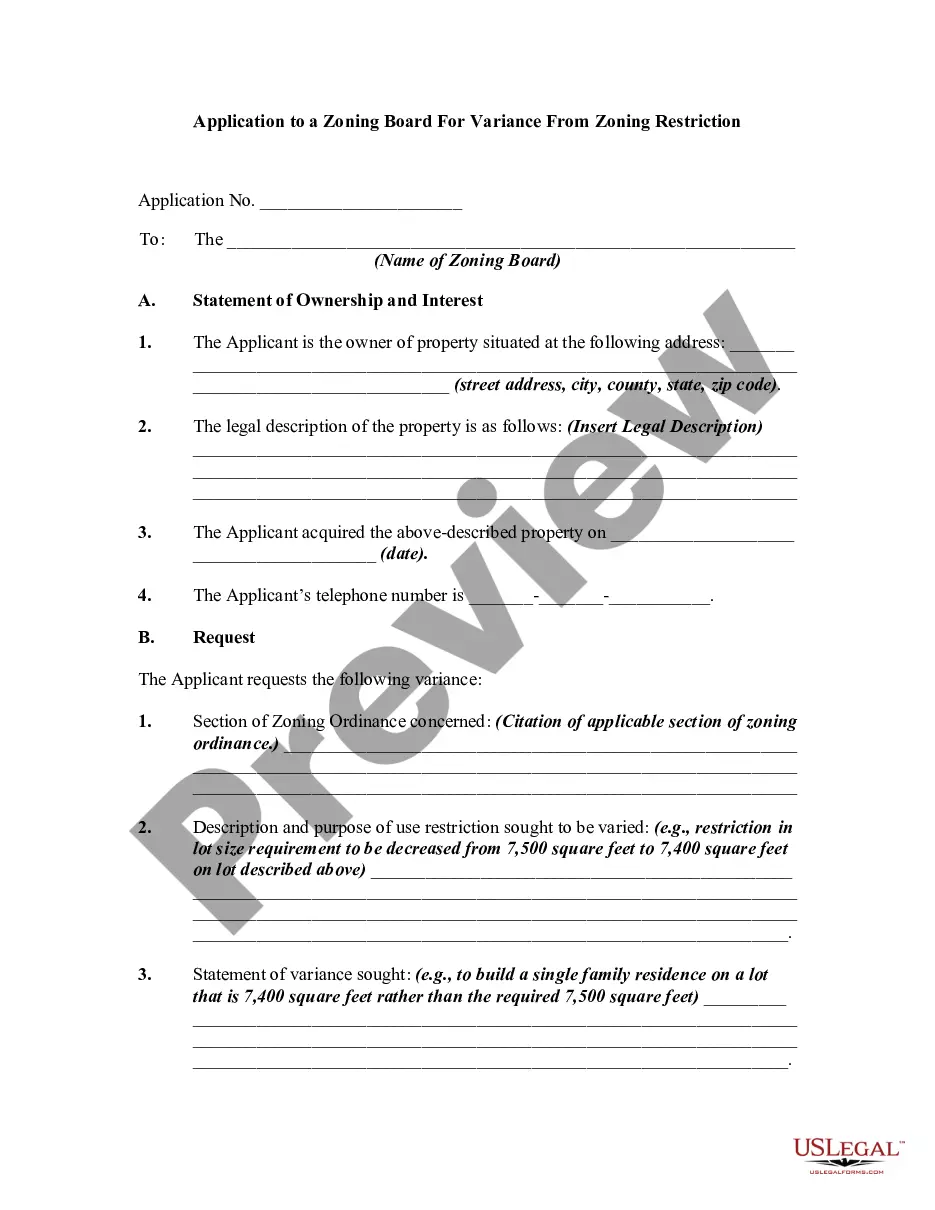
A variance form is a legal document that individuals or businesses use to request an exception to zoning laws or regulations. This form typically requires detailed information about the property, the nature of the requested variance, and justification for the request. Using the correct application variance document format helps ensure you provide all necessary information and streamline the review process. For convenience, consider accessing templates from uslegalforms that simplify the completion of variance forms.
When writing a variance report, begin by summarizing the purpose of the report and the specific variance in question. Include a detailed analysis of the factors that led to the variance request, supported by relevant data and documentation. The application variance document format can guide you in structuring your report clearly and logically, making it easier for reviewers to understand your position. Conclude with a summary of your findings and any recommendations.
Winning a variance hearing involves thorough preparation and a solid presentation of your case. Start by understanding the criteria that the board will use to evaluate your application. Present clear evidence that supports your request and demonstrates how granting the variance will not harm the community. Additionally, consider using the application variance document format provided by uslegalforms to ensure your documents are organized and professional.
To write a variance, start by clearly stating the specific zoning regulation or requirement you wish to change. Next, provide a detailed explanation of why the variance is necessary, including any unique circumstances that apply to your situation. Make sure to include supporting documents, as the application variance document format may require evidence that demonstrates the need for the variance. Finally, submit your application to the appropriate local authority.
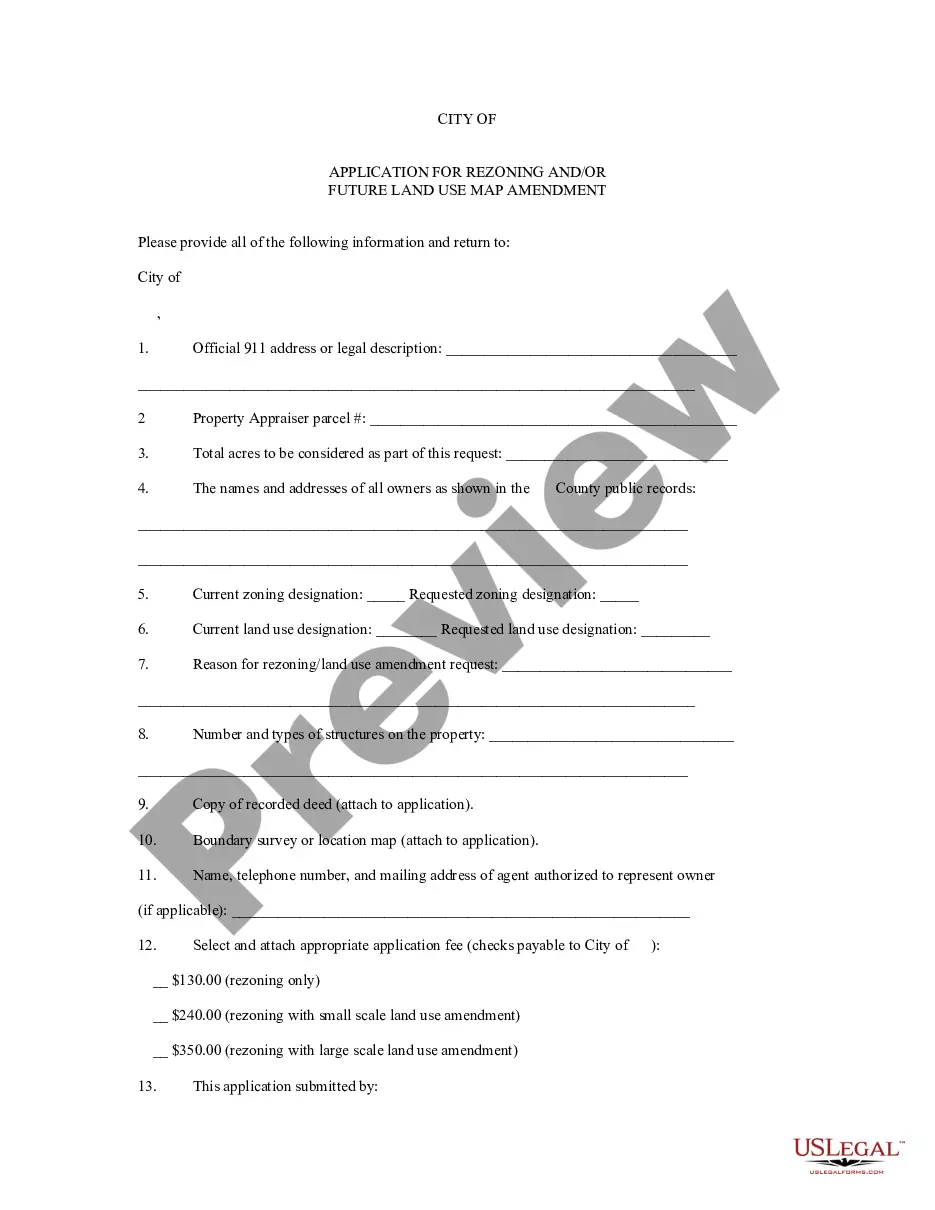
Examples of area variances include: Putting up a new fence where fences aren't usually permitted. Building a structure closer to the roadway or property line than is normally permitted. Building a structure that's larger or higher in square footage than is customarily allowed.
A ?variance? is ?a decision by an agency to grant a modification to all or part of the literal requirements of an agency to a person who is subject to the rule.? A ?waiver? is ?a decision by an agency not to apply all or part of a rule to a person who is subject to the rule.?
Write neatly and legibly/type your application. State specifically why you need the variance, what your hardship is and why the Ordinance, which caused your denial unfairly affects you. Attach all relevant documents to your application. Avoid, if possible, submitting new documentation to the Board during the Hearing.
Essentially, a property owner requests a variance when their planned use of their property deviates from local zoning laws designed to protect property values. If granted, a variance acts as a waiver to some aspect of the zoning law or regulations.