Common Law Marriage For Colorado
Description

Get your form ready online
Our built-in tools help you complete, sign, share, and store your documents in one place.
Make edits, fill in missing information, and update formatting in US Legal Forms—just like you would in MS Word.
Download a copy, print it, send it by email, or mail it via USPS—whatever works best for your next step.
Sign and collect signatures with our SignNow integration. Send to multiple recipients, set reminders, and more. Go Premium to unlock E-Sign.
If this form requires notarization, complete it online through a secure video call—no need to meet a notary in person or wait for an appointment.
We protect your documents and personal data by following strict security and privacy standards.

Make edits, fill in missing information, and update formatting in US Legal Forms—just like you would in MS Word.

Download a copy, print it, send it by email, or mail it via USPS—whatever works best for your next step.

Sign and collect signatures with our SignNow integration. Send to multiple recipients, set reminders, and more. Go Premium to unlock E-Sign.

If this form requires notarization, complete it online through a secure video call—no need to meet a notary in person or wait for an appointment.

We protect your documents and personal data by following strict security and privacy standards.
Looking for another form?

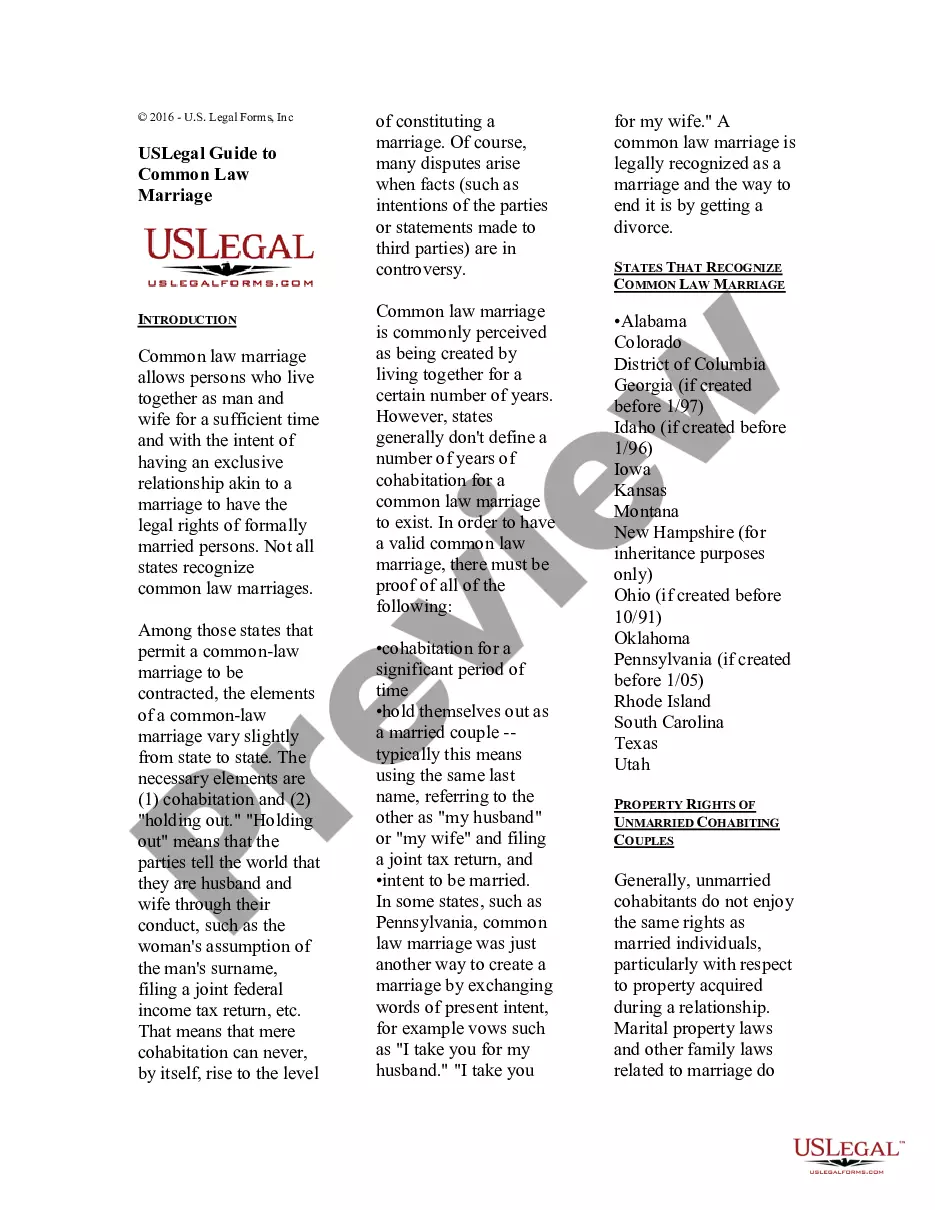
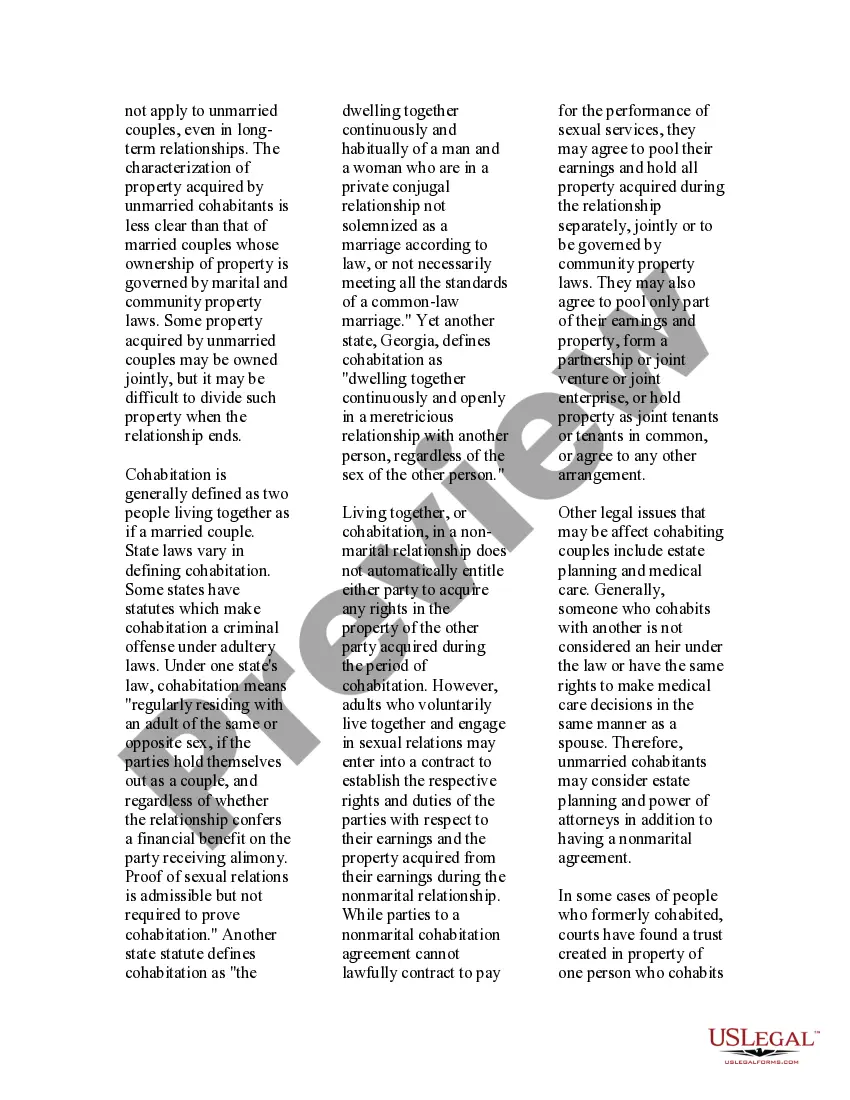
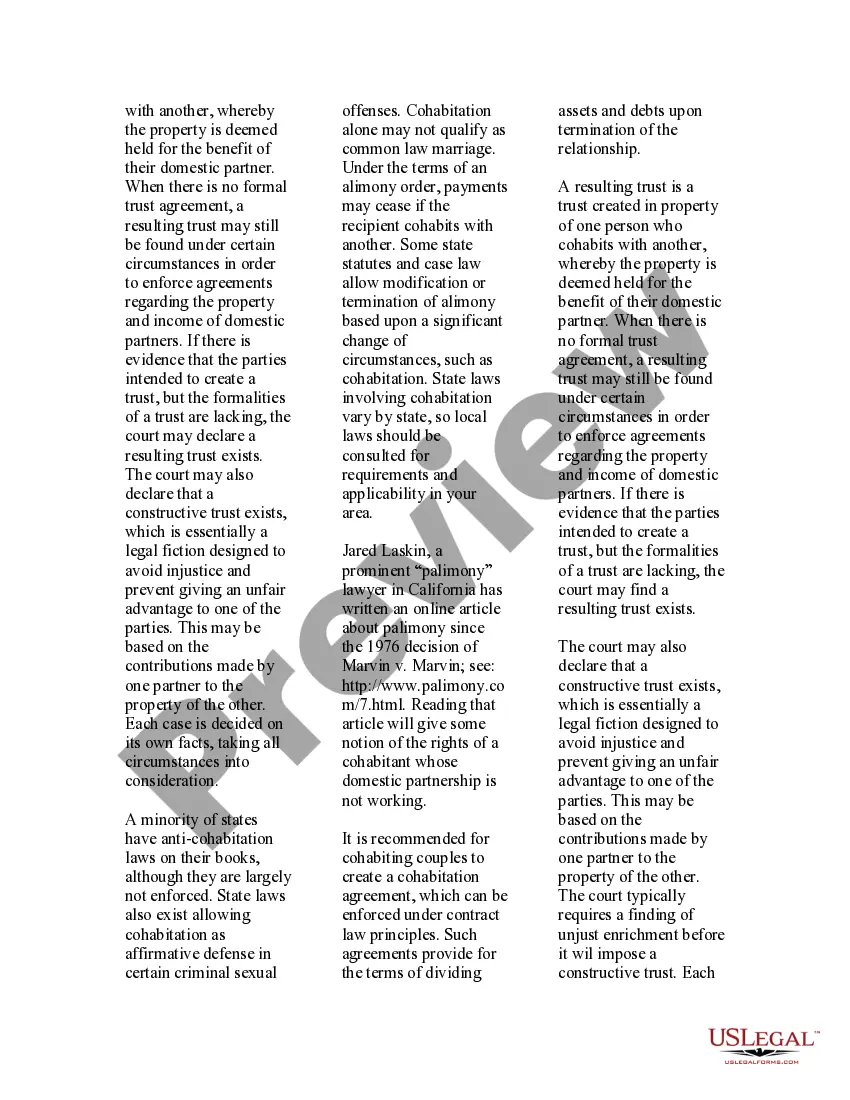
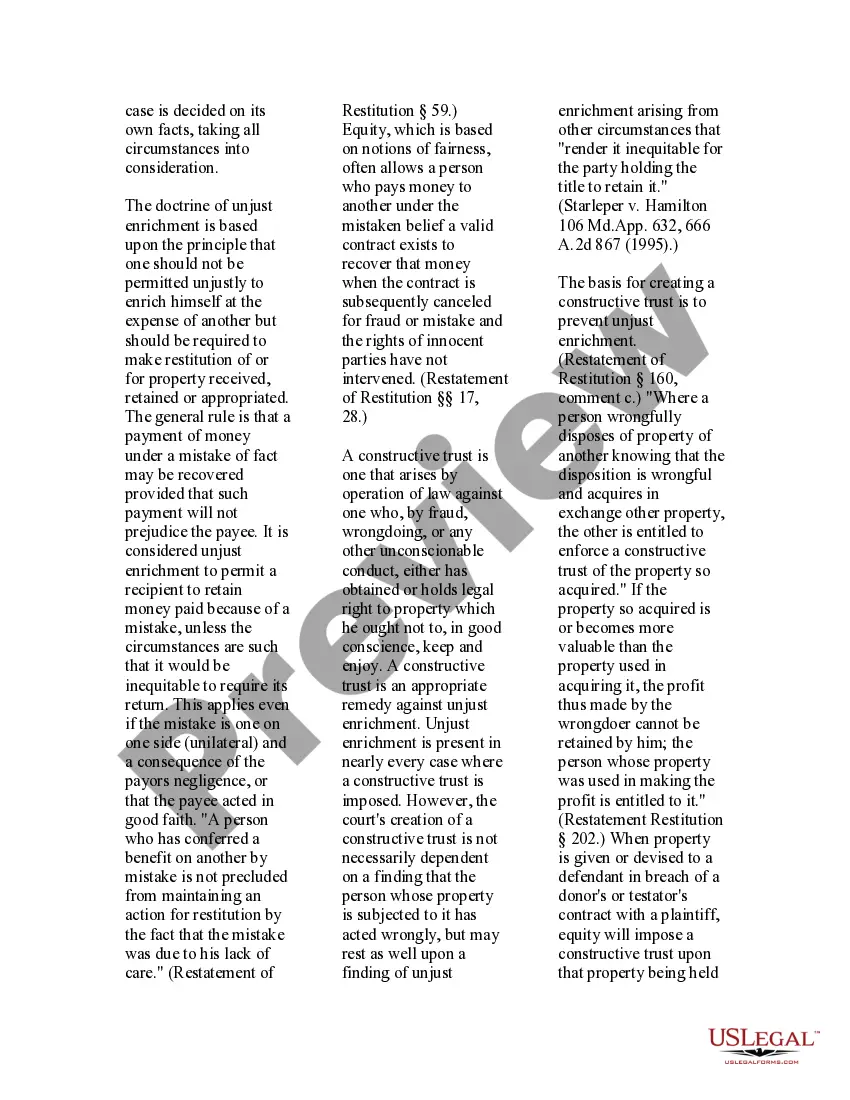
How to fill out USLegal Guide To Common Law Marriage?
It’s clear that you cannot transform into a legal scholar instantly, nor can you swiftly master how to draft Common Law Marriage For Colorado without possessing a specialized set of abilities.
Formulating legal documents is a lengthy endeavor that demands specific education and expertise. Therefore, why not entrust the development of the Common Law Marriage For Colorado to the professionals.
With US Legal Forms, one of the most extensive libraries of legal documents, you can obtain anything from court filings to templates for intra-office communication. We recognize the importance of conformity and compliance with federal and state regulations. That’s why, on our site, all forms are region-specific and current.
You can regain access to your documents from the My documents section at any time. If you are an existing user, you can simply Log In and find and download the template from the same section.
Regardless of the intent behind your documents—be it financial, legal, or personal—our platform is here to assist you. Explore US Legal Forms today!
- Begin by locating the document you require using the search bar at the top of the page.
- View it (if this option is available) and examine the accompanying description to determine if Common Law Marriage For Colorado is what you need.
- Restart your search if you require a different document.
- Create a complimentary account and select a subscription plan to acquire the template.
- Select Buy now. Once the payment is processed, you can obtain the Common Law Marriage For Colorado, complete it, print it, and deliver or send it by mail to the designated recipients or organizations.
Form popularity
FAQ
To prove common law marriage in Colorado, a couple must demonstrate that they have lived together, intend to be married, and hold themselves out to others as a married couple. This includes sharing expenses, having joint accounts, and using the same last name. Additionally, having witnesses who can confirm your relationship can strengthen your case. Navigating the complexities of common law marriage for Colorado can be simplified using resources like USLegalForms, which offers guidance tailored to your needs.
Yes, you can file as married under common law if your union meets the criteria established by Colorado law. This could provide you with several advantages, including potential tax benefits and legal protections. Ensure that you can demonstrate the existence of your common law marriage through cohabitation, shared financial responsibilities, and a mutual intent to be married. For assistance with understanding your rights and obligations, US Legal Forms offers valuable resources to support you.
Yes, the IRS recognizes common law marriage for Colorado if the couple meets the state's requirements. This means if you and your partner are deemed legally married under Colorado’s common law marriage provisions, you can file your taxes as married. This recognition helps ensure that you receive the appropriate tax benefits available to married couples. It's wise to document your relationship thoroughly if you plan to file taxes under common law marriage.
To claim common law marriage in Colorado, you need to establish that you and your partner have lived together for a significant time and have intended to be married. You should also present evidence of your relationship, such as shared bank accounts, joint property, or family acknowledgment. It's important to note that while a formal marriage license is not required, the legal recognition of your common law marriage can be crucial for various legal purposes. For comprehensive guidance, consider using US Legal Forms to prepare your documents.
To prove a common law marriage, you need to present evidence of cohabitation and shared intent to be married. Documentation such as joint bills, co-signed loans, or shared insurance policies can strengthen your case. If you find it challenging to navigate this process, consider consulting uslegalforms for guidance on establishing your common law marriage in Colorado.
Proof of a common law marriage in Colorado can include documents that demonstrate shared financial accounts, joint leases, or evidence of shared responsibilities. Affidavits from friends or family members who can testify to your relationship may also serve as proof. To make this process easier, consider using platforms like uslegalforms, which provide resources for establishing and documenting common law marriages.
In Colorado, property division in marriage, including common law marriage, operates on the principle of equitable distribution. This means that, in general, you could claim half of the couple's marital property, regardless of the length of time married. Thus, understanding how common law marriage for Colorado affects property rights can be beneficial if you seek to protect your interests.
In Colorado, there is no specific time period required to establish a common law marriage. However, couples generally should cohabit for a substantial time and demonstrate an intent to be married. Engaging with the right resources can help clarify your status regarding common law marriage in Colorado.
The concept of common law marriage varies significantly from state to state. In some states, such as Colorado, a couple may be recognized as being in a common law marriage after living together for a certain period, typically three years. It's important to understand the specific requirements for common law marriage for Colorado or other states, as the duration may differ.
To qualify for common law marriage in Colorado, couples must live together and intend to be married. Both partners must demonstrate mutual consent and take steps to present themselves as a married couple. This legal recognition is vital, and ensuring that you meet the criteria can streamline any legal processes that arise later.