Uslegal Adults Order With Disabilities
Description
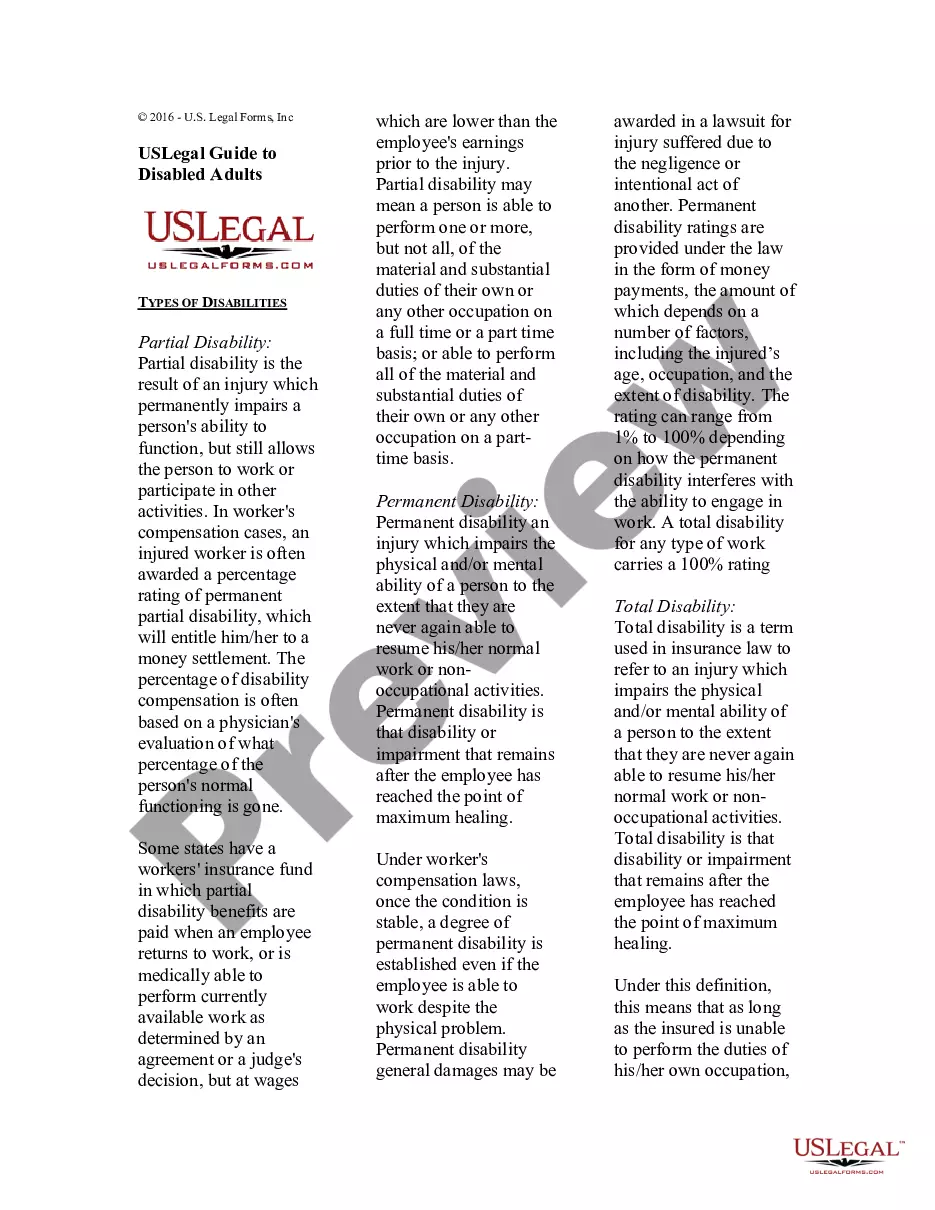
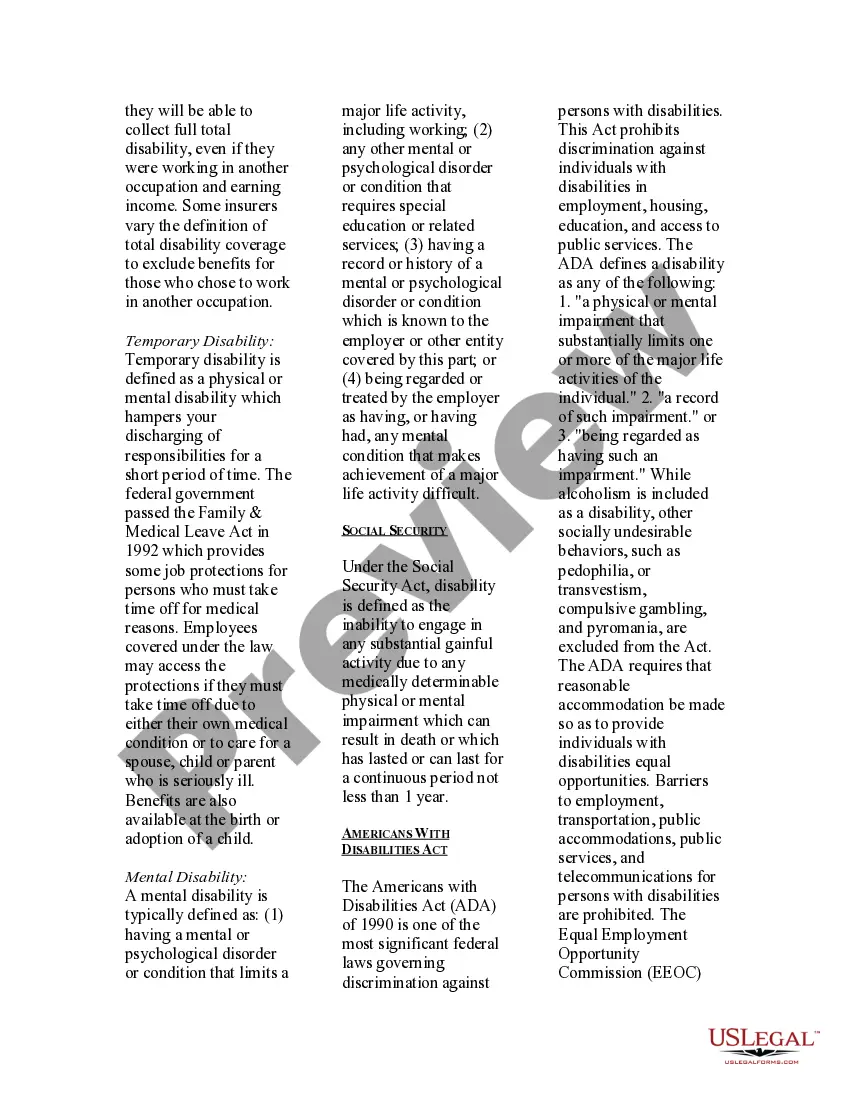
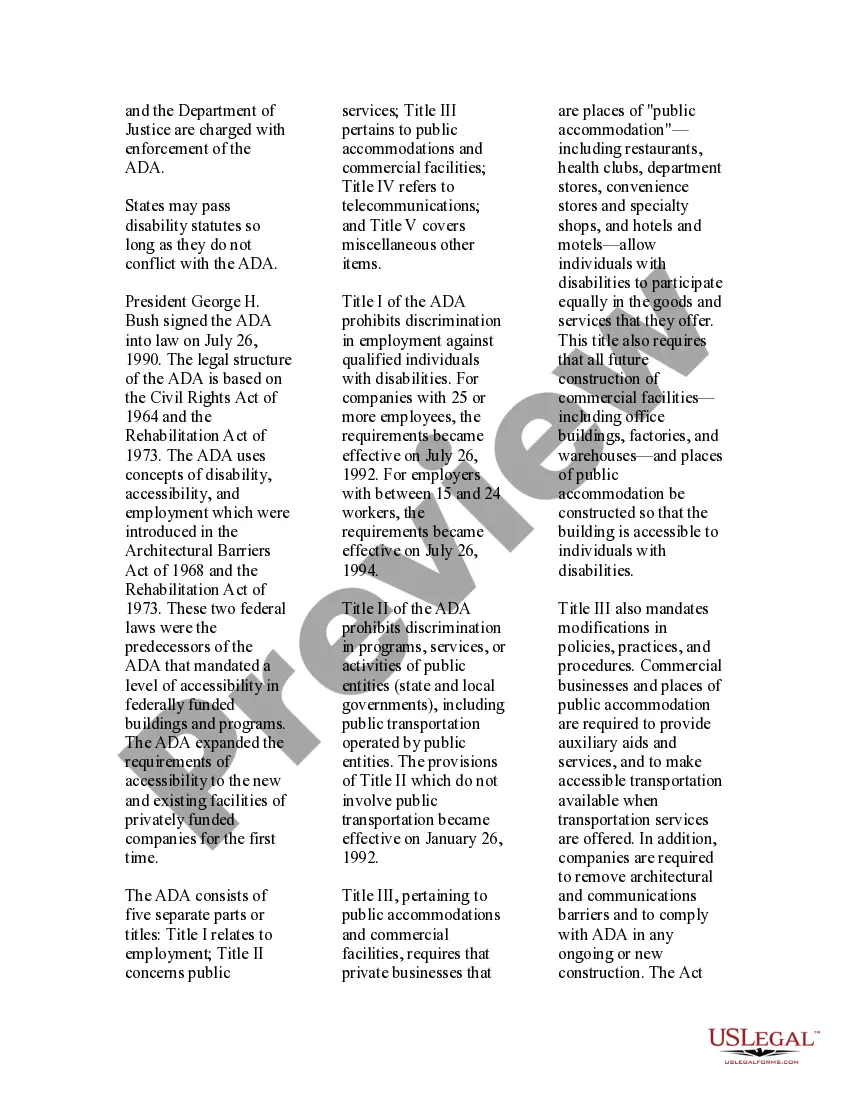
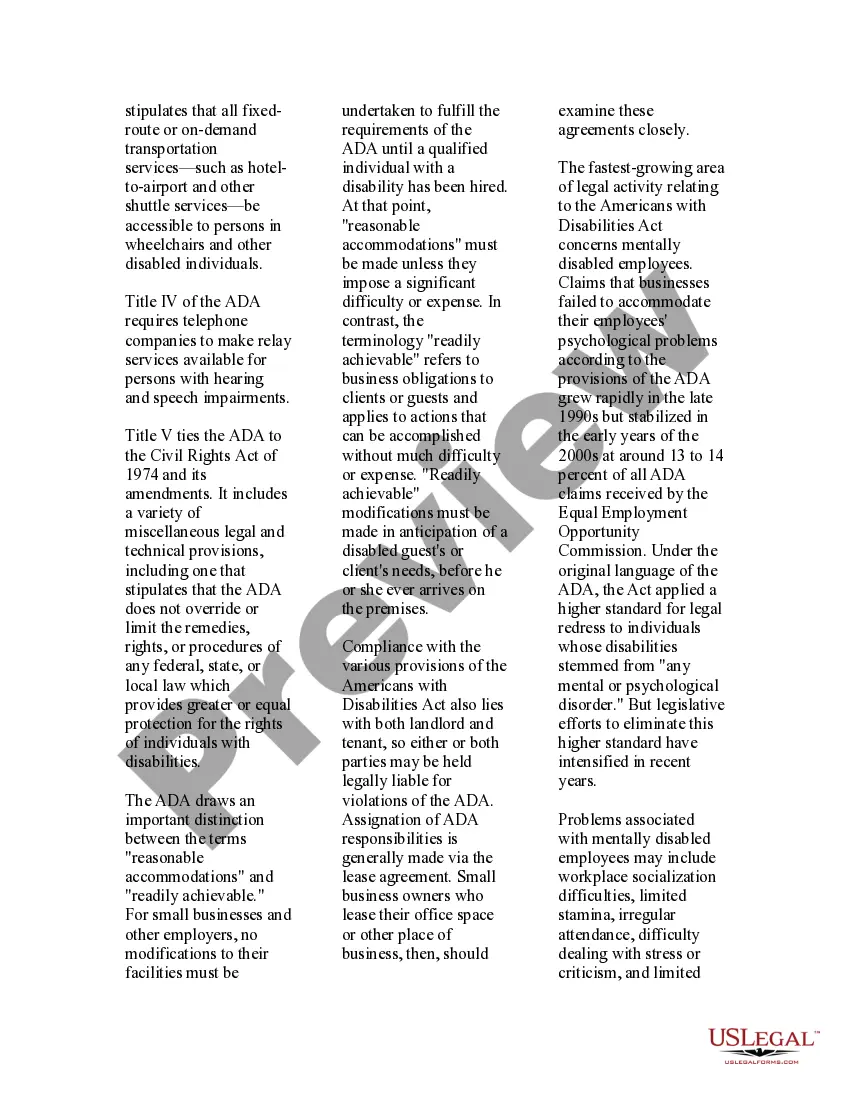


Get your form ready online
Our built-in tools help you complete, sign, share, and store your documents in one place.
Make edits, fill in missing information, and update formatting in US Legal Forms—just like you would in MS Word.
Download a copy, print it, send it by email, or mail it via USPS—whatever works best for your next step.
Sign and collect signatures with our SignNow integration. Send to multiple recipients, set reminders, and more. Go Premium to unlock E-Sign.
If this form requires notarization, complete it online through a secure video call—no need to meet a notary in person or wait for an appointment.
We protect your documents and personal data by following strict security and privacy standards.

Make edits, fill in missing information, and update formatting in US Legal Forms—just like you would in MS Word.

Download a copy, print it, send it by email, or mail it via USPS—whatever works best for your next step.

Sign and collect signatures with our SignNow integration. Send to multiple recipients, set reminders, and more. Go Premium to unlock E-Sign.

If this form requires notarization, complete it online through a secure video call—no need to meet a notary in person or wait for an appointment.

We protect your documents and personal data by following strict security and privacy standards.
Looking for another form?


How to fill out USLegal Guide To Disabled Adults?
- Verify your subscription status. If you're a returning user, log in to your account to access the needed forms.
- Explore the form library. Use the Preview feature to ensure the document meets your specific requirements and complies with local jurisdiction laws.
- Search for alternatives if necessary. If you don't find what you need, utilize the search bar to find the right form.
- Select and purchase the desired document. Click the 'Buy Now' button and choose your preferred subscription plan, ensuring you register for full access.
- Complete the payment process. Enter your credit card details or opt for PayPal to finalize your subscription.
- Download and save your form. Access your purchased template in the 'My Forms' section of your account whenever required.
With US Legal Forms, you not only gain access to over 85,000 fillable legal forms but also benefit from expert assistance to ensure your documents are accurate and legally viable.
Start simplifying your legal tasks today! Visit US Legal Forms and find the support you need.
Form popularity
FAQ
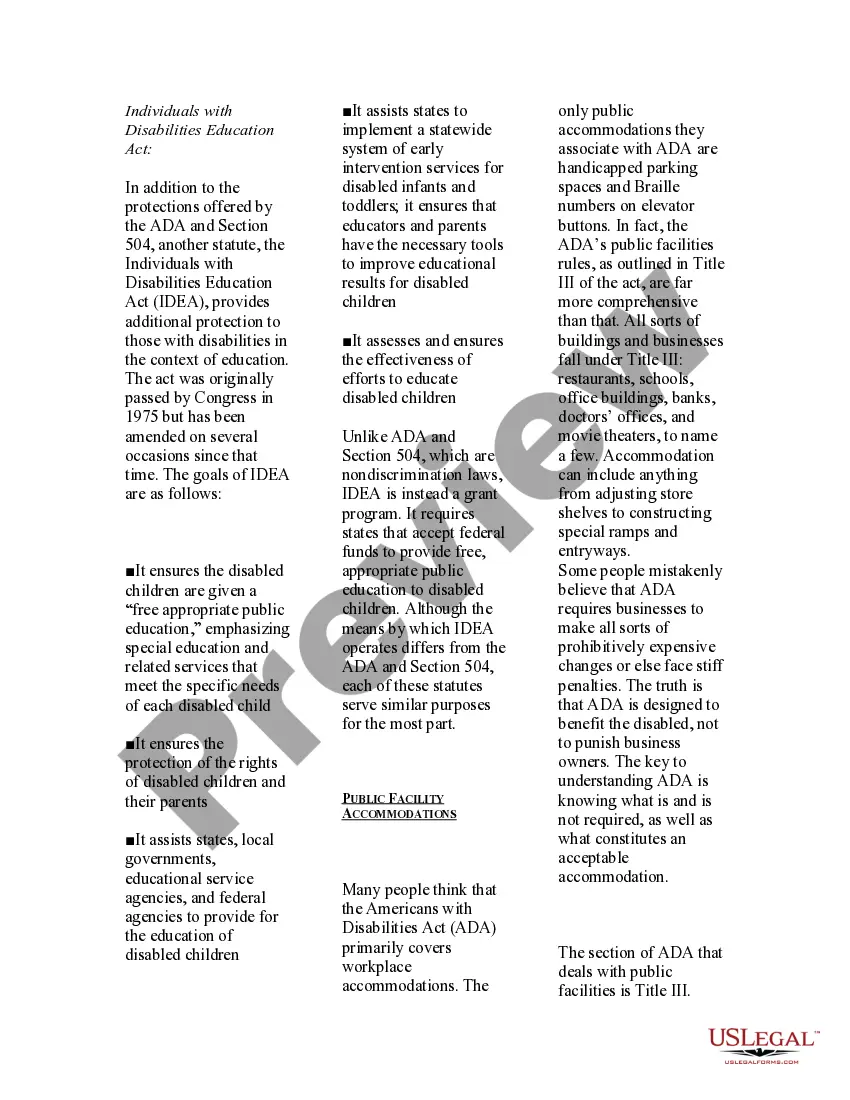
The ADA recognizes twelve categories of conditions that are considered disabilities, including physical impairments, mental illnesses, and other significant health issues. Each category plays a critical role in determining eligibility for protections under the law. Utilizing platforms like Uslegal adults order with disabilities can help individuals understand their rights and benefits under these categories.
Diagnoses that qualify for ADA must involve conditions that impair major life activities. This can include a variety of physical and psychological disorders. When navigating these issues, the Uslegal adults order with disabilities can provide vital support and assistance in ensuring compliance and understanding rights.
An ADA disability list includes a diverse range of conditions recognized as disabilities by the law. This could encompass mobility impairments, sensory disabilities, and chronic health disorders. By accessing resources such as Uslegal adults order with disabilities, individuals can clarify their status and access necessary support.
The ADA outlines various conditions that qualify as disabilities, including mental illnesses and physical impairments that limit daily activities. Specific examples include bipolar disorder, multiple sclerosis, and severe arthritis. For individuals looking to understand their rights, the Uslegal adults order with disabilities can offer the necessary legal framework.
Under the ADA, certain conditions are not classified as disabilities. For instance, temporary impairments or conditions that do not substantially limit major life activities may not meet the criteria. Understanding these distinctions is crucial for navigating the Uslegal adults order with disabilities and ensuring compliance with legal requirements.
Coping strategies for adults with disabilities often include developing routines that enhance daily living. Engaging in physical activities, using assistive technologies, and seeking support from family or peers can significantly improve quality of life. Additionally, resources like Uslegal adults order with disabilities provide essential guidance to help individuals navigate their challenges effectively.
Individuals with disabilities have the right to be treated with dignity and respect, to access public spaces, and to receive reasonable accommodations in workplaces. They are entitled to participate fully in society, accessing education, healthcare, and employment opportunities without discrimination. Recognizing these rights is essential for understanding how uslegal adults order with disabilities can navigate various systems and attain equitable treatment.
To sue under the Americans with Disabilities Act, you must first file a complaint with the Equal Employment Opportunity Commission (EEOC) or your local agency. After a thorough investigation, and if your case is substantial, you may receive a 'right to sue' letter. This letter allows you to file a lawsuit in federal or state court. Understanding the legal process is crucial when navigating issues related to uslegal adults order with disabilities.
The four fundamental rights for people with disabilities include the right to equality, the right to accessibility, the right to live independently, and the right to participate in cultural life. These rights support the full participation of individuals with disabilities in society, ensuring that they have equal opportunities. Knowledge of these rights can empower you in discussions and actions regarding uslegal adults order with disabilities.
The four general principles of the convention on the rights of persons with disabilities are respect for inherent dignity, individual autonomy, non-discrimination, and full participation in society. These principles aim to ensure that individuals with disabilities enjoy the same rights as everyone else, promoting inclusivity and respect. Familiarizing yourself with these principles can enhance your understanding of uslegal adults order with disabilities and their rights.