Dna Testing Form For Employees
Description
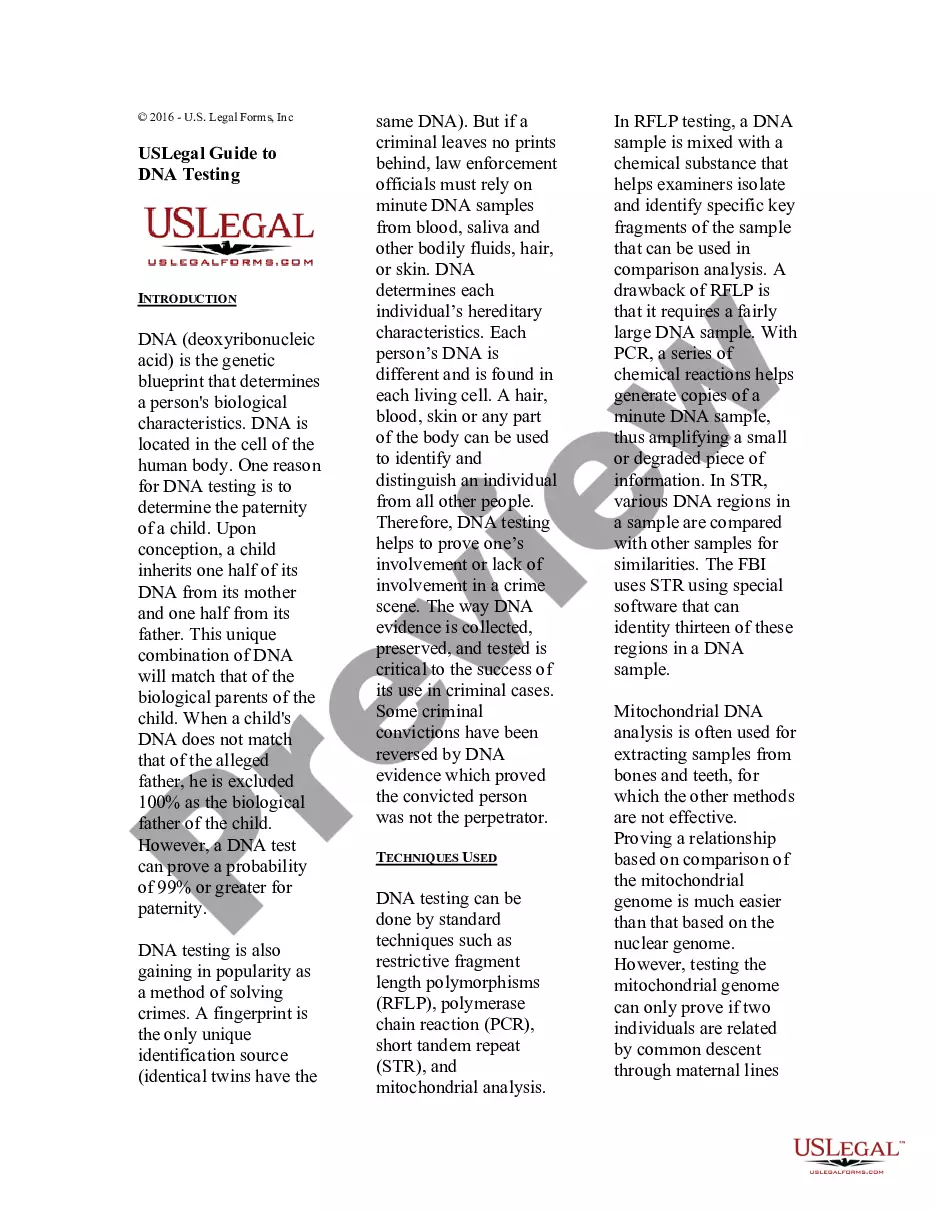
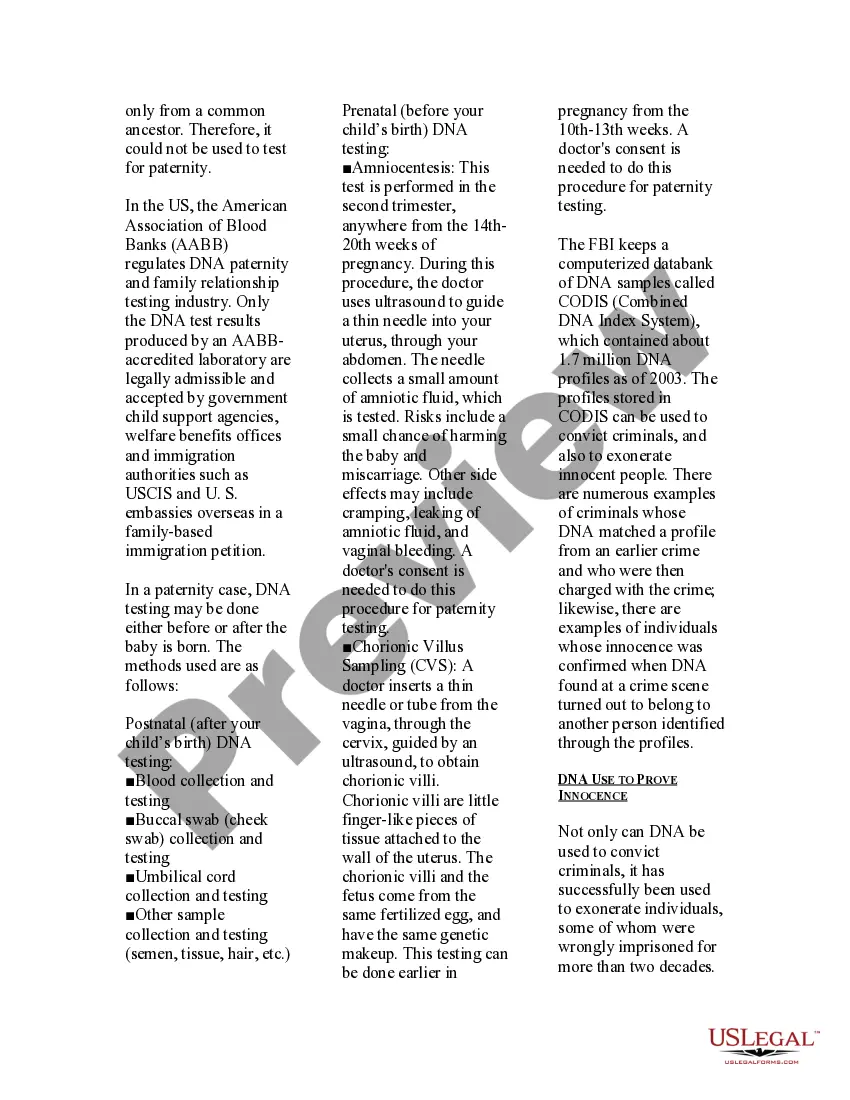
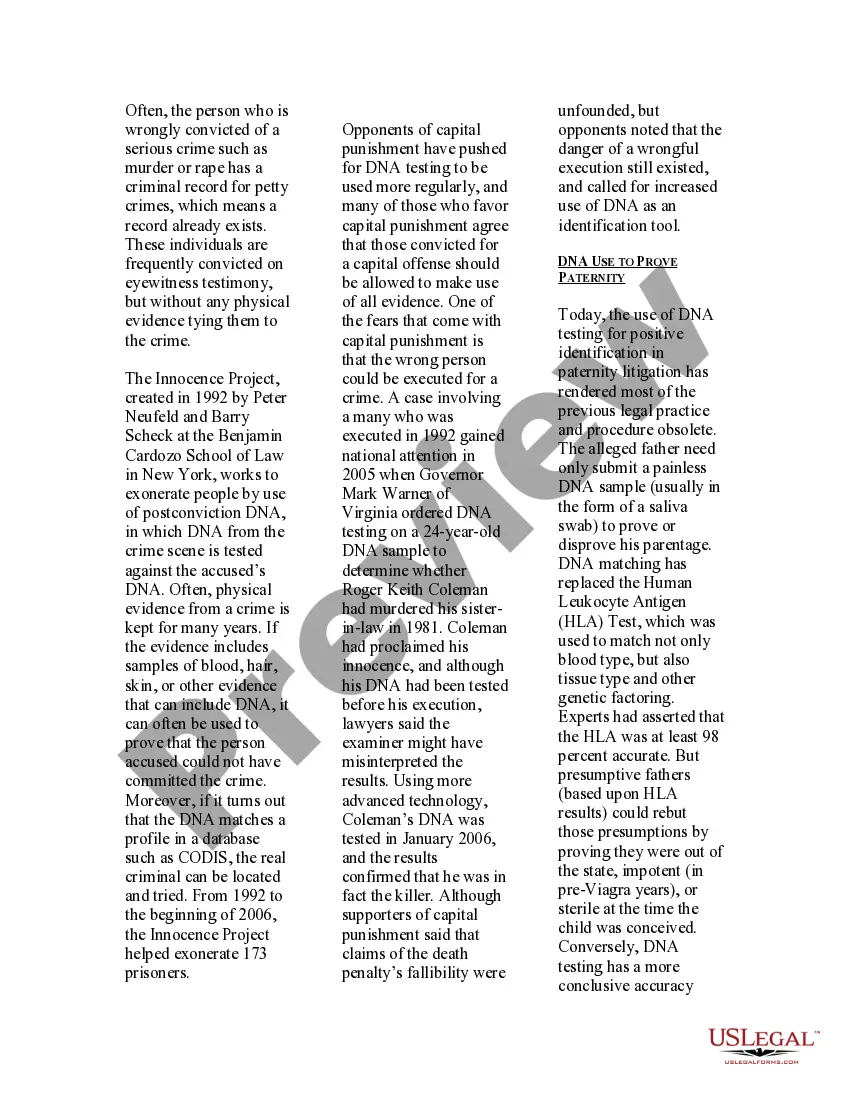
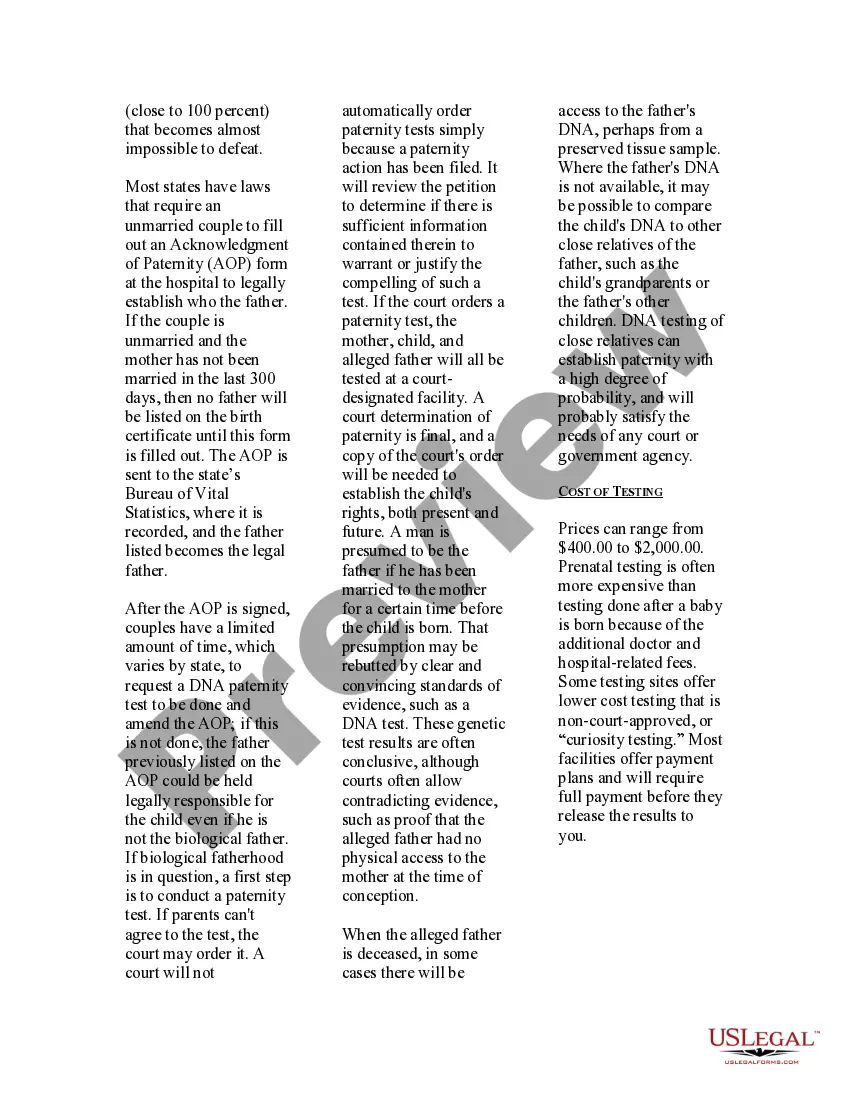

Get your form ready online
Our built-in tools help you complete, sign, share, and store your documents in one place.
Make edits, fill in missing information, and update formatting in US Legal Forms—just like you would in MS Word.
Download a copy, print it, send it by email, or mail it via USPS—whatever works best for your next step.
Sign and collect signatures with our SignNow integration. Send to multiple recipients, set reminders, and more. Go Premium to unlock E-Sign.
If this form requires notarization, complete it online through a secure video call—no need to meet a notary in person or wait for an appointment.
We protect your documents and personal data by following strict security and privacy standards.

Make edits, fill in missing information, and update formatting in US Legal Forms—just like you would in MS Word.

Download a copy, print it, send it by email, or mail it via USPS—whatever works best for your next step.

Sign and collect signatures with our SignNow integration. Send to multiple recipients, set reminders, and more. Go Premium to unlock E-Sign.

If this form requires notarization, complete it online through a secure video call—no need to meet a notary in person or wait for an appointment.

We protect your documents and personal data by following strict security and privacy standards.
Looking for another form?




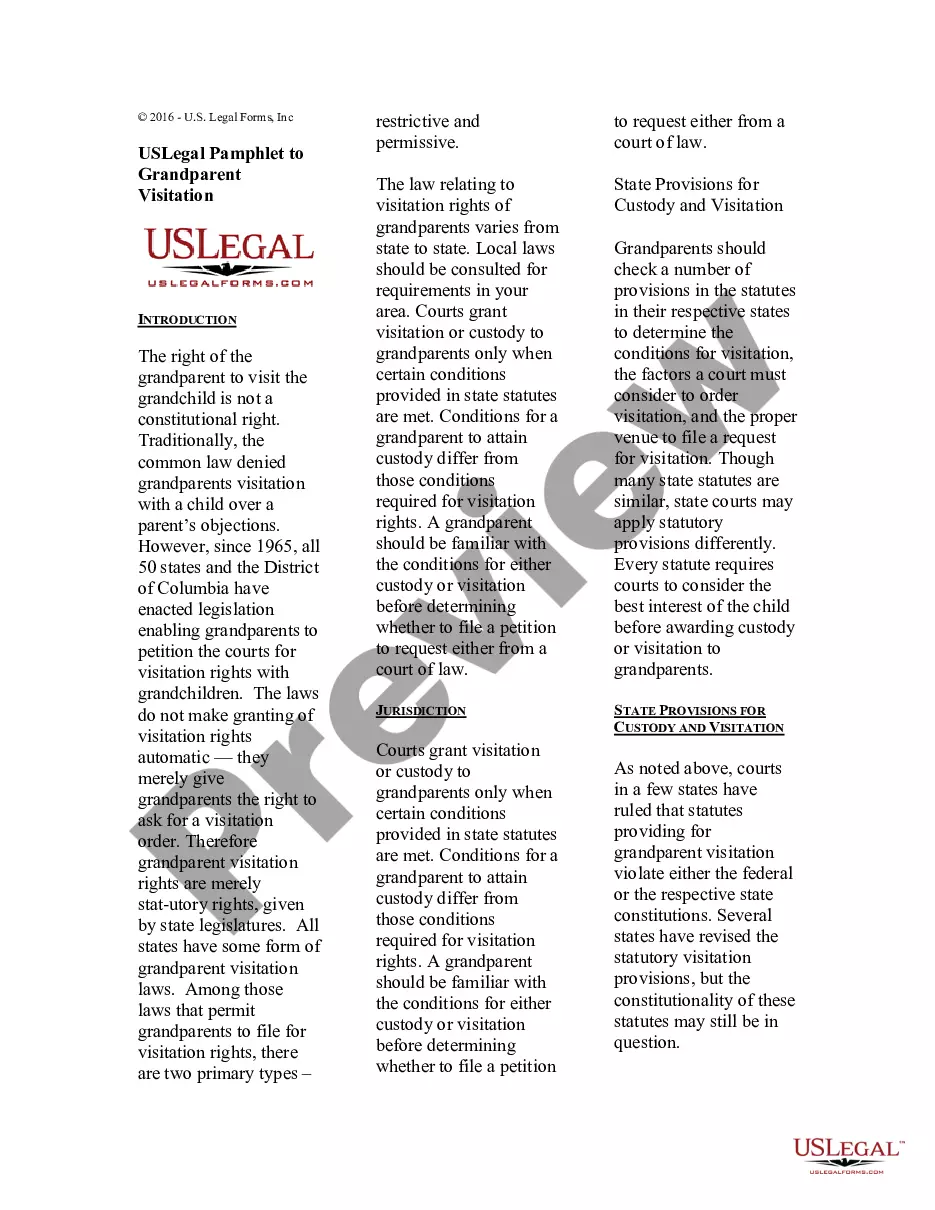
How to fill out USLegal Guide To DNA Testing?
It's widely recognized that one cannot instantly transition into a legal professional, nor can one swiftly learn how to effectively prepare the Dna Testing Form For Employees without possessing a dedicated skill set.
Drafting legal documents is an extensive process that necessitates specialized training and expertise. Therefore, why not delegate the task of preparing the Dna Testing Form For Employees to the experts.
With US Legal Forms, a comprehensive legal document resource, you can find everything from court documents to templates geared toward internal business communication.
You can revisit your documents via the My documents section at any time. If you are an existing user, you can simply Log In, and locate and download the template from the same section.
No matter the intent of your forms—be it financial, legal, or personal—our website has you covered. Experience US Legal Forms today!
- Identify the form you require by utilizing the search feature located at the top of the page.
- Review it (if this option is available) and examine the accompanying description to determine if the Dna Testing Form For Employees meets your needs.
- If you require a different template, restart your search.
- Create a free account and select a subscription option to acquire the template.
- Click Buy now. After your payment is processed, you can download the Dna Testing Form For Employees, complete it, print it out, and send or deliver it to the appropriate individuals or organizations.
Form popularity
FAQ
Essential information for a DNA test includes personal identification, the purpose of testing, and a completed DNA testing form for employees. It's important to provide accurate and complete information to facilitate a smooth testing process. This will help ensure timely and reliable results, which can aid in decision-making within your organization.
When you need to request a DNA test from an employee, approach the conversation with respect and clarity. Start by explaining the reasons behind the request and how a DNA testing form for employees can benefit the organization. Make sure to emphasize that participation is voluntary and reassure them of confidentiality in the process.
To conduct a DNA test, you should gather specific documents, including a DNA testing form for employees, consent forms, and any relevant identification. These documents help streamline the process and ensure that all parties understand their rights and responsibilities. Always make sure the forms are completed accurately to avoid delays in testing results.
When preparing for a DNA test, the primary requirement is a completed DNA testing form for employees. This form usually includes personal information, consent for testing, and details about the purpose of the DNA analysis. Additionally, you may need identification documents to ensure proper verification and tracking of the samples.
To perform DNA testing as part of your job, you'll first need to familiarize yourself with the process and regulations surrounding DNA testing forms for employees. Typically, this involves receiving proper training and certification in genetic testing procedures. Additionally, you may need to establish a reliable protocol for collecting and analyzing DNA samples in compliance with workplace policies.
Submitting a DNA test typically involves completing a Dna testing form for employees and following the instructions provided by the service. You will usually need to collect a DNA sample, such as saliva or a cheek swab, and send it to the designated laboratory. Make sure to check if there are specific submission guidelines to follow. Platforms like uslegalforms can provide the necessary resources to ensure a smooth submission process.
Employers can request genetic testing, but they must follow specific legal guidelines to ensure employee privacy. The Dna testing form for employees must comply with various federal regulations, including the Genetic Information Nondiscrimination Act (GINA). Employers should ensure that any DNA testing is strictly voluntary and that employees are informed about their rights. It’s essential to use a trusted platform, like uslegalforms, to navigate these regulations correctly.
Qualifications for DNA testing usually include a degree in a relevant scientific discipline, such as molecular biology or forensic science. Many employers also prefer candidates with laboratory certifications or additional training in DNA testing techniques. Using platforms like US Legal Forms, you can easily access a DNA testing form for employees that aligns with your qualifications. This resource can facilitate your understanding and compliance with industry standards, ensuring you are well-prepared for the role.
To become someone who tests DNA, you typically need to pursue a degree in biology, genetics, or a related field. After obtaining your degree, consider gaining relevant laboratory experience through internships or entry-level positions. Utilizing the US Legal Forms platform can also help you find necessary resources, such as a DNA testing form for employees, to streamline your transition into this field. Overall, gaining hands-on experience and specialized training will prepare you for a successful career in DNA testing.
It is not outright illegal for employers to request genetic testing, but there are strict regulations in place. Employers must adhere to relevant laws, such as GINA, which protects employees from genetic discrimination. Using a DNA testing form for employees in compliance with these laws safeguards both the employer's and employee's interests.