Hardship Letter Lender Sample Format
Description
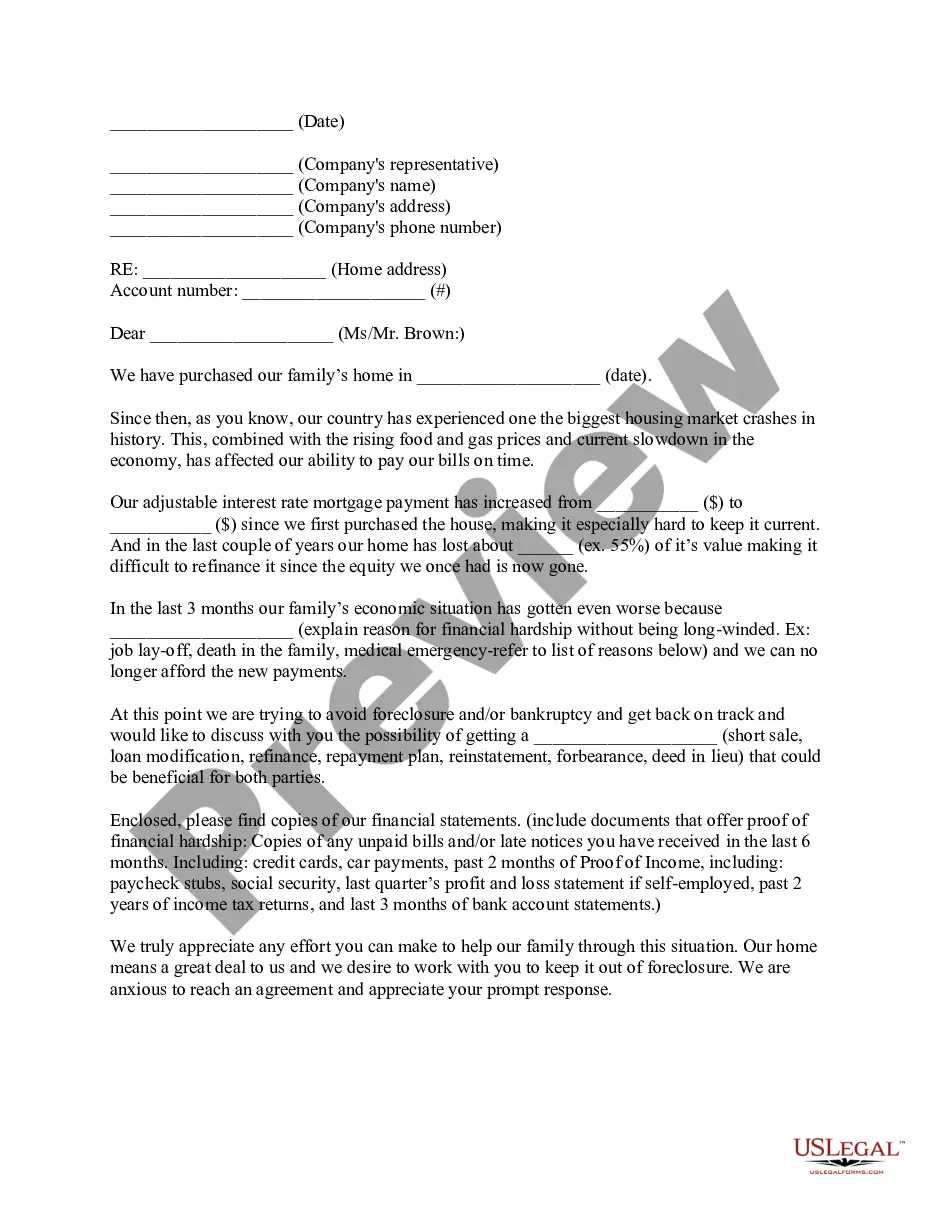
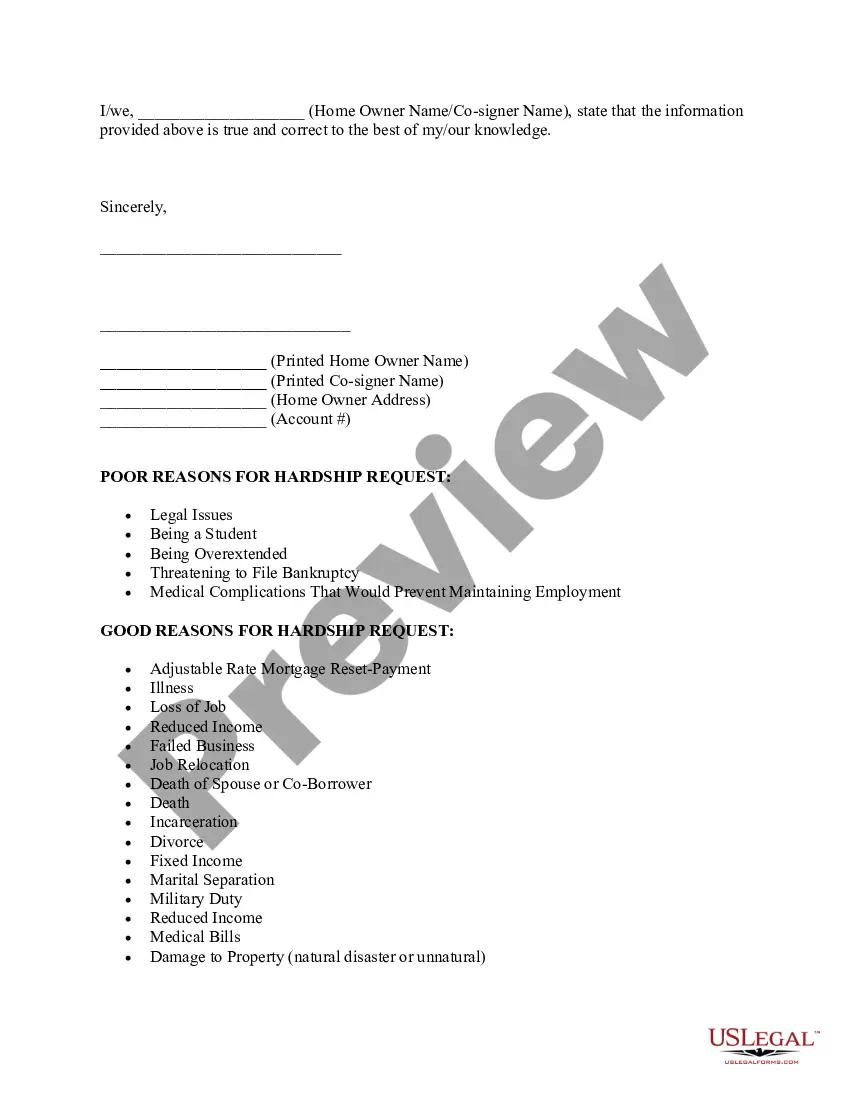
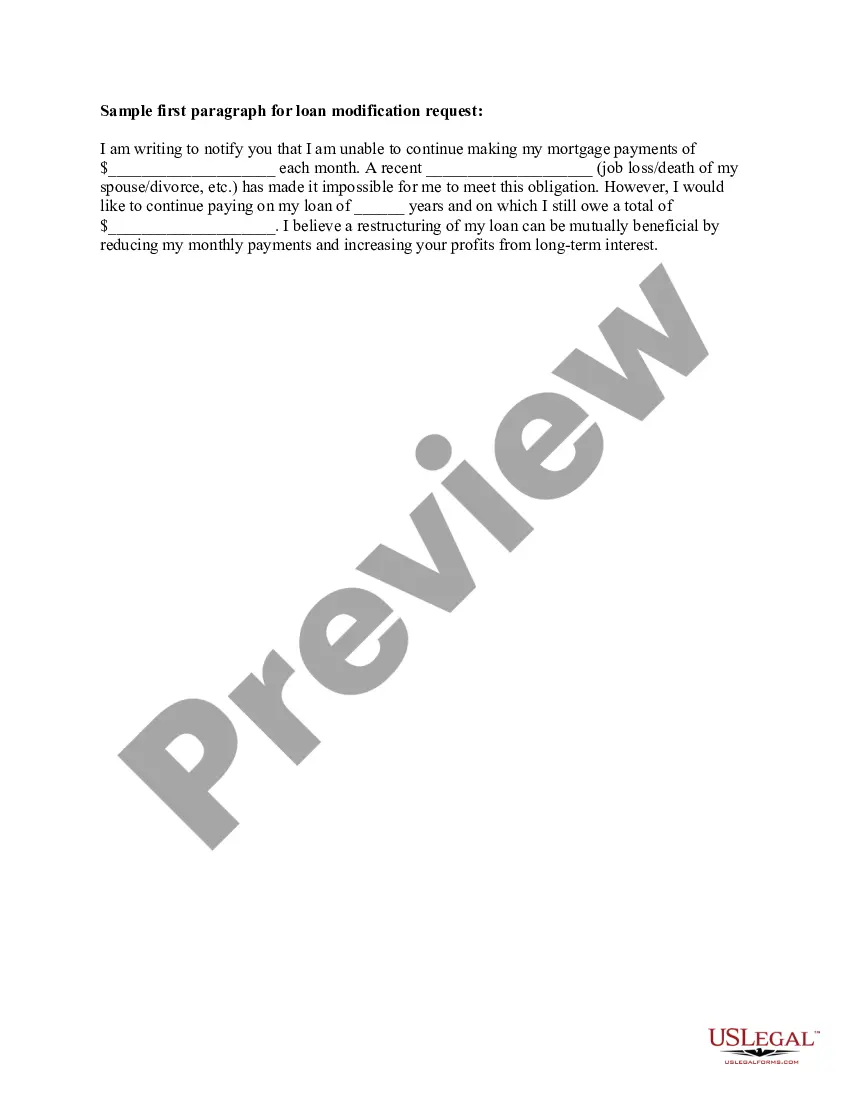
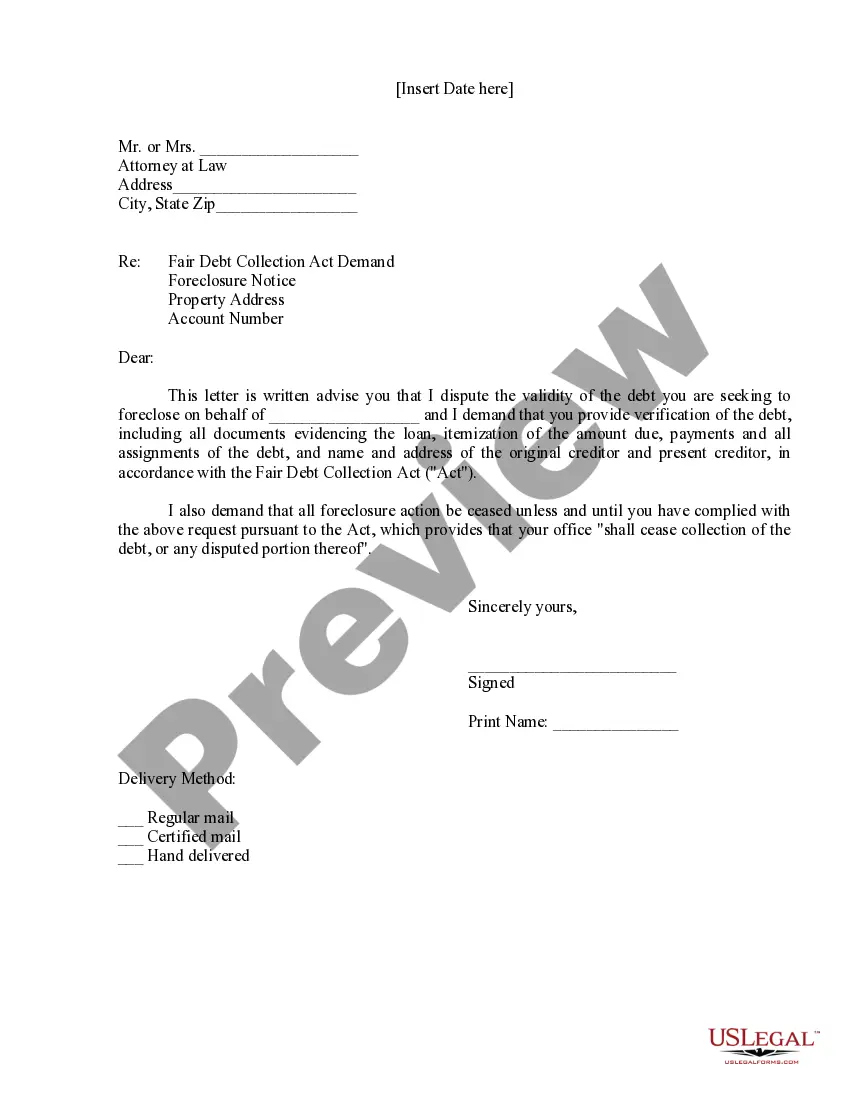
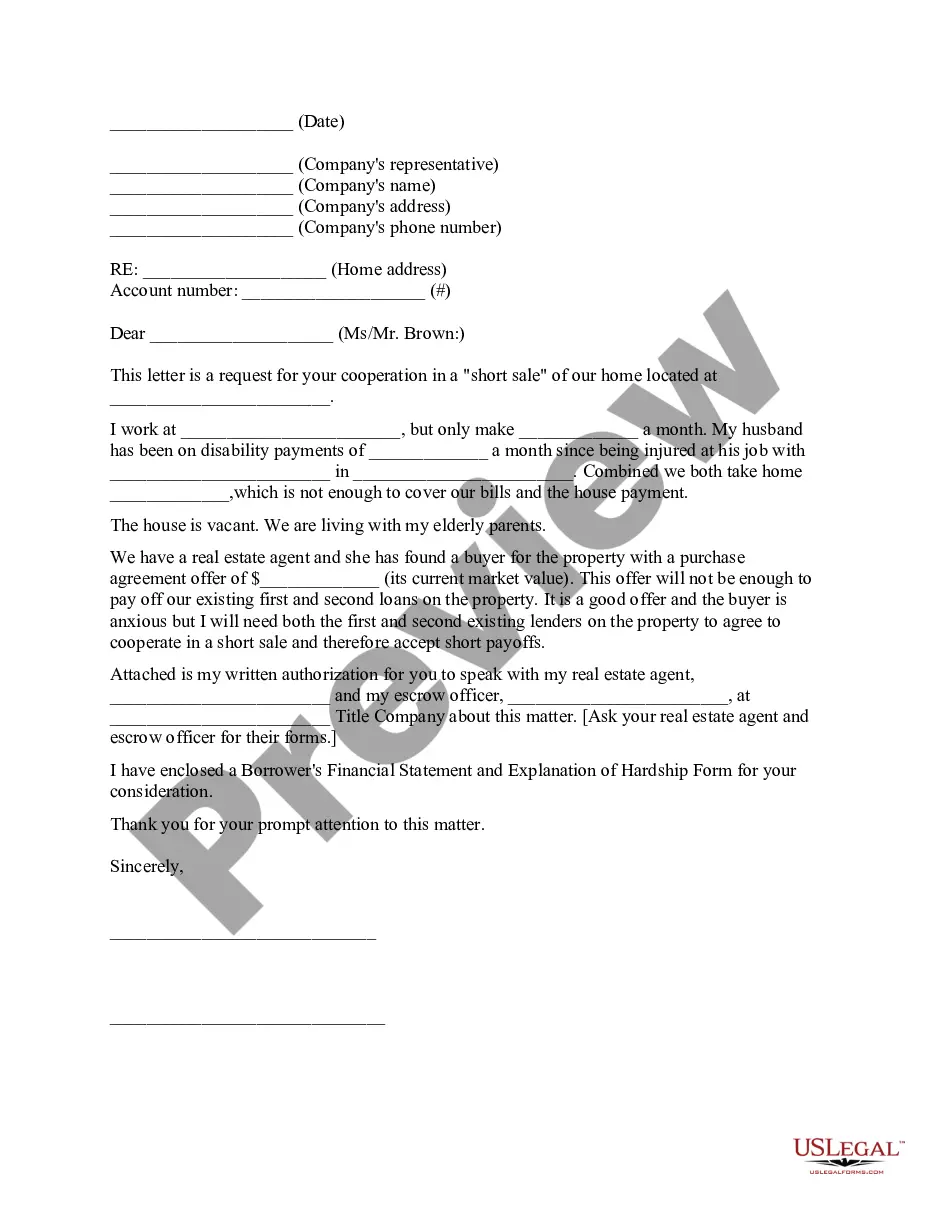

How to fill out Hardship Letter To Mortgagor Or Lender To Prevent Foreclosure?
Dealing with legal documents and tasks can be a lengthy addition to your schedule.
Hardship Letter Lender Sample Format and similar documents generally necessitate that you locate them and figure out how to fill them out accurately.
Therefore, whether you are managing financial, legal, or personal issues, utilizing a comprehensive and useful online directory of forms readily available will be beneficial.
US Legal Forms is the leading online platform for legal templates, featuring over 85,000 state-specific documents and a range of tools that will assist you in completing your paperwork efficiently.
To begin, simply Log In to your account, locate the Hardship Letter Lender Sample Format, and retrieve it instantly from the My documents section. You also have the option to access previously saved documents.
- Browse the selection of relevant documents accessible with a single click.
- US Legal Forms provides state- and county-specific documents available for download anytime.
- Protect your document management processes by leveraging a premium service that lets you create any form within minutes without extra or hidden charges.
Form popularity
FAQ
Register with a licensing agency. If you have written a song (lyrics, music, or both), you may register that song, completely for free, with any of several commercial licensing agencies.
What's the point of registering my tracks? Although it's not pleasant to think about, anyone can steal your work if you don't protect it before making it public. And, on the other hand, you can also be accused of stealing what you release.
Form SR should be used when the copyright claim is limited to the sound recording itself, and it may also be used where the same copyright claimant is seeking simultaneous registration of the underlying musical, dramatic, or literary work embodied in the phonorecord.
So we've established copyright is great ? it gives you full ownership rights to your music and prevents any mean people from stealing or copying your work. Plus it requires you giving YOUR permission for others to record, distribute, sample or perform your song.
In fact, music is automatically copyrighted the moment you create it in a tangible medium; like on paper or on an audio recording. That's right! All you have to do is write your original song down on paper or record it, and you own the copyright.
For an independent artist, they would essentially be inseparable to protect your music from any threats of being used without your permission.
If anyone else wants to perform your music, they must get your permission. However, to fully protect your music, you should register your copyright with the U.S. government. You should also monitor whether other people perform or use your music without permission and send appropriate legal notices.