Debt Stating Forbearance
Description
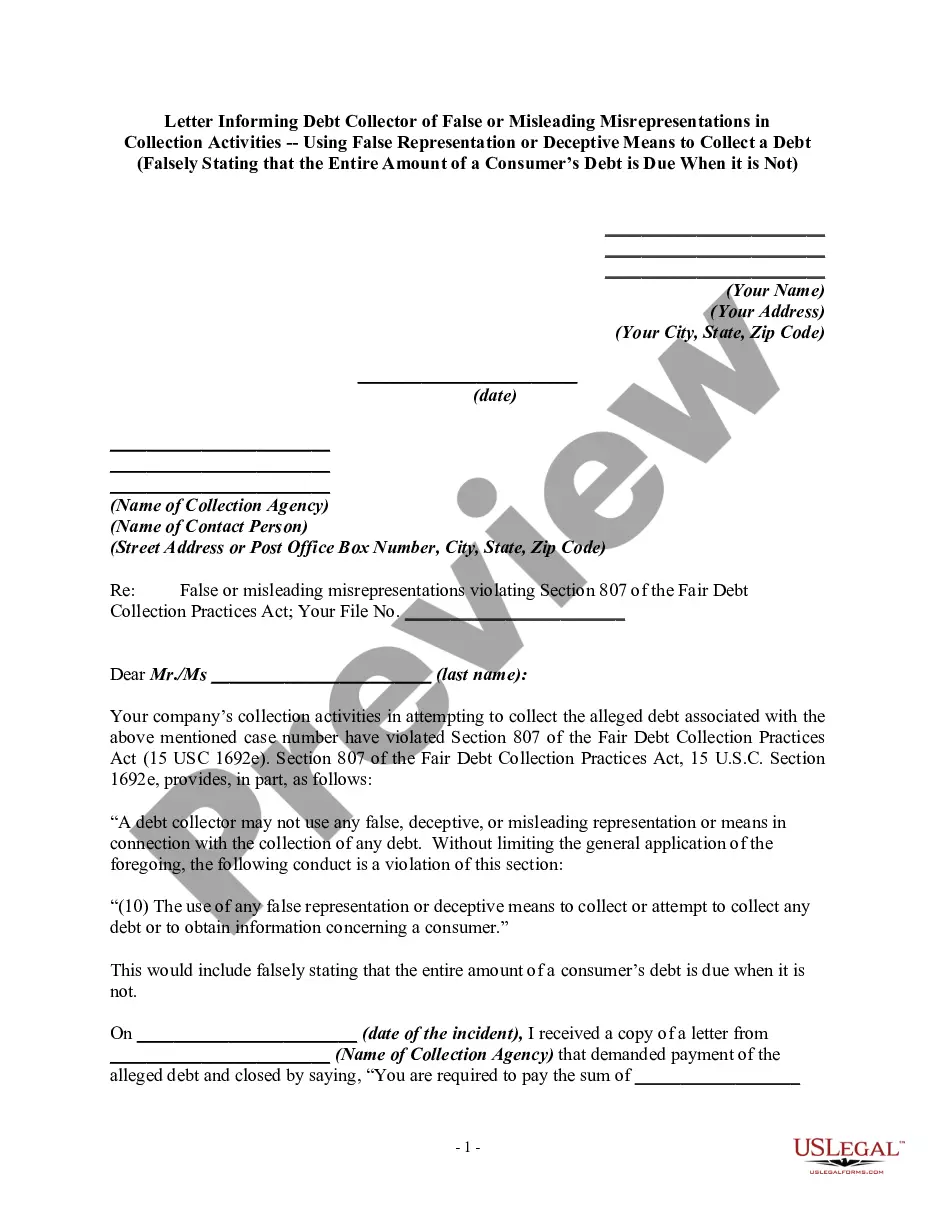
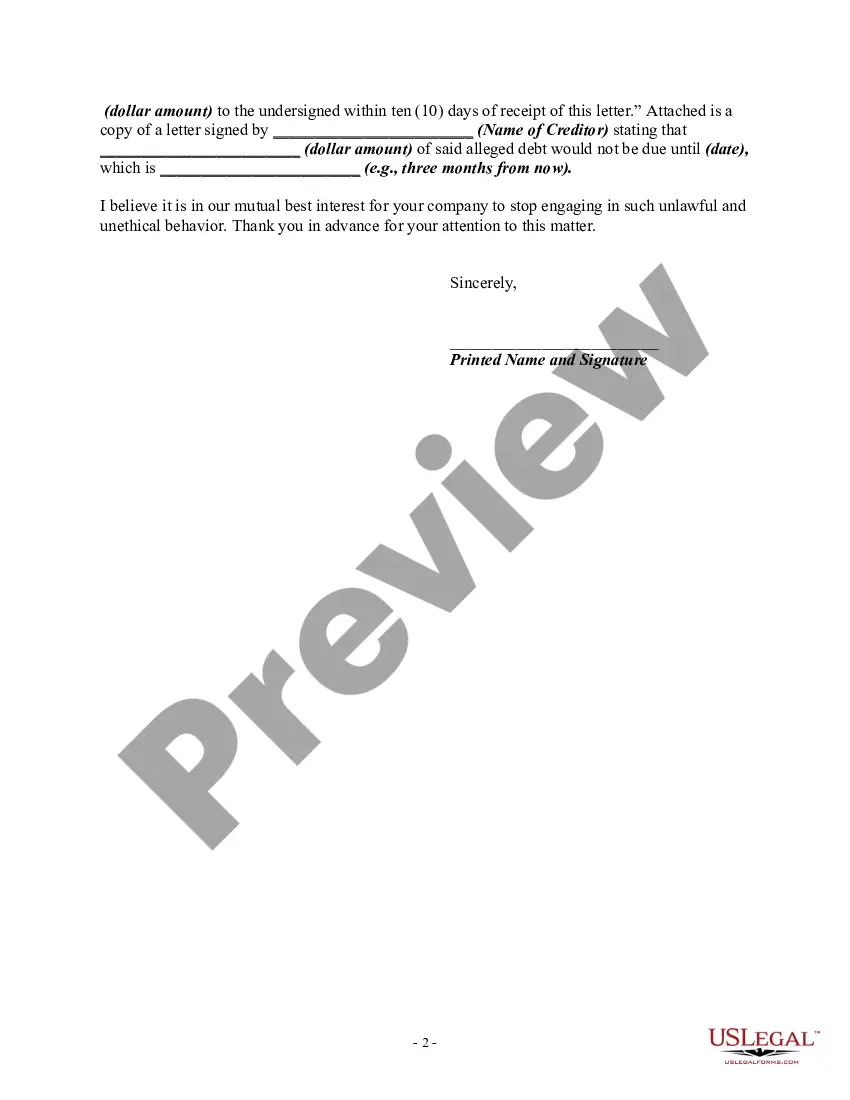
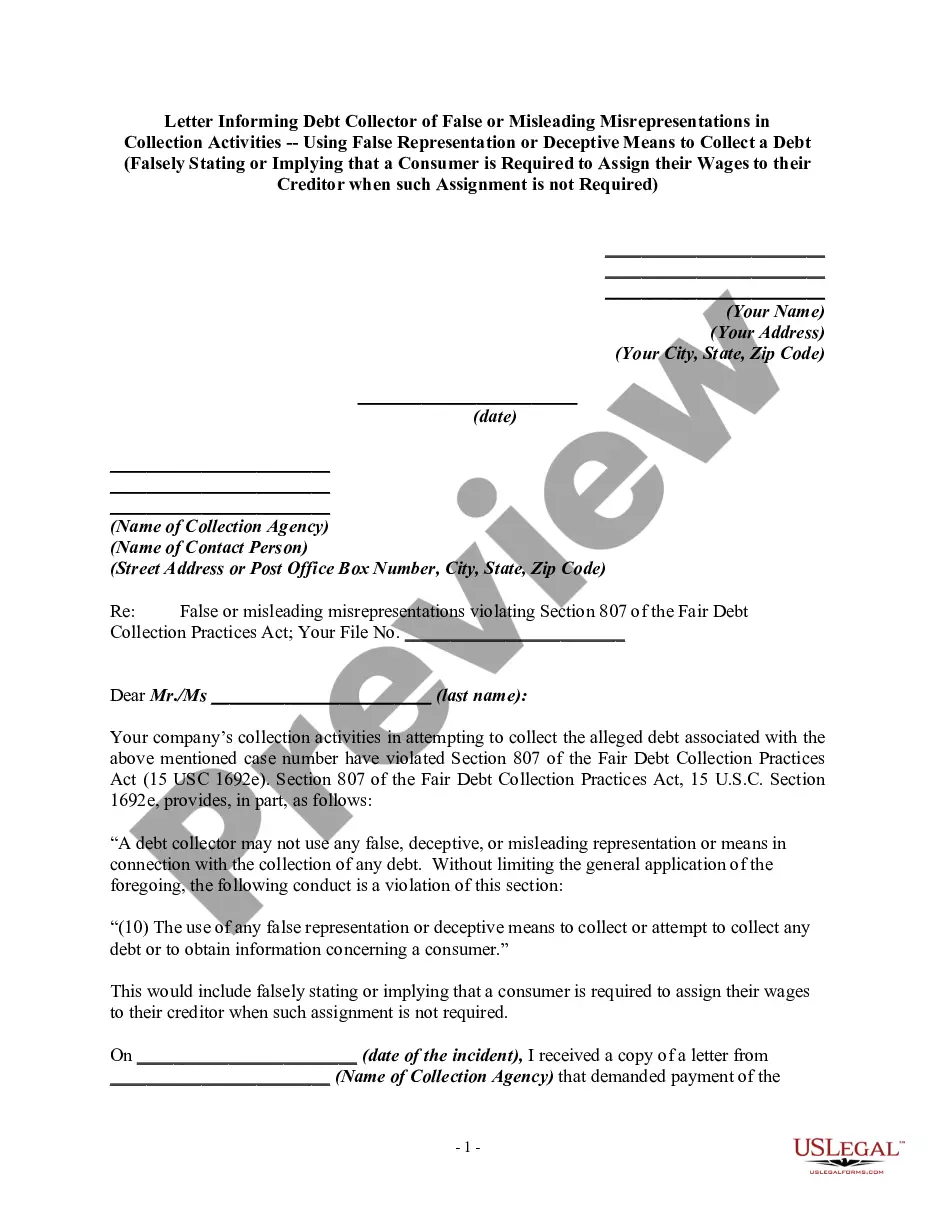
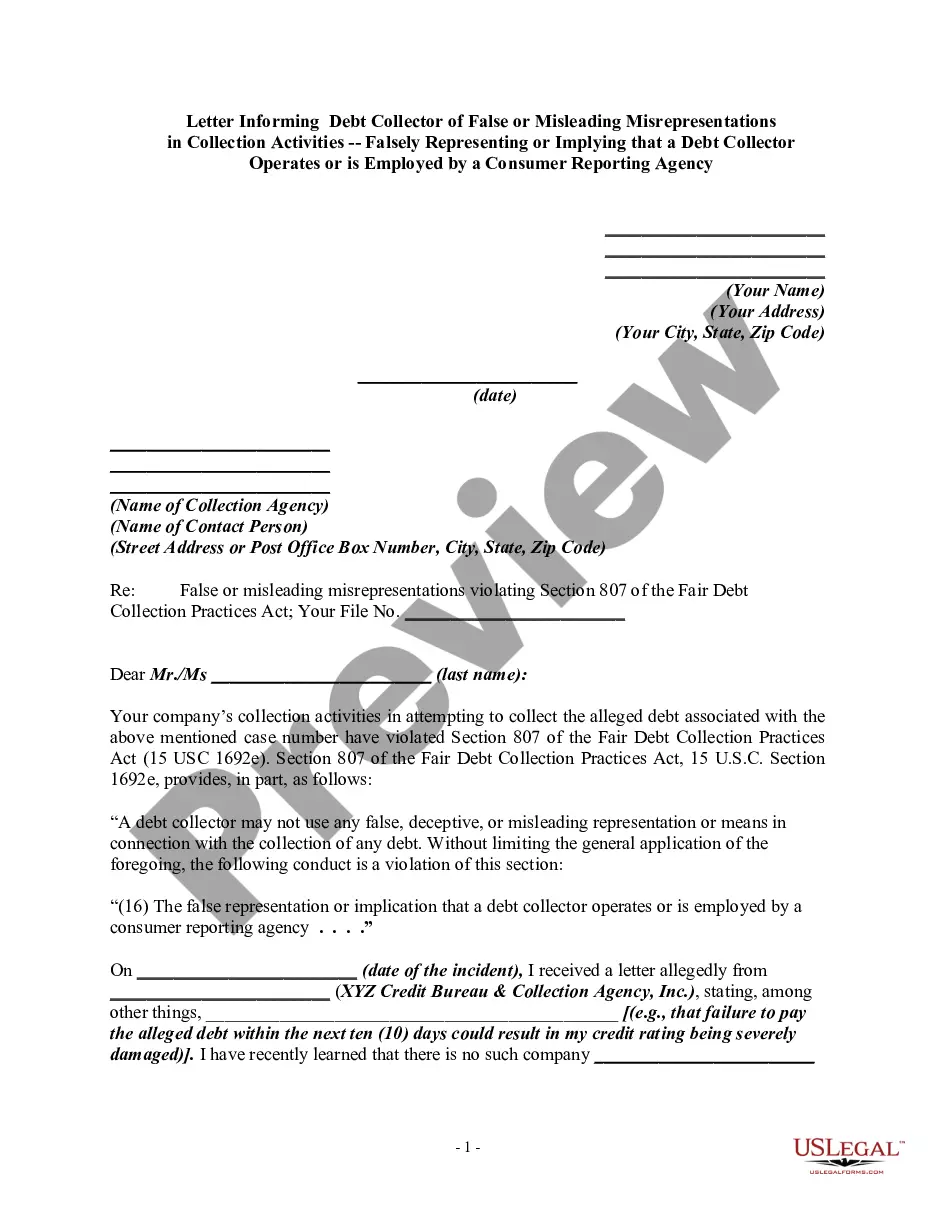
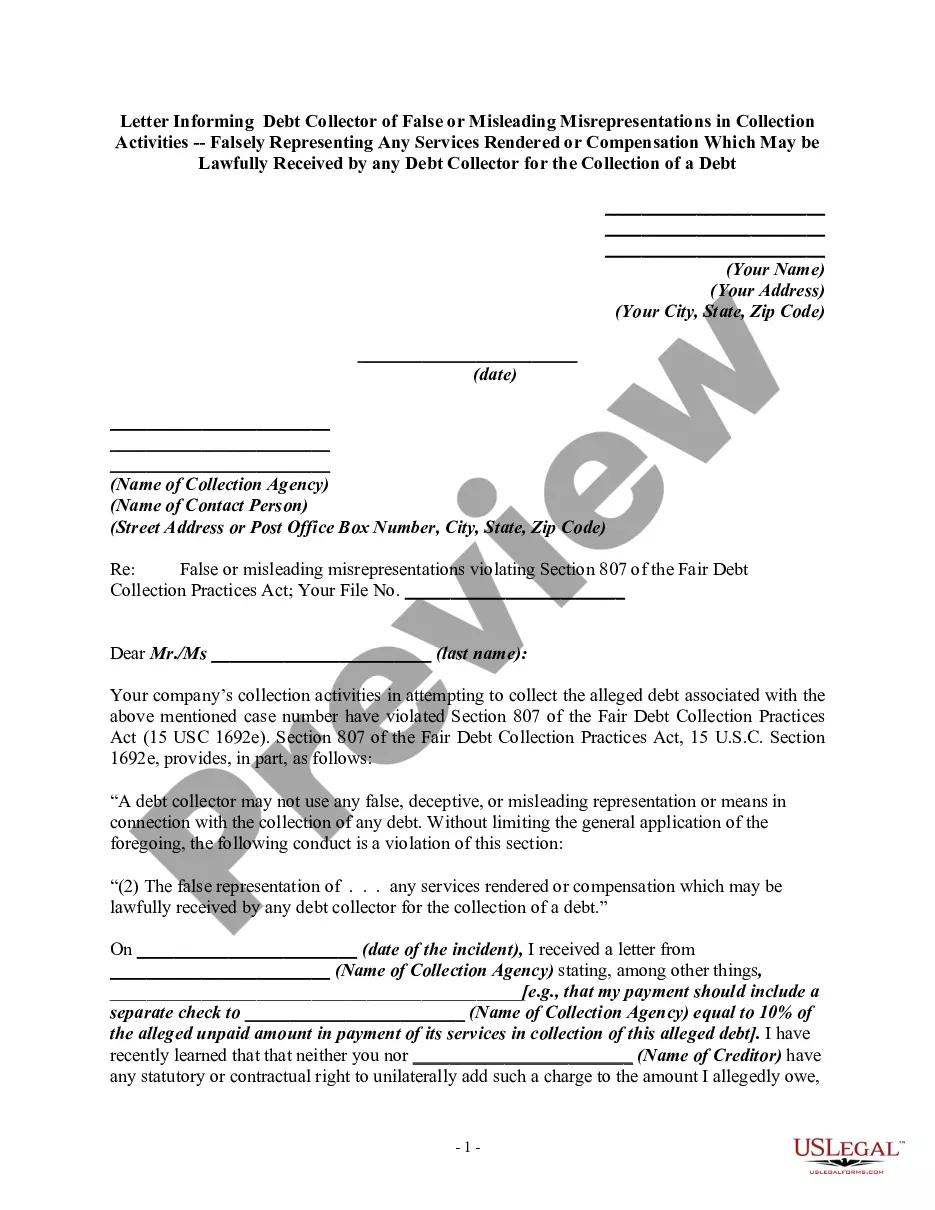
How to fill out Letter Informing Debt Collector Of False Or Misleading Misrepresentations In Collection Activities - Using False Representation Or Deceptive Means To Collect A Debt - Falsely Stating That The Entire Amount Of A Consumer's Debt Is Due When It Is Not?
The Debt Stating Forbearance presented on this page is a reusable formal template created by experienced attorneys in alignment with federal and state regulations.
For over 25 years, US Legal Forms has offered individuals, organizations, and legal practitioners more than 85,000 authenticated, state-specific documents for any professional and personal needs. It is the fastest, simplest, and most reliable method to obtain the paperwork you require, as the service ensures bank-level data security and anti-malware safeguards.
Register for US Legal Forms to access validated legal templates for every aspect of life.
- Search for the document you require and examine it.
- Enroll and Log Into your account.
- Acquire the editable template.
- Fill out and sign the document.
- Redownload your documents as needed.
Form popularity
FAQ
The fee is 28% of the case balance at the time it was referred to outside collections. This fee is added automatically and without further notice to the debtor or further order by the court. You may set up a payment plan by submitting the Request for Payment Plan form.
In Oregon, the deadline is six years for a mortgage, medical or credit card debt, auto loans, and other contract debts. Unfortunately, state tax debt doesn't have a statute of limitation. Note that the statute of limitations doesn't start when you were last billed but starts with your last payment on your debt.
Collection agencies can collect interest and late charges on the debt that is owed if there is a written agreement (contract) that allows this. If there is no contract, they can collect interest of up to 9 percent each year on the amount of the unpaid bill.
What is the statute of limitations on debt in Oregon? In Oregon, debtors have up to six years to file a debt collection lawsuit against you. Once the debt passes its statute of limitations, debt collectors cannot sue you for the debt; it will be considered time-barred or simply null and void.
Oregon has a law called the Unlawful Debt Collection Practices Act. It controls how a creditor may try to collect a debt, whether by letter or phone call. Unlawful debt collection practices include the use of obscene or abusive language.
Debt collectors may collect interest, fees, charges, or other expenses to your debt only if they are expressly authorized by the agreement creating the debt or are otherwise permitted by law. If you ask, the debt collector must tell you how much it is charging you and why.
Oregon has a law called the Unlawful Debt Collection Practices Act. It controls how a creditor may try to collect a debt, whether by letter or phone call. Unlawful debt collection practices include the use of obscene or abusive language.
Collection agency fees - what are legal? Debt collectors can charge you interest, up to the maximum amount outlined in the original contract. It's generally listed as the ?penalty rate? in credit card contracts and it can soar past 30 percent, depending on the creditor.