Suing For Specific Performance Real Estate
Description
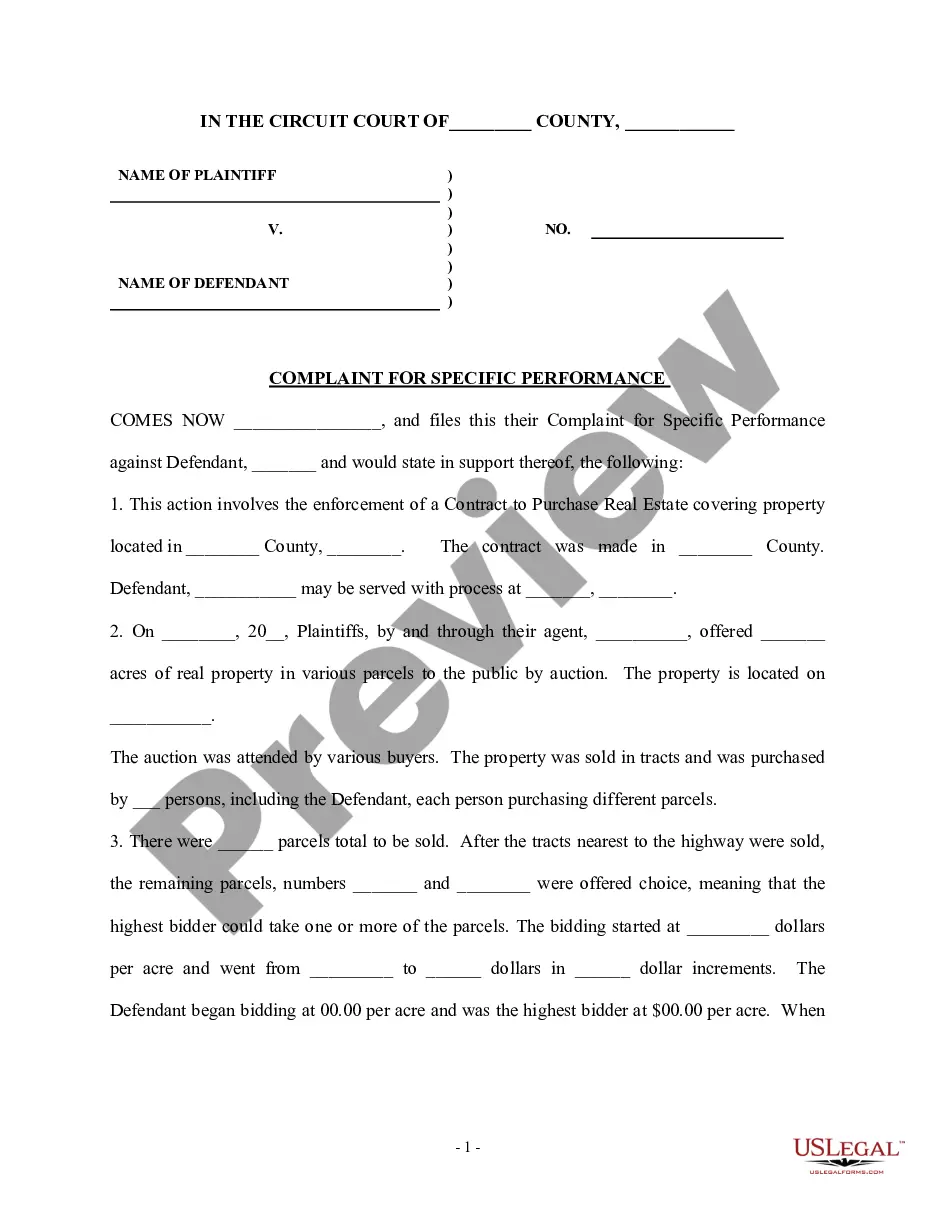
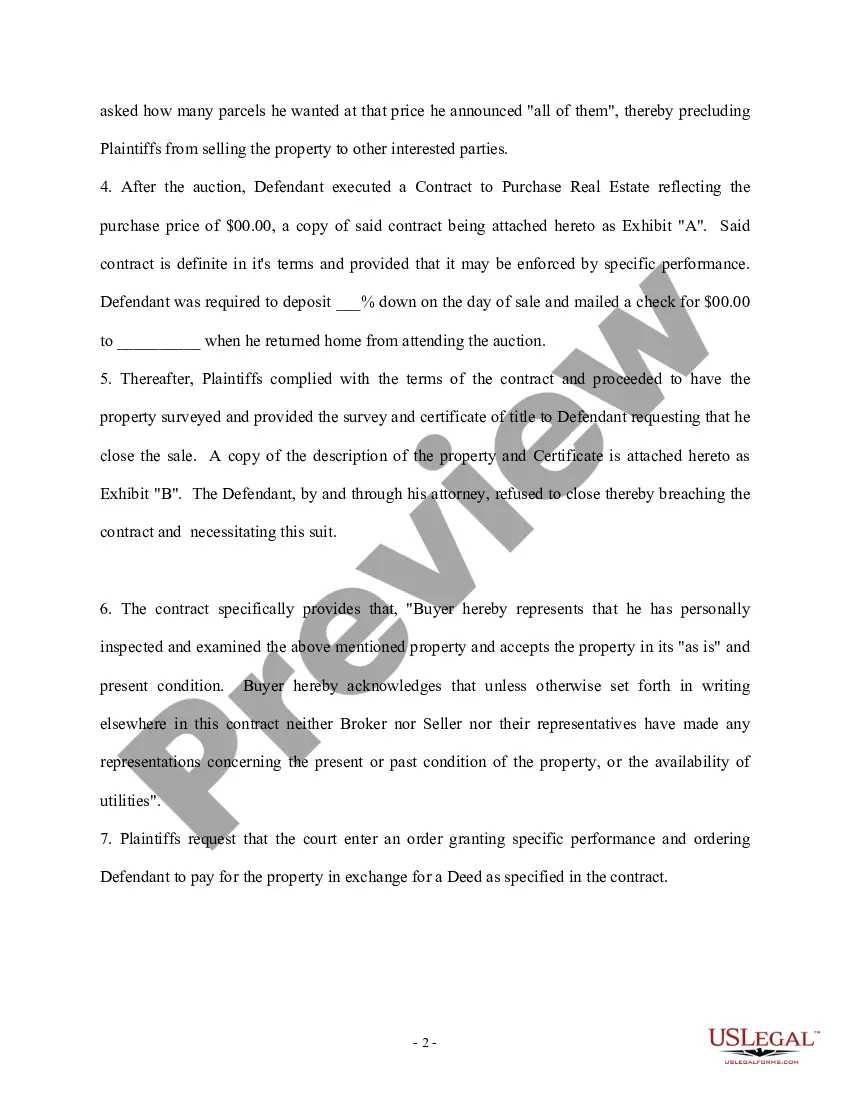
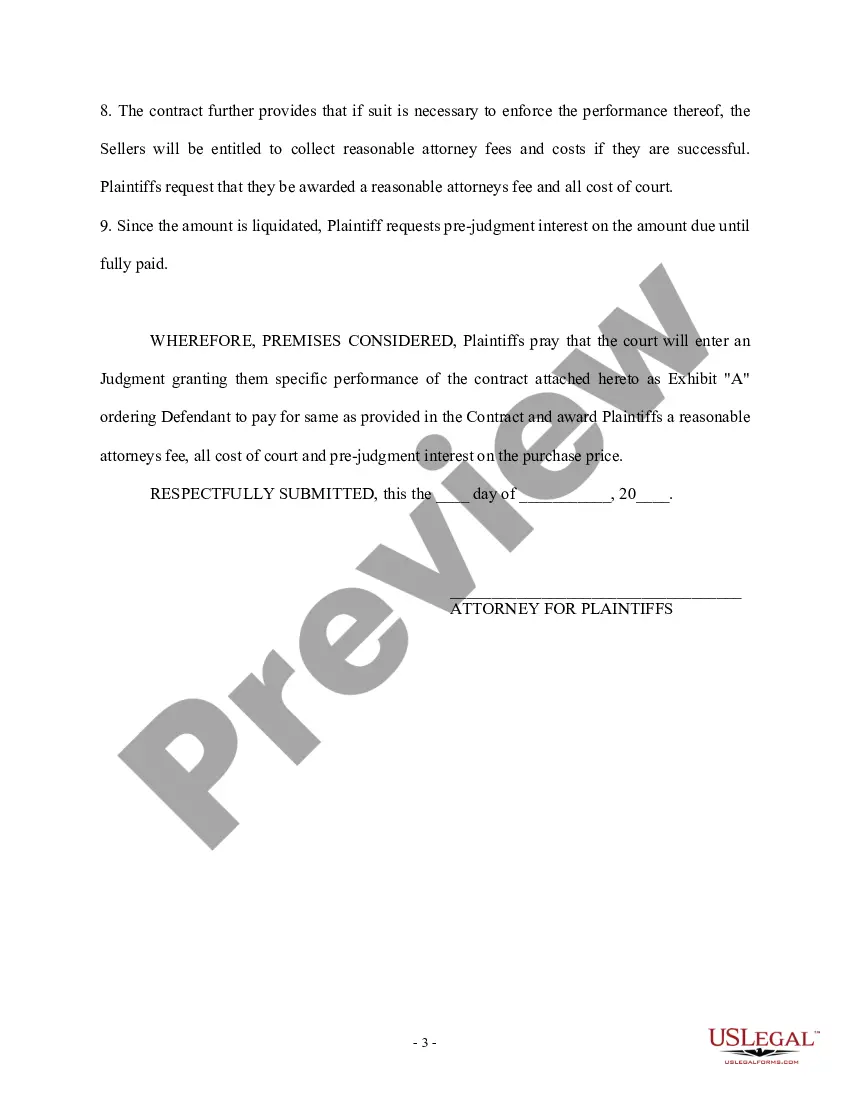
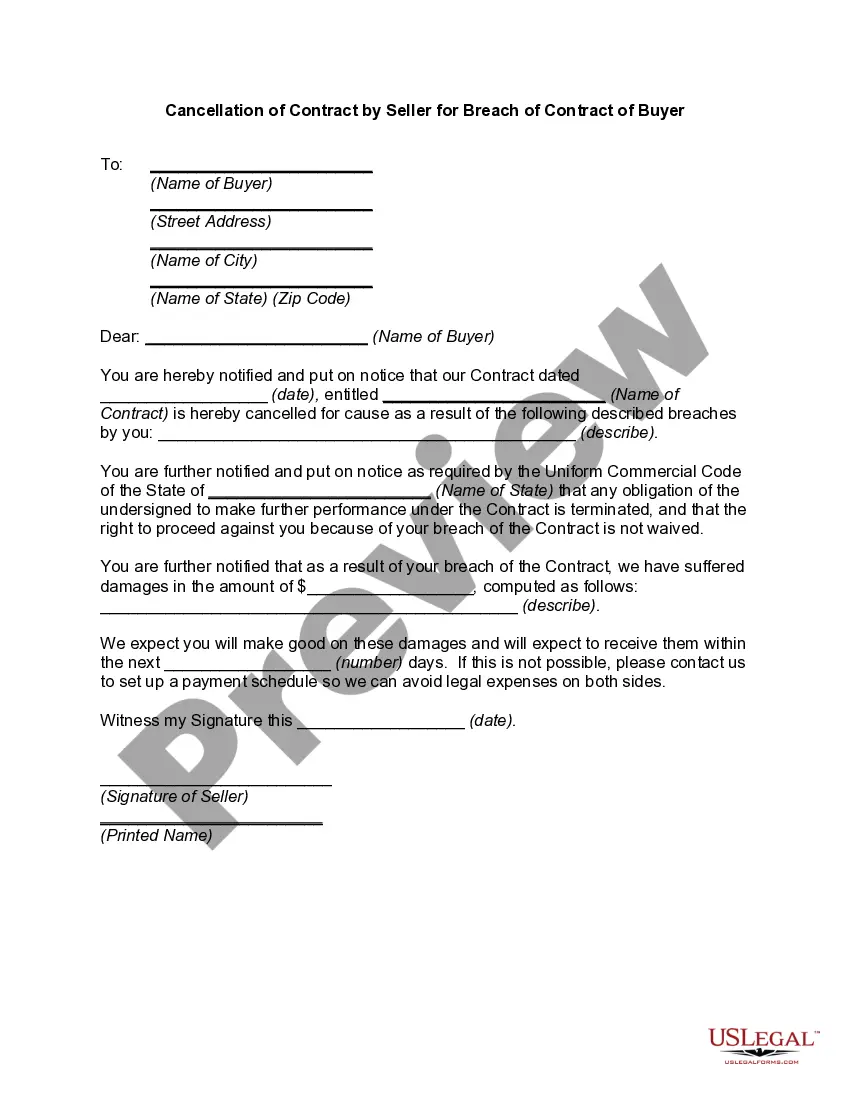

Get your form ready online
Our built-in tools help you complete, sign, share, and store your documents in one place.
Make edits, fill in missing information, and update formatting in US Legal Forms—just like you would in MS Word.
Download a copy, print it, send it by email, or mail it via USPS—whatever works best for your next step.
Sign and collect signatures with our SignNow integration. Send to multiple recipients, set reminders, and more. Go Premium to unlock E-Sign.
If this form requires notarization, complete it online through a secure video call—no need to meet a notary in person or wait for an appointment.
We protect your documents and personal data by following strict security and privacy standards.

Make edits, fill in missing information, and update formatting in US Legal Forms—just like you would in MS Word.

Download a copy, print it, send it by email, or mail it via USPS—whatever works best for your next step.

Sign and collect signatures with our SignNow integration. Send to multiple recipients, set reminders, and more. Go Premium to unlock E-Sign.

If this form requires notarization, complete it online through a secure video call—no need to meet a notary in person or wait for an appointment.

We protect your documents and personal data by following strict security and privacy standards.
Looking for another form?


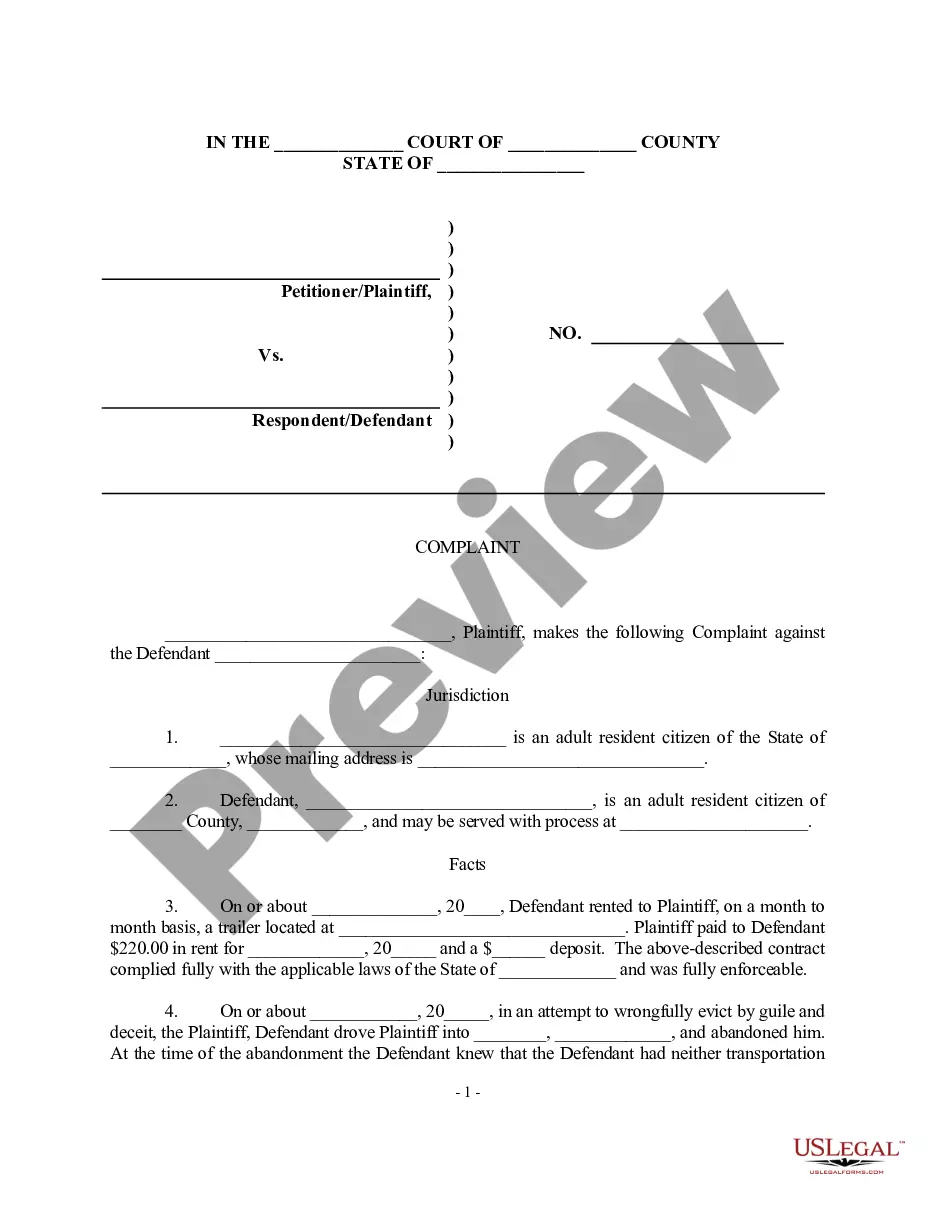
How to fill out Complaint For Specific Performance Of Real Estate Contract?
- Log in to your account on US Legal Forms. If you're a new user, start by creating one.
- Browse through the preview section to confirm you've selected the appropriate form that complies with your local jurisdiction.
- If the form doesn't fit your requirements, utilize the search function to find a more suitable template.
- Once the correct document is found, click on the 'Buy Now' button and select a subscription plan that best aligns with your needs.
- Complete the purchase by entering your credit card details or choosing PayPal for payment.
- Finally, download your form to your device and access it anytime through the 'My Forms' section in your profile.
Leveraging US Legal Forms allows you to streamline the process of securing legal documents with ease. Their database boasts over 85,000 customizable forms, ensuring comprehensive coverage for various legal scenarios.
Take the first step towards securing your legal rights in real estate by visiting US Legal Forms today. Start your journey towards effective legal solutions now!
Form popularity
FAQ
A suit for specific performance in real estate is a legal action where a buyer seeks to enforce a contract when the seller refuses to go through with the sale. It compels the seller to fulfill their obligations and complete the transaction as agreed. This type of lawsuit occurs when monetary damages are insufficient to remedy the situation. Understanding the intricacies of suing for specific performance real estate can help buyers secure their desired property.
In cases of specific performance, the burden of proof generally lies with the party seeking enforcement, often the seller. They must demonstrate that the buyer breached the contract and that monetary damages would be insufficient to compensate for that breach. The seller should present evidence of the contract's terms and the buyer's failure to comply. This clarity is vital for a successful outcome.
An example of suing for specific performance would be a seller whose buyer refuses to close on a home as stated in the contract. If the buyer does not have a valid legal excuse for this refusal, the seller might file a lawsuit to compel the buyer to complete the transaction. This type of action helps ensure that the seller is not left at a disadvantage due to the buyer's breach. Real estate is valuable, and specific performance serves as a safeguard.
Specific performance can be enforceable, depending on the circumstances of the case. Courts often favor specific performance in real estate sales, since each property is unique. If the buyer breaches the contract, the seller may initiate legal action to compel the buyer to proceed with the sale. Thus, understanding the enforceability of specific performance is essential in real estate disputes.
You can sue for specific performance when there has been a breach of a valid real estate contract, and monetary damages do not provide adequate relief. This typically occurs in cases involving unique properties where the buyer or seller has a continued interest in the transaction. Timeliness is crucial, so pursuing your claim promptly after the breach is critical.
To sue for specific performance in the context of real estate, you first need to file a complaint in the appropriate court. This complaint should outline the contract, your performance under that contract, and the specific relief you seek. Engaging a legal expert familiar with real estate law, such as those at USLegalForms, can help you navigate the complexities of the process effectively.
To defend against a lawsuit for specific performance in real estate, you may argue that the contract is void or unenforceable due to factors like misrepresentation or lack of capacity. You could also contest the uniqueness of the property or assert that damages are sufficient to address any losses. Understanding these defenses can significantly impact the outcome of your case.
The standard for specific performance in real estate cases requires showing that the contract is clear, the subject matter is unique, and the party seeking performance has acted in good faith. Courts look for compelling reasons why mere monetary compensation would not capture the essence of the agreement. Essentially, you need to illustrate why specific performance is the most appropriate remedy for your situation.
When suing for specific performance in real estate, the burden of proof lies with the party seeking enforcement. You must demonstrate that a valid contract exists, that you have fulfilled your obligations, and that monetary damages would not suffice. This often involves presenting evidence of the property's uniqueness and the significance of the contract terms.
Typically, any party to a real estate contract that has a valid legal claim can seek specific performance. This usually includes both buyers and sellers who have fulfilled their contractual obligations but face a breach by the other party. Remember, though, that proving entitlement requires a well-defined and enforceable contract, so it’s wise to consider legal assistance when navigating this process.