Trade Secrets
Description


Get your form ready online
Our built-in tools help you complete, sign, share, and store your documents in one place.
Make edits, fill in missing information, and update formatting in US Legal Forms—just like you would in MS Word.
Download a copy, print it, send it by email, or mail it via USPS—whatever works best for your next step.
Sign and collect signatures with our SignNow integration. Send to multiple recipients, set reminders, and more. Go Premium to unlock E-Sign.
If this form requires notarization, complete it online through a secure video call—no need to meet a notary in person or wait for an appointment.
We protect your documents and personal data by following strict security and privacy standards.

Make edits, fill in missing information, and update formatting in US Legal Forms—just like you would in MS Word.

Download a copy, print it, send it by email, or mail it via USPS—whatever works best for your next step.

Sign and collect signatures with our SignNow integration. Send to multiple recipients, set reminders, and more. Go Premium to unlock E-Sign.

If this form requires notarization, complete it online through a secure video call—no need to meet a notary in person or wait for an appointment.

We protect your documents and personal data by following strict security and privacy standards.
Looking for another form?
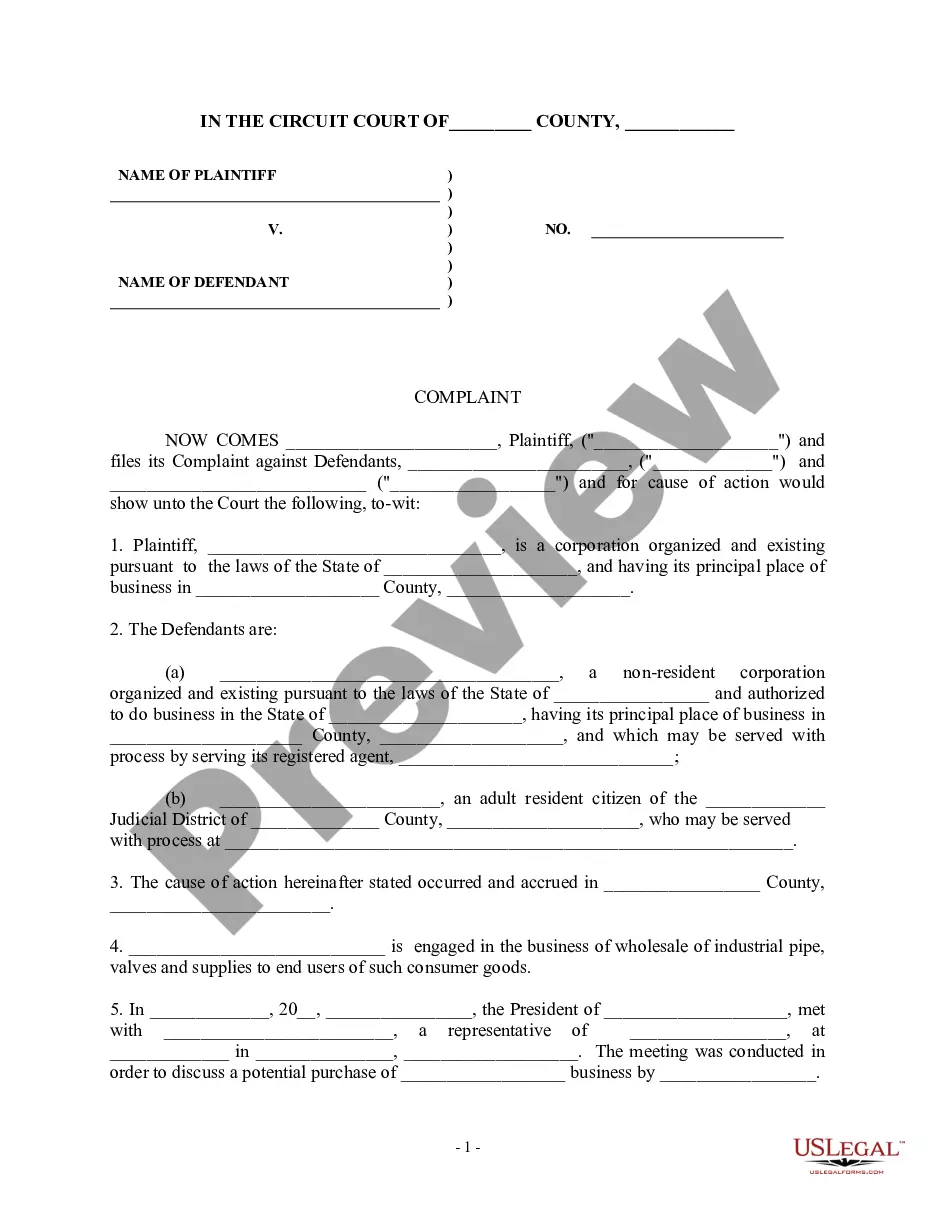
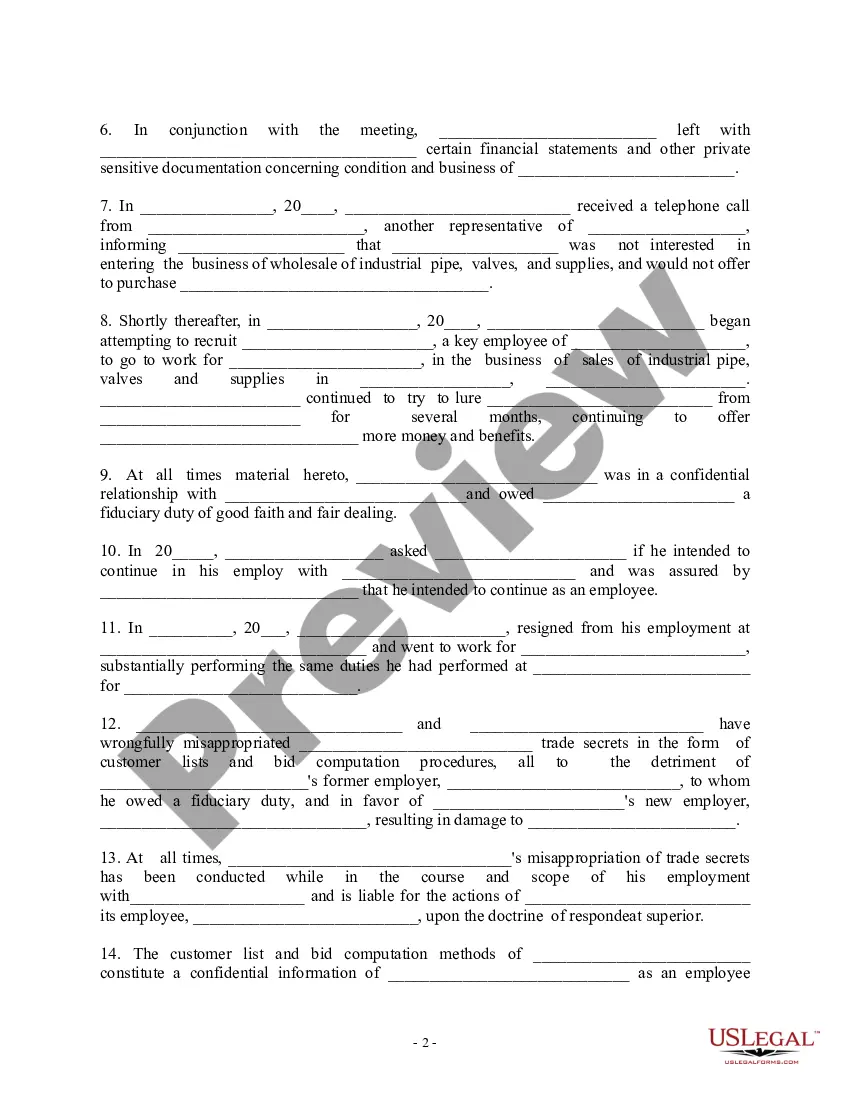
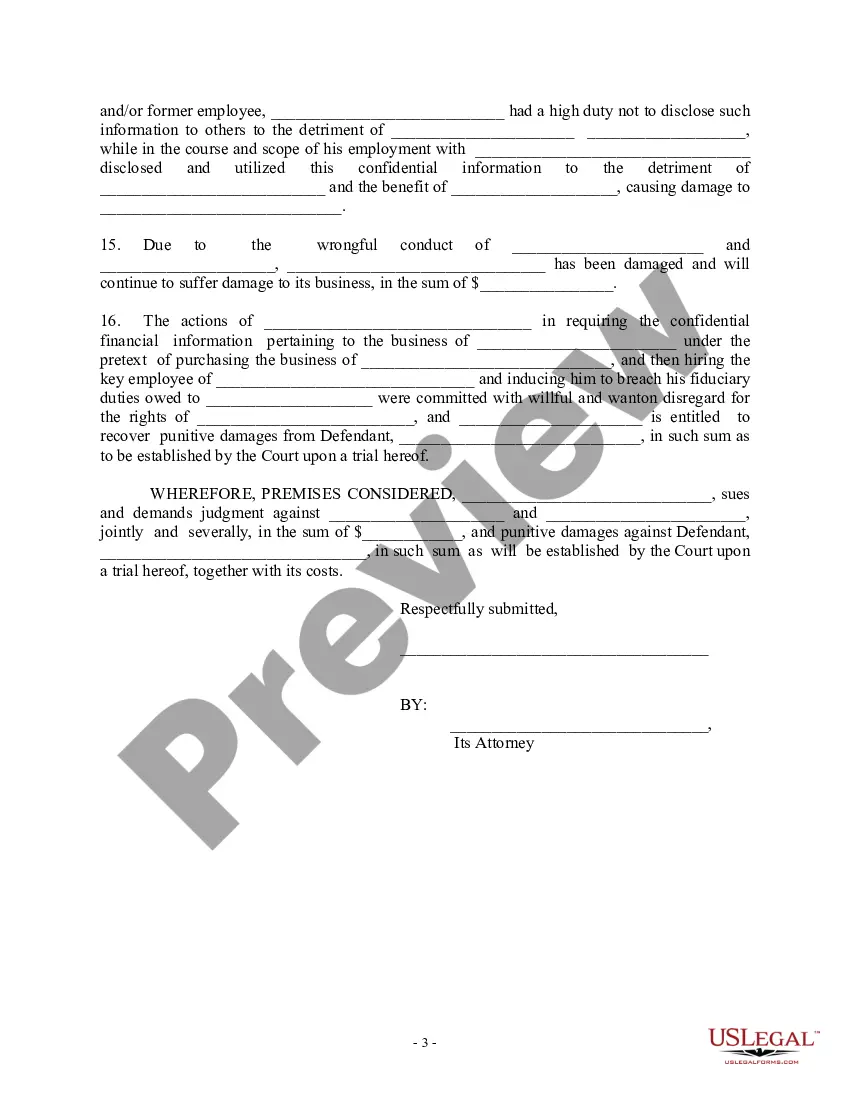
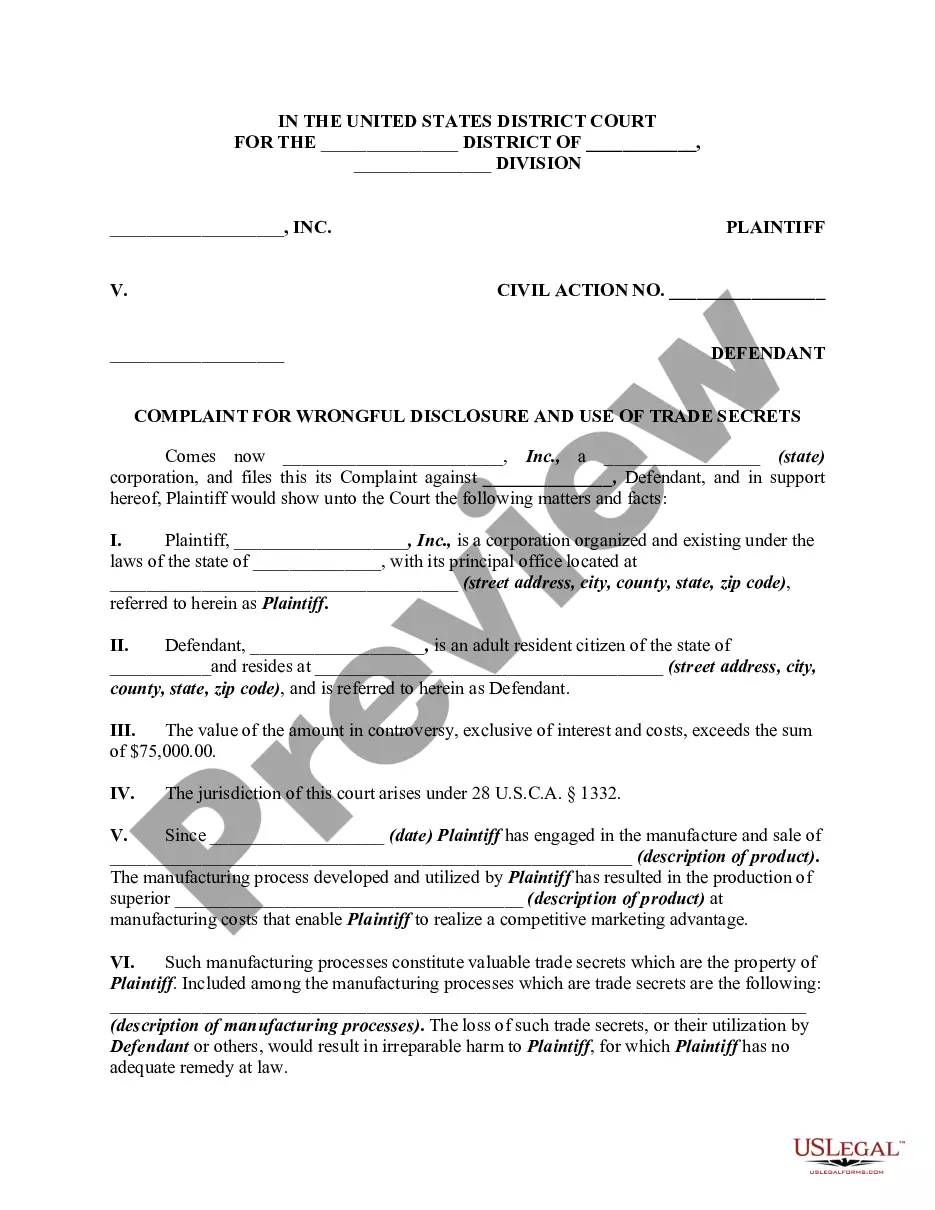
How to fill out Complaint - Trade Secrets - Misappropriation By Former Employee And Prospective Purchaser - Breach Of Fiduciary Duty?
- If you're an existing user, log in to your account and select the form template you need. Ensure your subscription is active; renew if it has expired.
- For new users, start by exploring the Preview mode. Review the form descriptions carefully to confirm that you have selected the correct document that fits your local requirements.
- If necessary, utilize the Search tab to find alternative templates that may better meet your needs.
- Once your desired document is found, proceed by clicking on the Buy Now button and choose your preferred subscription plan while creating an account for access.
- Complete your purchase by entering your payment details, either via credit card or PayPal.
- Finally, download the form and save it to your device for easy access. Revisit your documents anytime from the My Forms section in your profile.
By leveraging these trade secrets, you can efficiently secure the legal forms you need while ensuring compliance and accuracy.
Start your seamless legal journey today with US Legal Forms and discover how easy document management can be!
Form popularity
FAQ
While the location of the keycard for the Hornwright Safe Room can vary, players typically find it during their exploration or through interactions with characters. It may be helpful to check any logs or clues provided in the game, as these guides often lead you to valuable trade secrets and items. Remember, gathering information from community forums or guides can also provide insights into finding these keycards more efficiently.
Unlocking trade secrets can be a challenging process and often requires legal guidance to navigate the necessary steps. One effective way is to review any non-disclosure agreements or contracts that may grant access to the required information. Additionally, engaging with legal experts, like those available at US Legal Forms, can help you understand the specific requirements and protections related to trade secrets. Utilizing these resources can ensure you approach the situation correctly.
For information to qualify as a trade secret, it must meet three critical criteria. First, it must be secret, meaning that it is not generally known or readily accessible to others in the industry. Second, it should have economic value derived from its secrecy, contributing to your business's financial success. Finally, reasonable efforts must be made to maintain its confidentiality, ensuring that your trade secrets remain protected from potential competitors.
Obtaining a trade secret typically involves identifying valuable information that is not publicly known and implementing measures to keep it confidential. This can include business strategies, processes, customer lists, or formulas. It is essential to document your efforts to safeguard this information, such as using confidentiality agreements and limiting access to the data. By taking these steps, you can effectively secure your trade secrets and maintain their competitive advantage.
While the focus is primarily on trade secrets, understanding trade-ins involves three key elements. These include the current item’s value, the condition of the item, and the terms offered by the receiving business. Coming back to trade secrets, ensuring clarity in your business processes can enhance your strategic operations.
When discussing trade secrets in an educational context, three essential elements emerge. These include secrecy, value, and efforts to maintain confidentiality. Recognizing these elements will help you understand how trade secrets function and their role in protecting business information.
To establish a trade secret, three main elements must be present. First, the information should be unique and not known to the public. Second, it should provide the business with a competitive edge. Lastly, the owner must actively protect that information through confidentiality measures.
For trade secrets to exist, they must meet three key elements. They should consist of information that is not public knowledge, they must provide economic benefits to the owner, and the owner must take steps to maintain their secrecy. Together, these elements work to ensure that trade secrets remain protected.
To qualify as trade secrets, certain statements must hold true. First, the information must not be generally known or readily accessible. Second, the secret must provide a business advantage due to its secrecy. Third, reasonable efforts must be taken to keep the information confidential.
A trade secret example includes any information that gives a company a competitive advantage and is kept confidential. For instance, a secret recipe used in a popular snack food or a proprietary software algorithm represents trade secrets. These examples highlight the importance of safeguarding vital information to maintain market dominance.