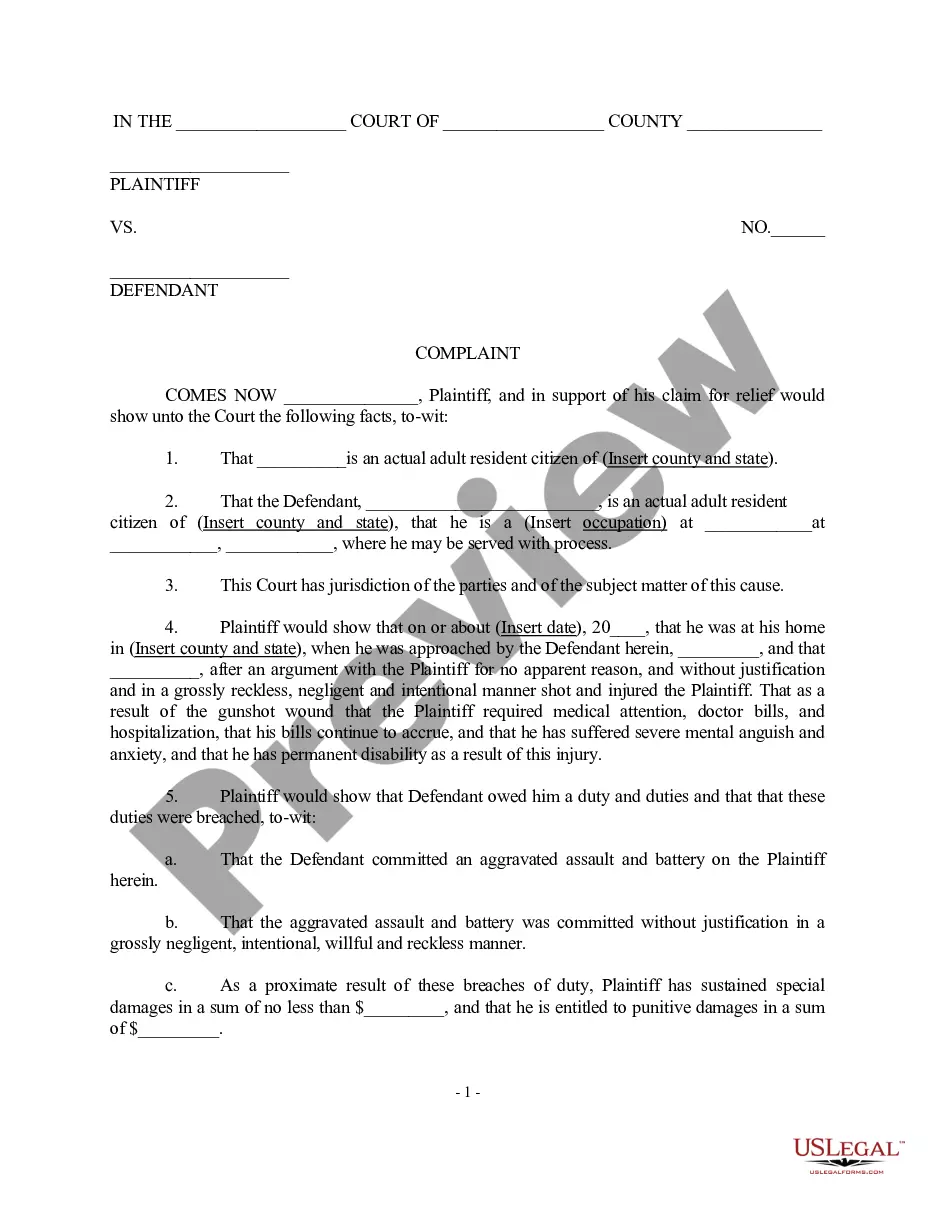
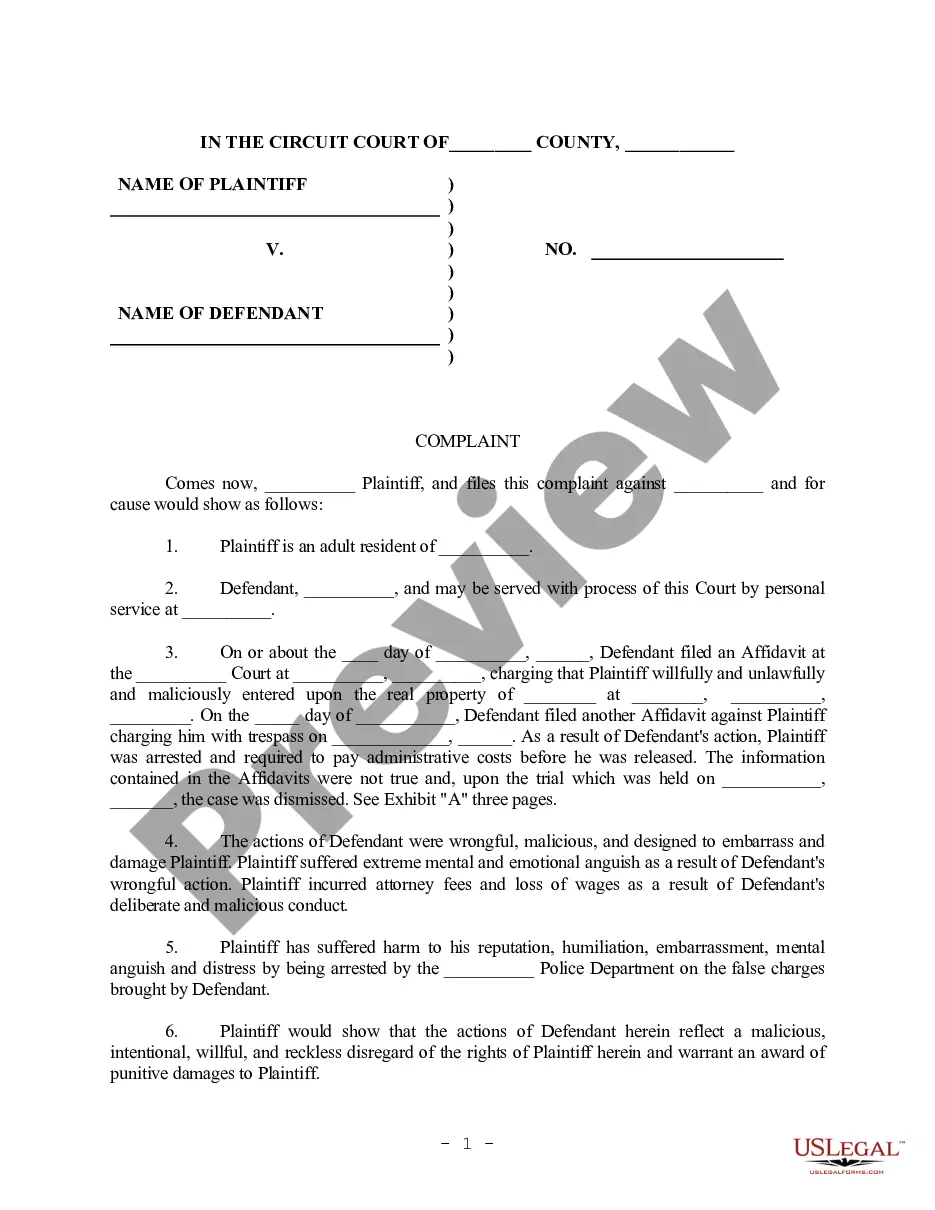
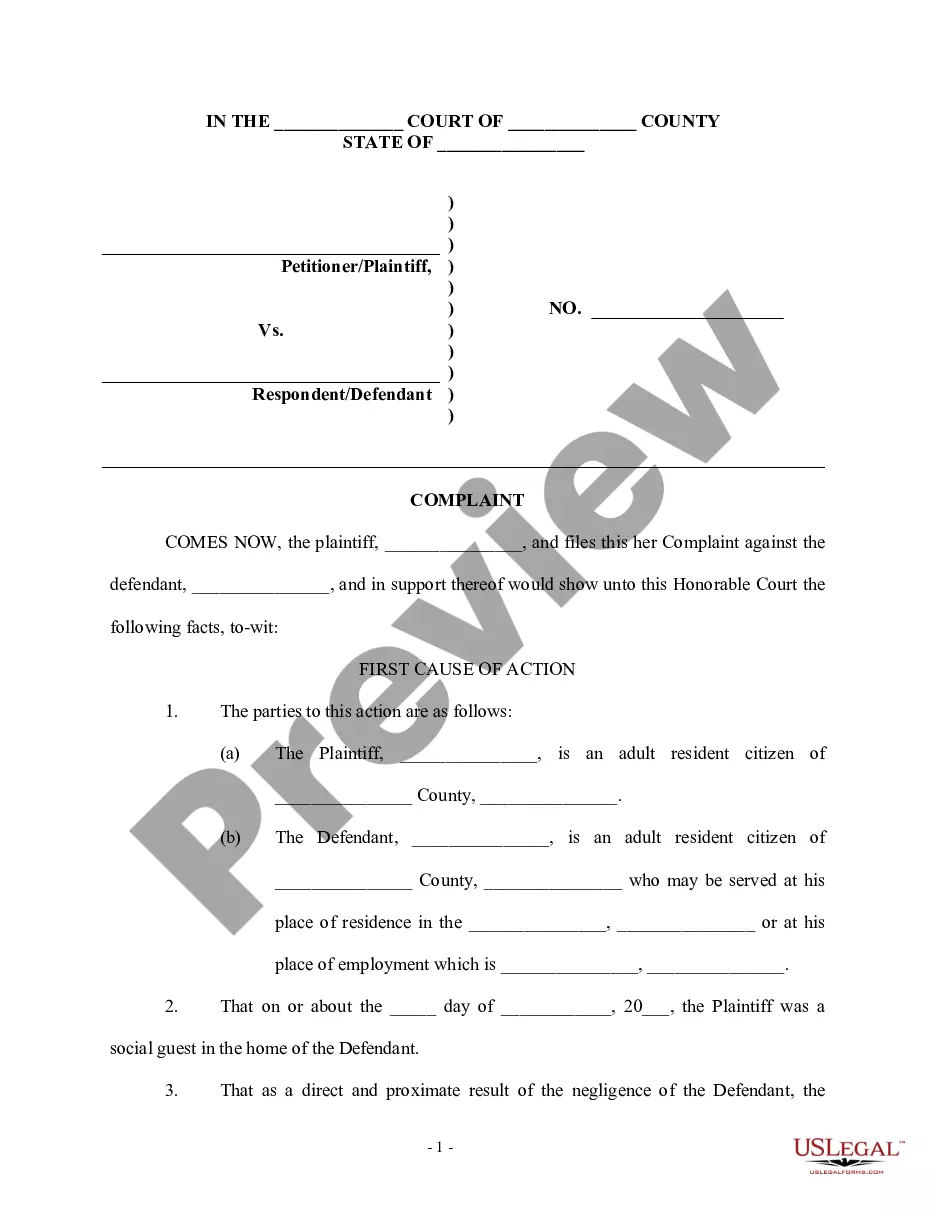
Battery Without Assault Example
Description


Get your form ready online
Our built-in tools help you complete, sign, share, and store your documents in one place.
Make edits, fill in missing information, and update formatting in US Legal Forms—just like you would in MS Word.
Download a copy, print it, send it by email, or mail it via USPS—whatever works best for your next step.
Sign and collect signatures with our SignNow integration. Send to multiple recipients, set reminders, and more. Go Premium to unlock E-Sign.
If this form requires notarization, complete it online through a secure video call—no need to meet a notary in person or wait for an appointment.
We protect your documents and personal data by following strict security and privacy standards.

Make edits, fill in missing information, and update formatting in US Legal Forms—just like you would in MS Word.

Download a copy, print it, send it by email, or mail it via USPS—whatever works best for your next step.

Sign and collect signatures with our SignNow integration. Send to multiple recipients, set reminders, and more. Go Premium to unlock E-Sign.

If this form requires notarization, complete it online through a secure video call—no need to meet a notary in person or wait for an appointment.

We protect your documents and personal data by following strict security and privacy standards.
Looking for another form?
How to fill out Complaint Regarding Assault And Battery?
The Battery Without Assault Template you see on this page is a reusable formal model crafted by professional attorneys in accordance with federal and local laws and regulations.
For over 25 years, US Legal Forms has supplied individuals, organizations, and legal experts with over 85,000 validated, state-specific documents for any business and personal situation. It’s the fastest, easiest, and most reliable method to acquire the papers you require, as the service ensures bank-level data protection and anti-malware safeguards.
Subscribe to US Legal Forms to have authenticated legal templates for all of life's situations at your fingertips.
- Search for the document you need and examine it.
- Sign up and Log In.
- Obtain the editable template.
- Complete and sign the documents.
- Download your documents again.
Form popularity
FAQ
In other words, one can assault a person without committing a battery. Likewise, a person can commit a battery without assaulting that person. For example, if Bob stabs you from behind without you witnessing the attack, then Bob is committing a battery without an assault.
Any type of touching that the victim considers harmful or offensive can be sufficient. For example, if a woman pours a mug of hot water on someone else, this could be a battery. To go even further, a classic case of a battery that does not result in pain or injury is when the perpetrator spits on the victim.
It is important to note that in most jurisdictions, words, without an act, cannot constitute an assault. For example, no assault has occurred where a person waves his arms at another and shouts, ?I'm going to shoot you!? where no gun is visible or apparent.
Some common types of battery include: Pushing someone. Hitting or kicking someone. Attacking someone with a weapon.
The main difference between a battery charge and an assault charge is the actual presence of harm and the threat of harm. Someone can only be charged with battery if they have caused real physical harm to someone, while a person can be charged with assault if the mere threat of harm is present.