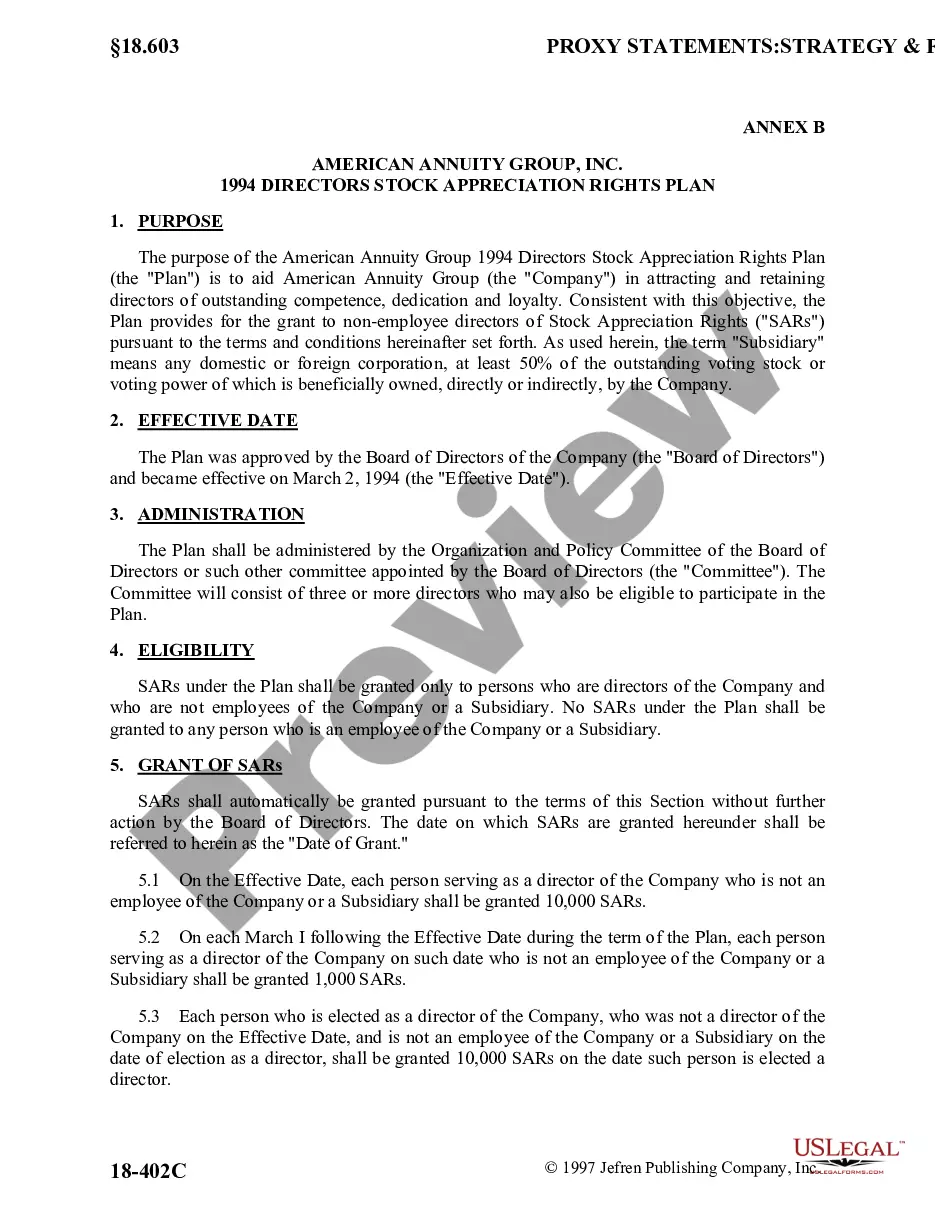
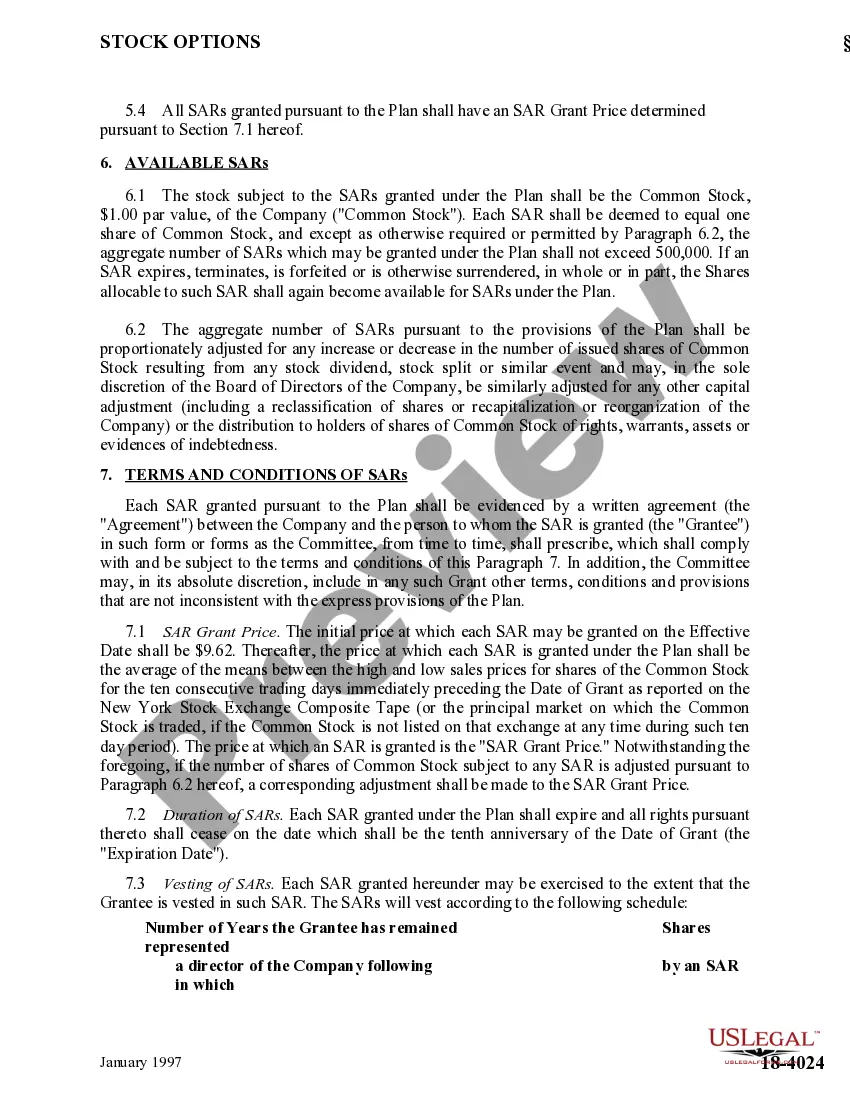
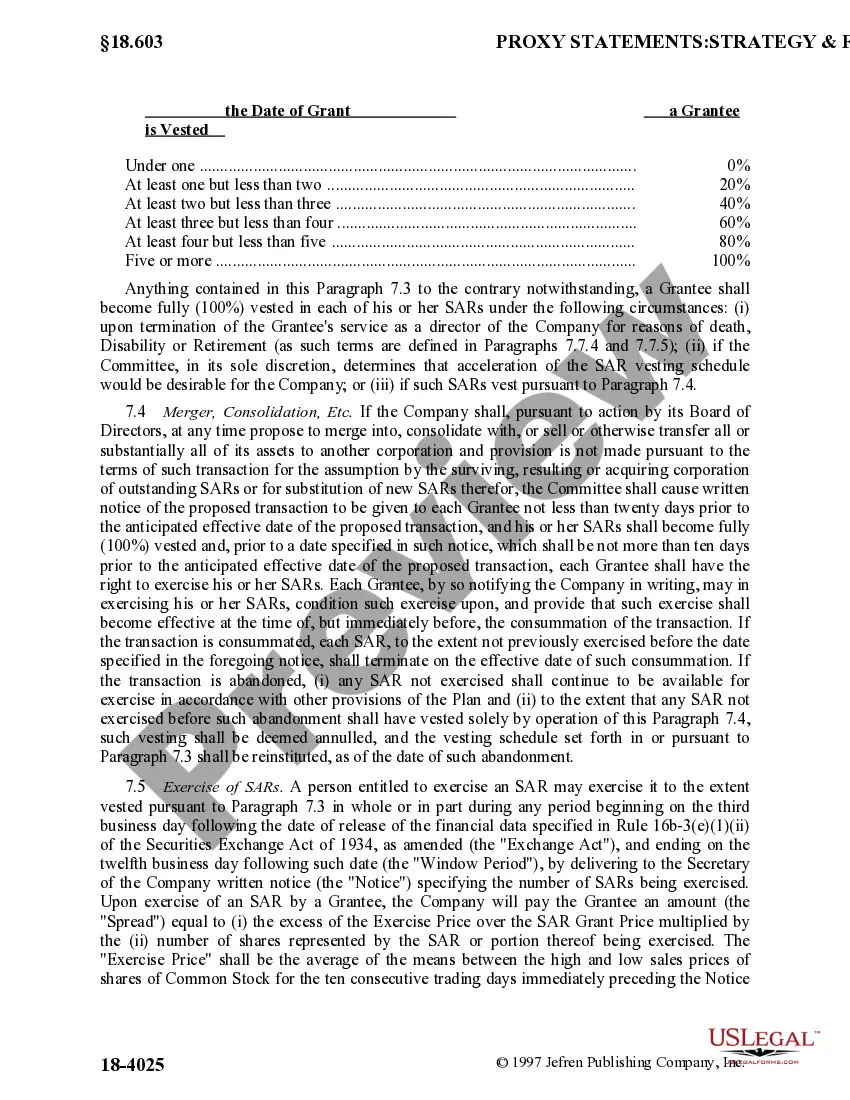
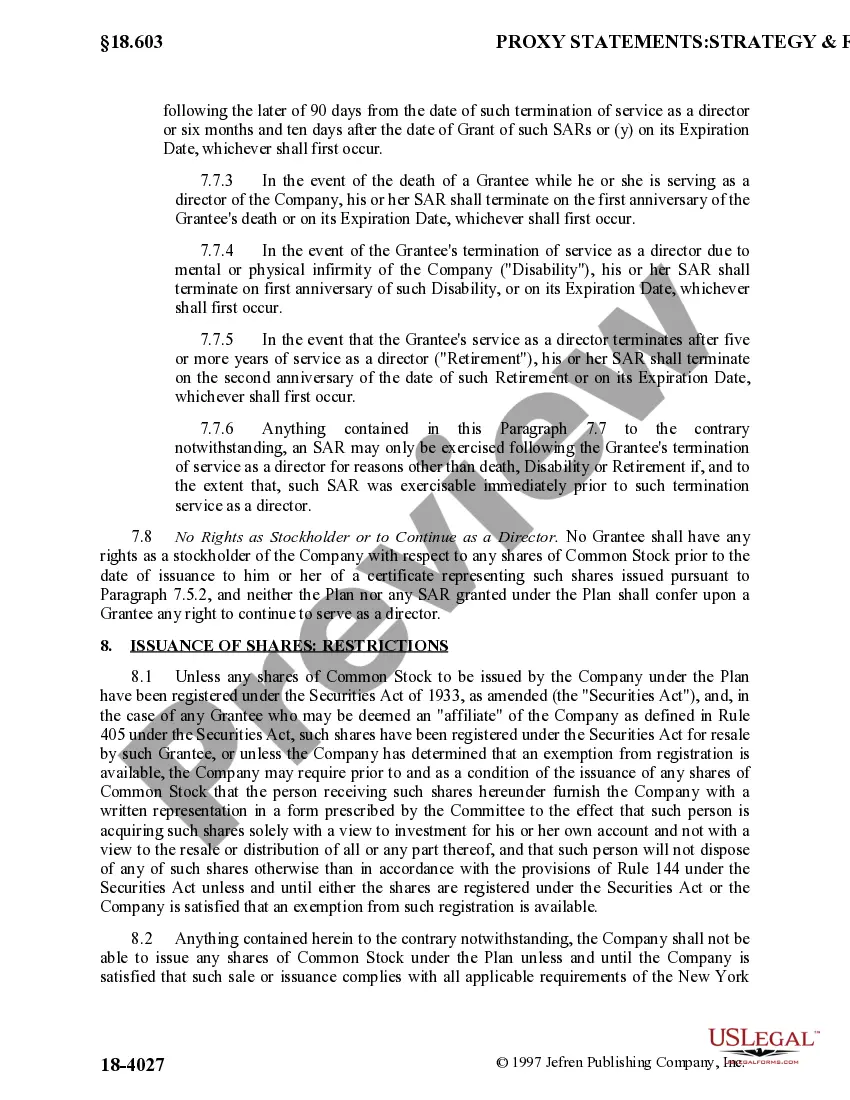
Stock Appreciation Rights For Employees
Description

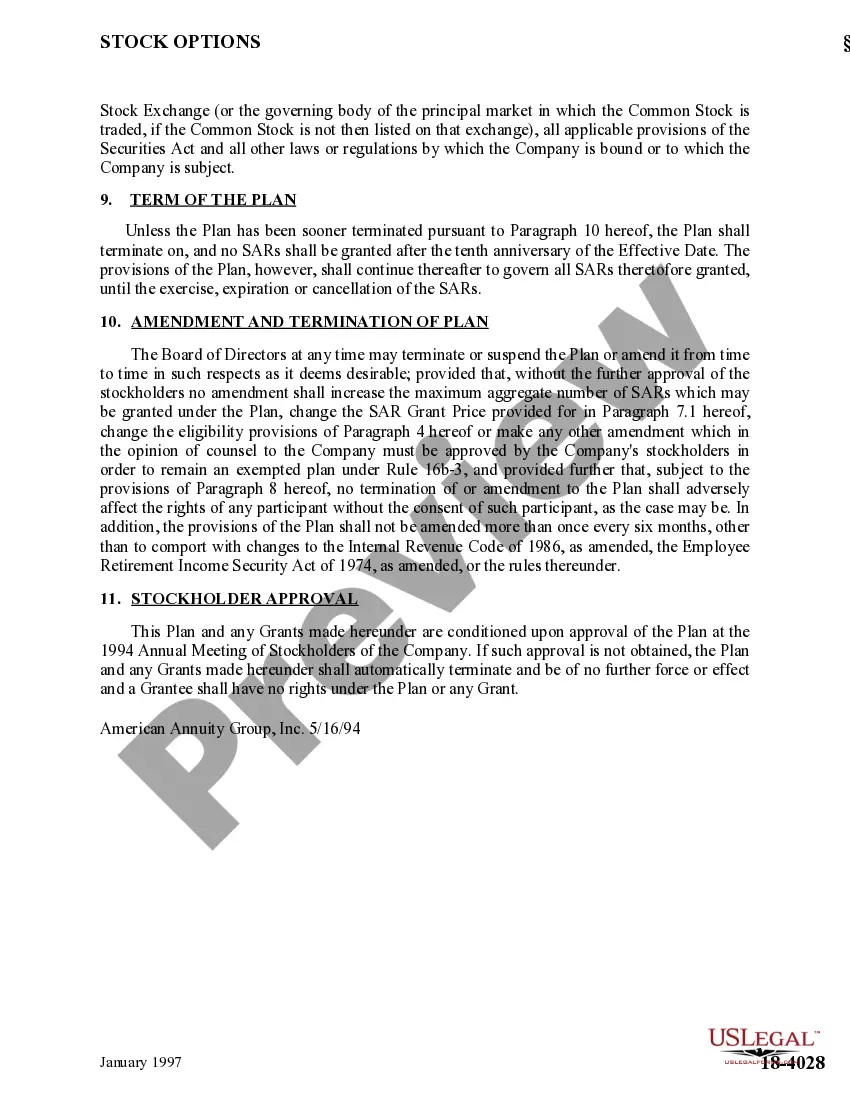

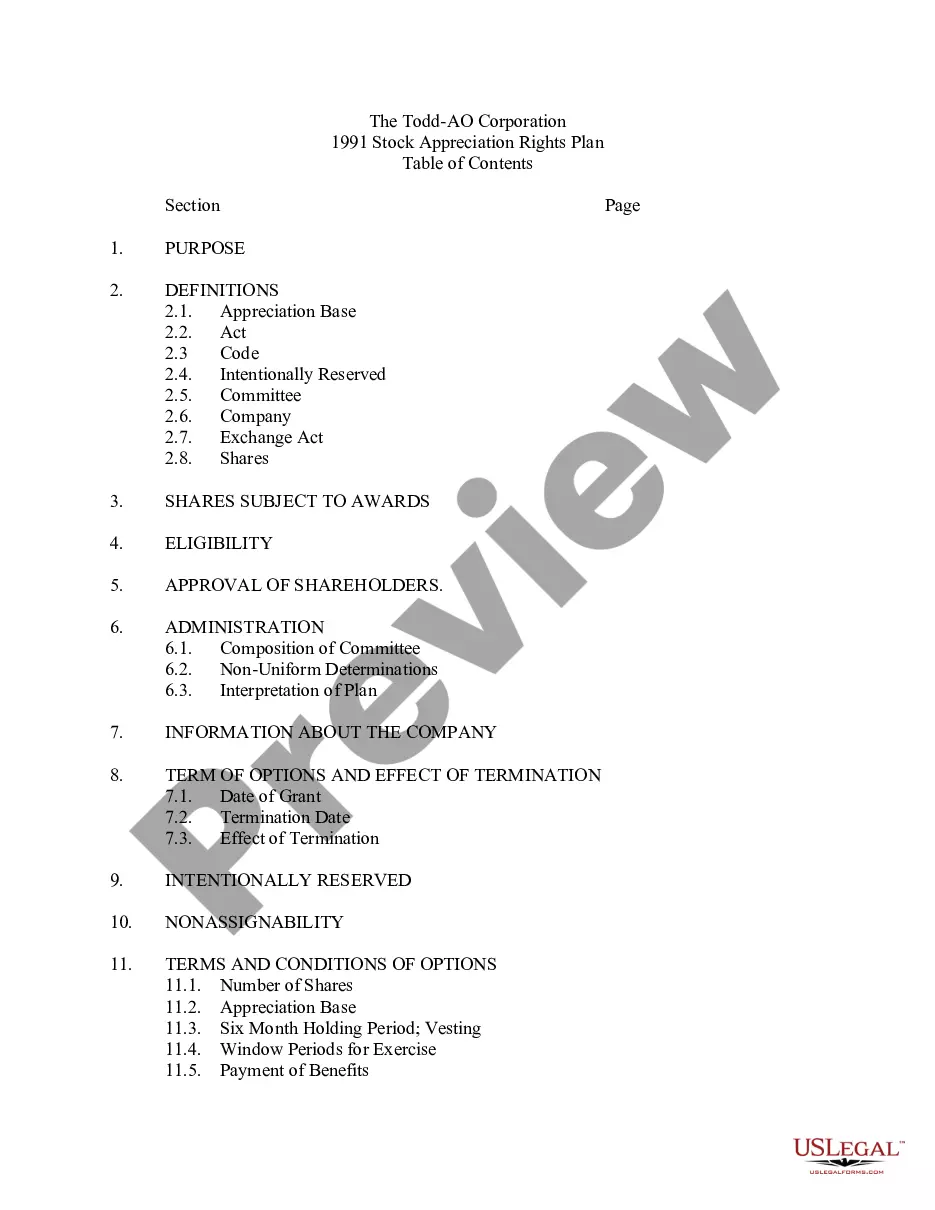
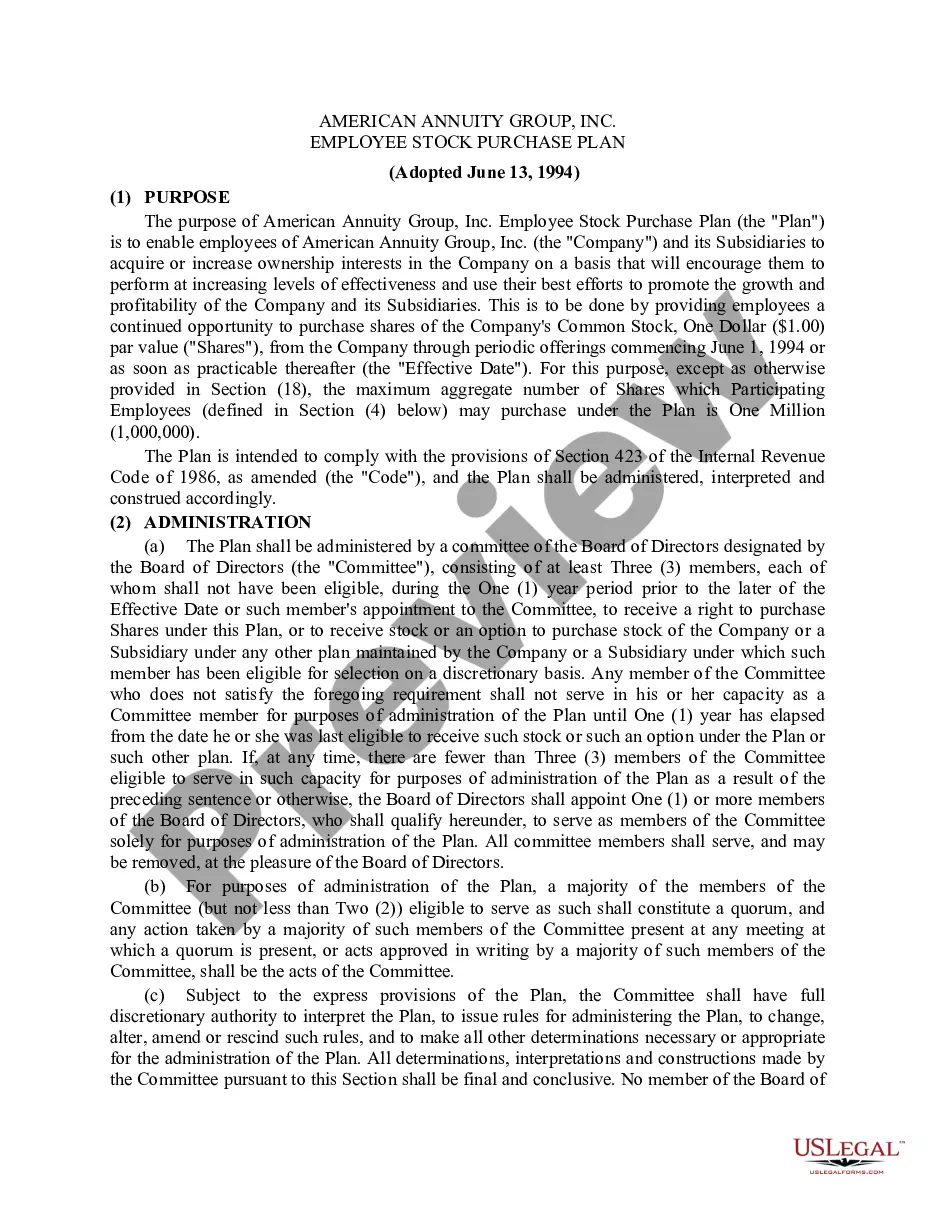
Get your form ready online
Our built-in tools help you complete, sign, share, and store your documents in one place.
Make edits, fill in missing information, and update formatting in US Legal Forms—just like you would in MS Word.
Download a copy, print it, send it by email, or mail it via USPS—whatever works best for your next step.
Sign and collect signatures with our SignNow integration. Send to multiple recipients, set reminders, and more. Go Premium to unlock E-Sign.
If this form requires notarization, complete it online through a secure video call—no need to meet a notary in person or wait for an appointment.
We protect your documents and personal data by following strict security and privacy standards.

Make edits, fill in missing information, and update formatting in US Legal Forms—just like you would in MS Word.

Download a copy, print it, send it by email, or mail it via USPS—whatever works best for your next step.

Sign and collect signatures with our SignNow integration. Send to multiple recipients, set reminders, and more. Go Premium to unlock E-Sign.

If this form requires notarization, complete it online through a secure video call—no need to meet a notary in person or wait for an appointment.

We protect your documents and personal data by following strict security and privacy standards.
Looking for another form?








Form popularity
FAQ
Yes, stock appreciation rights for employees do have expiration dates that are specified in the plan document. Typically, they are valid for several years; however, if not exercised within that timeframe, they become void. Understanding the expiration timeline is essential for employees to maximize their benefits. Consult your company's plan details or platforms like USLegalForms to stay informed and make the best decisions regarding your rights.
To account for stock appreciation rights for employees, firms typically recognize the expense based on the fair value of the rights granted. This value is measured at the grant date and is adjusted for any changes until the rights are settled. The expense is recorded over the service period, aligning the costs with the time employees earn the rights. Accurate accounting ensures compliance with financial regulations and provides clarity in financial reporting.
Exercising an Employee Stock Ownership Plan (ESOP) usually involves a process defined by your employer's plan documents. Generally, you would need to notify the plan administrator and follow the outlined steps to redeem your shares, often contingent on employment terms. If you have questions about your rights or the process, platforms like US Legal Forms can provide resources to help you navigate these transactions smoothly.
Stock appreciation rights for employees must be accounted for in accordance with specific accounting standards. Typically, the fair value of the rights is determined and recognized as compensation expense over the vesting period of the rights. Companies should work with financial professionals to ensure compliance with relevant regulations and proper recording of these values in financial statements.
To obtain stock appreciation rights for employees, it is essential to be part of an organization that offers them as part of its compensation package. Typically, these rights are granted by the employer during employment, often as an incentive to encourage performance and align employee interests with those of shareholders. You should review your employment contract and discuss the details with your employer or human resources department.
Taxation of stock appreciation rights for employees generally occurs at exercise. The profit you receive becomes ordinary income, subjecting it to your regular income tax rate. Clearly understanding the tax implications can help you better plan for future financial growth, and consulting a tax advisor is advisable.
Stock appreciation rights for employees can potentially be dilutive to existing shareholders, depending on how the company manages them. When these rights are exercised, new shares might be issued, which can reduce the percentage ownership for current shareholders. However, companies often implement measures to balance the interests of all stakeholders.
To obtain stock appreciation rights for employees, you typically need to be part of a company that offers this type of compensation. Companies often include these rights in their employee incentive programs. Engage with your HR department to learn about eligibility requirements and how to participate in such programs.
When you receive stock appreciation rights for employees, the tax implications can be significant. Generally, you incur taxes at the time of exercise, as the profit you make from exercising these rights is treated as ordinary income. It's important to consult a tax professional to understand your specific circumstances, as taxes can vary based on your income and the terms of your rights.