Non-qualified Stock Options For Shares
Description


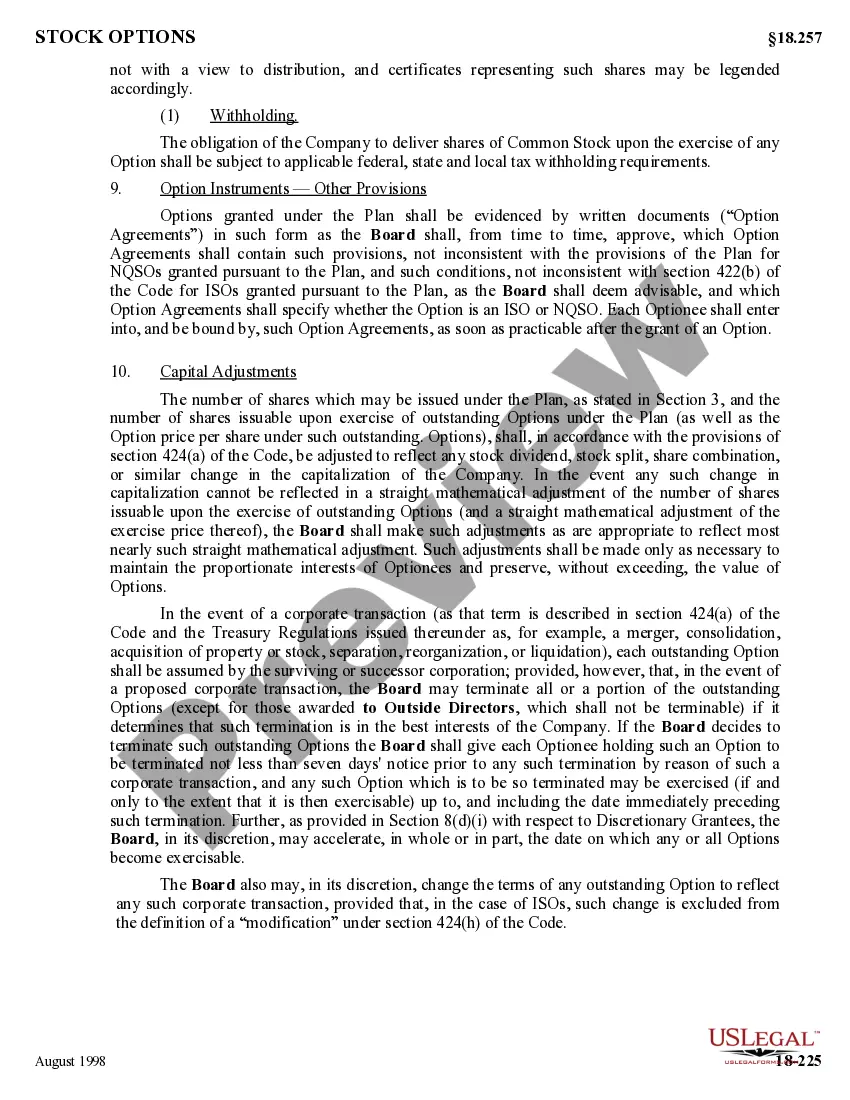


Get your form ready online
Our built-in tools help you complete, sign, share, and store your documents in one place.
Make edits, fill in missing information, and update formatting in US Legal Forms—just like you would in MS Word.
Download a copy, print it, send it by email, or mail it via USPS—whatever works best for your next step.
Sign and collect signatures with our SignNow integration. Send to multiple recipients, set reminders, and more. Go Premium to unlock E-Sign.
If this form requires notarization, complete it online through a secure video call—no need to meet a notary in person or wait for an appointment.
We protect your documents and personal data by following strict security and privacy standards.

Make edits, fill in missing information, and update formatting in US Legal Forms—just like you would in MS Word.

Download a copy, print it, send it by email, or mail it via USPS—whatever works best for your next step.

Sign and collect signatures with our SignNow integration. Send to multiple recipients, set reminders, and more. Go Premium to unlock E-Sign.

If this form requires notarization, complete it online through a secure video call—no need to meet a notary in person or wait for an appointment.

We protect your documents and personal data by following strict security and privacy standards.
Looking for another form?
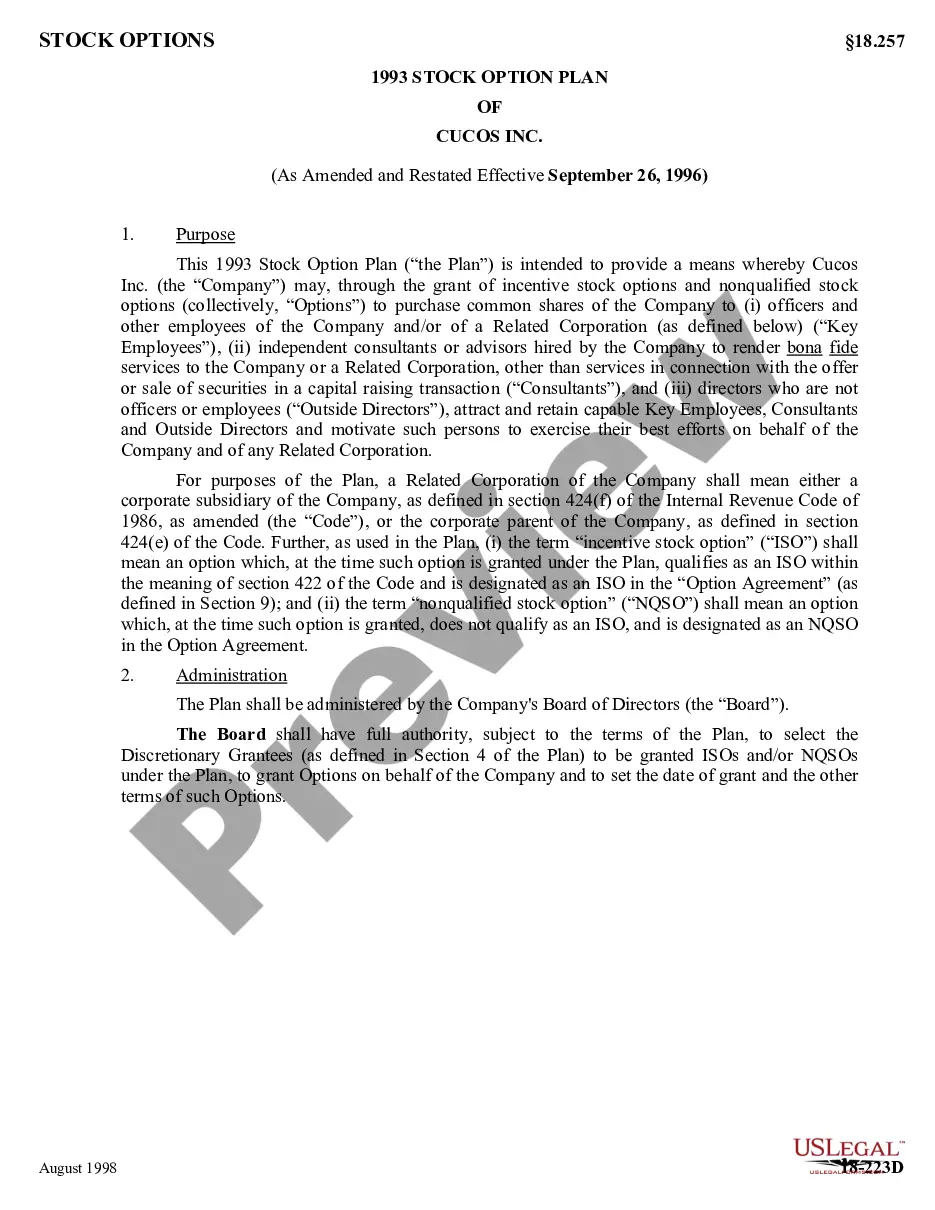
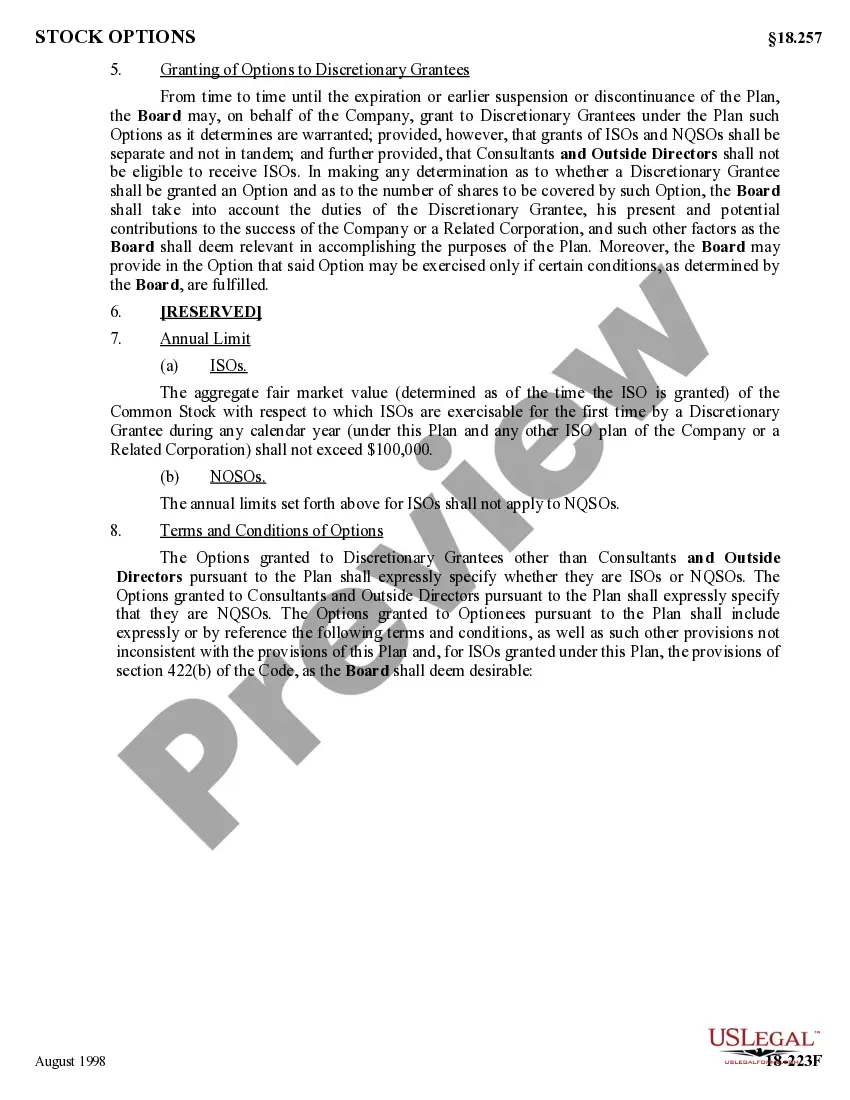
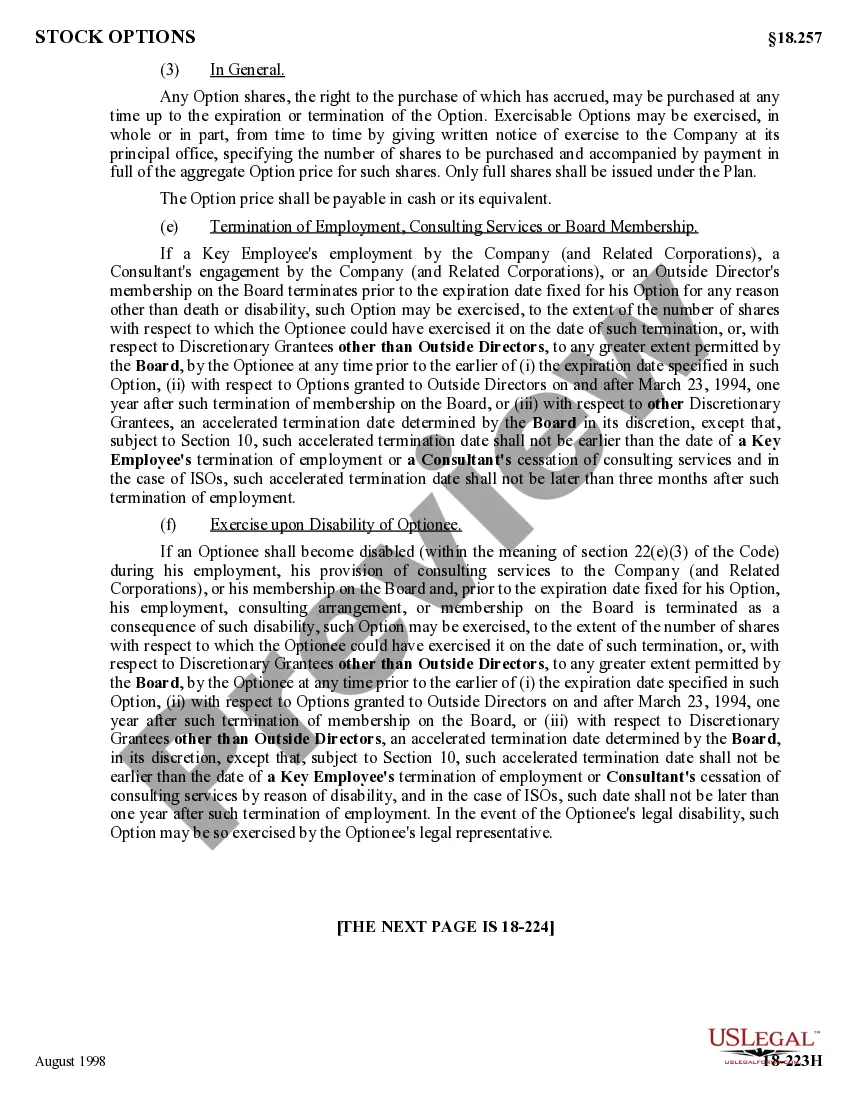
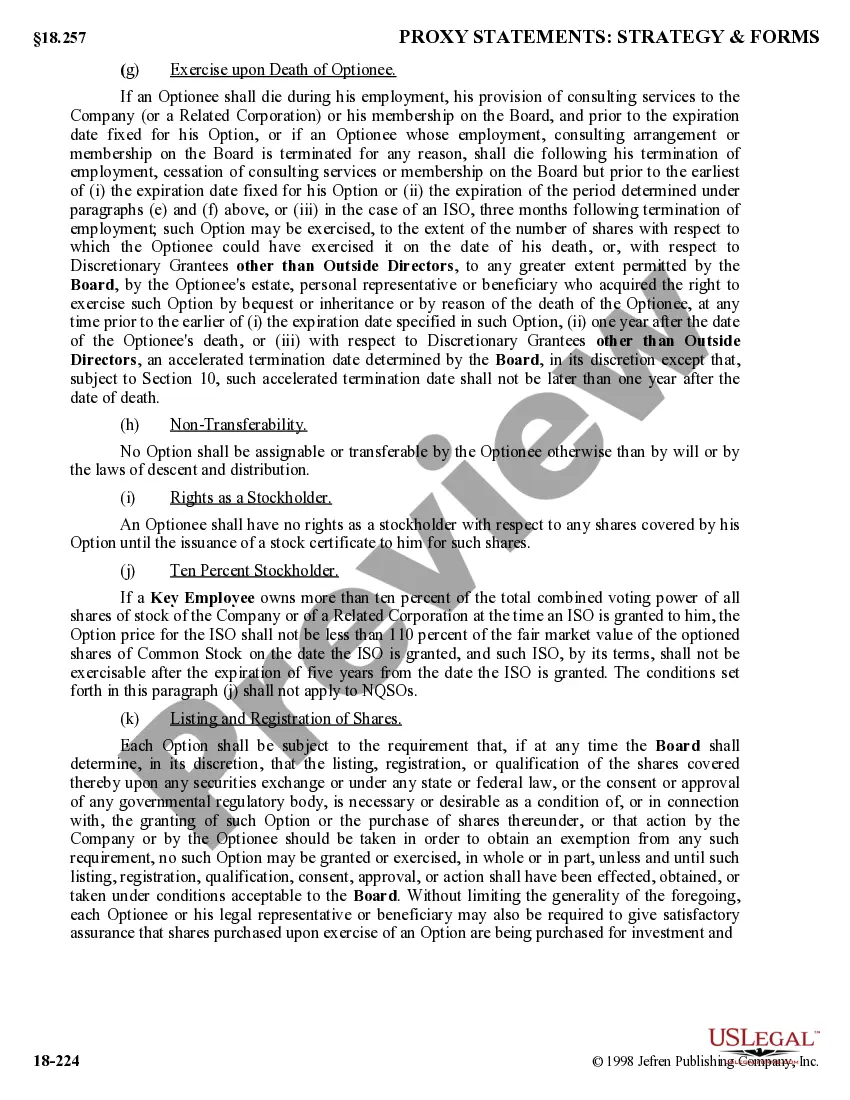
How to fill out Nonemployee Directors Nonqualified Stock Option Plan Of Cucos, Inc.?
The Non-qualified Stock Options for Shares available on this site is a reusable legal document crafted by experienced attorneys in accordance with federal and state laws and regulations.
For over 25 years, US Legal Forms has supplied individuals, companies, and legal experts with more than 85,000 verified, state-specific documents for various business and personal needs. It's the quickest, most straightforward, and most trustworthy method to acquire the necessary paperwork, as the service assures the highest standards of data protection and anti-malware security.
Select the format you desire for your Non-qualified Stock Options for Shares (PDF, DOCX, RTF) and download the sample to your device.
- Search for the document you require and examine it.
- Browse through the file you searched and preview it or review the form description to ensure it meets your needs. If it doesn’t, use the search option to locate the correct one. Click Buy Now once you have identified the template you need.
- Choose and Log Into your account.
- Select the pricing option that fits your needs and register for an account. Use PayPal or a credit card for a swift payment. If you already possess an account, Log In and check your subscription to proceed.
- Obtain the editable template.
Form popularity
FAQ
Non-qualified stock options for shares are reported on your W-2 form in the year you exercise them. The income generated from exercising these options is subject to ordinary income tax and will be included in your total wages. It's crucial to keep accurate records to ensure proper reporting during tax season.
The most profitable options strategy often depends on your investment goals and market conditions. However, one effective approach with non-qualified stock options for shares is to use a covered call strategy. This involves holding shares and selling call options, which can generate income while potentially allowing for capital appreciation.
Non-qualified stock options for shares do not meet the requirements set by the Internal Revenue Code for favorable tax treatment. They can be granted to employees, directors, and even consultants, whereas incentive stock options are limited to employees. This flexibility allows companies to design compensation packages that attract talent.
To minimize taxes on non-qualified stock options for shares, consider exercising them when your income is lower. You may also want to hold onto the shares for more than a year before selling, as this can lead to long-term capital gains tax rates. Additionally, consulting with a tax advisor can help you strategize your options effectively.
Avoiding tax on non-qualified stock options for shares is challenging since they are generally taxed as ordinary income at exercise. However, you can strategically plan your exercise timing and consider holding shares long enough to qualify for capital gains tax rates. Seeking the expertise of tax professionals or utilizing platforms like USLegalForms can help you navigate tax implications effectively and explore options to minimize your tax burden.
To report non-qualified stock options for shares on your tax return, you must first calculate your gain or loss from the sale of the shares. This involves using the information provided on your 1099 B form. You typically report the income as ordinary income in the year you exercise the options. For comprehensive guidance on this process, consider using the resources available on US Legal Forms, which can help you navigate the complexities of tax reporting.
A 1099 B form reports the proceeds from broker and barter exchange transactions, including the sale of non-qualified stock options for shares. When you exercise these options and sell the resulting shares, your broker will issue a 1099 B to detail your gains or losses. This information is essential for accurately reporting your income and ensuring compliance with tax regulations. Understanding this form helps you manage your financial records effectively.