Leave For Work
Description
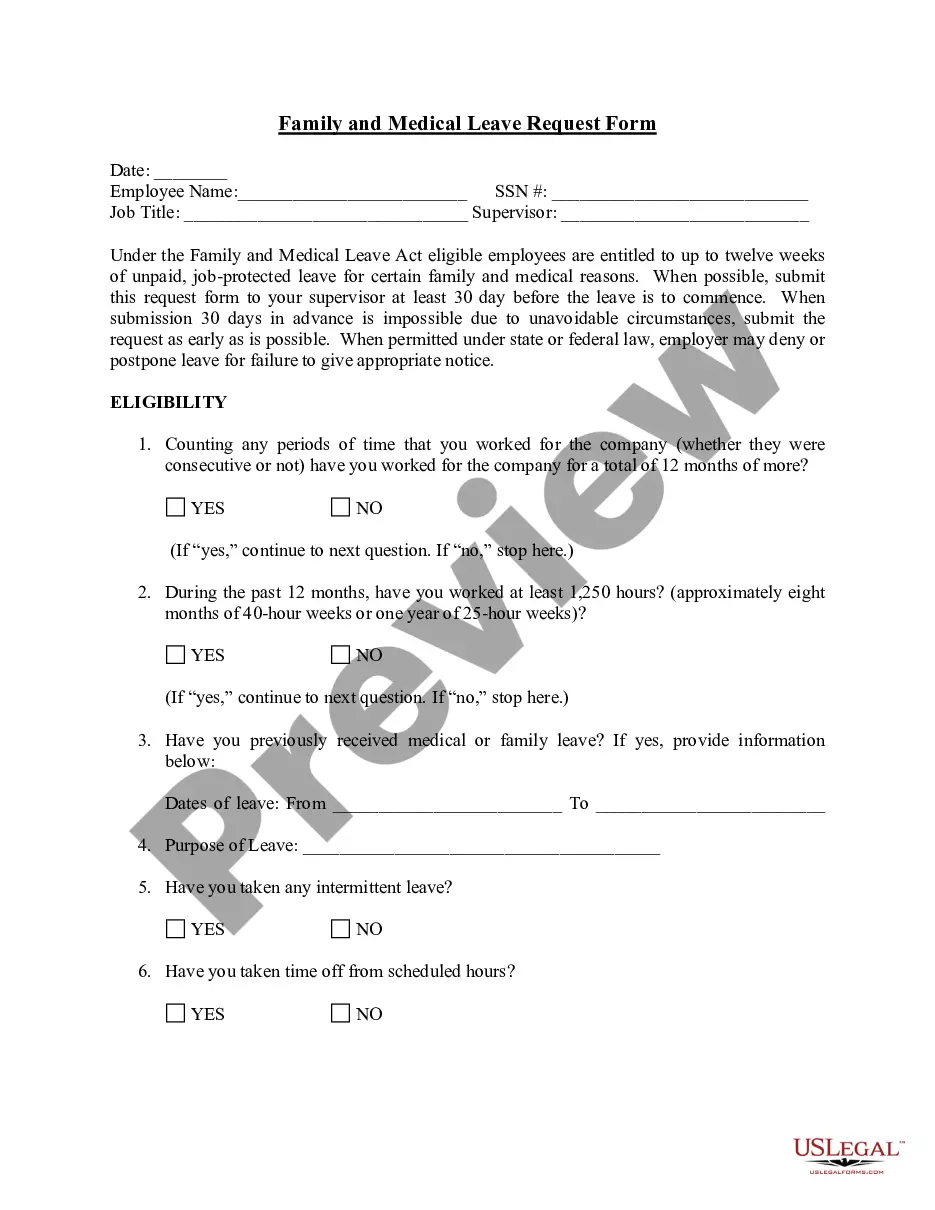
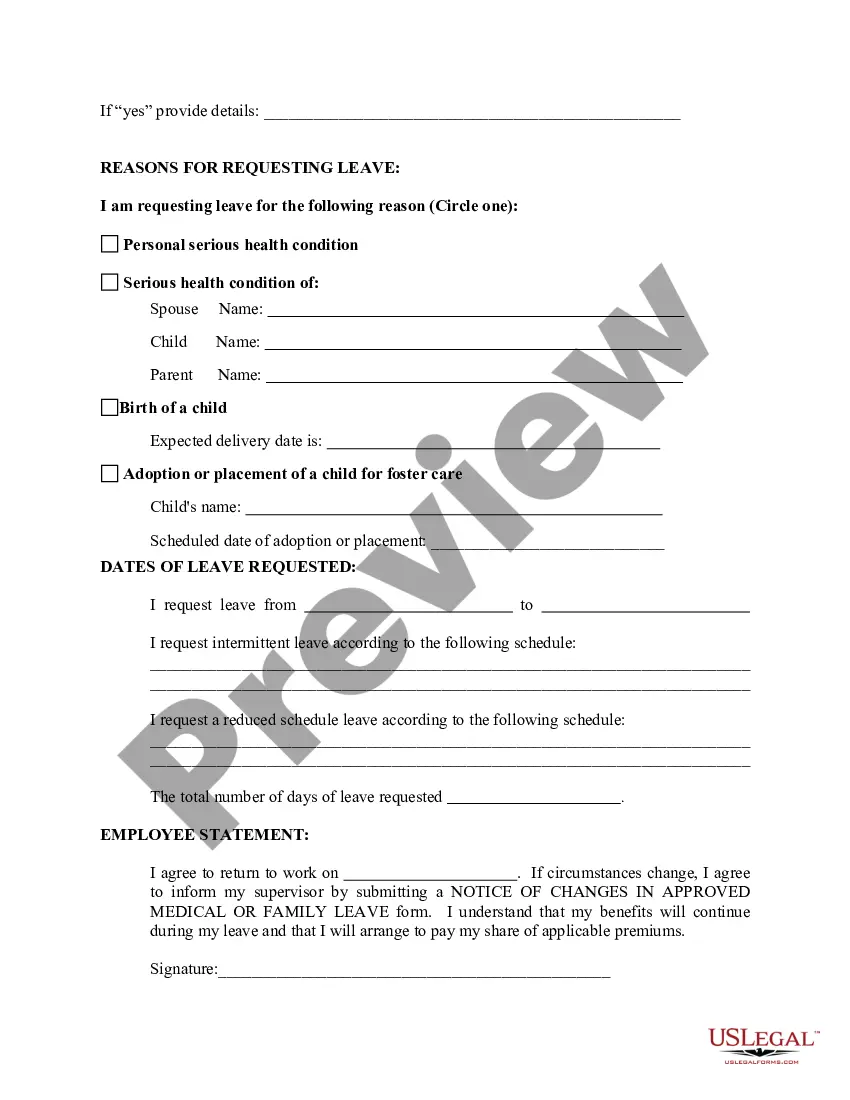
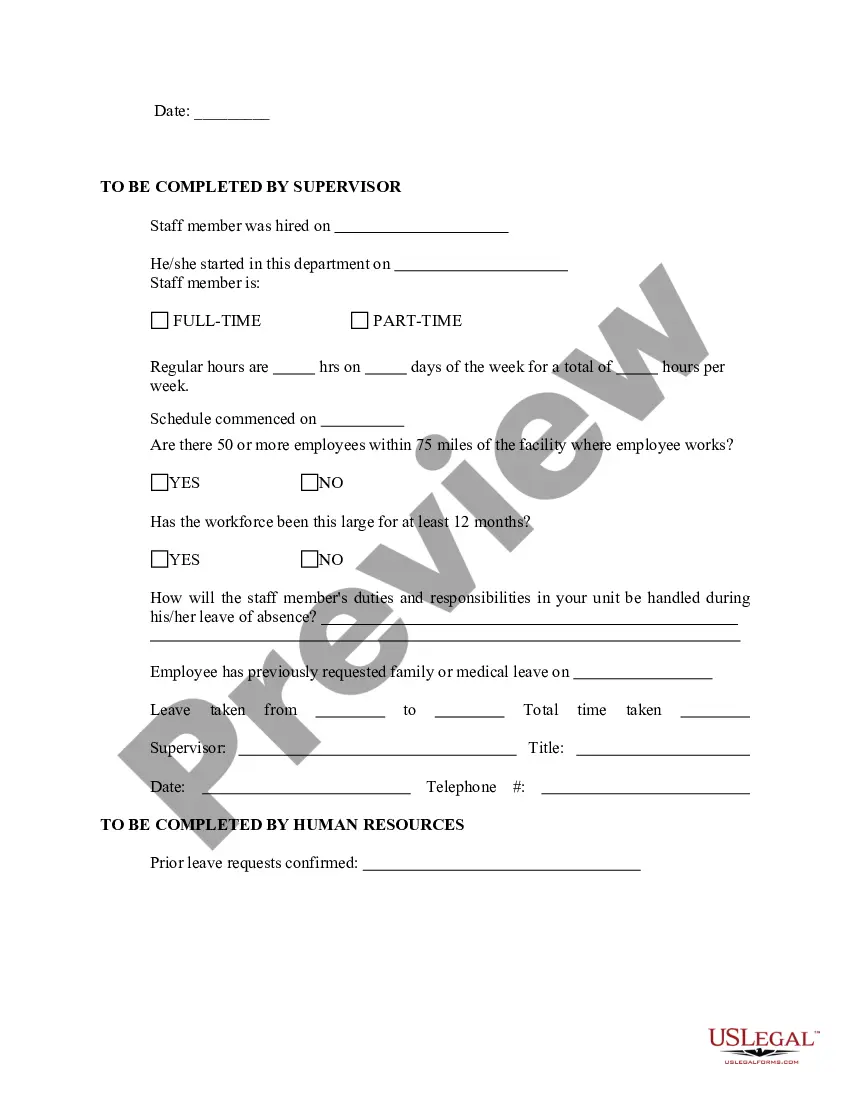
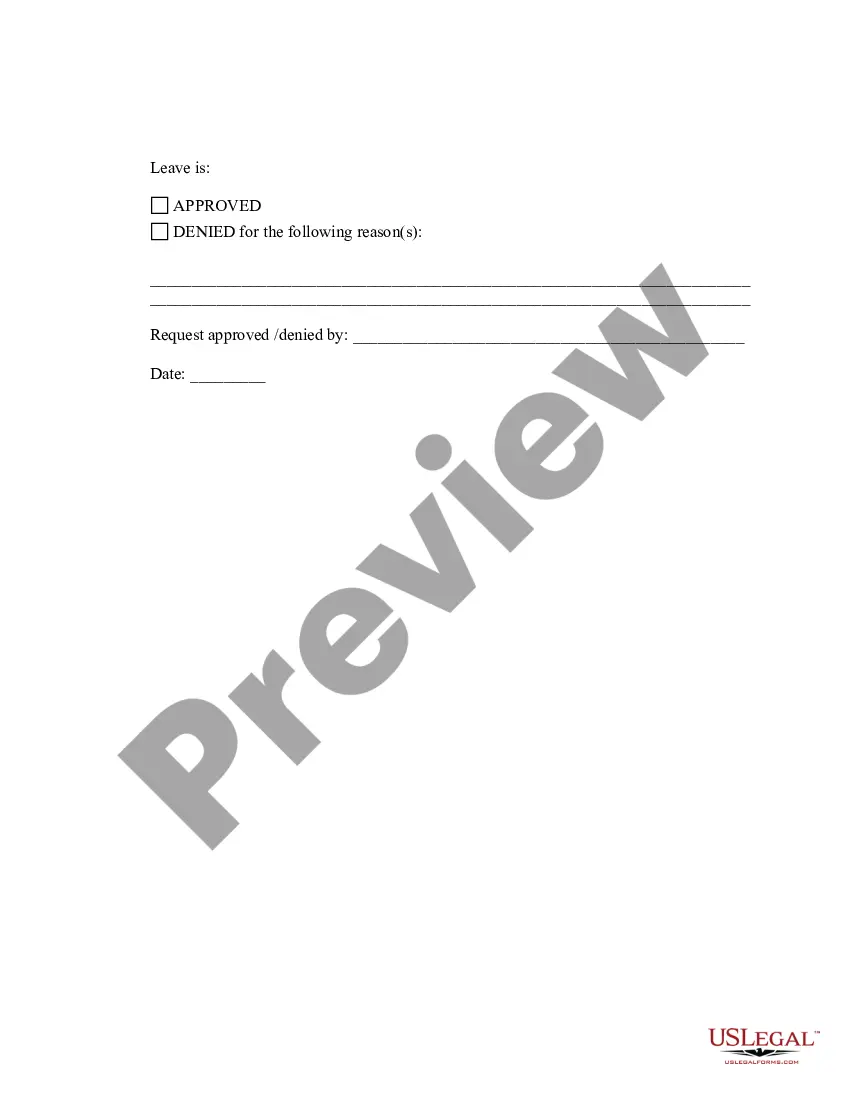
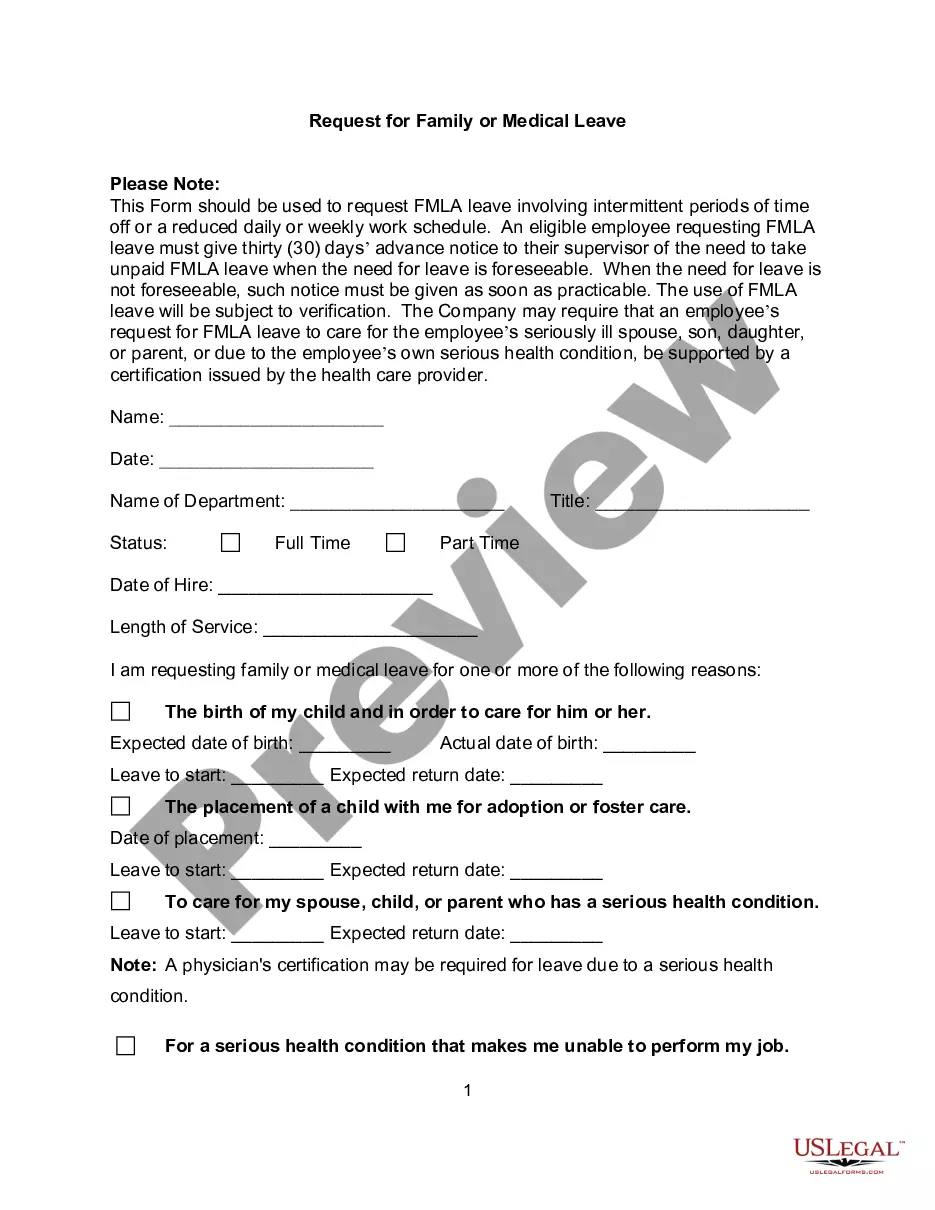
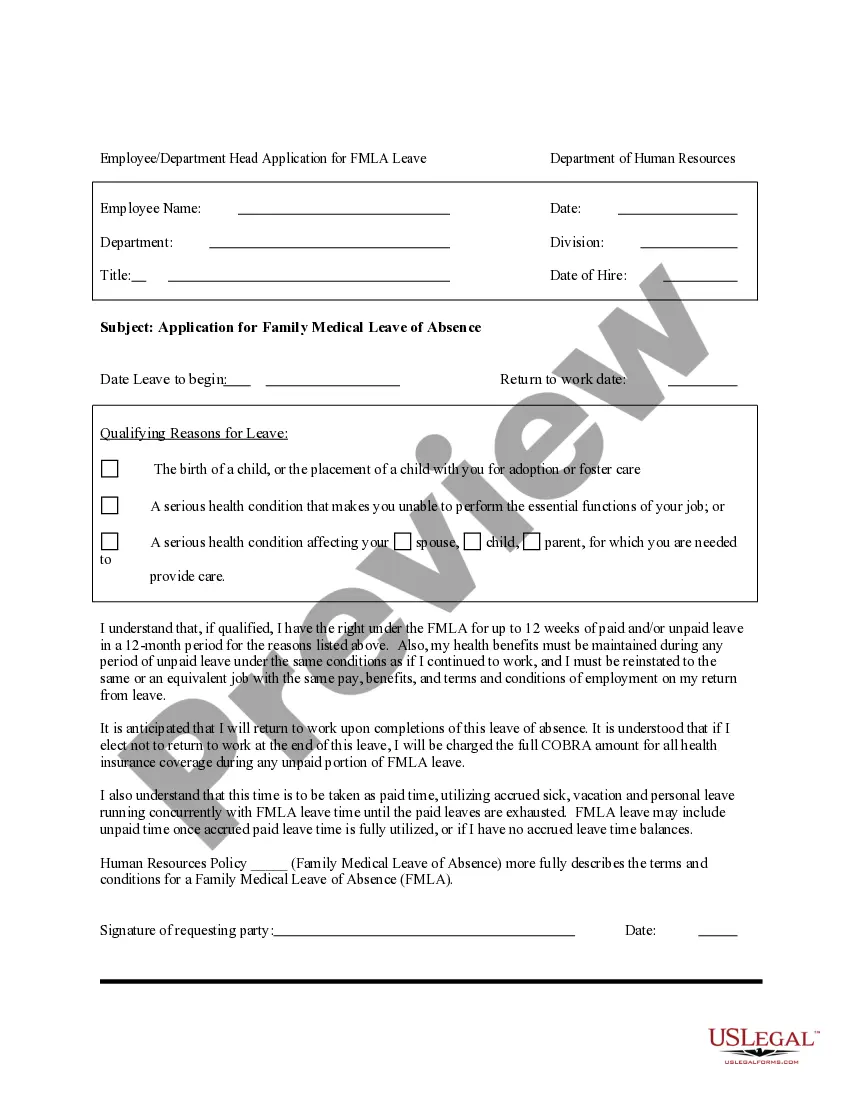
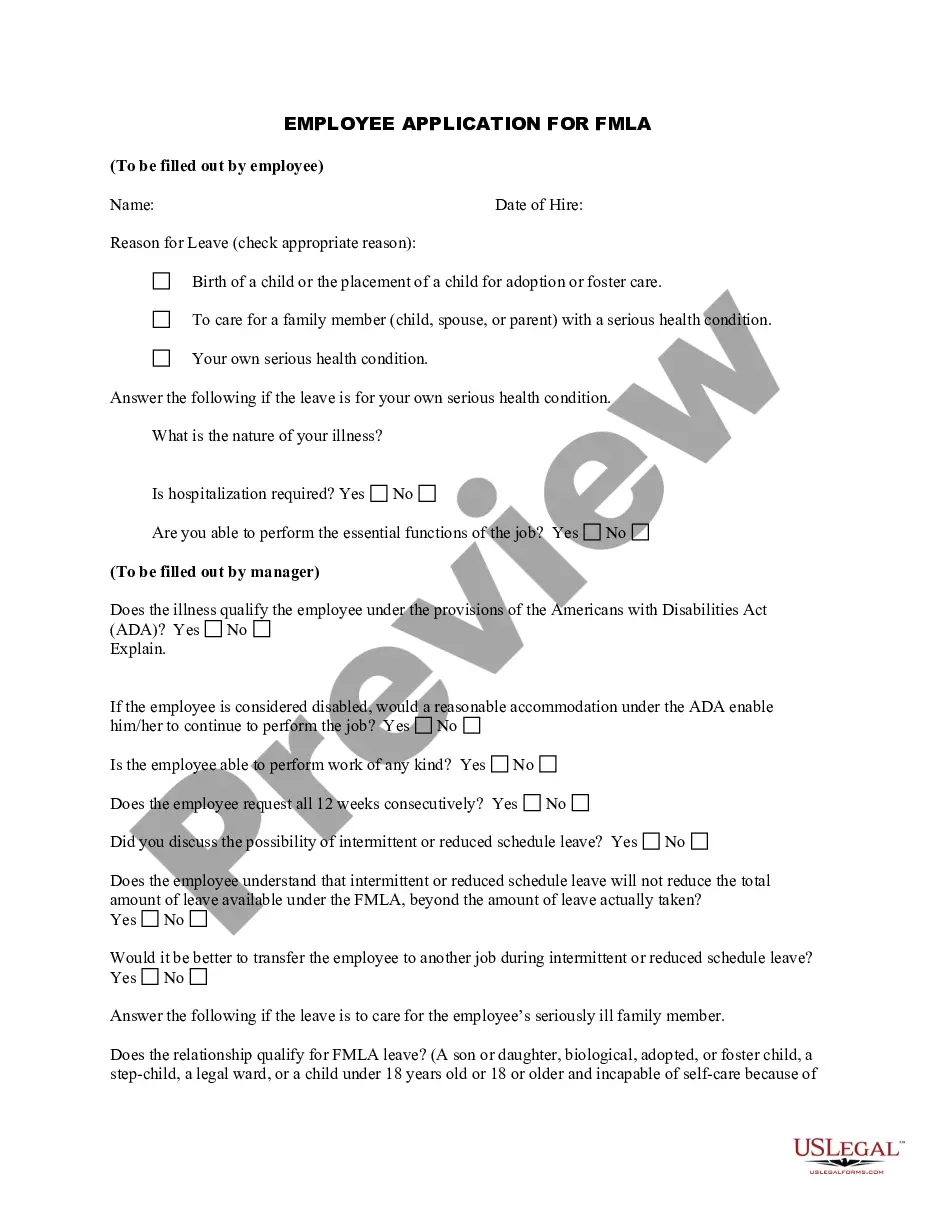
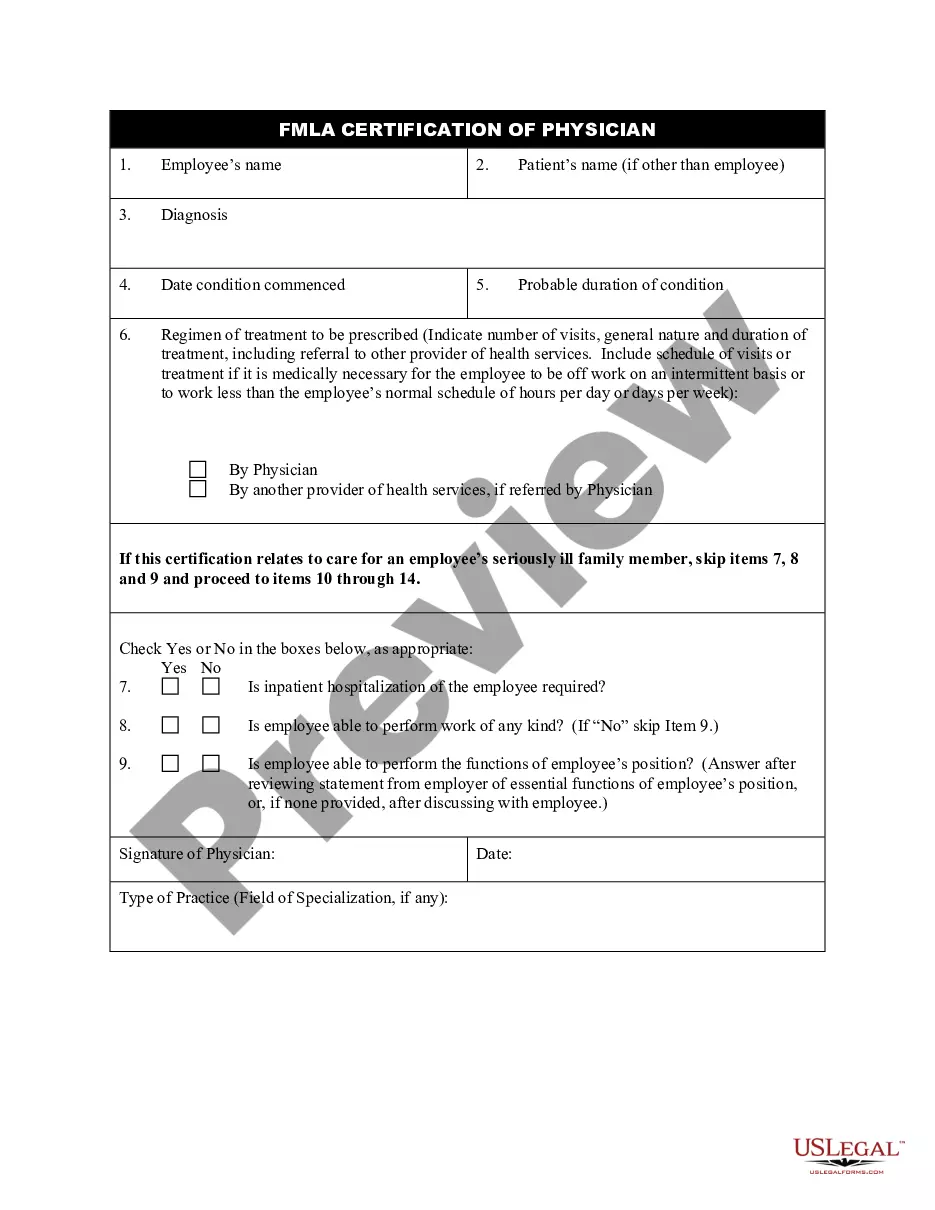
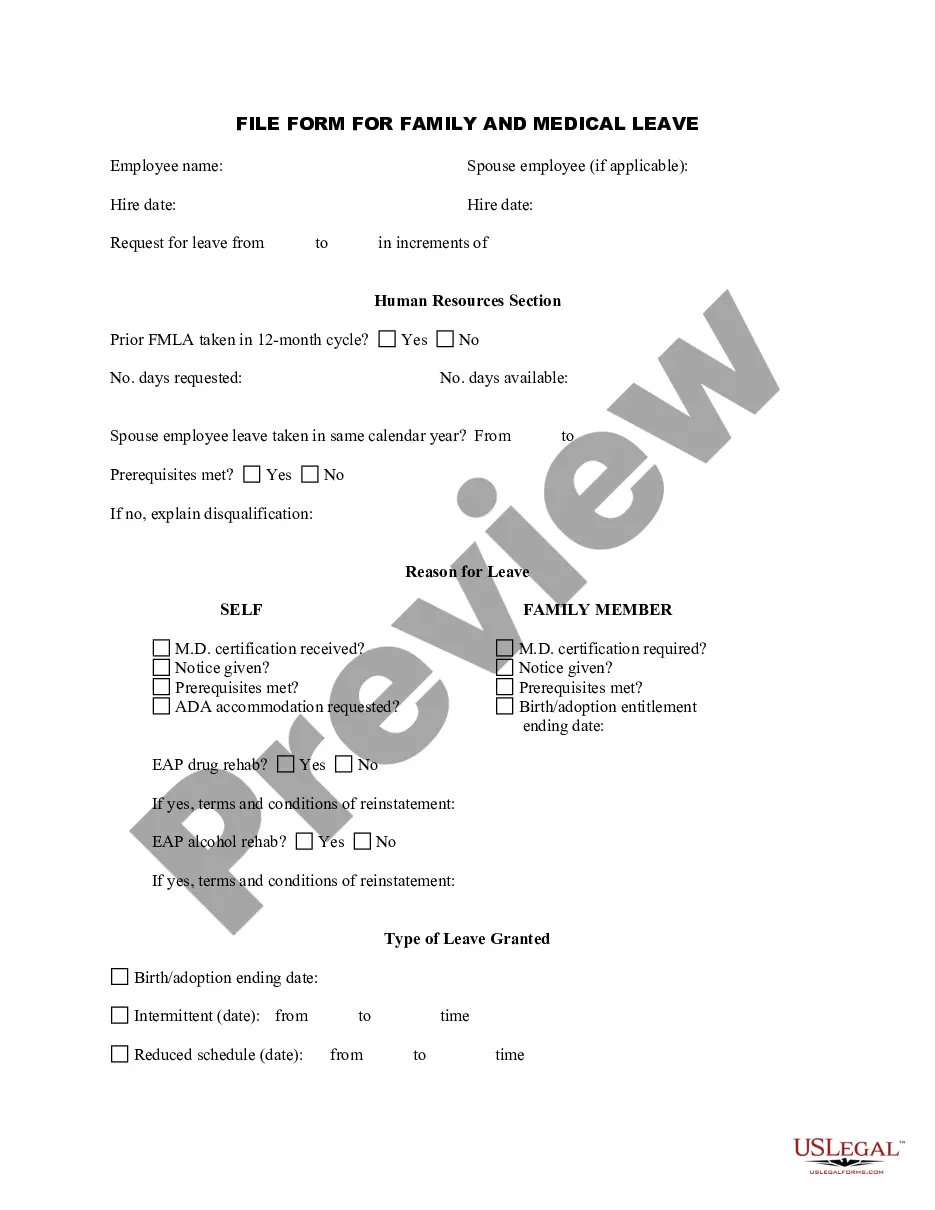
How to fill out Family And Medical Leave Request Form?
Whether for professional reasons or personal concerns, everyone ultimately has to confront legal matters in their lifetime.
Filling out legal documents requires meticulous care, beginning with choosing the correct template example.
With an extensive US Legal Forms catalog available, you will never need to waste time searching for the correct template online. Utilize the library's user-friendly navigation to find the suitable form for any situation.
- Locate the template you require by utilizing the search box or the catalog navigation.
- Review the details of the form to verify it aligns with your situation, state, and locality.
- Select the form's preview to examine it.
- If it is the wrong document, return to the search tool to find the Leave For Work template you need.
- Download the template once it satisfies your criteria.
- If you possess a US Legal Forms account, click Log in to access previously stored documents in My documents.
- If you do not have an account yet, you can acquire the form by clicking Buy now.
- Choose the appropriate pricing option.
- Fill out the profile registration form.
- Select your payment option: you may utilize a credit card or PayPal account.
- Choose the desired file format and download the Leave For Work document.
- Once it is downloaded, you can fill out the form with editing software or print it out and complete it by hand.
Form popularity
FAQ
Being on leave for work indicates that you have formally notified your employer of your absence due to specific reasons such as illness or family emergencies. During this time, your job is typically protected, allowing you to return without penalty. It's essential to familiarize yourself with policies regarding leave for work to ensure your rights are upheld during your absence.
Leave for work signifies the authorized time away from your job, which may stem from medical needs, family obligations, or simply personal time needed for rest. It serves an important role in fostering a supportive workplace environment. Knowing your rights and options regarding leave for work can empower you to take necessary time when needed.
The Family and Medical Leave Act (FMLA) provides eligible employees with unpaid, job-protected leave for specific medical and family reasons. In contrast, a Leave of Absence (LOA) may encompass a broader range of personal reasons not necessarily covered by FMLA. Understanding these differences helps you navigate your options when considering various leaves for work.
Leaving your work at work means that you mentally and physically separate your job duties from your personal life. This approach helps maintain a healthy work-life balance, allowing you to recharge and focus on other important aspects of your life. Emphasizing this practice can enhance your overall productivity and well-being.
When you talk about leave for work, you might refer to it as taking time off, being on leave, or requesting a leave of absence. Each phrasing conveys the idea of stepping away from your job responsibilities temporarily. Clear communication about your leave intentions is vital for maintaining good relationships with your employer.
Leave for work refers to the time when an employee is allowed to be away from their job due to various reasons such as medical issues, personal matters, or family emergencies. It is a crucial aspect of workplace policy designed to support employees' well-being. Understanding the different types of leave can help you make informed decisions about your work life.
Yes, you can often take leave for personal reasons, depending on your company's policy. Personal reasons might encompass anything from family matters to mental health needs. It is important to clearly state your reasons when requesting leave for work to ensure your employer understands your situation and can support you accordingly.
Valid reasons for leave of absence may include a serious illness, recovery from surgery, or the need to care for a family member. Each workplace may have specific guidelines, so be sure to reference your employee handbook. Articulating a solid, valid reason for leave for work can facilitate a smoother discussion with your employer.
The best excuse to take leave for work is one that is genuine and clearly communicates your need for time off. Commonly accepted excuses include medical issues, personal emergencies, or the need for mental health days. Ensure that whatever excuse you use is legitimate and aligns with your company’s leave policies to avoid complications.
A valid reason for a leave of absence often includes health-related issues, family matters, or emergencies. It is crucial to support your request with appropriate documentation when necessary, such as a doctor’s note. When you present a valid reason for leave for work, it increases the likelihood of approval and fosters understanding from your employer.