Llc Members Company For Business
Description
Get your form ready online
Our built-in tools help you complete, sign, share, and store your documents in one place.
Make edits, fill in missing information, and update formatting in US Legal Forms—just like you would in MS Word.
Download a copy, print it, send it by email, or mail it via USPS—whatever works best for your next step.
Sign and collect signatures with our SignNow integration. Send to multiple recipients, set reminders, and more. Go Premium to unlock E-Sign.
If this form requires notarization, complete it online through a secure video call—no need to meet a notary in person or wait for an appointment.
We protect your documents and personal data by following strict security and privacy standards.

Make edits, fill in missing information, and update formatting in US Legal Forms—just like you would in MS Word.

Download a copy, print it, send it by email, or mail it via USPS—whatever works best for your next step.

Sign and collect signatures with our SignNow integration. Send to multiple recipients, set reminders, and more. Go Premium to unlock E-Sign.

If this form requires notarization, complete it online through a secure video call—no need to meet a notary in person or wait for an appointment.

We protect your documents and personal data by following strict security and privacy standards.
Looking for another form?



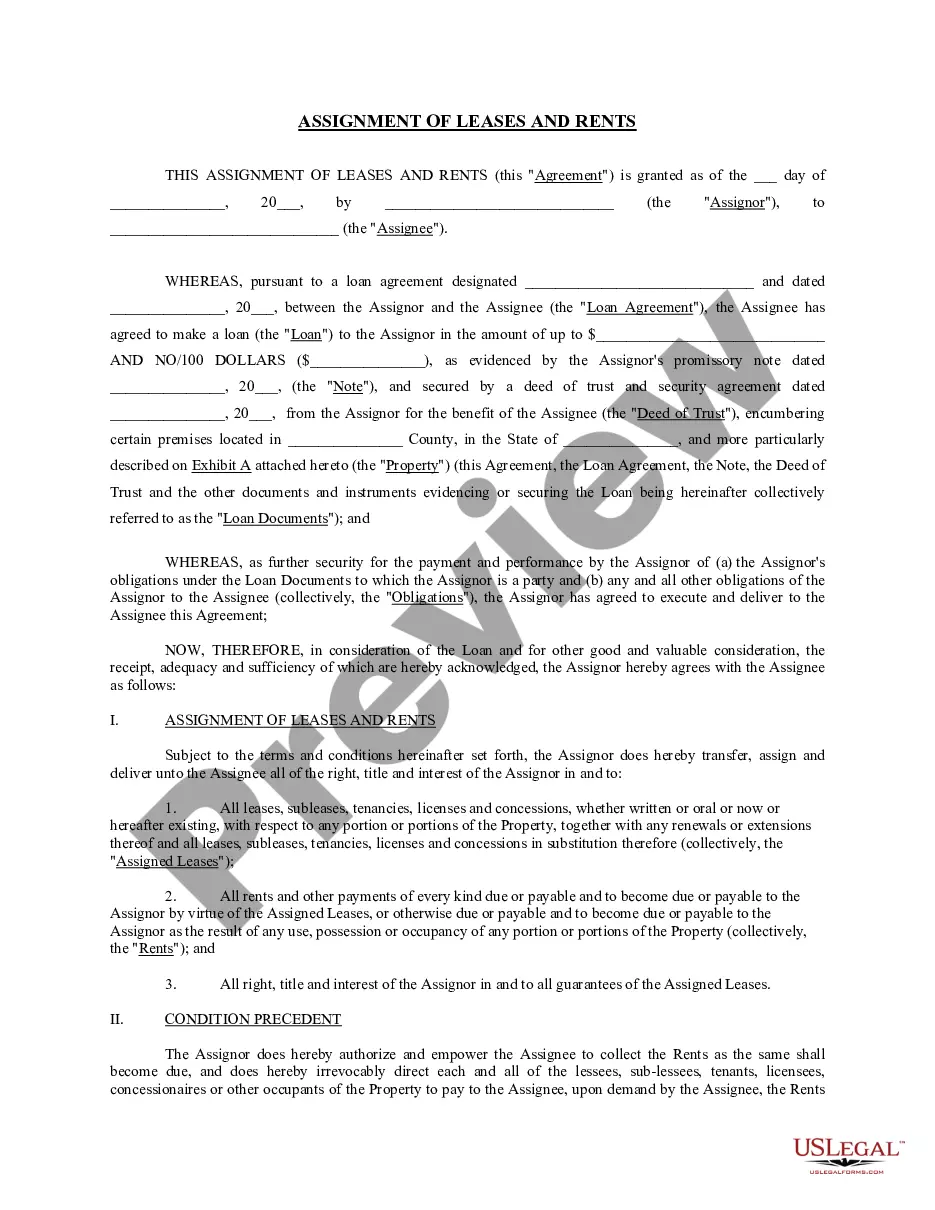
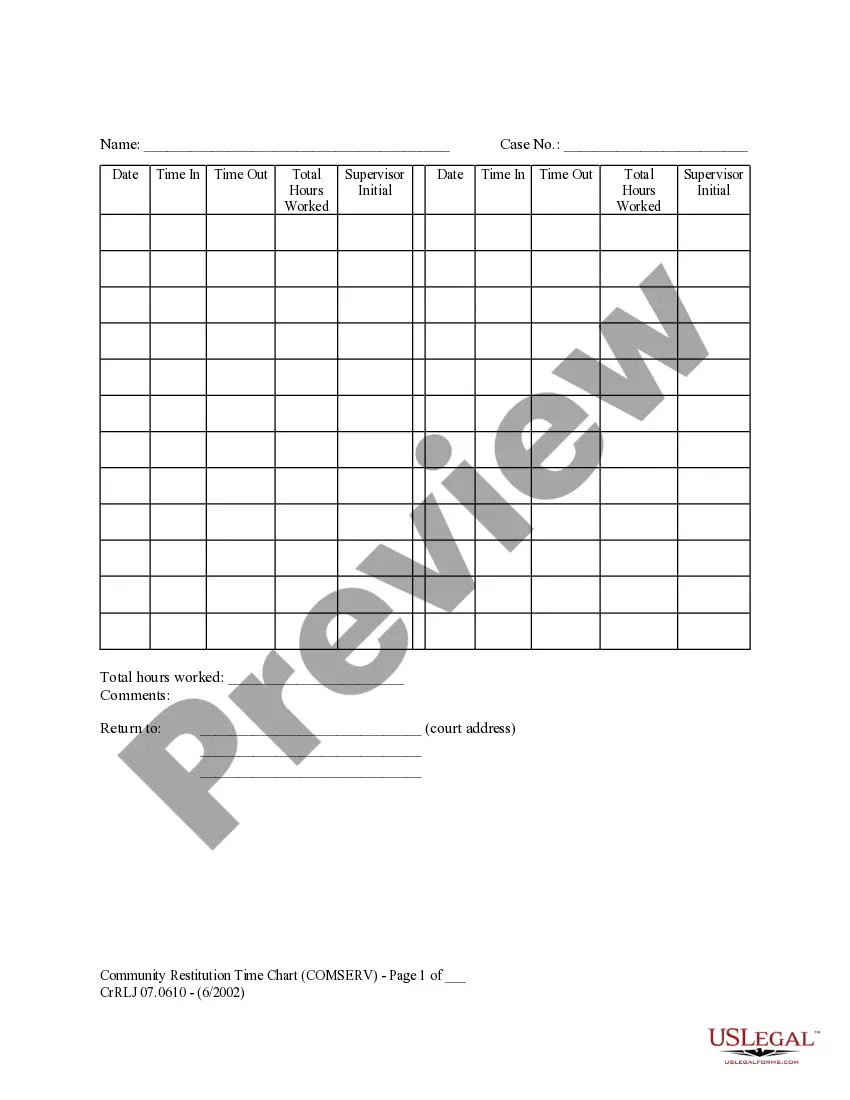
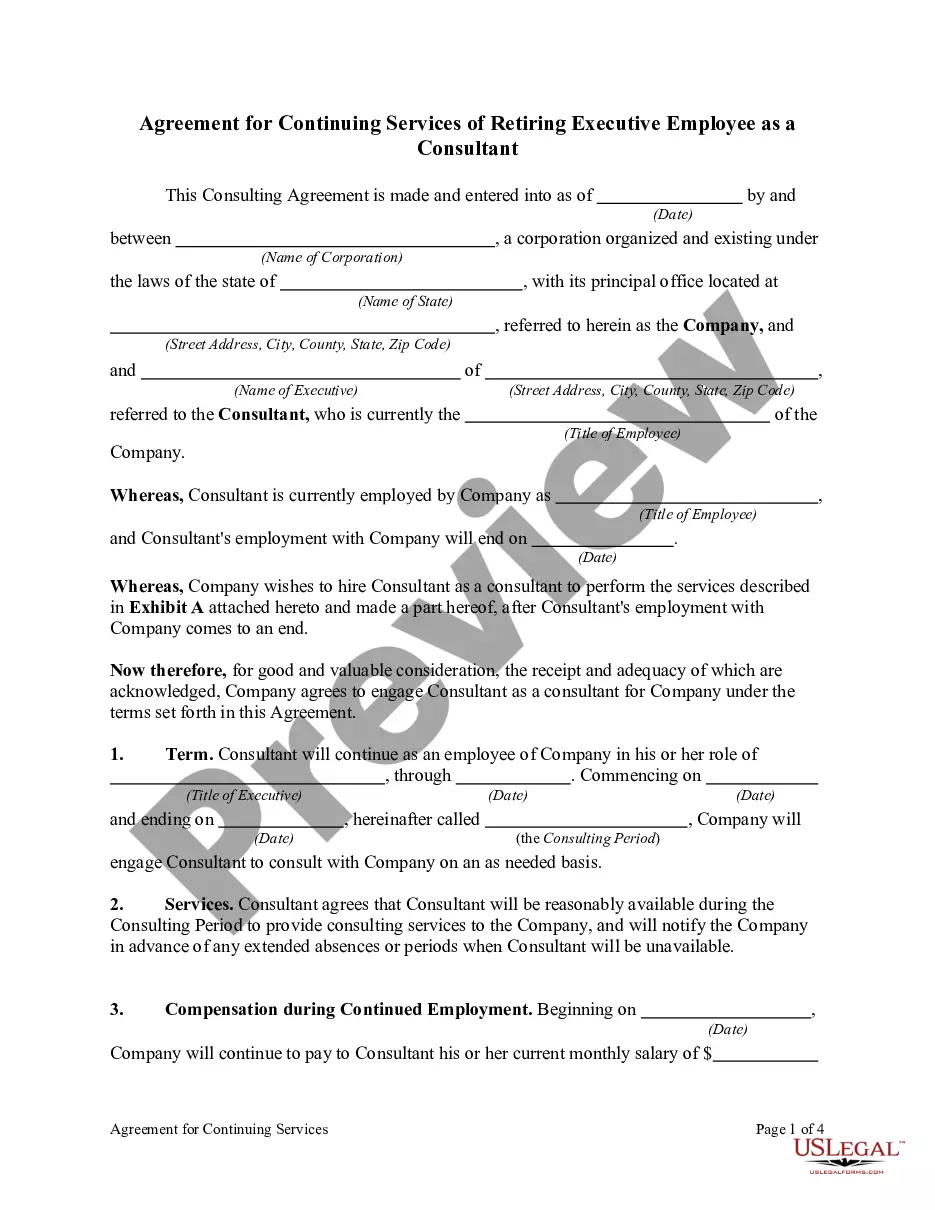
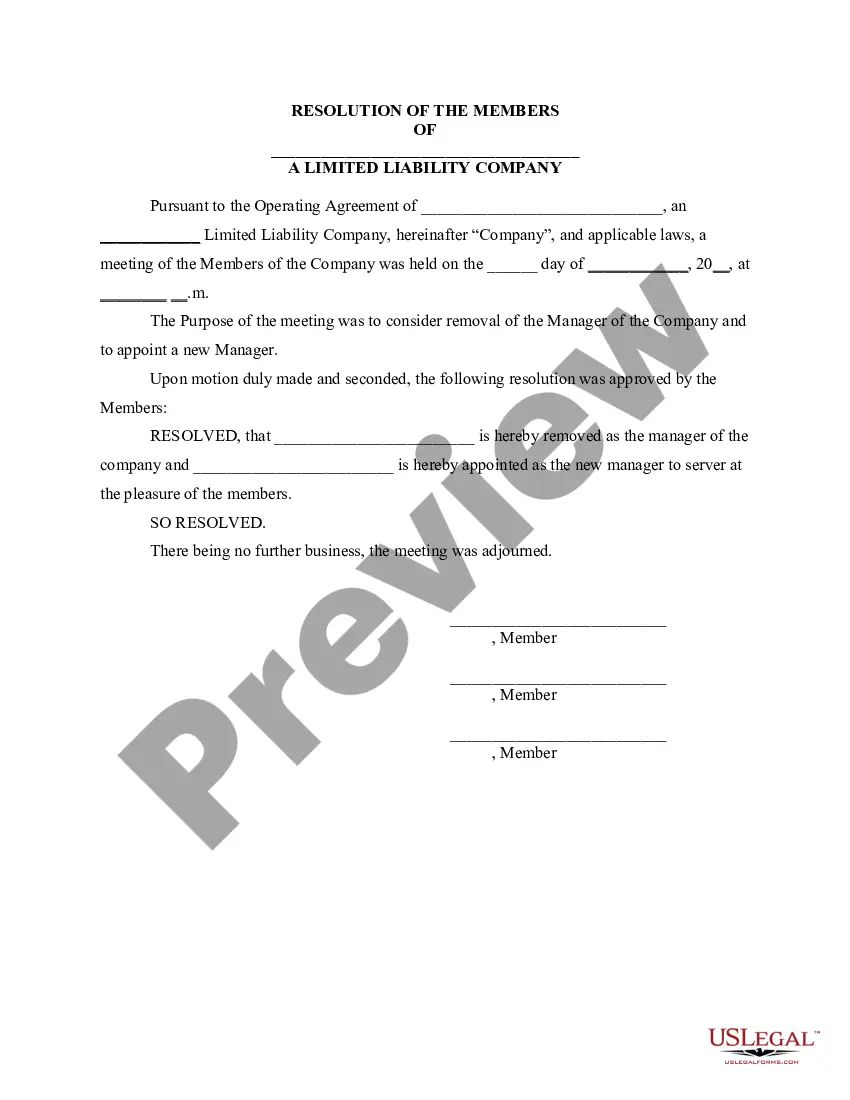
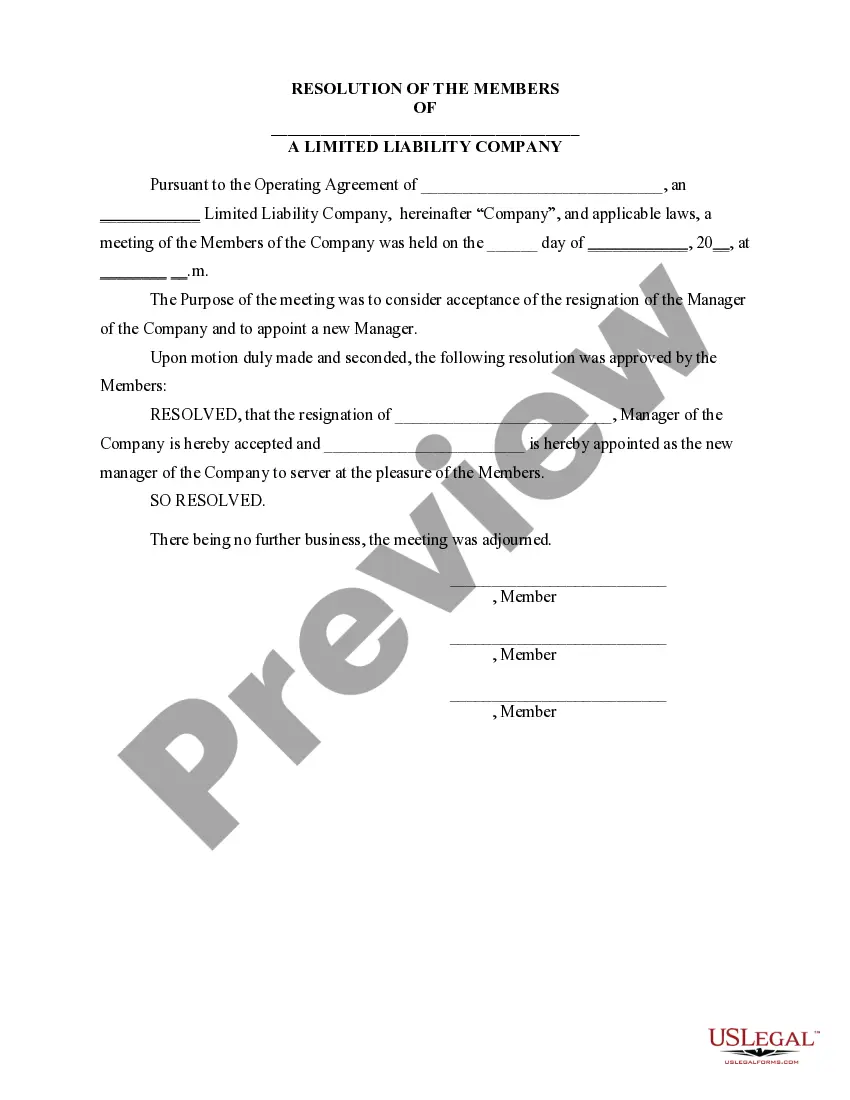
How to fill out Resolution Of Meeting Of LLC Members To Remove The Manager Of The Company And Appoint A New Manager?
- If you're already a member, log in to access your account and quickly download the required form template. Ensure your subscription is current, and renew it if necessary.
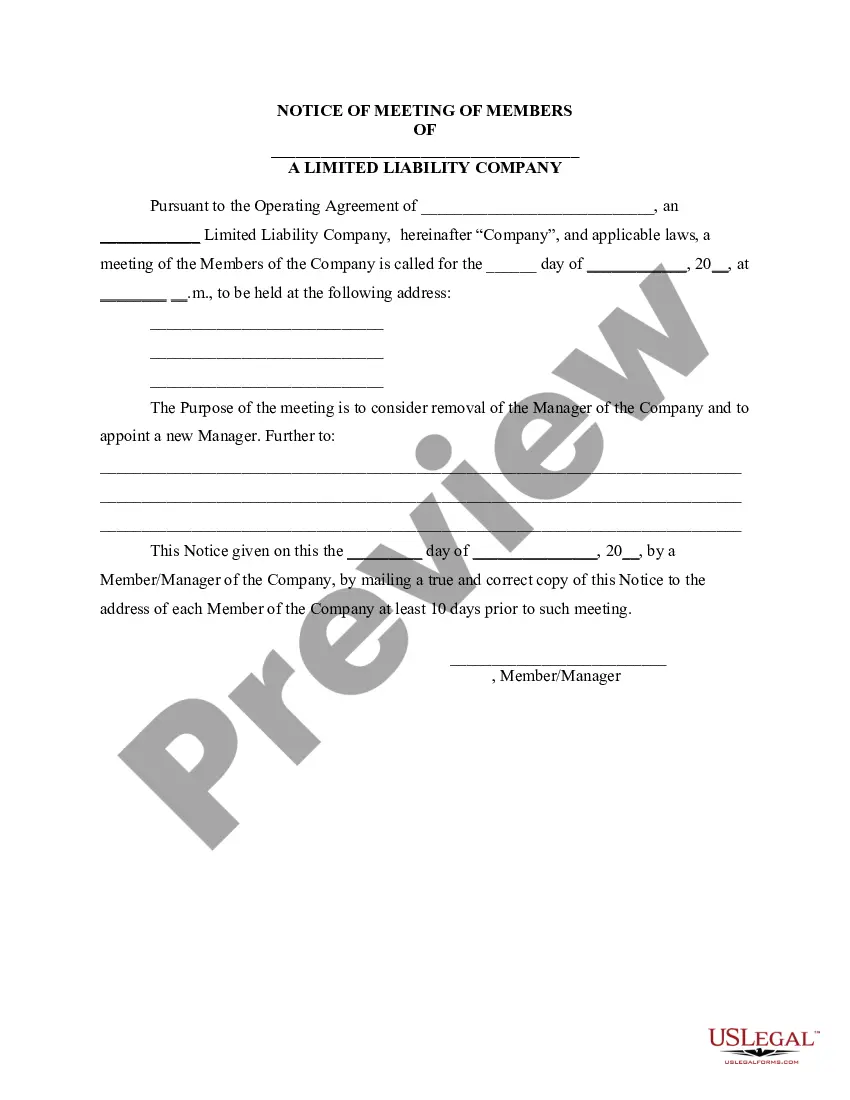
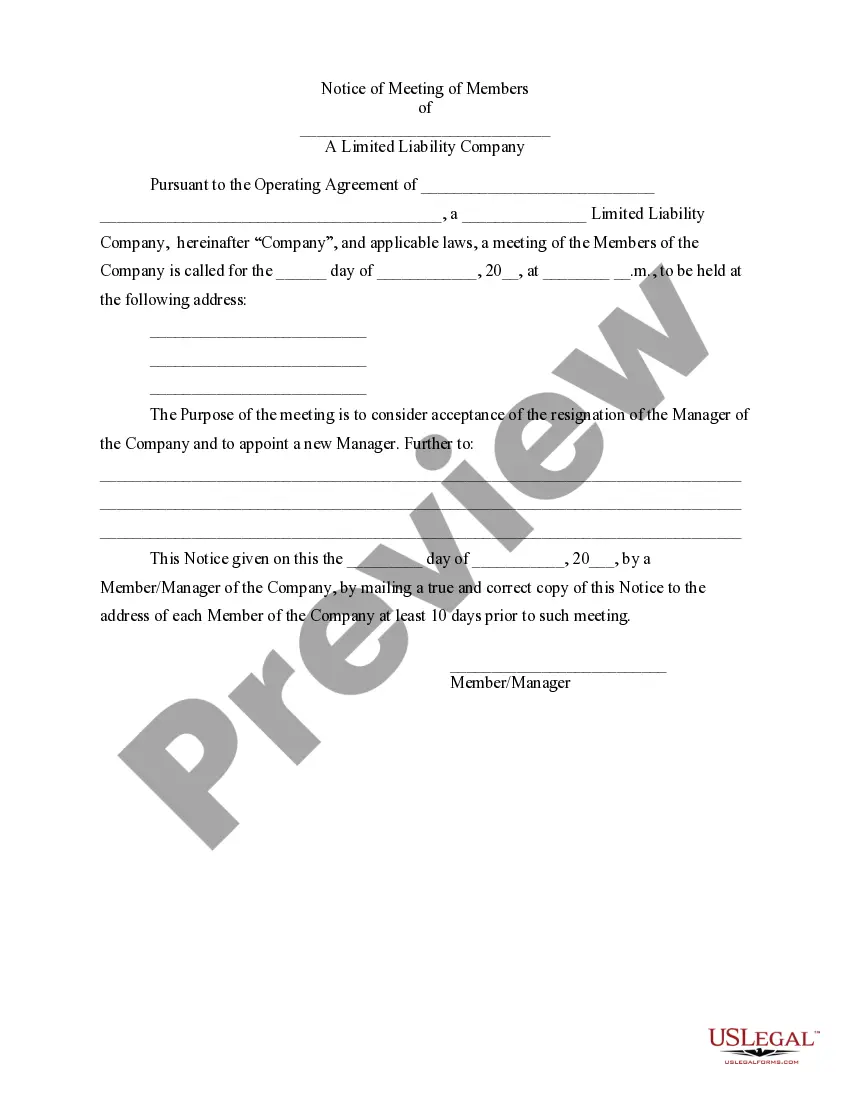
- For first-time users, begin by exploring the Preview mode and descriptions of the forms available. Verify that the template aligns with your business requirements and local laws.
- If you notice any discrepancies with your chosen form, utilize the Search tab at the top of the page to find the appropriate template.
- Once you've found the right document, click the Buy Now button and select your preferred subscription plan. Registration is required to access the extensive library of forms.
- Complete your purchase by entering your credit card information or using your PayPal account.
- After securing your subscription, you can download your form. Access it anytime from the My Forms section in your profile.
US Legal Forms offers an extensive online library of over 85,000 customizable legal templates. This makes it easier for both individuals and attorneys to create precise legal documents.
Take control of your business documentation today. Start your journey with US Legal Forms and ensure that your LLC members company is compliant and well-organized!
Form popularity
FAQ
Yes, an owner of an LLC is referred to as a member. This terminology highlights the roles and rights associated with ownership in the company. Using consistent language throughout your business documents can streamline understanding and governance. Ensure that when launching your LLC members company for business, you clearly communicate member roles.
In the context of an LLC, a 'member' refers to an individual or entity that has ownership stakes in the company. Members share in the profits and losses, and they may also participate in daily operations. This collective ownership model supports collaboration, making your LLC members company for business more resilient and adaptable. Clarity about who qualifies as a member is crucial for operations.
In most cases, a member of an LLC is indeed considered an owner. This designation gives them entitlement to profits and an active role in company decisions. Recognizing members as owners can simplify the understanding of responsibilities and rewards within your LLC members company for business. Clear definitions foster a cooperative environment.
Yes, a company can be a member of an LLC. This allows for business entities to collaborate and share resources effectively. Including a company as a member can provide benefits such as shared expertise and financial support. With the right structure, your LLC members company for business can thrive with diverse members.
Members of an LLC can hold various positions depending on the company's structure and agreements. Common designations include managing members, who actively run the business, and non-managing members, who primarily invest. Understanding these roles can enhance communication and efficiency within your LLC members company for business. Define these positions early on to avoid confusion later.
In an LLC, members are often the owners of the business, but the terms can have different implications. Members participate in managing the LLC and hold rights to its profits. However, some LLCs may have different structures where members are not necessarily the owners but have specific roles. It's essential to clarify these roles when establishing your LLC members company for business.
Ownership and membership have distinct meanings in the context of an LLC. Ownership refers to having financial investment and rights to the profits of the business, while membership signifies being a member of the LLC. In an LLC members share decision-making and management roles. Understanding these terms is crucial for navigating your LLC members company for business.
Filing LLC taxes with your personal taxes depends on your LLC's structure. A single-member LLC allows you to report business income directly on your personal tax return, simplifying the tax process. In contrast, if you have a multi-member LLC, you will need to file a separate partnership return, which then affects how each member files their taxes. Utilizing resources from US Legal Forms can help clarify what steps to take for your LLC members company for business.
If you operate a single-member LLC, you can file your personal and LLC taxes together without complications. The profits and losses from your business are reported on your personal tax return, streamlining the filing process. Conversely, with multi-member LLCs, you will need to file a separate return for the business. Familiarizing yourself with tax filings for an LLC members company for business can be easier with tools like US Legal Forms to ensure you meet all requirements.
Filing personal and business taxes together is common for single-member LLCs. In this case, your LLC's income is reported on your personal tax return, simplifying the process. However, multi-member LLCs file a separate partnership return, making it essential to keep business finances distinct. Using the US Legal Forms platform can help you understand the forms and procedures required for your specific LLC members company for business.