Sample Regarding Deposition Template For Subpoena
Description
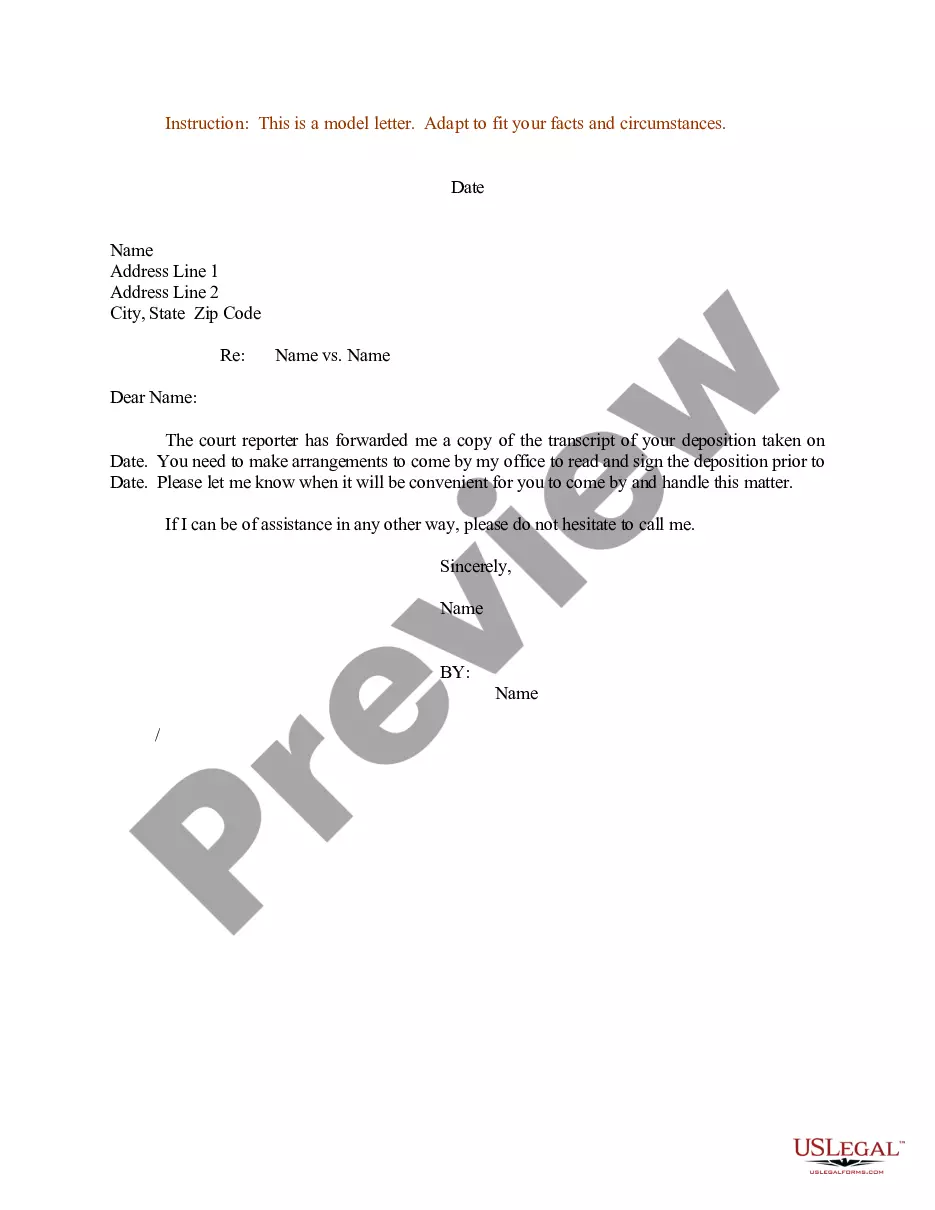
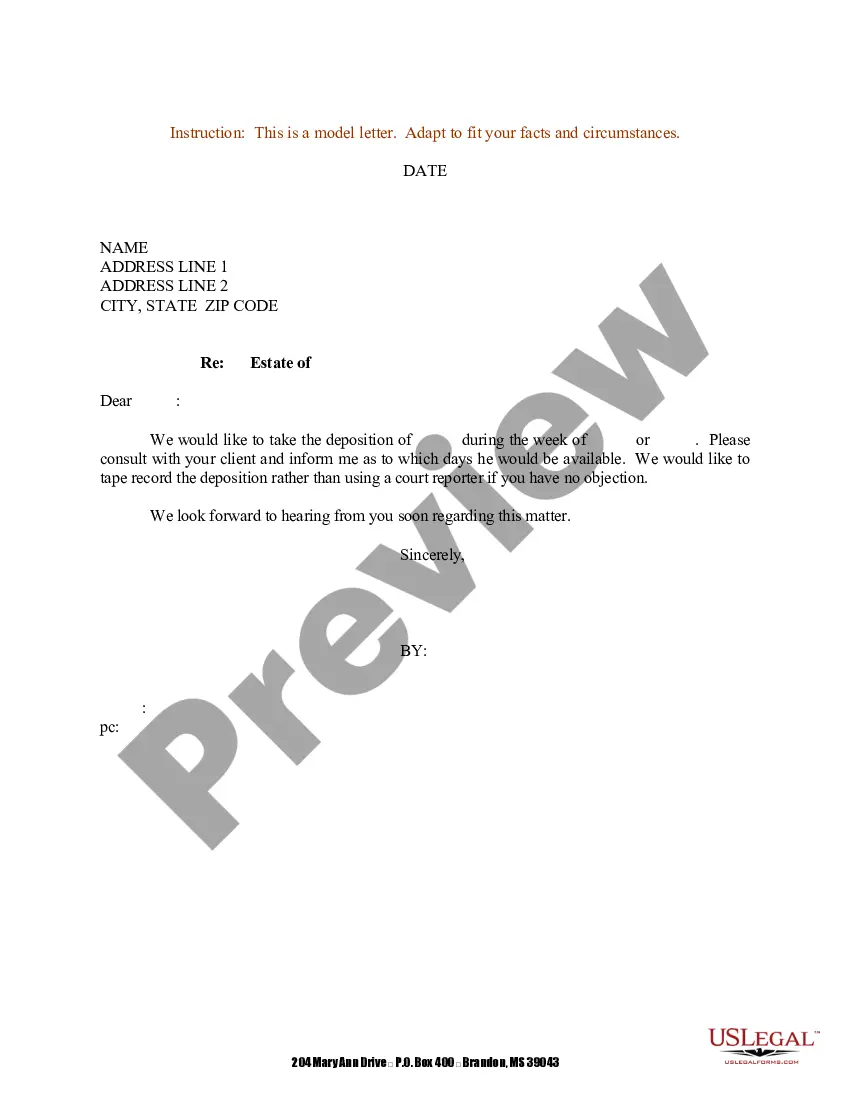
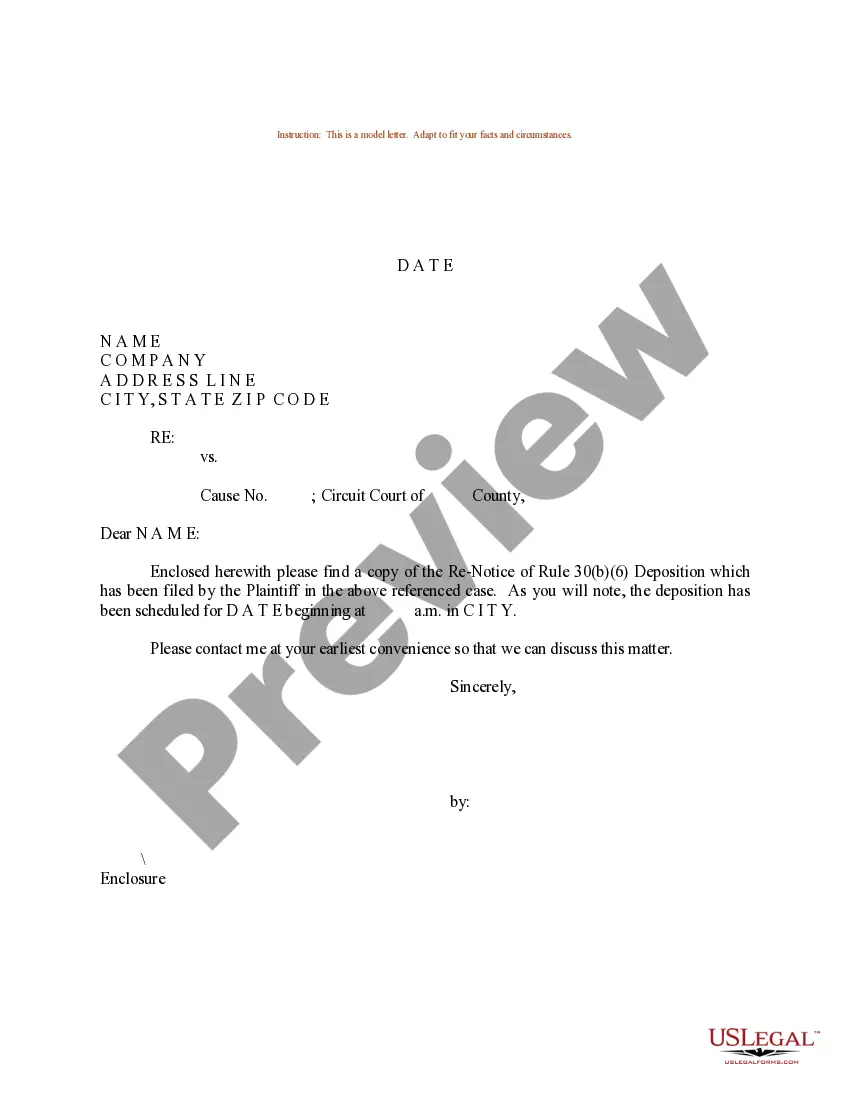
Get your form ready online
Our built-in tools help you complete, sign, share, and store your documents in one place.
Make edits, fill in missing information, and update formatting in US Legal Forms—just like you would in MS Word.
Download a copy, print it, send it by email, or mail it via USPS—whatever works best for your next step.
Sign and collect signatures with our SignNow integration. Send to multiple recipients, set reminders, and more. Go Premium to unlock E-Sign.
If this form requires notarization, complete it online through a secure video call—no need to meet a notary in person or wait for an appointment.
We protect your documents and personal data by following strict security and privacy standards.

Make edits, fill in missing information, and update formatting in US Legal Forms—just like you would in MS Word.

Download a copy, print it, send it by email, or mail it via USPS—whatever works best for your next step.

Sign and collect signatures with our SignNow integration. Send to multiple recipients, set reminders, and more. Go Premium to unlock E-Sign.

If this form requires notarization, complete it online through a secure video call—no need to meet a notary in person or wait for an appointment.

We protect your documents and personal data by following strict security and privacy standards.
Looking for another form?
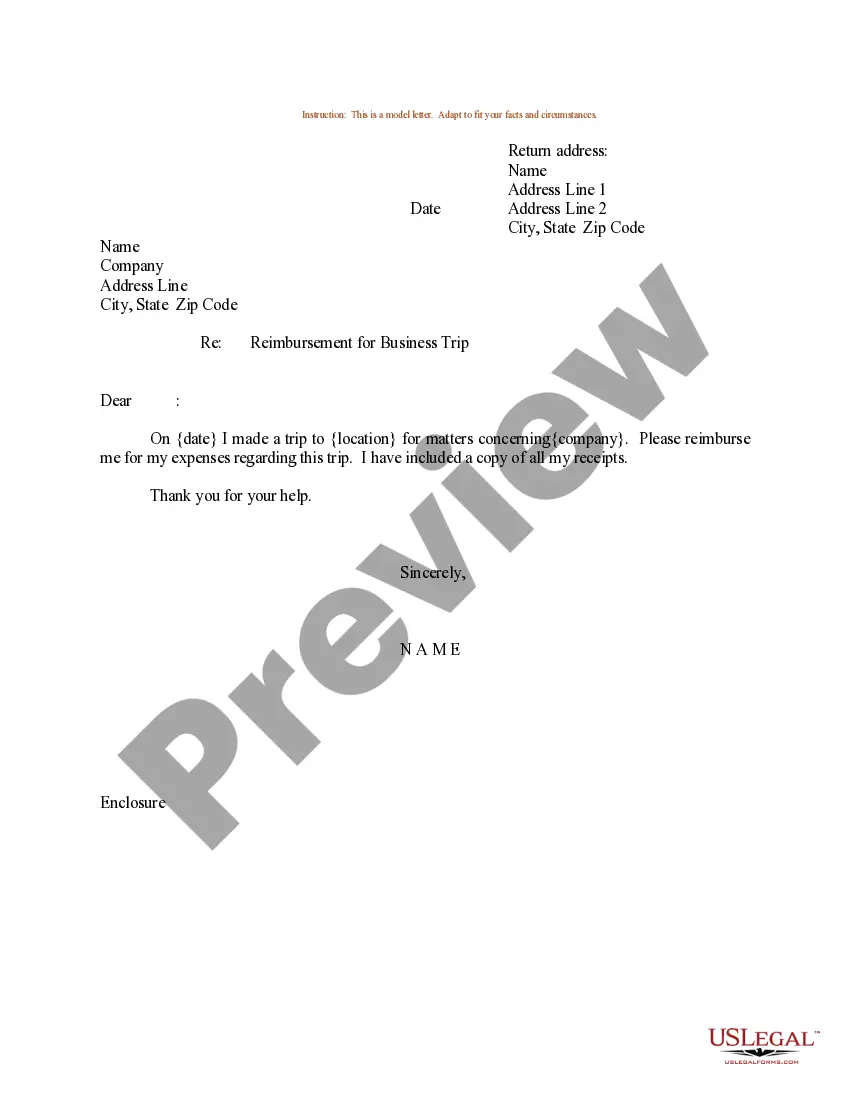
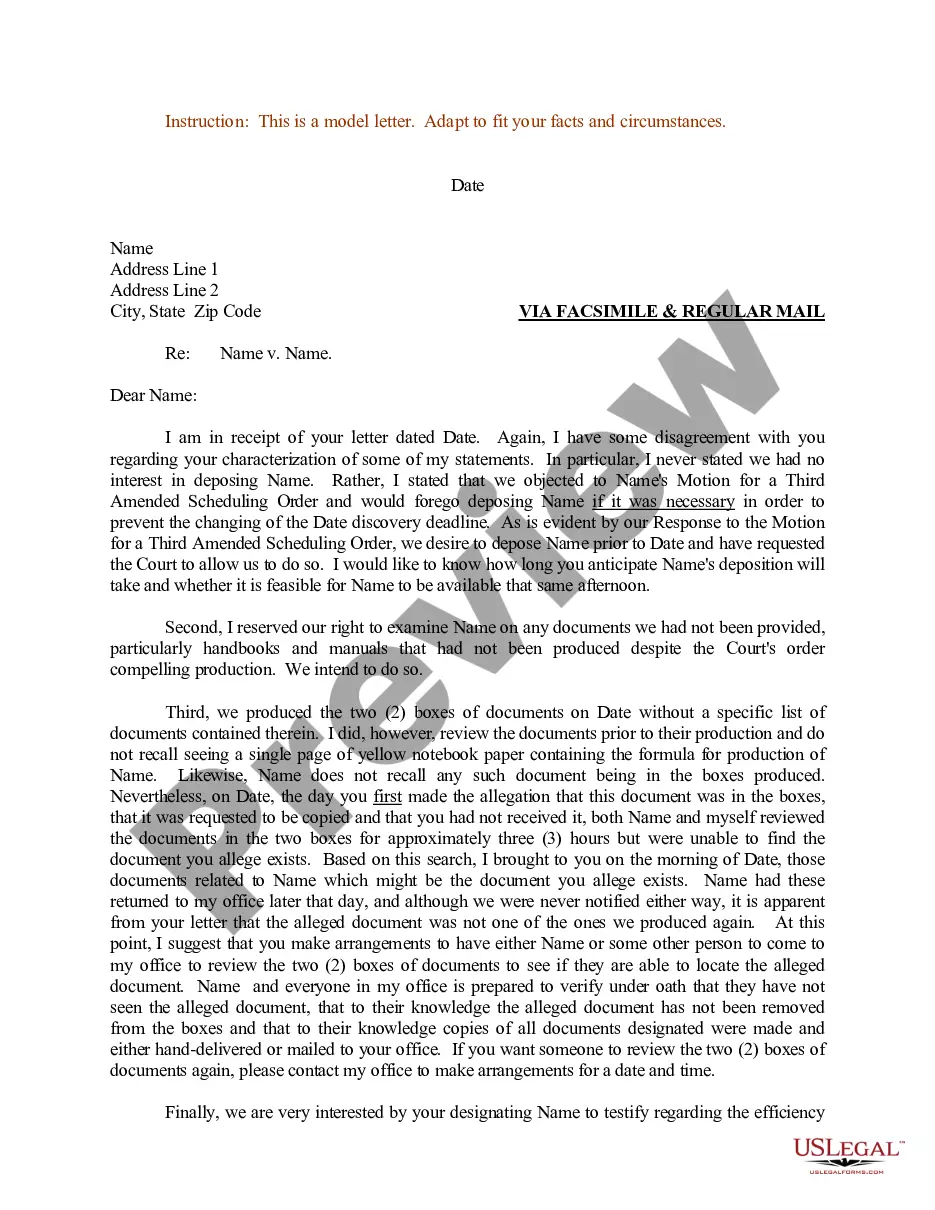
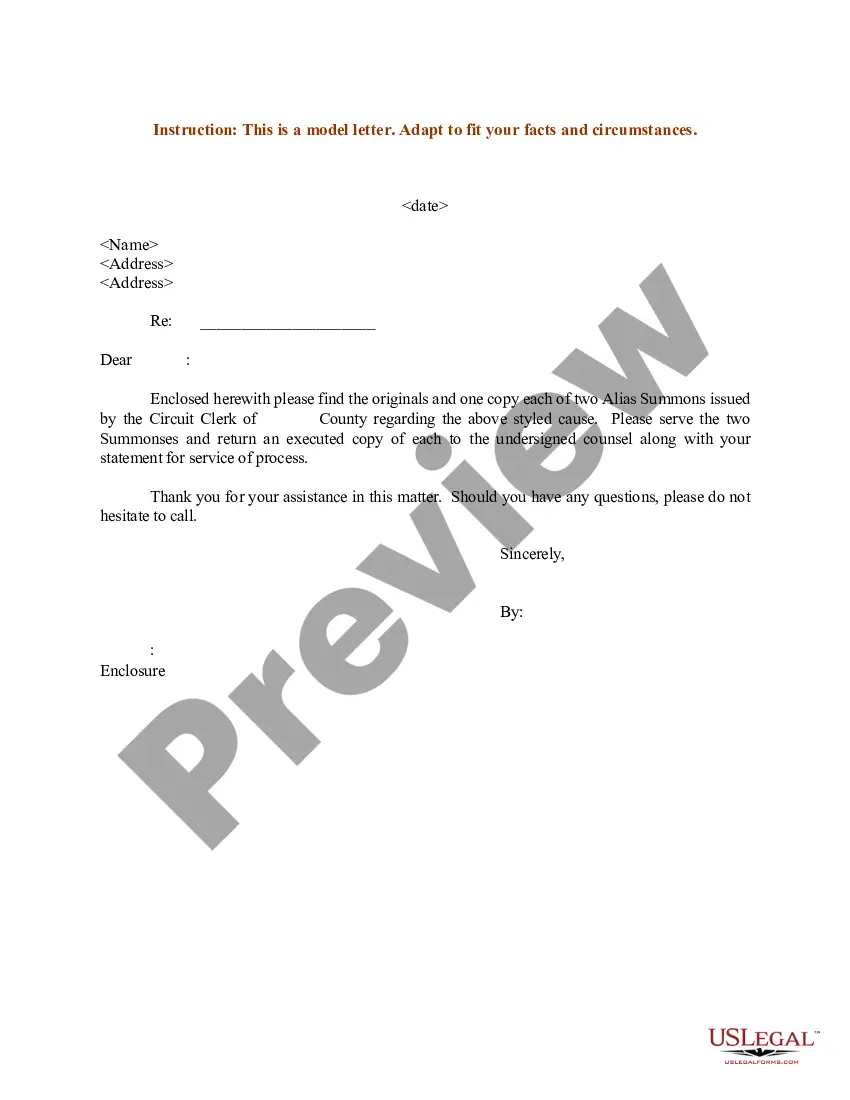
How to fill out Sample Letter Regarding Deposition?
It’s widely known that you cannot instantly transform into a legal authority, nor can you swiftly understand how to effectively prepare Sample Regarding Deposition Template For Subpoena without the required specialized knowledge.
Compiling legal documents is an extensive process that necessitates particular education and expertise.
So why not delegate the preparation of the Sample Regarding Deposition Template For Subpoena to the experts.
Preview it (if this option is available) and review the accompanying description to determine if the Sample Regarding Deposition Template For Subpoena is what you seek.
If you need any other form, start your search again.
- With US Legal Forms, one of the most extensive libraries of legal templates, you can locate everything from court documents to templates for corporate internal communication.
- We recognize how vital compliance and observance of federal and state laws and regulations are.
- This is why, on our platform, all templates are specific to locations and current.
- Here’s how you can begin using our website and obtain the form you need in only a few minutes.
- Find the document you require using the search bar at the top of the page.
Form popularity
FAQ
Taking a Deposition Toolkit (Federal) Gather previously unknown facts. Receive unrehearsed responses to broad questions. Explore the other party's theory of the case. Nail down an expert's opinions and establish the scope of his testimony. Assess the deponent's credibility and effectiveness as a witness.
How to Handle a Deposition: Advice from an OMIC Defense Attorney Tell the truth. ... Think before you speak. ... Answer the question. ... Do not volunteer information. ... Do not answer a question you do not understand. ... Talk in full, complete sentences. ... You only know what you have seen or heard. ... Do not guess.
However, if you have never prepared a notice of deposition, follow these simple instructions to get started. Caption. ... Names and Addresses of Attorneys. ... Type of Notice. ... Date, Time and Location. ... Signature Block of the Requesting Attorney. ... Putting It All Together.
Brief and concise answers are best. If you don't know the answer, ?I don't know? is a perfectly good answer. Don't guess, speculate, or play a hunch. A deposition is sworn testimony; only say what you know to be true.
Give your reasons for your objections to the Subpoena and what it is asking for. You can object to having to attend the hearing or trial, and explain why. You can object to bringing some or all the documents that the other party requested in his or her Subpoena.