Sample Regarding Deposition Template For Federal Court
Description
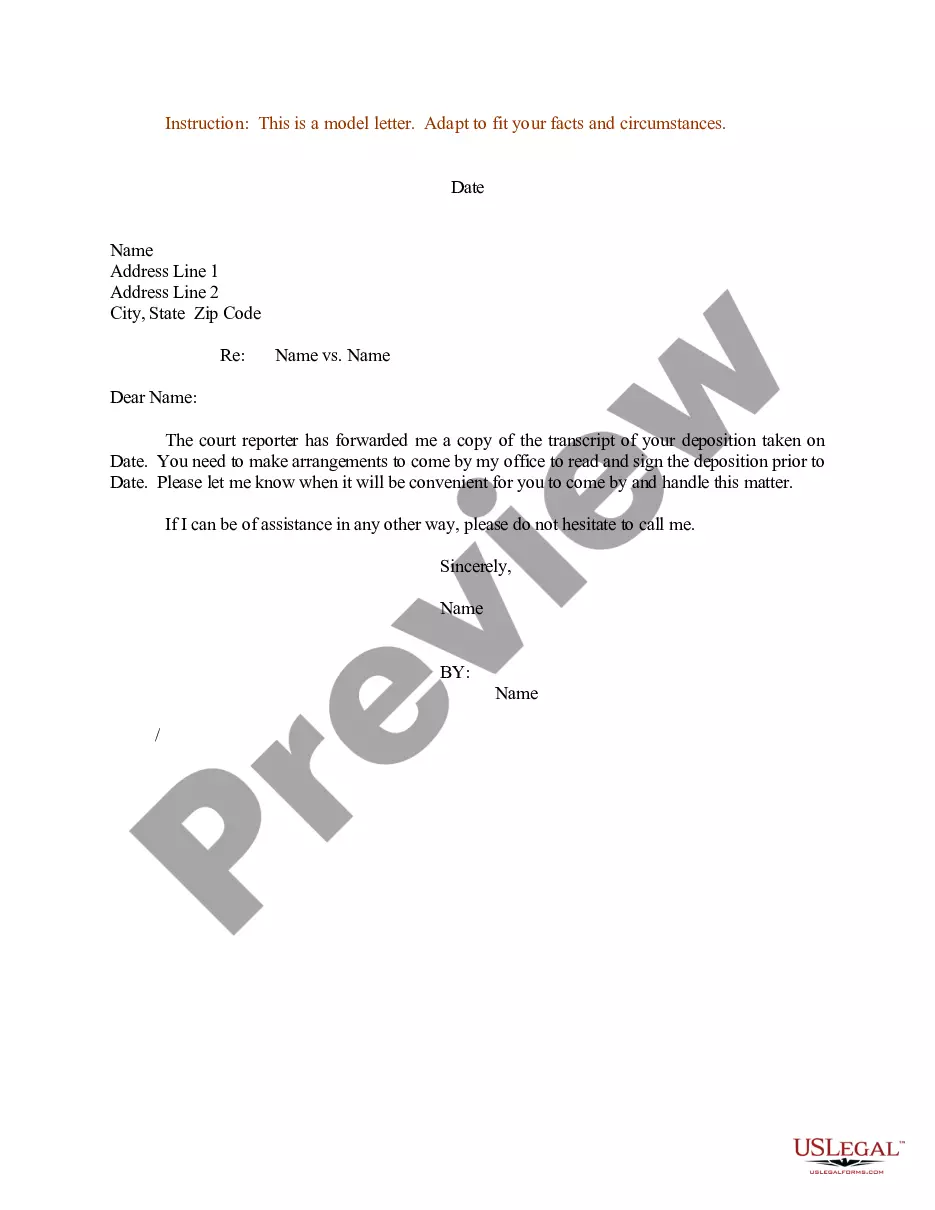
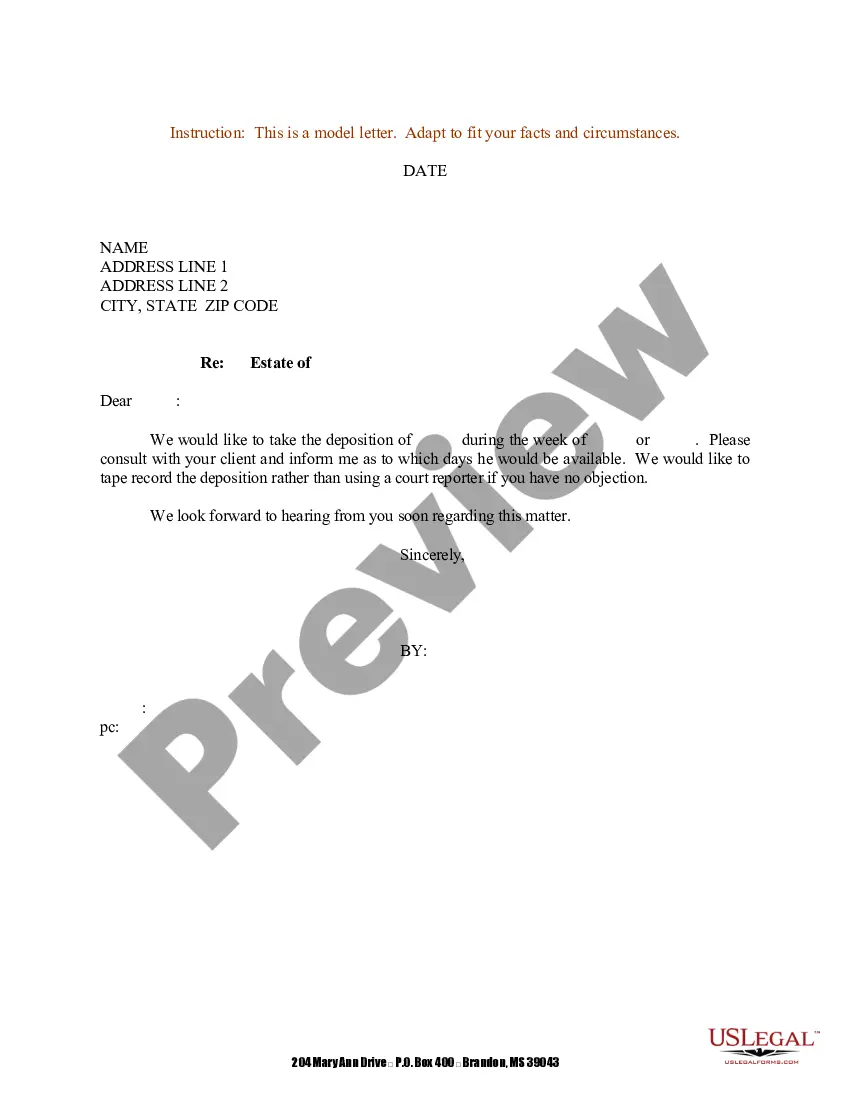
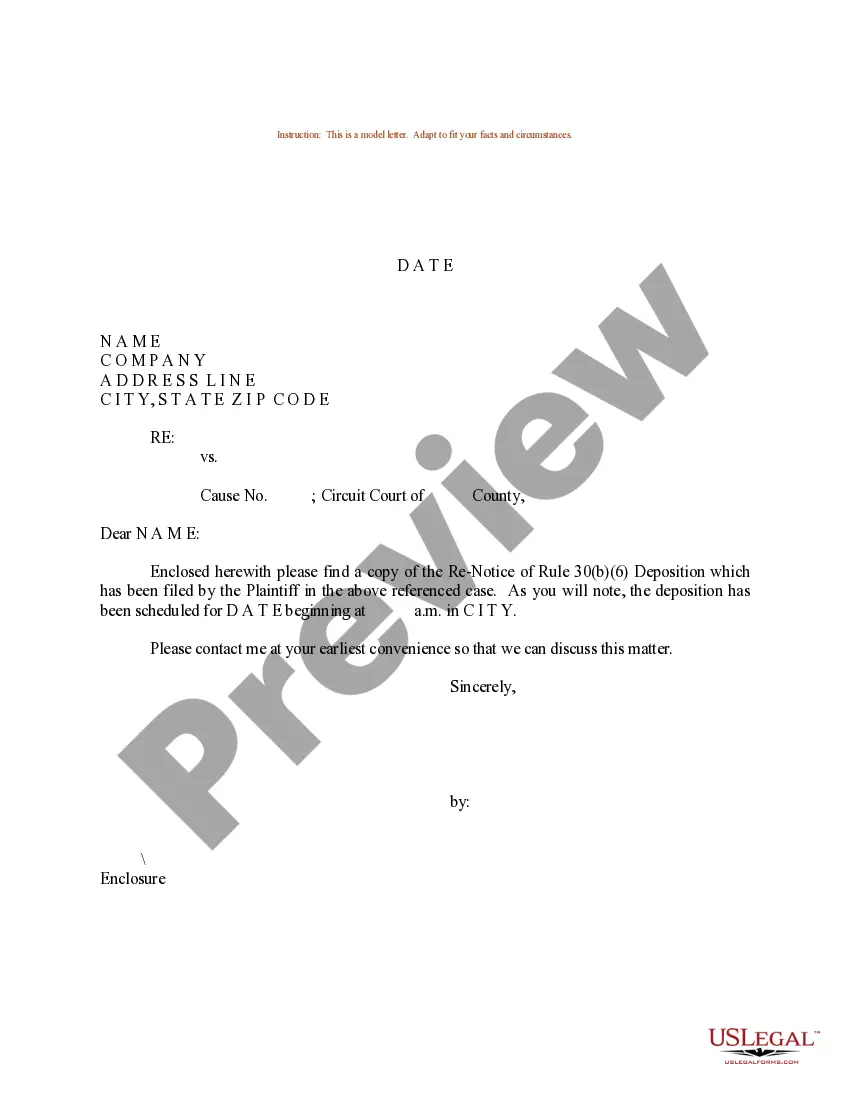
Get your form ready online
Our built-in tools help you complete, sign, share, and store your documents in one place.
Make edits, fill in missing information, and update formatting in US Legal Forms—just like you would in MS Word.
Download a copy, print it, send it by email, or mail it via USPS—whatever works best for your next step.
Sign and collect signatures with our SignNow integration. Send to multiple recipients, set reminders, and more. Go Premium to unlock E-Sign.
If this form requires notarization, complete it online through a secure video call—no need to meet a notary in person or wait for an appointment.
We protect your documents and personal data by following strict security and privacy standards.

Make edits, fill in missing information, and update formatting in US Legal Forms—just like you would in MS Word.

Download a copy, print it, send it by email, or mail it via USPS—whatever works best for your next step.

Sign and collect signatures with our SignNow integration. Send to multiple recipients, set reminders, and more. Go Premium to unlock E-Sign.

If this form requires notarization, complete it online through a secure video call—no need to meet a notary in person or wait for an appointment.

We protect your documents and personal data by following strict security and privacy standards.
Looking for another form?

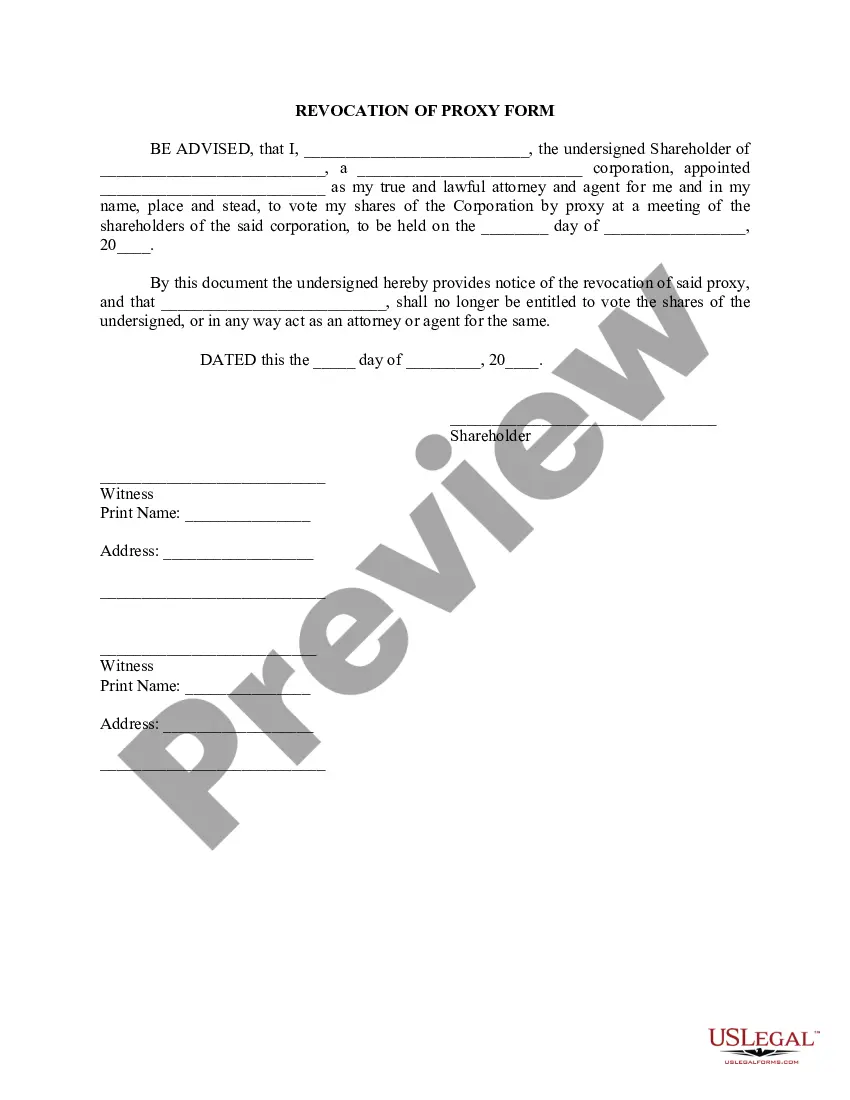


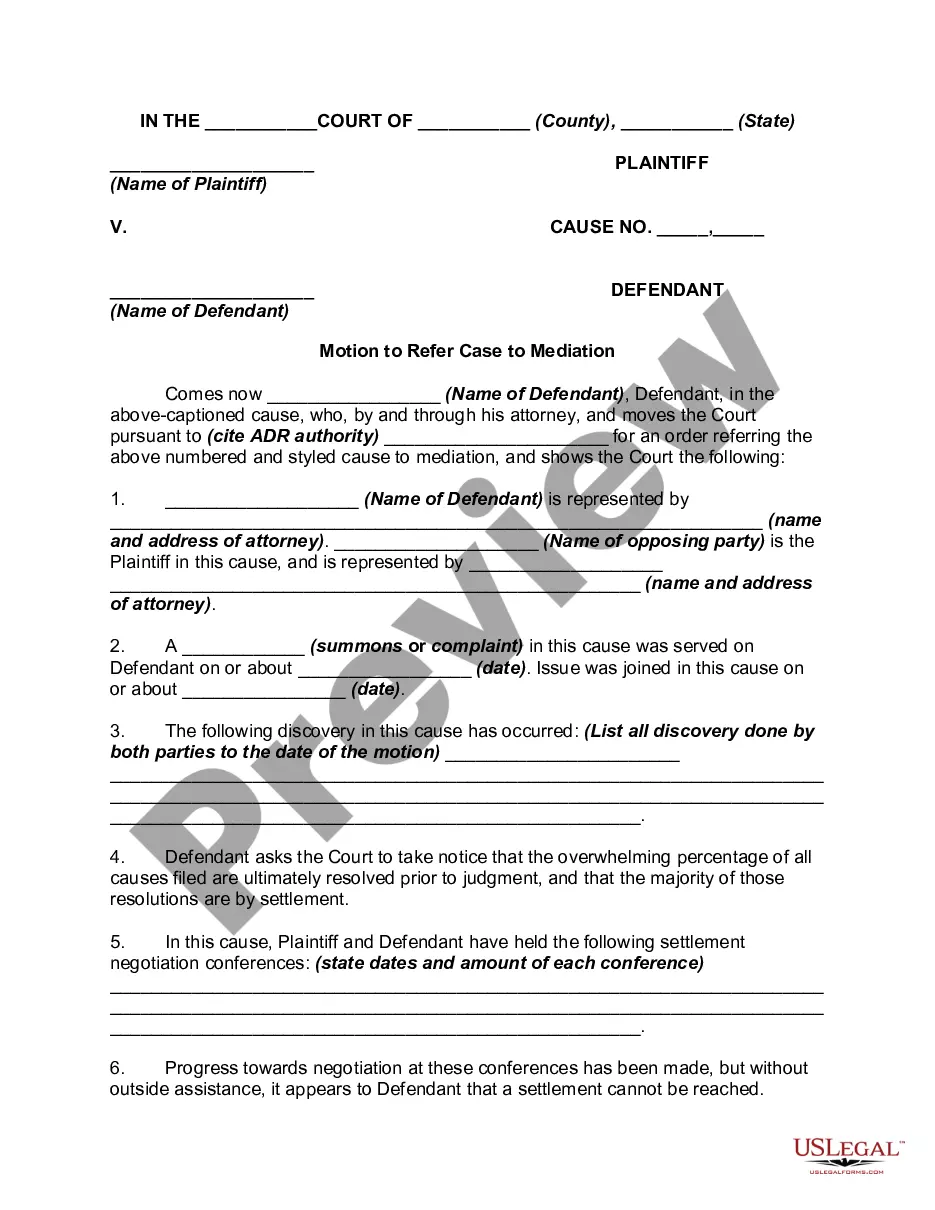

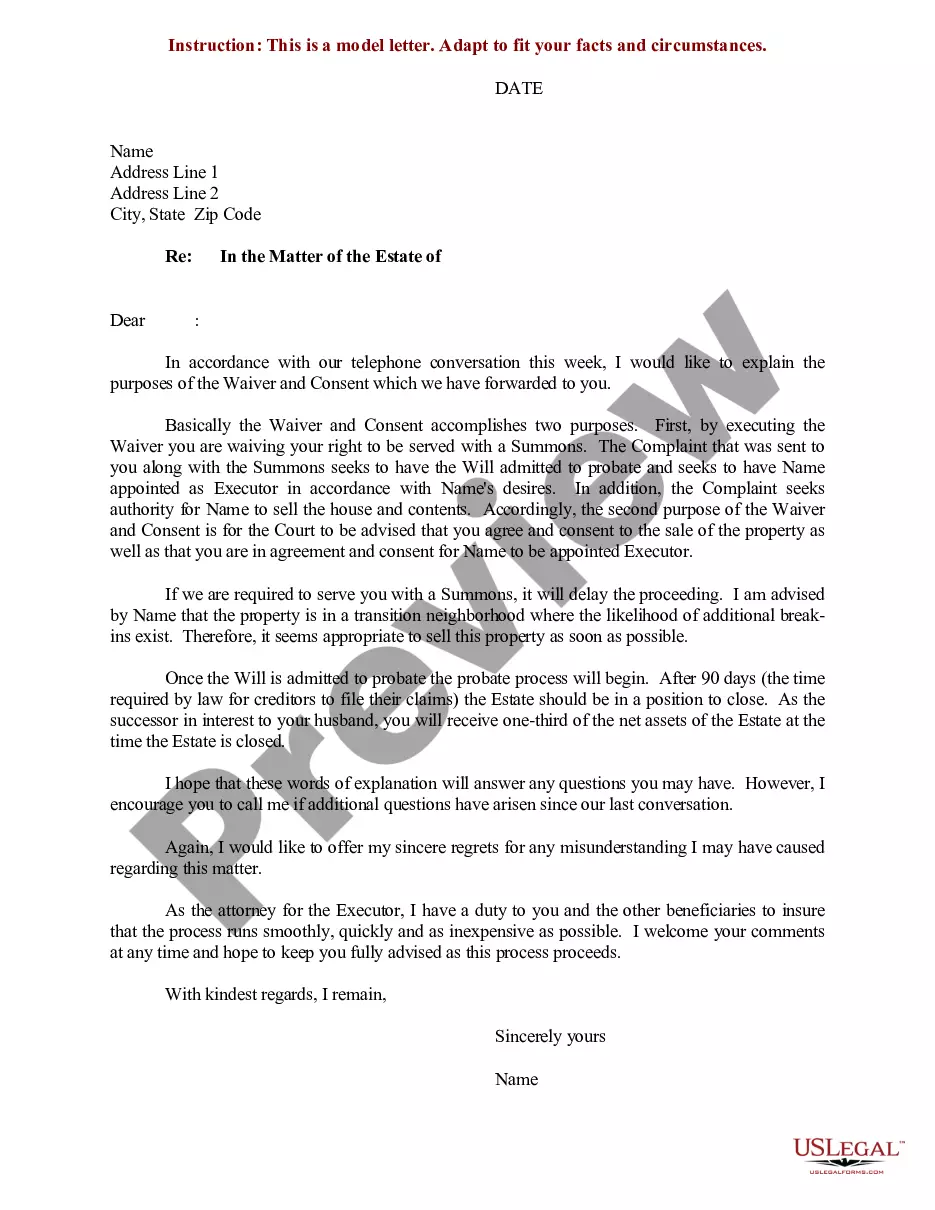

How to fill out Sample Letter Regarding Deposition?
Securing a primary source for obtaining the most updated and suitable legal templates is a major part of navigating through bureaucracy.
Locating the appropriate legal documents requires precision and meticulousness, which is why it is crucial to source templates related to the Deposition Template for Federal Court exclusively from reliable providers, such as US Legal Forms. A faulty template could squander your time and delay your situation.
Once you have the template on your device, you can either modify it using the editor or print it and fill it out manually. Avoid complications associated with your legal paperwork. Browse the comprehensive US Legal Forms directory to find legal templates, verify their applicability to your circumstances, and download them immediately.
- Utilize the directory navigation or search bar to find your template.
- Examine the document details to ensure it meets the criteria of your state and locality.
- Preview the form, if an option, to confirm it is the exact document you are looking for.
- Return to the search to find the appropriate template if the Deposition Template for Federal Court does not align with your requirements.
- Once you are certain about the document's relevancy, download it.
- If you have an account, click Log in to verify your identity and access your selected documents in My documents.
- If you still need to create an account, click Buy now to acquire the document.
- Select a pricing option that suits your needs.
- Proceed with the registration process to finalize your purchase.
- Complete your transaction by choosing a payment method (credit card or PayPal).
- Select the file format for downloading the Deposition Template for Federal Court.
Form popularity
FAQ
A party who wants to depose a person by oral questions must give reasonable written notice to every other party. The notice must state the time and place of the deposition and, if known, the deponent's name and address.
Rule 30 governs depositions in federal court. Unlike in state court, where the Code of Civil Procedure provides timing requirements, a deposition notice in federal court need only give ?reasonable written notice.? (Rule 30(b)(1).) ?Reasonable? notice depends on the facts of a particular case and of a particular notice.
However, if you have never prepared a notice of deposition, follow these simple instructions to get started. Caption. ... Names and Addresses of Attorneys. ... Type of Notice. ... Date, Time and Location. ... Signature Block of the Requesting Attorney. ... Putting It All Together.
Taking a Deposition Toolkit (Federal) Gather previously unknown facts. Receive unrehearsed responses to broad questions. Explore the other party's theory of the case. Nail down an expert's opinions and establish the scope of his testimony. Assess the deponent's credibility and effectiveness as a witness.
A person who desires to perpetuate testimony regarding any matter that may be cognizable in any court of the United States may file a verified petition in the United States district court in the district of the residence of any expected adverse party.