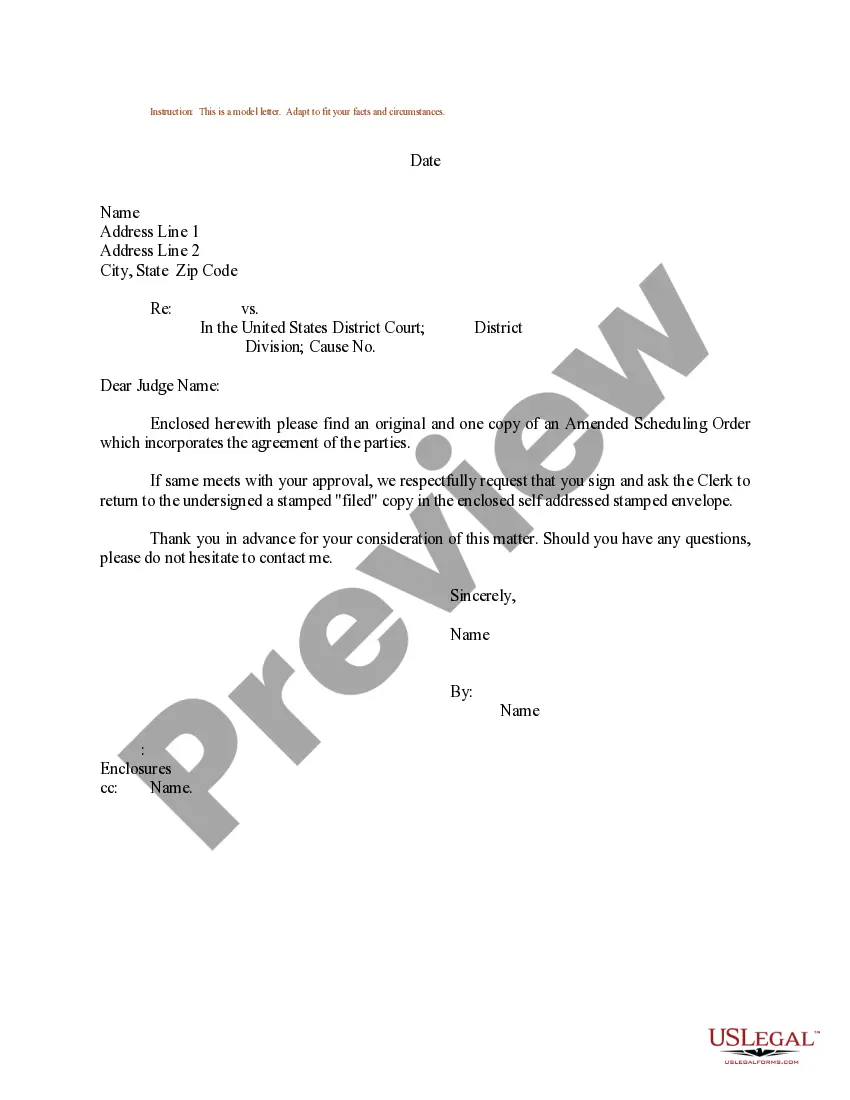
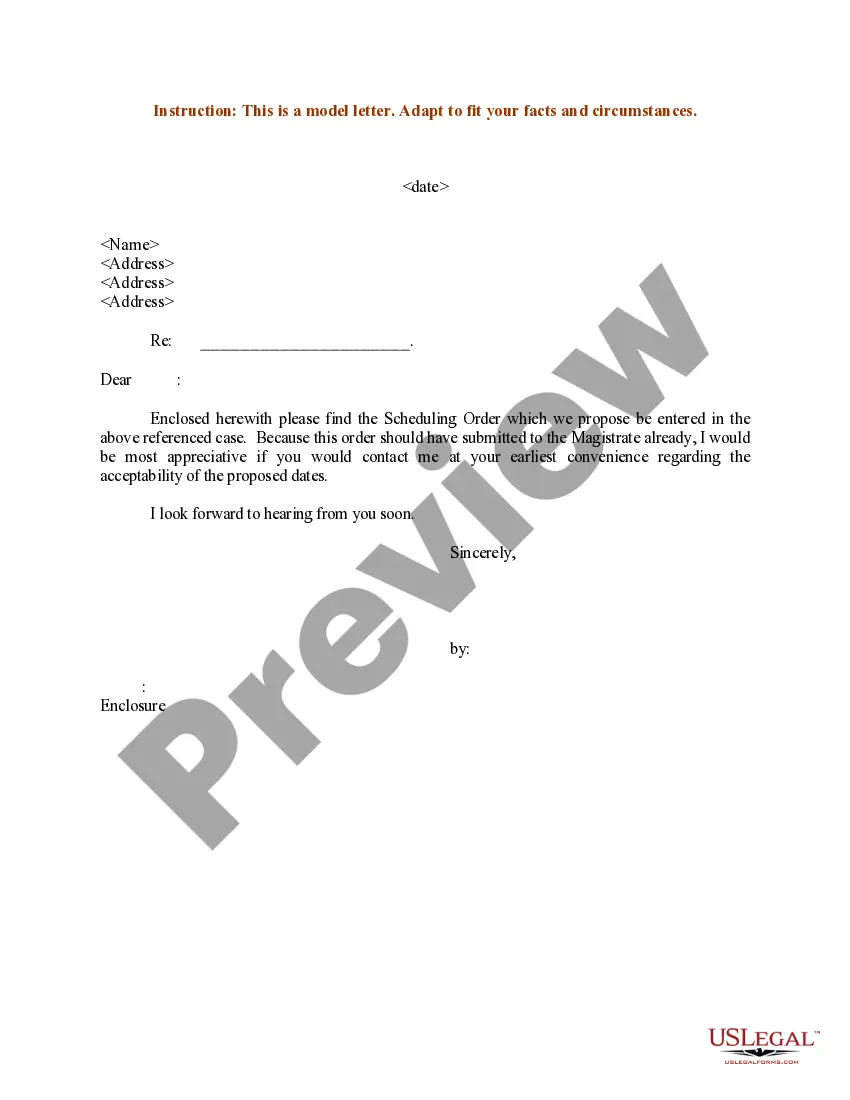
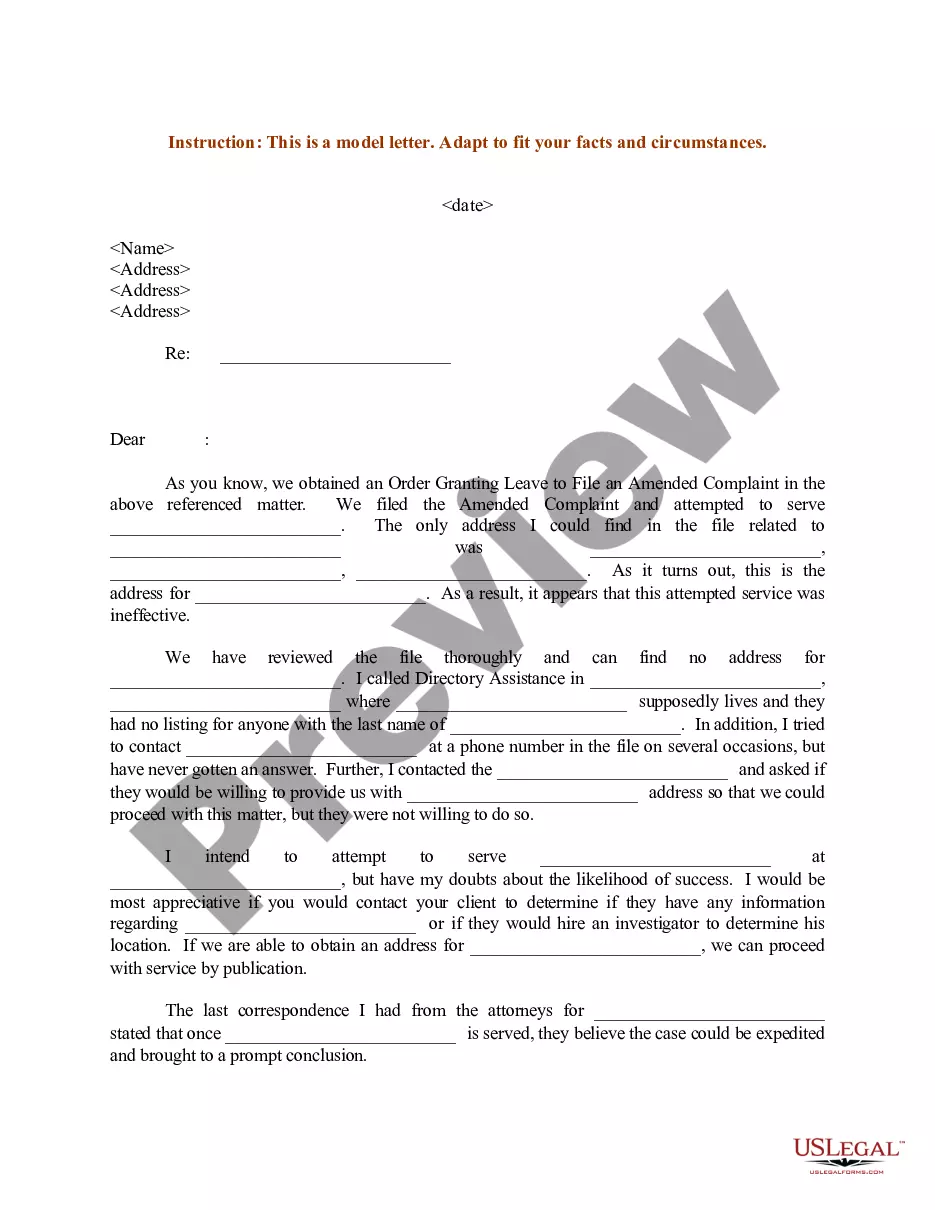
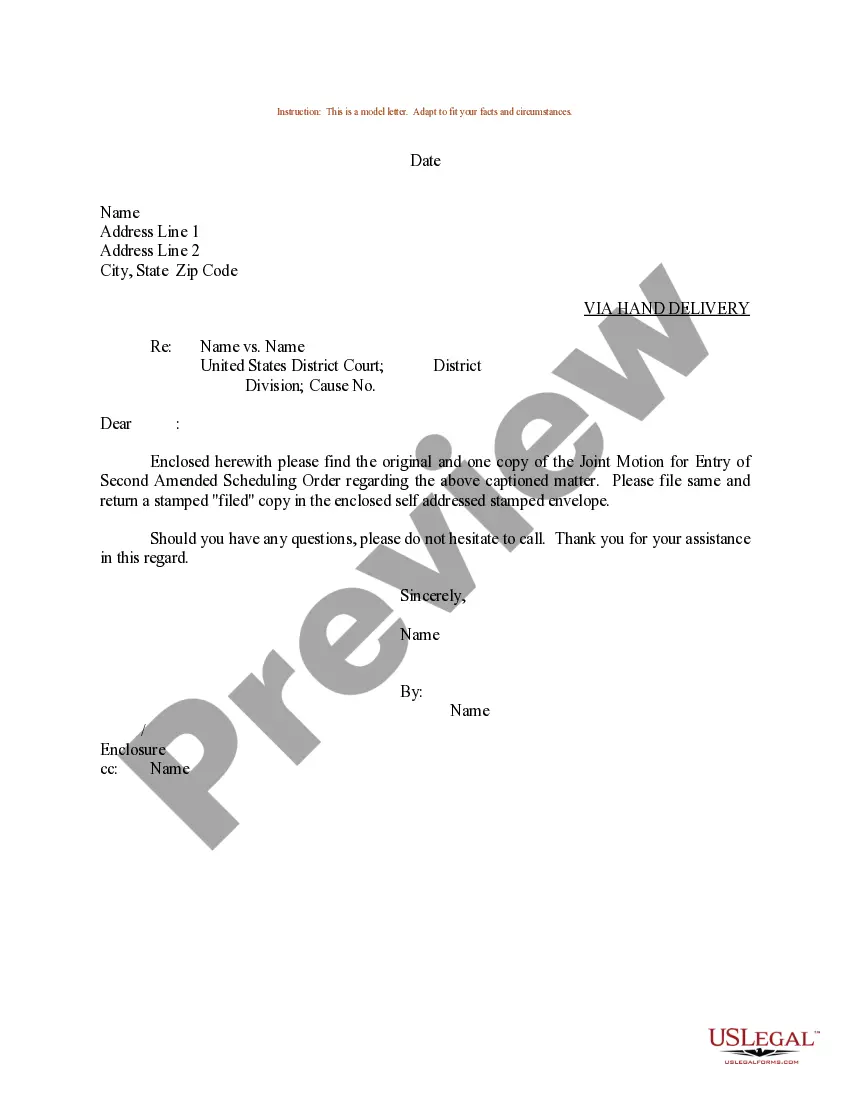
Scheduling Order In Federal Court
Description
Get your form ready online
Our built-in tools help you complete, sign, share, and store your documents in one place.
Make edits, fill in missing information, and update formatting in US Legal Forms—just like you would in MS Word.
Download a copy, print it, send it by email, or mail it via USPS—whatever works best for your next step.
Sign and collect signatures with our SignNow integration. Send to multiple recipients, set reminders, and more. Go Premium to unlock E-Sign.
If this form requires notarization, complete it online through a secure video call—no need to meet a notary in person or wait for an appointment.
We protect your documents and personal data by following strict security and privacy standards.
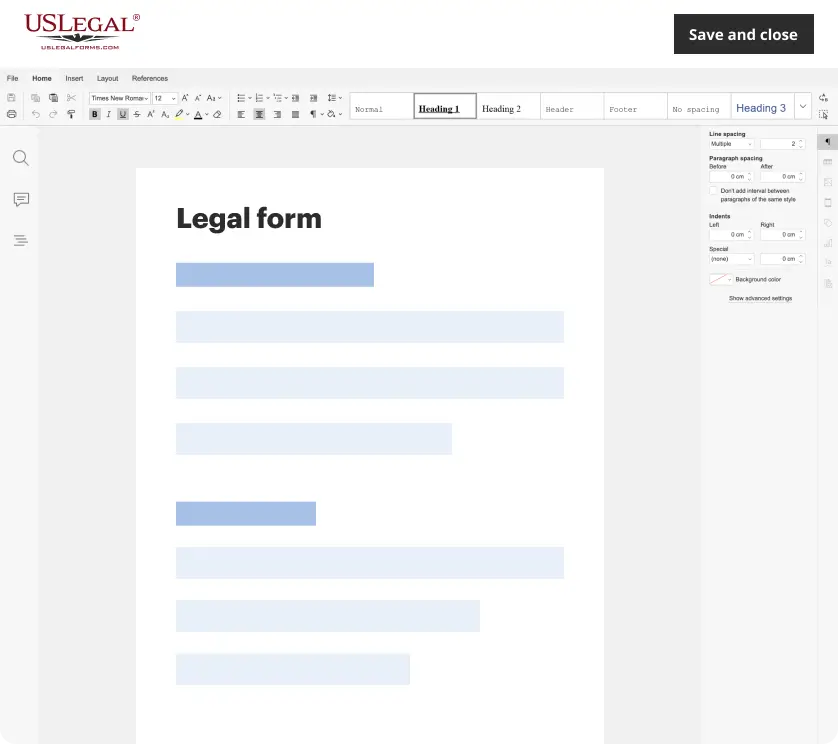
Make edits, fill in missing information, and update formatting in US Legal Forms—just like you would in MS Word.
Download a copy, print it, send it by email, or mail it via USPS—whatever works best for your next step.
Sign and collect signatures with our SignNow integration. Send to multiple recipients, set reminders, and more. Go Premium to unlock E-Sign.
If this form requires notarization, complete it online through a secure video call—no need to meet a notary in person or wait for an appointment.
We protect your documents and personal data by following strict security and privacy standards.
Looking for another form?

How to fill out Sample Letter For Amended Scheduling Order?
The Scheduling Order In Federal Court you see on this page is a reusable legal template created by expert attorneys in accordance with federal and local statutes and regulations.
For over 25 years, US Legal Forms has supplied individuals, organizations, and legal practitioners with more than 85,000 authenticated, state-specific documents for any business and personal situation. It’s the quickest, most straightforward, and most reliable method to acquire the documents you require, as the service assures the utmost level of data security and anti-malware safeguards.
Sign up for US Legal Forms to have verified legal templates for all of life’s situations at your disposal.
- Browse for the document you need and review it.
- Look through the file you searched and preview it or check the form description to verify it meets your needs. If it does not, use the search bar to find the right one. Click Buy Now once you have identified the template you need.
- Subscribe and Log In.
- Select the pricing plan that fits you and create an account. Use PayPal or a credit card to make a swift payment. If you already have an account, Log In and check your subscription to proceed.
- Acquire the fillable template.
Form popularity
FAQ
Except in a proceeding exempted from initial disclosure under Rule 26(a)(1)(B) or when the court orders otherwise, the parties must confer as soon as practicable?and in any event at least 21 days before a scheduling conference is to be held or a scheduling order is due under Rule 16(b).. Fed.
Answer: Unless the Disclosure/Discovery Document/Subpoena is filed in connection with a motion or otherwise ordered by the court, it is not filed in the record.
Rule 26(f) describes a conference of two parties (the plaintiff and defendant) to cooperate and set out a clear plan for the process of discovery. In terms of responsibility for arrangement, both parties are jointly responsible?and this remains true as the case progresses.
After you have filed the Joint 26(f) Report, you will receive a document from the Court called a ?Scheduling Order.? This document is extremely important because it lists many deadlines for your case, including discovery deadlines, motion deadlines, and deadlines for required pre-trial documents.
Upon a defendant's request, the government must furnish the defendant with a copy of the defendant's prior criminal record that is within the government's possession, custody, or control if the attorney for the government knows-or through due diligence could know-that the record exists.