Settlement Offer Agreement With Credit Card
Description
Get your form ready online
Our built-in tools help you complete, sign, share, and store your documents in one place.
Make edits, fill in missing information, and update formatting in US Legal Forms—just like you would in MS Word.
Download a copy, print it, send it by email, or mail it via USPS—whatever works best for your next step.
Sign and collect signatures with our SignNow integration. Send to multiple recipients, set reminders, and more. Go Premium to unlock E-Sign.
If this form requires notarization, complete it online through a secure video call—no need to meet a notary in person or wait for an appointment.
We protect your documents and personal data by following strict security and privacy standards.

Make edits, fill in missing information, and update formatting in US Legal Forms—just like you would in MS Word.

Download a copy, print it, send it by email, or mail it via USPS—whatever works best for your next step.

Sign and collect signatures with our SignNow integration. Send to multiple recipients, set reminders, and more. Go Premium to unlock E-Sign.

If this form requires notarization, complete it online through a secure video call—no need to meet a notary in person or wait for an appointment.

We protect your documents and personal data by following strict security and privacy standards.
Looking for another form?
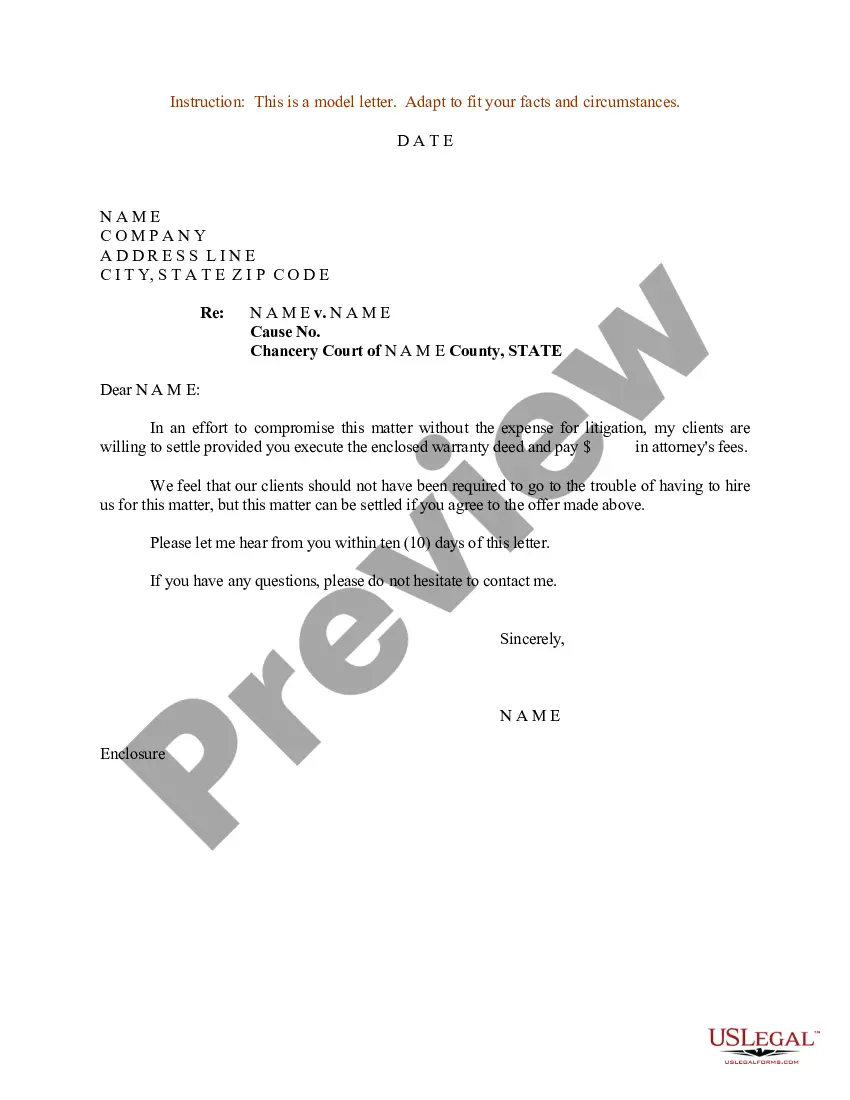
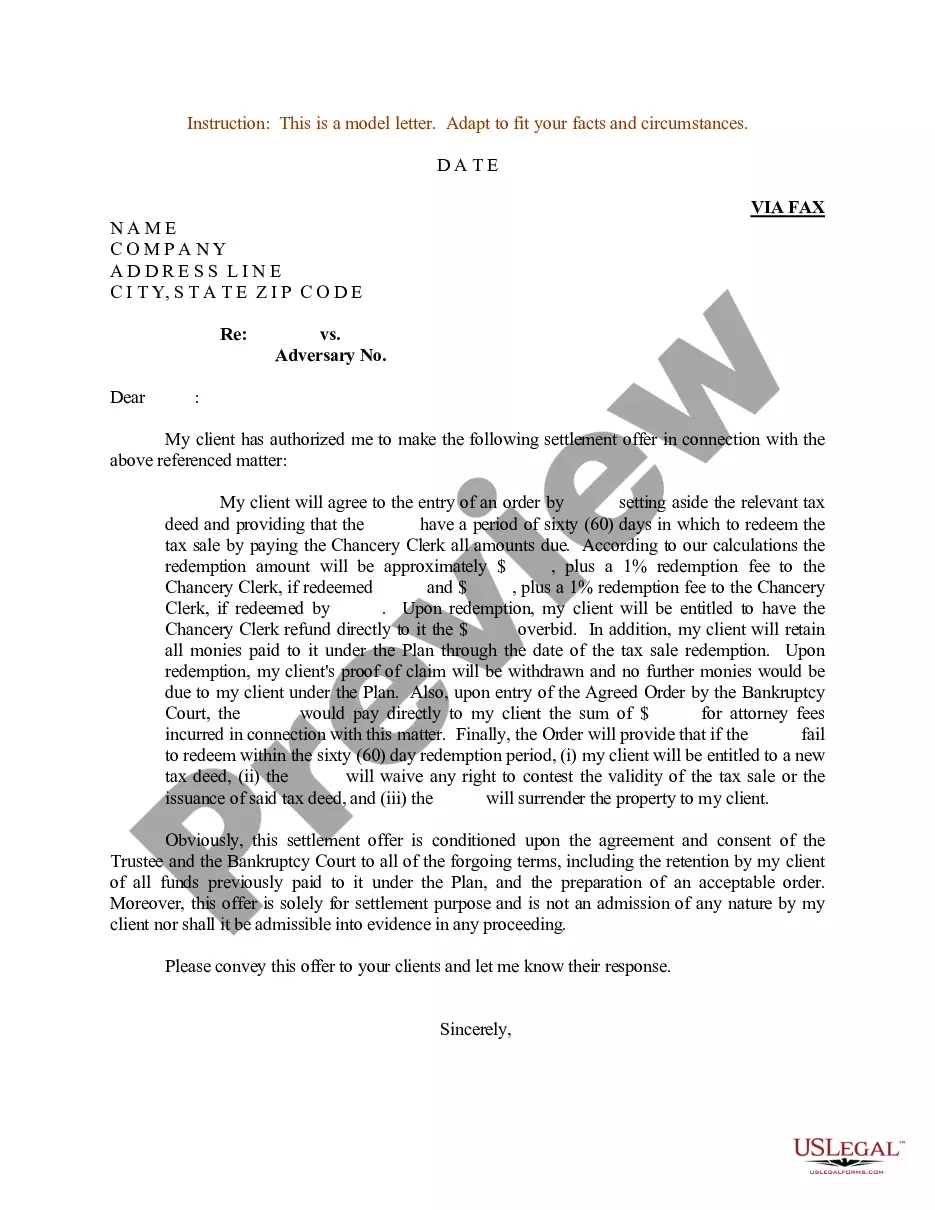
How to fill out Sample Letter For Settlement - Offer To Settle With Condition?
It's well-known that you can't become a legal expert instantly, nor can you determine how to swiftly draft a Settlement Offer Agreement With Credit Card without possessing a specialized skill set.
Developing legal documents is a prolonged procedure that demands specific training and expertise. So why not entrust the drafting of the Settlement Offer Agreement With Credit Card to the experts.
With US Legal Forms, one of the most extensive libraries of legal templates, you can discover everything from court documents to templates for in-office correspondence. We recognize the significance of compliance and adherence to both federal and state regulations. That’s why all forms on our platform are location-specific and current.
You can access your documents again from the My documents tab at any moment. If you are a returning customer, you can easily Log In and find and download the template from the same tab.
Regardless of the intention behind your documentation—whether financial, legal, or personal—our platform has you covered. Give US Legal Forms a try today!
- Begin by using the search bar at the top of the page to find the form you need.
- If this option is available, preview it and review the accompanying description to determine if the Settlement Offer Agreement With Credit Card is what you are looking for.
- If you require a different form, restart your search.
- Create a free account and select a subscription plan to acquire the template.
- Select Buy now. Once the payment is processed, you can obtain the Settlement Offer Agreement With Credit Card, complete it, print it, and send or mail it to the appropriate individuals or organizations.
Form popularity
FAQ
Yes, you can negotiate a settlement with your credit card company. It involves reaching out to them to discuss your financial situation and proposing a lower amount to settle your debt. Be open and honest about your circumstances, as this can foster a more productive conversation. Consider using a settlement offer agreement with credit card, as it formalizes the arrangement you reach.
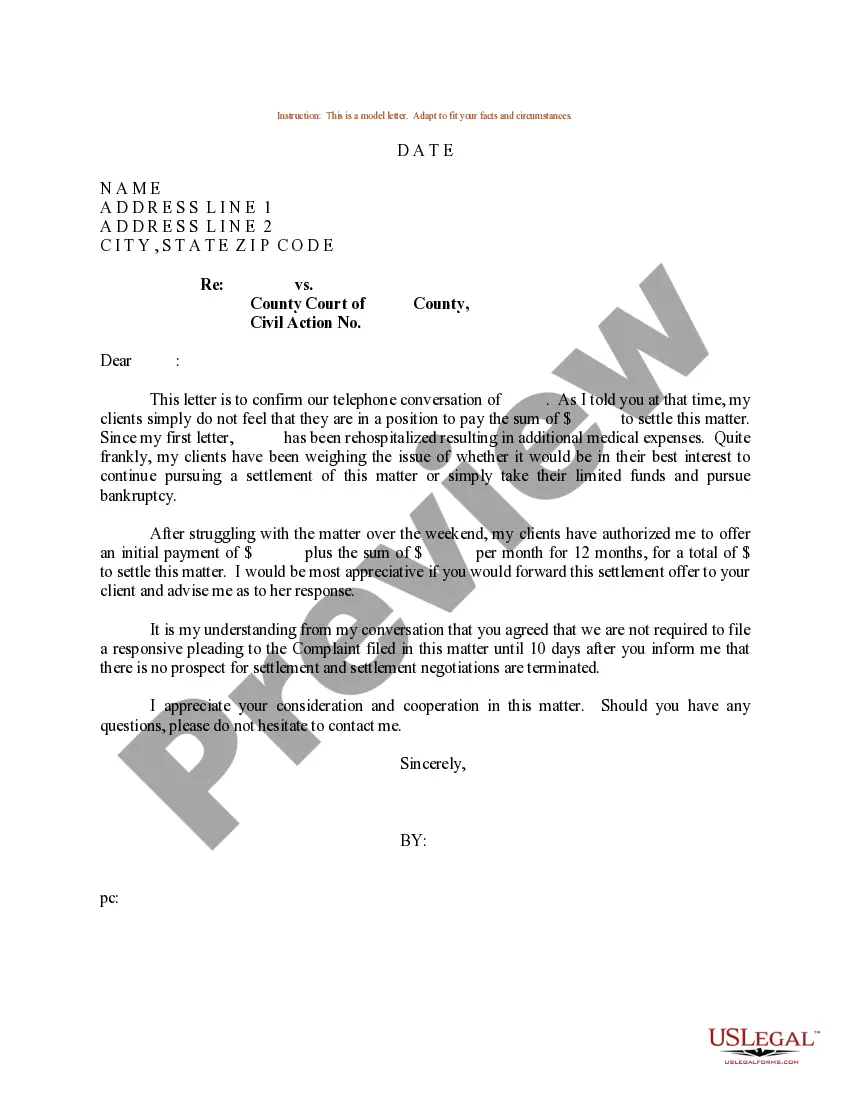
To make a credit card settlement offer, start by gathering your financial documents to understand what you can afford. Next, contact your credit card company and present your offer, ideally in writing, to formalize the settlement offer agreement with credit card. Be honest about your financial situation, and remain patient during the negotiation process. Assess their counteroffers thoughtfully to reach a satisfactory agreement.
Credit card companies often settle for a percentage of the total debt owed. Typically, settlements range between 40% to 60% of the original amount, but this can vary based on factors like your account history and financial situation. When you enter a settlement offer agreement with credit card providers, they may accept lower amounts if they believe it's a better option than pursuing collection. Always consider negotiating to maximize your settlement benefit.
A credit card settlement can be a beneficial strategy for reducing debt; however, its appropriateness depends on your unique financial situation. The settlement offer agreement with credit card companies must be carefully assessed to understand potential effects on your credit score. By lowering your overall debt, you may find relief in your budget. USLegalForms provides valuable tools to help you evaluate whether credit card settlement is the right choice for you.
When considering a settlement offer from a credit card company, you should evaluate the terms outlined in the settlement offer agreement with credit card entities. Weighing the pros and cons is essential, as settling may alleviate immediate financial stress but could lead to long-term credit issues. Getting clarity on what the settlement resolves is crucial. USLegalForms offers resources to assist you in making informed decisions regarding such offers.
Accepting a debt settlement offer can be a useful way to reduce your financial burden. However, you should carefully review the settlement offer agreement with credit card companies to ensure it fits your financial situation. Consider your total debt, the terms of the settlement, and how it may impact your credit score. Platforms like USLegalForms can help you understand the implications and navigate the process effectively.
Your debt settlement proposal letter must be formal and clearly state your intentions, as well as what you expect from your creditors. You should also include all the key information your creditor will need to locate your account on their system, which includes: Your full name used on the account. Your full address.
Write a debt settlement letter to your creditor. Explain your current situation and how much you can pay upfront. Also, provide them with a clear description of what you expect in return, such as the removal of missed payments or the account shown as paid in full on your report.
Apply for a settlement via a formal letter in which you will again explain in detail why you can't pay the entire debt amount. The lender may decide on a lump sum settlement amount based on the severity of your circumstances. As part of the debt settlement process, provide the whole amount that your lender decides.
I am writing about the money which you are claiming on the above account. I can confirm that I am unable to pay the money which I owe in full. Include a paragraph explaining your circumstances and details of your financial situation that you want the creditor to take into account.