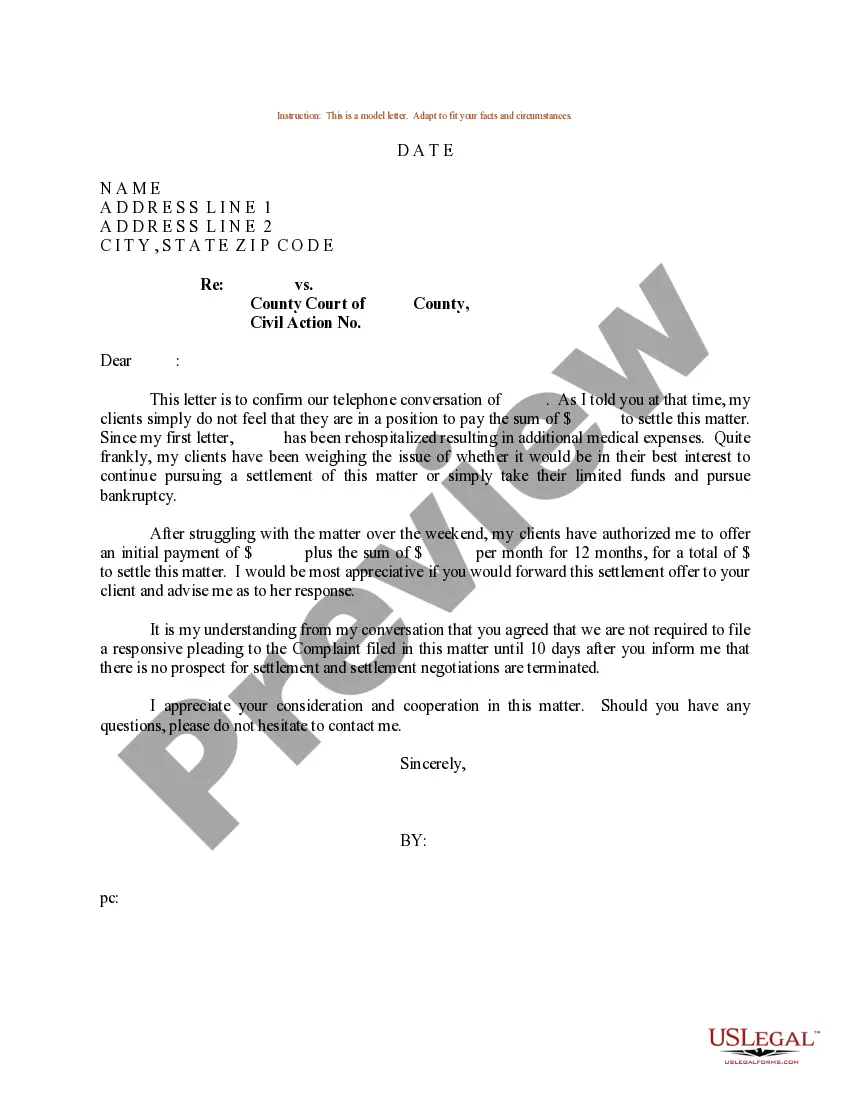
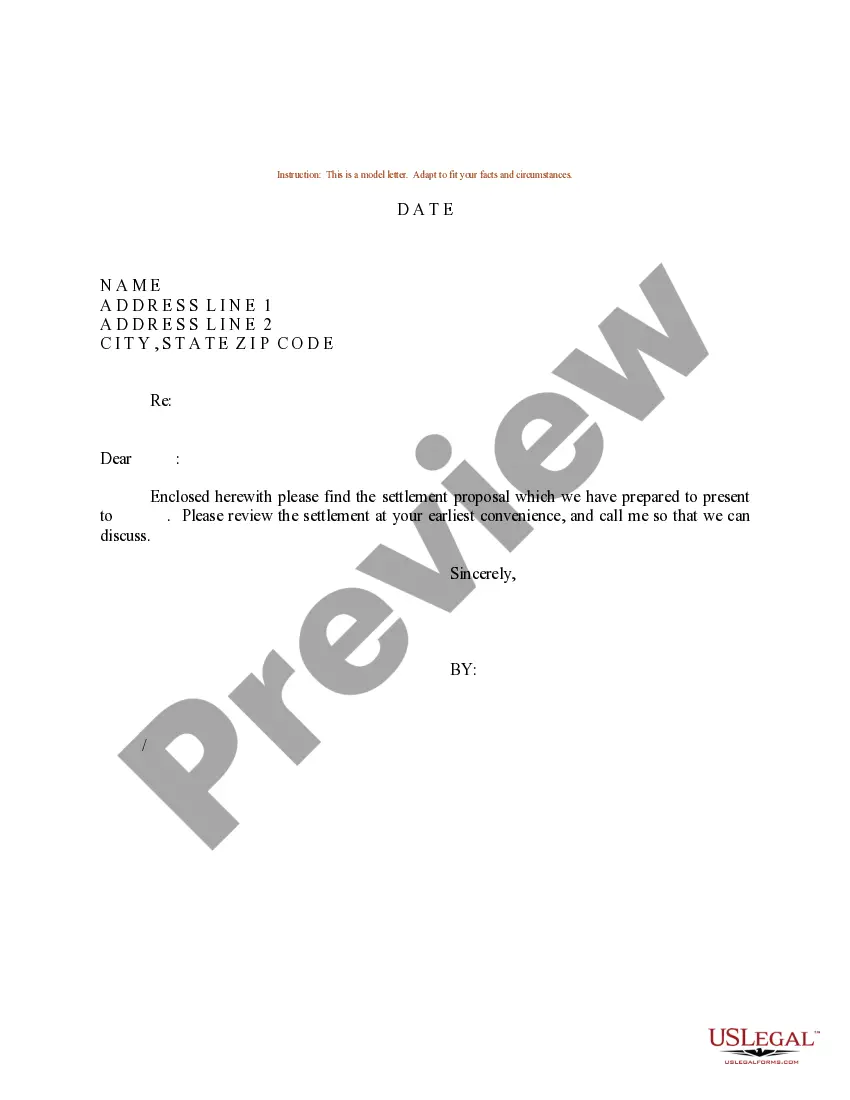
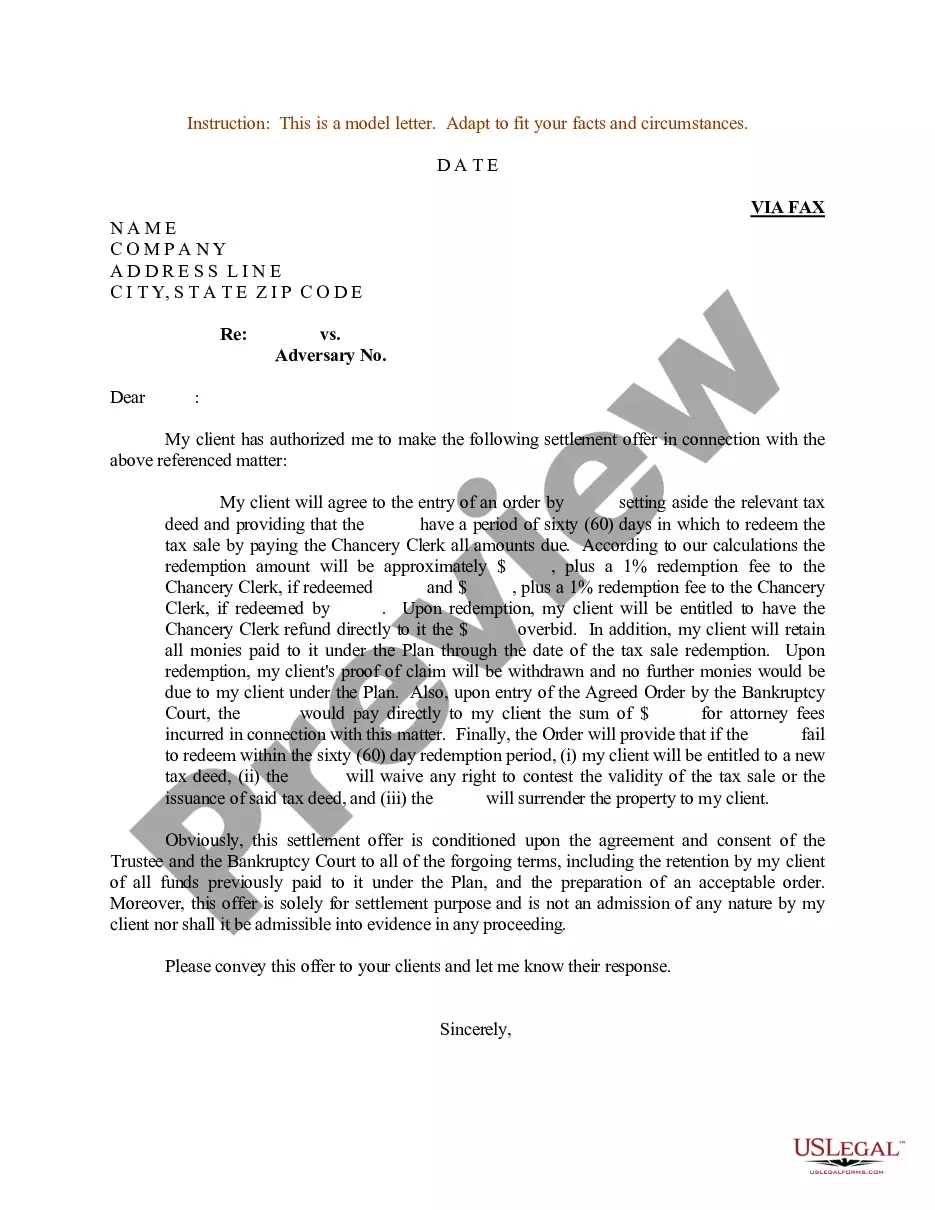
Sample Settlement Letter Without Prejudice
Description
Get your form ready online
Our built-in tools help you complete, sign, share, and store your documents in one place.
Make edits, fill in missing information, and update formatting in US Legal Forms—just like you would in MS Word.
Download a copy, print it, send it by email, or mail it via USPS—whatever works best for your next step.
Sign and collect signatures with our SignNow integration. Send to multiple recipients, set reminders, and more. Go Premium to unlock E-Sign.
If this form requires notarization, complete it online through a secure video call—no need to meet a notary in person or wait for an appointment.
We protect your documents and personal data by following strict security and privacy standards.

Make edits, fill in missing information, and update formatting in US Legal Forms—just like you would in MS Word.

Download a copy, print it, send it by email, or mail it via USPS—whatever works best for your next step.

Sign and collect signatures with our SignNow integration. Send to multiple recipients, set reminders, and more. Go Premium to unlock E-Sign.

If this form requires notarization, complete it online through a secure video call—no need to meet a notary in person or wait for an appointment.

We protect your documents and personal data by following strict security and privacy standards.
Looking for another form?

How to fill out Sample Letter For Settlement - Offer To Settle With Condition?
Managing legal paperwork and processes could be a lengthy addition to your day.
Example Settlement Letter Without Prejudice and documents like it frequently necessitate that you look for them and figure out how to complete them accurately.
As a result, whether you are dealing with financial, legal, or personal issues, utilizing a thorough and user-friendly online collection of forms at your disposal will be very beneficial.
US Legal Forms is the premier online resource for legal templates, offering over 85,000 state-specific forms and a variety of tools to help you fill out your documents effortlessly.
Is this your first experience using US Legal Forms? Sign up and create a free account in just a few minutes to gain access to the form library and Example Settlement Letter Without Prejudice. Then, follow the steps below to complete your form: Make sure you have located the correct form by utilizing the Preview function and reviewing the form details. Choose Buy Now when you’re ready, and select the monthly subscription plan that suits your needs. Click Download and then complete, sign, and print the form. US Legal Forms has 25 years of experience assisting clients in managing their legal documents. Obtain the form you need today and streamline any process without hassle.
- Look through the collection of relevant documents accessible to you with just one click.
- US Legal Forms provides you with state- and county-specific forms available at any time for download.
- Protect your document handling processes with a high-quality service that enables you to create any form in a matter of minutes without any additional or hidden fees.
- Just Log In to your account, find Example Settlement Letter Without Prejudice, and obtain it immediately from the My documents section.
- You can also access previously saved forms.
Form popularity
FAQ
'Without prejudice' does not inherently mean privileged, although it can often provide a level of protection. This term allows parties to negotiate settlements without fear that their offers will be held against them later in court. When preparing a sample settlement letter without prejudice, it's essential to understand that the letter may not be admissible as evidence if negotiations fail.
However, what does the term ?Without Prejudice Save at to Costs? mean? Marking a communication with the words ?without prejudice save as to costs? means that this correspondence cannot be shown to the Court until after the main issue is resolved.
Whereas a case that is dismissed ?with prejudice? is dismissed permanently, a case that is dismissed ?without prejudice? is only dismissed temporarily. This temporary dismissal means that the plaintiff is allowed to re-file charges, alter the claim, or bring the case to another court.
The purpose of marking a letter ?without prejudice? is to protect the writer so that any concessions made by him in that letter (e.g. an admission) cannot be relied on by the other party in any court proceedings, i.e. the letter is written without prejudice to the writer's position.
?With prejudice? means the decision is final. ?Without prejudice? means it's not final and subject to future inquiry. If the judge announces a case is dismissed with prejudice, that means it's permanently dismissed and can't be retried.
Dismissal without prejudice means that the judge dismissed the plaintiff's or prosecutor's case without damaging their right to have their matter heard in court later. A prosecutor may ask to withdraw the case against a person to have more time to make a case stronger, find more evidence or question other witnesses.
