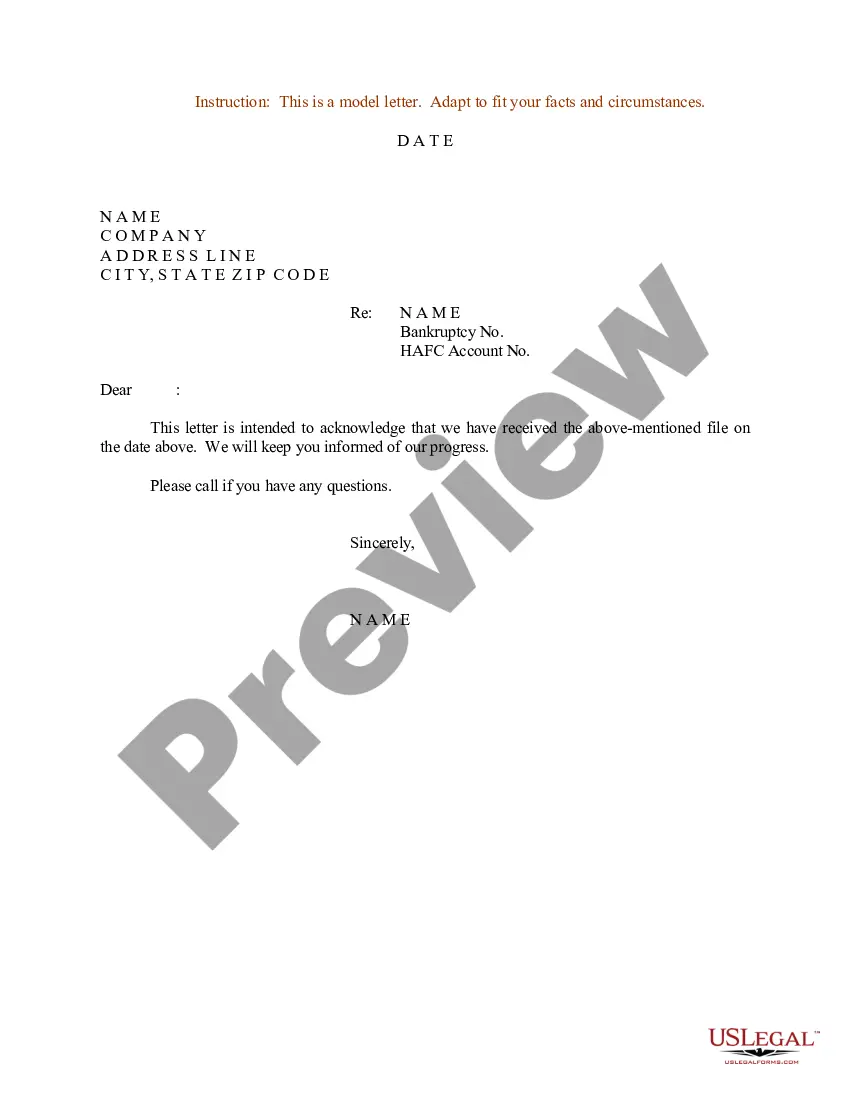
Bankruptcy Information File With Student Loans
Description
Get your form ready online
Our built-in tools help you complete, sign, share, and store your documents in one place.
Make edits, fill in missing information, and update formatting in US Legal Forms—just like you would in MS Word.
Download a copy, print it, send it by email, or mail it via USPS—whatever works best for your next step.
Sign and collect signatures with our SignNow integration. Send to multiple recipients, set reminders, and more. Go Premium to unlock E-Sign.
If this form requires notarization, complete it online through a secure video call—no need to meet a notary in person or wait for an appointment.
We protect your documents and personal data by following strict security and privacy standards.

Make edits, fill in missing information, and update formatting in US Legal Forms—just like you would in MS Word.

Download a copy, print it, send it by email, or mail it via USPS—whatever works best for your next step.

Sign and collect signatures with our SignNow integration. Send to multiple recipients, set reminders, and more. Go Premium to unlock E-Sign.

If this form requires notarization, complete it online through a secure video call—no need to meet a notary in person or wait for an appointment.

We protect your documents and personal data by following strict security and privacy standards.
Looking for another form?

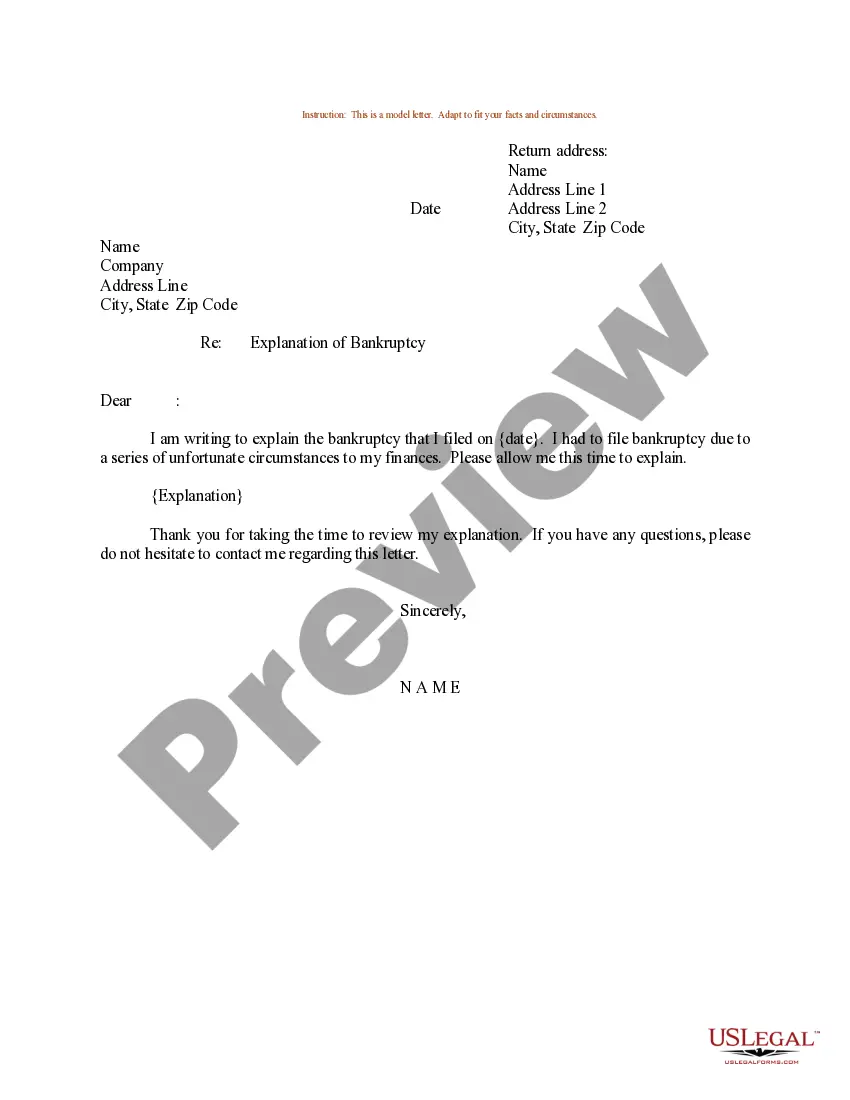
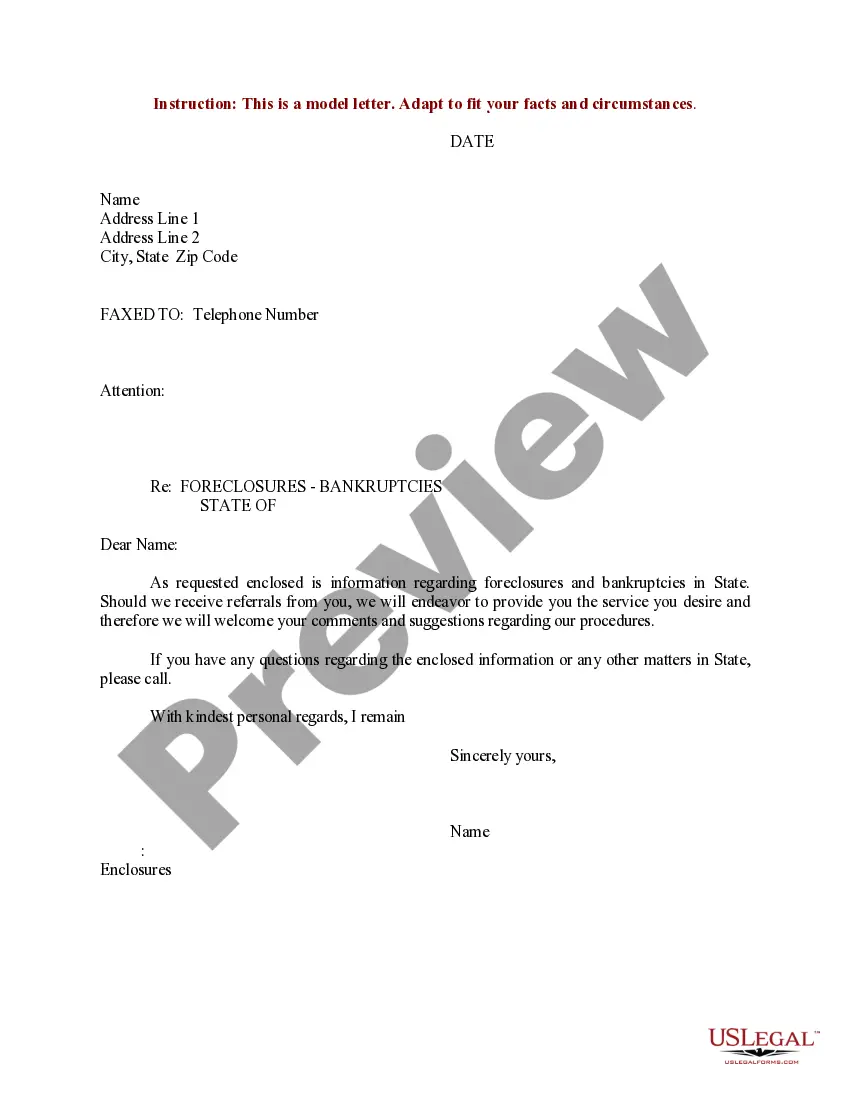
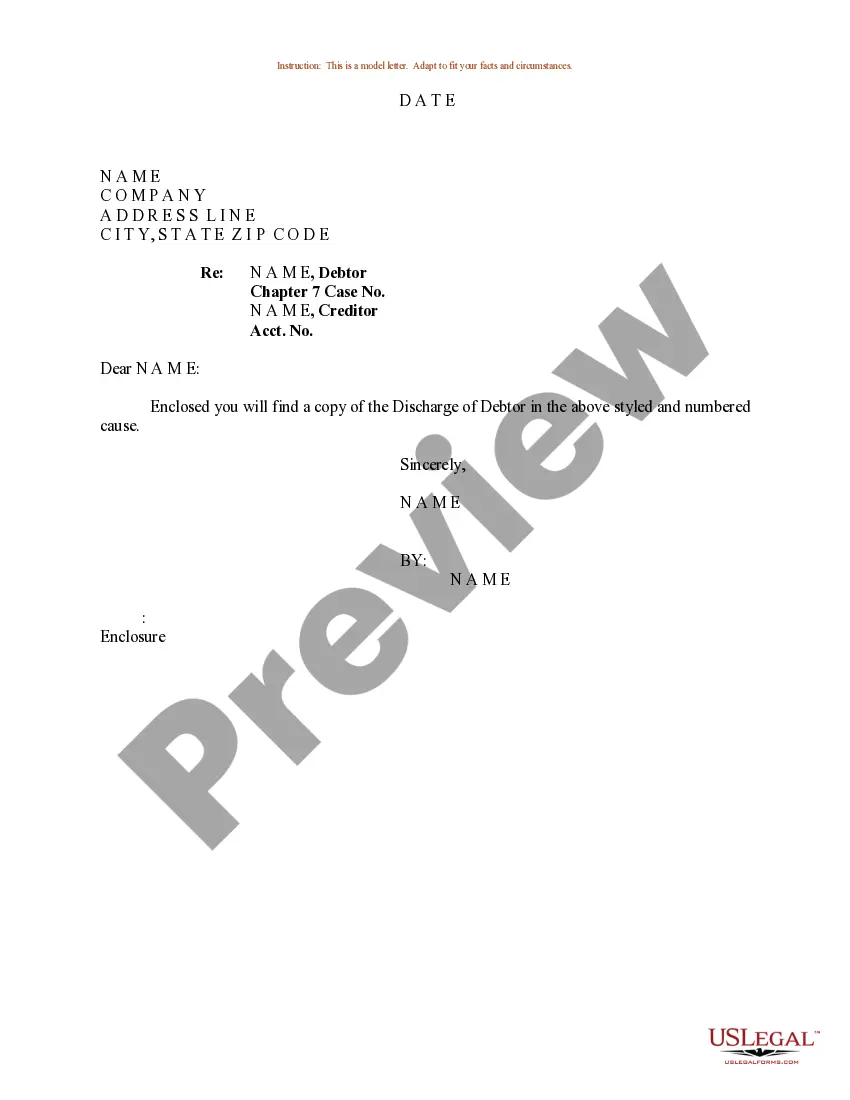
How to fill out Sample Letter For Written Acknowledgment Of Bankruptcy Information?
Creating legal documents from the ground up can frequently be daunting.
Some situations may require extensive research and substantial financial commitment.
If you’re seeking a more straightforward and economical method of preparing a Bankruptcy Information File with Student Loans or any other documents without unnecessary obstacles, US Legal Forms is always within your reach.
Our online repository of over 85,000 current legal forms encompasses almost every aspect of your financial, legal, and personal matters.
However, before jumping right into downloading the Bankruptcy Information File with Student Loans, consider these guidelines: check the form preview and descriptions to ensure you have located the form you need, verify that the form you select meets your state and county requirements, choose the most appropriate subscription package to obtain the Bankruptcy Information File with Student Loans, download the form, then complete, sign, and print it. US Legal Forms boasts an impeccable reputation and over 25 years of expertise. Join us now and make document execution a simple and efficient process!
- With just a few clicks, you can quickly access state- and county-specific forms meticulously crafted for you by our legal experts.
- Utilize our platform whenever you require trustworthy and dependable services through which you can effortlessly find and download the Bankruptcy Information File with Student Loans.
- If you’re familiar with our site and have previously created an account, simply Log In to your account, find the template, and download it or re-download it anytime in the My documents section.
- Don’t have an account? No issue. It takes hardly any time to register and browse the library.
Form popularity
FAQ
You can declare bankruptcy on your student loans, but discharging them is challenging. Typically, courts require you to prove that repaying the loans causes you undue hardship. If you meet the criteria set by your jurisdiction, you may find relief from your loans. For detailed guidance, visiting uslegalforms can provide essential bankruptcy information files with student loans, helping you understand your options.
To declare bankruptcy on student loans, you must file a bankruptcy petition in court and request to include your loans in the filing. However, it's important to understand that student loans are typically not dischargeable in bankruptcy unless you demonstrate undue hardship. This process requires a separate adversarial proceeding in court to evaluate your situation. Consulting the bankruptcy information file with student loans can provide clarity on how to proceed and what documentation you need.
The 7 year rule refers to the time it takes for most negative information related to your student loans, including bankruptcy, to fall off your credit report. This means that if you declare bankruptcy and include your student loans, they may impact your credit for up to seven years. After this period, you may begin to see improvements in your credit score, provided you manage your remaining debts responsibly. Therefore, accessing accurate bankruptcy information files with student loans can help you navigate your options effectively.
An assignment of mortgage gives the loan seller's rights under the mortgage, including the right to foreclose if the borrower doesn't make payments, to the new owner of the loan.
In a mortgage assignment, your original lender or servicer transfers your mortgage account to another loan servicer. When this occurs, the original mortgagee or lender's interests go to the next lender. Even if your mortgage gets transferred or assigned, your mortgage's terms should remain the same.
This document was created when a mortgagee wished to recover his money, but the mortgagor could not pay it back. The mortgagee would assign the mortgage to another person, who would pay him the money he was owed.
An assignee is a person or a company that buys your loan. For example, an auto dealer that extends credit to individuals may sell their loans to a bank. In this case, the bank is the assignee and the auto dealer is the assignor. If your loan has been sold, you owe money to whoever owns your loan.
An assignment of mortgage documents the transfer of a mortgage from an original lender or borrower to another person or entity. Lenders regularly sell mortgages to other lenders. Less often, a borrower transfers the mortgage to someone else who assumes the mortgage.
The most common example of an Assignment of Mortgage is when a mortgage lender transfers/sells the mortgage to another lender. This can be done more than once until the balance is paid. The lender does not have to inform the borrower that the mortgage is being assigned to another party.
The term debt assignment refers to a transfer of debt, and all the associated rights and obligations, from a creditor to a third party. The assignment is a legal transfer to the other party, who then becomes the owner of the debt.