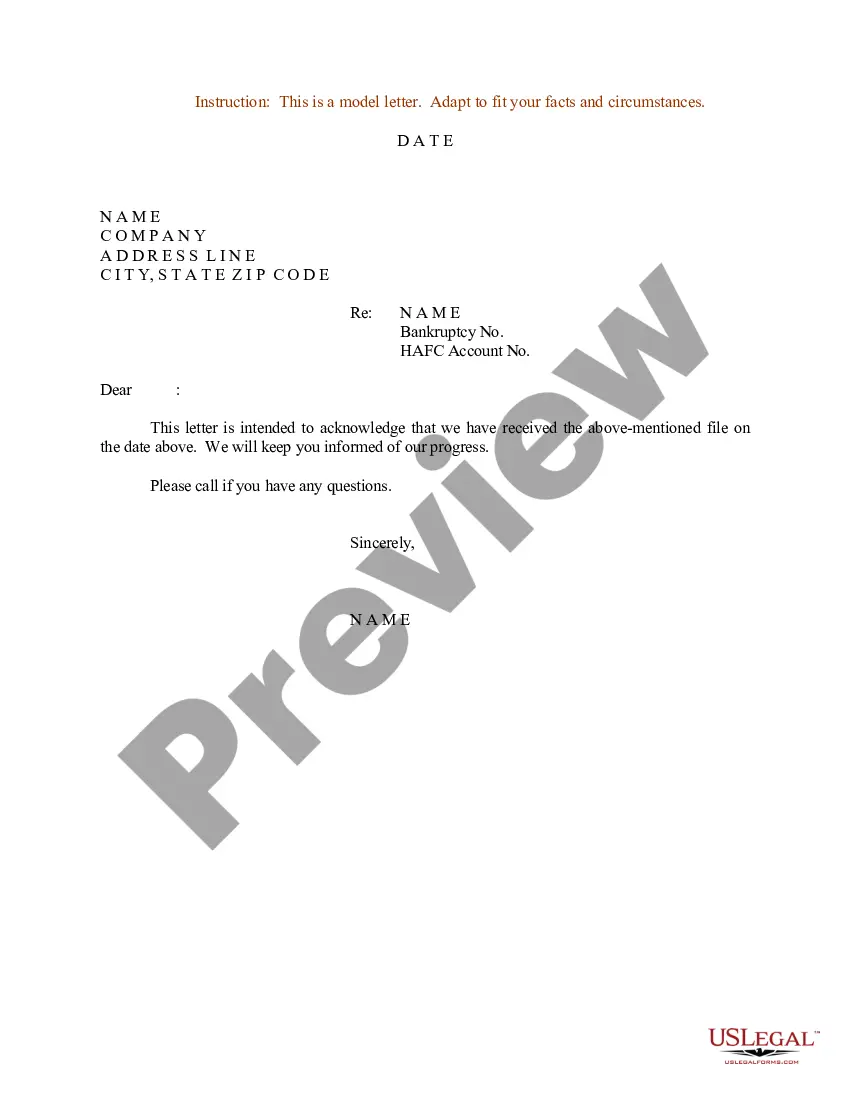
Bankruptcy Information File With A Criminal Record
Description
Get your form ready online
Our built-in tools help you complete, sign, share, and store your documents in one place.
Make edits, fill in missing information, and update formatting in US Legal Forms—just like you would in MS Word.
Download a copy, print it, send it by email, or mail it via USPS—whatever works best for your next step.
Sign and collect signatures with our SignNow integration. Send to multiple recipients, set reminders, and more. Go Premium to unlock E-Sign.
If this form requires notarization, complete it online through a secure video call—no need to meet a notary in person or wait for an appointment.
We protect your documents and personal data by following strict security and privacy standards.

Make edits, fill in missing information, and update formatting in US Legal Forms—just like you would in MS Word.

Download a copy, print it, send it by email, or mail it via USPS—whatever works best for your next step.

Sign and collect signatures with our SignNow integration. Send to multiple recipients, set reminders, and more. Go Premium to unlock E-Sign.

If this form requires notarization, complete it online through a secure video call—no need to meet a notary in person or wait for an appointment.

We protect your documents and personal data by following strict security and privacy standards.
Looking for another form?
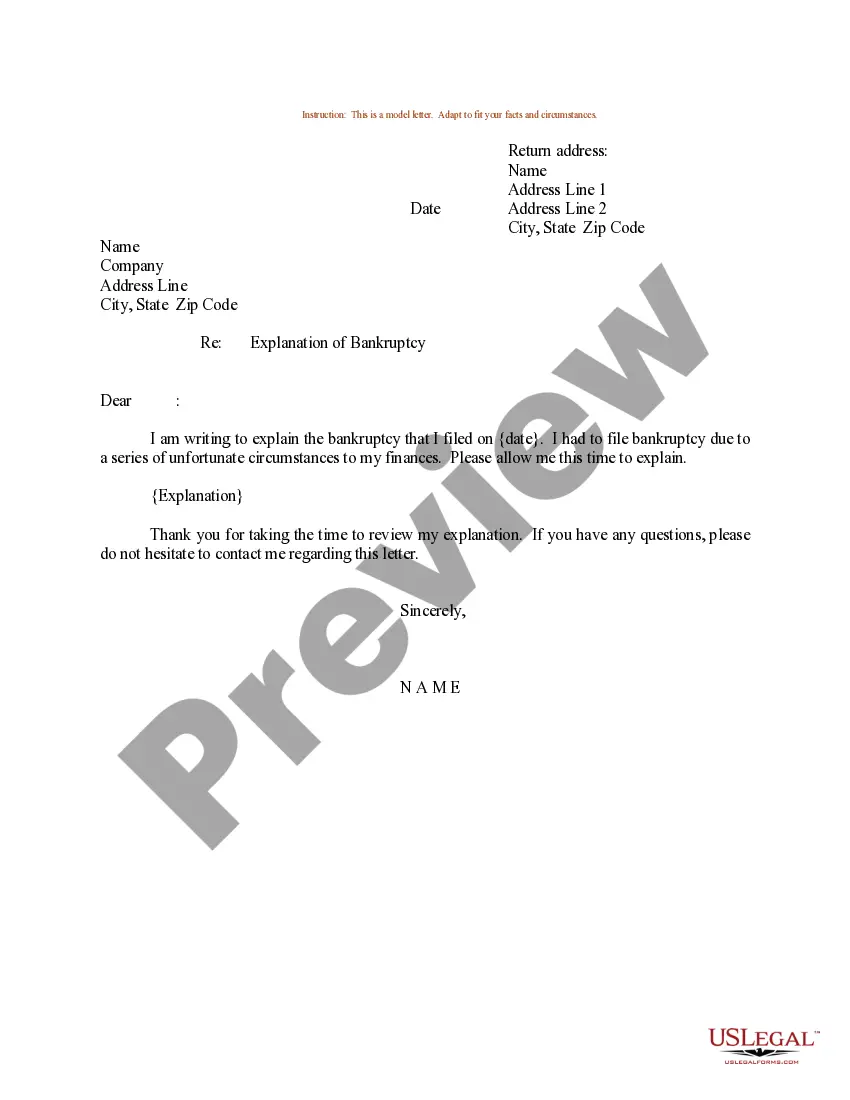
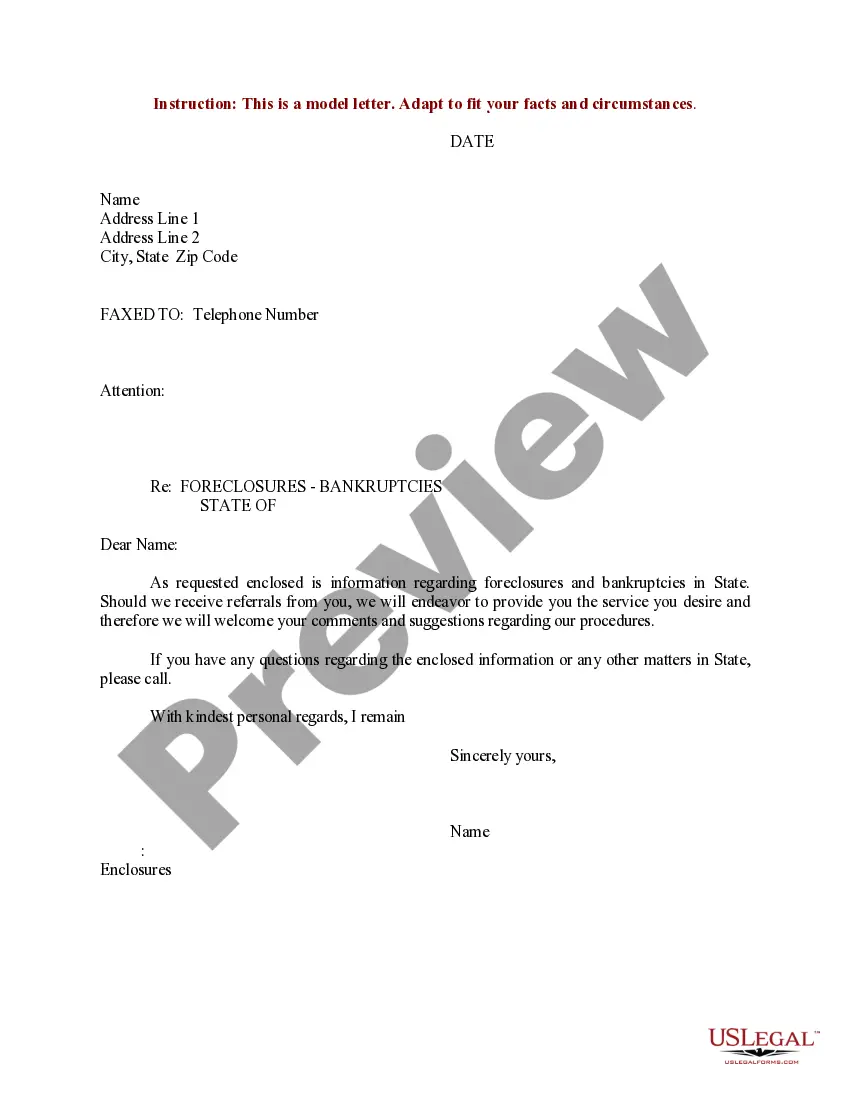
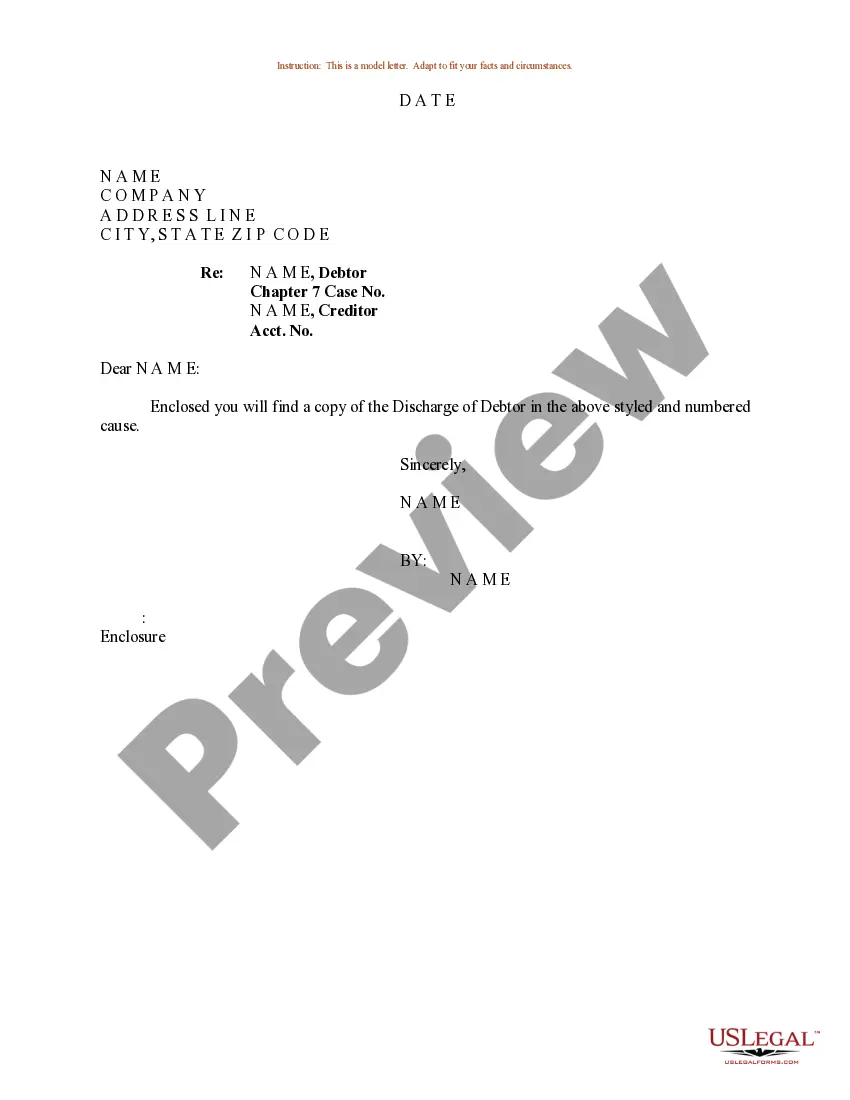
How to fill out Sample Letter For Written Acknowledgment Of Bankruptcy Information?
- If you're a returning user, log in to your account and click the Download button for the desired form template. Ensure your subscription is active, and if needed, renew it according to your payment plan.
- For first-time users, start by checking the Preview mode and description of the form you need. This ensures you select the correct document that complies with your local jurisdiction requirements.
- If you find any discrepancies, use the Search tab to locate an alternative template that better fits your requirements.
- Once you’ve found the appropriate document, click the Buy Now button and choose your preferred subscription plan. You will need to register an account for access to the extensive library.
- Provide your payment details, either by credit card or through your PayPal account to complete the purchase.
- Finally, download your form to save it on your device and access it anytime through the My Forms section of your account.
With US Legal Forms, you can rest assured that you are handling your legal documentation with care. Their extensive collection of over 85,000 easily editable legal forms empowers users to create precise documents tailored to their needs.
Don’t wait any longer—start your journey towards legally sound documentation today by visiting US Legal Forms!
Form popularity
FAQ
A bankruptcy can generally be traced back for a period of 10 years. This timeframe applies to Chapter 7 bankruptcies, while Chapter 13 bankruptcies remain on your record for just seven years. If you have a criminal record, it's crucial to manage your bankruptcy information file with a criminal record, as it may influence how creditors view your financial situation and trustworthiness.
When filing for bankruptcy, certain debts cannot be eliminated, including most student loans, child support, and alimony. Additionally, fines and restitution associated with a criminal record are typically non-dischargeable. You should also check your bankruptcy information file with a criminal record for details specific to your case, as this can help clarify which debts will remain after your bankruptcy proceedings.
It's important to consider your situation carefully when deciding whether to file bankruptcy before or after a lawsuit. Generally, if you are facing a lawsuit that could lead to significant financial losses, it may be beneficial to file your bankruptcy claim first. This approach can potentially protect your assets and stop the lawsuit from proceeding. However, if you have a criminal record, you should review your bankruptcy information file with a criminal record to understand how it may impact your filing strategy.
Yes, individuals with a security clearance can file for bankruptcy. However, filing bankruptcy may impact your security clearance status, as it raises questions about financial responsibility. To navigate this process successfully, be sure to collect comprehensive bankruptcy information files with a criminal record. U.S. Legal Forms can assist you in preparing your documents correctly, helping you maintain compliance while managing your financial future.
Yes, convicted felons can file for bankruptcy. Having a criminal record does not bar you from using bankruptcy as a financial relief option. It is important to gather appropriate bankruptcy information files with a criminal record, as this may help you understand the nuances involved in your specific situation. Utilizing resources like U.S. Legal Forms can simplify the process and ensure you submit accurate documentation.
Bankruptcy does not erase criminal charges or convictions. You cannot file for bankruptcy to eliminate a criminal case, as bankruptcy is primarily a consumer debt relief process. If you have a criminal record and are seeking bankruptcy information file with a criminal record, consulting with a legal professional can clarify your options moving forward.
In many cases, employers do not check for bankruptcies during the hiring process. However, some employers may conduct background checks that could reveal your financial history, especially in financial positions. It is worth remembering that having a bankruptcy on your record is one part of a broader picture of your qualifications and abilities. Taking steps to improve your financial standing can demonstrate responsibility and resilience.
Yes, bankruptcy filings are public records, meaning anyone can access that information. This includes creditors and potential lenders. However, it is essential to note that not everyone may actively search for this information about you. If you are concerned, consider consulting with experts who can help you navigate the implications.
Certain factors might disqualify you from filing for bankruptcy. For instance, if you have recently filed for bankruptcy and did not wait the required time period, you may be ineligible. Additionally, if you committed fraud or did not undergo credit counseling, this could impact your eligibility. Always consider seeking professional assistance to understand your options.
Yes, filing for bankruptcy does go on your record. It becomes part of the public record, which can affect your credit report for several years. Typically, Chapter 7 bankruptcy remains on your record for about ten years, while Chapter 13 may last around seven years. Being aware of this helps you understand the implications when searching for bankruptcy information file with a criminal record.