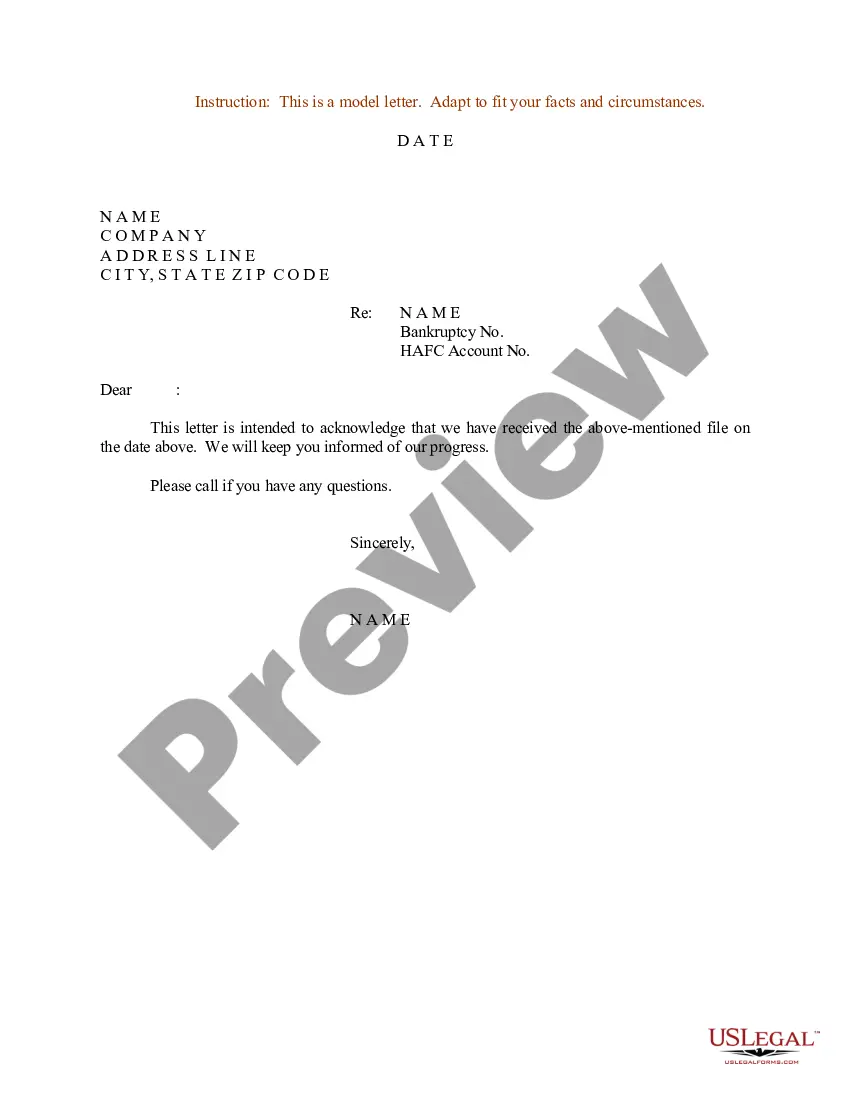
Bankruptcy Information And Reestablishment Center
Description
Get your form ready online
Our built-in tools help you complete, sign, share, and store your documents in one place.
Make edits, fill in missing information, and update formatting in US Legal Forms—just like you would in MS Word.
Download a copy, print it, send it by email, or mail it via USPS—whatever works best for your next step.
Sign and collect signatures with our SignNow integration. Send to multiple recipients, set reminders, and more. Go Premium to unlock E-Sign.
If this form requires notarization, complete it online through a secure video call—no need to meet a notary in person or wait for an appointment.
We protect your documents and personal data by following strict security and privacy standards.

Make edits, fill in missing information, and update formatting in US Legal Forms—just like you would in MS Word.

Download a copy, print it, send it by email, or mail it via USPS—whatever works best for your next step.

Sign and collect signatures with our SignNow integration. Send to multiple recipients, set reminders, and more. Go Premium to unlock E-Sign.

If this form requires notarization, complete it online through a secure video call—no need to meet a notary in person or wait for an appointment.

We protect your documents and personal data by following strict security and privacy standards.
Looking for another form?





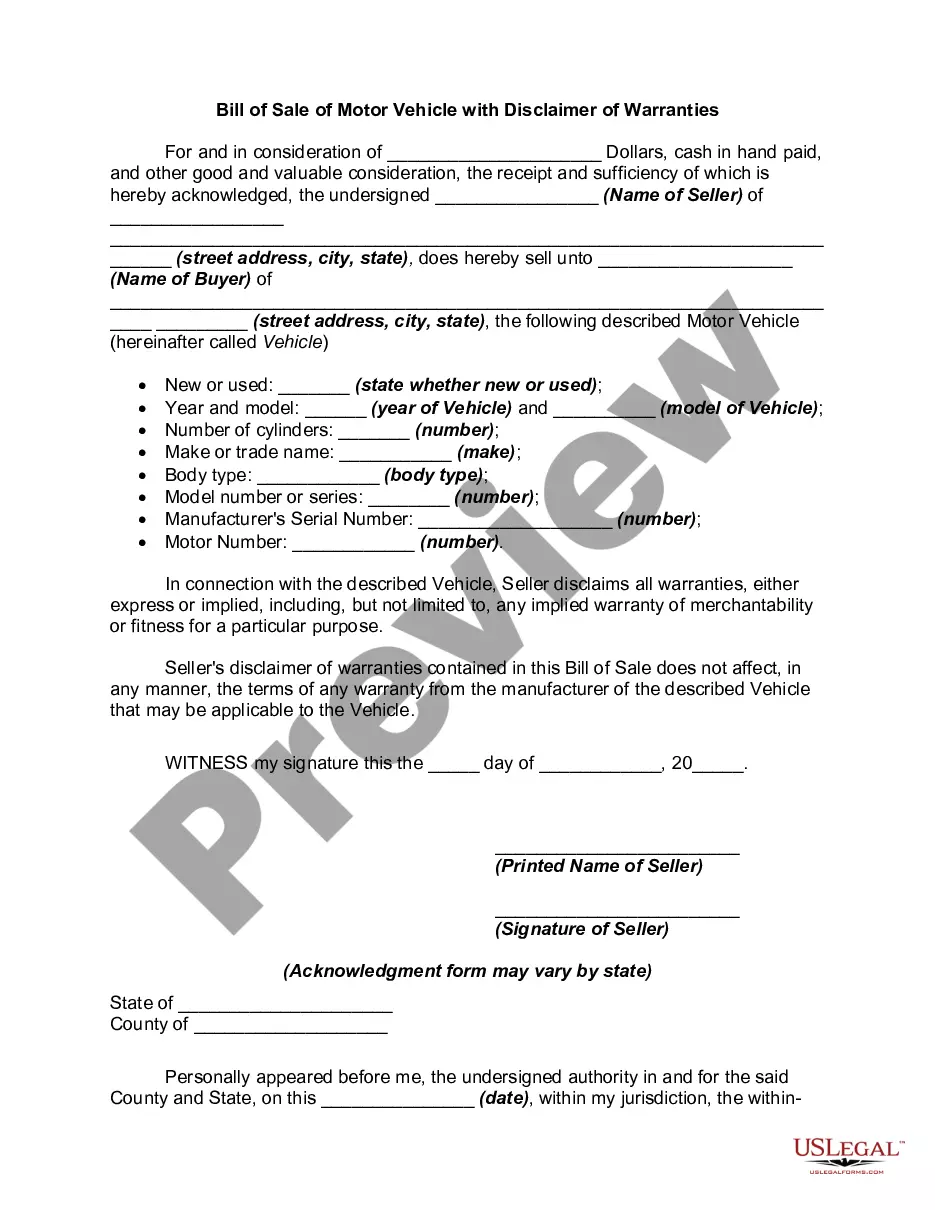
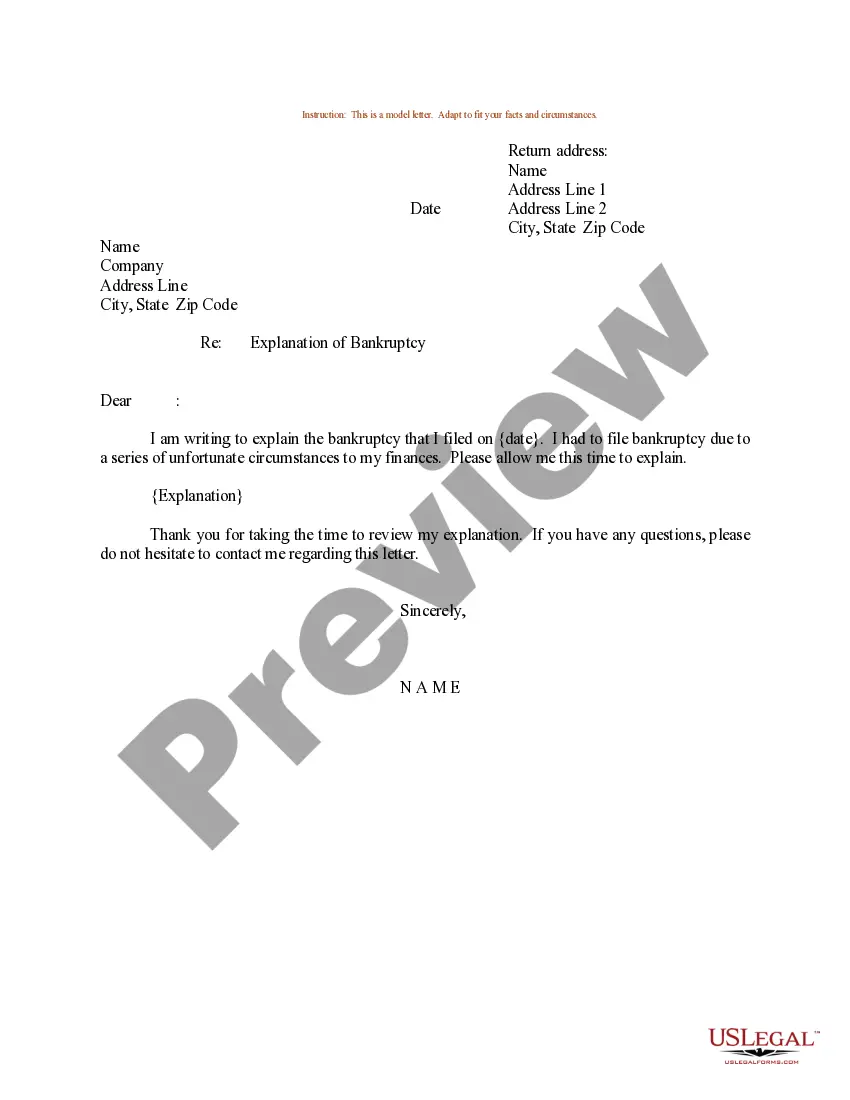
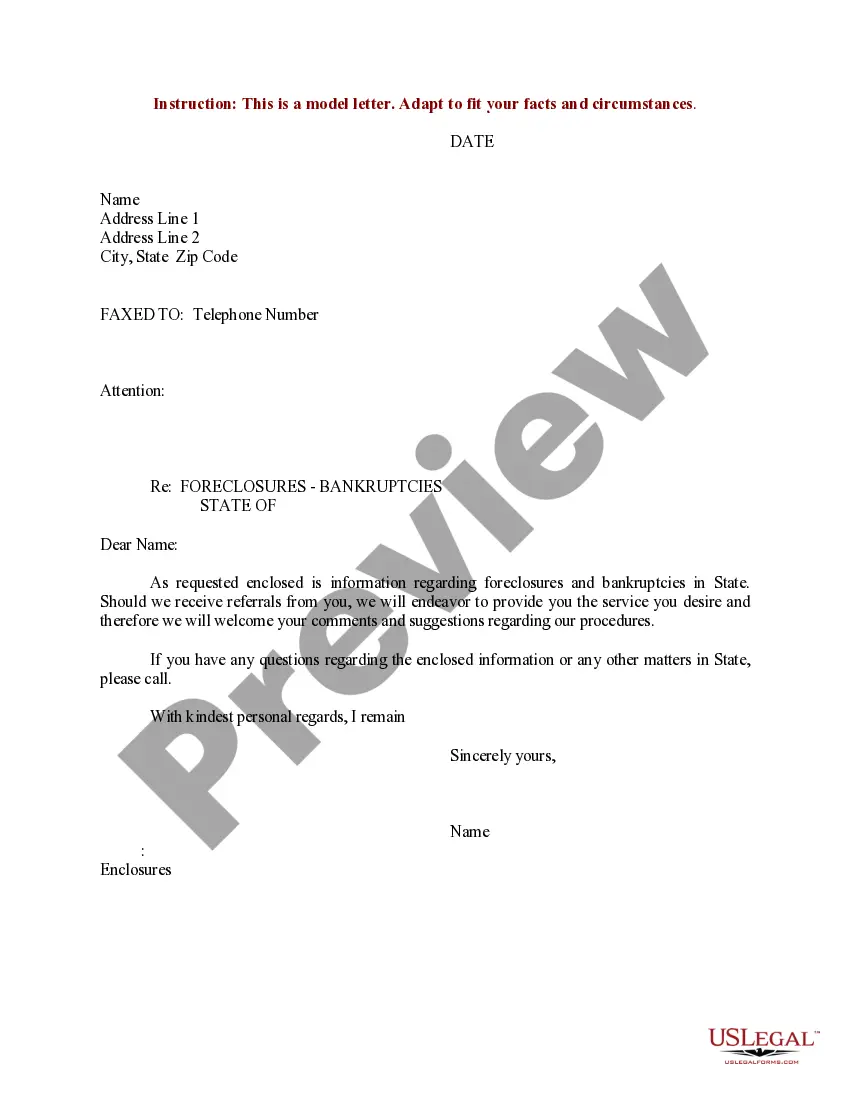
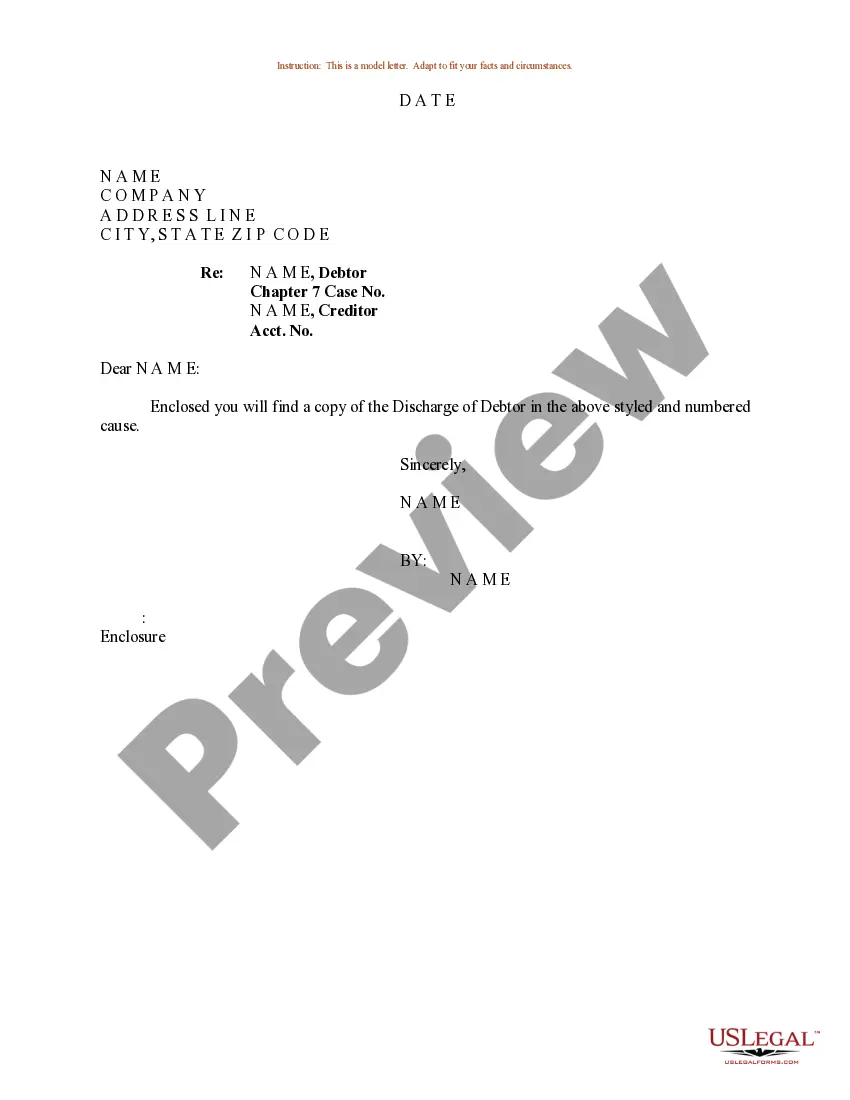
How to fill out Sample Letter For Written Acknowledgment Of Bankruptcy Information?
There's no longer a requirement to waste time searching for legal documents to comply with your local state laws.
US Legal Forms has compiled all of them in a single location and enhanced their availability.
Our website provides more than 85k templates for various business and personal legal situations categorized by state and application.
Utilize the Search field above to look for another example if the current one did not meet your needs.
- All forms are expertly drafted and verified for accuracy, so you can feel assured in obtaining an up-to-date Bankruptcy Information And Reestablishment Center.
- If you are acquainted with our platform and already possess an account, ensure your subscription is active before accessing any templates.
- Log In to your account, choose the document, and click Download.
- You can also revisit all saved documents anytime needed by entering the My documents tab in your profile.
- For those who have never utilized our platform, the process will require a few more steps to finalize.
- Here’s how newcomers can locate the Bankruptcy Information And Reestablishment Center in our collection.
- Examine the page content thoroughly to confirm it contains the example you need.
- To assist you, employ the form description and preview features if available.
Form popularity
FAQ
Absolutely, bankruptcies do show up on credit reports. They typically remain visible for around ten years, significantly impacting credit scores during that time. Knowing how this affects your financial future is important, and a proactive approach can lead to recovery. At our Bankruptcy information and reestablishment center, we provide valuable insights to help you rebuild your credit and attain financial stability.
Yes, bankruptcy filings are public records, meaning that anyone can see that you have filed bankruptcy. This information is accessible through court records and credit reports. While this may seem alarming, it is essential to understand that many people go through bankruptcy and recover successfully. Our Bankruptcy information and reestablishment center can help equip you with knowledge and strategies to move forward with confidence.
Hiding a bankruptcy on your credit report is not possible. Credit reporting agencies maintain reliable records, and misleading information can lead to serious repercussions. Instead of hiding, focus on rebuilding your credit over time. Our Bankruptcy information and reestablishment center provides resources and guidance to help you on your journey to financial recovery.
Removing bankruptcy from your credit report after seven years can be challenging, as bankruptcies generally remain for ten years. However, if you believe there is an error, you can dispute it with the credit bureaus. Successfully removing inaccurate entries can improve your credit profile. Our Bankruptcy information and reestablishment center offers tools to assist you in disputing these inaccuracies.
Yes, credit reports do display bankruptcy information. Typically, a bankruptcy filing appears on your credit report for ten years, affecting your credit score during this period. Understanding your credit report is essential, especially when dealing with bankruptcy. Our Bankruptcy information and reestablishment center can help you navigate this process.
Certain factors can disqualify you from filing for bankruptcy, including previous bankruptcy filings dismissed for fraud and failing to complete required credit counseling. Moreover, if you have had a Chapter 7 bankruptcy discharged within the last eight years, you may not be eligible. It's essential to review your situation carefully; the bankruptcy information and reestablishment center can assist you in determining your eligibility.
The four core steps of bankruptcy include preparing your paperwork, filing your bankruptcy petition, attending the meeting of creditors, and completing a financial management course. Each step is integral to restructuring your financial status. Utilizing a bankruptcy information and reestablishment center can guide you through these steps efficiently, ensuring you remain compliant with the legal requirements.
After gathering the necessary bankruptcy information and filling out the required forms, the second step involves filing your bankruptcy petition with the court. This petition includes details about your financial situation and provides the court with the context needed to understand your case. It's crucial to file it correctly to avoid delays. The US Legal feature allows you to navigate this step smoothly.
There is no specific minimum amount of debt required to file for bankruptcy, but most people consider it when they cannot manage their current financial obligations. Factors like your overall income, asset values, and living expenses play key roles in the decision. If you're unsure about your situation, consulting with a specialist can be beneficial. Our Bankruptcy information and reestablishment center can help clarify these requirements and support you in making an informed choice.
Restarting after bankruptcy involves creating a fresh financial plan and rebuilding your credit. Begin by establishing a budget and considering a secured credit card to help improve your credit score over time. Additionally, it's crucial to make timely payments for any new debts you acquire. Our Bankruptcy information and reestablishment center offers resources that can guide you through the reestablishment process, helping you achieve financial stability.