Grantor Retained Income Trust Pros And Cons
Description
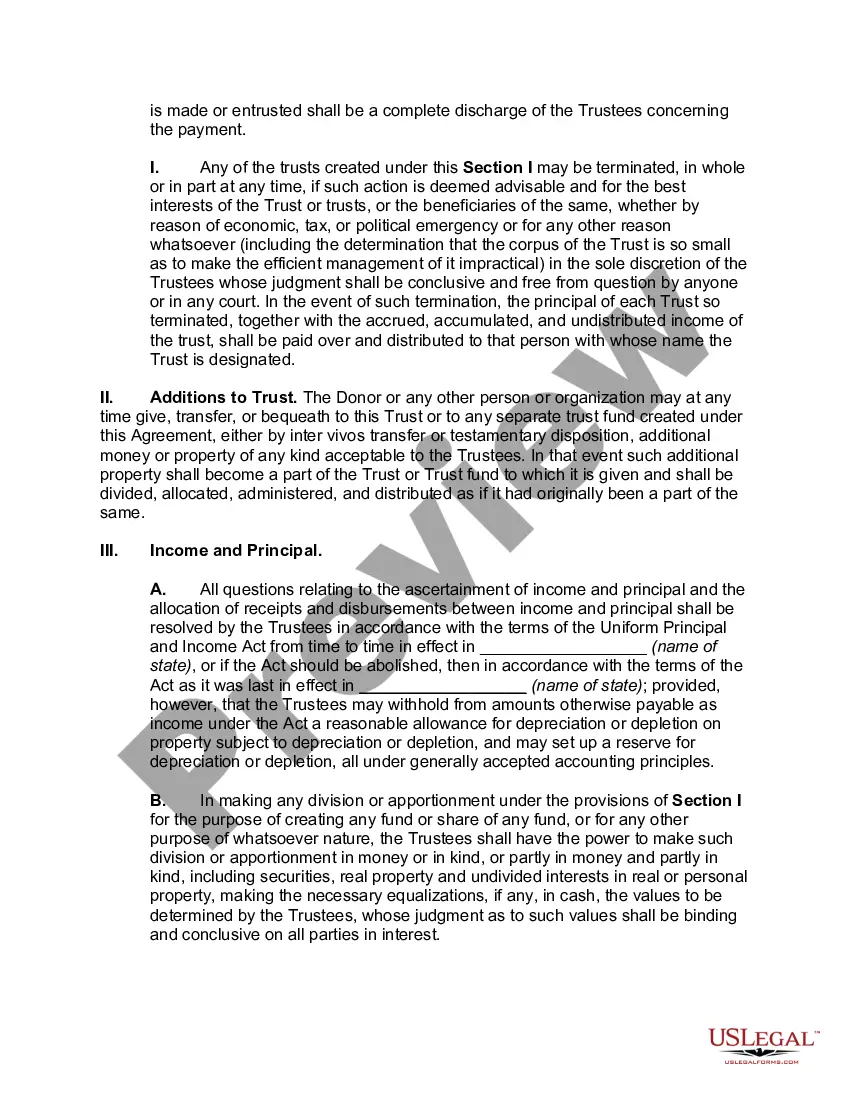
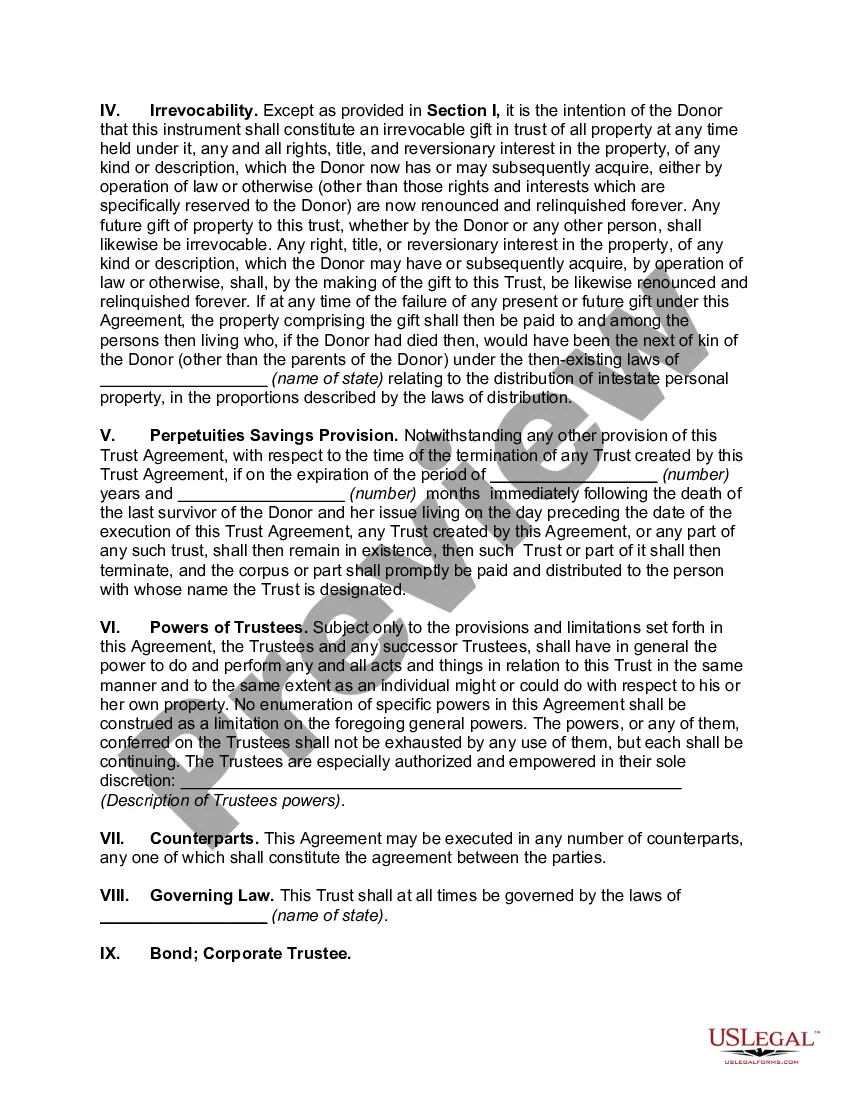
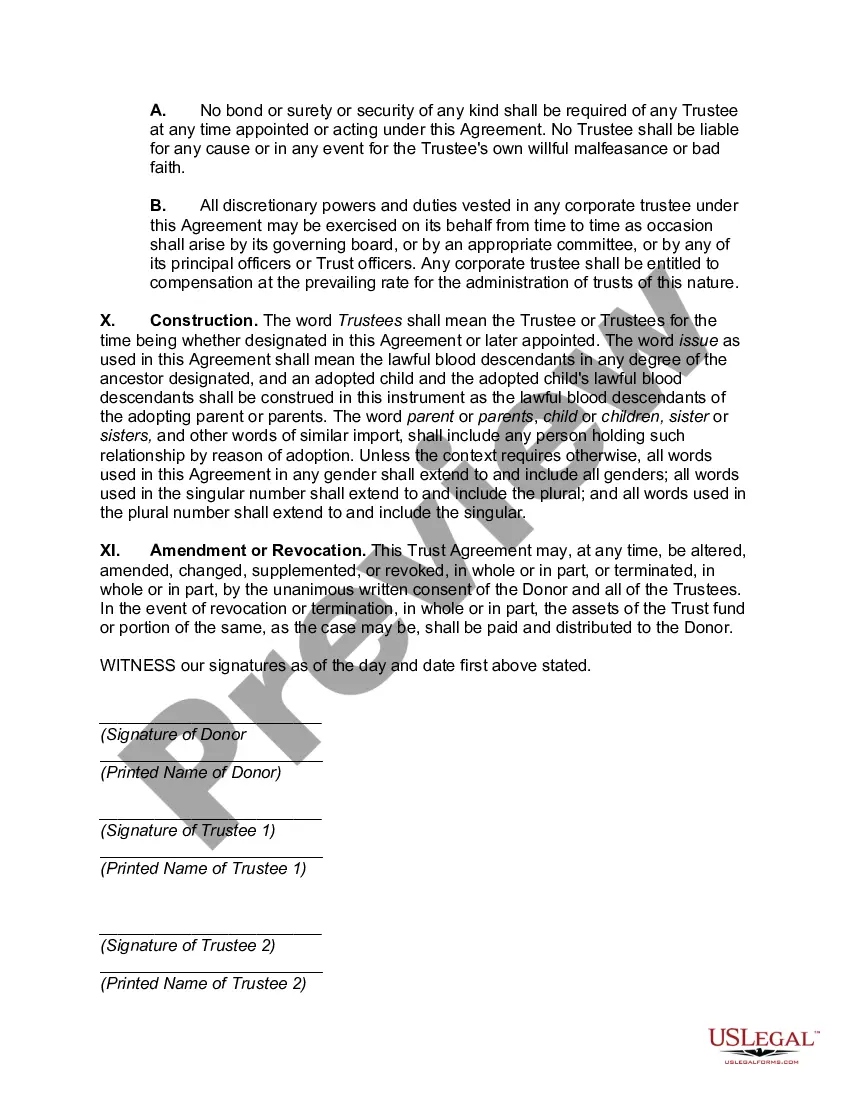

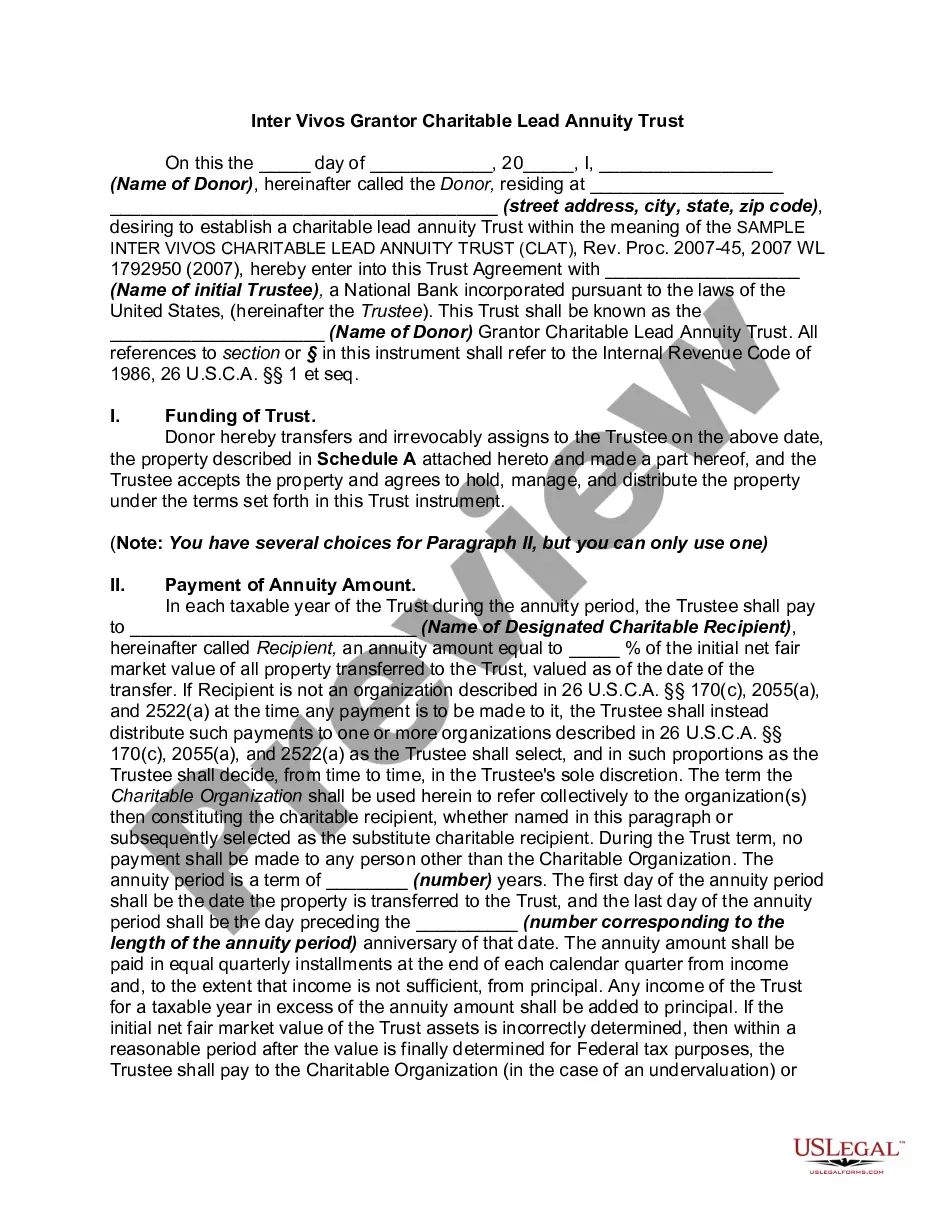
Get your form ready online
Our built-in tools help you complete, sign, share, and store your documents in one place.
Make edits, fill in missing information, and update formatting in US Legal Forms—just like you would in MS Word.
Download a copy, print it, send it by email, or mail it via USPS—whatever works best for your next step.
Sign and collect signatures with our SignNow integration. Send to multiple recipients, set reminders, and more. Go Premium to unlock E-Sign.
If this form requires notarization, complete it online through a secure video call—no need to meet a notary in person or wait for an appointment.
We protect your documents and personal data by following strict security and privacy standards.

Make edits, fill in missing information, and update formatting in US Legal Forms—just like you would in MS Word.

Download a copy, print it, send it by email, or mail it via USPS—whatever works best for your next step.

Sign and collect signatures with our SignNow integration. Send to multiple recipients, set reminders, and more. Go Premium to unlock E-Sign.

If this form requires notarization, complete it online through a secure video call—no need to meet a notary in person or wait for an appointment.

We protect your documents and personal data by following strict security and privacy standards.
Looking for another form?



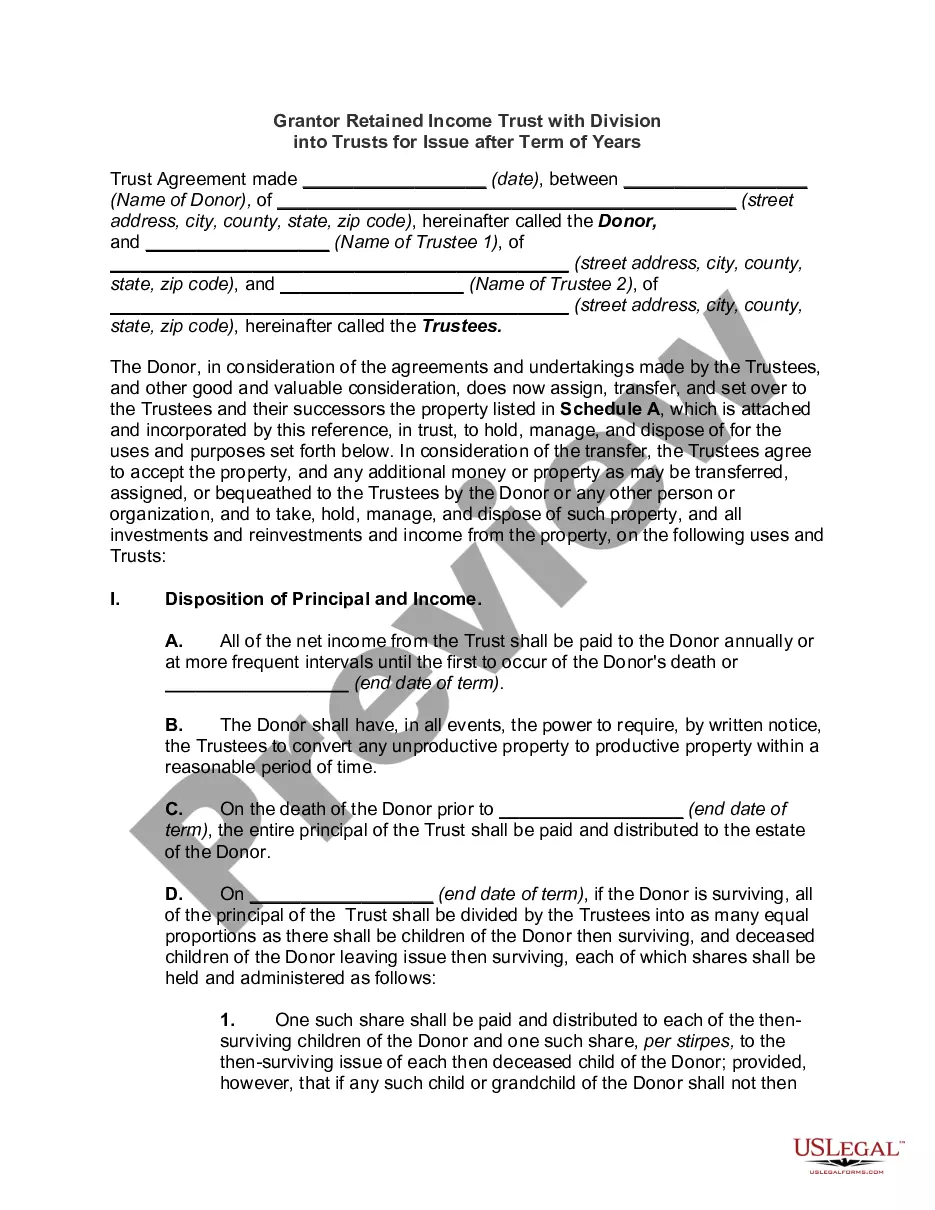
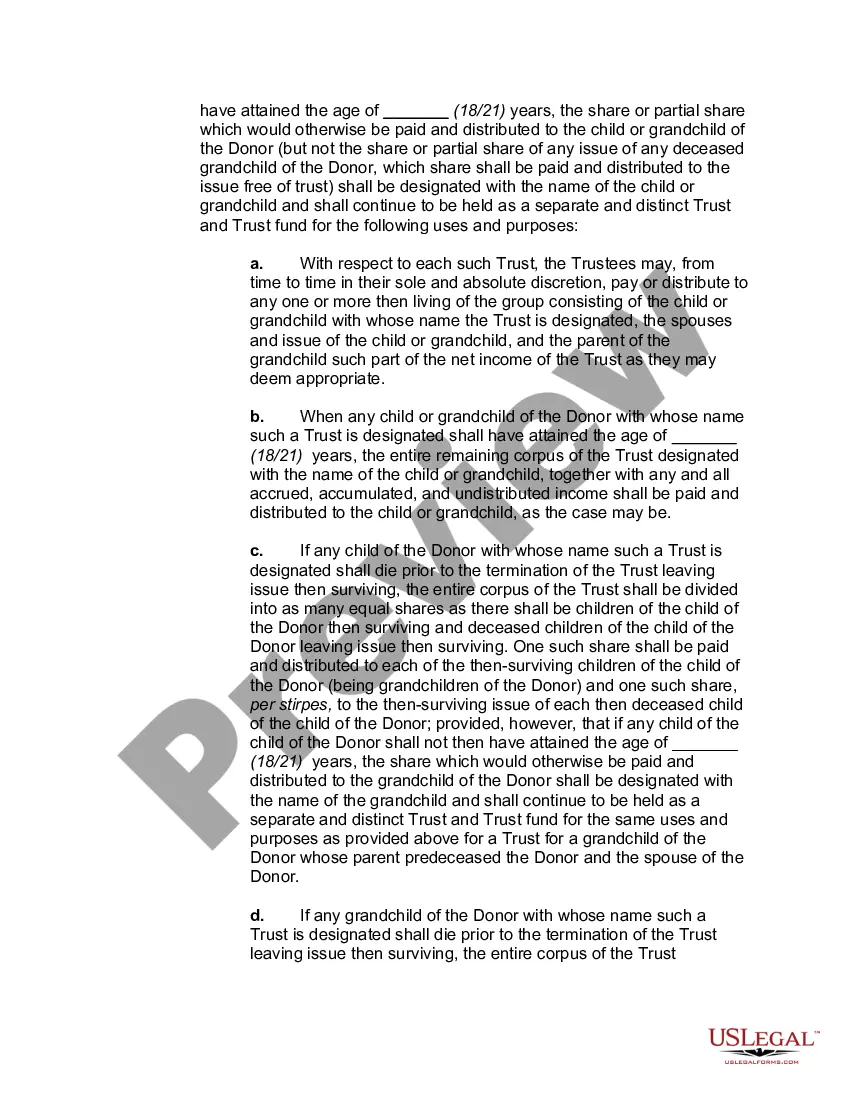
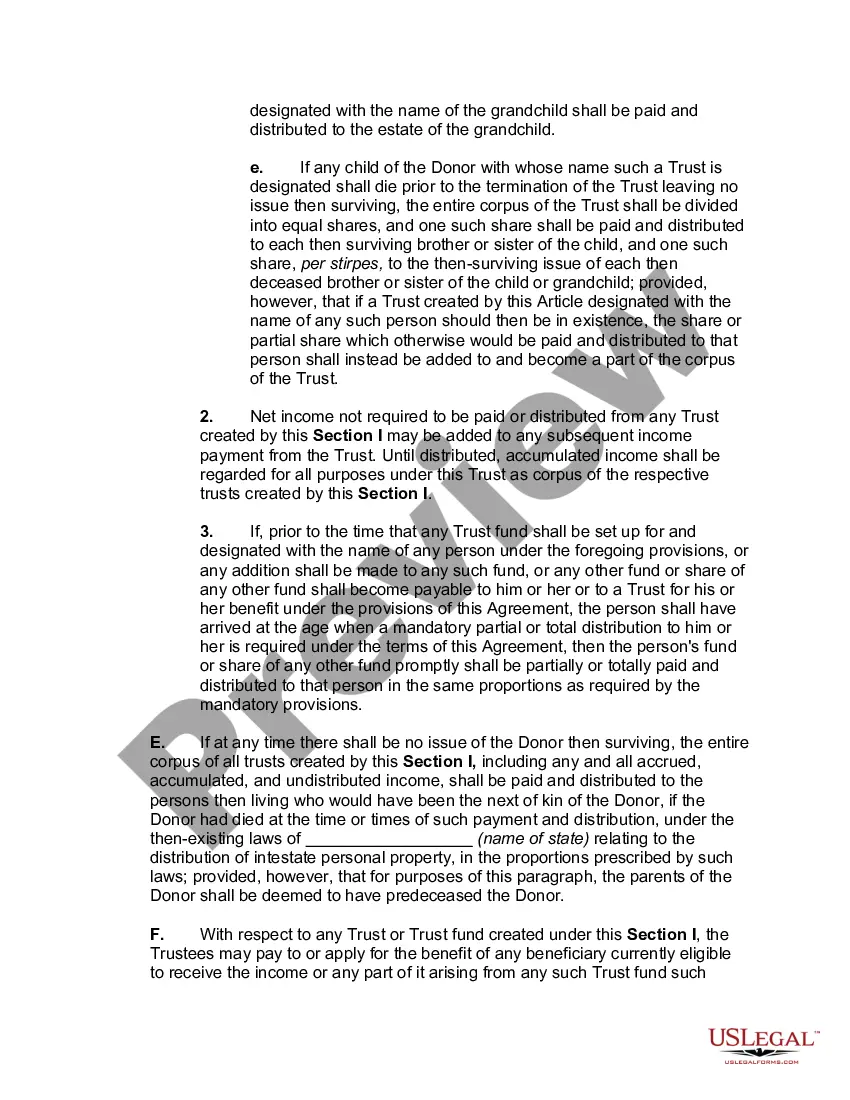
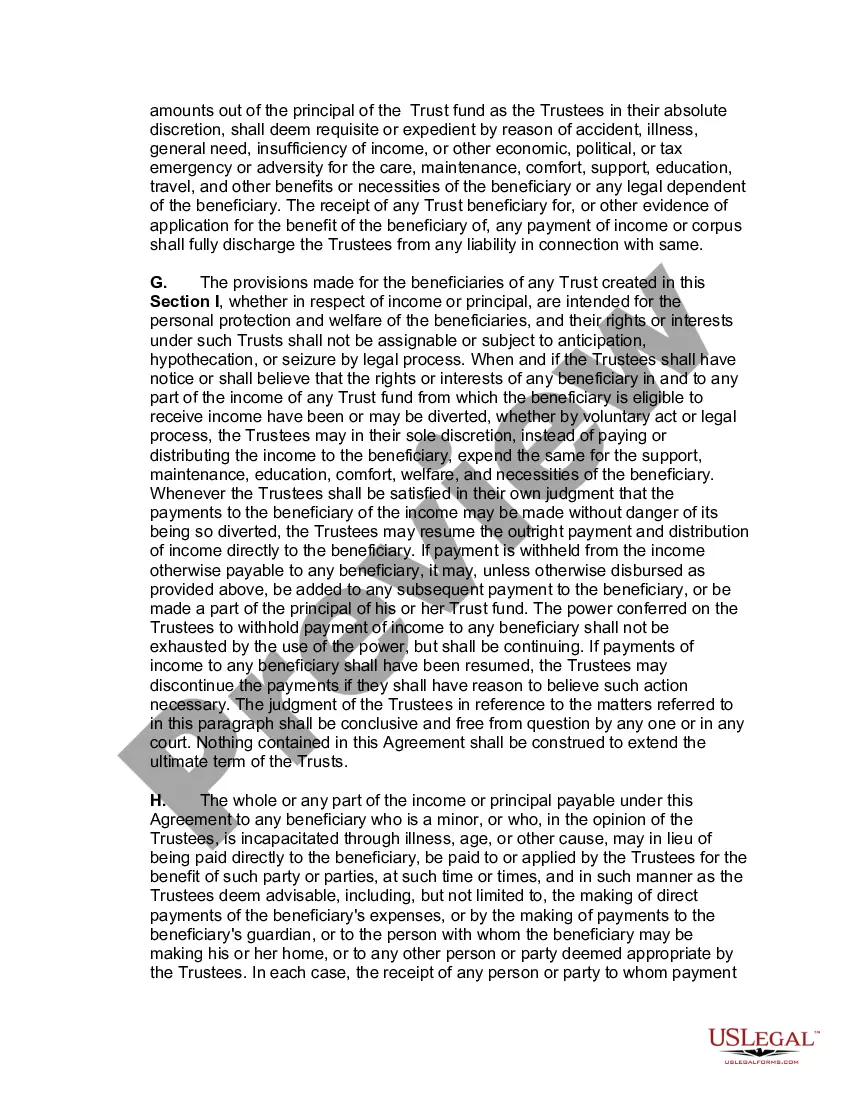
How to fill out Grantor Retained Income Trust With Division Into Trusts For Issue After Term Of Years?
Legal oversight can be daunting, even for seasoned professionals.
When you are interested in a Grantor Retained Income Trust Pros And Cons and don’t find the time to search for the correct and current version, the procedures can be challenging.
US Legal Forms accommodates all of your needs, from personal to business-related documentation, all in one location.
Employ advanced tools to complete and manage your Grantor Retained Income Trust Pros And Cons.
Follow these steps after downloading the form you desire: Validate that it is the correct form by previewing it and reviewing its details.
- Access a wealth of articles, guides, and resources relevant to your situation and requirements.
- Save effort and time searching for the documents you need, and utilize US Legal Forms' sophisticated search and Review feature to find Grantor Retained Income Trust Pros And Cons and obtain it.
- If you have a subscription, Log In to your US Legal Forms account, search for the form, and download it.
- Check the My documents section to review the documents you have previously saved and organize your folders as necessary.
- If this is your first encounter with US Legal Forms, create an account and gain unlimited access to all the perks of the collection.
- Utilize a comprehensive online form directory to ensure efficient handling of these scenarios.
- US Legal Forms is a leader in online legal documentation, offering more than 85,000 state-specific legal forms available at any moment.
- Facilitate access to state- or county-specific legal and business documents.
Form popularity
FAQ
Using 'GRAT' correctly involves understanding its function as a financial tool in estate planning. It's essential to convey that GRAT stands for Grantor Retained Annuity Trust and not simply a generic term. When discussing a GRAT, you should emphasize its role in allowing the grantor to retain income while transferring assets to beneficiaries. To fully grasp the intricacies of a GRAT, consider exploring resources from UsLegalForms, which can provide insight into the overall grantor retained income trust pros and cons.
Here are two potential disadvantages: Potential income tax challenges: Establishing a grantor trust assumes that you have sufficient financial resources to pay income taxes on trust assets during your lifetime. ... Rules can change: If the rules for grantor trusts change, they may no longer offer the same advantages.
All assets within a GRAT lose the benefit of step-up in basis and are exposed to income taxes. While a GRAT helps assets avoid the estate tax, the assets in the GRAT lose the benefit of step-up in-basis which can expose the assets in the GRAT to state and federal income tax that they otherwise wouldn't be exposed to.
The primary disadvantage of a revocable trust is that the grantor is still obligated to assume the tax burden. The fact that the assets are still considered property of the grantor also means that the trust is still subject to an estate tax in the event of an untimely passing of the creator.
The biggest perceived disadvantage of a GRAT is that the grantor must survive the term of the GRAT in order to keep the GRAT assets out of his or her estate.
The advantages of GRATs are its tax benefits and flexibility. It enables swapping of assets, if they underperform expectations. The disadvantages of GRATs are an absence of tax benefits to the beneficiary, if the grantor passes away during the trust's term.