Testamentary Trust With A Witness
Description

Get your form ready online
Our built-in tools help you complete, sign, share, and store your documents in one place.
Make edits, fill in missing information, and update formatting in US Legal Forms—just like you would in MS Word.
Download a copy, print it, send it by email, or mail it via USPS—whatever works best for your next step.
Sign and collect signatures with our SignNow integration. Send to multiple recipients, set reminders, and more. Go Premium to unlock E-Sign.
If this form requires notarization, complete it online through a secure video call—no need to meet a notary in person or wait for an appointment.
We protect your documents and personal data by following strict security and privacy standards.

Make edits, fill in missing information, and update formatting in US Legal Forms—just like you would in MS Word.

Download a copy, print it, send it by email, or mail it via USPS—whatever works best for your next step.

Sign and collect signatures with our SignNow integration. Send to multiple recipients, set reminders, and more. Go Premium to unlock E-Sign.

If this form requires notarization, complete it online through a secure video call—no need to meet a notary in person or wait for an appointment.

We protect your documents and personal data by following strict security and privacy standards.
Looking for another form?
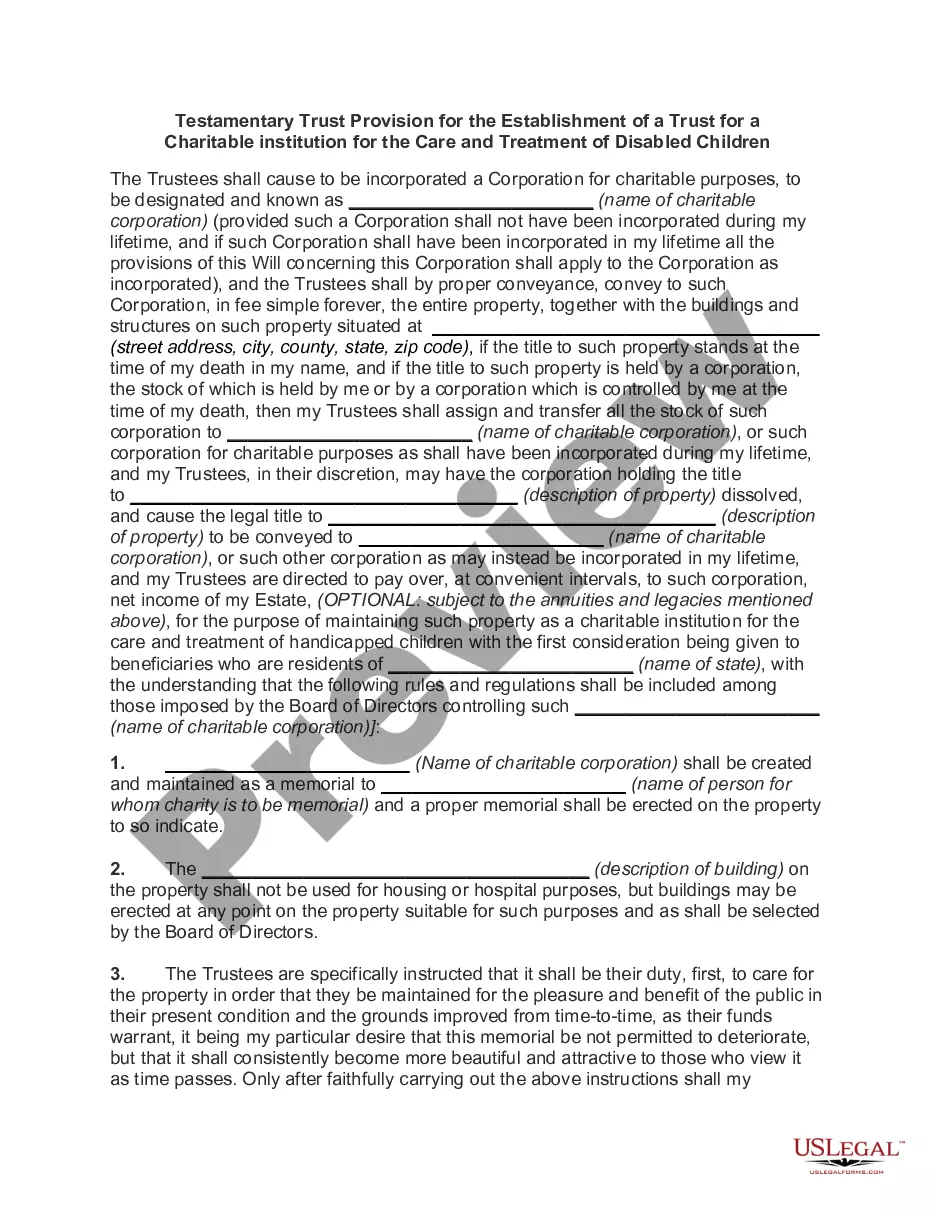
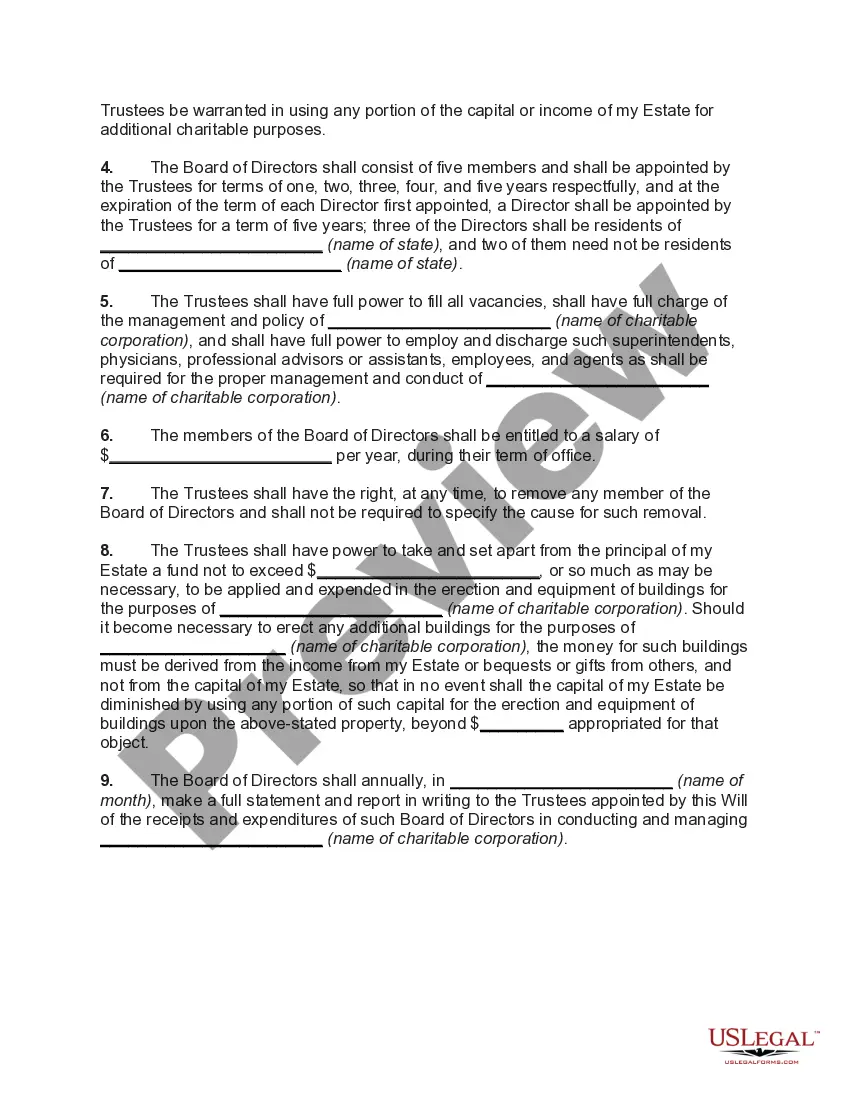
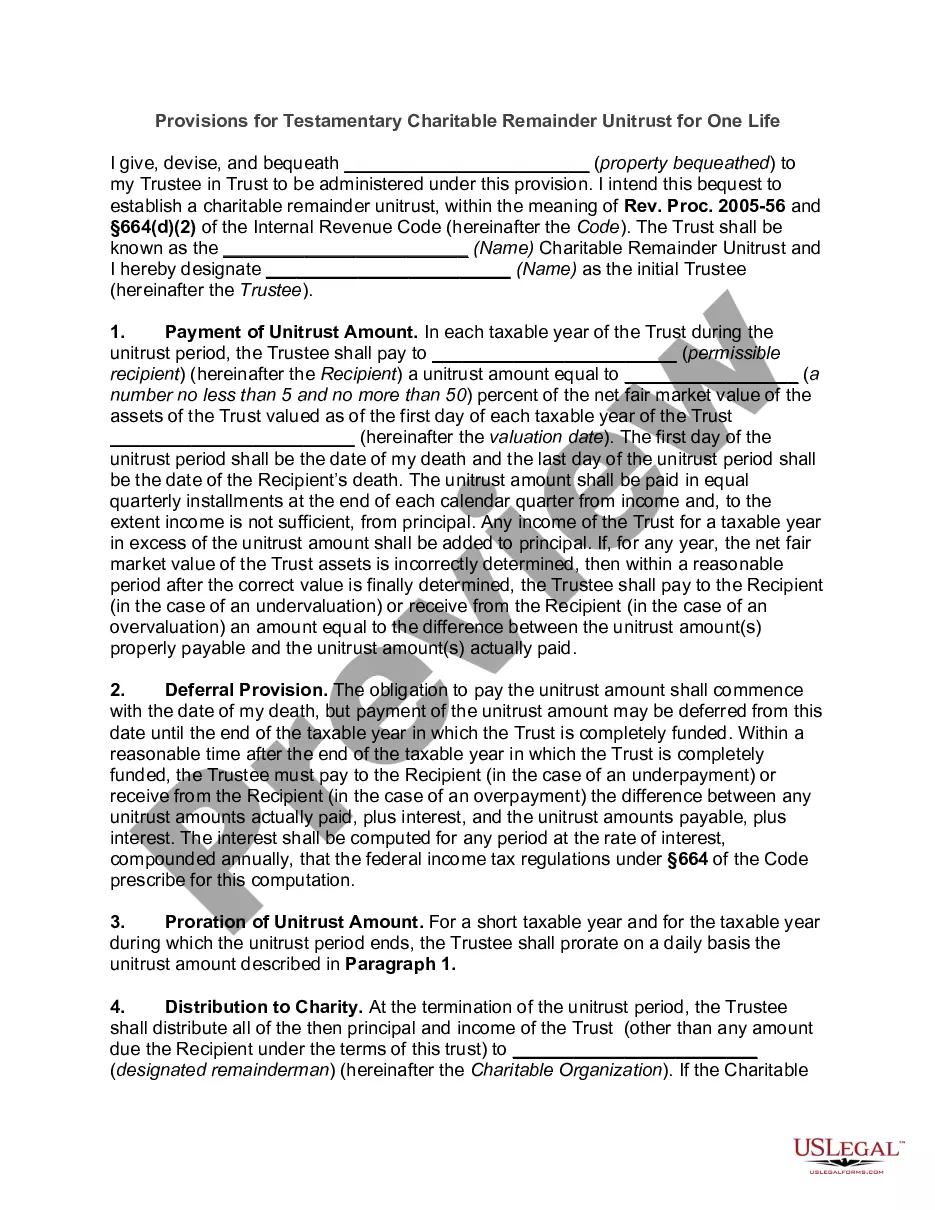
How to fill out Testamentary Trust Provision For The Establishment Of A Trust For A Charitable Institution For The Care And Treatment Of Disabled Children?
- If you're a returning user, log in to your account. Ensure your subscription is active, and download your desired form by clicking the Download button.
- New to US Legal Forms? Begin by checking the Preview mode and form description to confirm you have selected a template that fits your needs and complies with local regulations.
- If your needs are not met, utilize the Search tab to find an alternate template that suits you better.
- Once you've found the appropriate form, click the Buy Now button, choose your preferred subscription plan, and create an account to unlock the library’s resources.
- To finalize your purchase, enter your payment details via credit card or PayPal.
- Download your form and save it to your device. You can access it anytime from the My Forms section of your profile.
By leveraging US Legal Forms, you gain access to a vast collection of over 85,000 legal forms that are easily fillable and editable. Plus, users can seek expert assistance to ensure all forms are completed correctly.
Don't let legal complexities overwhelm you. Visit US Legal Forms today to utilize our comprehensive library and simplify your legal document needs!
Form popularity
FAQ
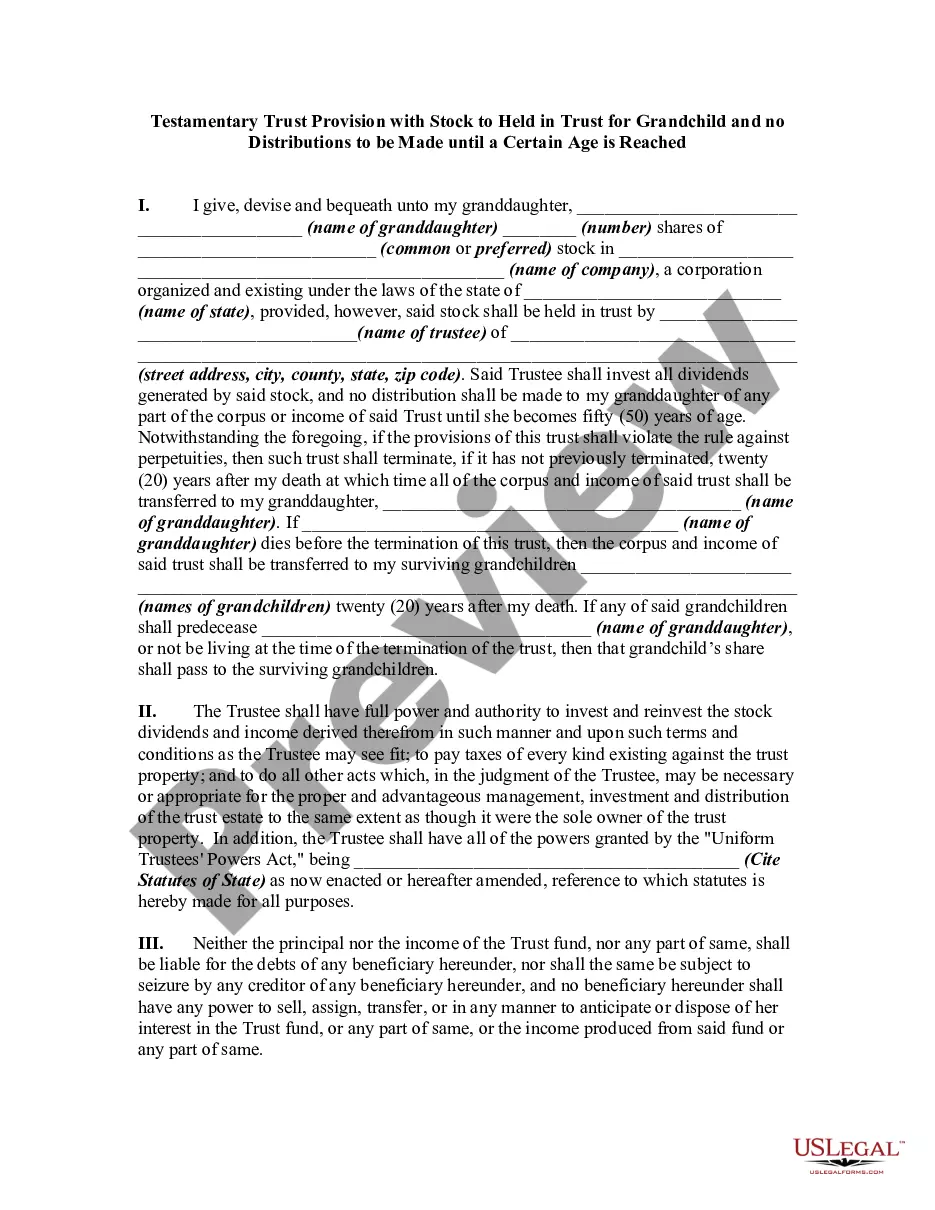
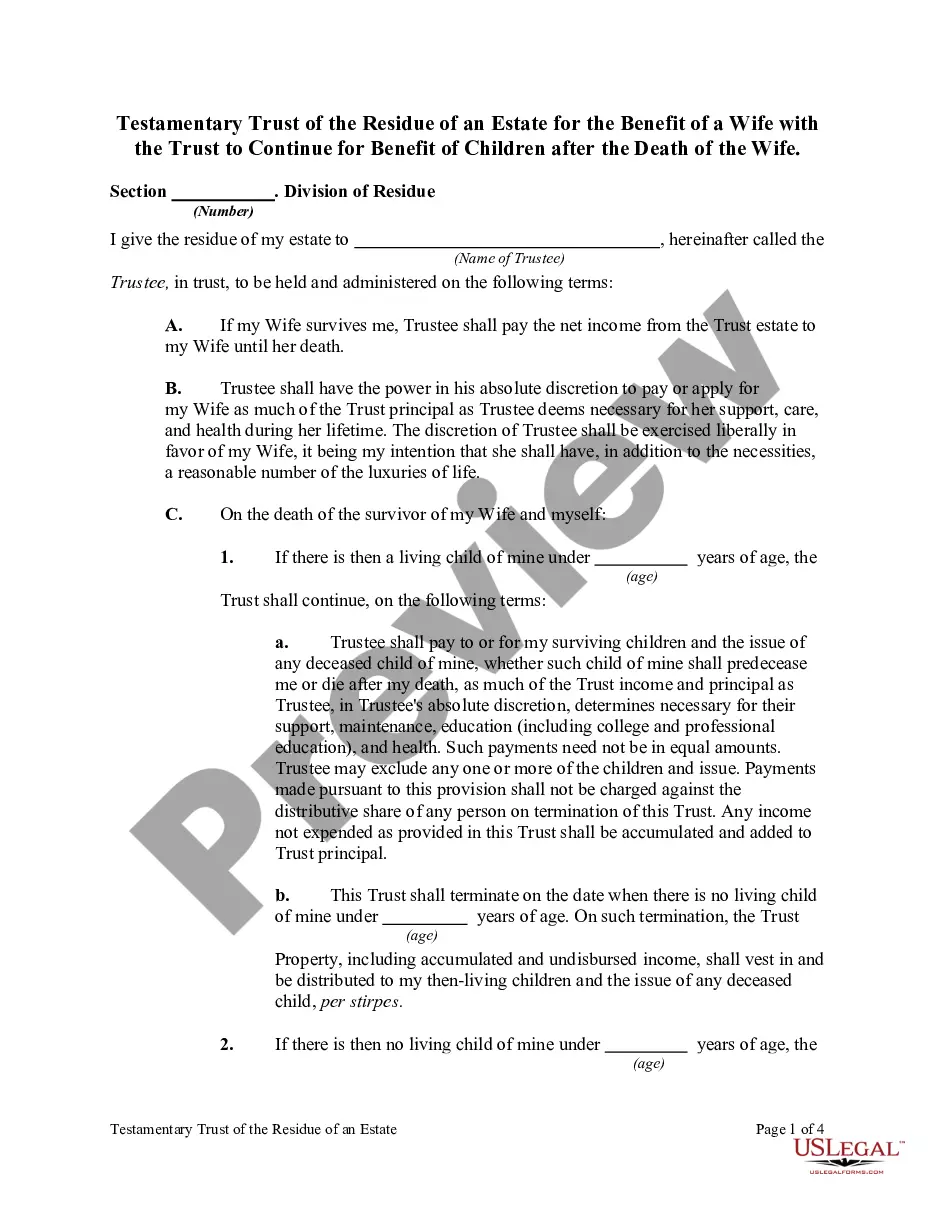
Yes, in many cases, witnesses are required for a trust to be valid, especially for a testamentary trust with a witness. Witnesses help confirm that the trust creator understands the document and is not under duress. Their signatures can add an additional layer of protection against future challenges. Always consider using services like US Legal Forms to ensure compliance with your state’s witness requirements.
To draft a testamentary trust with a witness, start by clearly defining your wishes for asset distribution after your passing. Include details such as who will serve as the trustee, the beneficiaries, and the specific assets to be held in trust. It is crucial to have a witness present during the signing of the trust document to ensure its validity. Consider using US Legal Forms for easy access to templates and guidance that simplify the process of creating a testamentary trust.
The necessity of a witness for a gun trust varies by state law and the specific type of trust in question. Although gun trusts generally offer more privacy, having a witness can provide an additional layer of legitimacy and assurance. If your gun trust is a testamentary trust with a witness, ensuring all legal requirements are met is essential for compliance.
Administering a testamentary trust involves managing the trust's assets according to the terms set out in the trust document. The trustee, whether you're using our platform or handling it independently, will be responsible for distributing funds to beneficiaries and ensuring that all legal and tax obligations are met. Following the guidelines within the testamentary trust with a witness will aid in a smooth administration process.
While technically allowed in some states, it is generally not advisable for a trustee to act as a witness. Conflicts of interest may arise, particularly concerning the testamentary trust with a witness. Choosing impartial witnesses ensures that the trust's integrity remains intact, which is critical for your peace of mind.
To create a valid trust, you must fulfill five essential requirements: the intent to create the trust, identifiable beneficiaries, a lawful purpose, property to fund the trust, and adherence to state laws. Additionally, for a testamentary trust with a witness, ensure proper documentation is signed in the presence of witnesses. Meeting these requirements can prevent future disputes and challenges.
A trust document is considered legal when it follows the specific laws of the state where it is created. Key elements include the settlor's intent, clear identification of beneficiaries, a legitimate purpose, and the signature of the settlor. For a testamentary trust with a witness, including the required witness signatures further solidifies its legal standing.
Yes, a witness can be included in a will, and it is often a requirement. To maintain the validity of your testamentary trust with a witness, having impartial individuals as witnesses is important during the signing process. Witnesses can help affirm that the testator intended to create the will, thereby reducing the risk of future legal challenges.
A trust can be considered invalid if it lacks essential components, such as a clear intention to create a trust, an identifiable beneficiary, or a lawful purpose. Additionally, if the trust document does not comply with state laws, particularly regarding not having a witness where required, it may face disputes. Therefore, ensuring your testamentary trust with a witness is created correctly is crucial.
Yes, a testamentary trust with a witness typically requires formal witnessing to ensure its legality. The will creating the trust must be signed in the presence of witnesses per state law, which helps to prevent disputes and challenges after your passing. This legal requirement adds a layer of security to your estate planning process.