Random Drug Test For Employee
Description
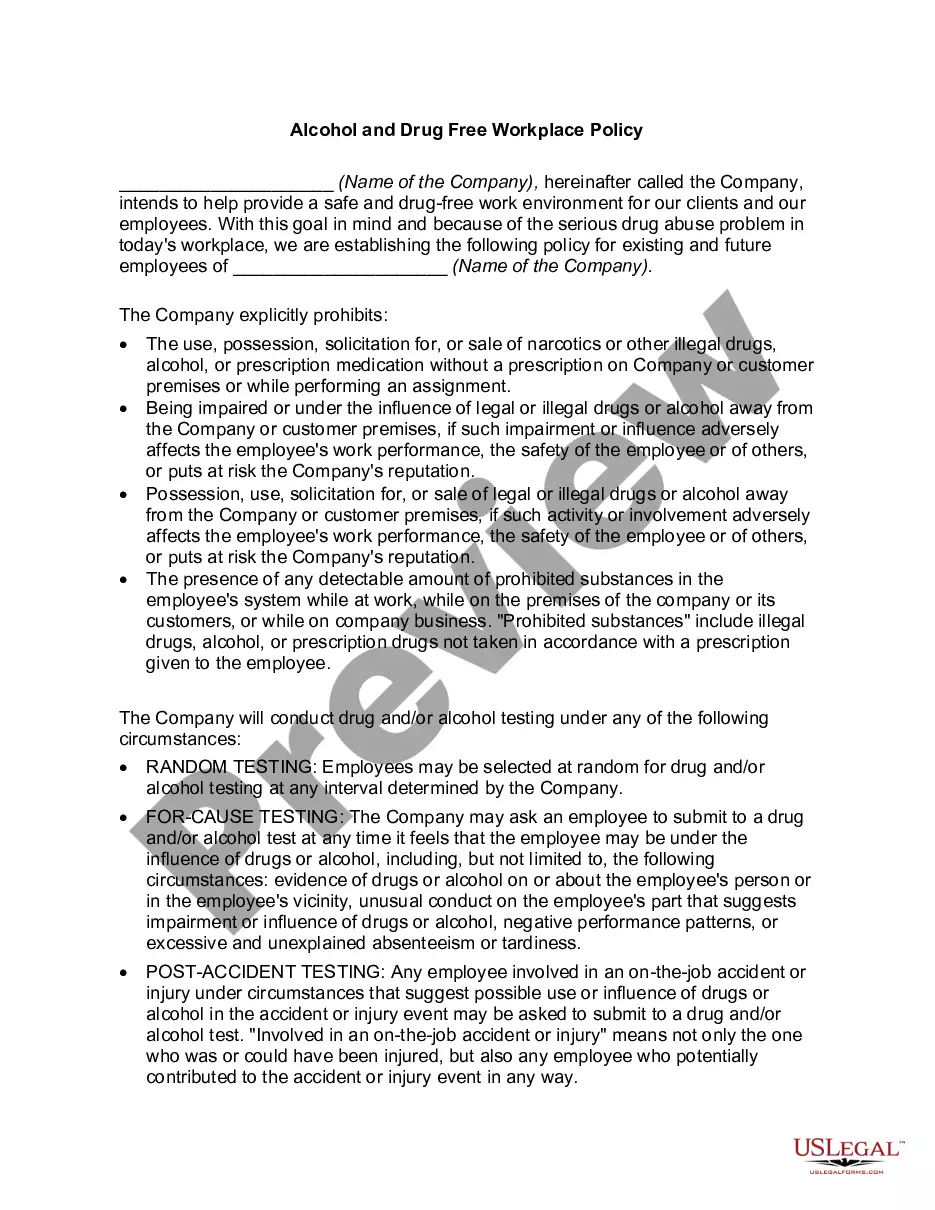
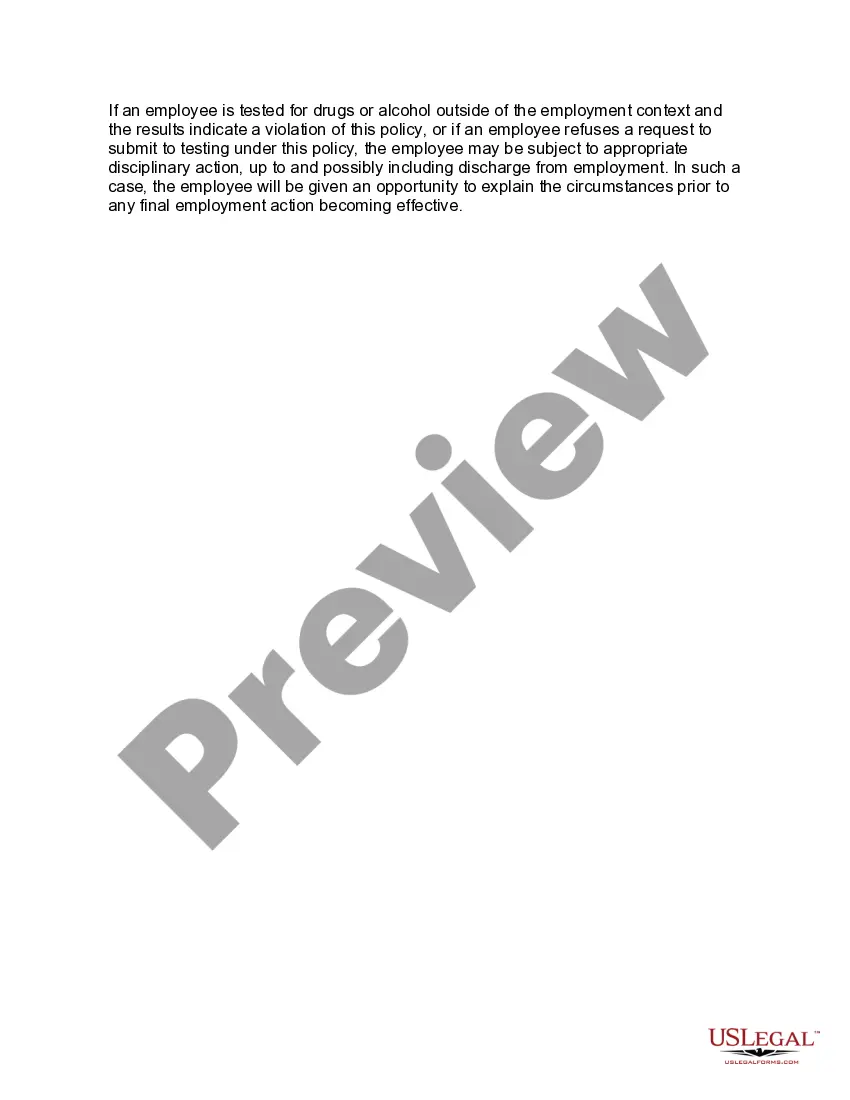
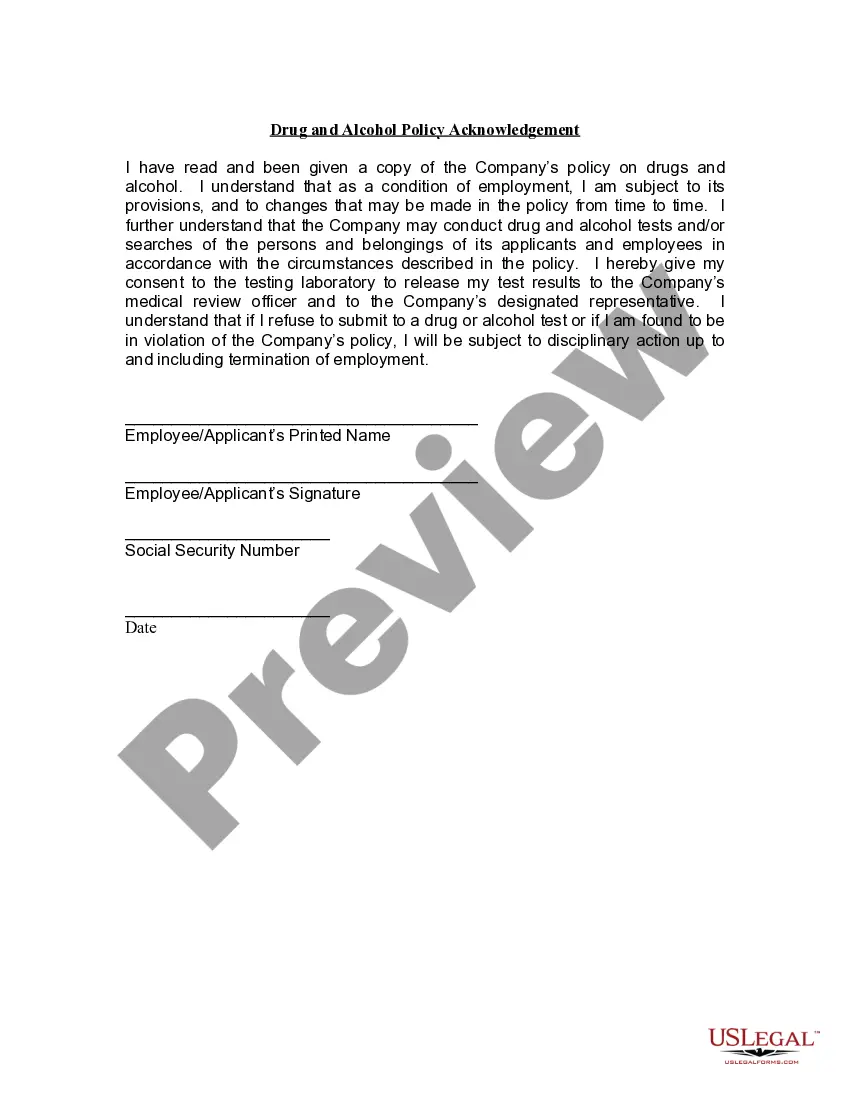
Get your form ready online
Our built-in tools help you complete, sign, share, and store your documents in one place.
Make edits, fill in missing information, and update formatting in US Legal Forms—just like you would in MS Word.
Download a copy, print it, send it by email, or mail it via USPS—whatever works best for your next step.
Sign and collect signatures with our SignNow integration. Send to multiple recipients, set reminders, and more. Go Premium to unlock E-Sign.
If this form requires notarization, complete it online through a secure video call—no need to meet a notary in person or wait for an appointment.
We protect your documents and personal data by following strict security and privacy standards.

Make edits, fill in missing information, and update formatting in US Legal Forms—just like you would in MS Word.

Download a copy, print it, send it by email, or mail it via USPS—whatever works best for your next step.

Sign and collect signatures with our SignNow integration. Send to multiple recipients, set reminders, and more. Go Premium to unlock E-Sign.

If this form requires notarization, complete it online through a secure video call—no need to meet a notary in person or wait for an appointment.

We protect your documents and personal data by following strict security and privacy standards.
Looking for another form?
How to fill out Alcohol And Drug Free Workplace Policy?
- Start by logging into your existing US Legal Forms account. Ensure your subscription is active; renew if necessary.
- Preview the available forms to find the random drug test template that aligns with your business needs and local jurisdiction.
- If the required form isn’t available, utilize the Search tool to locate the correct document.
- After identifying your form, click on the 'Buy Now' button to select a subscription plan that fits your requirements.
- Complete your purchase by entering your credit card information or using your PayPal account.
- Finally, download the form to your device for easy access. You can also find it in the 'My Forms' section of your profile.
In conclusion, US Legal Forms offers a convenient and comprehensive solution to help you manage your legal documentation needs effectively. With a vast collection of editable templates and the support of legal experts, you can ensure your random drug test for employees complies with the law.
Start your journey towards secure legal documentation by accessing US Legal Forms today!
Form popularity
FAQ
Conducting a drug test without consent is generally discouraged and may lead to legal complications. Most companies require employees to sign a consent form as part of their policy for a random drug test for employees. Keeping employees informed about testing procedures and obtaining their agreement protects your organization and promotes a positive workplace culture.
Most states in the U.S. allow random drug testing, but regulations can vary widely. It is crucial to check the specific laws in your state, as some might impose restrictions or require notice before testing. Utilizing a platform like UsLegalForms can help you navigate state regulations concerning random drug test for employees.
Yes, drug tests can indeed be random. Randomness in testing helps with fairness, as it prevents employees from anticipating tests and potentially altering their behavior beforehand. Establishing a well-defined random drug test for employees fosters trust and encourages compliance among staff.
To randomly select employees for a drug test, first, compile a list of all employees. You can then use a random selection tool or software to ensure fairness and eliminate bias. This process helps maintain transparency and accountability, ensuring that your random drug test for employees adheres to company policy and legal requirements.
While you may feel hesitant, refusing a random drug test for employees can lead to serious consequences, including disciplinary action or termination. It’s crucial to understand your company’s drug testing policy and how it applies to all employees. If you have concerns about the test, consider discussing them with your HR department beforehand. Open communication can often provide clarity and support in navigating these situations.
Yes, employers can send an employee for a random drug test if they have a policy in place. This means the employer has communicated the testing procedure clearly to all employees through an employee handbook or a policy document. By informing employees about the practice of a random drug test for employees, you set expectations and help maintain compliance with industry regulations. Always ensure that these tests are conducted fairly and respectfully.
The frequency of drug tests depends on company policy and applicable laws. Employers may require testing at different intervals, such as quarterly or annually, or even after incidents that suggest drug use. As policies vary, employees should familiarize themselves with the specifics of their workplace rules regarding random drug test for employee to stay informed and compliant.
Yes, an employee can refuse a random drug test; however, this may lead to consequences defined in the company's drug testing policy. Employers often have the right to impose disciplinary actions for refusal, as it may be seen as non-compliance with established protocols. Therefore, it's crucial for employees to understand the implications of denying a random drug test for employee.
Employers typically use a random selection process that ensures fairness and impartiality when choosing employees for a drug test. Common methods include computerized selection tools or drawing names from a confidential pool. Using these techniques helps maintain the integrity of the process and ensures that all employees have an equal chance of being selected for a random drug test for employee.
Yes, an employer can request a random drug test, provided they adhere to relevant laws and established workplace policies. It's important that these requests are consistent with the company's drug testing policies, which should be communicated to all employees beforehand. This approach supports a safe workplace while clarifying expectations regarding random drug test for employee protocols.