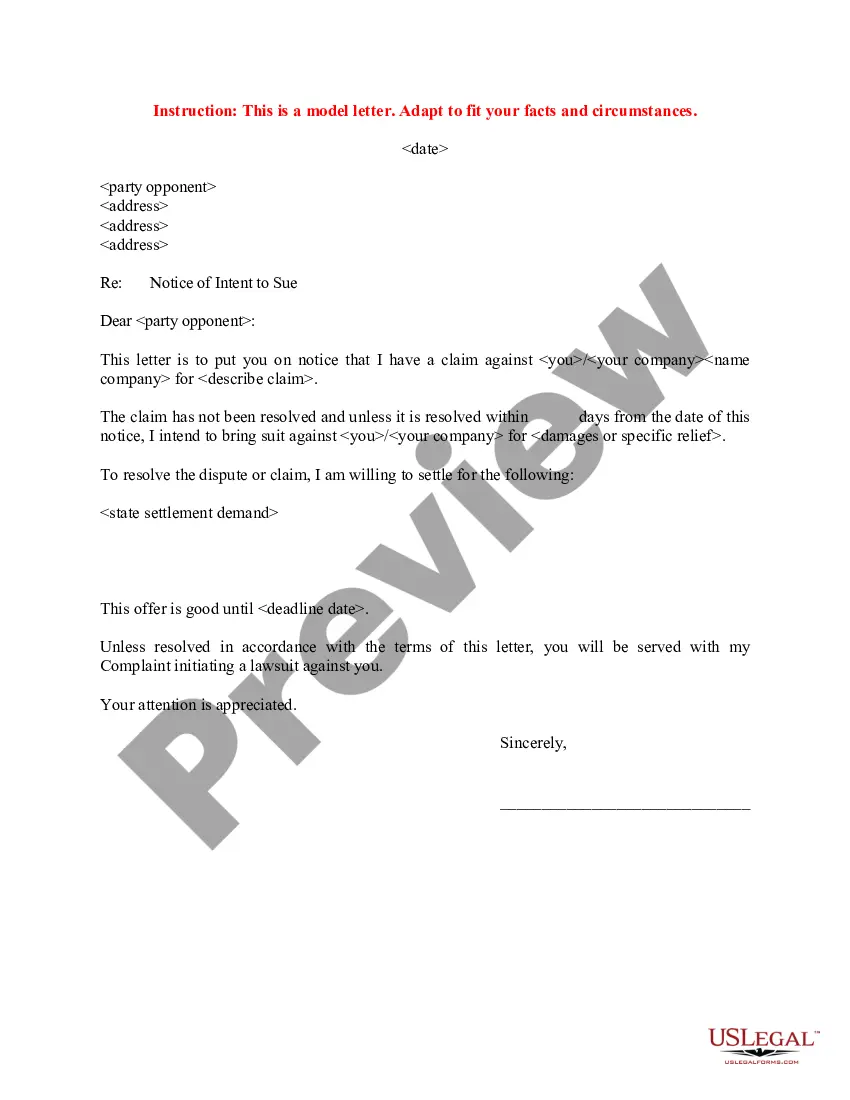
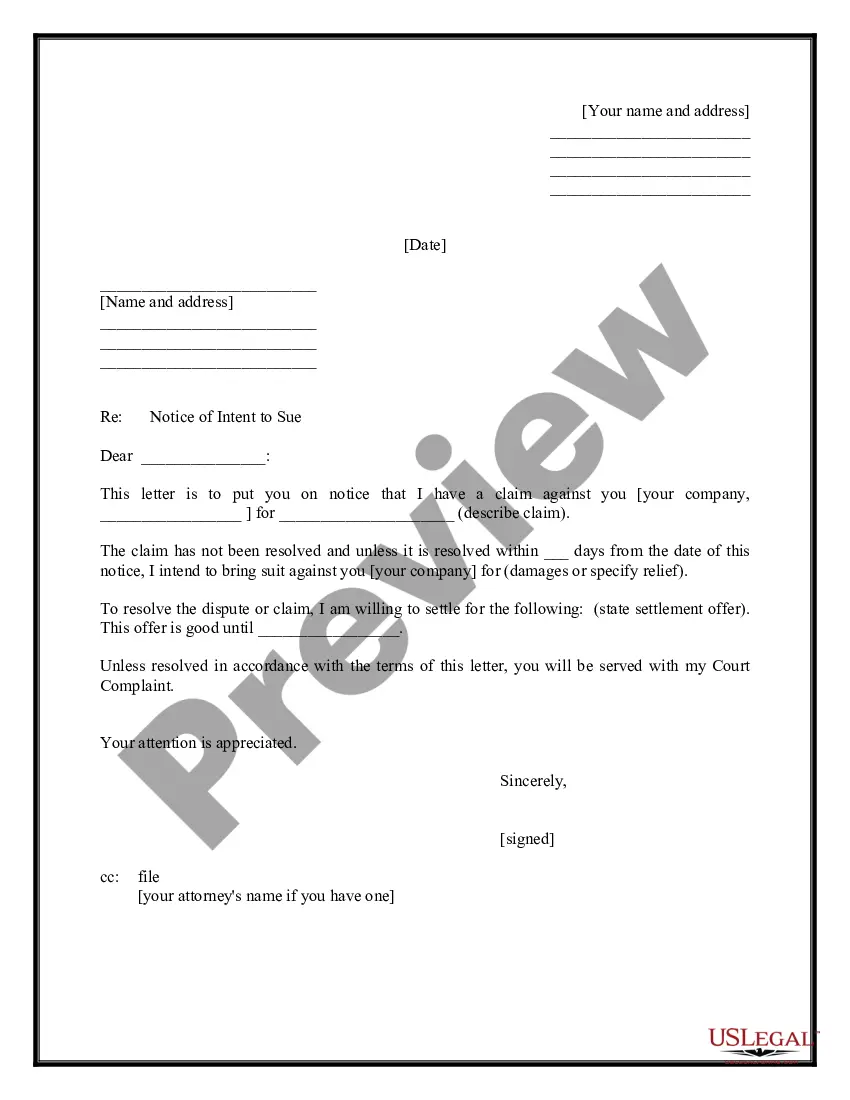
Settlement Demand Within Limits
Description
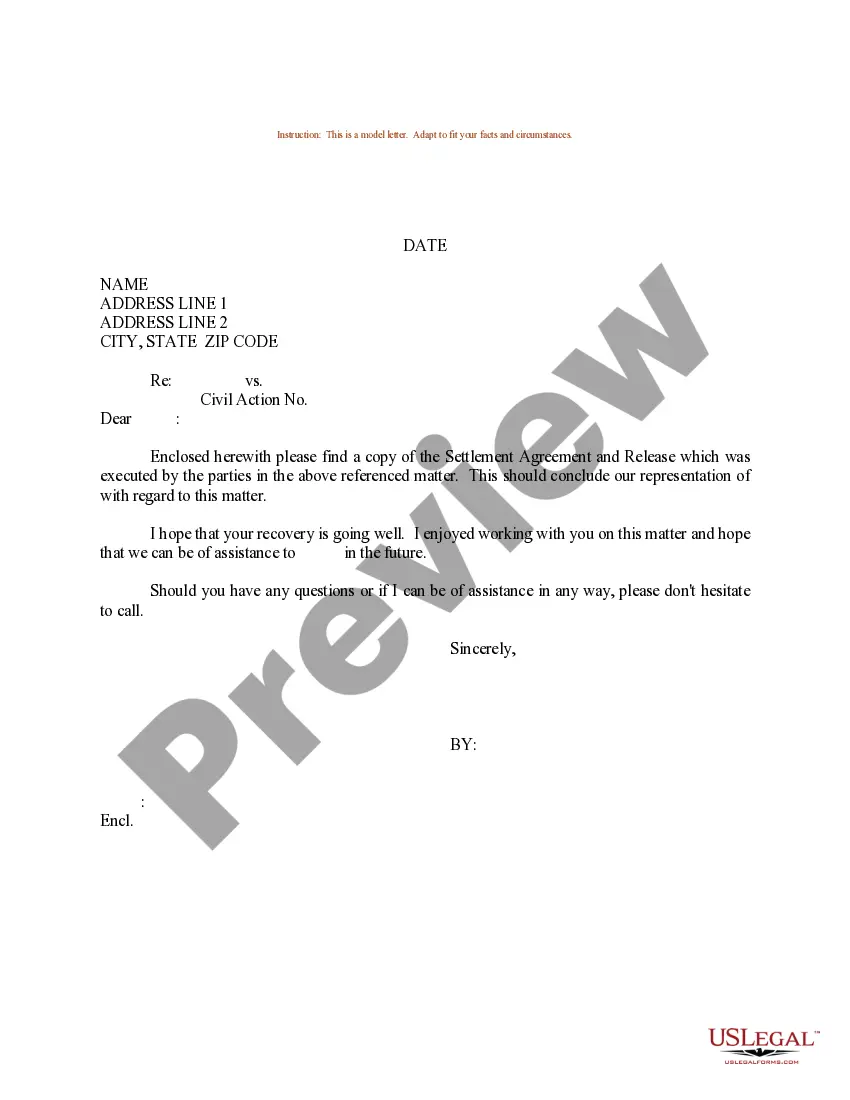
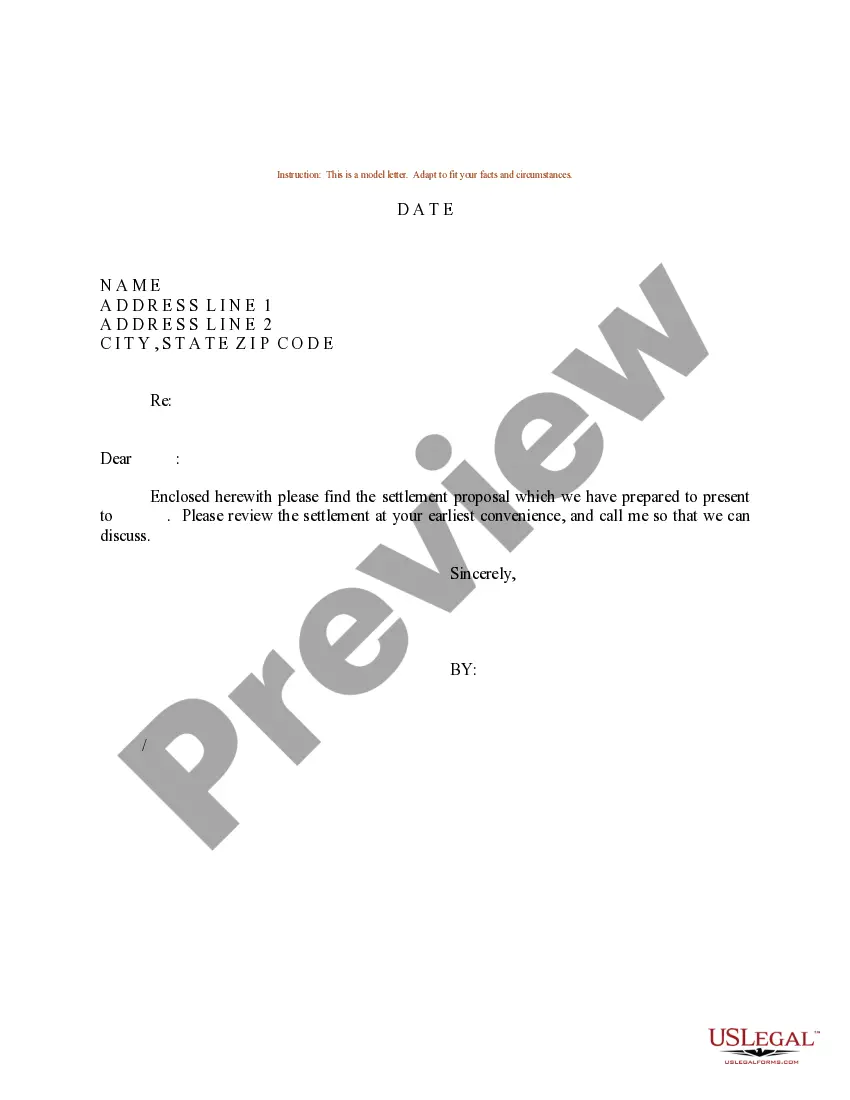
Get your form ready online
Our built-in tools help you complete, sign, share, and store your documents in one place.
Make edits, fill in missing information, and update formatting in US Legal Forms—just like you would in MS Word.
Download a copy, print it, send it by email, or mail it via USPS—whatever works best for your next step.
Sign and collect signatures with our SignNow integration. Send to multiple recipients, set reminders, and more. Go Premium to unlock E-Sign.
If this form requires notarization, complete it online through a secure video call—no need to meet a notary in person or wait for an appointment.
We protect your documents and personal data by following strict security and privacy standards.

Make edits, fill in missing information, and update formatting in US Legal Forms—just like you would in MS Word.

Download a copy, print it, send it by email, or mail it via USPS—whatever works best for your next step.

Sign and collect signatures with our SignNow integration. Send to multiple recipients, set reminders, and more. Go Premium to unlock E-Sign.

If this form requires notarization, complete it online through a secure video call—no need to meet a notary in person or wait for an appointment.

We protect your documents and personal data by following strict security and privacy standards.
Looking for another form?
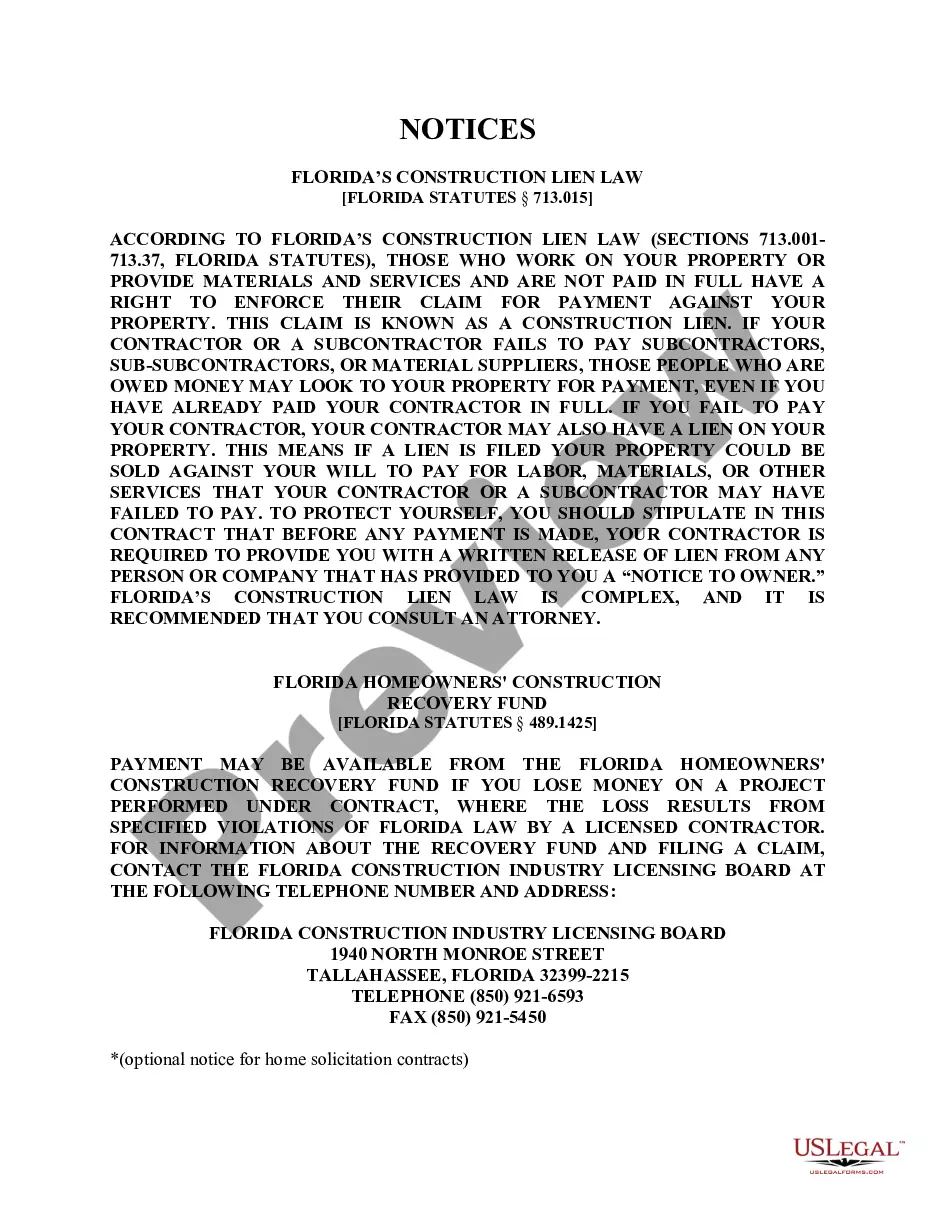




How to fill out Sample Letter Of Intent To Sue - With Settlement Demand?
Whether for commercial reasons or personal issues, everyone must confront legal matters at some stage in their life.
Completing legal documents demands meticulous care, starting from choosing the appropriate form template.
Once it is saved, you can fill out the form using editing software or print it and complete it manually. With an extensive US Legal Forms catalog available, you will never have to waste time searching for the right template online. Utilize the library’s simple navigation to find the suitable form for any occasion.
- For example, if you choose an incorrect version of a Settlement Demand Within Limits, it will be rejected upon submission.
- Thus, it is crucial to find a trustworthy source of legal documents like US Legal Forms.
- If you need to acquire a Settlement Demand Within Limits template, follow these straightforward steps.
- Obtain the template you require by utilizing the search bar or catalog navigation.
- Review the form’s description to confirm it suits your situation, state, and county.
- Click on the form’s preview to examine it.
- If it is not the correct form, return to the search function to locate the Settlement Demand Within Limits example you need.
- Download the file if it aligns with your requirements.
- If you already possess a US Legal Forms account, click Log in to access previously saved files in My documents.
- If you do not yet have an account, you can acquire the form by clicking Buy now.
- Select the appropriate pricing option.
- Fill out the account registration form.
- Choose your payment method: use a credit card or PayPal account.
- Select the document format you prefer and download the Settlement Demand Within Limits.
Form popularity
FAQ
A settlement demand is a formal request made by a party involved in a legal dispute, outlining the compensation they seek to resolve the matter. This demand outlines the facts of the case, the damages incurred, and the legal basis for the request. When considering a settlement demand within limits, it is essential to evaluate the potential costs and benefits of settling versus continuing litigation. Using US Legal Forms can help you draft a clear and effective settlement demand to present your case confidently.
The time-limited, policy-limit demand must be accepted within 30 days of the transmission date if by email, certified mail, or fax and within 33 days when transmitted via mail. An unequivocal settlement offer for any claim within the policy's limits, including lien satisfaction where applicable.
While you can technically negotiate a better settlement offer with the at-fault driver's insurance company on your own, they often don't make the process simple or easy. Insurance companies often insist they cannot pay a penny more than their initial offer.
Also known as your coverage amount, your insurance limit is the maximum amount your insurer may pay out for a claim, as stated in your policy. Most insurance policies, including home and auto insurance, have different types of coverages with separate coverage limits.
A settlement demand for an amount within policy limits is reasonable if the defendant knew or should have known at the time the demand was rejected that the potential judgment was likely to exceed the amount of the demand based on the plaintiff's injuries or loss and plaintiff's probable liability.
If you have a claim that exceeds your policy limits, your insurance company may send you a policy limit demand. This is a notice that informs you of the maximum amount they are willing to pay on your claim. It's important to understand that you are not required to accept the policy limit demand.