Exempt And Non Exempt Employees In Canada
Description
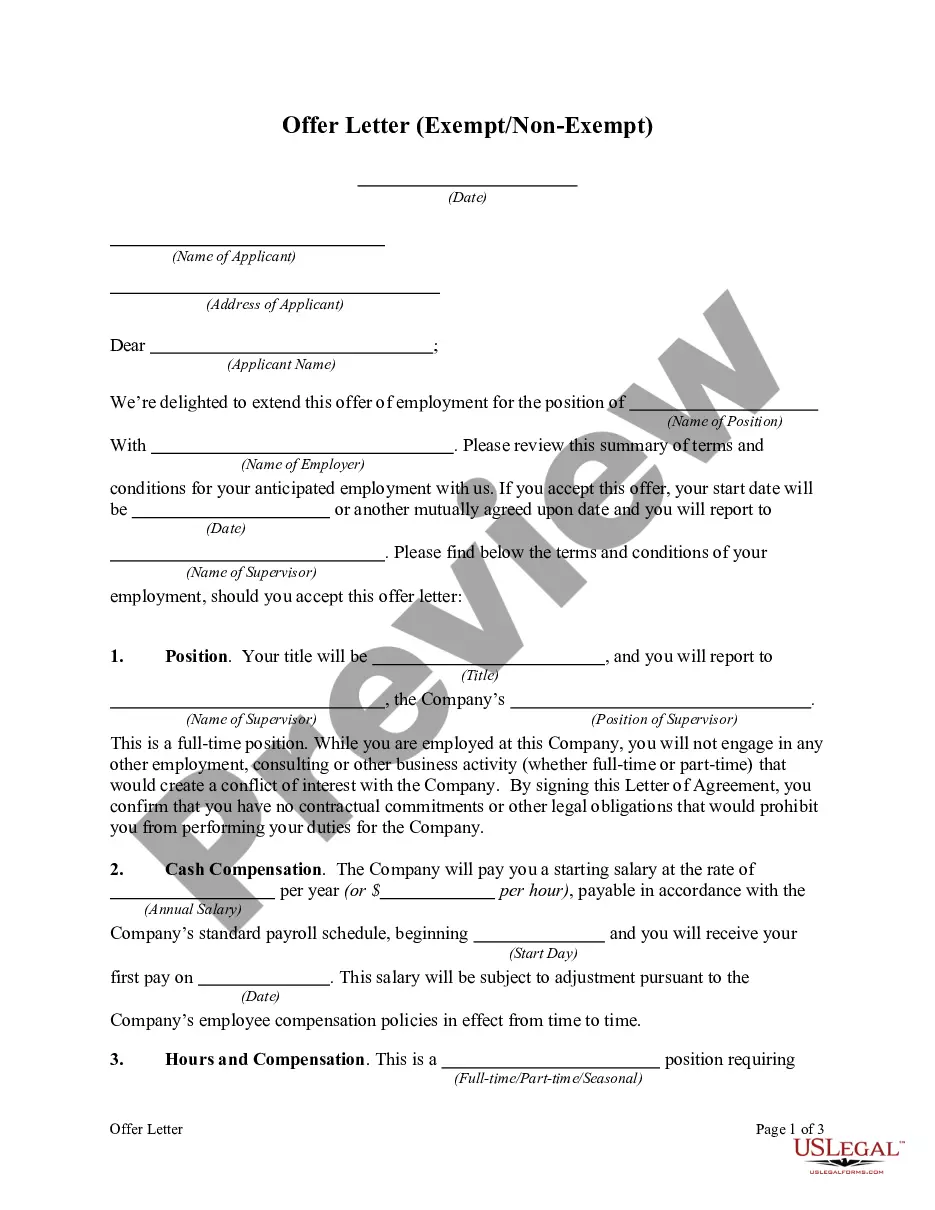


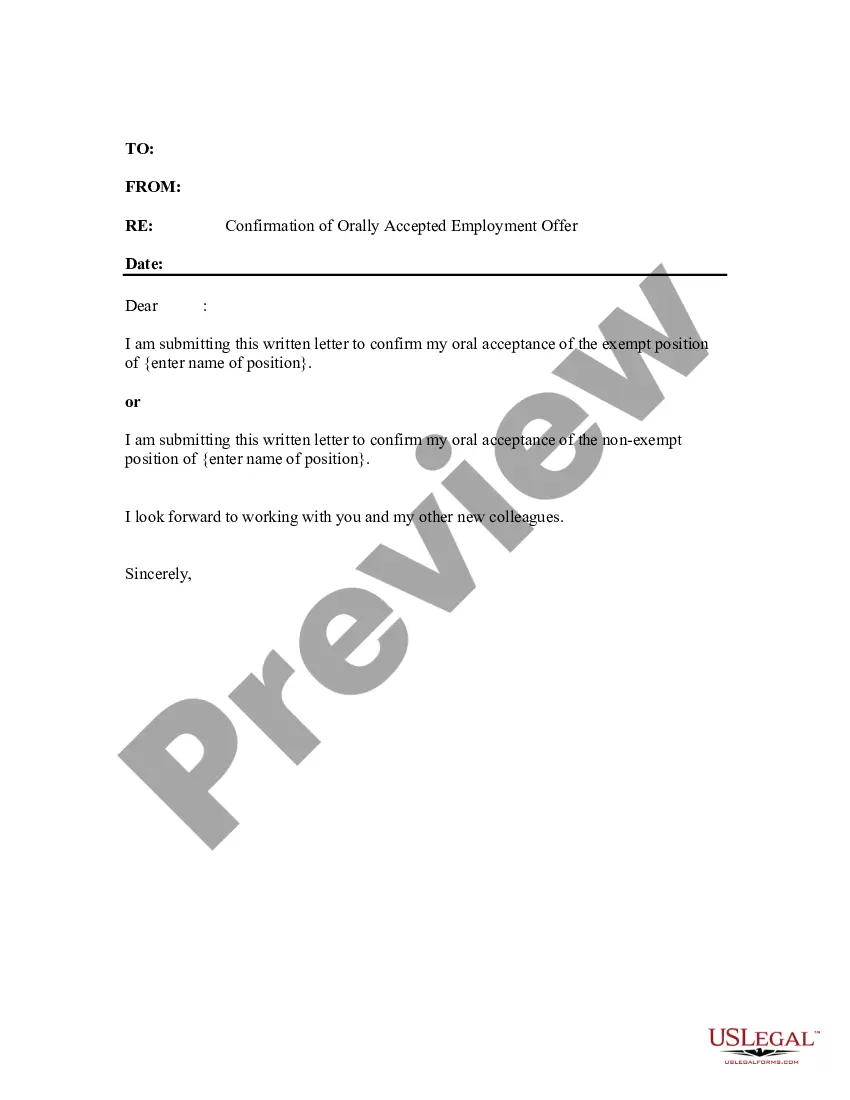
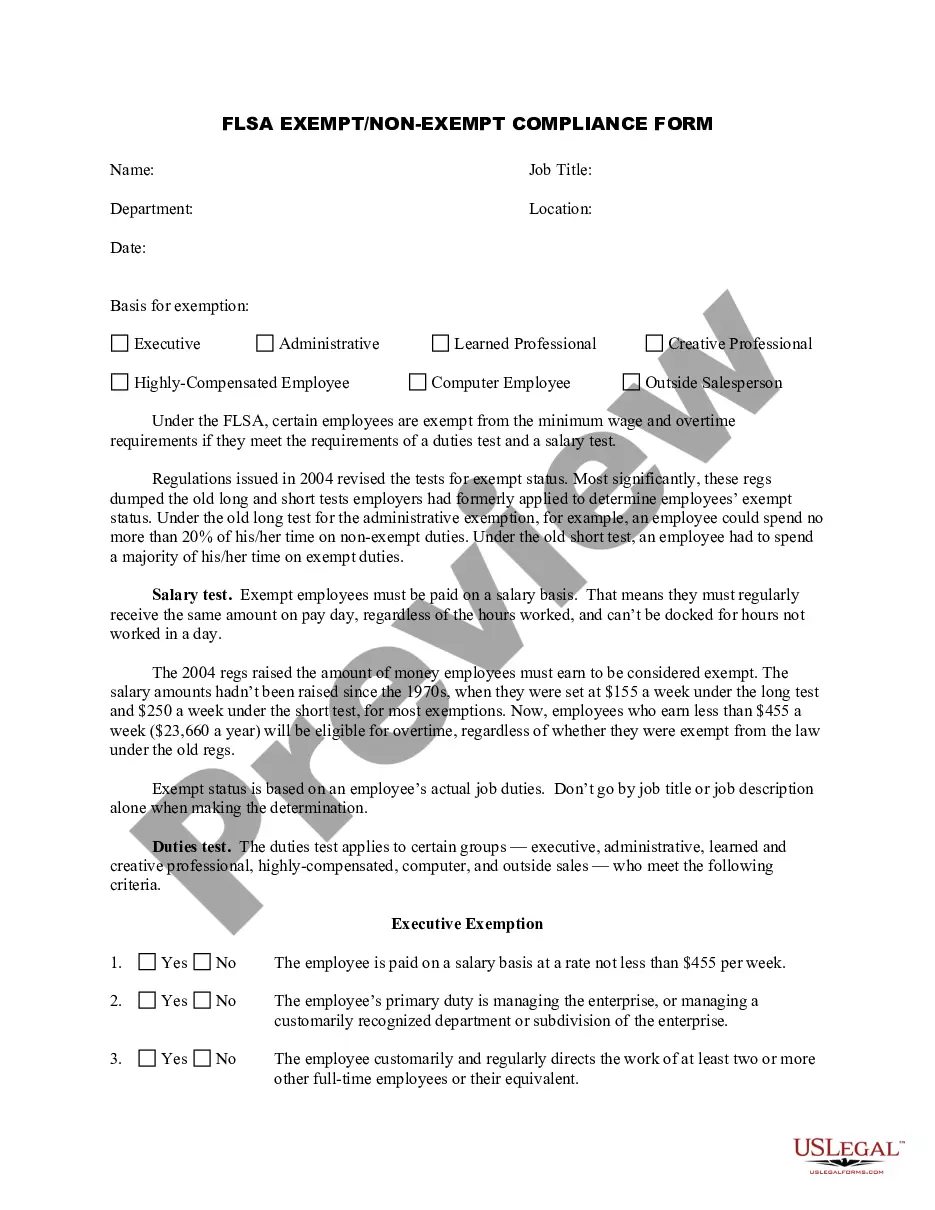
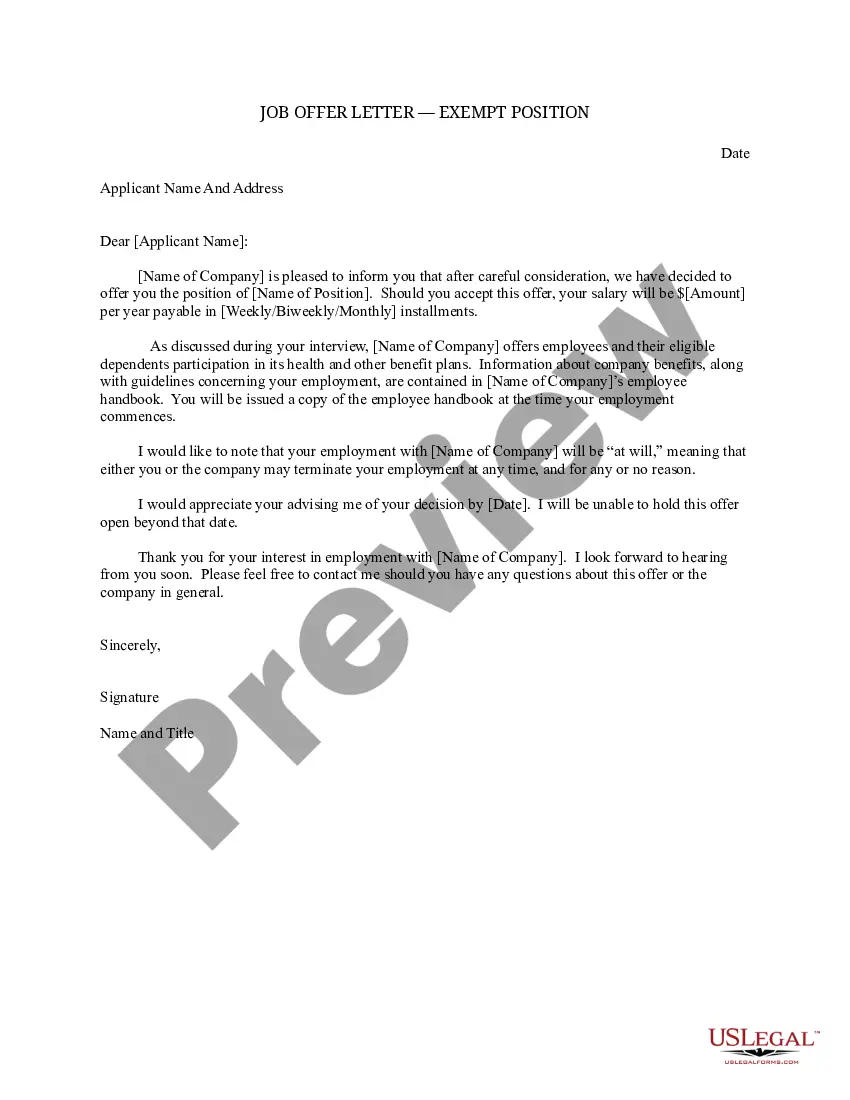
Get your form ready online
Our built-in tools help you complete, sign, share, and store your documents in one place.
Make edits, fill in missing information, and update formatting in US Legal Forms—just like you would in MS Word.
Download a copy, print it, send it by email, or mail it via USPS—whatever works best for your next step.
Sign and collect signatures with our SignNow integration. Send to multiple recipients, set reminders, and more. Go Premium to unlock E-Sign.
If this form requires notarization, complete it online through a secure video call—no need to meet a notary in person or wait for an appointment.
We protect your documents and personal data by following strict security and privacy standards.

Make edits, fill in missing information, and update formatting in US Legal Forms—just like you would in MS Word.

Download a copy, print it, send it by email, or mail it via USPS—whatever works best for your next step.

Sign and collect signatures with our SignNow integration. Send to multiple recipients, set reminders, and more. Go Premium to unlock E-Sign.

If this form requires notarization, complete it online through a secure video call—no need to meet a notary in person or wait for an appointment.

We protect your documents and personal data by following strict security and privacy standards.
Looking for another form?
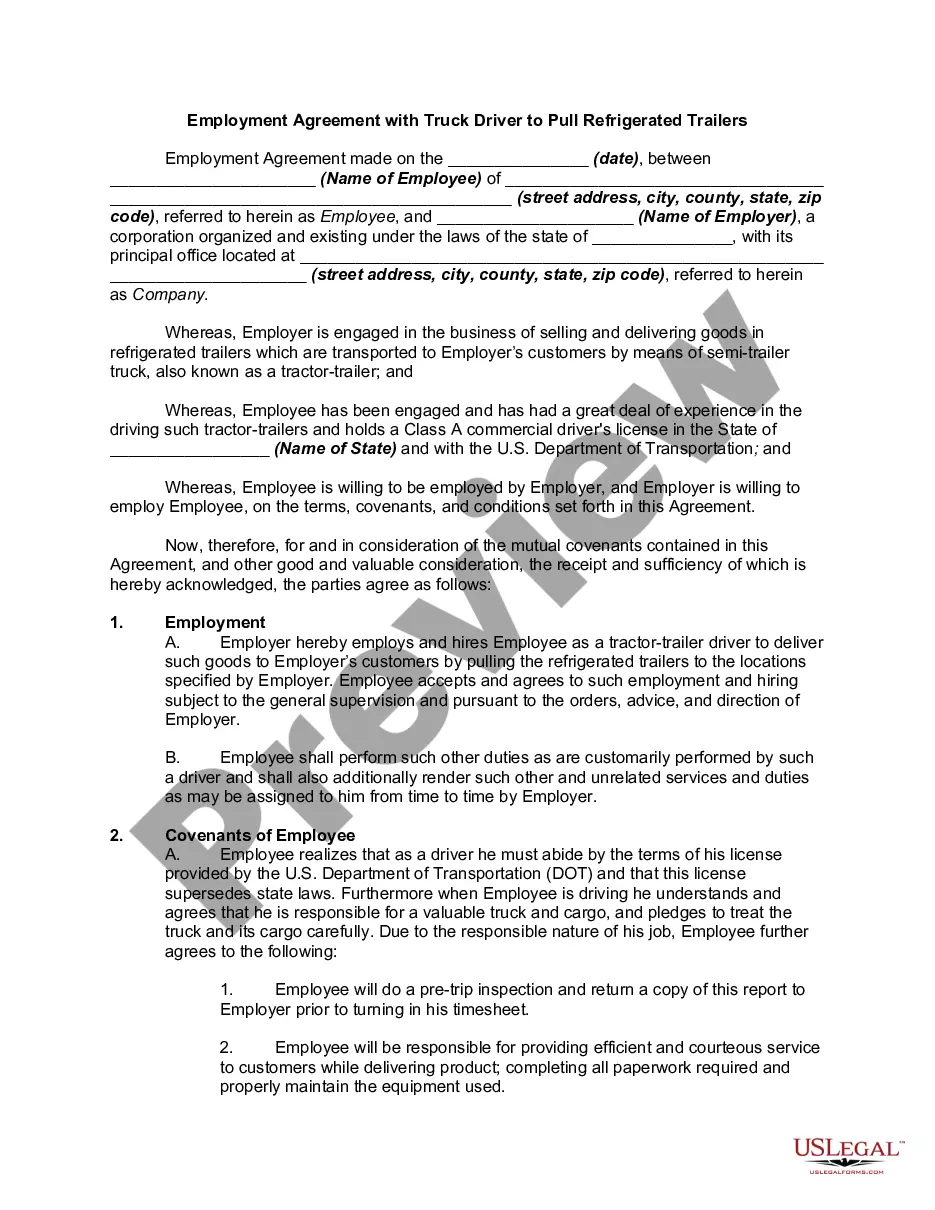
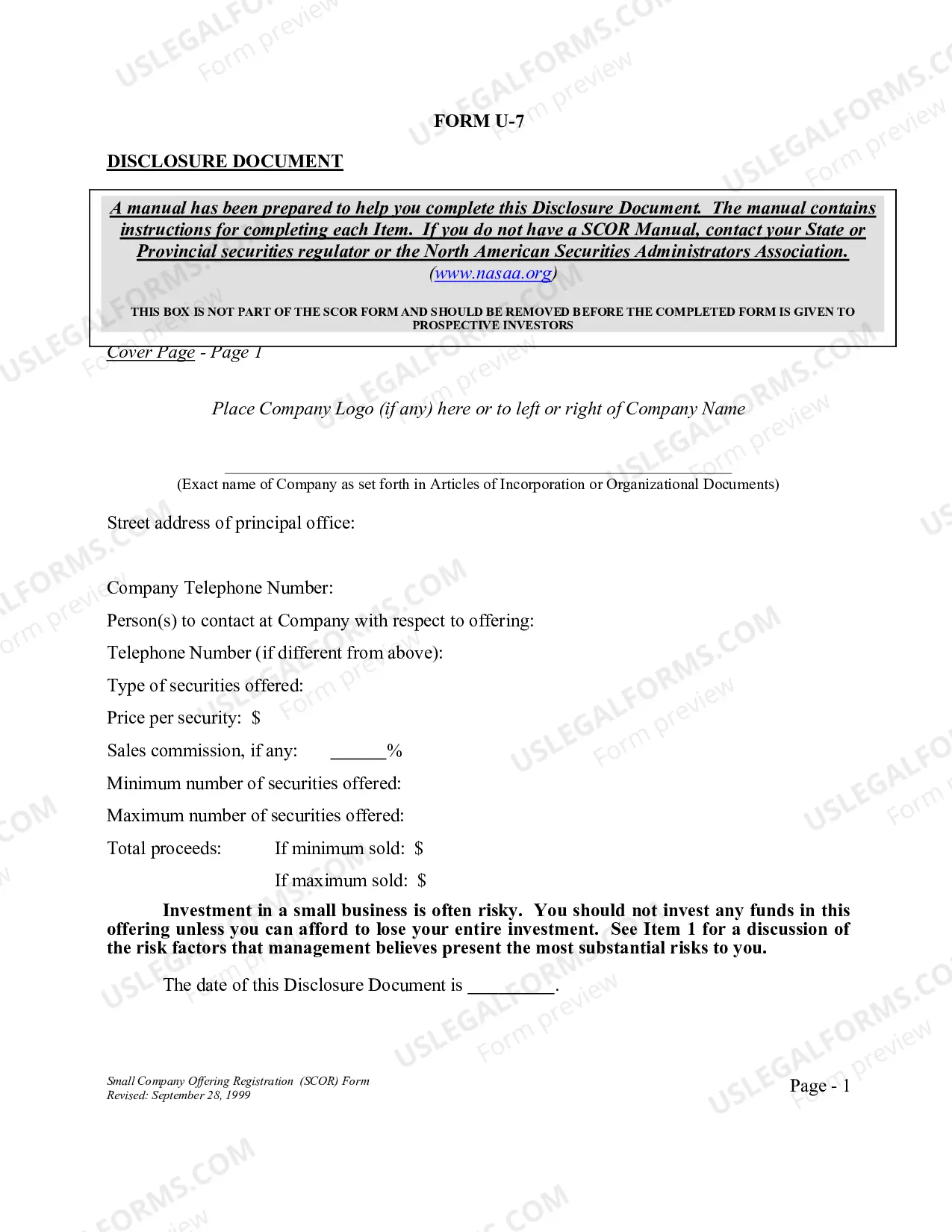

How to fill out Employment Offer Letter Exempt Or Non-Exempt?
Locating a reliable source to obtain the latest and pertinent legal templates is a significant part of managing bureaucracy.
Selecting the appropriate legal documents requires accuracy and careful attention, which is why it is crucial to obtain samples of Exempt And Non Exempt Employees In Canada exclusively from reputable providers, such as US Legal Forms.
Eliminate the hassle that comes with your legal paperwork. Explore the comprehensive US Legal Forms library where you can discover legal templates, assess their applicability to your situation, and download them immediately.
- Use the catalog navigation or search bar to find your template.
- Review the form’s description to confirm if it meets the requirements of your state and region.
- Access the form preview, if available, to ensure the template is indeed what you are looking for.
- Return to the search and seek the suitable document if the Exempt And Non Exempt Employees In Canada does not match your needs.
- Once you are confident about the form’s applicability, download it.
- If you are a registered user, click Log in to verify and access your selected forms in My documents.
- If you do not have an account yet, click Buy now to purchase the form.
- Choose the pricing option that aligns with your preferences.
- Proceed to the registration to complete your purchase.
- Finalize your purchase by selecting a payment method (credit card or PayPal).
- Choose the file format for downloading Exempt And Non Exempt Employees In Canada.
- Once you have the form on your device, you can edit it with the editor or print it and fill it out by hand.
Form popularity
FAQ
To determine if you qualify for exempt status, evaluate your job duties and salary against the criteria outlined in Canadian labor laws. Typically, you will need to demonstrate that your position involves high-level decision-making or specialized skills. Reviewing job descriptions and proposing any needed adjustments can be beneficial. Utilizing tools or platforms like UsLegalForms can provide clarity on the classification of exempt and non exempt employees in Canada.
To determine if an employee should be exempt or nonexempt, employers must evaluate the employee's job responsibilities and salary level. Checking compatibility with the duties test and salary threshold established by Canadian labor laws is critical. Conducting a thorough job analysis often helps clarify this classification. This understanding of exempt and non exempt employees in Canada can prevent potential legal issues.
An employee is classified as exempt if they meet certain criteria set by employment laws. Generally, exempt employees perform specific duties related to management, professional, or administrative tasks. Furthermore, these employees typically receive a salary rather than hourly wages, and their roles usually require more independent judgment. Understanding exempt and non exempt employees in Canada is essential for compliance and proper payroll management.
Canada does not have the Fair Labor Standards Act (FLSA) like the United States. Instead, it has its own set of labor laws that address wage standards and employee classifications, including exempt and non exempt employees in Canada. Each province in Canada regulates labor standards, emphasizing the importance of understanding distinct provincial laws. For accurate guidance, resources such as USLegalForms can provide clarity.
Unpaid overtime is generally not legal in Canada for non-exempt employees. The law mandates that non-exempt workers must receive compensation for all hours worked beyond their regular hours. However, certain positions classified as exempt may have different rules regarding hours worked. It's important for both employers and employees to understand these distinctions to avoid legal complications.
The Fair Labor Standards Act (FLSA) is a United States federal law and does not apply in Canada. Instead, Canada has its own labor laws, managed at both federal and provincial levels, that govern employee classification and wage standards. Therefore, employers and employees should familiarize themselves with Canadian regulations regarding exempt and non-exempt employees in Canada. Utilizing platforms like US Legal Forms can provide vital resources for understanding and navigating Canadian labor laws.
Yes, you can be tax exempt in Canada under certain circumstances, such as specific income types or qualifying for certain deductions. Understanding the distinctions between exempt and non-exempt employees in Canada can help you determine if you qualify for any tax exemptions. Exploring resources like uslegalforms can provide clarity and assistance with your tax questions.
Becoming legally exempt from taxes in Canada requires meeting specific criteria set by the Canada Revenue Agency (CRA). For both exempt and non-exempt employees in Canada, strategies may include claiming eligible deductions or credits. It's wise to review your options and, if needed, consult with a tax advisor to navigate this process effectively.
The tax exemption amount in Canada can fluctuate based on various factors, including your income level and specific deductions. For exempt and non-exempt employees in Canada, it's crucial to stay informed about the exemption thresholds to optimize your tax returns. Consulting resources or professionals can guide you in maximizing potential tax benefits.
The Fair Labor Standards Act (FLSA) is a U.S. law and does not directly apply in Canada. Instead, Canada has its own labor laws that address exempt and non-exempt employees in Canada. Understanding the distinctions between these regulations can help you navigate your workplace rights and obligations effectively.