Building To Suit
Description
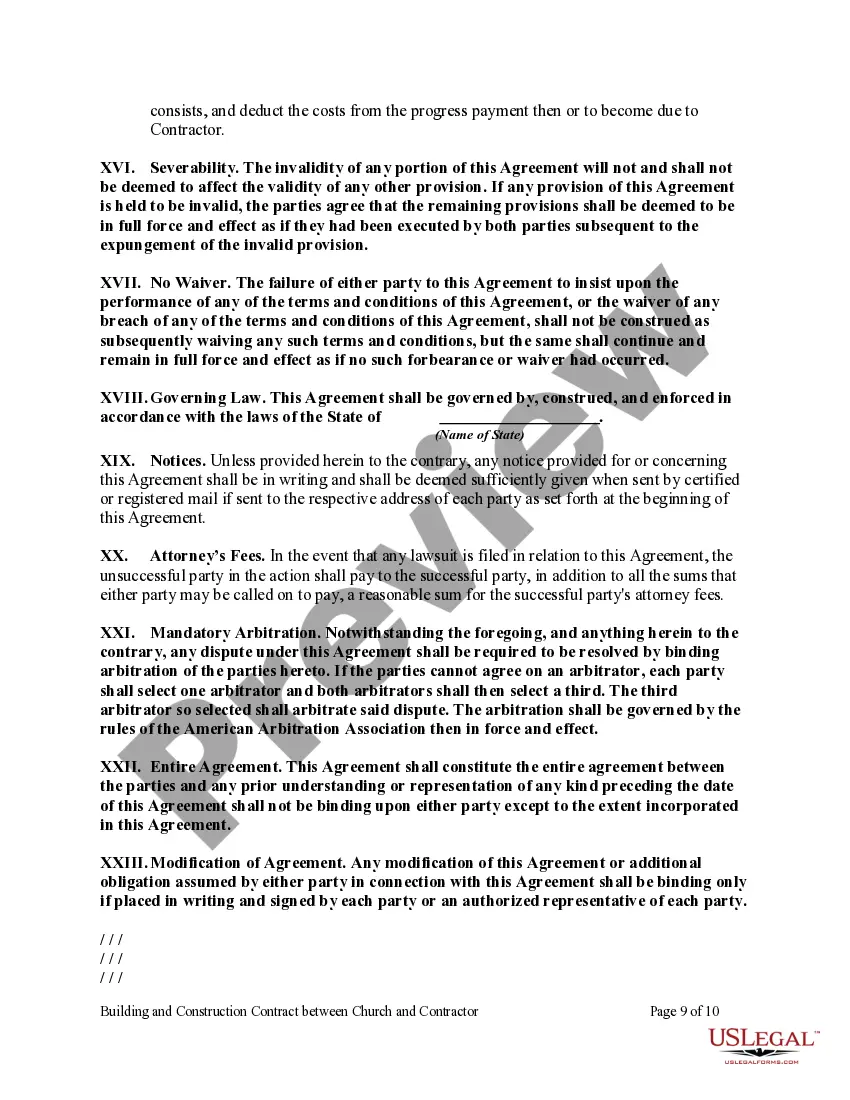
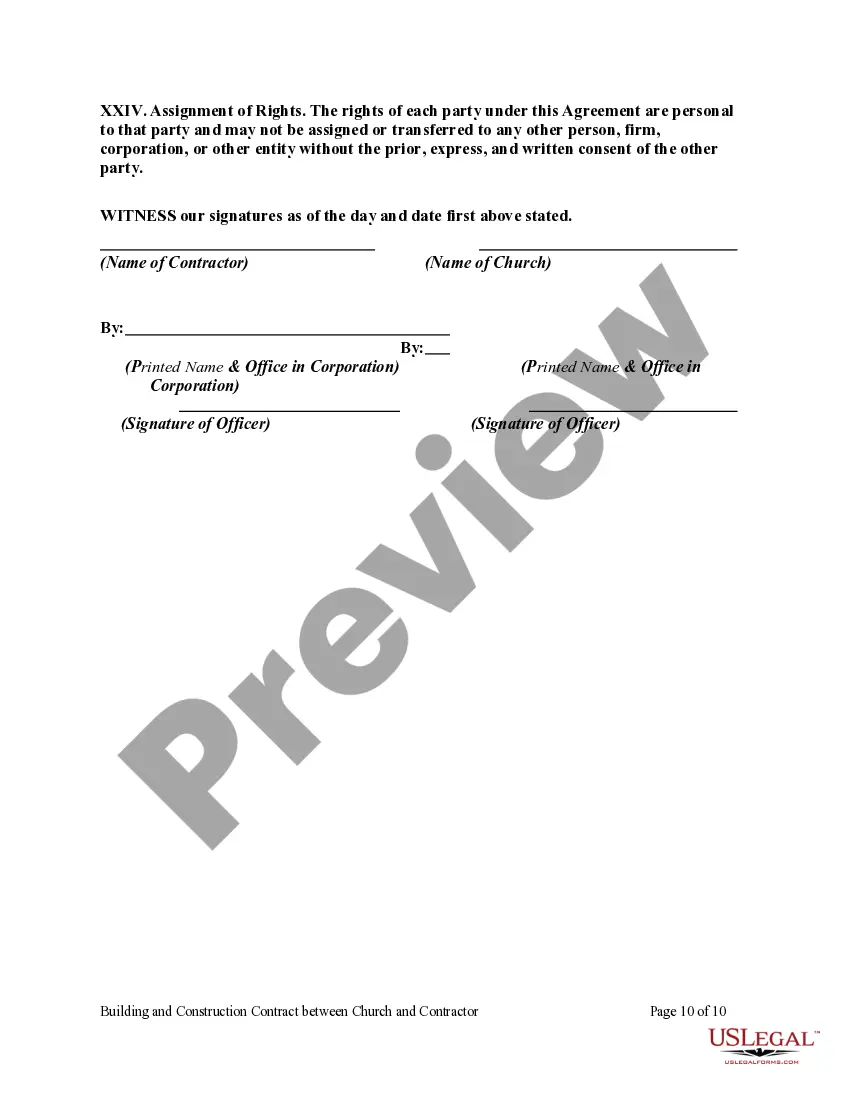
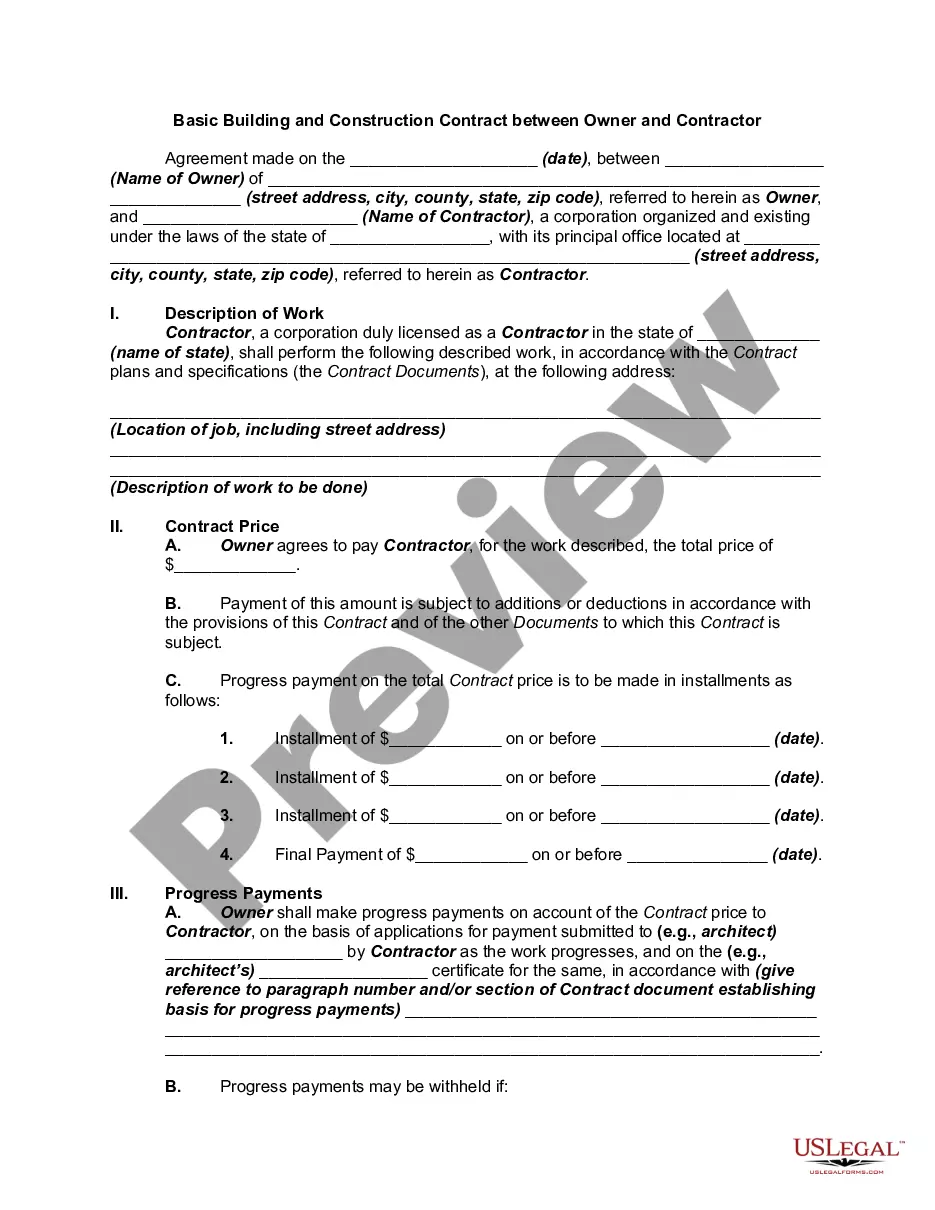
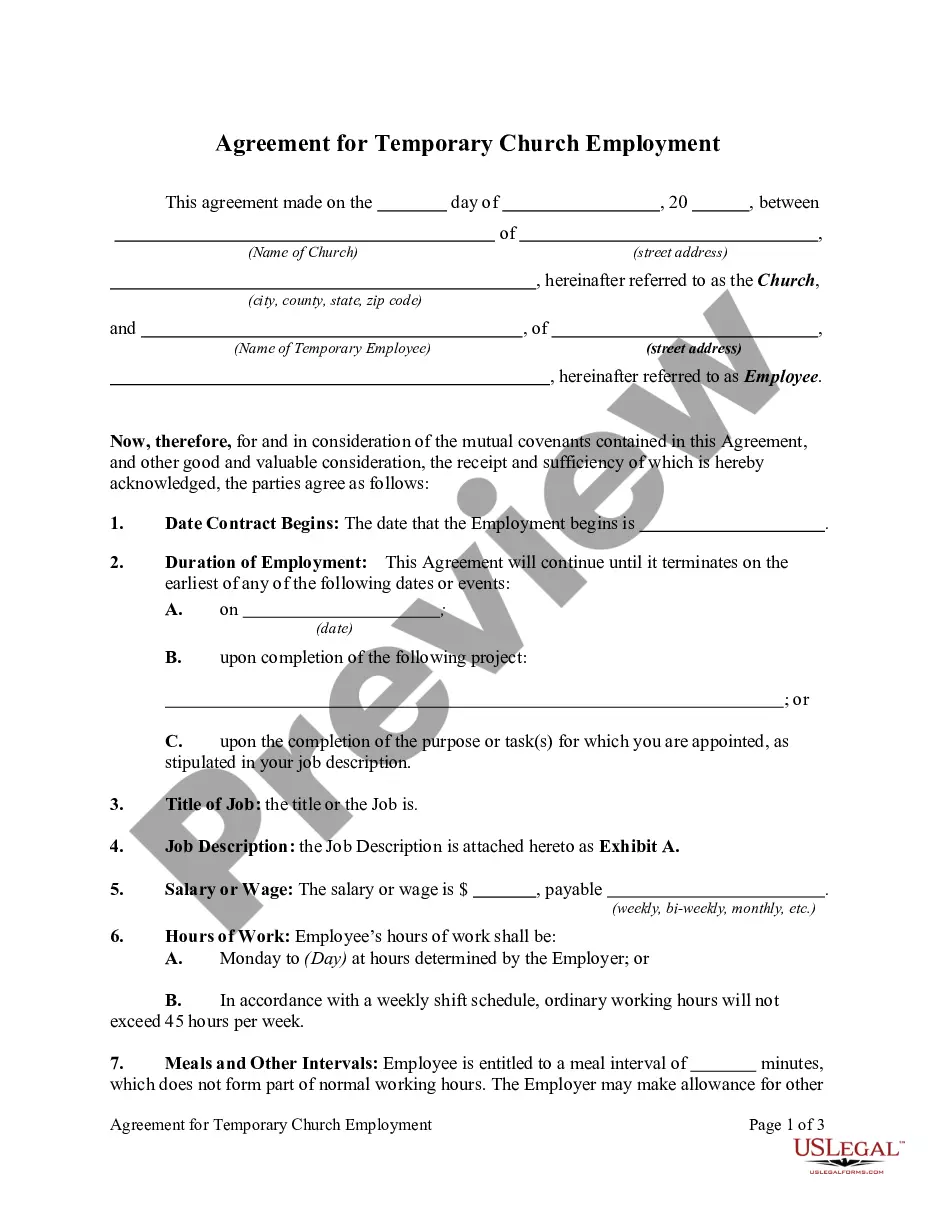
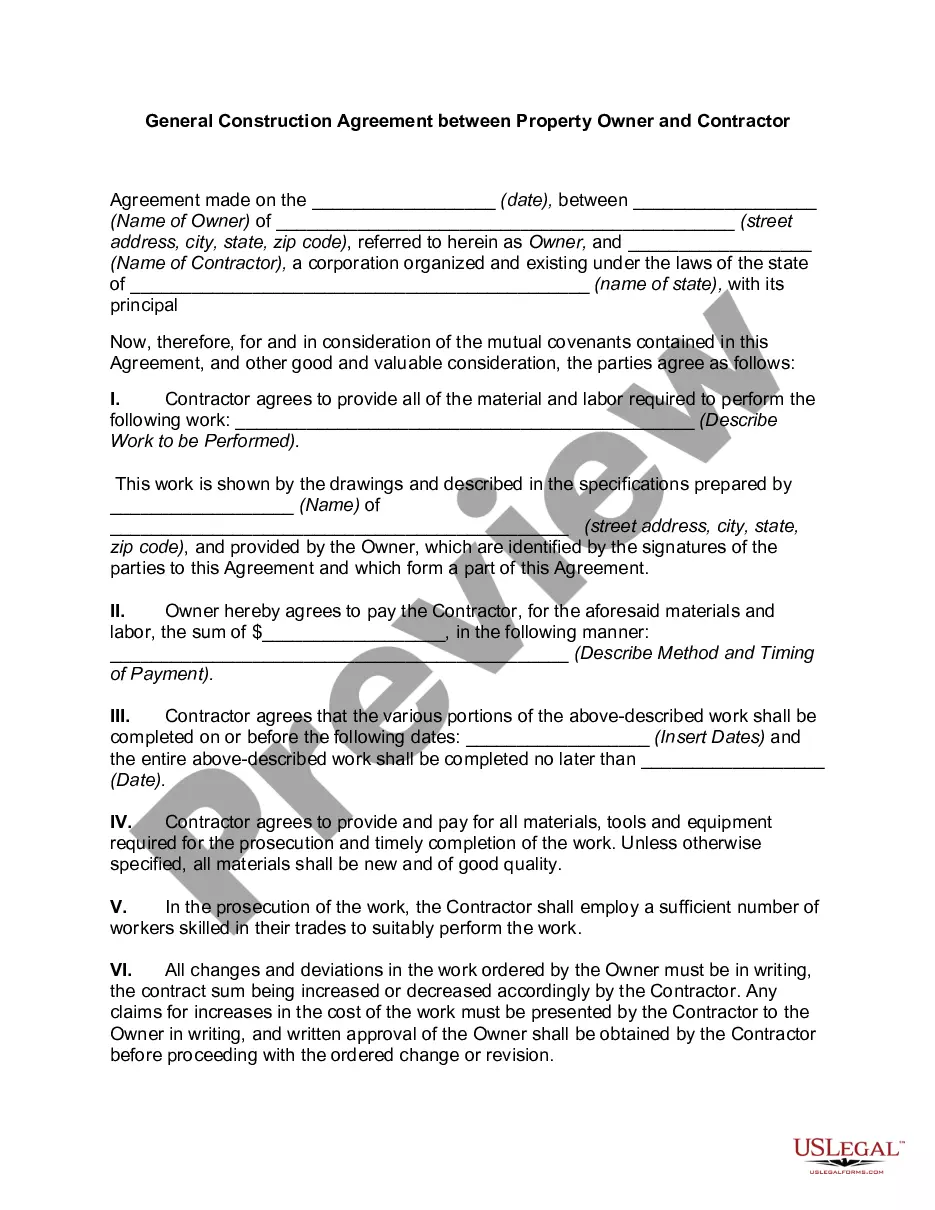
Get your form ready online
Our built-in tools help you complete, sign, share, and store your documents in one place.
Make edits, fill in missing information, and update formatting in US Legal Forms—just like you would in MS Word.
Download a copy, print it, send it by email, or mail it via USPS—whatever works best for your next step.
Sign and collect signatures with our SignNow integration. Send to multiple recipients, set reminders, and more. Go Premium to unlock E-Sign.
If this form requires notarization, complete it online through a secure video call—no need to meet a notary in person or wait for an appointment.
We protect your documents and personal data by following strict security and privacy standards.

Make edits, fill in missing information, and update formatting in US Legal Forms—just like you would in MS Word.

Download a copy, print it, send it by email, or mail it via USPS—whatever works best for your next step.

Sign and collect signatures with our SignNow integration. Send to multiple recipients, set reminders, and more. Go Premium to unlock E-Sign.

If this form requires notarization, complete it online through a secure video call—no need to meet a notary in person or wait for an appointment.

We protect your documents and personal data by following strict security and privacy standards.
Looking for another form?
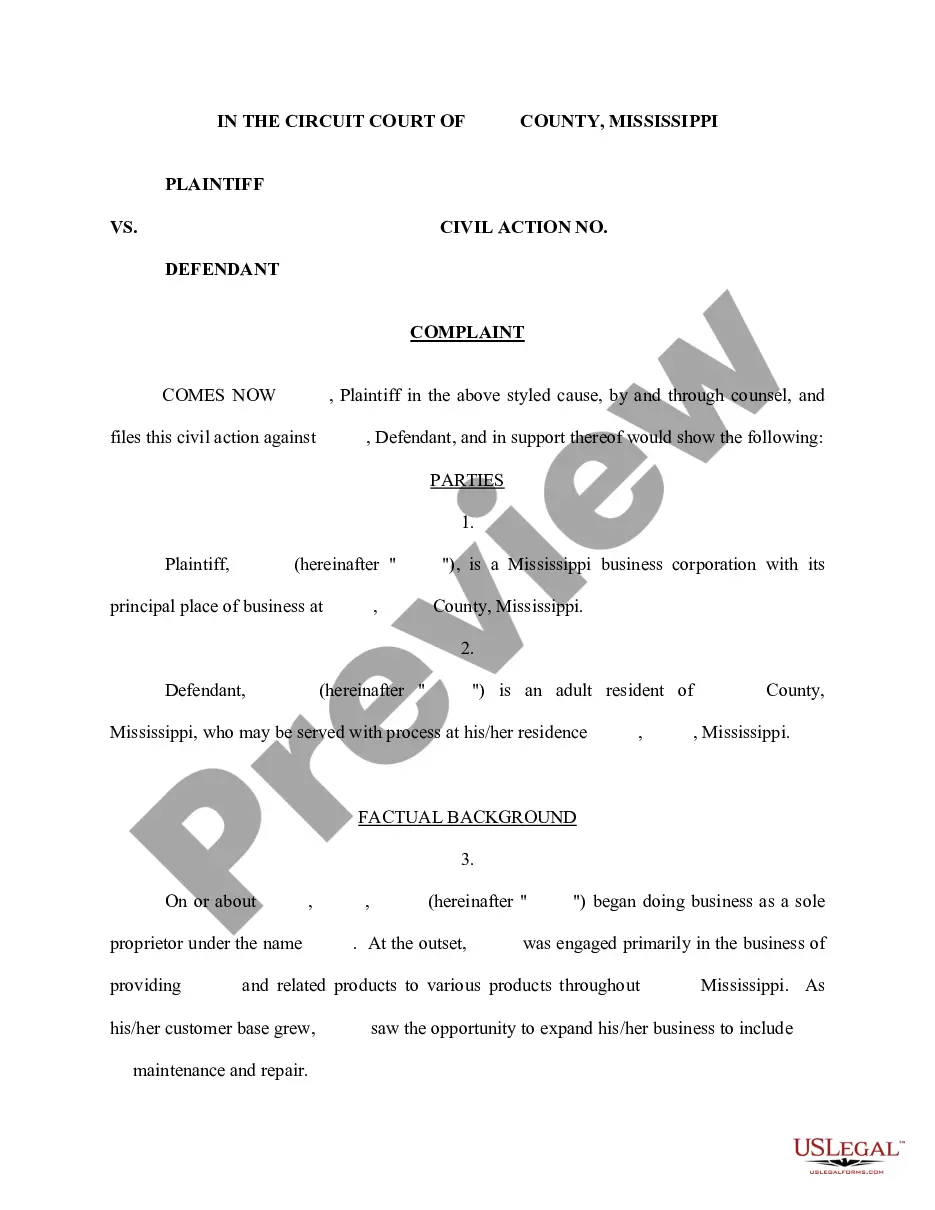
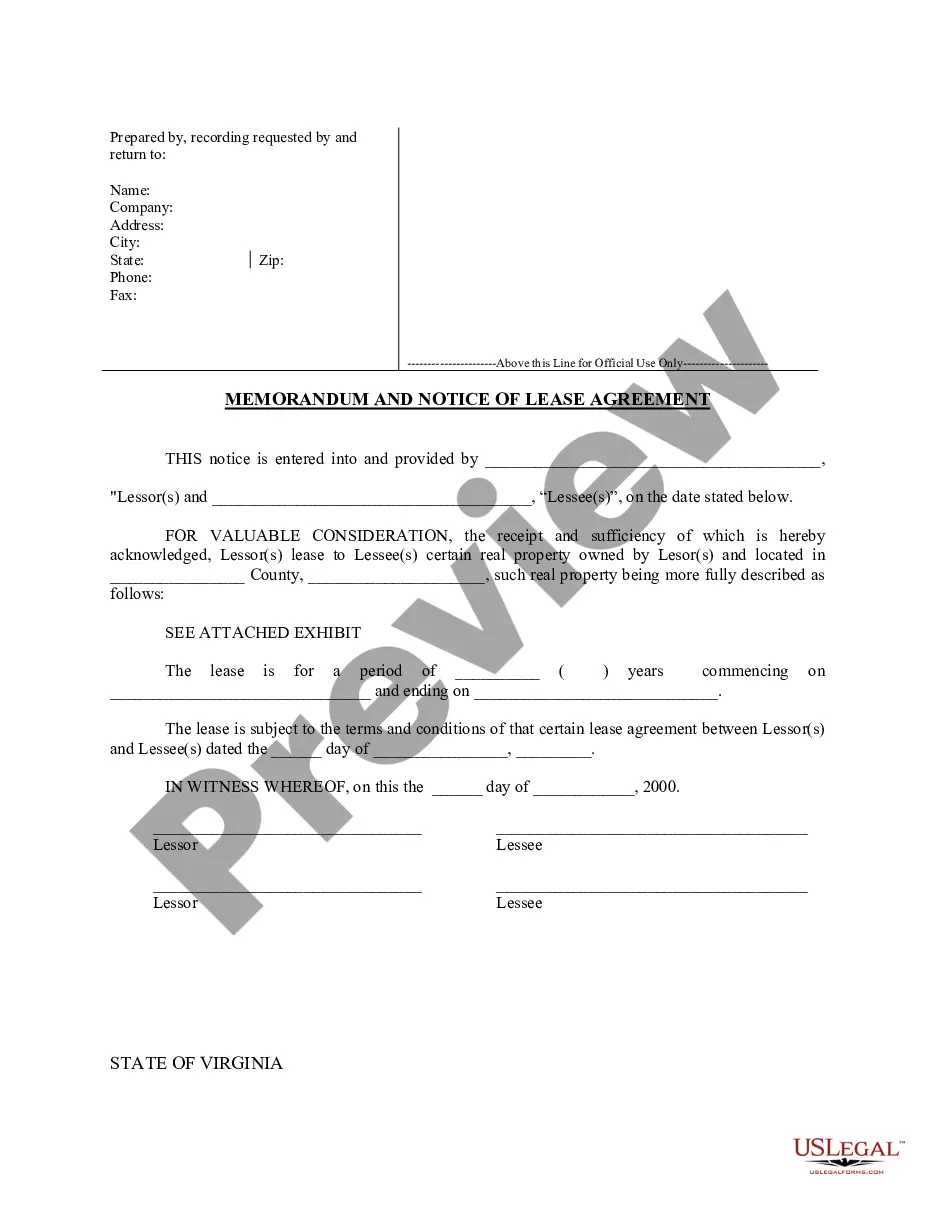
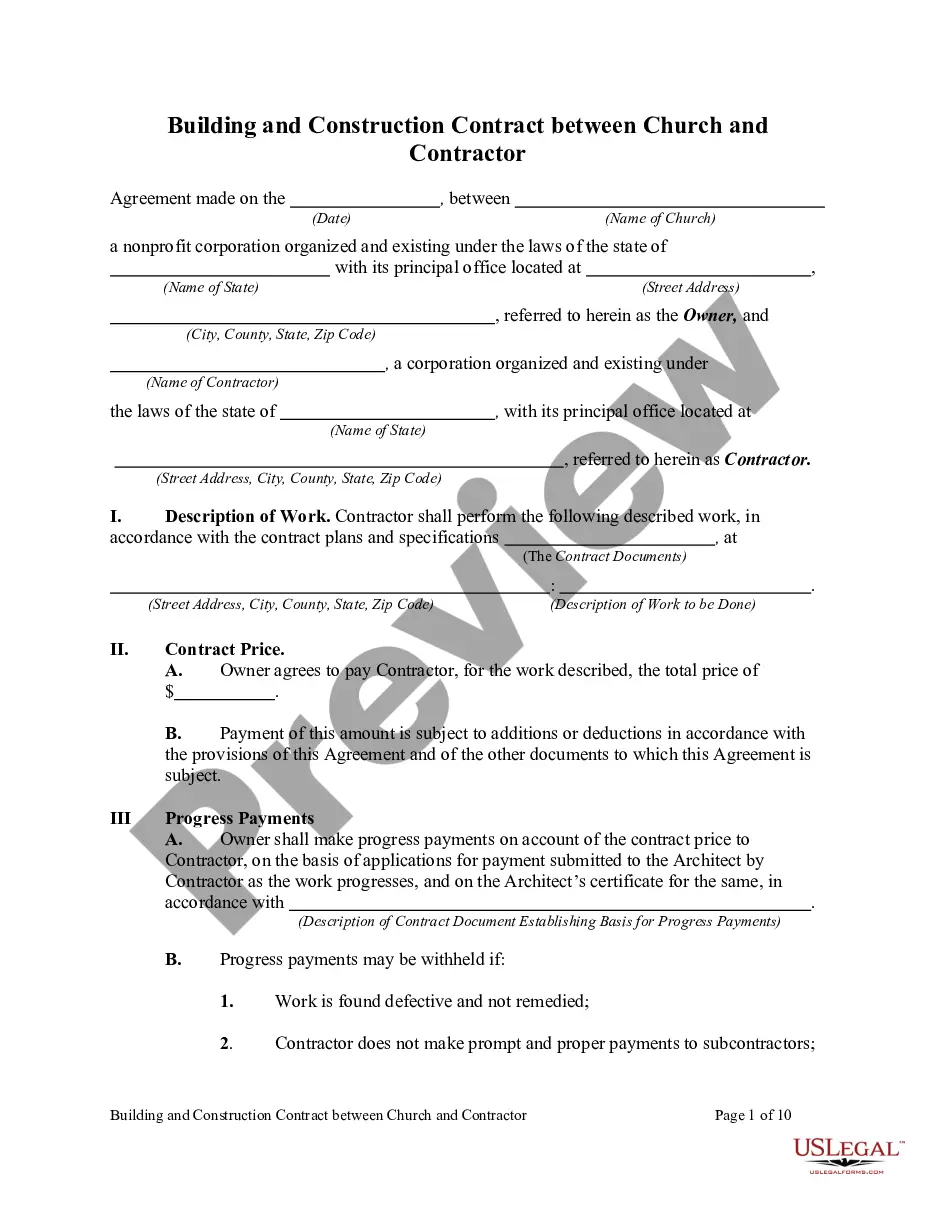
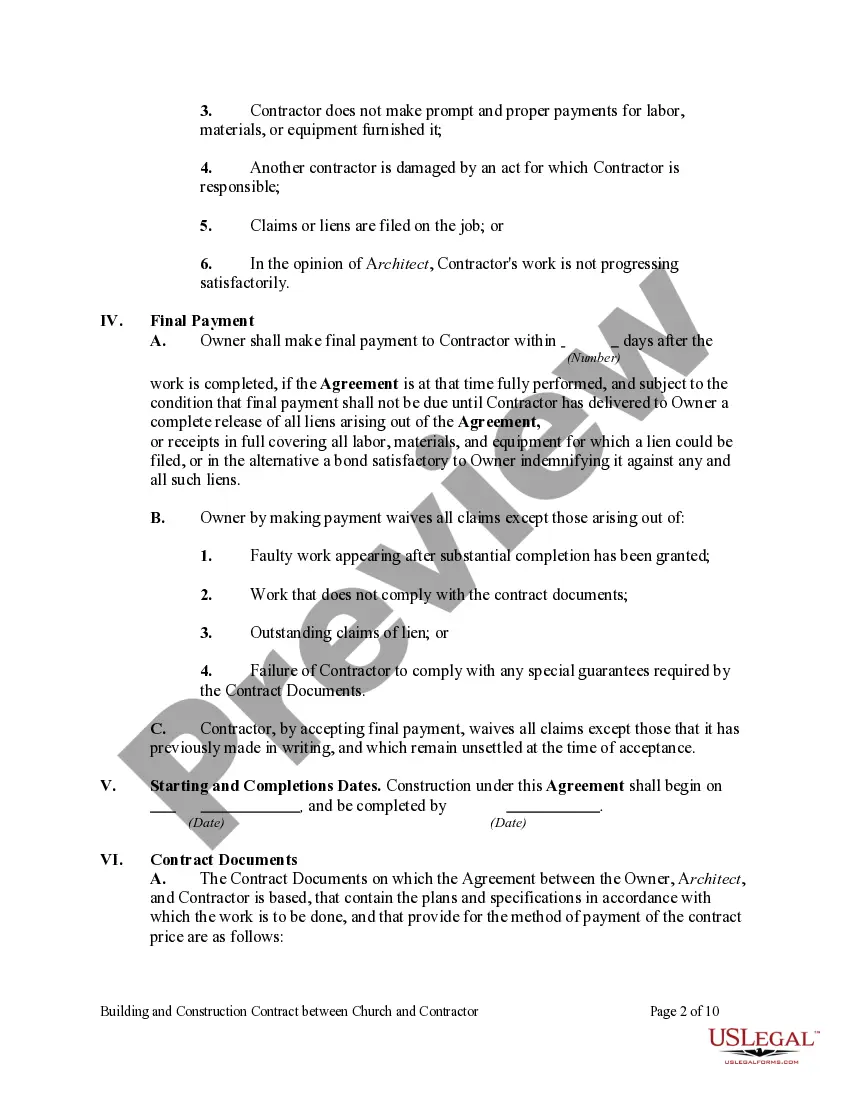
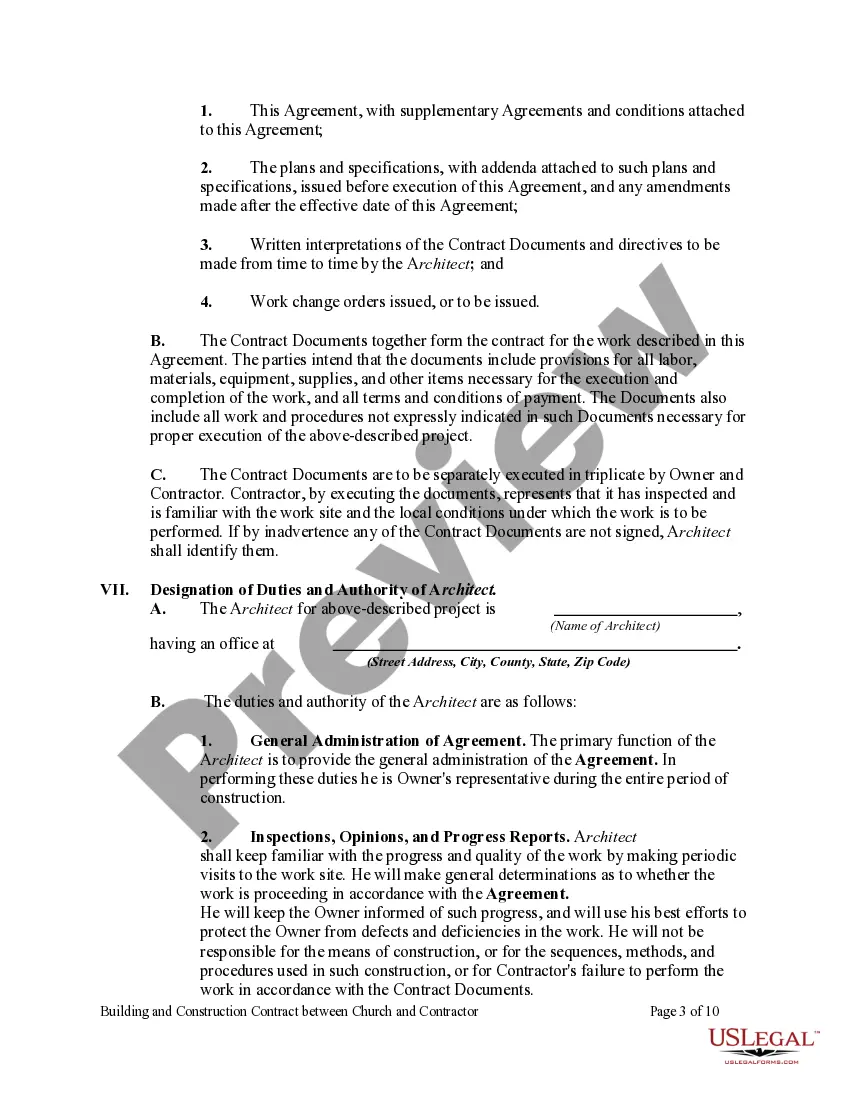
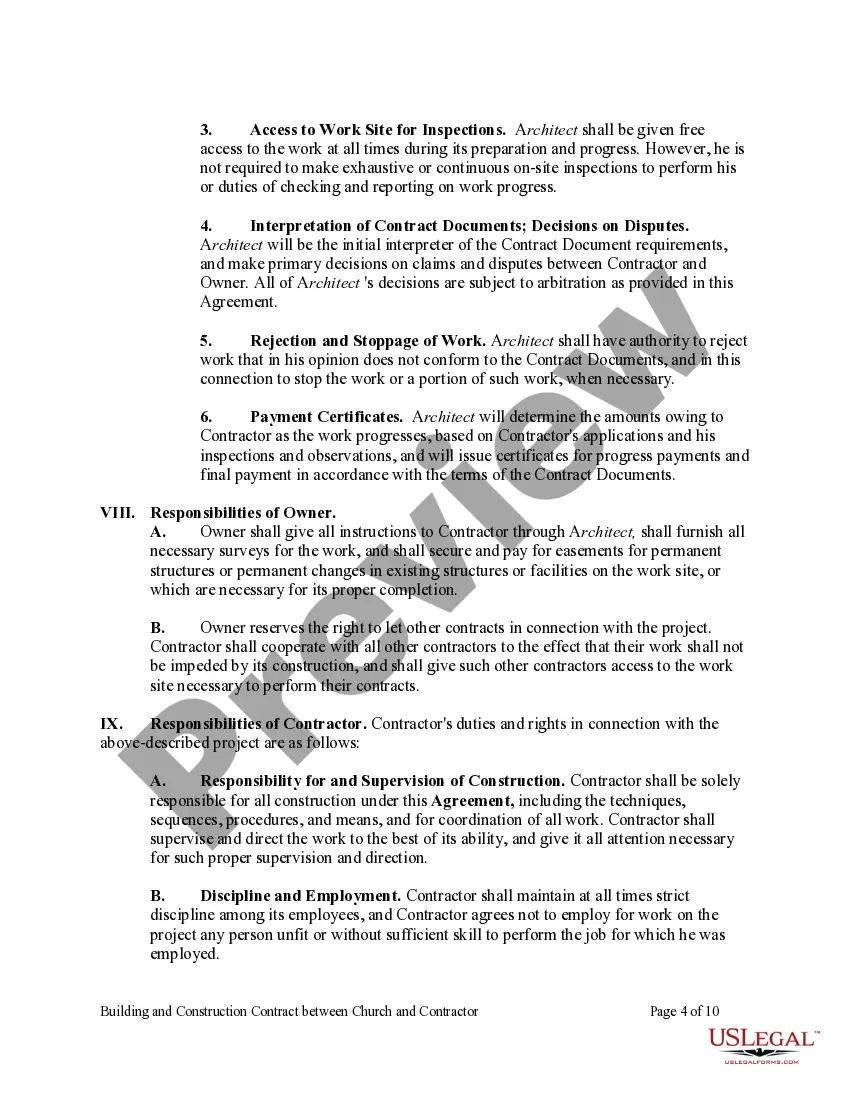
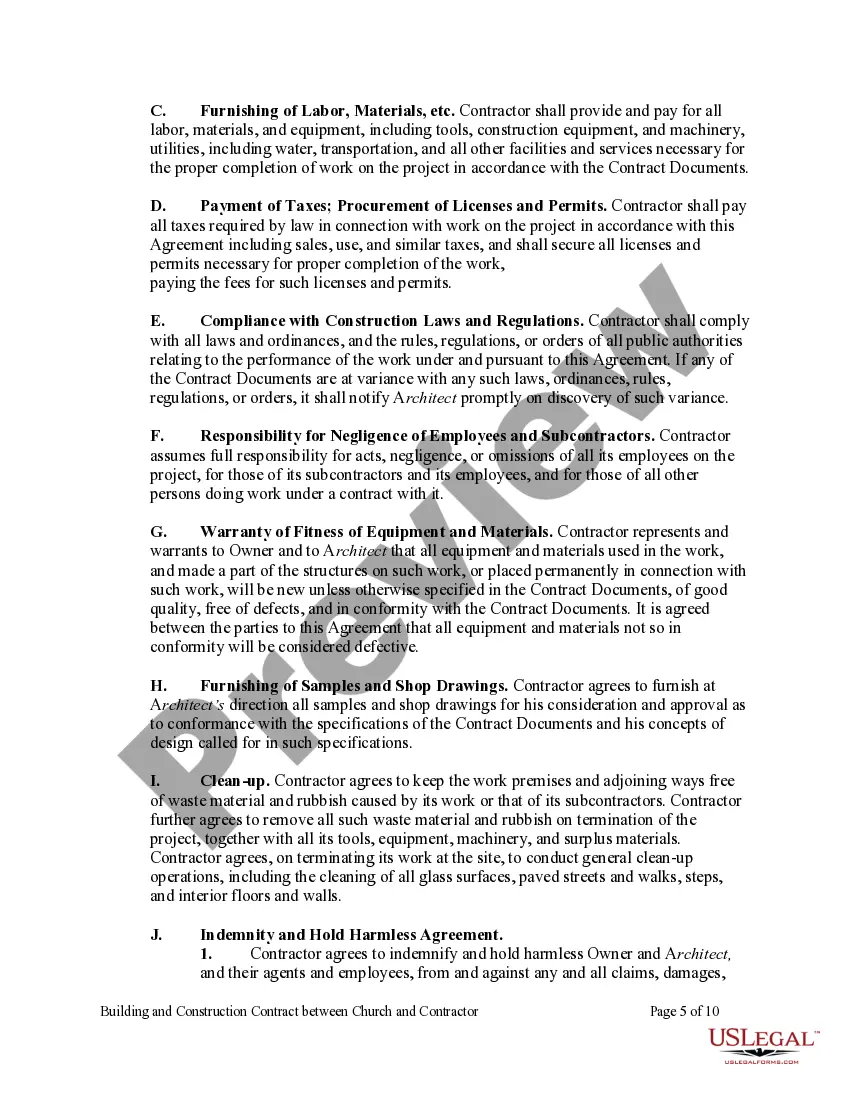
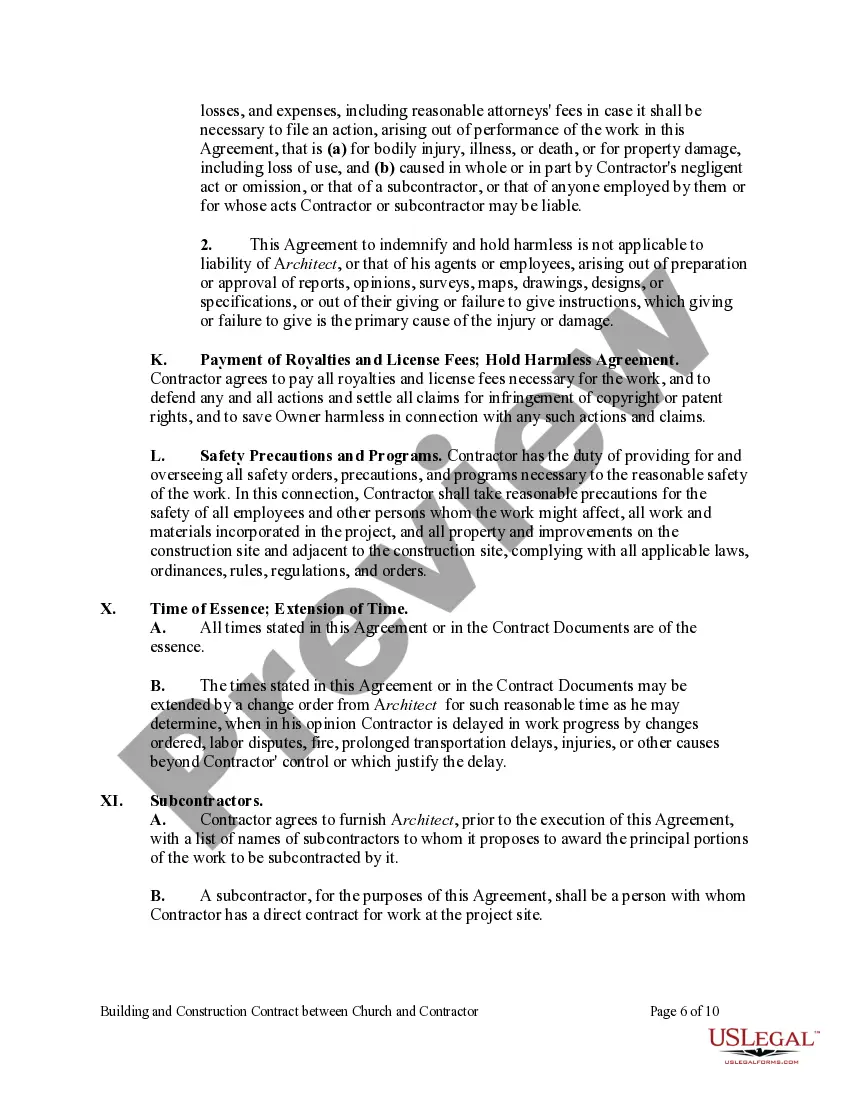
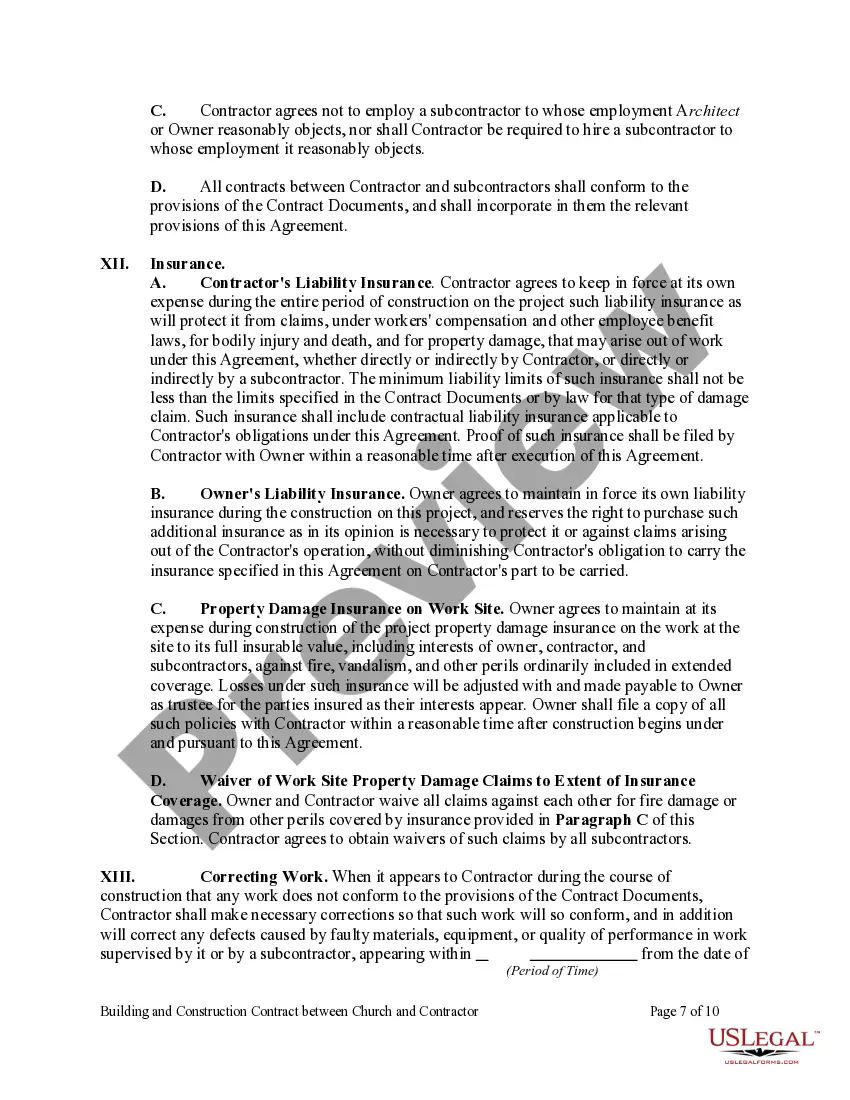
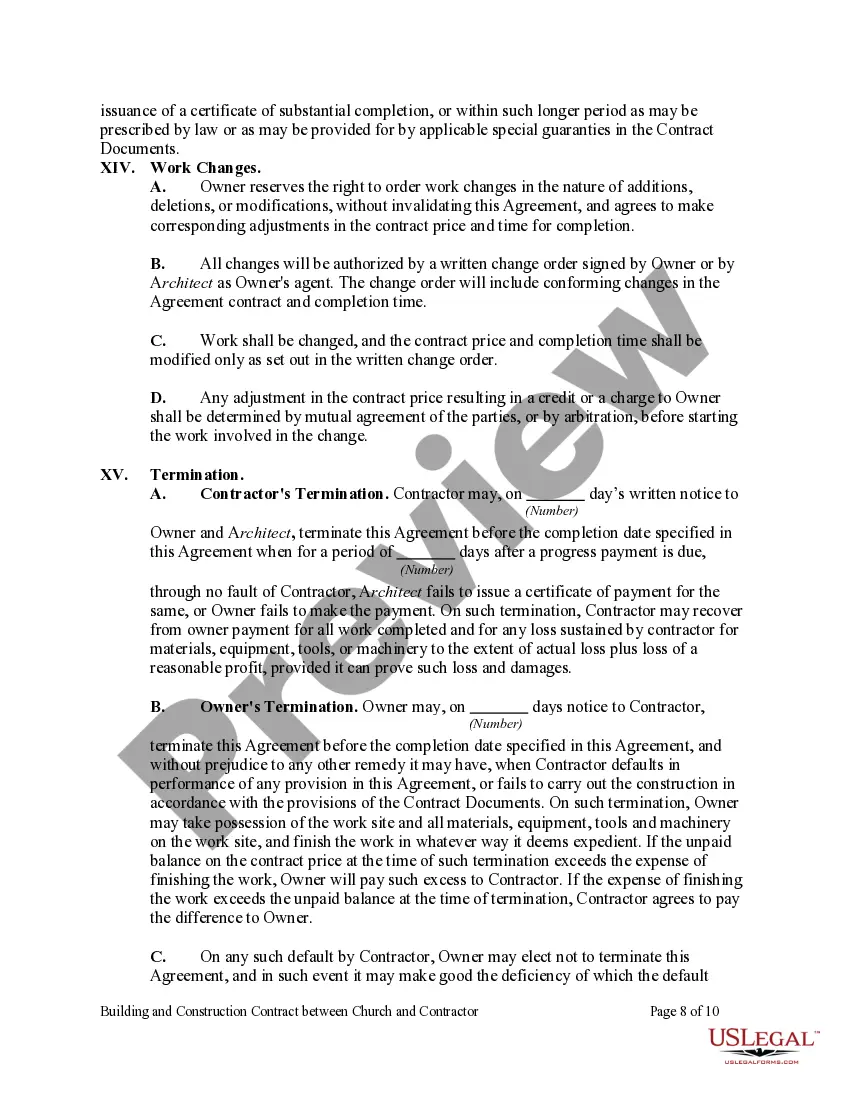
How to fill out Building And Construction Contract Between Church And Contractor?
- If you're a returning user, simply log into your account and download the desired template by clicking the Download button. Ensure your subscription is active or renew it as needed.
- For first-time users, begin by accessing the Preview mode to review the form description. Confirm that it aligns with your needs and local jurisdiction.
- If you find discrepancies, utilize the Search tab to locate a more appropriate template.
- Once you find the right document, proceed to purchase by clicking the Buy Now button and selecting your preferred subscription plan. You'll need to create an account to unlock access to the library.
- Complete your purchase by entering your payment details or using your PayPal account.
- Finally, download your form to your device for easy access, or find it anytime in the My Forms section of your profile.
With US Legal Forms, building the perfect legal document is straightforward, whether you're returning for additional resources or starting fresh.
Ready to simplify your legal paperwork? Explore US Legal Forms today and experience the benefits of a well-structured library tailored to your needs.
Form popularity
FAQ
Building to suit refers to a development strategy where a property is constructed specifically for a tenant's requirements. This approach ensures that the design, layout, and features align with the tenant's operational goals. It provides businesses with the opportunity to create a space that optimally supports their functions. For those seeking customized real estate solutions, utilizing the building to suit concept can be highly advantageous.
The correct term is 'build to suit.' This phrase emphasizes the active process of creating a property based on tenant specifications. Understanding this distinction is crucial for clear communication in real estate discussions. Building to suit focuses on the future potential of a property, aligning with tenant needs.
You might say, 'The company decided to pursue a build to suit agreement to ensure the new office met their unique needs.' In this context, the term highlights a tailored approach to property development. Using building to suit in conversations showcases the importance of custom solutions in real estate. This phrase indicates a focus on specific objectives for space utilization.
A build to suit is a property development specifically designed to meet the needs of a tenant. For instance, if a company requires a warehouse with particular dimensions, a developer constructs the facility precisely to those specifications. This arrangement benefits businesses by ensuring that the space accommodates their operational requirements effectively. Ultimately, building to suit allows for greater customization in commercial real estate.
In many cases, contractors file for building permits on behalf of the property owner. This practice is common in building to suit projects where specialized knowledge helps streamline the permitting process. Engaging a reputable contractor can also alleviate the burden of paperwork and ensure that all legal requirements are met efficiently.
In Minnesota, homeowners can usually perform minor repairs, like painting or replacing fixtures, without a permit. However, significant renovations and construction projects often require permits. Engaging in building to suit arrangements can help homeowners navigate these complexities and ensure that all necessary legalities are addressed beforehand.
In California, it is typically the responsibility of the property owner or developer to obtain the necessary building permits. However, as part of a building to suit project, some agreements may stipulate that the contractor manage this process. It is essential to clarify these details early in the planning stages to prevent project delays and to stay compliant with local regulations.
A tenant build to suit is a specific type of leasing arrangement where a property is constructed or modified to meet the exact specifications of a tenant. This approach in the building to suit process provides tenants greater flexibility to design workspaces that suit their operational needs. Moreover, it ensures that businesses have functional and customized environments that promote their unique brand identity.
Typically, the property owner or developer is responsible for obtaining and paying for building permits. In a building to suit arrangement, this obligation can be part of the lease agreement, depending on the terms negotiated. Understanding this financial responsibility is crucial as it affects overall project costs and timelines.
Building to suit refers to the process where property developers construct buildings tailored specifically to meet the needs of a tenant or buyer. This ensures that the final product aligns with the client's design preferences and operational requirements. By engaging in a building to suit agreement, businesses can create their ideal workspace that enhances productivity and efficiency.