Employment Contract With Severance Clauses
Description
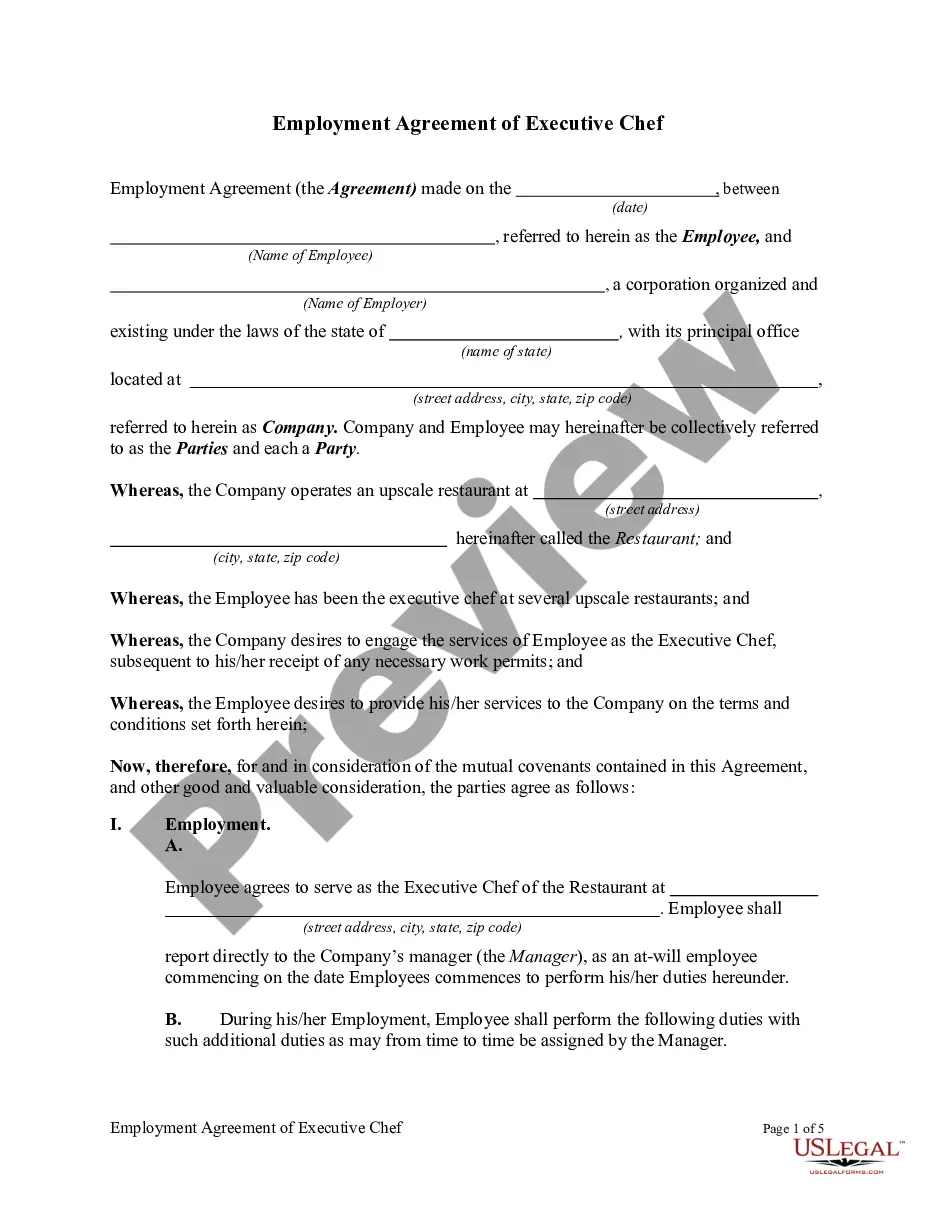
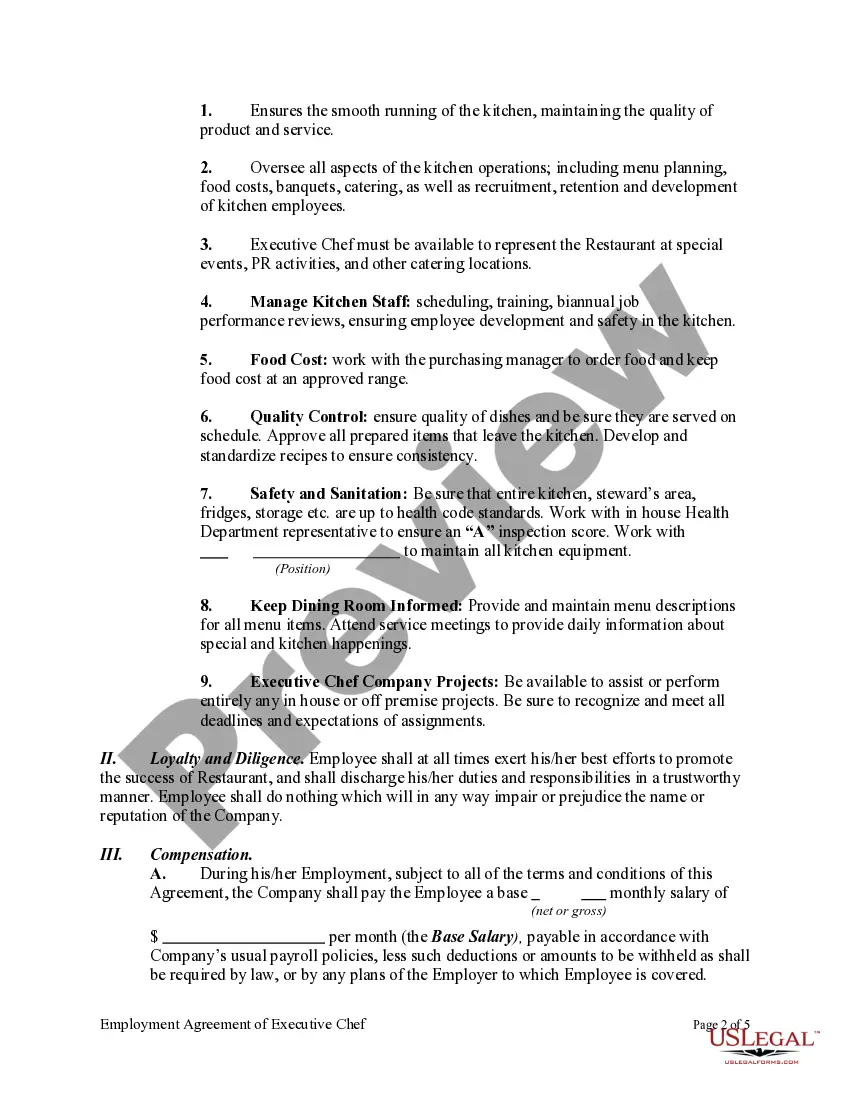
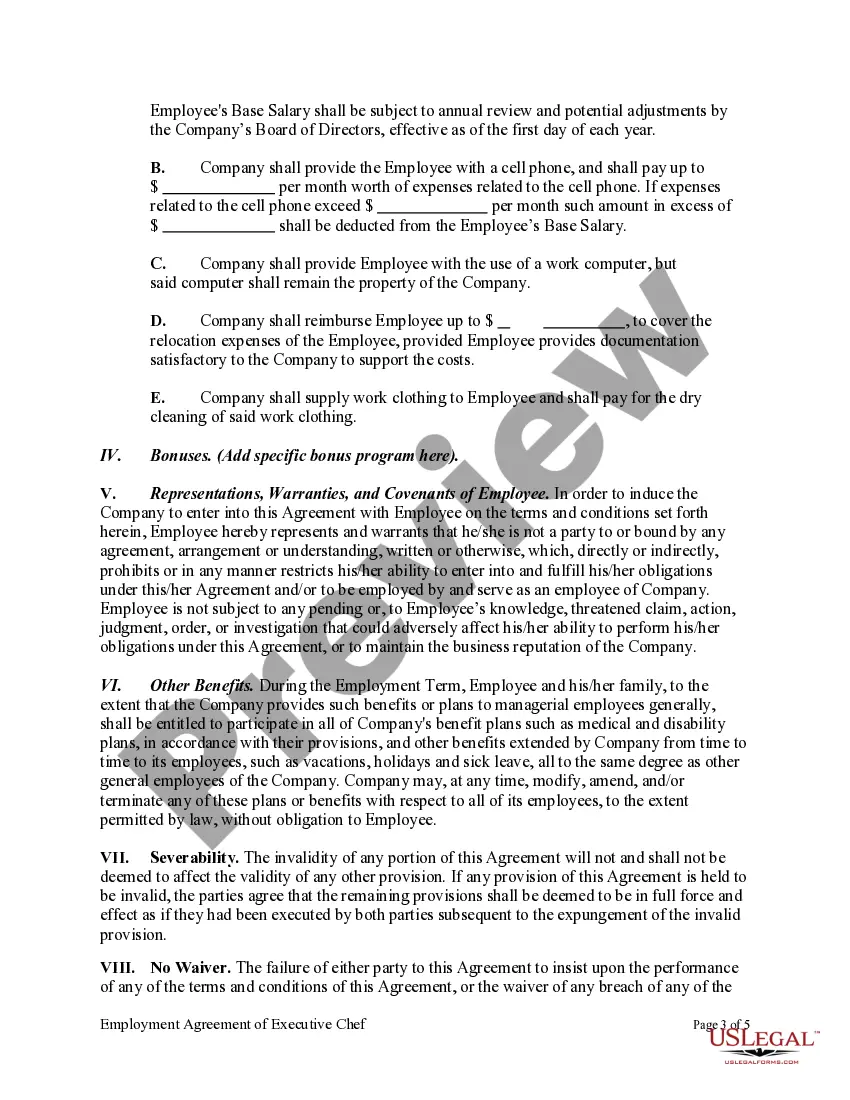
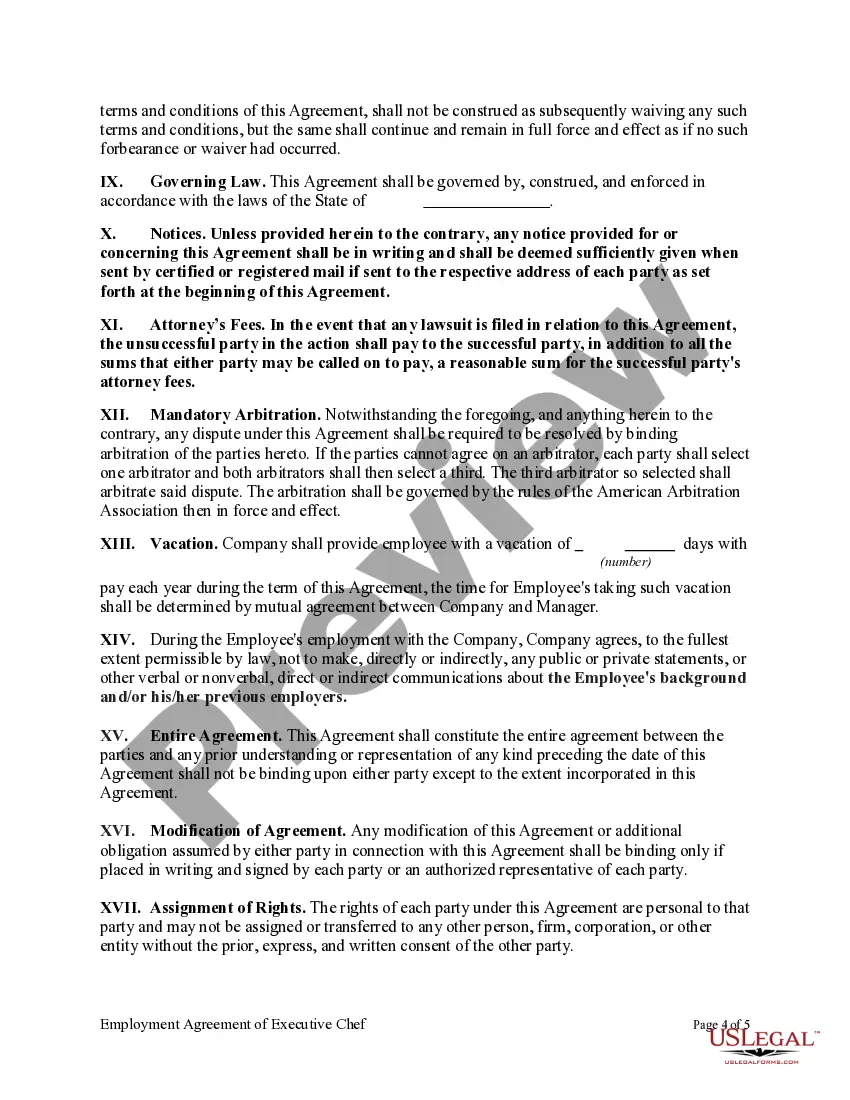
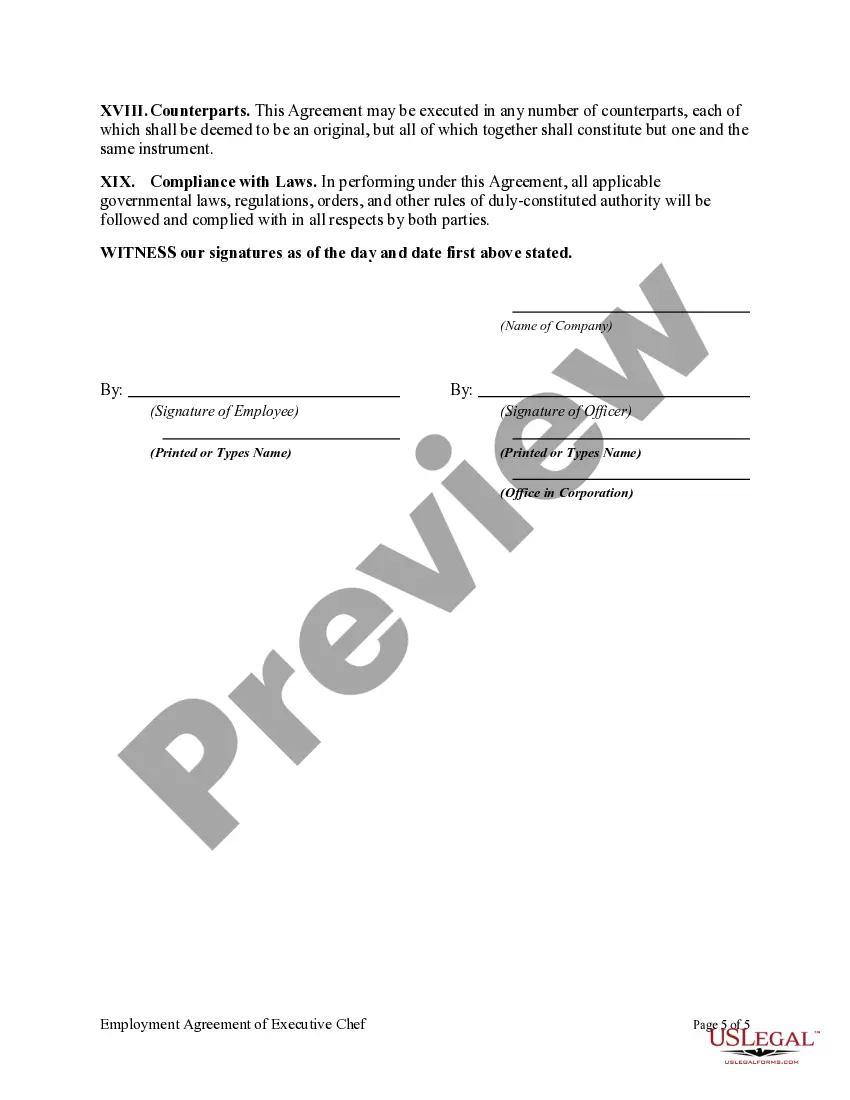
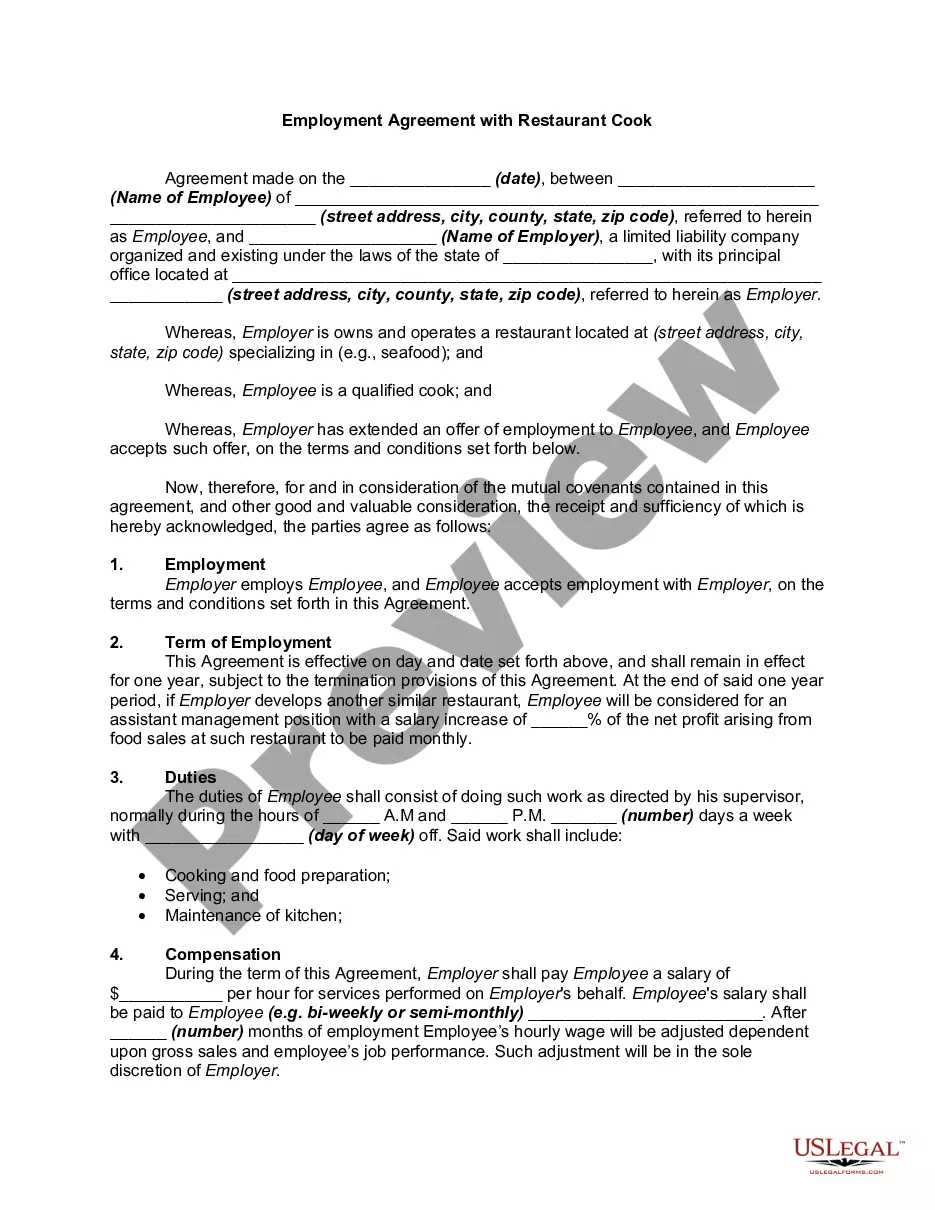
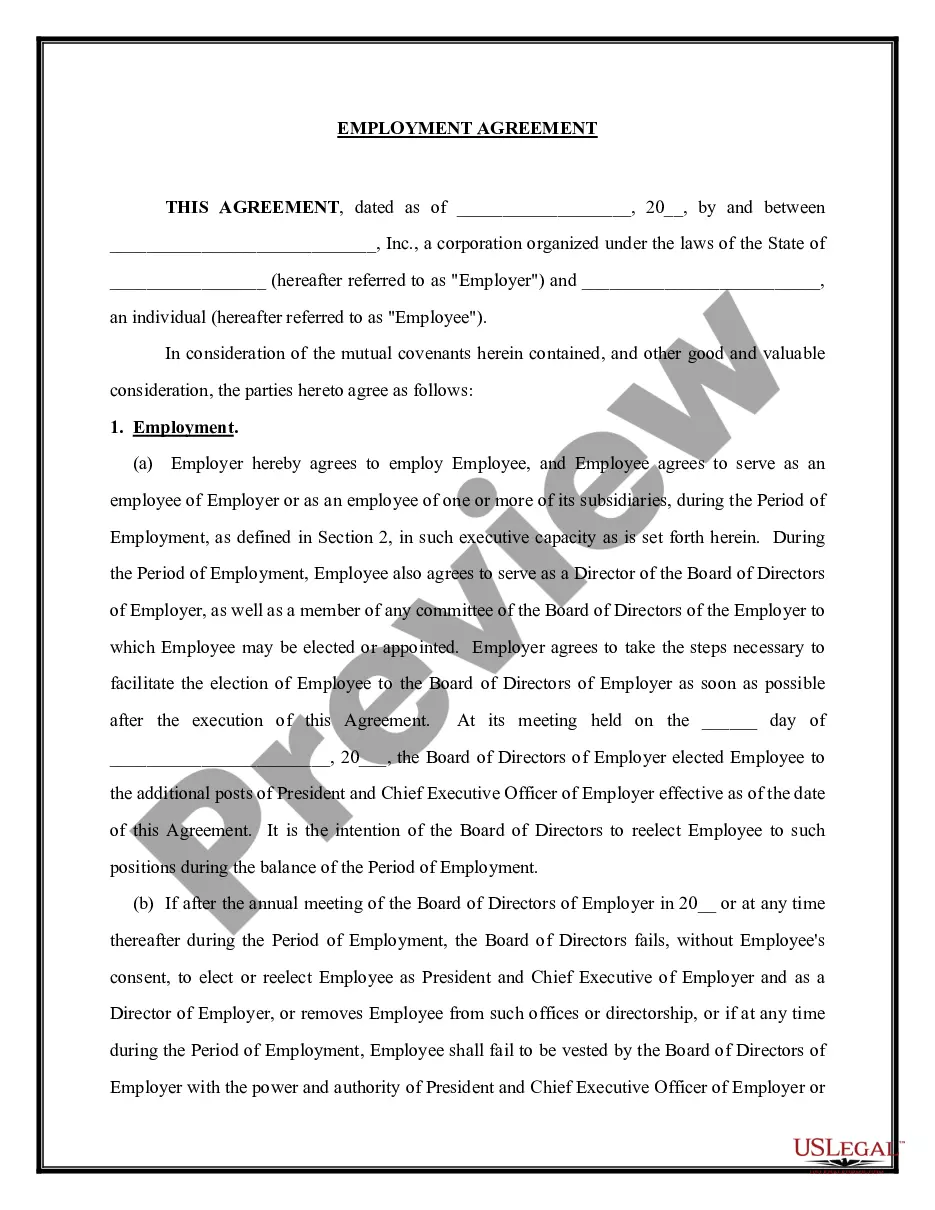
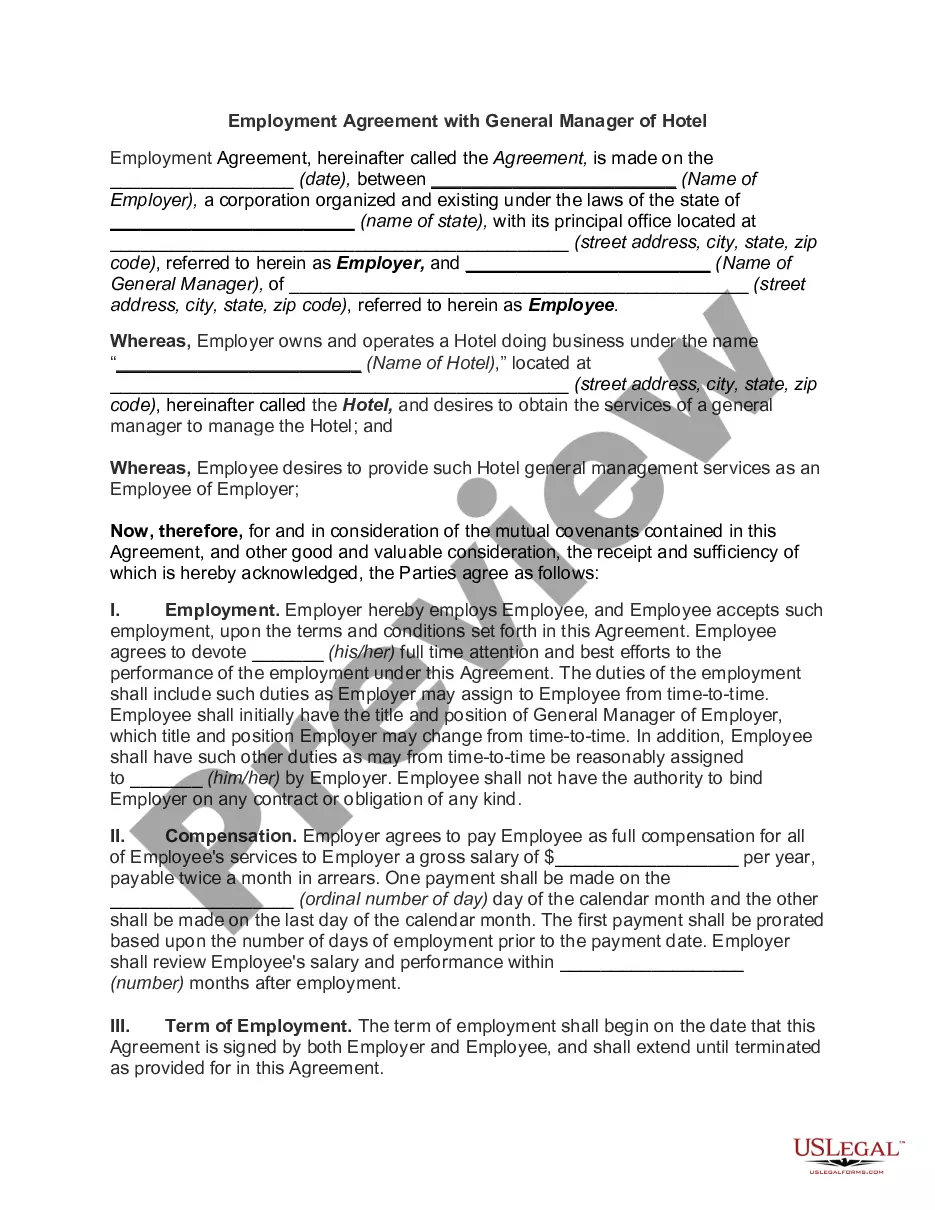
How to fill out Employment Agreement Of Executive Chef?
It’s clear that you cannot instantly become a legal expert, nor can you comprehend how to swiftly create an Employment Contract With Severance Clauses without possessing a particular set of expertise. Formulating legal documents is a lengthy endeavor that necessitates specific education and abilities. So why not entrust the drafting of the Employment Contract With Severance Clauses to the experts.
With US Legal Forms, one of the most comprehensive legal template collections, you can obtain anything from court documents to templates for internal business communication. We understand how crucial compliance and adherence to federal and local regulations are. That’s why, on our platform, all forms are location-specific and current.
Here’s how you can initiate your experience with our website and obtain the document you need in just minutes.
You can access your forms again from the My documents tab at any time. If you’re an existing customer, you can directly Log In, and find and download the template from the same tab.
Regardless of the purpose of your forms—whether financial, legal, or personal—our website has you covered. Give US Legal Forms a try now!
- Locate the document you require using the search bar at the top of the page.
- Preview it (if this option is available) and review the accompanying description to determine if the Employment Contract With Severance Clauses is what you’re looking for.
- Restart your search if you need a different template.
- Create a free account and select a subscription plan to purchase the template.
- Click Buy now. Once the payment is processed, you can obtain the Employment Contract With Severance Clauses, complete it, print it, and send or mail it to the relevant individuals or organizations.
Form popularity
FAQ
1. What is a severance agreement? A severance agreement is a contract that an employer may ask an employee to sign when they are terminated from a job. Severance pay is often offered in exchange for an employee's release of their claims against the employer.
Severance pay is usually based on the number of years you've worked at your employer. Generally, you'll get one week to four weeks of pay per year of service, but it is common for employers to pay out two weeks of pay for each year at the company.
Write the terms of the severance package in a formal list that you will present to the employee at the termination meeting. Include a line at the end of the document for the employee's signature agreeing to the terms.
A severance agreement should include the following elements: The name of the employer and employee. The effective date of the agreement. The employment period of the outgoing employee. The severance pay amount. Terms of continuation of benefits. Employee waiver of legal claims (within reason)