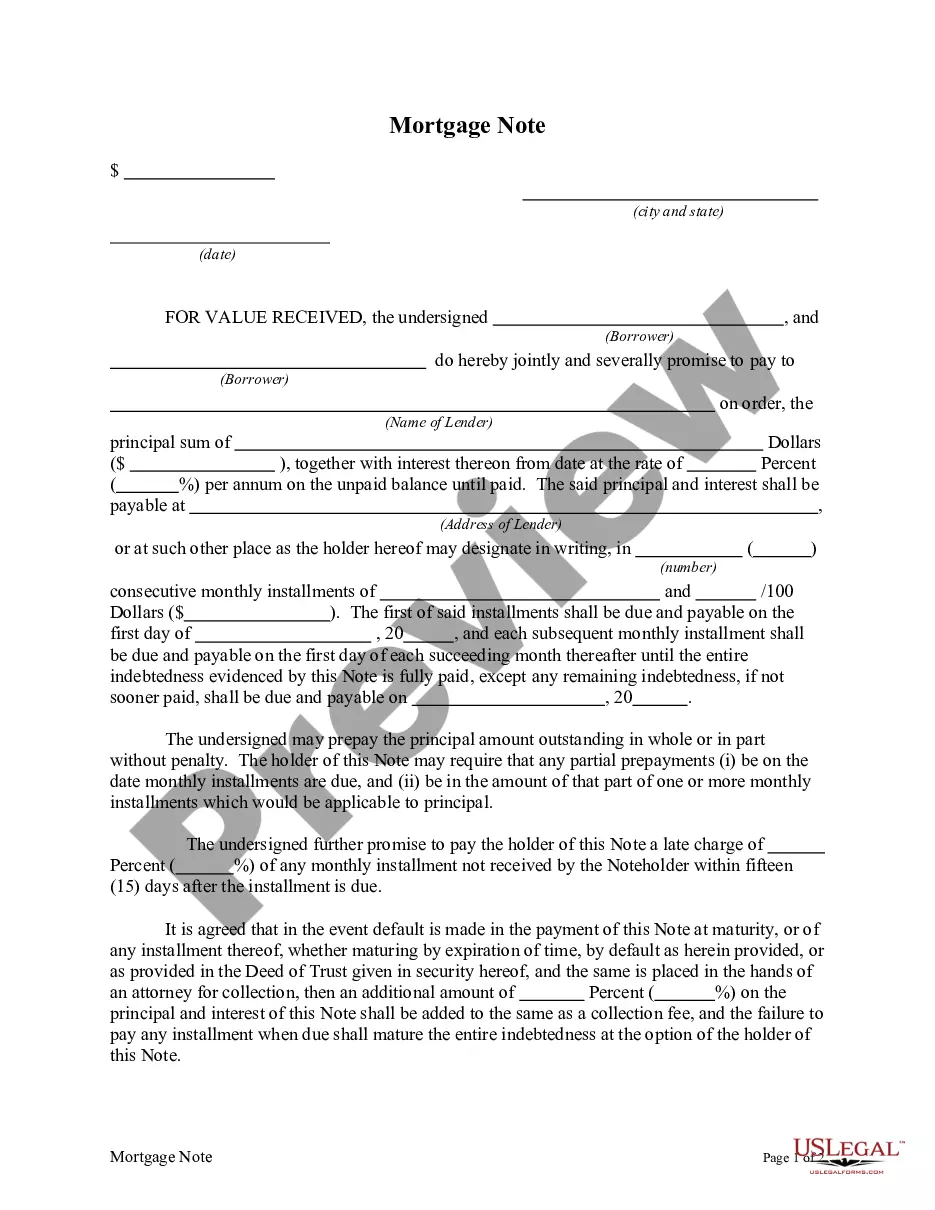
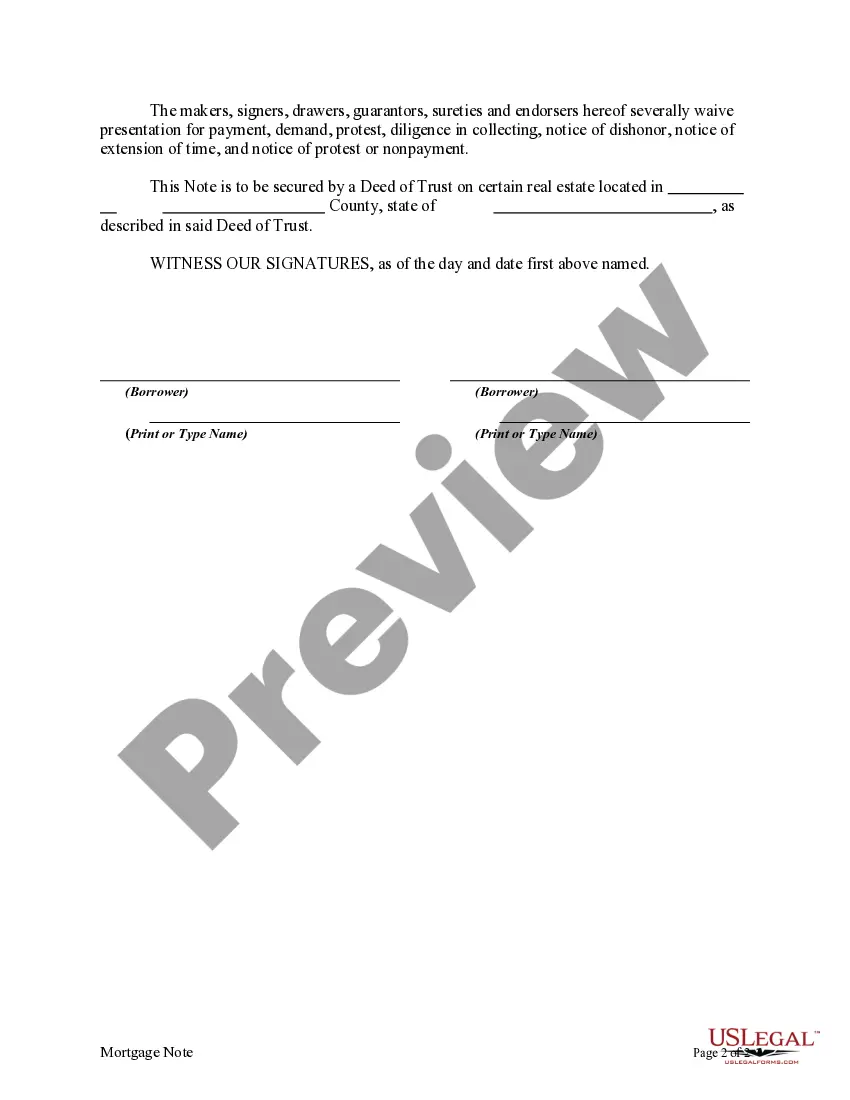
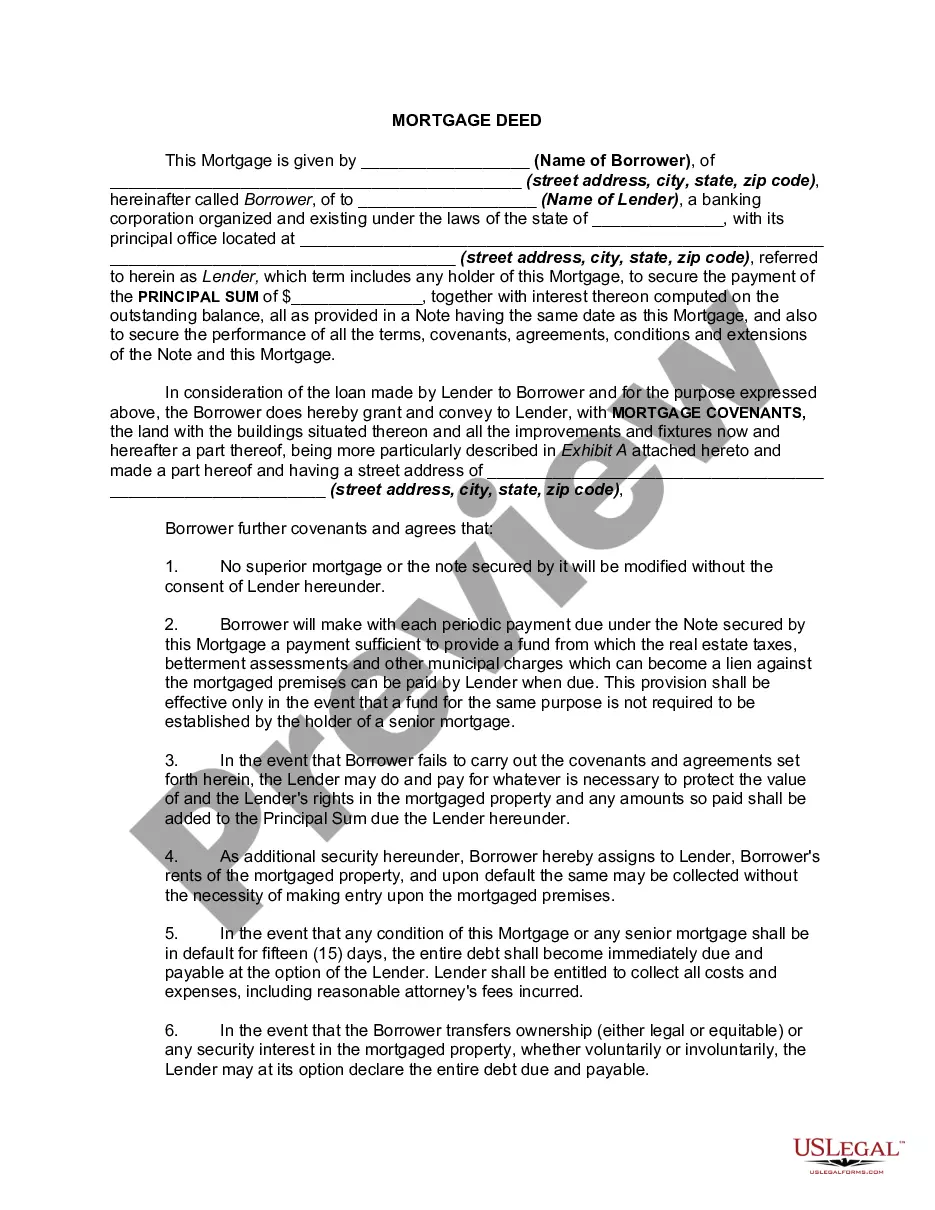
Mortgage Note Statement For Schedule E Property(ies)
Description
Get your form ready online
Our built-in tools help you complete, sign, share, and store your documents in one place.
Make edits, fill in missing information, and update formatting in US Legal Forms—just like you would in MS Word.
Download a copy, print it, send it by email, or mail it via USPS—whatever works best for your next step.
Sign and collect signatures with our SignNow integration. Send to multiple recipients, set reminders, and more. Go Premium to unlock E-Sign.
If this form requires notarization, complete it online through a secure video call—no need to meet a notary in person or wait for an appointment.
We protect your documents and personal data by following strict security and privacy standards.

Make edits, fill in missing information, and update formatting in US Legal Forms—just like you would in MS Word.

Download a copy, print it, send it by email, or mail it via USPS—whatever works best for your next step.

Sign and collect signatures with our SignNow integration. Send to multiple recipients, set reminders, and more. Go Premium to unlock E-Sign.

If this form requires notarization, complete it online through a secure video call—no need to meet a notary in person or wait for an appointment.

We protect your documents and personal data by following strict security and privacy standards.
Looking for another form?
How to fill out Mortgage Note?
Whether for business purposes or for personal matters, everybody has to handle legal situations sooner or later in their life. Filling out legal paperwork demands careful attention, beginning from selecting the correct form template. For instance, when you choose a wrong version of the Mortgage Note Statement For Schedule E Property(ies), it will be turned down once you send it. It is therefore essential to have a reliable source of legal files like US Legal Forms.
If you need to get a Mortgage Note Statement For Schedule E Property(ies) template, stick to these easy steps:
- Find the template you need by using the search field or catalog navigation.
- Check out the form’s description to ensure it suits your case, state, and region.
- Click on the form’s preview to examine it.
- If it is the incorrect form, return to the search function to locate the Mortgage Note Statement For Schedule E Property(ies) sample you require.
- Download the template when it meets your needs.
- If you already have a US Legal Forms profile, simply click Log in to access previously saved templates in My Forms.
- In the event you don’t have an account yet, you may download the form by clicking Buy now.
- Pick the appropriate pricing option.
- Complete the profile registration form.
- Select your payment method: you can use a bank card or PayPal account.
- Pick the document format you want and download the Mortgage Note Statement For Schedule E Property(ies).
- When it is saved, you can complete the form with the help of editing applications or print it and finish it manually.
With a large US Legal Forms catalog at hand, you do not need to spend time looking for the appropriate template across the web. Utilize the library’s straightforward navigation to get the proper template for any situation.
Form popularity
FAQ
Net operating income measures an income-producing property's profitability before adding in any costs from financing or taxes. To calculate NOI, subtract all operating expenses incurred on a property from all revenue generated on the property.
The PA Schedule E should reflect what is reported on federal Form 8825, Rental Real Estate Income and Expenses of a Partnership or S Corporation. For each rental real estate property (e.g., townhouse) and/or royalty income (e.g., mineral extracts), enter street address, city or town, and state and the type of property.
Most people report rental income on an ?accrual basis? ? they include the income in the year it is receivable and deduct expenses in the year they are incurred. In certain cases you can deduct uncollectible rent from your income. This is considered a ?bad debt? for tax purposes.
Gross Rental Income is the equivalent of business revenue. It's the total amount of money you will get from renting out your property before accounting for costs or expenses. It is calculated by multiplying the monthly rent by 12 (i.e. one year) and then factoring in the vacancy rate.
The 2% rule is the same as the 1% rule ? it just uses a different number. The 2% rule states that the monthly rent for an investment property should be equal to or no less than 2% of the purchase price. Here's an example of the 2% rule for a home with the purchase price of $150,000: $150,000 x 0.02 = $3,000.