Mediation Vs Arbitration Definition With Insurance
Description

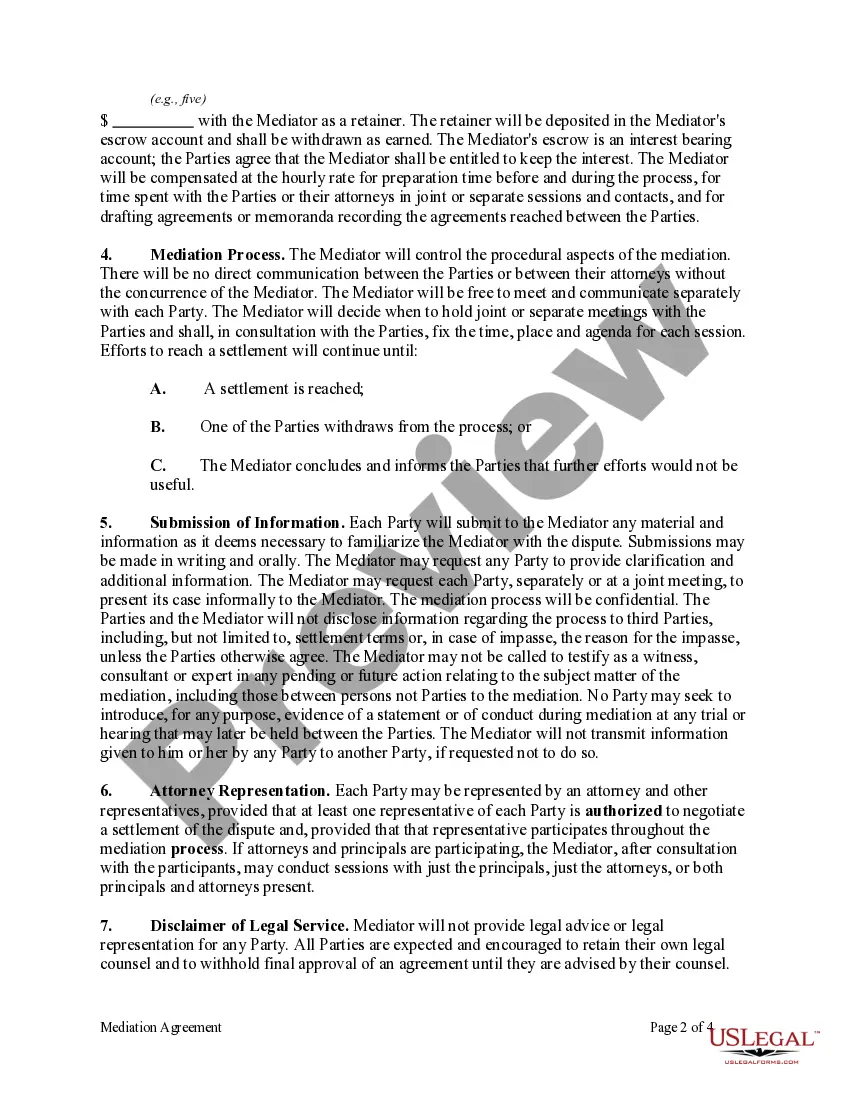
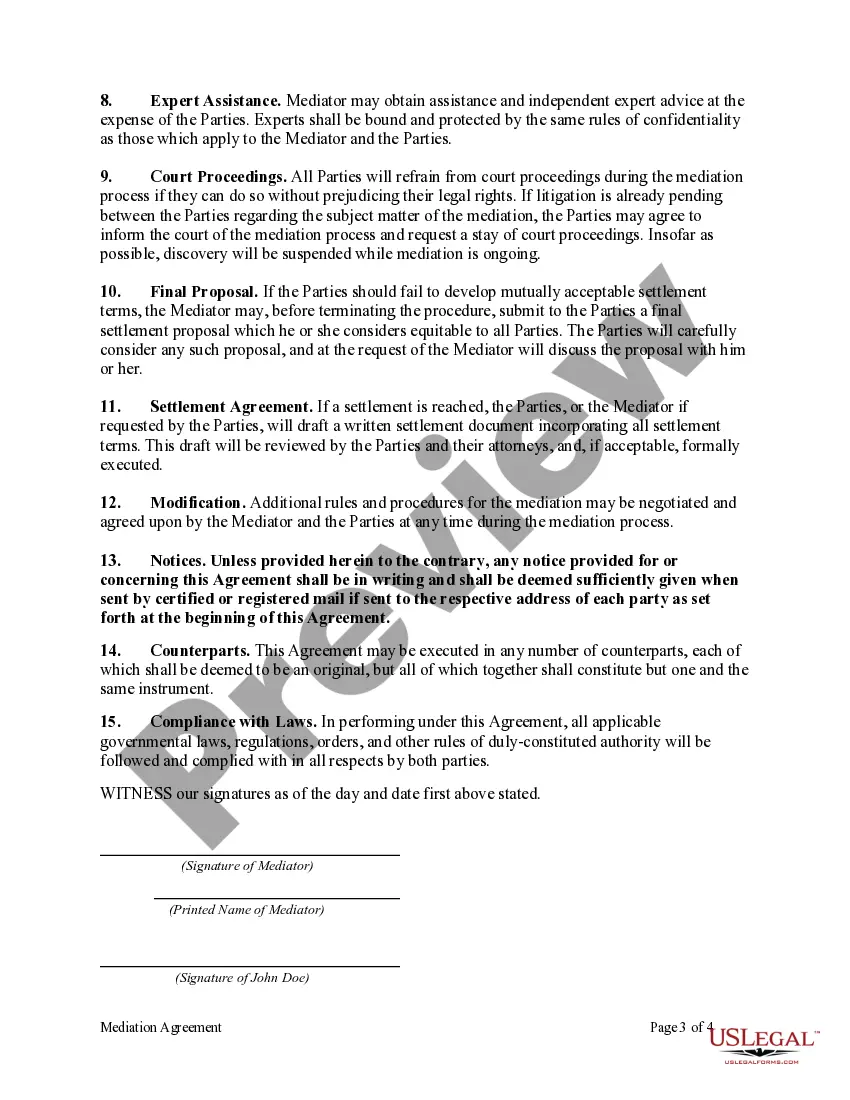


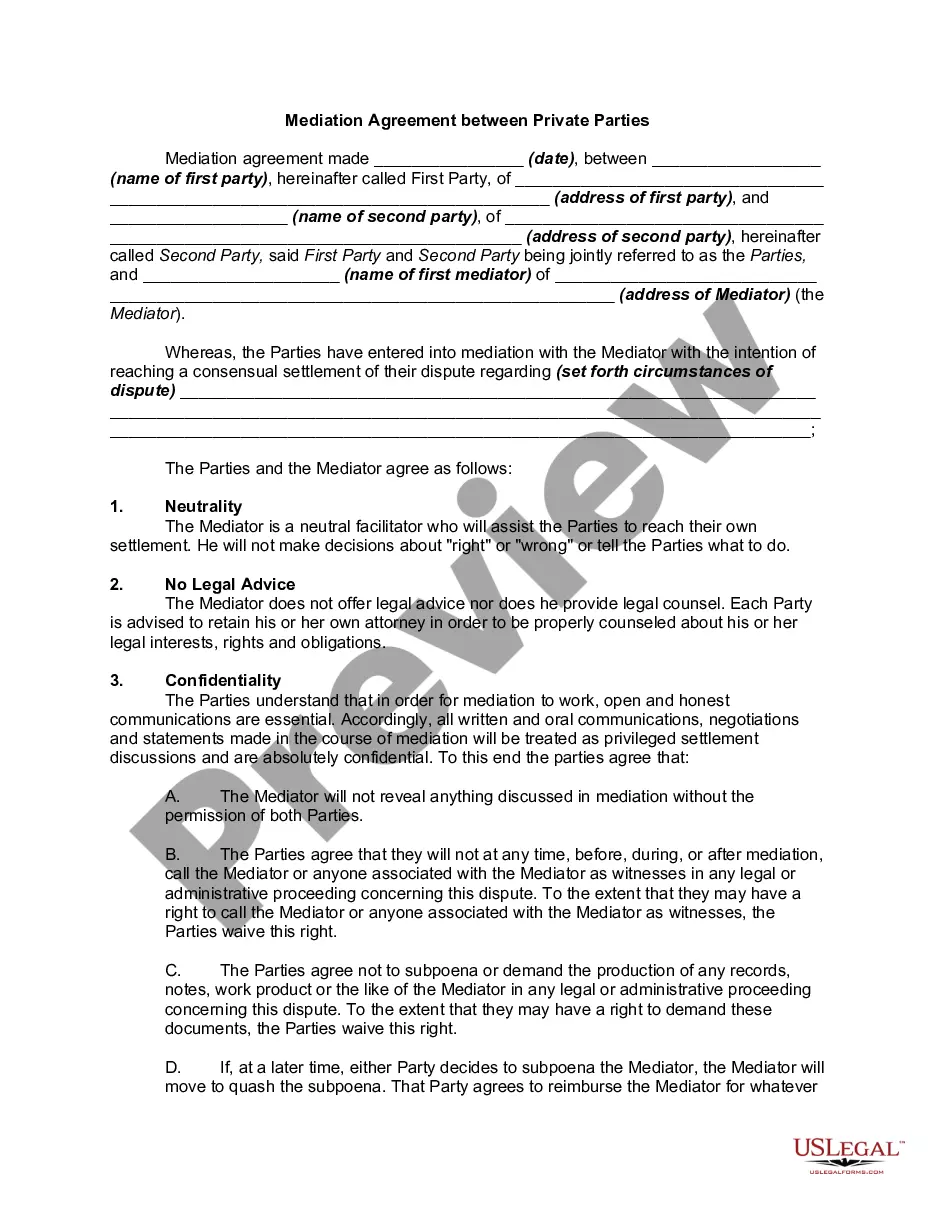
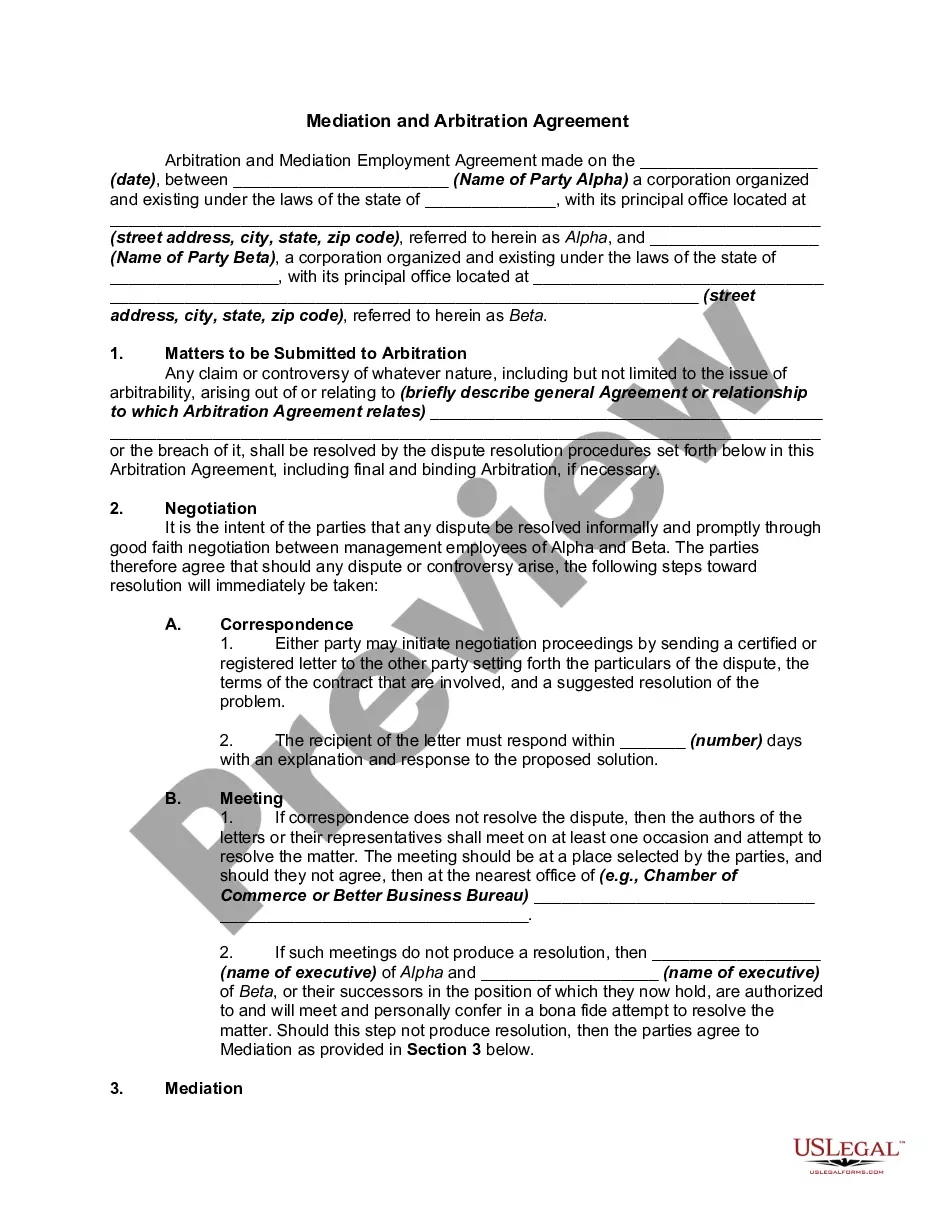
Get your form ready online
Our built-in tools help you complete, sign, share, and store your documents in one place.
Make edits, fill in missing information, and update formatting in US Legal Forms—just like you would in MS Word.
Download a copy, print it, send it by email, or mail it via USPS—whatever works best for your next step.
Sign and collect signatures with our SignNow integration. Send to multiple recipients, set reminders, and more. Go Premium to unlock E-Sign.
If this form requires notarization, complete it online through a secure video call—no need to meet a notary in person or wait for an appointment.
We protect your documents and personal data by following strict security and privacy standards.

Make edits, fill in missing information, and update formatting in US Legal Forms—just like you would in MS Word.

Download a copy, print it, send it by email, or mail it via USPS—whatever works best for your next step.

Sign and collect signatures with our SignNow integration. Send to multiple recipients, set reminders, and more. Go Premium to unlock E-Sign.

If this form requires notarization, complete it online through a secure video call—no need to meet a notary in person or wait for an appointment.

We protect your documents and personal data by following strict security and privacy standards.
Looking for another form?
How to fill out Mediation Agreement?
Whether for commercial reasons or for individual issues, everyone must confront legal circumstances sooner or later in their lifetime.
Completing legal documents requires meticulous attention, beginning with choosing the suitable form template.
Choose the document format you desire and download the Mediation Vs Arbitration Definition With Insurance. After saving it, you can fill out the form using editing software or print it out to complete it manually. With a comprehensive US Legal Forms catalog available, you don’t have to waste time searching for the right template online. Utilize the library’s simple navigation to find the correct form for any purpose.
- For example, if you select an incorrect version of the Mediation Vs Arbitration Definition With Insurance, it will be rejected once you submit it.
- Thus, it is crucial to find a reliable source for legal documents like US Legal Forms.
- If you wish to acquire a Mediation Vs Arbitration Definition With Insurance template, follow these simple instructions.
- Obtain the template you require using the search bar or catalog navigation.
- Review the form's details to ensure it suits your situation, state, and county.
- Click on the form's preview to examine it.
- If it is the wrong document, return to the search feature to find the Mediation Vs Arbitration Definition With Insurance sample you need.
- Download the template when it corresponds with your requirements.
- If you have a US Legal Forms account, simply click Log in to access previously saved documents in My documents.
- If you do not yet possess an account, you can obtain the form by clicking Buy now.
- Choose the appropriate pricing option.
- Complete the account registration form.
- Select your payment method: use a credit card or PayPal account.
Form popularity
FAQ
People often choose mediation over arbitration for its collaborative nature and potential for preserving relationships. Mediation allows for creative solutions that may not be available through arbitration, which typically results in a binding decision. Additionally, mediation tends to be quicker and less expensive, making it an attractive option for many. By understanding the mediation vs arbitration definition with insurance, you can better appreciate the advantages of mediation.
Choosing between mediation and arbitration depends on the nature of the dispute and the desired outcome. Use mediation when you prefer a more flexible and open dialogue to reach a settlement. On the other hand, consider arbitration when you need a binding resolution from an impartial third party. Familiarizing yourself with the mediation vs arbitration definition with insurance can help you make an informed choice.
To take an insurance claim to arbitration, first, review your insurance policy for any arbitration clauses. Next, notify your insurance company of your intent to arbitrate and gather all necessary documentation to support your claim. Engaging with a platform like USLegalForms can help you prepare the required paperwork and navigate the arbitration process smoothly. Understanding the mediation vs arbitration definition with insurance can clarify the steps involved.
Mediation is best used when parties seek a collaborative solution to their disputes. It allows individuals to communicate openly and find mutually agreeable outcomes, which is particularly beneficial in less adversarial situations. For claims involving insurance, mediation can streamline the process, saving time and costs compared to traditional litigation. Understanding the mediation vs arbitration definition with insurance can guide you in choosing the right approach.
Insurance coverage for mediation can vary significantly depending on the policy and the specific circumstances. Typically, mediation is viewed as a voluntary process aimed at resolving disputes outside of court, and not all insurance policies include coverage for this service. However, some liability insurance or specific legal expense policies may cover mediation costs, especially in disputes related to claims. To understand how mediation vs arbitration definition with insurance applies to your situation, it is best to consult your insurance provider or a legal expert.
The main purpose of mediation is to provide a platform for disputing parties to communicate in a structured environment, facilitating understanding and collaboration. This process aims to help parties achieve a voluntary agreement, thereby promoting resolution without the need for litigation. By grasping the mediation vs arbitration definition with insurance, you can appreciate how mediation offers a more amicable solution to conflicts.
When insurance goes to arbitration, it means that the dispute has advanced to a stage where an arbitrator will review the case and make a binding decision. This process typically follows unsuccessful mediation attempts and can be viewed as a more formal resolution method. Understanding the mediation vs arbitration definition with insurance can guide you through the implications of moving toward arbitration.
The primary difference between arbitration and mediation lies in the level of control participants have over the outcome. In mediation, both parties work together to reach an agreement, while in arbitration, a designated arbitrator makes a binding decision. Knowing the mediation vs arbitration definition with insurance helps clarify these distinctions and allows for informed choices based on individual needs and circumstances.
Mediation in insurance is a process where a neutral third party facilitates communication between disputing parties to help them reach a mutually acceptable agreement. This method emphasizes collaboration rather than confrontation, making it a preferred choice for many insurance claims. By exploring the mediation vs arbitration definition with insurance, you can see how mediation serves as a constructive alternative to litigation.
The duration of insurance mediation can vary significantly based on the complexity of the case and the willingness of both parties to negotiate. Typically, mediation sessions last a few hours, but they may span multiple days if necessary. The goal is to reach a resolution efficiently, ultimately saving time and resources compared to more formal processes. Understanding the mediation vs arbitration definition with insurance can help you prepare for what to expect.