Sample Consulting Agreement With Retainer
Description
Get your form ready online
Our built-in tools help you complete, sign, share, and store your documents in one place.
Make edits, fill in missing information, and update formatting in US Legal Forms—just like you would in MS Word.
Download a copy, print it, send it by email, or mail it via USPS—whatever works best for your next step.
Sign and collect signatures with our SignNow integration. Send to multiple recipients, set reminders, and more. Go Premium to unlock E-Sign.
If this form requires notarization, complete it online through a secure video call—no need to meet a notary in person or wait for an appointment.
We protect your documents and personal data by following strict security and privacy standards.

Make edits, fill in missing information, and update formatting in US Legal Forms—just like you would in MS Word.

Download a copy, print it, send it by email, or mail it via USPS—whatever works best for your next step.

Sign and collect signatures with our SignNow integration. Send to multiple recipients, set reminders, and more. Go Premium to unlock E-Sign.

If this form requires notarization, complete it online through a secure video call—no need to meet a notary in person or wait for an appointment.

We protect your documents and personal data by following strict security and privacy standards.
Looking for another form?


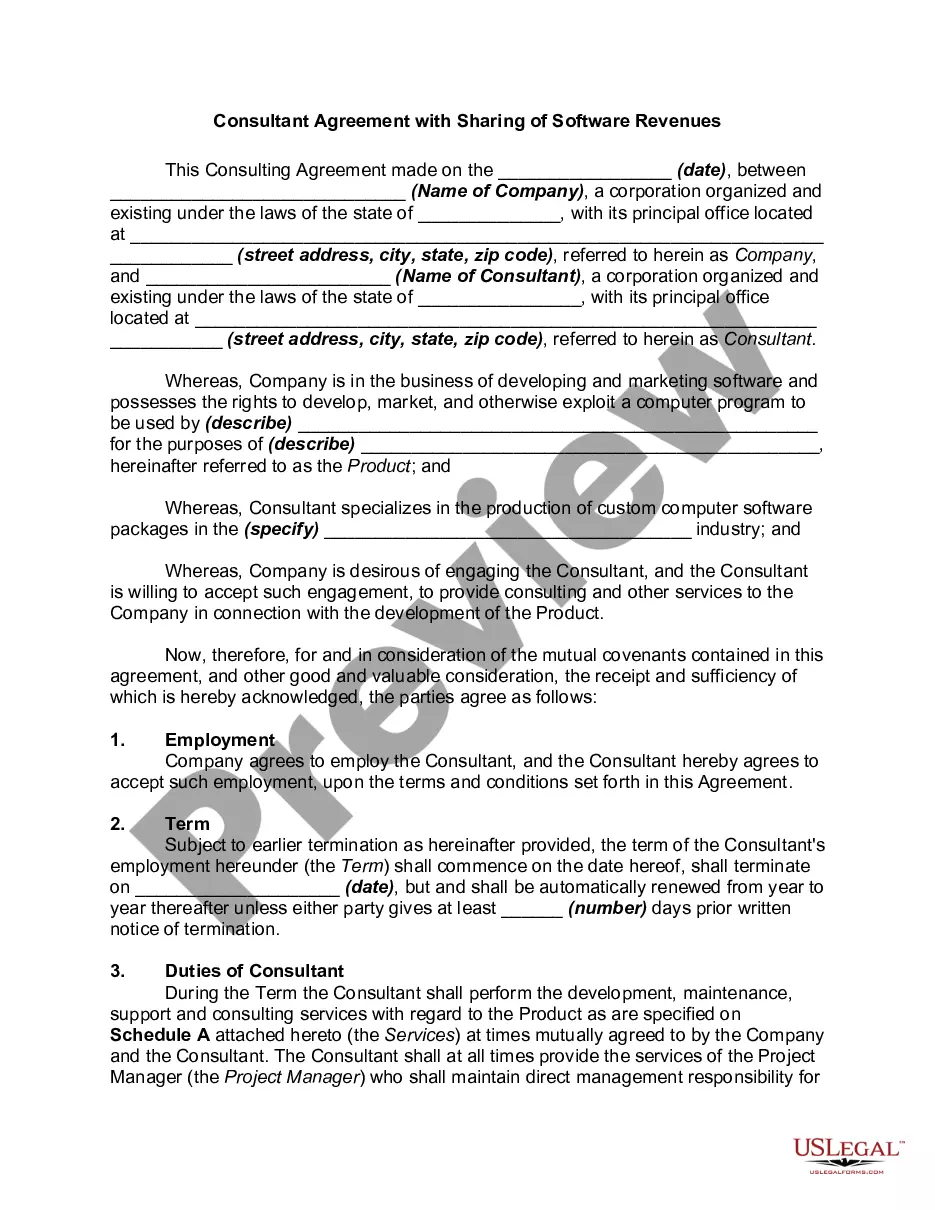
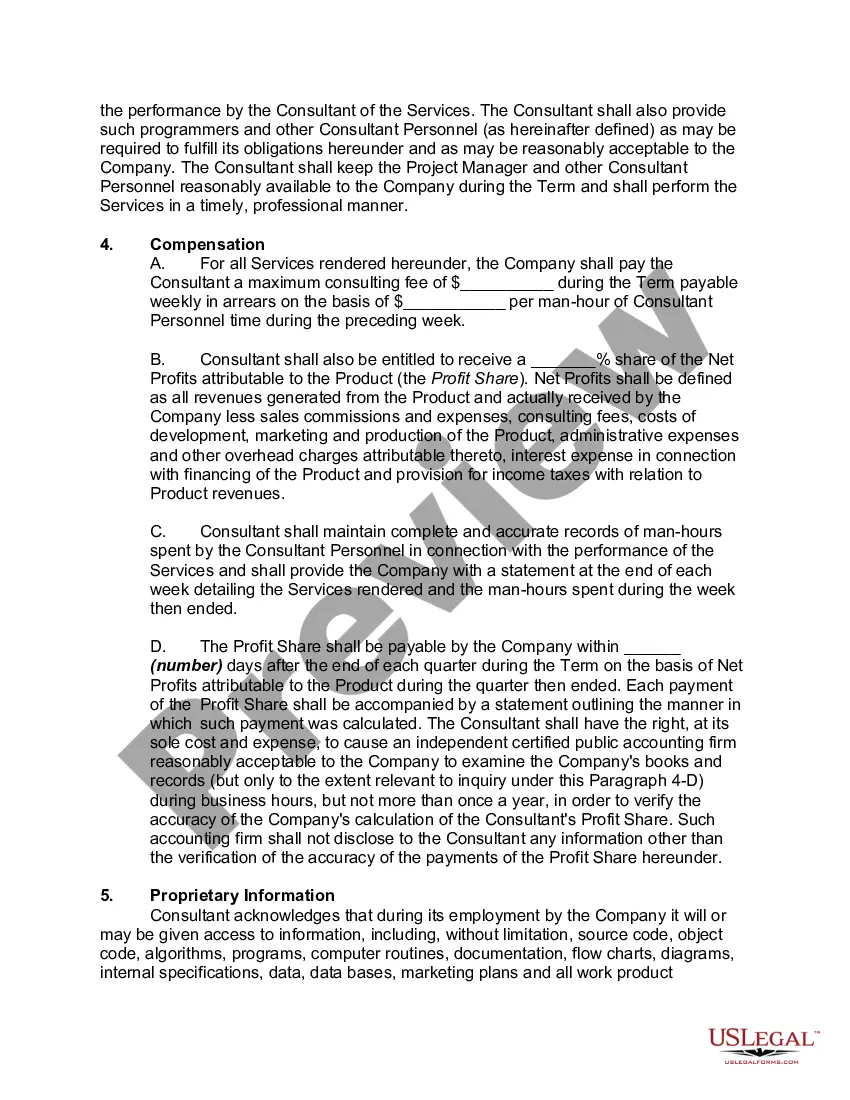
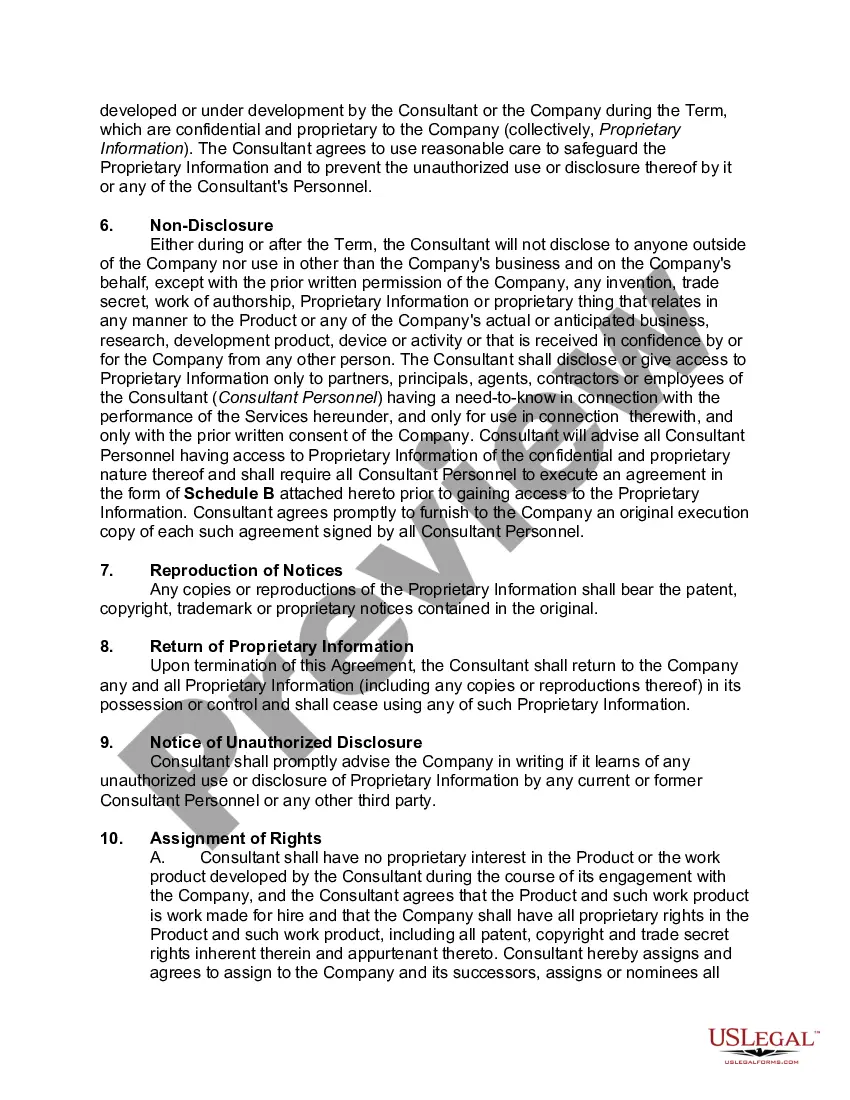
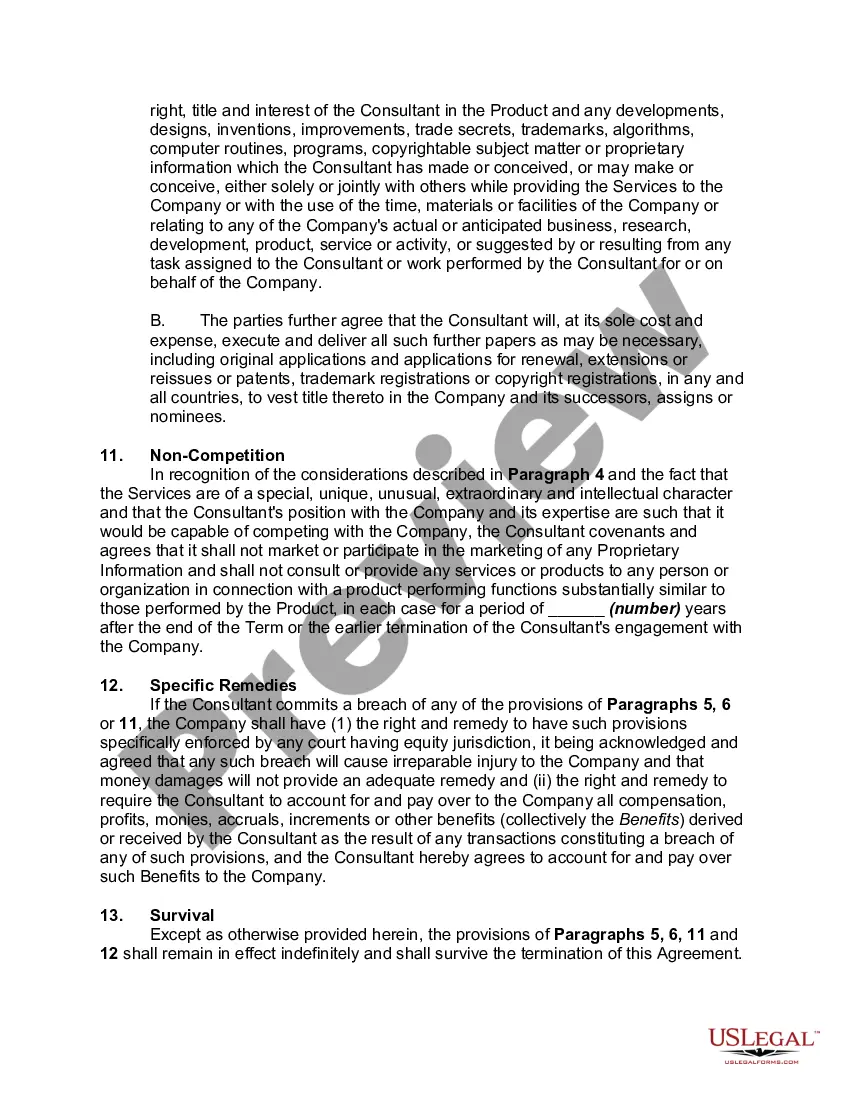
How to fill out Consultant Agreement With Sharing Of Software Revenues?
Whether for commercial objectives or personal matters, individuals must confront legal circumstances inevitably at some point in their lives. Completing legal documents requires meticulous care, starting with choosing the correct form template.
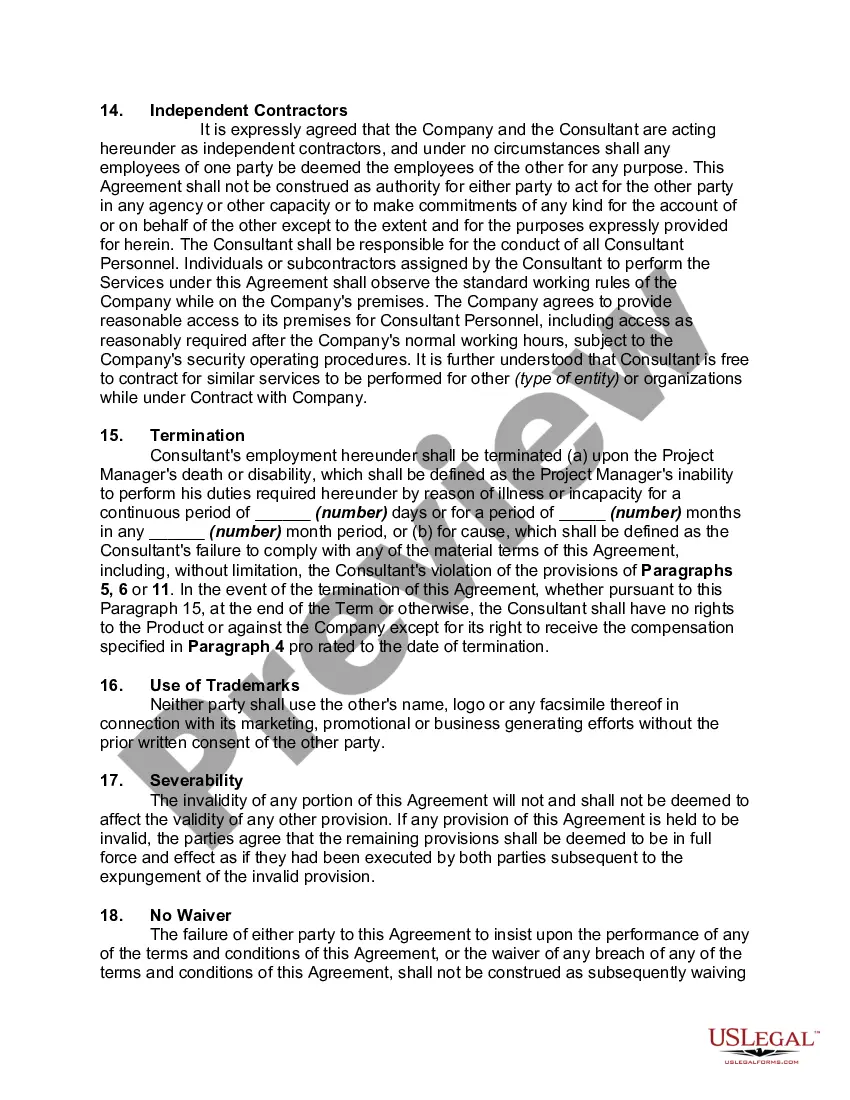
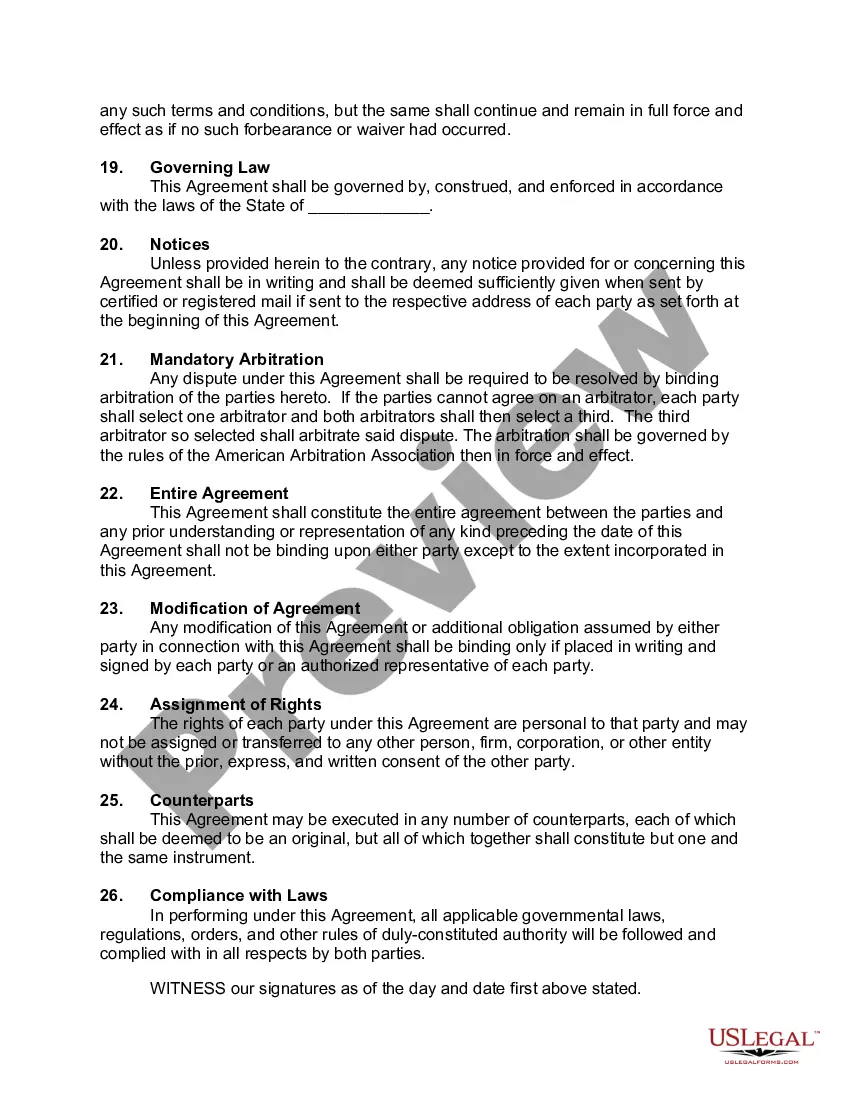
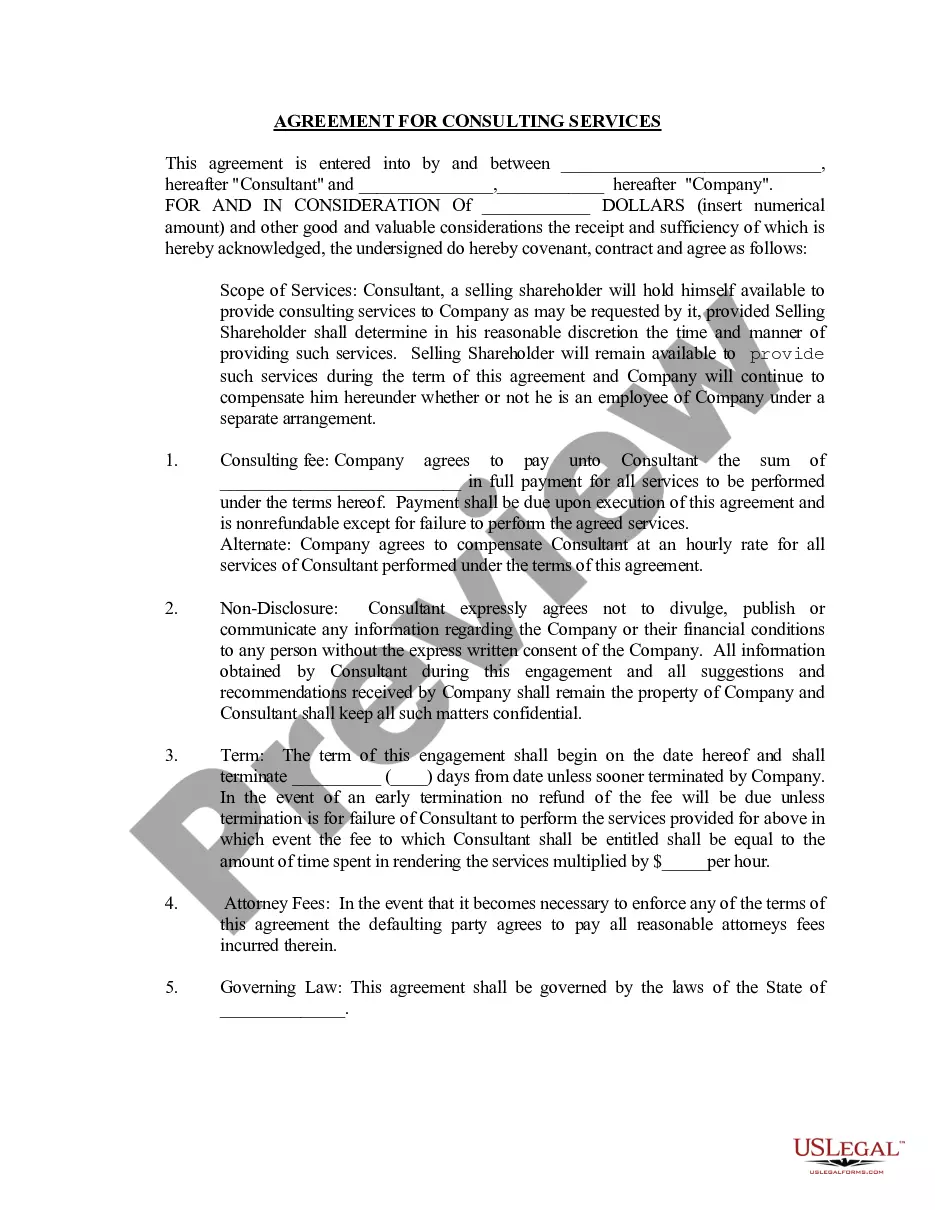
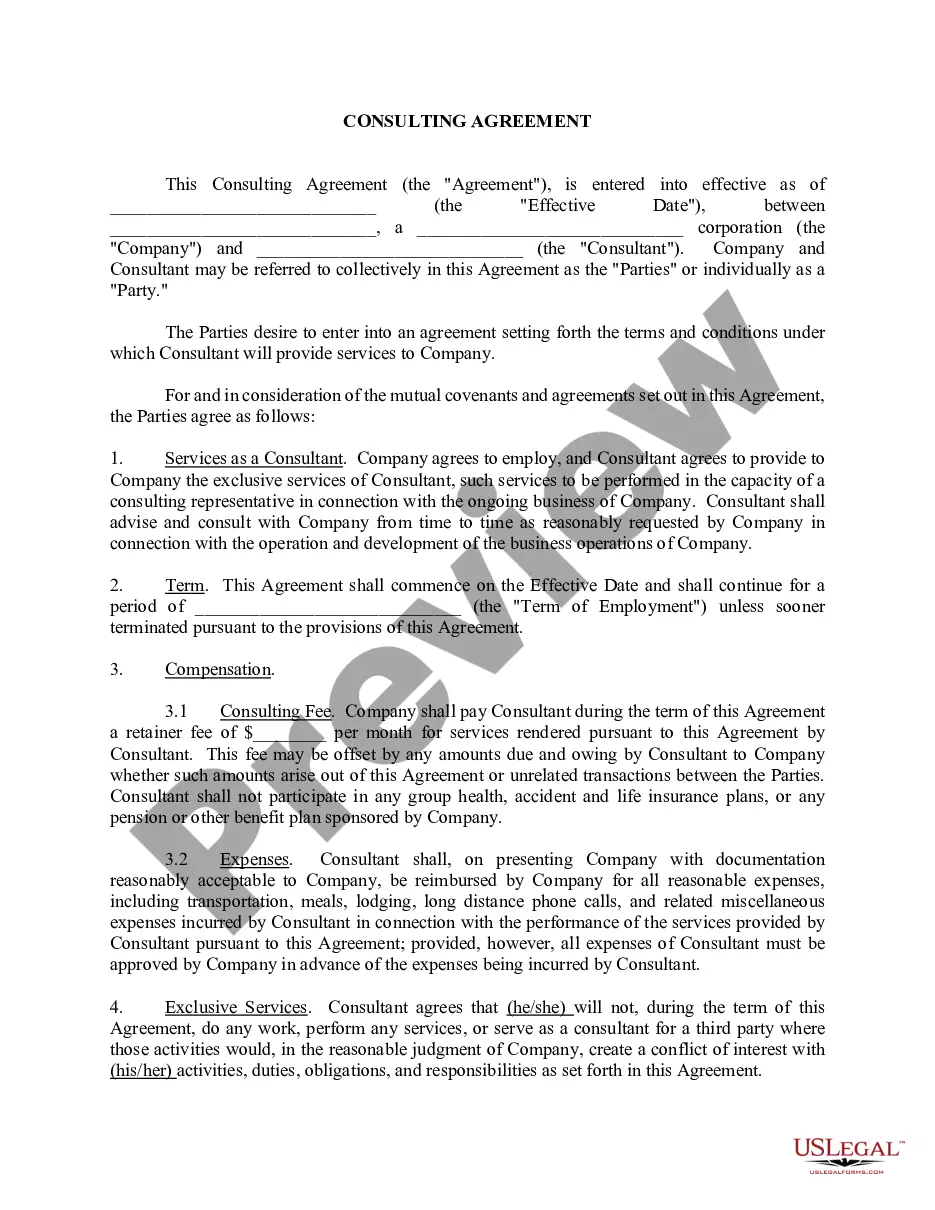
For example, if you select an incorrect version of the Sample Consulting Agreement With Retainer, it will be denied upon submission. Thus, it is vital to obtain a trustworthy source of legal documentation like US Legal Forms.
- Locate the template you require by utilizing the search box or browsing the catalog.
- Review the details of the form to confirm it aligns with your case, jurisdiction, and county.
- Select the form’s preview to view it.
- If it is the incorrect document, revert to the search option to locate the Sample Consulting Agreement With Retainer template you need.
- Obtain the file if it fulfills your specifications.
- If you possess a US Legal Forms account, just click Log in to access previously saved documents in My documents.
- If you do not have an account yet, you can obtain the form by clicking Buy now.
- Choose the correct pricing plan.
- Complete the registration form for your account.
- Select your payment option: use a credit card or PayPal.
- Choose the document format you prefer and download the Sample Consulting Agreement With Retainer.
- Once it is downloaded, you can fill out the form using editing software or print it out and complete it by hand.
- With a vast collection of US Legal Forms available, you don’t need to waste time searching for the suitable sample across the internet. Utilize the library’s easy navigation to find the correct form for any scenario.
Form popularity
FAQ
The retainer proposal will typically include details such as the scope of work, deliverables, timeline, fees and payment schedule. It should also outline any additional expenses or costs that may be incurred during the course of the engagement.
They are Pay for Work retainers and Pay for Access retainers. The one that's right for you depends on your relationship with your client and their level of trust in you and your expertise. The more common of the two (especially for novice and mid-level consultants) is the Pay for Work model.
To summarize what is a retainer agreement, it can be structured in several different ways: Client pays a set amount each month to access a certain amount of time. ... Client pays a set amount each month for a specific set of deliverables. ... Client pays simply to have access to the freelancer.
A retainer agreement is a contract between a client and a professional who requires an upfront payment applied to future work. A retainer can be set up as a one-time payment or for a recurring period. The agreement will detail compensation, hours, contingencies, and any other terms for the services provided.
Retainer fees are often based on the rates you would charge under other payment models. For instance, if you charge $100 per hour for your services and typically work 40 hours per week for clients, you would likely look to charge a $4,000 monthly retainer.