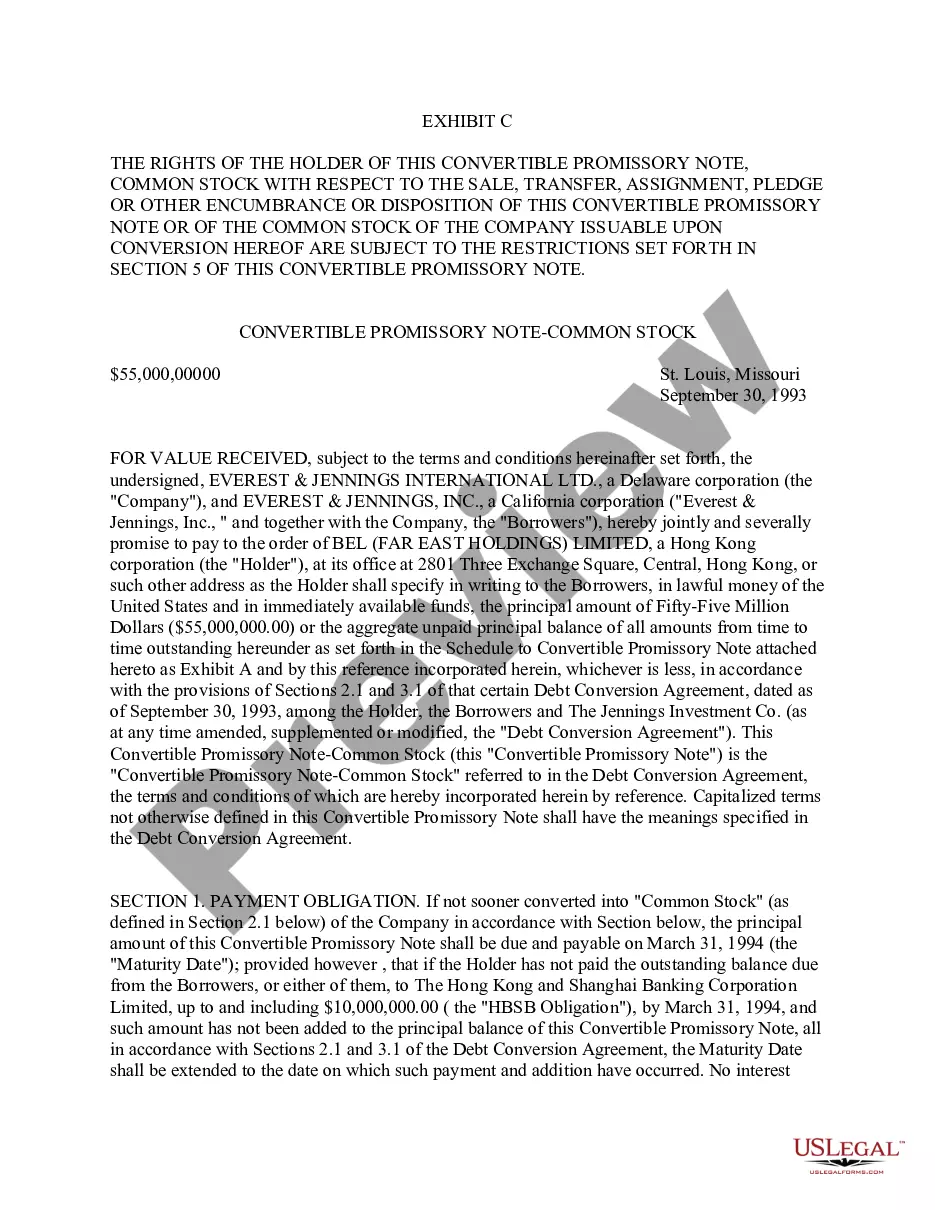
Promissory Notes Issued Form With Irs
Description
Get your form ready online
Our built-in tools help you complete, sign, share, and store your documents in one place.
Make edits, fill in missing information, and update formatting in US Legal Forms—just like you would in MS Word.
Download a copy, print it, send it by email, or mail it via USPS—whatever works best for your next step.
Sign and collect signatures with our SignNow integration. Send to multiple recipients, set reminders, and more. Go Premium to unlock E-Sign.
If this form requires notarization, complete it online through a secure video call—no need to meet a notary in person or wait for an appointment.
We protect your documents and personal data by following strict security and privacy standards.

Make edits, fill in missing information, and update formatting in US Legal Forms—just like you would in MS Word.

Download a copy, print it, send it by email, or mail it via USPS—whatever works best for your next step.

Sign and collect signatures with our SignNow integration. Send to multiple recipients, set reminders, and more. Go Premium to unlock E-Sign.

If this form requires notarization, complete it online through a secure video call—no need to meet a notary in person or wait for an appointment.

We protect your documents and personal data by following strict security and privacy standards.
Looking for another form?

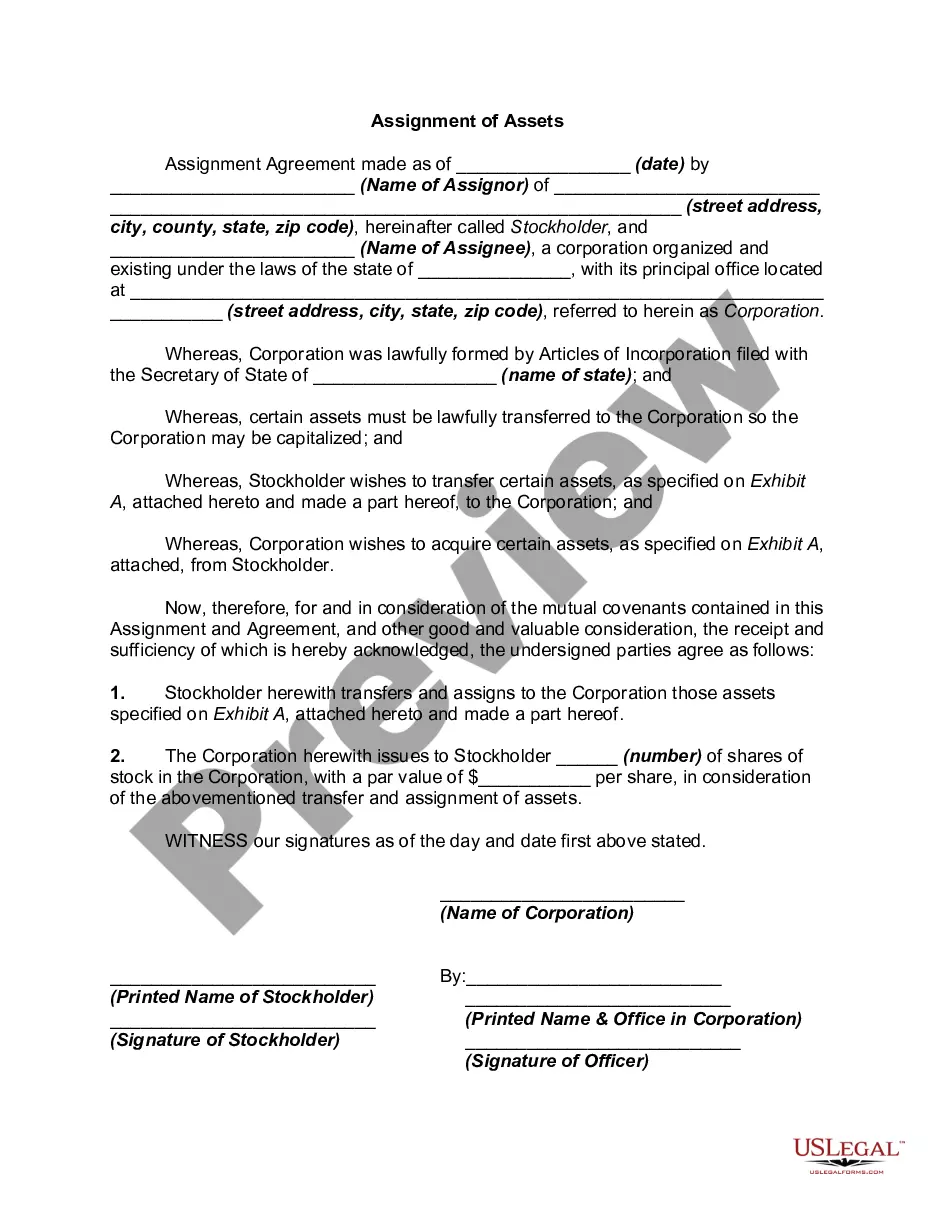



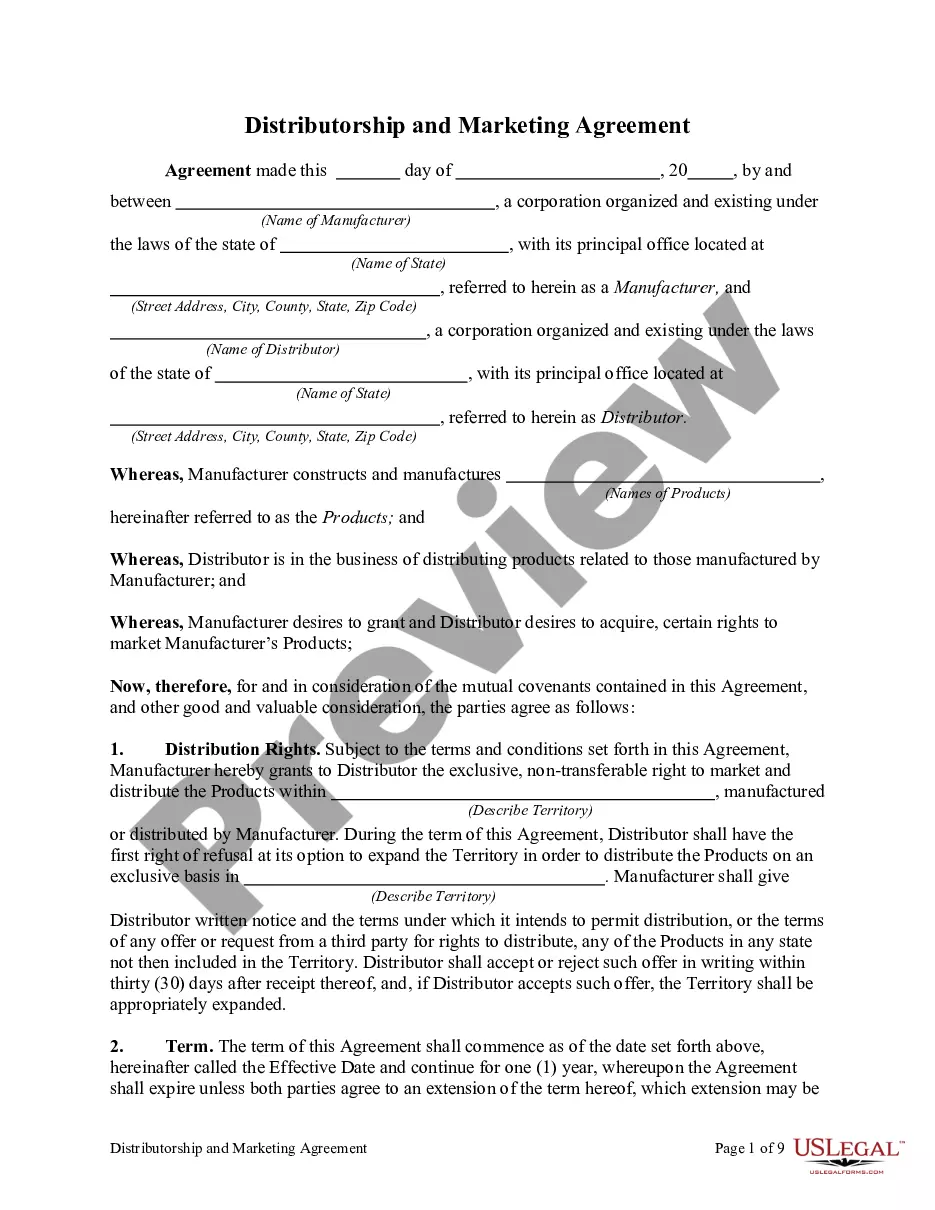


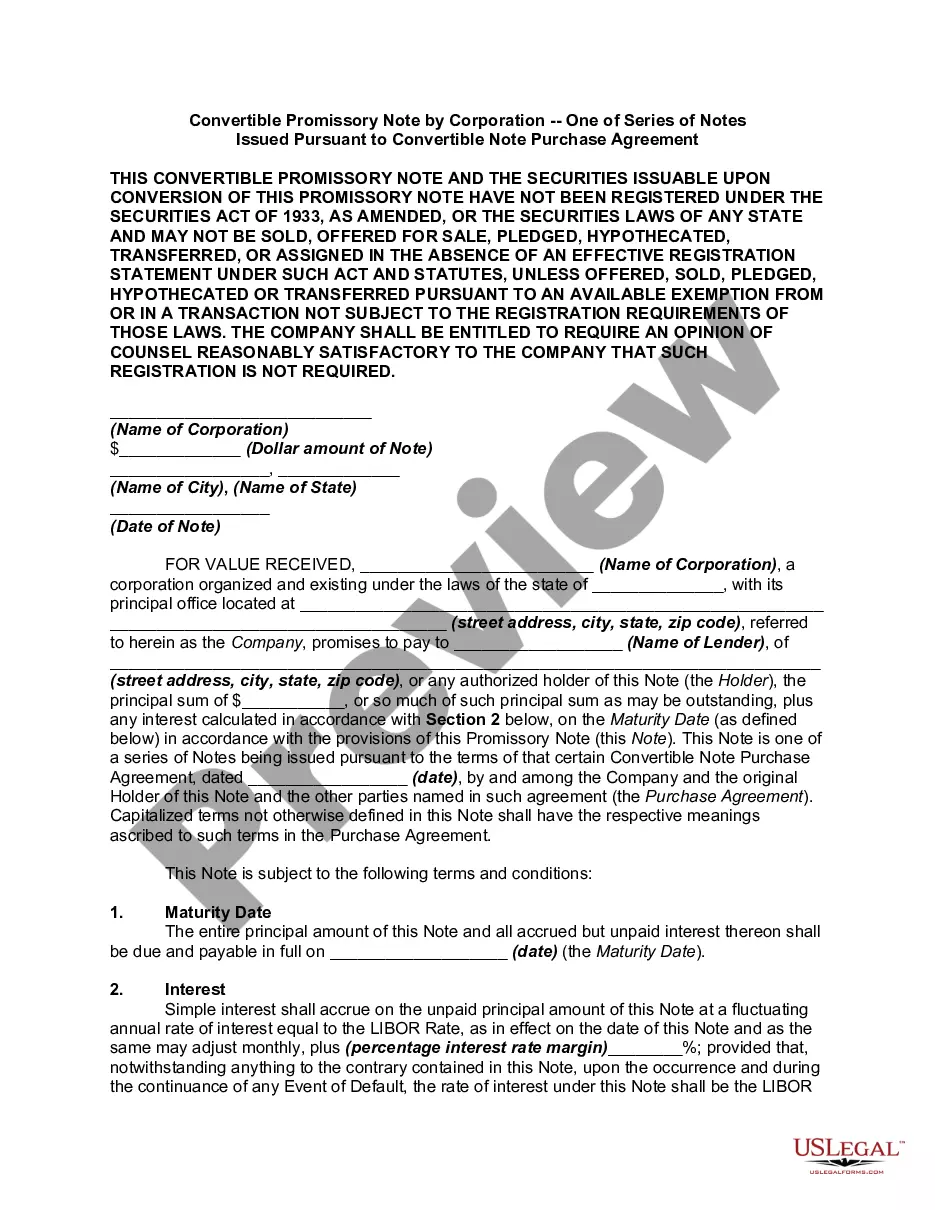
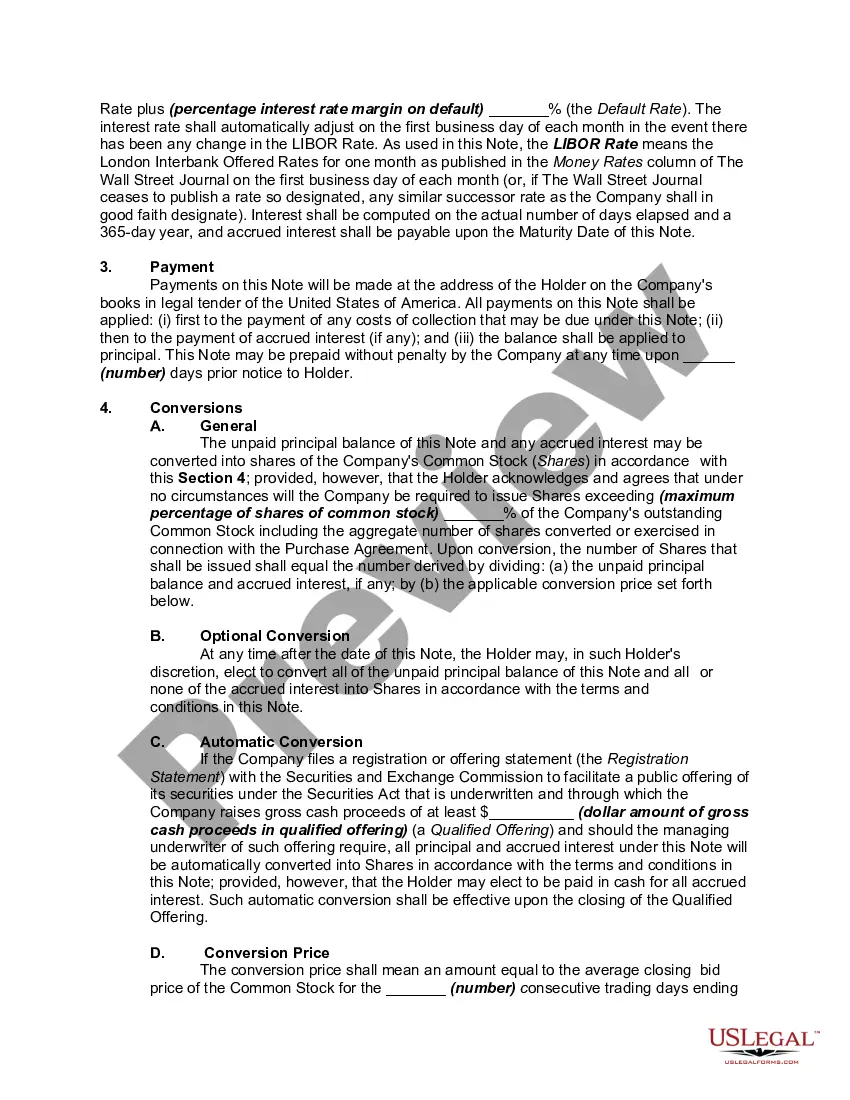
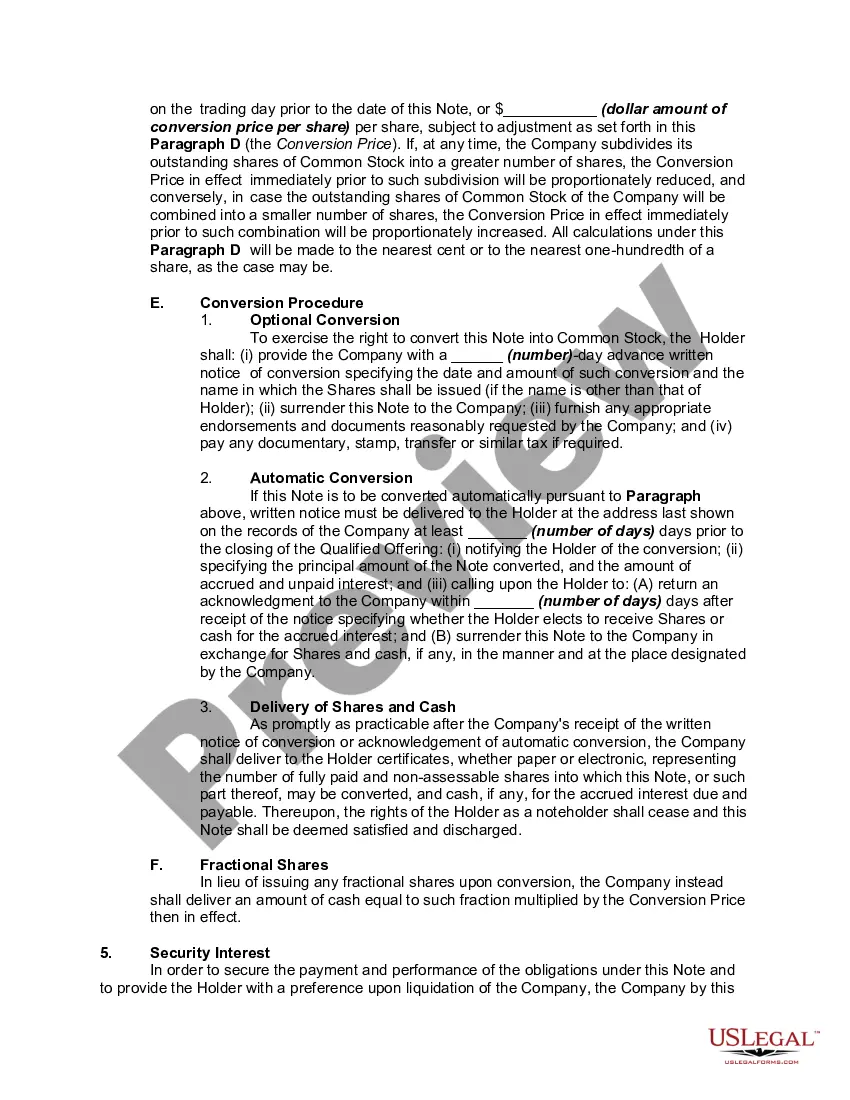
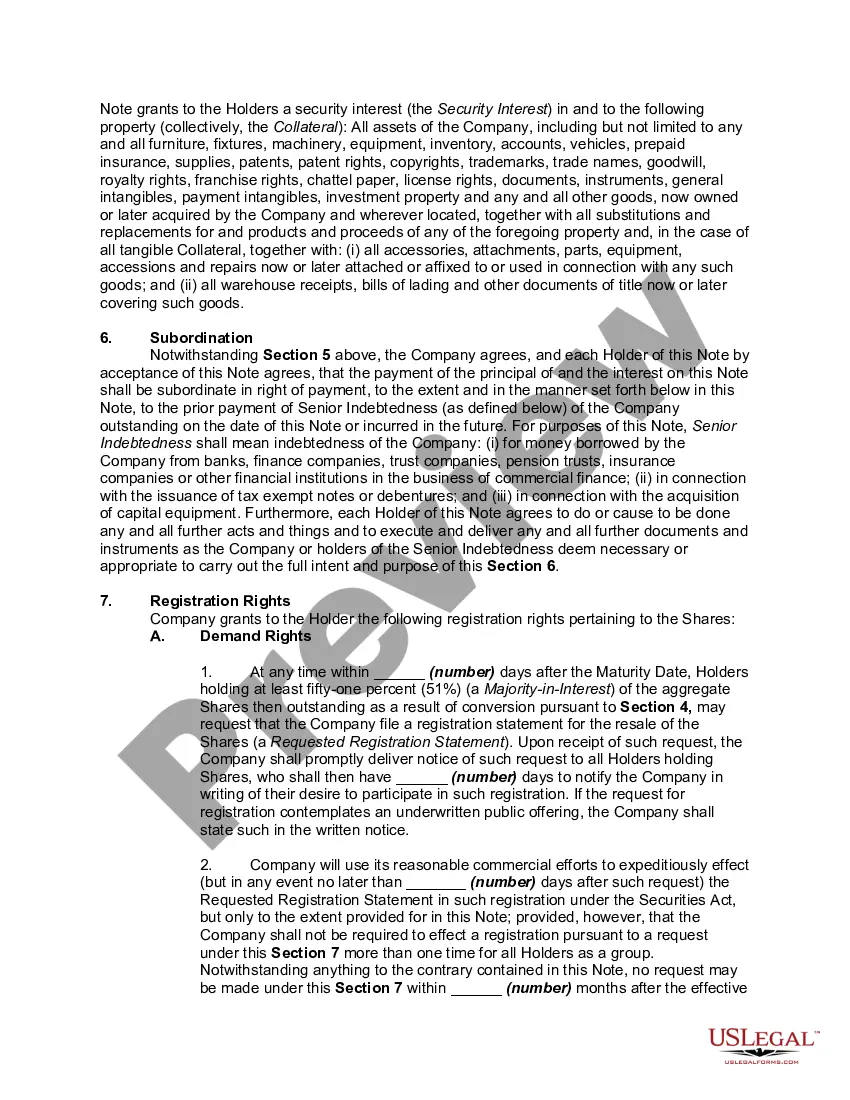
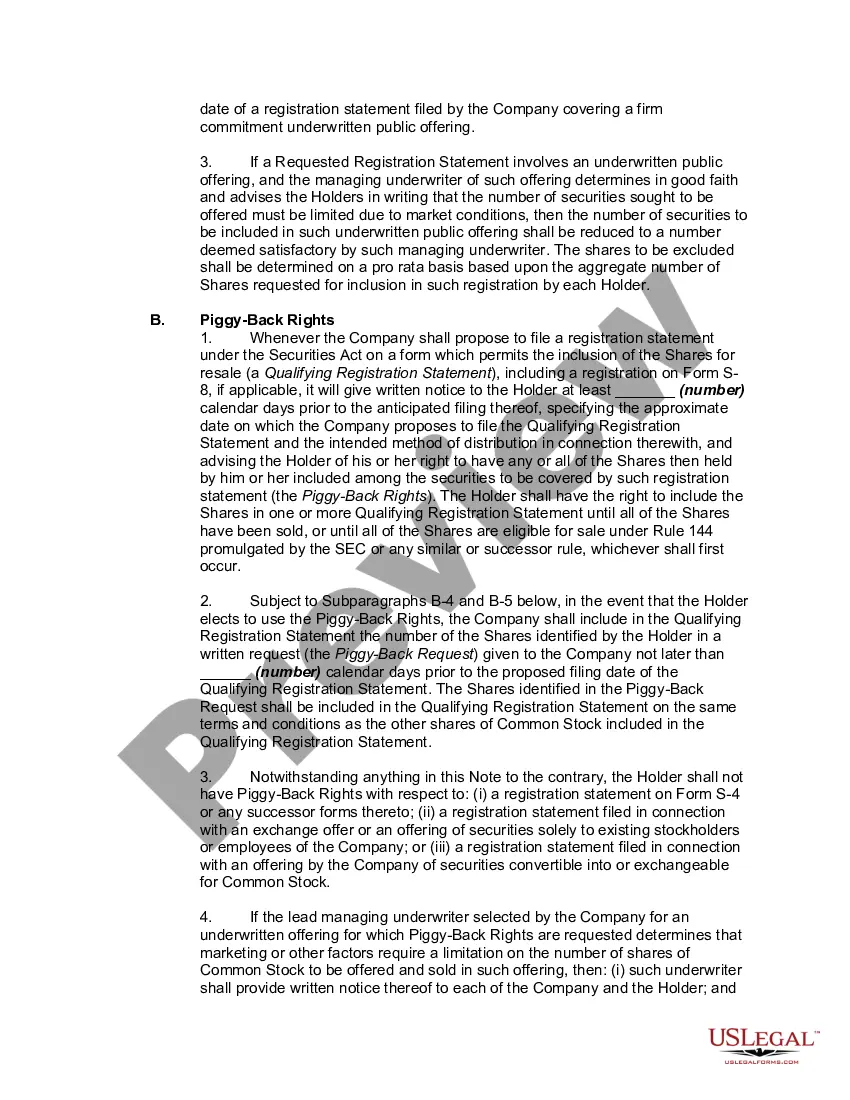
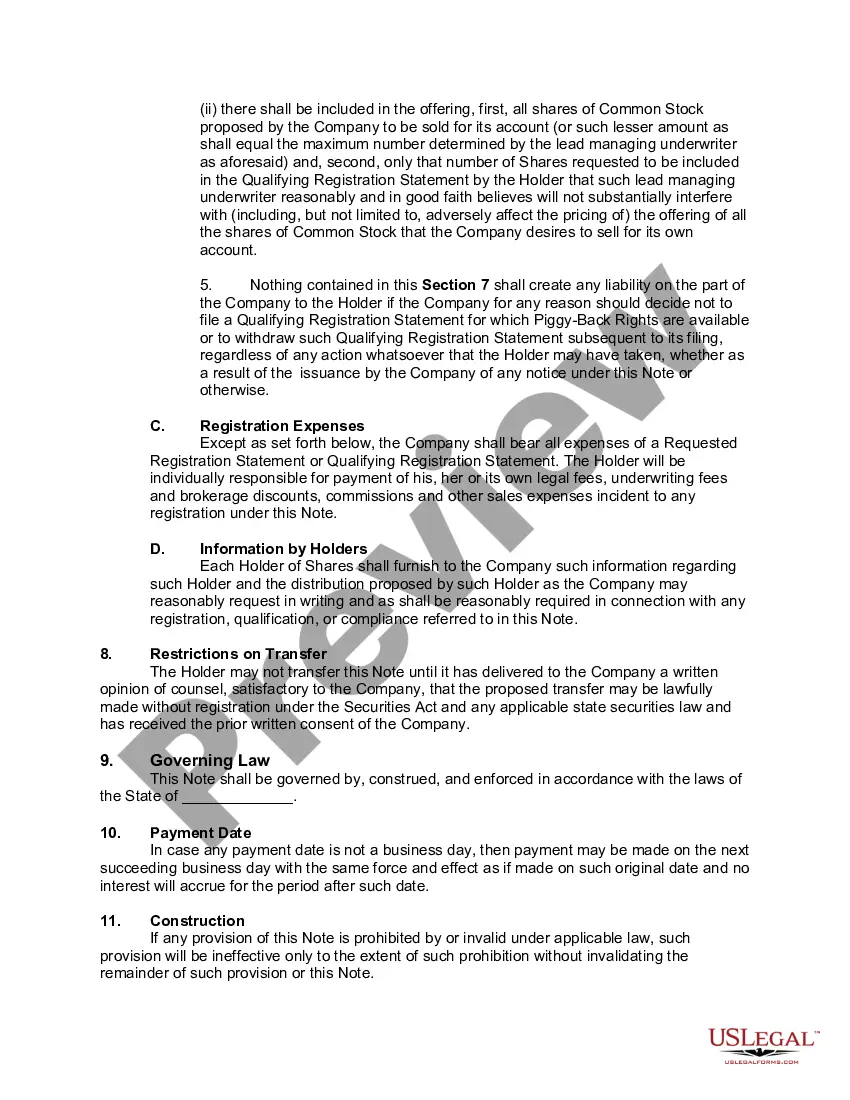
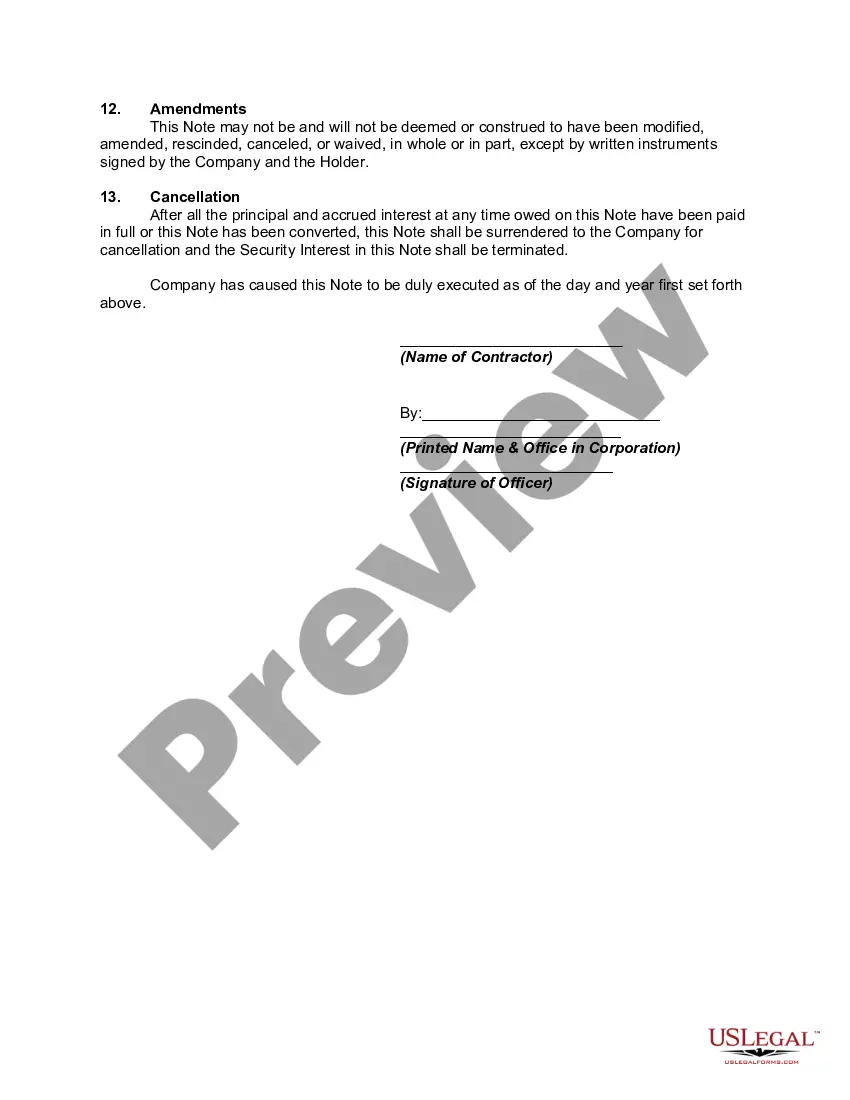
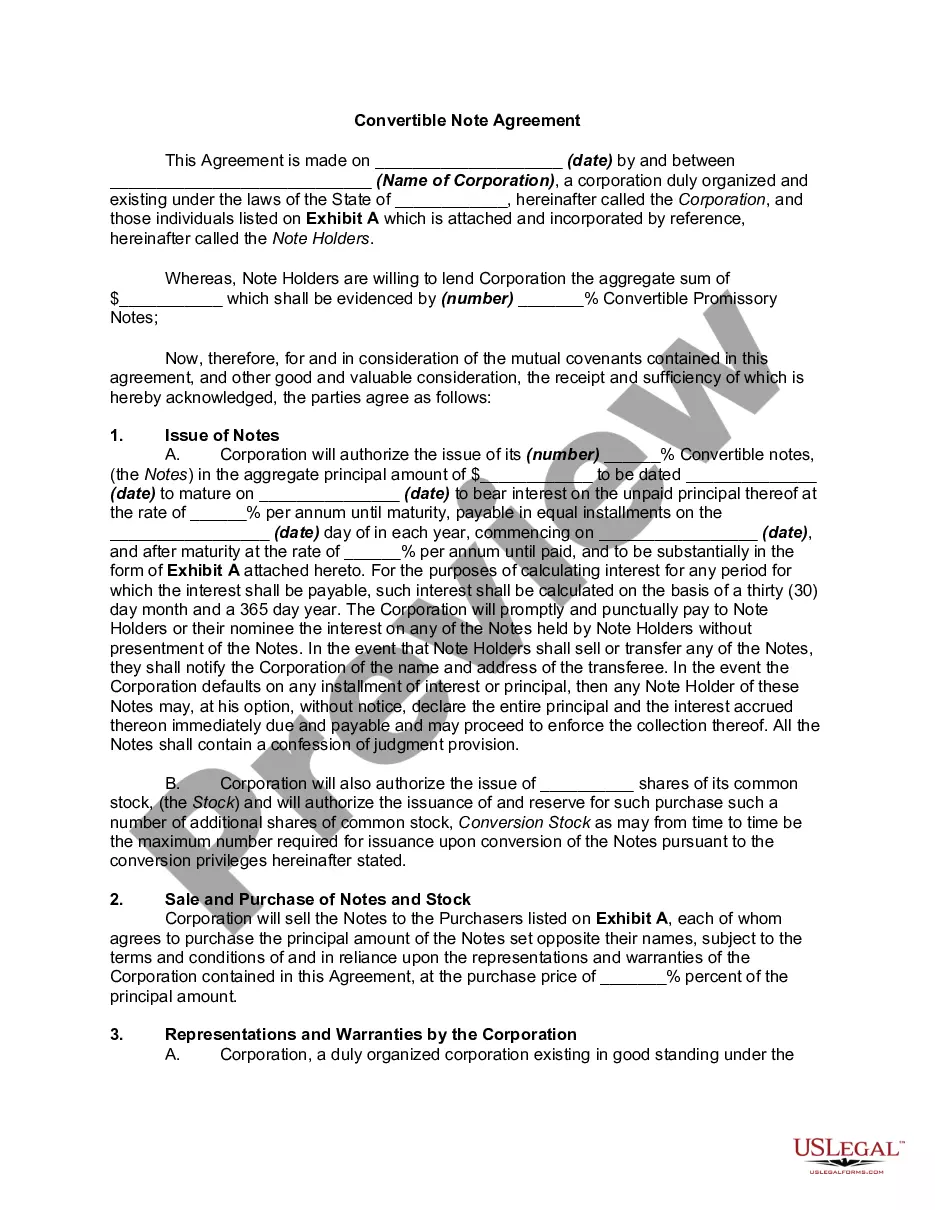
How to fill out Convertible Promissory Note By Corporation - One Of Series Of Notes Issued Pursuant To Convertible Note Purchase Agreement?
Managing legal documents can be daunting, even for the most seasoned professionals.
If you're looking for a Promissory Notes Issued Form With Irs and lack the time to invest in finding the right and current version, the process can be stressful.
US Legal Forms meets all your requirements, whether for personal or business documents, all in one place.
Utilize advanced tools to complete and manage your Promissory Notes Issued Form With Irs.
Here are the steps to follow after acquiring the form you need: Confirm it is the right form by previewing and reading its description, ensure that the sample is valid in your state or county, click Buy Now when ready, select a monthly subscription plan, choose your preferred format, and Download, complete, sign, print, and send your document. Enjoy the US Legal Forms online library, backed by 25 years of expertise and dependability. Transform your daily document management into a seamless and user-friendly experience today.
- Access a repository of articles, guides, and materials pertinent to your situation and needs.
- Save time and effort searching for the necessary documents by using US Legal Forms’ sophisticated search and Preview feature to find Promissory Notes Issued Form With Irs and obtain it.
- If you have a subscription, Log Into your US Legal Forms account, search for the form, and download it.
- Check the My documents tab to view the documents you've previously downloaded and manage your folders as you wish.
- If this is your first experience with US Legal Forms, create an account to gain unlimited access to all platform benefits.
- A comprehensive online form repository can be transformative for anyone aiming to navigate these matters effectively.
- US Legal Forms stands as a frontrunner in online legal documents, offering over 85,000 state-specific legal forms available whenever you need.
- With US Legal Forms, you can access a wide range of legal and business forms tailored to your state or county.
Form popularity
FAQ
To fill out the 1099-INT form, start by entering your information as the payer and the recipient's details. Include the interest payments made, and ensure you accurately report any amounts related to promissory notes. Using a promissory notes issued form with the IRS can simplify this process and ensure you adhere to tax reporting requirements.
A 1098 form is typically sent by lenders to report mortgage interest payments that you made during the year. If you have a promissory note related to your mortgage, the lender will provide this form. Understanding your promissory notes issued form with the IRS can clarify how these payments impact your tax filings.
The $600 rule stipulates that any individual or business that pays $600 or more in a year must report that payment to the IRS. This applies to various types of income, including interest from promissory notes. Keeping proper records and utilizing a promissory notes issued form with the IRS can help you navigate this requirement efficiently.
The tax form for a promissory note typically depends on the nature of the note. If you are receiving interest from a promissory note, you may need to report this on IRS Form 1099-INT. Using a promissory notes issued form with the IRS can help streamline your reporting process and ensure compliance with tax regulations.
To write a note to the IRS, start by clearly stating your purpose for contacting them. Include your name, address, and taxpayer identification number for identification. If your note concerns a promissory note issued form with the IRS, be specific about the details related to that form to ensure clarity.
On Form 1099-OID, report the qualified stated interest in box 2 and the OID in box 1, 8, or 11, as applicable. You may choose to report the interest on Form 1099-INT and the OID on Form 1099-OID.
Box 1 ? Original issue discount Scroll down to the Form 1099-INT section. Enter the reported income in Banks, Savings, and Loans, Credit Unions, etc. If the amount reported on Box 1 is more or less than the actual amount of Original Issue Discount enter any needed adjustments in Original Issue Discount (OID).
Names of all Parties Involved ? Such a document must include the names of the payee, drawee, and holder. Address and Contact Details ? Should include the residential address and phone number of all parties involved. Promissory Note Amount ? It must show the sum that is outstanding and must be repaid as per the note.
At its most basic, a promissory note should include the following things: Date. Name of the lender and borrower. Loan amount. Whether the loan is secured or unsecured. If it's secured with collateral: What is the collateral? ... Payment amount and frequency. Payment due date. Whether the loan has a cosigner, and if so, who.
In general, your tax-exempt stated interest should be shown in box 8 of Form 1099-INT or, for a tax-exempt OID bond, in box 2 of Form 1099-OID, and your tax-exempt OID should be shown in box 11 of Form 1099-OID. Enter the total on line 2a of your Form 1040 or 1040-SR.