Convertible Note Benefits
Description
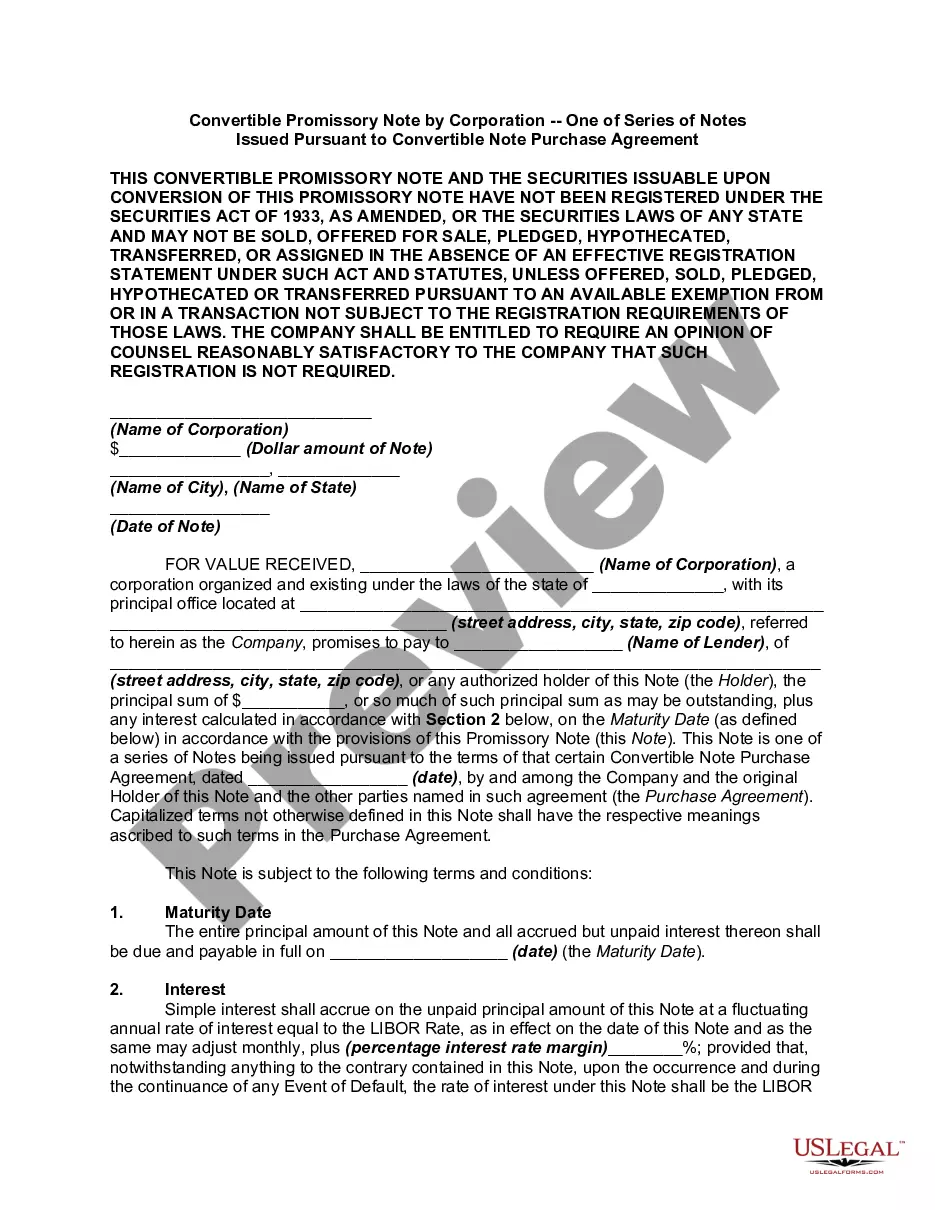
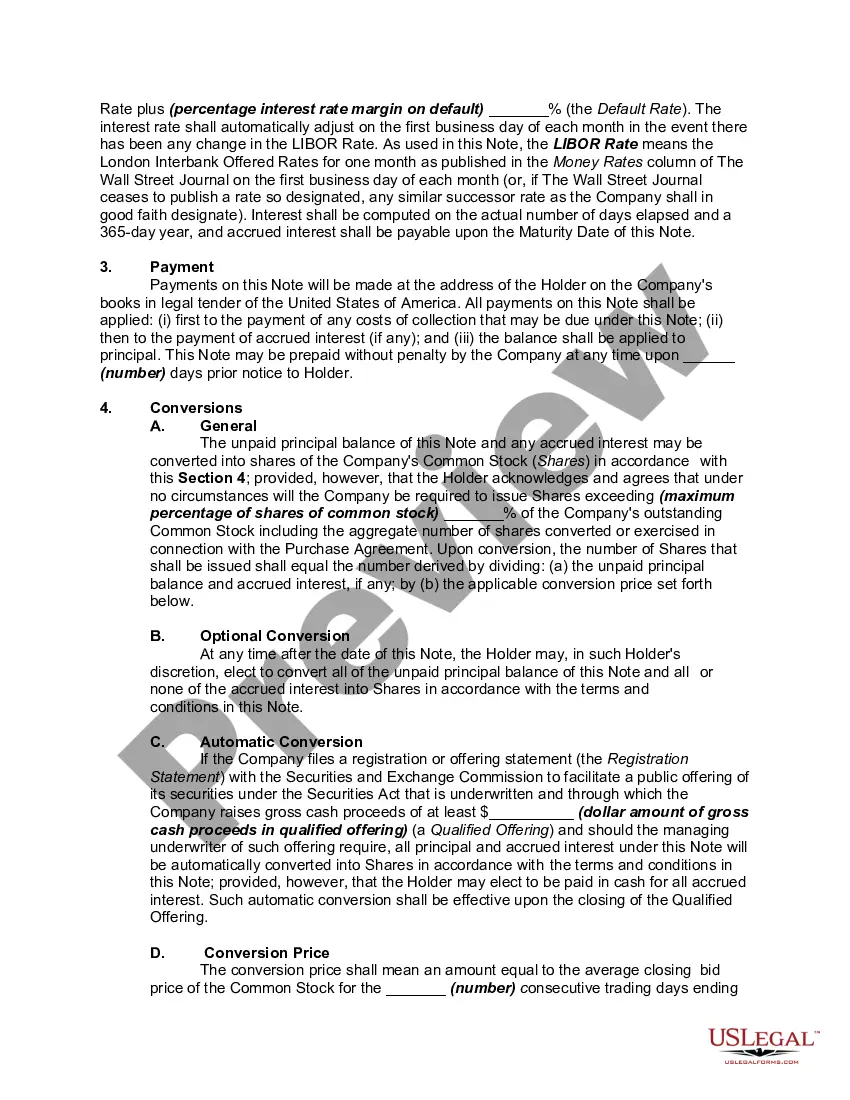
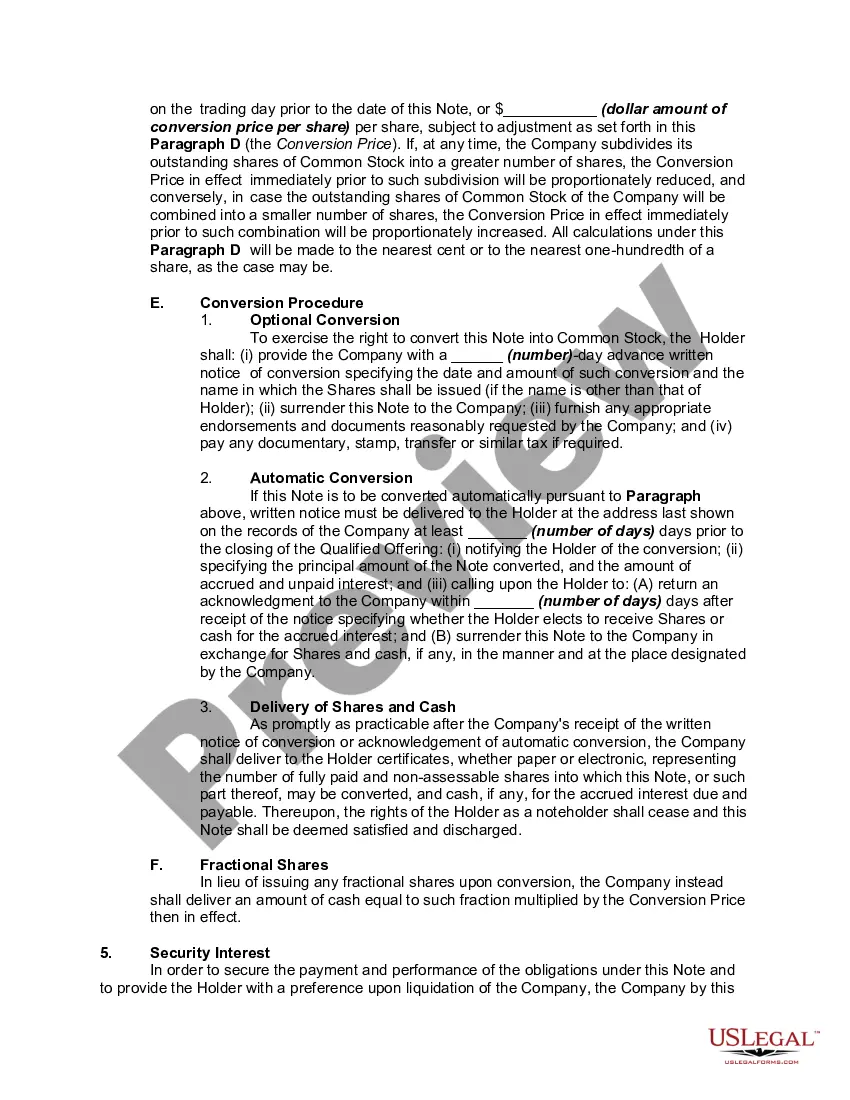
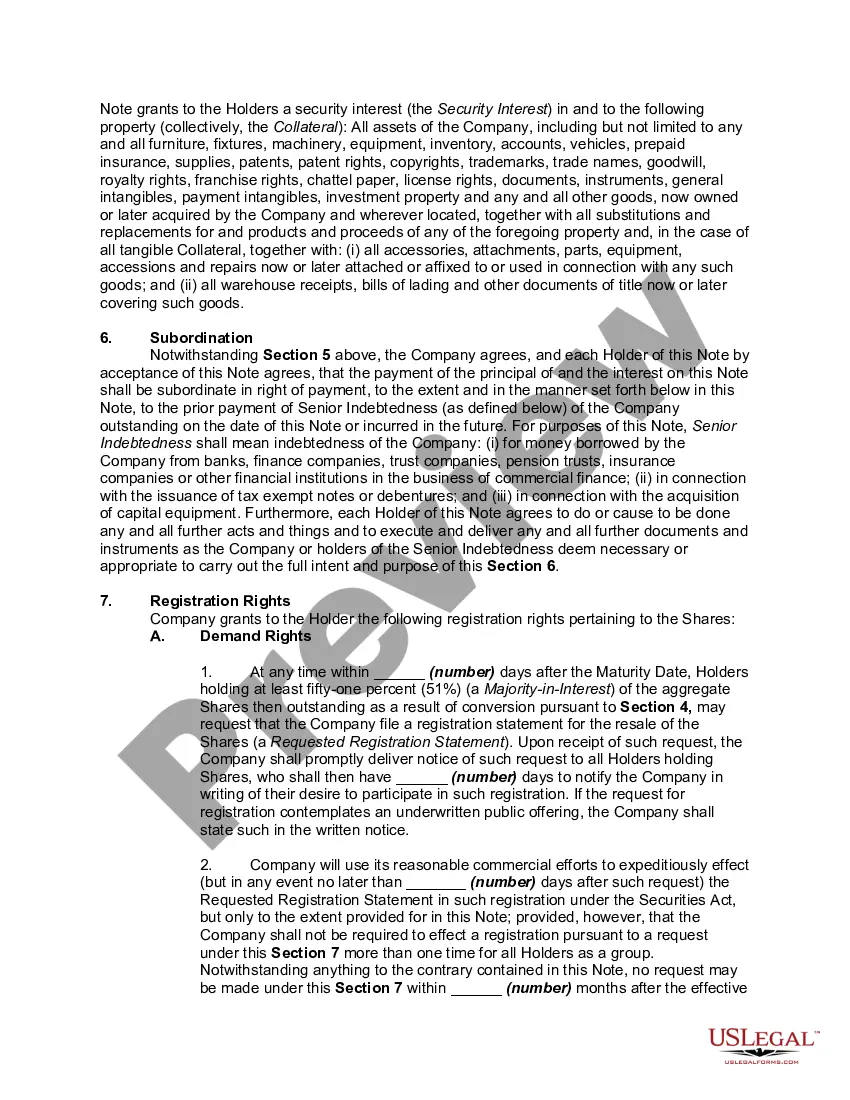
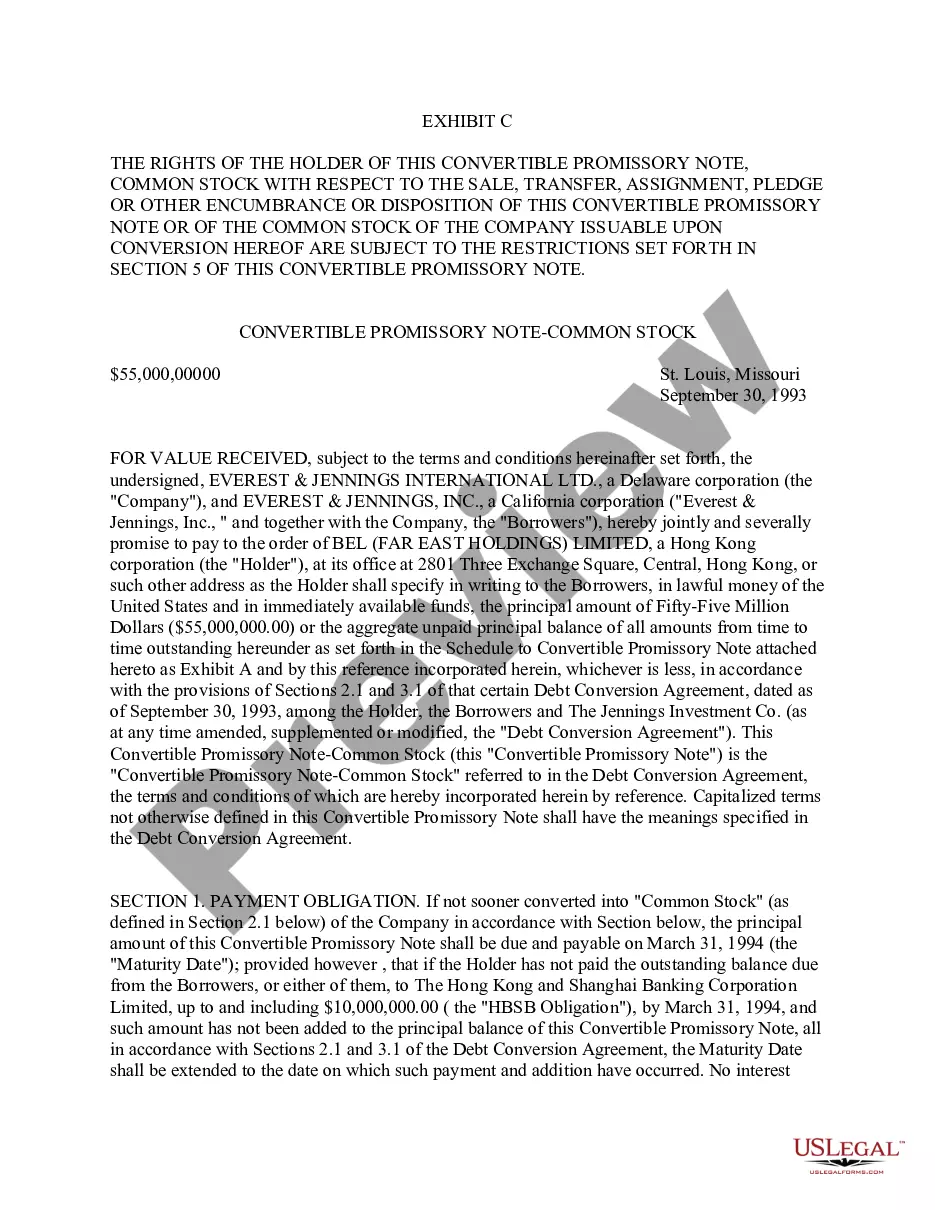
Get your form ready online
Our built-in tools help you complete, sign, share, and store your documents in one place.
Make edits, fill in missing information, and update formatting in US Legal Forms—just like you would in MS Word.
Download a copy, print it, send it by email, or mail it via USPS—whatever works best for your next step.
Sign and collect signatures with our SignNow integration. Send to multiple recipients, set reminders, and more. Go Premium to unlock E-Sign.
If this form requires notarization, complete it online through a secure video call—no need to meet a notary in person or wait for an appointment.
We protect your documents and personal data by following strict security and privacy standards.

Make edits, fill in missing information, and update formatting in US Legal Forms—just like you would in MS Word.

Download a copy, print it, send it by email, or mail it via USPS—whatever works best for your next step.

Sign and collect signatures with our SignNow integration. Send to multiple recipients, set reminders, and more. Go Premium to unlock E-Sign.

If this form requires notarization, complete it online through a secure video call—no need to meet a notary in person or wait for an appointment.

We protect your documents and personal data by following strict security and privacy standards.
Looking for another form?
How to fill out Convertible Promissory Note By Corporation - One Of Series Of Notes Issued Pursuant To Convertible Note Purchase Agreement?
Locating a reliable source to obtain the latest and suitable legal templates is a significant part of dealing with bureaucracy.
Acquiring the appropriate legal documents requires precision and carefulness, which is why it is essential to obtain samples of Convertible Note Benefits solely from trustworthy providers, like US Legal Forms. An incorrect template will squander your time and hinder your current situation. With US Legal Forms, you have minimal concerns. You can access and review all the information regarding the document’s utility and relevance for your conditions and in your region or county.
Eliminate the hassle associated with your legal documentation. Explore the extensive US Legal Forms library to discover legal templates, assess their relevance to your situation, and download them instantly.
- Utilize the library navigation or search feature to find your template.
- Review the form’s details to confirm if it meets the requirements of your state and locality.
- Examine the form preview, if available, to ensure the template is truly the one you need.
- Return to the search and identify the appropriate document if the Convertible Note Benefits does not meet your needs.
- When you are confident regarding the form’s relevance, download it.
- If you are an authorized user, click Log in to verify and access your chosen forms in My documents.
- If you have yet to create an account, click Buy now to purchase the form.
- Select the pricing plan that aligns with your needs.
- Proceed to register to complete your transaction.
- Finalize your purchase by choosing a payment method (credit card or PayPal).
- Select the document format for downloading Convertible Note Benefits.
- After you have the form on your device, you may edit it with the editor or print it and fill it out manually.
Form popularity
FAQ
For example, if an investor holds a convertible note with a 20% discount and the next funding round values the shares at $10 each, the investor can convert their note into shares at $8 each. This discount effectively rewards the early investor for their risk, illustrating one of the significant convertible note benefits. By allowing an attractive entry point, it encourages more engagement from potential investors.
A convertible note is a type of short-term debt that converts into equity, typically during a future financing round. For instance, a startup may issue a $100,000 convertible note to an investor with a specified interest rate and a maturity date. Once the company raises its next round of funding, the note converts into shares of stock, benefiting both the investor and the company.
Whether convertible notes are good or bad often depends on individual circumstances. They can serve as a valuable financing tool for startups, offering several convertible note benefits, like capital access and delayed valuation. However, investors should consider their risk tolerance and the potential for dilution before committing. Ultimately, informed decisions based on careful evaluation are essential.
The benefits of convertible notes are significant for startups and investors alike. For startups, they provide an expedited way to secure funds without burdensome valuations. Investors, on the other hand, gain the potential for equity ownership and a discount, making these notes appealing. Therefore, understanding the convertible note benefits can help entrepreneurs and investors make informed decisions.
Convertible notes offer several advantages for both investors and companies. They simplify fundraising by postponing valuation discussions and can result in lower legal and administrative costs. Additionally, the flexible terms associated with convertible notes can foster positive investor relationships, enhancing the convertible note benefits for the business's growth.
Companies sell convertible notes to raise capital quickly while avoiding immediate ownership dilution. This financing method allows businesses to defer a formal valuation until a future investment round, which can be advantageous if they expect growth. Moreover, selling convertible notes provides an efficient way to secure funding while enjoying the convertible note benefits, like flexibility and investor incentives.
The average discount on a convertible note typically ranges from 10% to 30%. This discount serves as a reward for early investors, compensating them for taking higher risks. By providing a favorable conversion rate, companies can attract more investors, thereby enhancing the convertible note benefits for both parties involved.
Convertible notes come with certain disadvantages that investors should consider. One major drawback is the potential for dilution of ownership, as converting the notes into equity can reduce existing shareholders' stake. Additionally, if the company's valuation fails to increase as expected, investors may face challenges in recouping their investment. Understanding these drawbacks is essential to weighing the convertible note benefits.
Recording a convertible note on a balance sheet involves classifications that reflect its current status. Initially, it should be categorized under liabilities as a short-term or long-term debt, based on its terms. Once the note converts to equity, transfer the amount to the equity section. Utilizing resources like USLegalForms can simplify the process and ensure compliance.
Understanding how convertible notes are taxed is key to compliance and financial planning. Generally, the conversion of a convertible note to equity is not a taxable event for the issuing company. However, it can lead to taxes for investors when gains are realized. It’s advisable to seek professional guidance to fully grasp the convertible note benefits related to taxation.