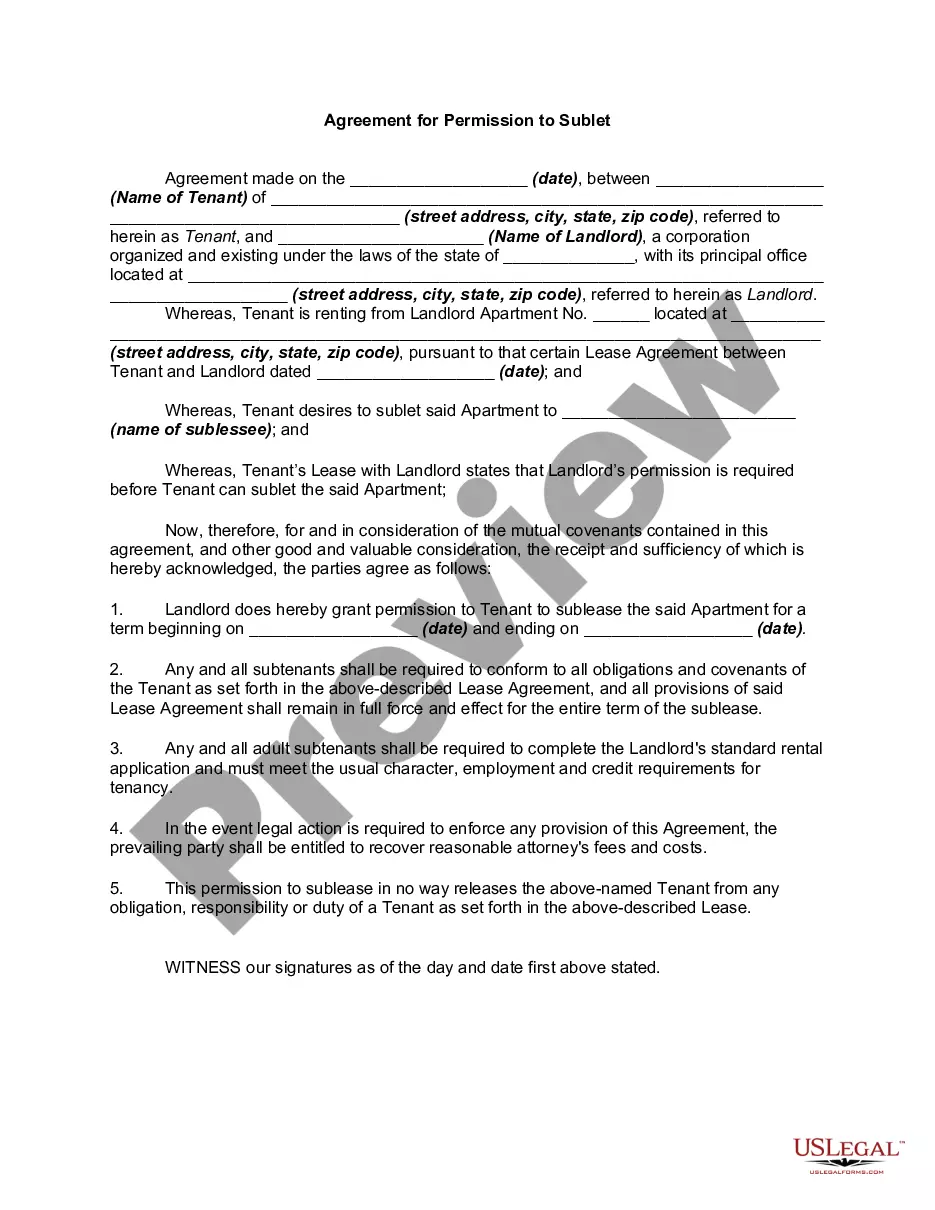
Sublet Renting Lease Format
Description
Get your form ready online
Our built-in tools help you complete, sign, share, and store your documents in one place.
Make edits, fill in missing information, and update formatting in US Legal Forms—just like you would in MS Word.
Download a copy, print it, send it by email, or mail it via USPS—whatever works best for your next step.
Sign and collect signatures with our SignNow integration. Send to multiple recipients, set reminders, and more. Go Premium to unlock E-Sign.
If this form requires notarization, complete it online through a secure video call—no need to meet a notary in person or wait for an appointment.
We protect your documents and personal data by following strict security and privacy standards.

Make edits, fill in missing information, and update formatting in US Legal Forms—just like you would in MS Word.

Download a copy, print it, send it by email, or mail it via USPS—whatever works best for your next step.

Sign and collect signatures with our SignNow integration. Send to multiple recipients, set reminders, and more. Go Premium to unlock E-Sign.

If this form requires notarization, complete it online through a secure video call—no need to meet a notary in person or wait for an appointment.

We protect your documents and personal data by following strict security and privacy standards.
Looking for another form?




How to fill out Agreement For Permission To Sublet?
The Sublet Rental Agreement Template displayed on this page is a reusable legal document crafted by experienced attorneys in accordance with national and local regulations.
For over 25 years, US Legal Forms has supplied individuals, businesses, and lawyers with more than 85,000 validated, state-specific documents for various professional and personal situations. It’s the quickest, simplest, and most reliable method to acquire the necessary paperwork, as the service ensures optimal data protection and anti-virus safety.
Complete and sign the document. Print the template for manual completion. Alternatively, use a versatile online PDF editor to quickly and accurately fill out and sign your form with a legally-binding electronic signature. Download your documents again as needed. Reopen the My documents tab in your profile to redownload any previously acquired forms. Enroll in US Legal Forms to access authenticated legal templates for every situation in life.
- Search for the document you require and examine it.
- Browse through the file you searched and preview it or review the form description to verify it meets your criteria. If it does not, use the search bar to locate the correct one. Click Buy Now once you find the template you wish to obtain.
- Choose and Log In.
- Pick the pricing option that fits you and create an account. Use PayPal or a credit card for swift payment. If you already possess an account, Log In and verify your subscription to continue.
- Obtain the editable template.
- Select the format you prefer for your Sublet Rental Agreement Template (PDF, Word, RTF) and save the sample onto your device.
Form popularity
FAQ
Drafting a sublease contract in Germany Names of the main tenant and the subtenant. The exact description of the apartment (address, floor) Start and end date of the lease. The subrent to be paid and any additional charges (e.g. for internet, water, energy)
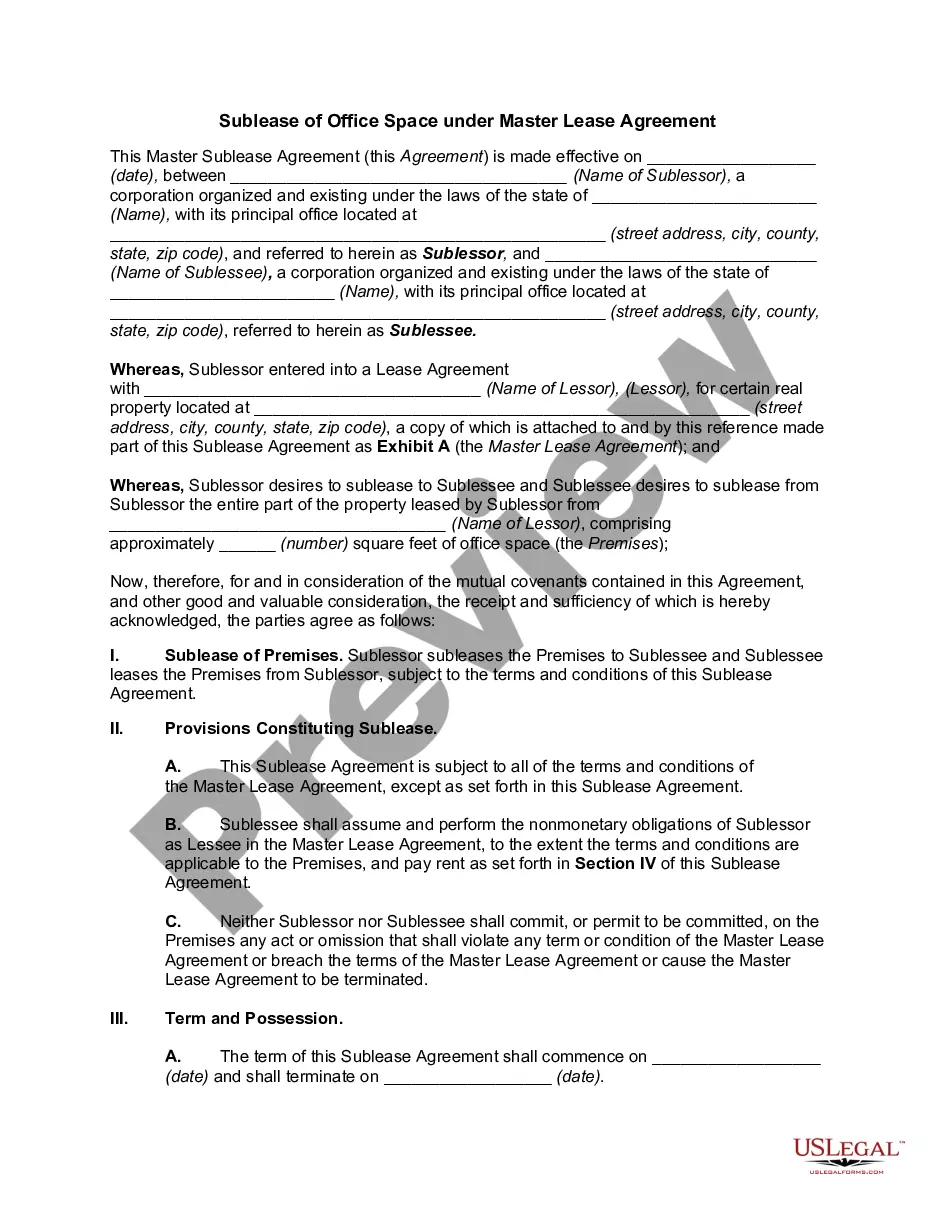
A sublease is the legal transfer of tenancy from an existing tenant to a third party for a specified period. The owner of the real estate must typically approve any subletting arrangement offered by the first tenant, subject to local laws and regulations.
As a tenant of an apartment, you must always obtain permission to sublet from your landlord. This permission is required by law for full and also partial subletting of living space (§ 540 BGB).
To allow someone to rent all or part of a house or other building that you are renting from someone else: Our rental contract states that we are not allowed to sublet the house. The tenant cannot sublet without the owner's permission and cannot charge more than the regulated rent.
The Supreme Court further stated, ?Subletting, assigning or otherwise parting with the possession of the whole or any part of the tenancy premises, without obtaining the consent in writing of the landlord, is not permitted and if done, the same provides a ground for eviction of the tenant by the landlord?.