Releasing Medical Information Without Consent
Description
Get your form ready online
Our built-in tools help you complete, sign, share, and store your documents in one place.
Make edits, fill in missing information, and update formatting in US Legal Forms—just like you would in MS Word.
Download a copy, print it, send it by email, or mail it via USPS—whatever works best for your next step.
Sign and collect signatures with our SignNow integration. Send to multiple recipients, set reminders, and more. Go Premium to unlock E-Sign.
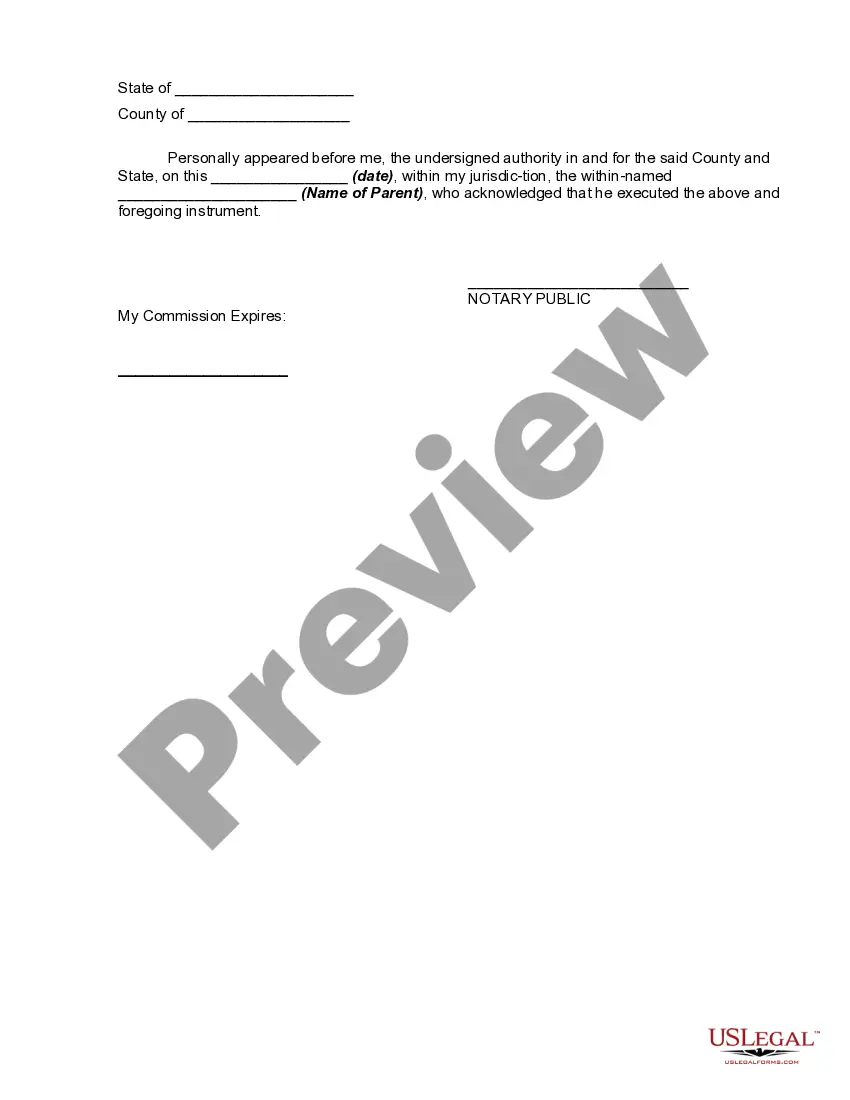
If this form requires notarization, complete it online through a secure video call—no need to meet a notary in person or wait for an appointment.
We protect your documents and personal data by following strict security and privacy standards.

Make edits, fill in missing information, and update formatting in US Legal Forms—just like you would in MS Word.

Download a copy, print it, send it by email, or mail it via USPS—whatever works best for your next step.

Sign and collect signatures with our SignNow integration. Send to multiple recipients, set reminders, and more. Go Premium to unlock E-Sign.

If this form requires notarization, complete it online through a secure video call—no need to meet a notary in person or wait for an appointment.

We protect your documents and personal data by following strict security and privacy standards.
Looking for another form?
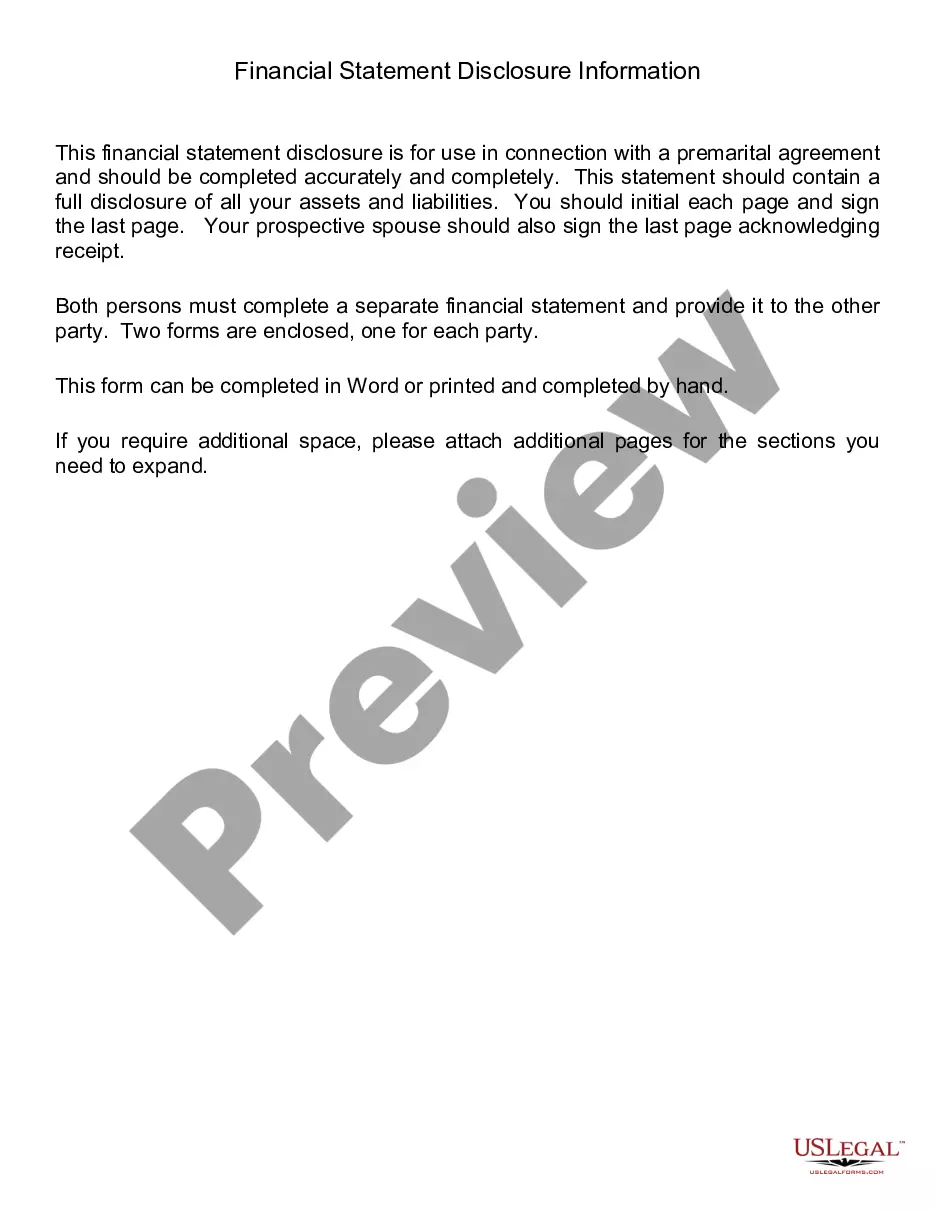
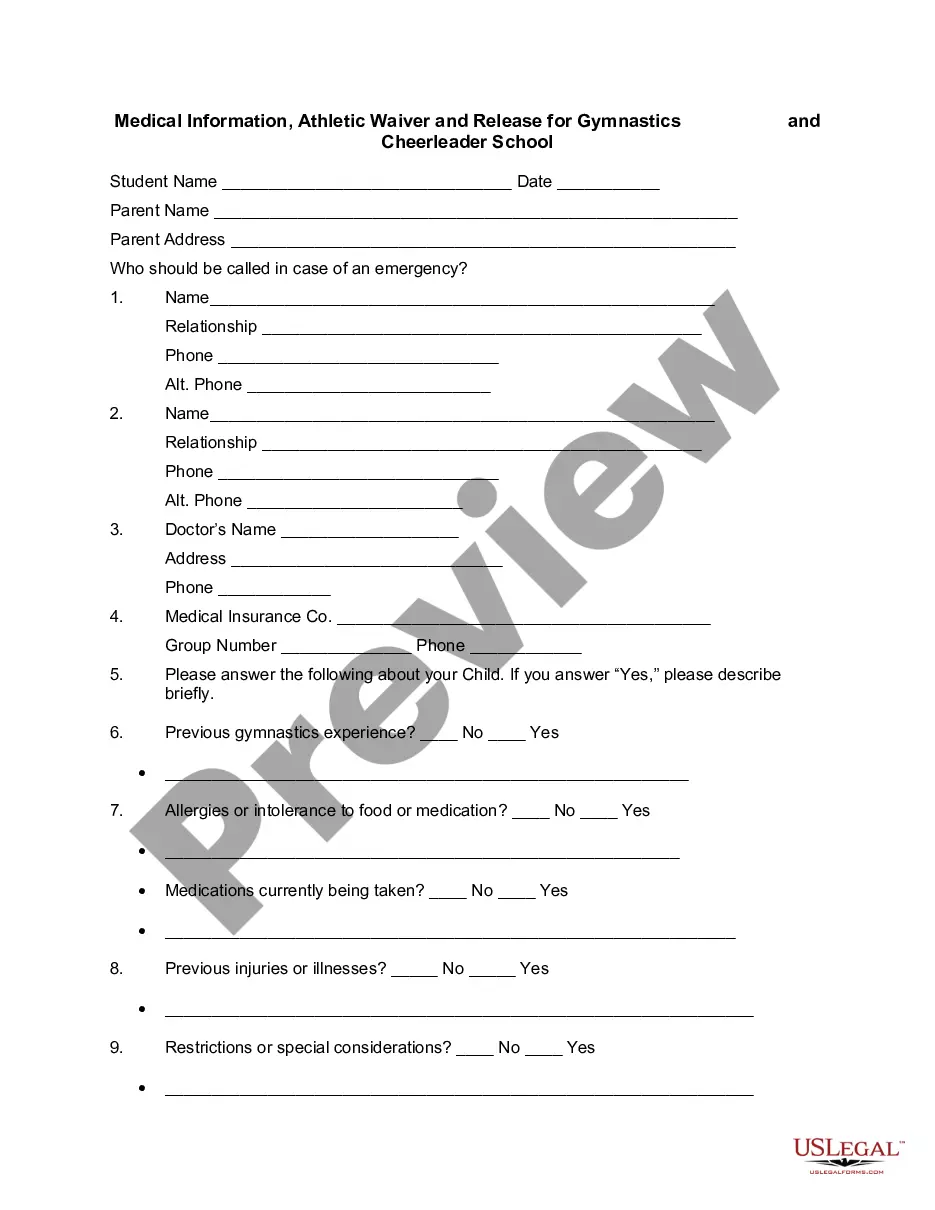
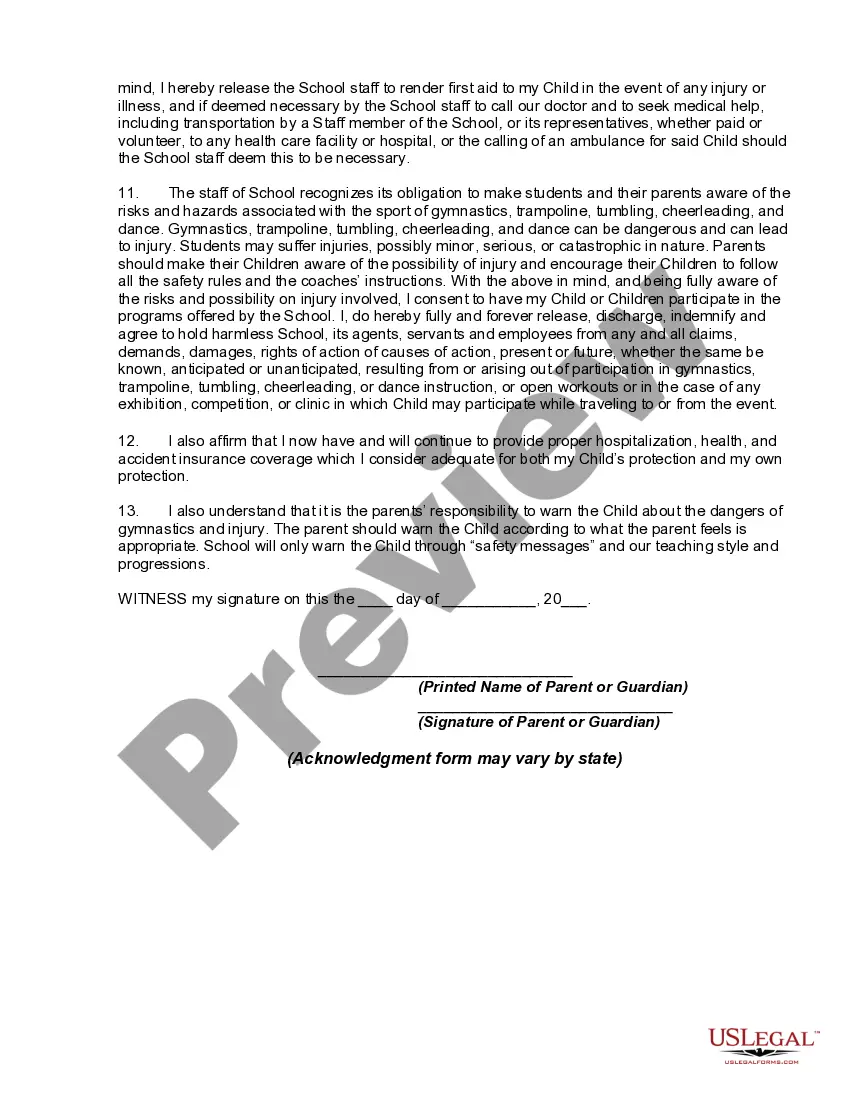
How to fill out Medical Information, Athletic Waiver And Release For Gymnastics And Cheerleader School?
Accessing legal document samples that adhere to federal and state regulations is essential, and the internet provides numerous options to select from.
However, what’s the purpose of spending time looking for the appropriate Releasing Medical Information Without Consent sample online if the US Legal Forms digital library already has these templates compiled in one location.
US Legal Forms is the largest online legal repository with over 85,000 fillable templates created by attorneys for any professional or personal circumstance.
Utilize the most comprehensive and user-friendly legal documentation service!
- They are easy to navigate with all documents organized by state and intended use.
- Our specialists stay current with legislative changes, so you can always rely on your form to be current and compliant when obtaining a Releasing Medical Information Without Consent from our site.
- Acquiring a Releasing Medical Information Without Consent is quick and straightforward for both existing and new users.
- If you already possess an account with an active subscription, sign in and download the document sample you need in the appropriate format.
- If you are unfamiliar with our website, please follow the steps below.
Form popularity
FAQ
Generally, releasing medical information without consent is not allowed under the Health Insurance Portability and Accountability Act (HIPAA). However, there are certain exceptions, such as in cases of medical emergencies or when required by law. It's essential to be aware of who has access to your medical records and the circumstances that might permit access without your approval. At US Legal Forms, we provide robust resources to help you navigate your rights concerning medical records.
Yes, you can potentially sue someone for exposing your medical information without permission, depending on the circumstances and laws of your state. Breaches of privacy can lead to legal action if it results in harm or damages. However, outcomes may vary, so consulting a legal expert is often wise when considering the implications of releasing medical information without consent.
In Louisiana, the law protects medical records under various statutes, requiring healthcare providers to maintain confidentiality. Patients generally have rights regarding their medical records, including access and control over disclosures. When considering releasing medical information without consent in Louisiana, understanding state laws and regulations is crucial to ensure compliance.
Yes, in certain situations, medical information can be shared without consent. For instance, healthcare providers may need to disclose information to comply with legal obligations or to prevent serious threats to health and safety. However, it is essential to navigate these circumstances carefully to ensure compliance when releasing medical information without consent.
Under HIPAA regulations, some medical information may be shared without consent for specific purposes, such as treatment, payment, and healthcare operations. Additionally, disclosures for public health activities or to law enforcement might be permissible. It is important to understand what qualifies as appropriate sharing to avoid issues when releasing medical information without consent.
In the United States, sharing someone's medical information without their consent can be illegal, particularly if it violates federal or state regulations. Releasing medical information without consent may breach confidentiality agreements and result in legal repercussions. However, certain exceptions exist, such as for public health concerns or when required by law.
Yes, certain circumstances allow information to be shared without patient consent. For example, healthcare providers may disclose information for public health reporting or legal investigations. Additionally, sharing may be necessary in emergency situations to provide critical care. Understanding these exceptions helps clarify the nuances of releasing medical information without consent, ensuring compliance with legal requirements.
To fill out an authorization for release of information, start by clearly identifying the patient by including their name, date of birth, and other identifiers. Next, specify the types of information you wish to release, such as medical records or surgical reports. Make sure to include the recipient's details, indicating who will receive this information. Once completed, sign and date the authorization to ensure it meets requirements, especially if you are considering releasing medical information without consent.
You can release patient information without consent in various situations, including emergency situations, legal proceedings, and threats to public safety. Situations such as a medical emergency or a court order often necessitate this action. It's important to be aware of the regulations that govern releasing medical information without consent to avoid potential legal repercussions. For additional guidance, uslegalforms can provide comprehensive resources and templates to navigate these complexities.
Three common reasons for releasing medical information without consent include legal requirements, public health concerns, and emergencies. For example, healthcare providers may be required to report certain diseases to control outbreaks, or they may need to share information in life-threatening situations. Understanding these reasons clarifies the boundaries of releasing medical information without consent and helps protect patient rights.