Beneficiary Estate Form With Answer
Description
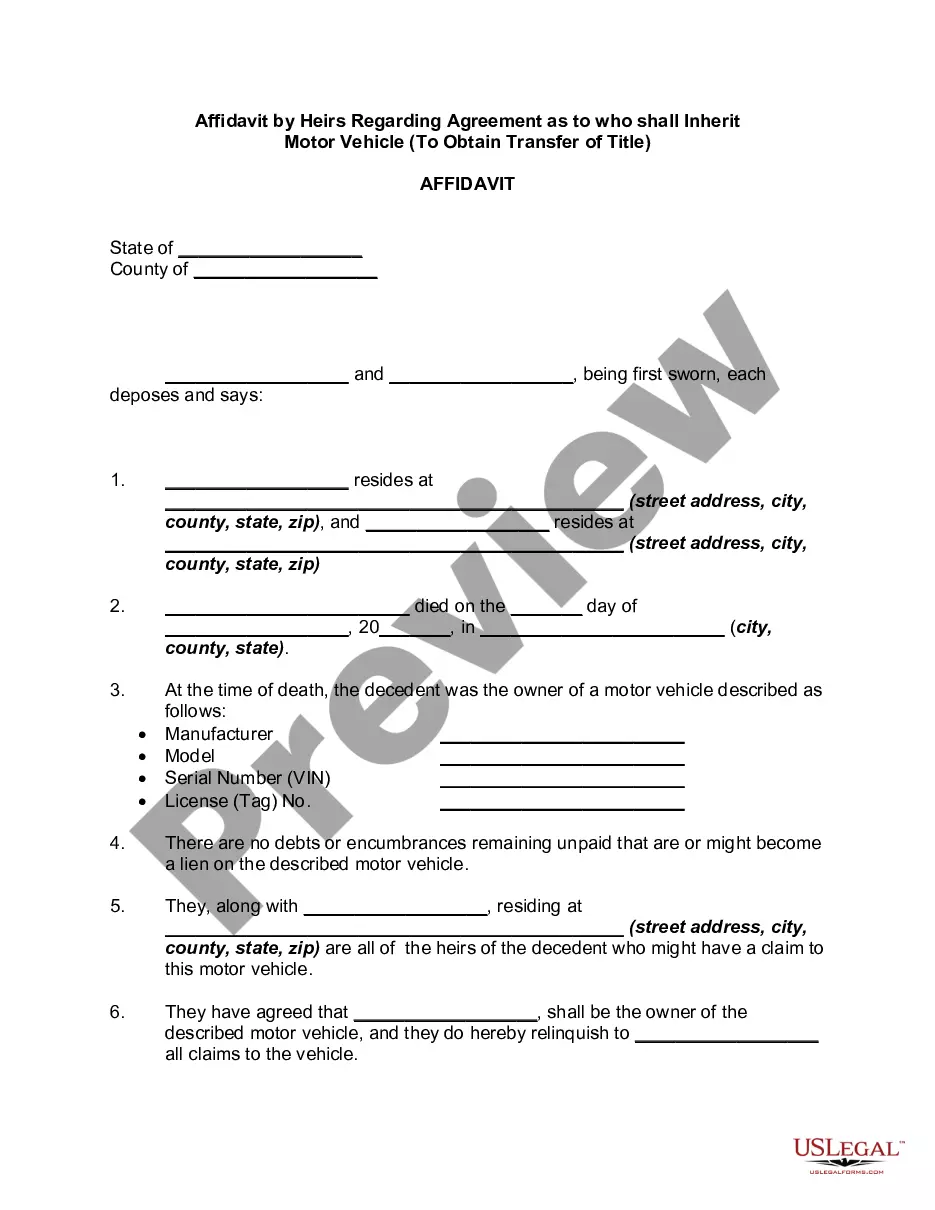






How to fill out Sworn Statement Of Beneficiary Of Estate And Consent To Close Estate - Uniform Probate Code?
Managing legal documents can be daunting, even for seasoned professionals.
When you're looking for a Beneficiary Estate Form With Answer but lack the time to search for the correct and updated version, the process can be stressful.
Access legal and business forms specific to your state or county. US Legal Forms caters to all your needs, whether for personal or organizational documentation, all in one place.
Utilize advanced tools to fill out and manage your Beneficiary Estate Form With Answer.
Here are the steps to follow after locating the form you need: Confirm it is the appropriate form by previewing it and reviewing its description. Make sure the template is valid in your state or county. Select Buy Now when you are ready. Choose a subscription plan. Select the format you require, and Download, complete, eSign, print, and submit your documents. Take advantage of the US Legal Forms online library, backed by 25 years of experience and reliability. Transform your document management into a seamless and user-friendly experience today.
- Access a valuable collection of articles, guidelines, and materials relating to your situation and requirements.
- Save time and effort in finding the necessary documents by using US Legal Forms’ advanced search and Review feature to locate the Beneficiary Estate Form With Answer and download it.
- If you have a subscription, Log In to your US Legal Forms account, search for the form, and download it.
- Check the My documents tab to view the documents you previously saved and manage your folders as desired.
- If you are new to US Legal Forms, register for an account and gain unlimited access to all the library's advantages.
- A comprehensive online form collection could revolutionize how individuals handle these situations.
- US Legal Forms stands as a frontrunner in online legal documents, offering over 85,000 state-specific legal forms accessible at your convenience.
- With US Legal Forms, you can.
Form popularity
FAQ
Spouse, partner, children, parents, brothers and sisters, business partner, key employee, trust and charitable organization.
A primary beneficiary is the first person you name to receive the proceeds from your insurance policy upon your death. You can designate 100% of the proceeds to one primary beneficiary or you can divide the proceeds among multiple primary beneficiaries.
When deciding upon beneficiaries, the more specific you are, the better. Describe beneficiaries by name instead of by group. For example, if you want all your children to inherit, name them individually. Stepchildren aren't beneficiaries unless they're specifically named in your will or other estate documents.
If you decide to have more than one beneficiary, you will allocate a percentage of the death benefit for each, so that the total allocation equals 100%. A simple example of this would be allocating 50% to your partner, and 25% to each of your two children, for a total of 100%.
Write the names of the first beneficiary(ies) you would like to receive your benefit after you die. You may name an individual(s), entity (such as a charity, business, religious organization, funeral home, etc.), trust, or estate. You may name more than one.