Confidentiality With Forensic Psychology
Description
Get your form ready online
Our built-in tools help you complete, sign, share, and store your documents in one place.
Make edits, fill in missing information, and update formatting in US Legal Forms—just like you would in MS Word.
Download a copy, print it, send it by email, or mail it via USPS—whatever works best for your next step.
Sign and collect signatures with our SignNow integration. Send to multiple recipients, set reminders, and more. Go Premium to unlock E-Sign.
If this form requires notarization, complete it online through a secure video call—no need to meet a notary in person or wait for an appointment.
We protect your documents and personal data by following strict security and privacy standards.

Make edits, fill in missing information, and update formatting in US Legal Forms—just like you would in MS Word.

Download a copy, print it, send it by email, or mail it via USPS—whatever works best for your next step.

Sign and collect signatures with our SignNow integration. Send to multiple recipients, set reminders, and more. Go Premium to unlock E-Sign.

If this form requires notarization, complete it online through a secure video call—no need to meet a notary in person or wait for an appointment.

We protect your documents and personal data by following strict security and privacy standards.
Looking for another form?

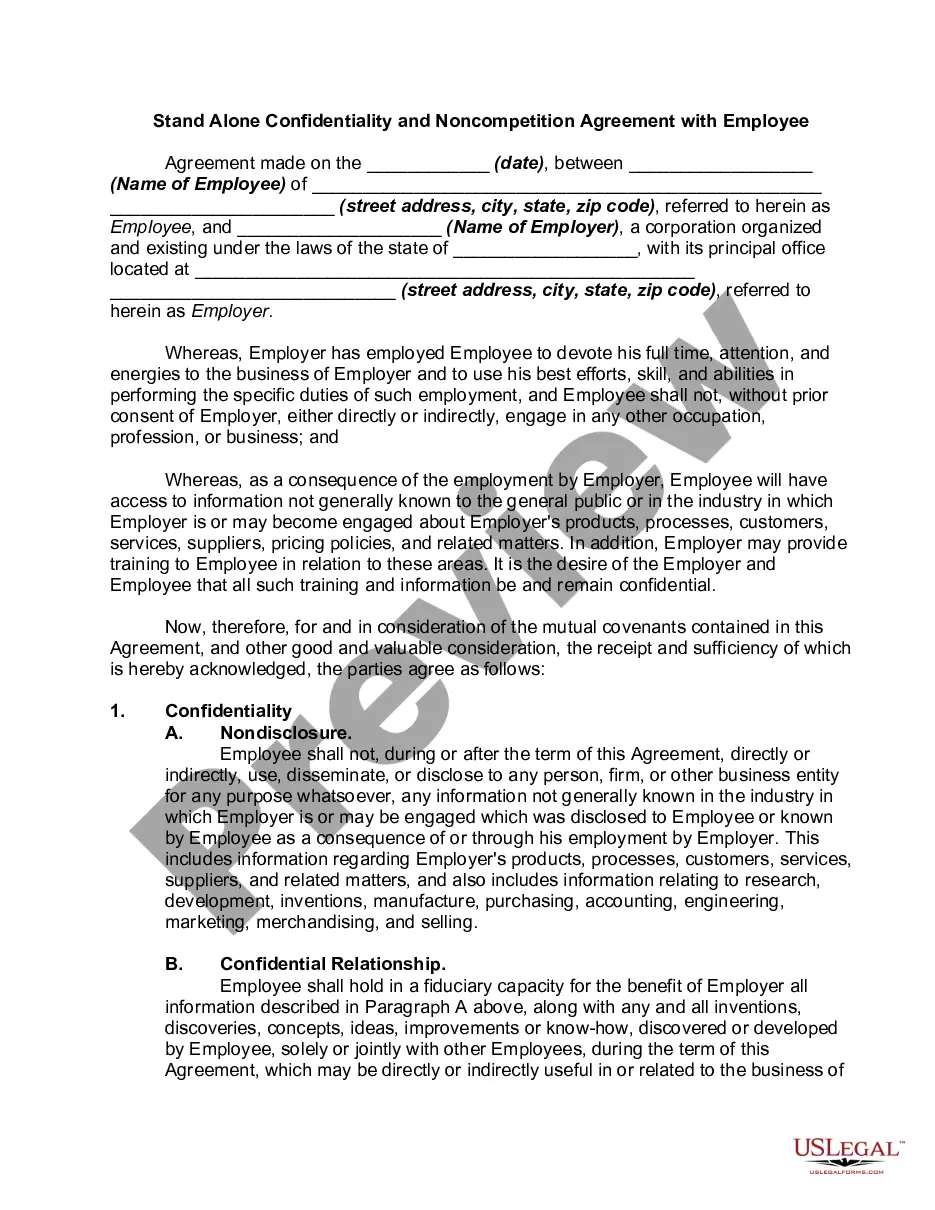
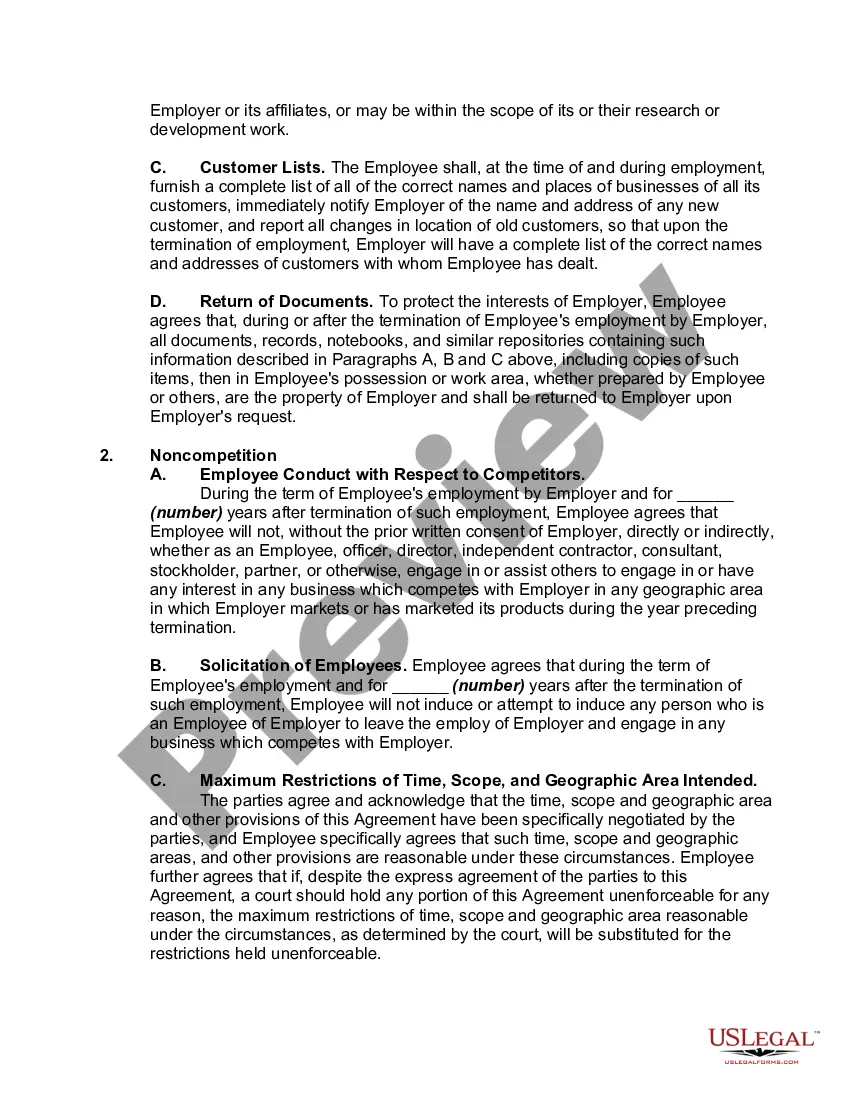
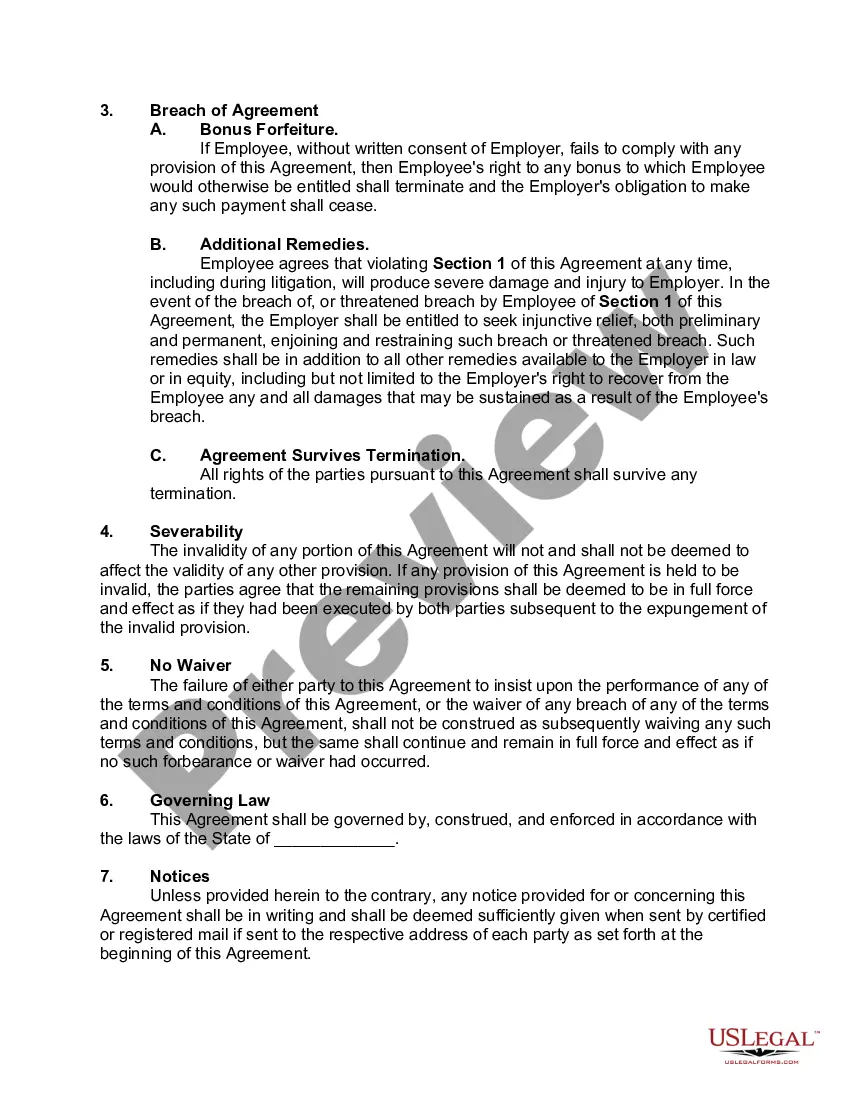
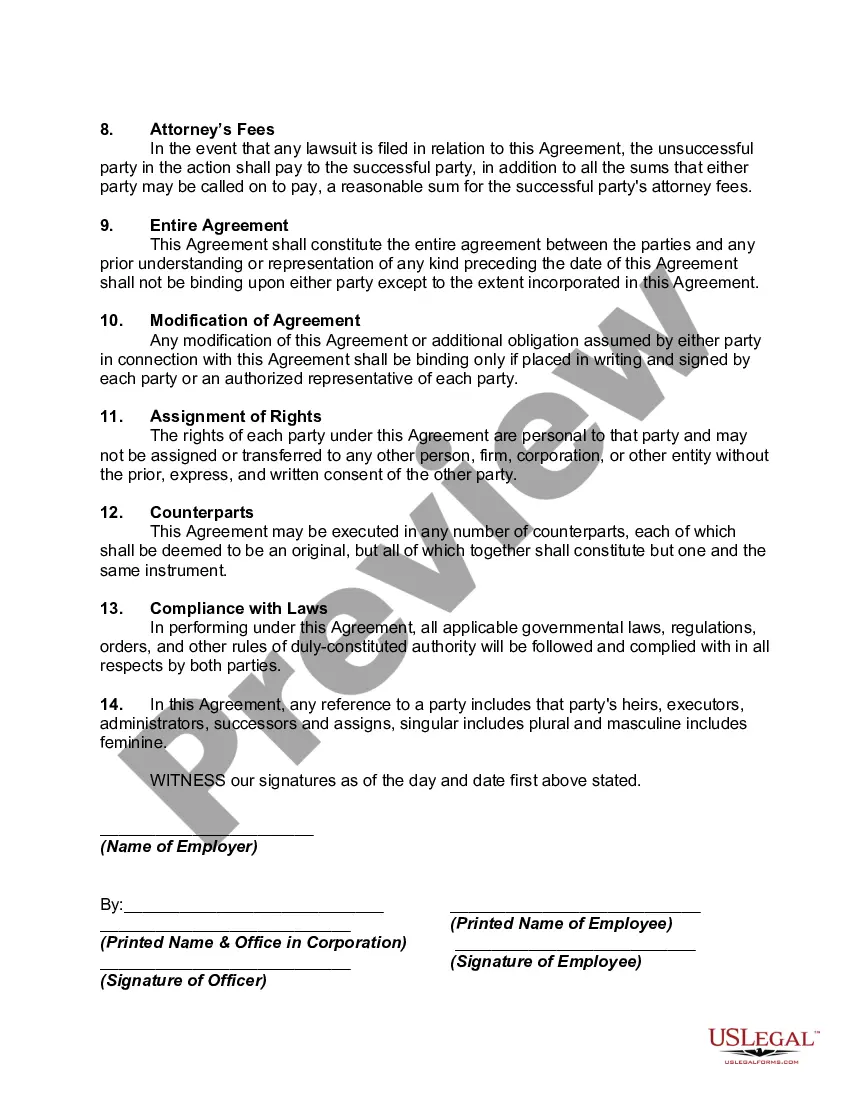
How to fill out Stand Alone Confidentiality And Noncompetition Agreement With Employee?
Whether for commercial reasons or for individual affairs, everyone must confront legal issues at some stage in their life.
Completing legal documents necessitates meticulous care, starting from selecting the appropriate form template.
Once saved, you can fill out the form using editing software or print it and complete it manually. With an extensive US Legal Forms collection available, you never have to waste time searching for the right sample online. Utilize the library’s straightforward navigation to discover the suitable form for any circumstance.
- Obtain the example you require by utilizing the search feature or catalog browsing.
- Examine the form’s details to ensure it corresponds with your situation, state, and locality.
- Click on the form’s preview to inspect it.
- If it is the wrong form, return to the search option to locate the Confidentiality With Forensic Psychology example you need.
- Download the template if it aligns with your requirements.
- If you already possess a US Legal Forms account, simply click Log in to access previously stored templates in My documents.
- In case you don’t have an account yet, you can acquire the form by clicking Buy now.
- Choose the appropriate pricing option.
- Complete the account registration form.
- Select your payment method: you can utilize a bank card or PayPal account.
- Choose the file format you desire and download the Confidentiality With Forensic Psychology.
Form popularity
FAQ
Forensic practitioners recognize their ethical obligations to maintain the confidentiality of information relating to a client or retaining party, except insofar as disclosure is consented to by the client or retaining party, or required or permitted by law (EPPCC Standard 4.01).
Consent should be obtained in writing and it is essential that the individual being evaluated understand fully the process of the evaluation, the role of the evaluator, the limits of confidentiality, and the differences between a forensic evaluation and treatment.
What is a Forensic Evaluation? Forensic psychologists conduct a forensic psychological evaluation, which will include a thorough clinical interview, comprehensive review of records, case law, collateral data, and psychological tests.
Inform the participants about the purpose of the research, the anticipated duration of the study, and the procedures that will be used. Tell participants that they have the right to decline to participate in the study. They also must know that they can withdraw from the experiment at any time.
Forensic psychology reports typically begin a first section with introductory and contextual information about the assessment?the evaluee (name, age, gender, etc.), evaluator (name, qualifications, location of assessment), purpose of the evaluation and, if a criminal matter, what the defendant is alleged to have done.