What Is The Punishment For Trespassing
Description
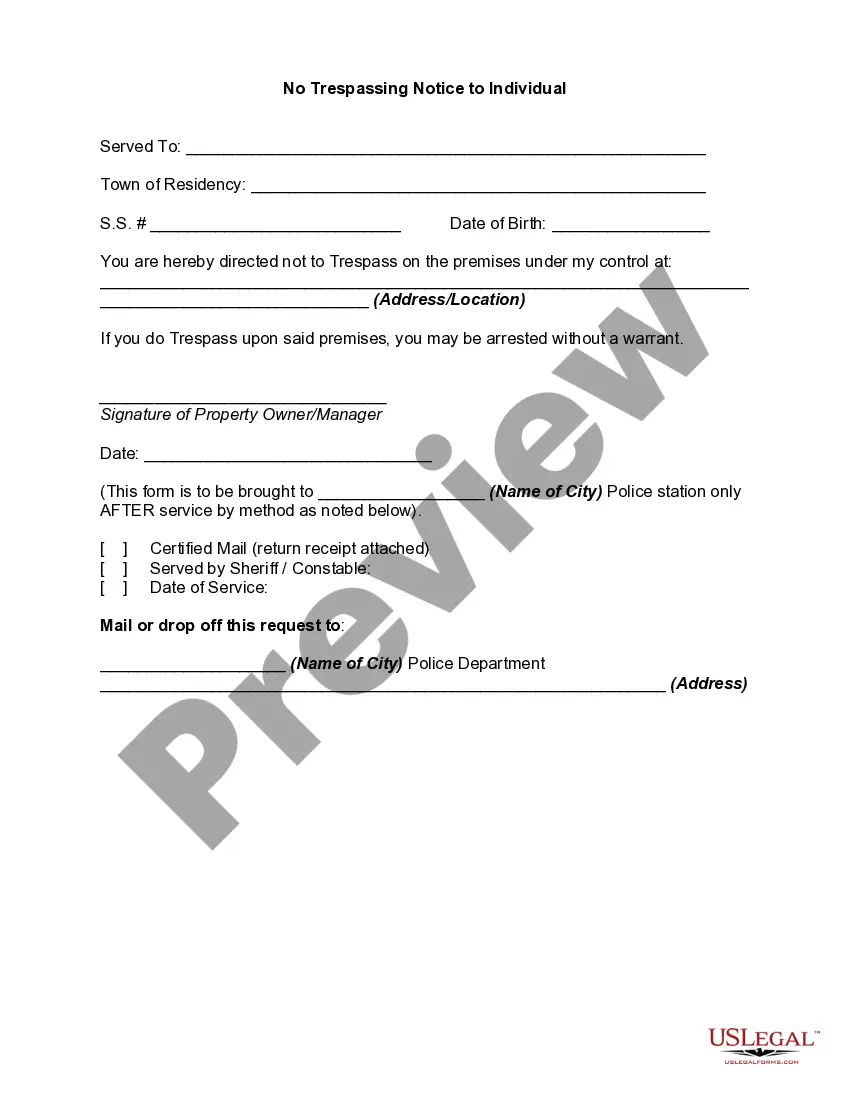
Get your form ready online
Our built-in tools help you complete, sign, share, and store your documents in one place.
Make edits, fill in missing information, and update formatting in US Legal Forms—just like you would in MS Word.
Download a copy, print it, send it by email, or mail it via USPS—whatever works best for your next step.
Sign and collect signatures with our SignNow integration. Send to multiple recipients, set reminders, and more. Go Premium to unlock E-Sign.
If this form requires notarization, complete it online through a secure video call—no need to meet a notary in person or wait for an appointment.
We protect your documents and personal data by following strict security and privacy standards.

Make edits, fill in missing information, and update formatting in US Legal Forms—just like you would in MS Word.

Download a copy, print it, send it by email, or mail it via USPS—whatever works best for your next step.

Sign and collect signatures with our SignNow integration. Send to multiple recipients, set reminders, and more. Go Premium to unlock E-Sign.

If this form requires notarization, complete it online through a secure video call—no need to meet a notary in person or wait for an appointment.

We protect your documents and personal data by following strict security and privacy standards.
Looking for another form?

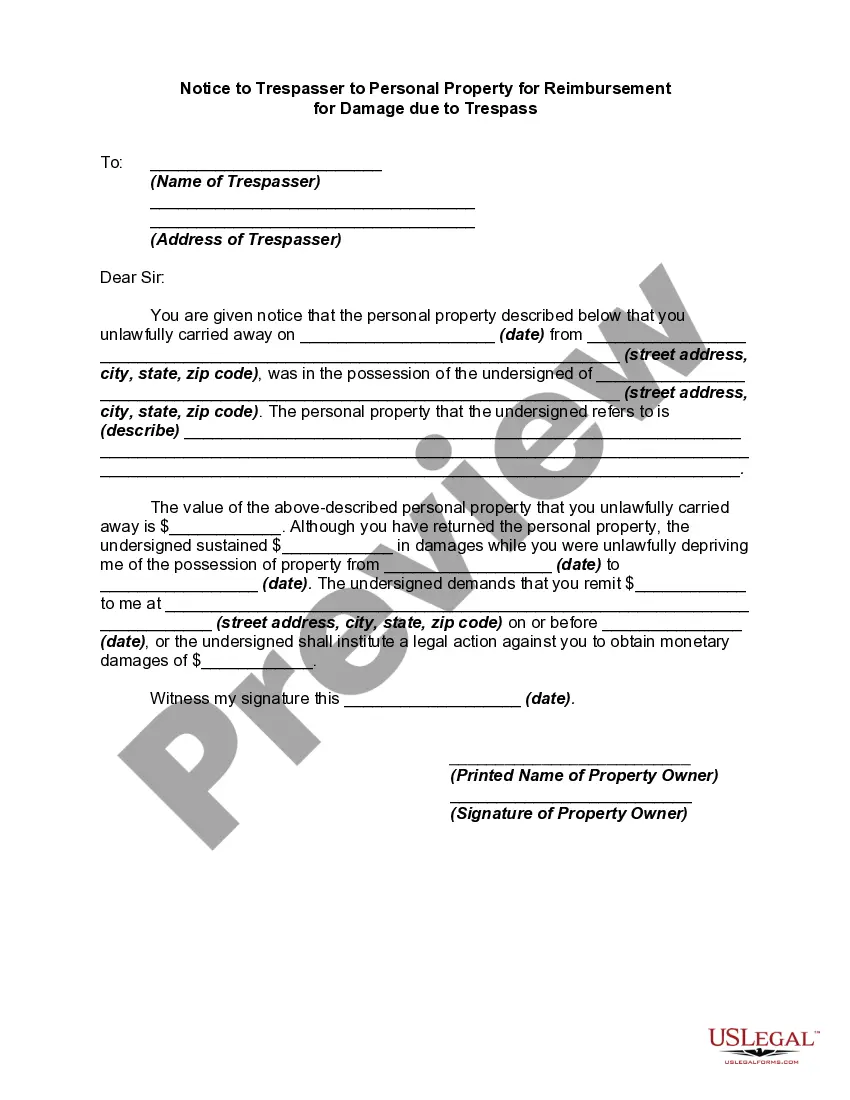
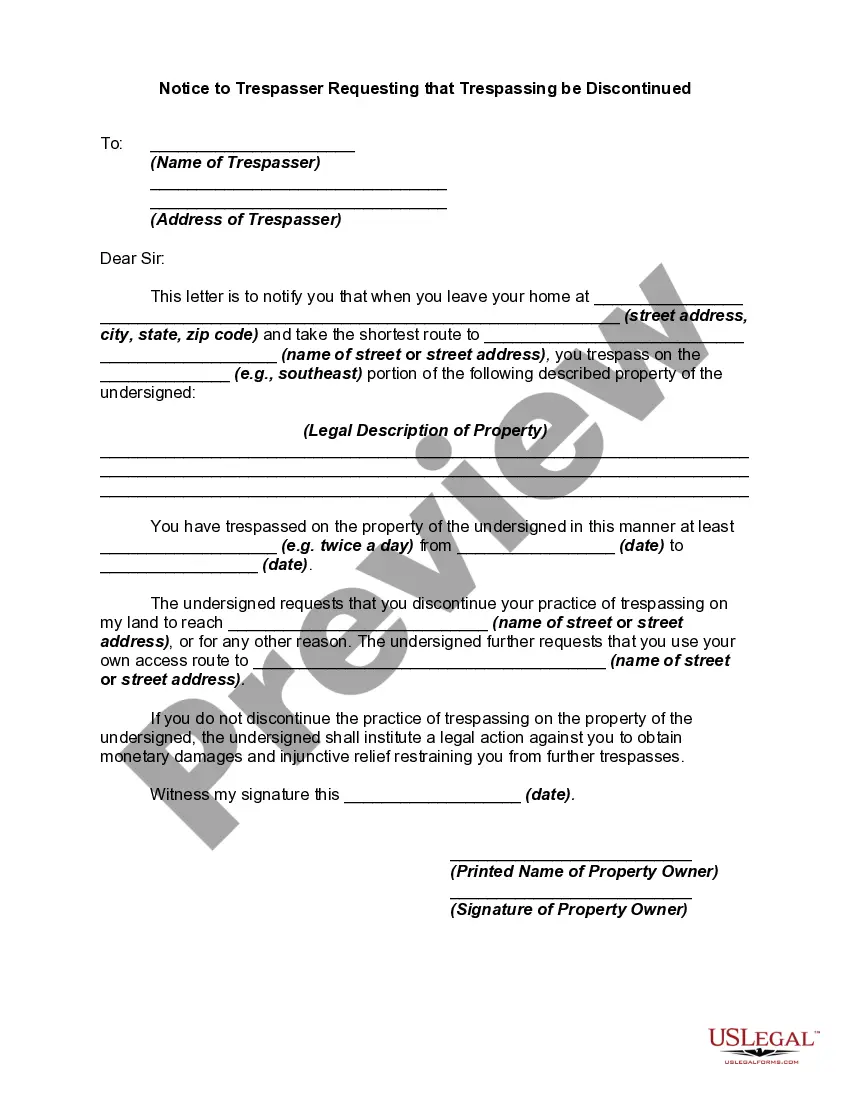
How to fill out Notice To Trespasser To Personal Property For Reimbursement For Damage Due To Trespass?
- Start by logging into your existing US Legal Forms account. If you're a new user, create an account for access.
- Browse the comprehensive form library and check the descriptions to ensure the selected template fits your needs and complies with local laws.
- If you need another template, use the Search feature to find the correct one quickly.
- Purchase the required document by clicking the Buy Now button and selecting your preferred subscription plan.
- Enter your payment information, either via credit card or PayPal, and complete the transaction.
- Download your chosen document directly to your device for immediate use, accessible anytime through the My Forms section.
Utilizing US Legal Forms simplifies the entire process, ensuring that you have access to a vast collection of over 85,000 customizable legal documents.
Don't navigate legalities alone; trust US Legal Forms for your legal documentation needs and secure your peace of mind today!
Form popularity
FAQ
Trespassing in Louisiana is constituted by the unauthorized entry onto private property after being asked to leave or when entering a property that is clearly marked as off-limits. The law provides specific definitions and consequences, focusing on the property owner's rights. Familiarizing yourself with these rules can help you understand the implications of trespassing on your land, especially regarding what is the punishment for trespassing.
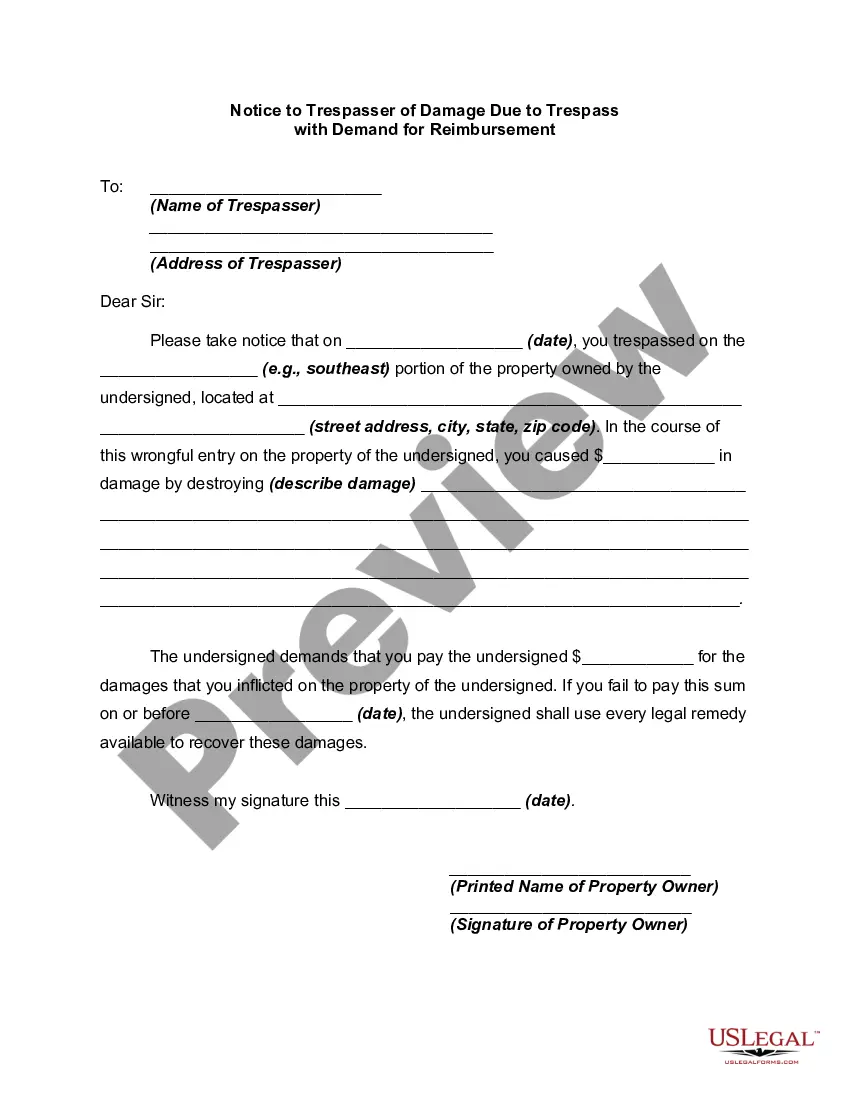
Yes, property owners can legally place 'No Trespassing' signs on their property. These signs serve as a clear warning to others about unauthorized entry, reinforcing your right to control access to your land. By posting signs, you can better protect your property and set clear expectations for those who might consider entering without permission.
In Pennsylvania, trespassing occurs when someone enters or remains on another person's land without permission. This includes actions such as ignoring posted signs or accessing areas marked as private. If you find yourself dealing with trespassers, understanding local laws can help you navigate the appropriate response and potential legal actions based on what is the punishment for trespassing.
In Louisiana, trespassing is defined as entering someone's property without permission or remaining after being told to leave. This can include various actions, such as walking on private land or using property without consent. The punishment for trespassing can vary, so it's essential to be aware of your rights and responsibilities as a property owner.
Yes, you can legally keep someone off your property by clearly communicating your intentions, such as posting 'No Trespassing' signs. If necessary, you can also seek legal assistance to enforce your property rights. Understanding the rules concerning trespassing is vital to avoid any misunderstandings or legal complications.
In Louisiana, the law does provide some rights for property owners regarding trespassers. However, using deadly force is only permissible in life-threatening situations. It’s crucial to understand the legal definitions and limits to avoid severe penalties and potential charges related to the punishment for trespassing.
To legally keep someone off your property, you should consider filing a trespass notice or, in some cases, a restraining order. A formal notice informs the individual that their presence is not welcome and can serve as a legal basis for further action if they ignore it. This way, you can establish clear boundaries and protect your rights as a property owner.
In Pennsylvania, trespassing occurs when a person enters or remains on property without permission. The law protects property owners by allowing them to pursue legal action against unauthorized individuals. If proven guilty, the punishment for trespassing may include fines or even imprisonment, depending on the severity of the offense.
In Pennsylvania, trespassing is defined as entering or remaining on property without consent. The punishment for trespassing can result in a fine or imprisonment, depending on the circumstances. For example, trespassing in a structure can lead to more serious penalties. To handle such situations correctly, utilizing resources like US Legal Forms can ensure you understand your rights.
In California, trespassing occurs when a person enters someone's property without permission. The punishment for trespassing can include fines, up to six months in jail, or both. Additionally, if the trespassing involves an intent to commit a crime, penalties can be more severe. Understanding the specifics can help you navigate any potential legal issues.