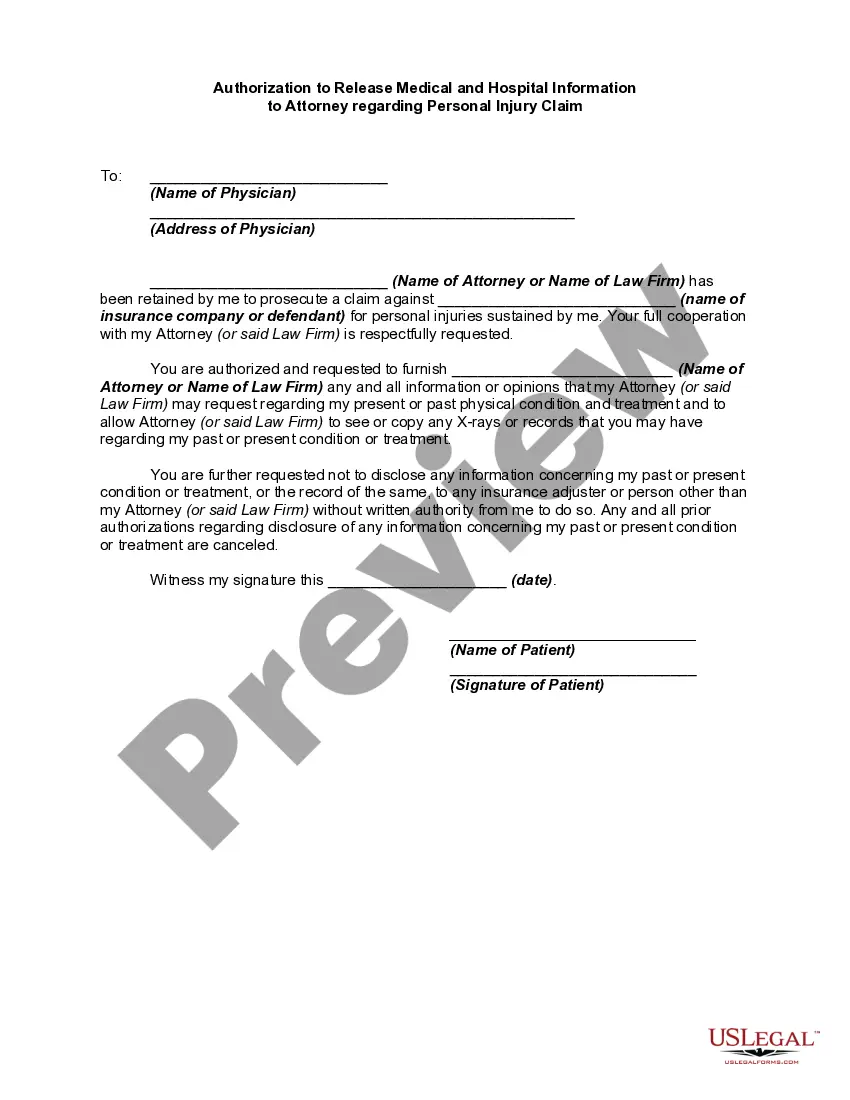
Release Hospital Paper Without Permission
Description

Get your form ready online
Our built-in tools help you complete, sign, share, and store your documents in one place.
Make edits, fill in missing information, and update formatting in US Legal Forms—just like you would in MS Word.
Download a copy, print it, send it by email, or mail it via USPS—whatever works best for your next step.
Sign and collect signatures with our SignNow integration. Send to multiple recipients, set reminders, and more. Go Premium to unlock E-Sign.
If this form requires notarization, complete it online through a secure video call—no need to meet a notary in person or wait for an appointment.
We protect your documents and personal data by following strict security and privacy standards.

Make edits, fill in missing information, and update formatting in US Legal Forms—just like you would in MS Word.

Download a copy, print it, send it by email, or mail it via USPS—whatever works best for your next step.

Sign and collect signatures with our SignNow integration. Send to multiple recipients, set reminders, and more. Go Premium to unlock E-Sign.

If this form requires notarization, complete it online through a secure video call—no need to meet a notary in person or wait for an appointment.

We protect your documents and personal data by following strict security and privacy standards.
Looking for another form?
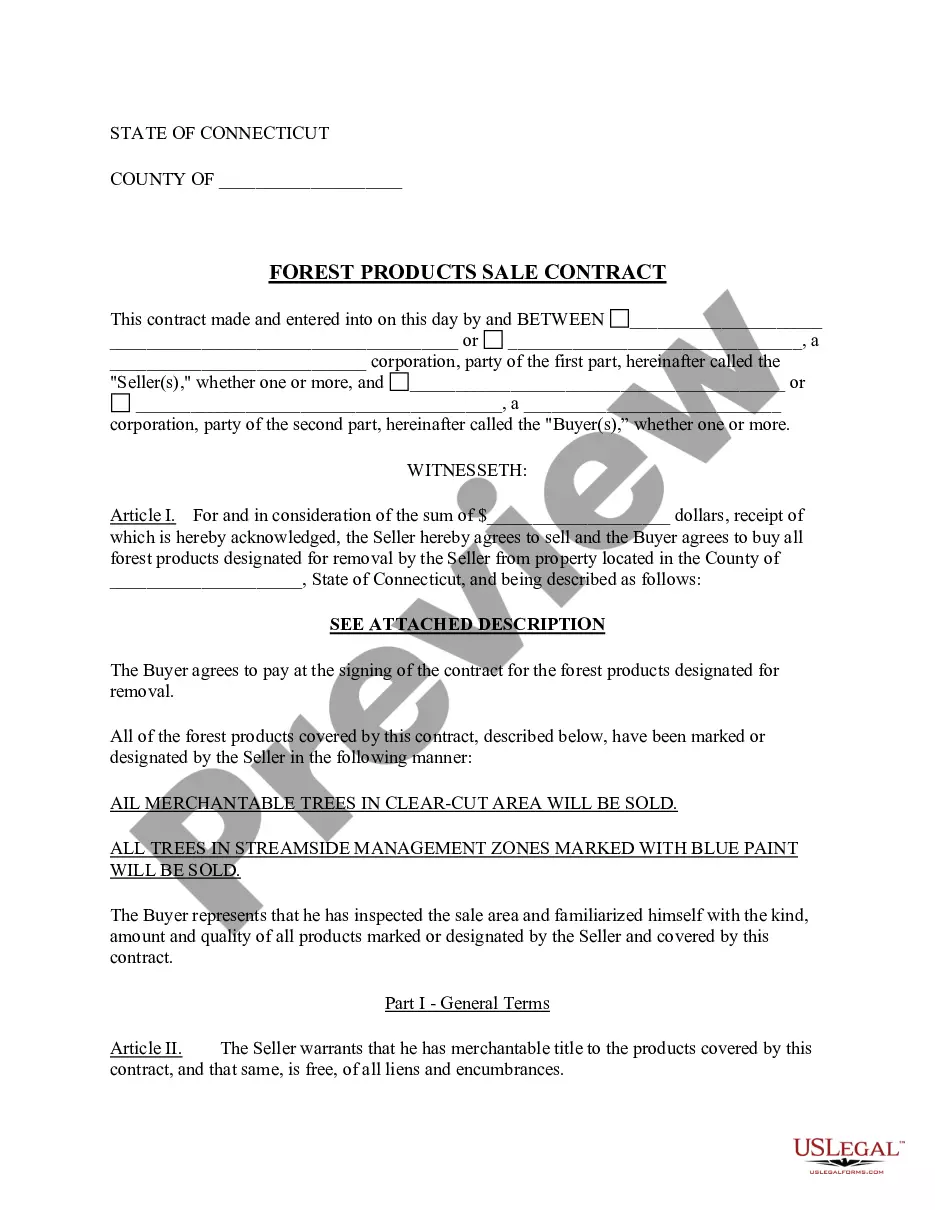
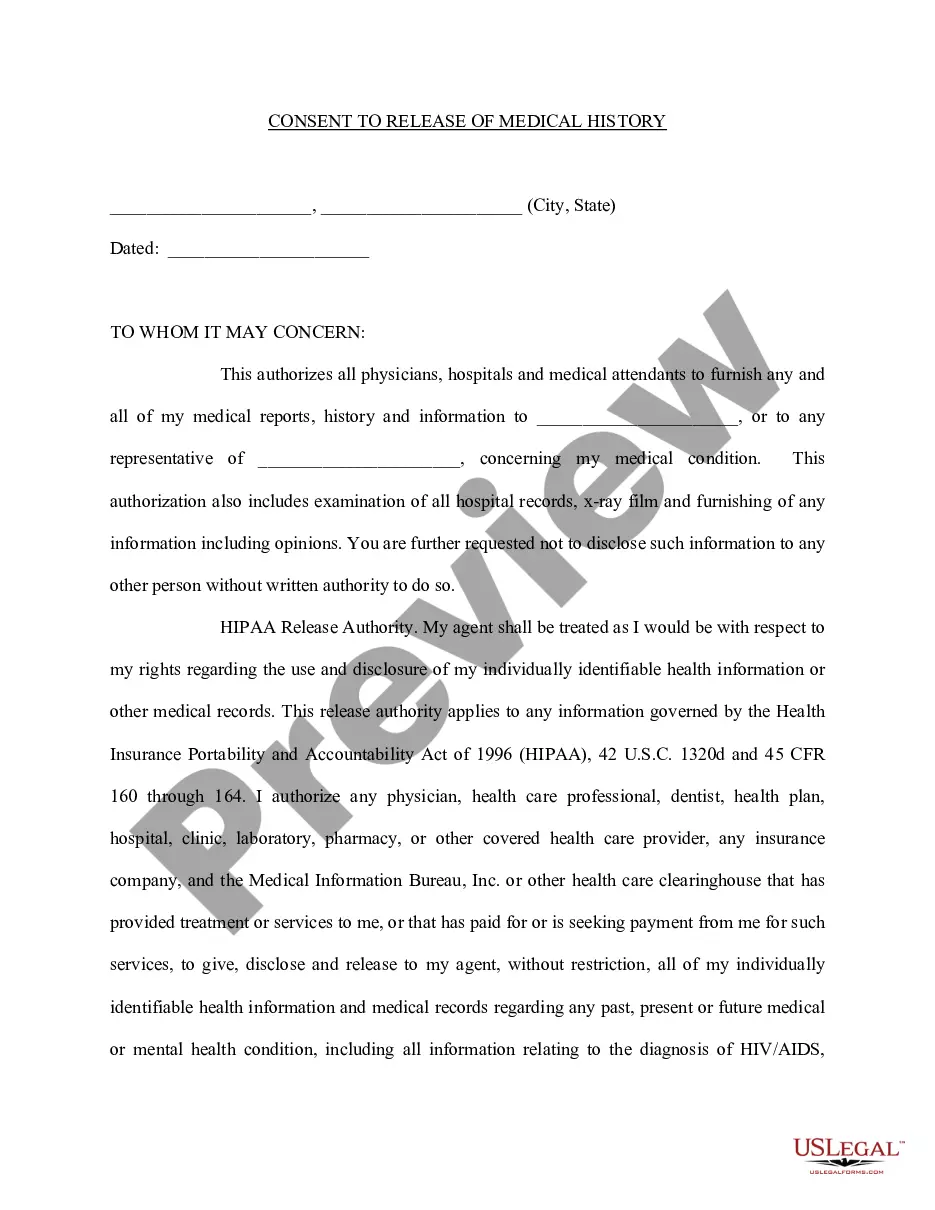
How to fill out Authorization To Release Medical And Hospital Information To Attorney?
Regardless of whether for corporate objectives or personal concerns, everyone eventually encounters legal situations in their lifetime.
Completing legal documents necessitates meticulous care, starting from selecting the suitable form template.
- For instance, if you choose an incorrect version of the Release Hospital Document Without Approval, it will be denied upon submission.
- Thus, it is vital to have a trustworthy provider of legal papers such as US Legal Forms.
- If you need to acquire a Release Hospital Document Without Approval template, follow these straightforward steps.
- Obtain the template you require by utilizing the search box or catalog browsing.
- Examine the description of the form to verify that it suits your circumstance, state, and county.
- Click on the preview of the form to review it.
- If it is the incorrect form, return to the search feature to locate the Release Hospital Document Without Approval template you need.
- Download the file when it meets your requirements.
- If you possess a US Legal Forms account, simply click Log in to access documents you have saved in My documents.
- If you do not yet have an account, you can download the form by clicking Buy now.
- Select the appropriate pricing option.
- Complete the profile sign-up form.
Form popularity
FAQ
How Do You Write a Release Form? The first step in writing is identifying all parties involved, including the releaser and the release. Specify the activity or event in detail, such as a photo shoot, a video production, or a performance. Clearly specify what is being released, whether liability, claims, or damages.
A covered entity is permitted, but not required, to use and disclose protected health information, without an individual's authorization, for the following purposes or situations: (1) To the Individual (unless required for access or accounting of disclosures); (2) Treatment, Payment, and Health Care Operations; (3) ...
Follow these steps to write your document: Fill in the information of both parties, including each person's name and address. Include the details of the event. ... Add if there is a payment required by the releasee. ... Write a section for signatures, which will contain the names and dates of both parties.
More generally, HIPAA allows the release of information without the patient's authorization when, in the medical care providers' best judgment, it is in the patient's interest.
Under the HIPAA Privacy Rule, when a release of information is intended for purposes other than medical treatment, healthcare operations, or payment, you'll need to sign an authorization for ROI. The healthcare organization releasing your information will check that the authorization is valid during the ROI process.