Towing Unauthorized Withdrawal From Bank Account
Description
Get your form ready online
Our built-in tools help you complete, sign, share, and store your documents in one place.
Make edits, fill in missing information, and update formatting in US Legal Forms—just like you would in MS Word.
Download a copy, print it, send it by email, or mail it via USPS—whatever works best for your next step.
Sign and collect signatures with our SignNow integration. Send to multiple recipients, set reminders, and more. Go Premium to unlock E-Sign.
If this form requires notarization, complete it online through a secure video call—no need to meet a notary in person or wait for an appointment.
We protect your documents and personal data by following strict security and privacy standards.

Make edits, fill in missing information, and update formatting in US Legal Forms—just like you would in MS Word.

Download a copy, print it, send it by email, or mail it via USPS—whatever works best for your next step.

Sign and collect signatures with our SignNow integration. Send to multiple recipients, set reminders, and more. Go Premium to unlock E-Sign.

If this form requires notarization, complete it online through a secure video call—no need to meet a notary in person or wait for an appointment.

We protect your documents and personal data by following strict security and privacy standards.
Looking for another form?
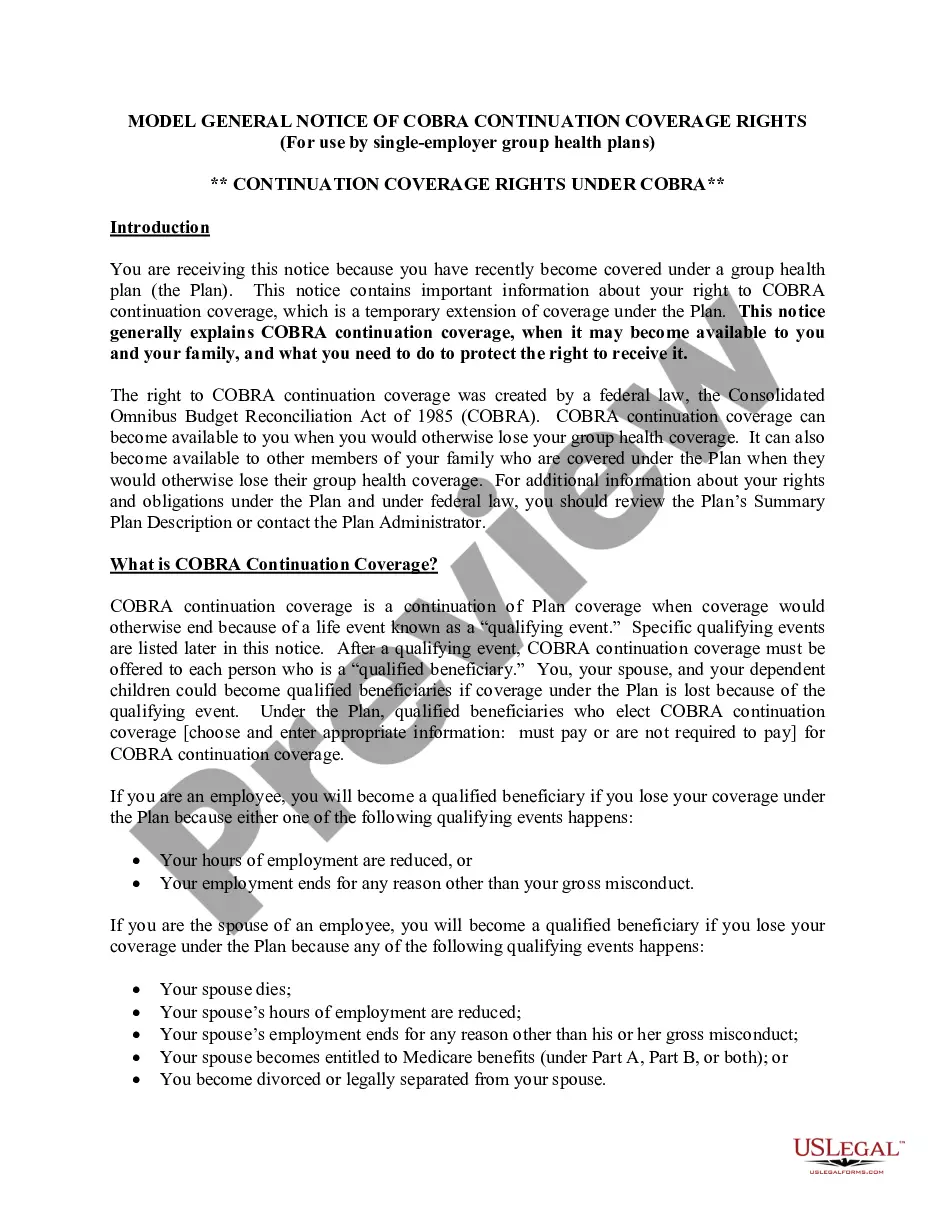
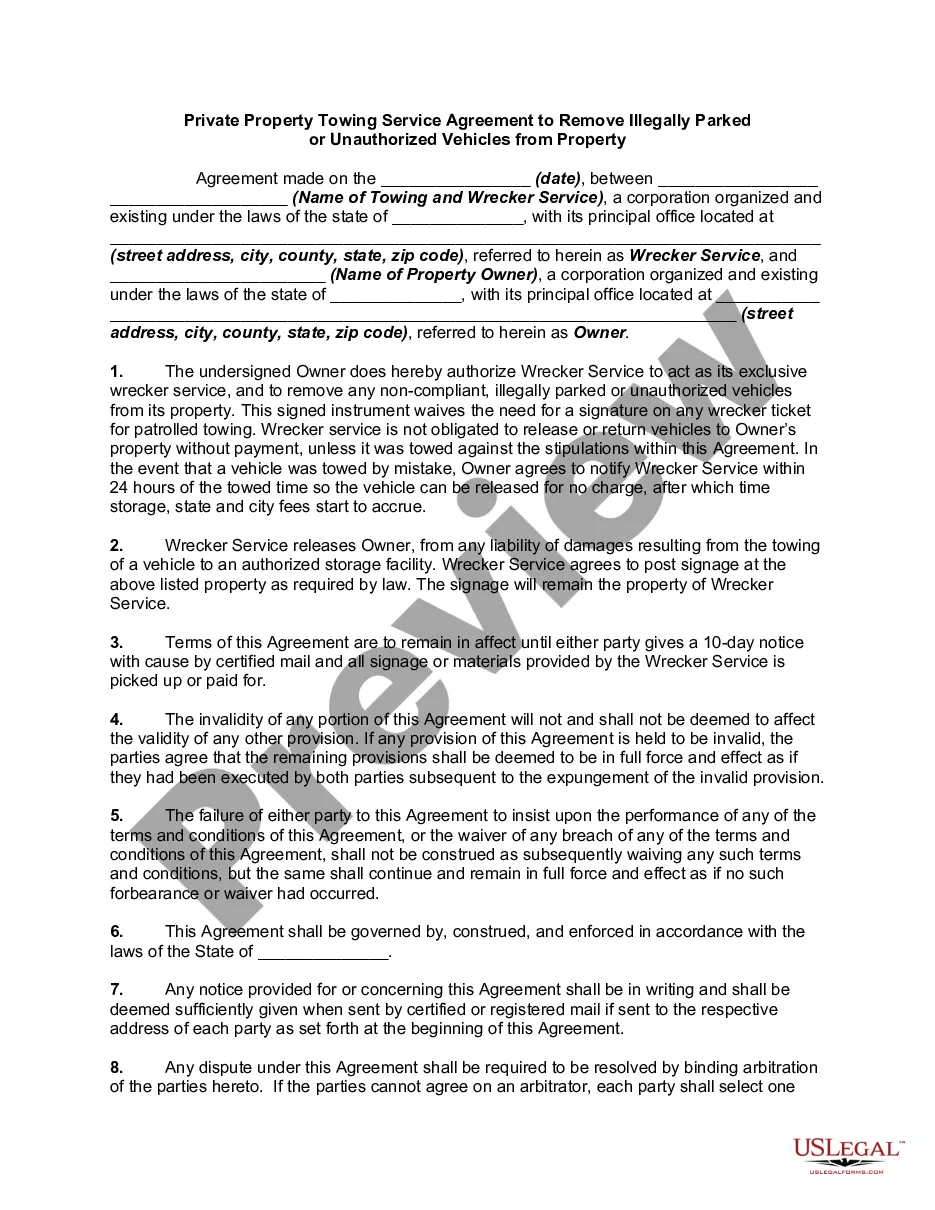
How to fill out Private Property Truck Towing Service Agreement To Remove Illegally Parked Or Unauthorized Vehicles From Property?
Legal oversight can be exasperating, even for skilled professionals.
When you seek assistance for a Towing Unauthorized Withdrawal From Bank Account and lack the time to search for the correct and current version, the processes can be taxing.
Tap into a helpful repository of articles, guides, handbooks, and resources related to your situation and requirements.
Conserve time and energy in locating the documents you require, employing US Legal Forms’ sophisticated search and Preview feature to uncover Towing Unauthorized Withdrawal From Bank Account and obtain it.
Ensure that the sample is valid in your state or county. Select Buy Now when you are prepared. Choose a monthly subscription plan. Select the format you need, and Download, complete, sign, print, and submit your documents. Take advantage of the US Legal Forms online catalog, backed by 25 years of expertise and reliability. Transform your everyday document management into a simple and user-friendly operation today.
- If you possess a monthly subscription, Log In to your US Legal Forms account, find the form, and retrieve it.
- Check your My documents section to view the documents you have previously downloaded and to manage your folders as needed.
- If this is your first experience with US Legal Forms, create a free account and gain unlimited access to all benefits of the library.
- Here are the actions to follow after acquiring the form you need.
- Confirm it is the correct form by previewing it and reviewing its details.
- Access state- or municipal-specific legal and business documents.
- US Legal Forms meets any requirements you might have, ranging from personal to commercial papers, all in one location.
- Employ advanced tools to complete and manage your Towing Unauthorized Withdrawal From Bank Account.
Form popularity
FAQ
In most cases, if the bank confirms that the transaction was indeed unauthorized, they will refund the amount taken from your account. However, the speed of the refund can vary, as it depends on the specifics of the towing unauthorized withdrawal from your bank account. It is essential to communicate with your bank promptly to understand their policies and timeline for issuing a refund. Keeping records of your communications can also be helpful in such situations.
Your bank can refund unauthorized transactions, but the refund depends on the investigation outcome. A swift and accurate report of the unauthorized withdrawal from your bank account is critical for a successful refund. If you encounter challenges during this process, US Legal Forms can equip you with the right tools and forms to effectively communicate and resolve the situation.
Once you notify your bank or credit union about an unauthorized transaction (that is, a charge or withdrawal you didn't make or allow), it generally has ten business days to investigate the issue. The bank or credit union must correct an error within one business day after determining that an error has occurred.
Immediately notify the bank and identify by date and dollar amount the transactions that you did not authorize. The bank will review your claim and may ask you to complete an affidavit unauthorized use.
If an unauthorized withdrawal appears on your bank statement, but you did not lose your card, security code, or PIN or had any of them stolen, you should notify your bank or credit union right away.
Both state and federal laws prohibit unauthorized withdrawals from being taken from your bank account or charges made to your credit card without your express consent having first been obtained for that to occur. Some laws require this consent to have first been obtained expressly in writing.
In the United States, banks have 10 business days to investigate fraud after a customer makes a claim. If the bank hasn't made a determination by this point, they need to credit the customer while they continue to investigate temporarily.