Unlawful Incarceration Force
Description

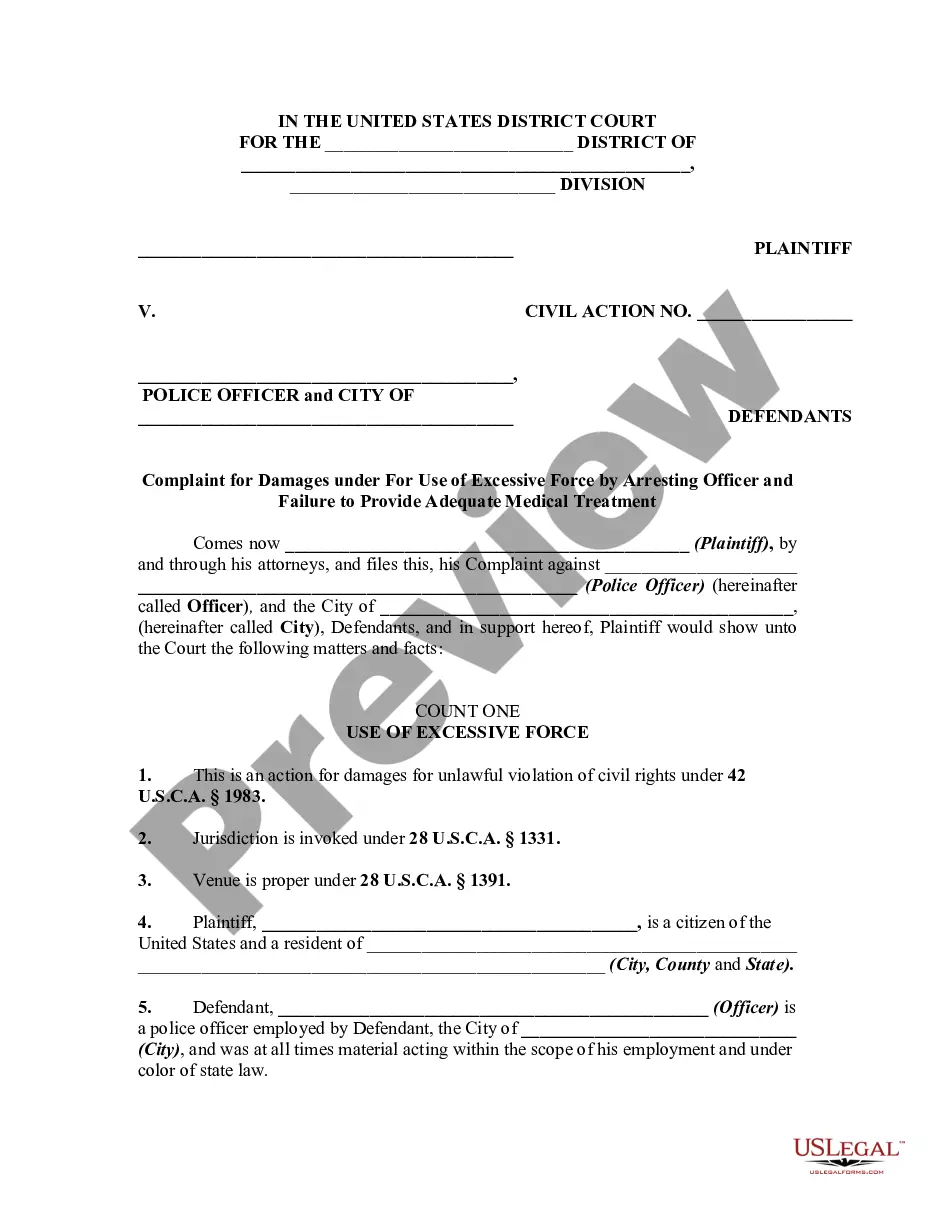
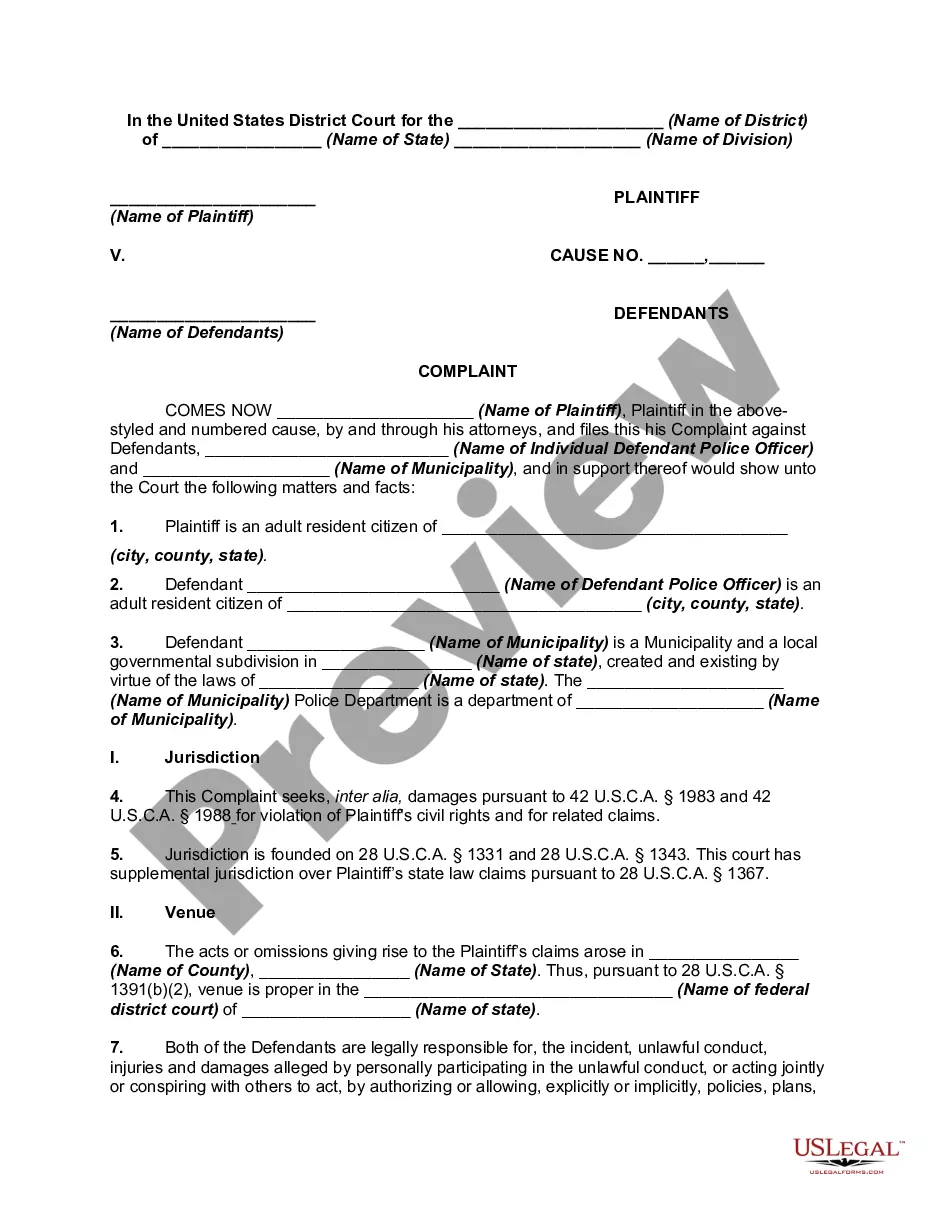
Get your form ready online
Our built-in tools help you complete, sign, share, and store your documents in one place.
Make edits, fill in missing information, and update formatting in US Legal Forms—just like you would in MS Word.
Download a copy, print it, send it by email, or mail it via USPS—whatever works best for your next step.
Sign and collect signatures with our SignNow integration. Send to multiple recipients, set reminders, and more. Go Premium to unlock E-Sign.
If this form requires notarization, complete it online through a secure video call—no need to meet a notary in person or wait for an appointment.
We protect your documents and personal data by following strict security and privacy standards.

Make edits, fill in missing information, and update formatting in US Legal Forms—just like you would in MS Word.

Download a copy, print it, send it by email, or mail it via USPS—whatever works best for your next step.

Sign and collect signatures with our SignNow integration. Send to multiple recipients, set reminders, and more. Go Premium to unlock E-Sign.

If this form requires notarization, complete it online through a secure video call—no need to meet a notary in person or wait for an appointment.

We protect your documents and personal data by following strict security and privacy standards.
Looking for another form?

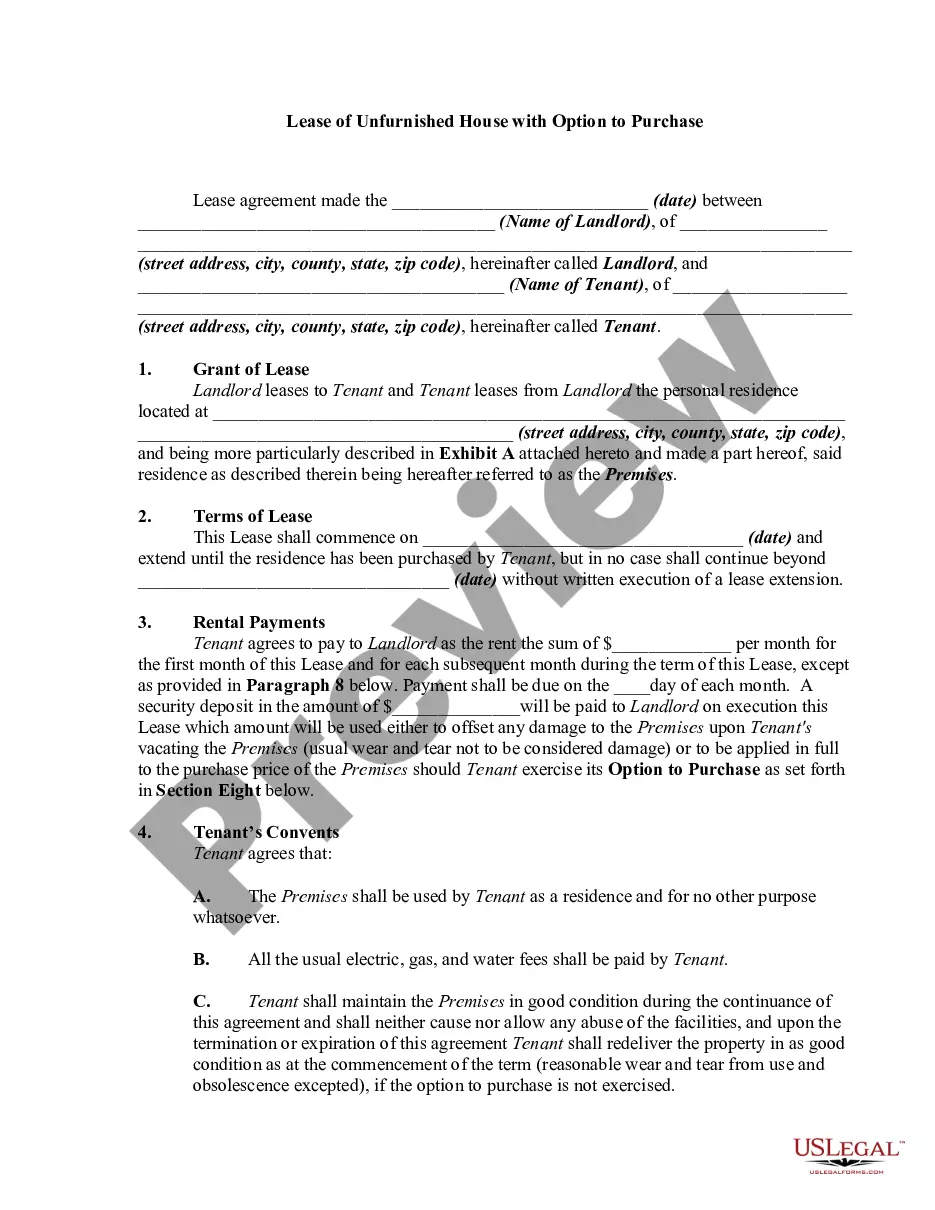
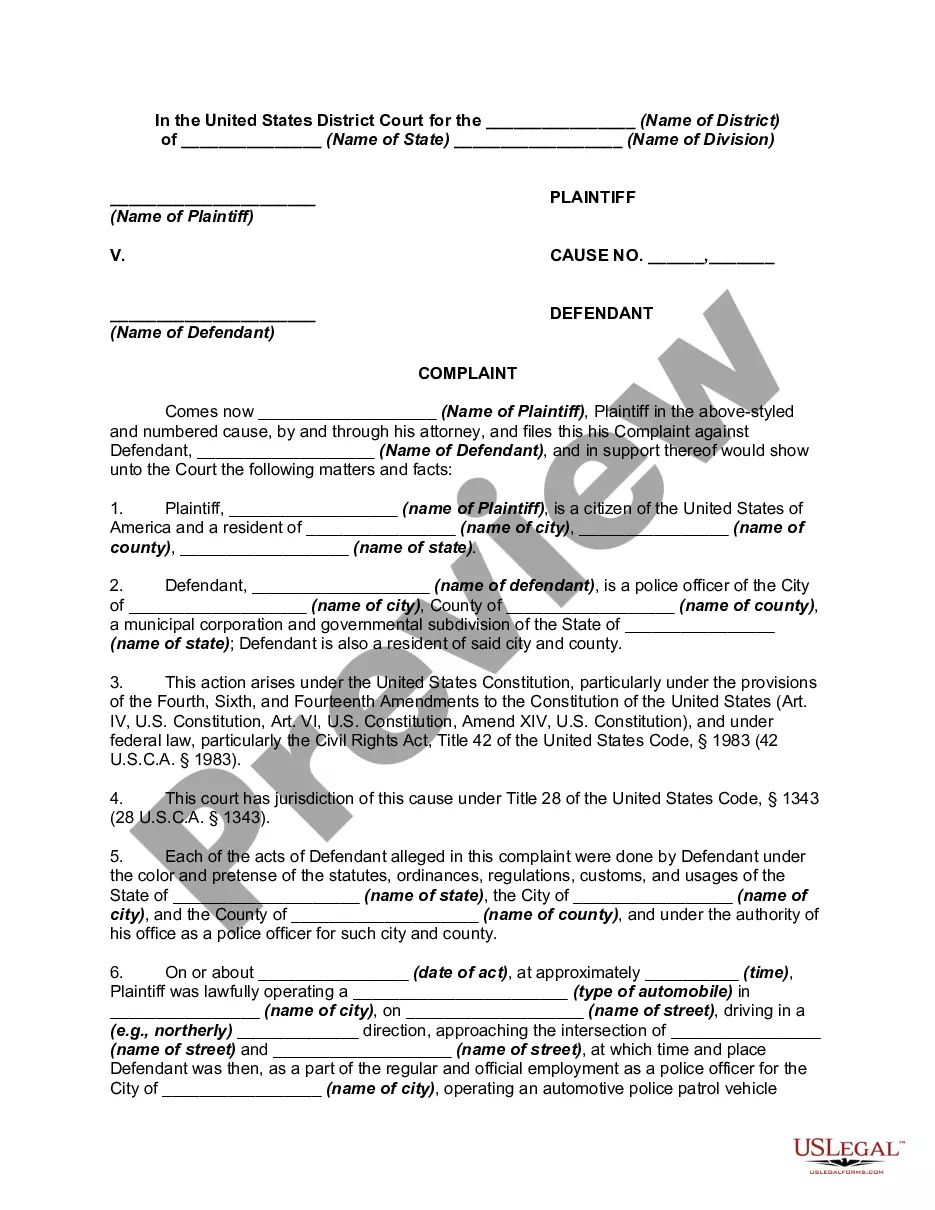
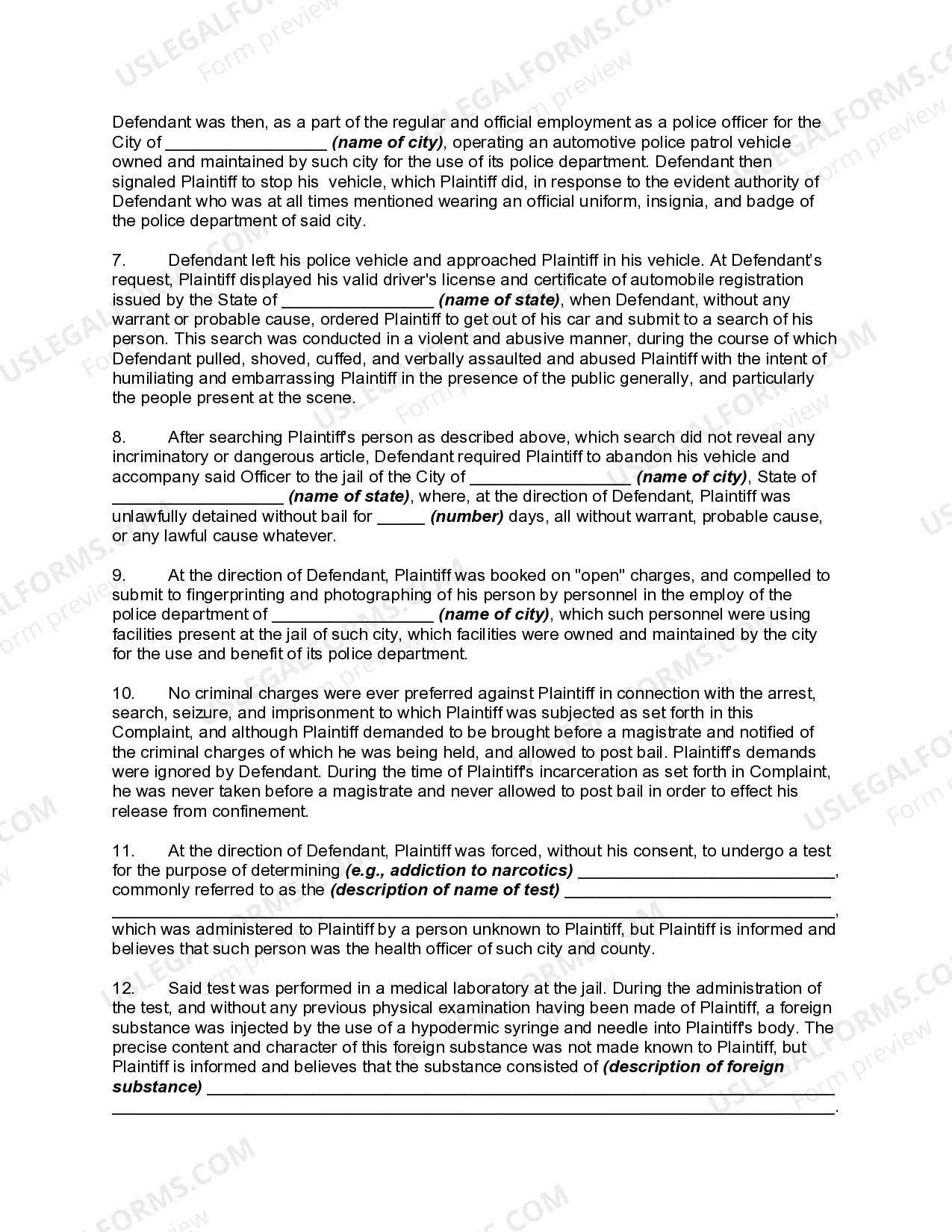
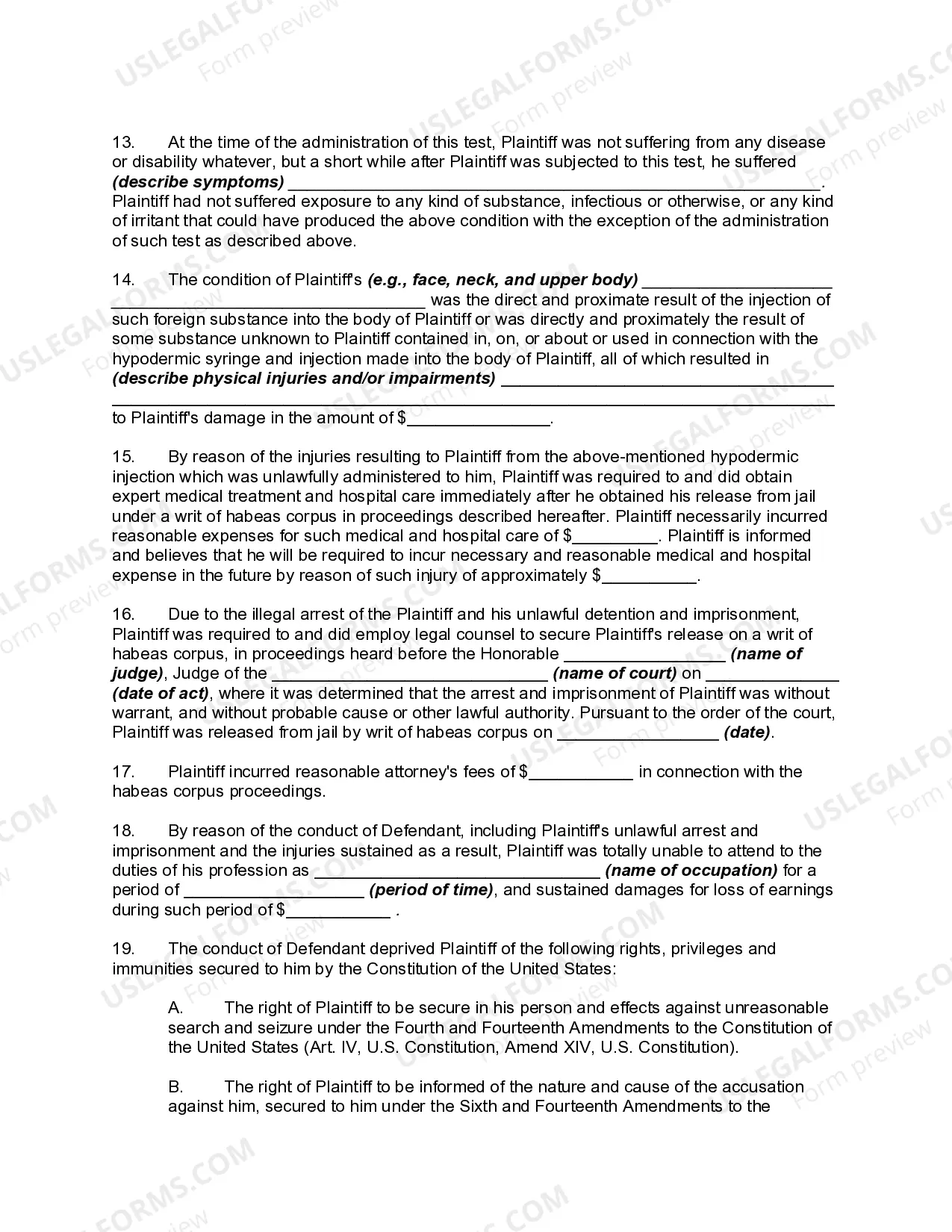
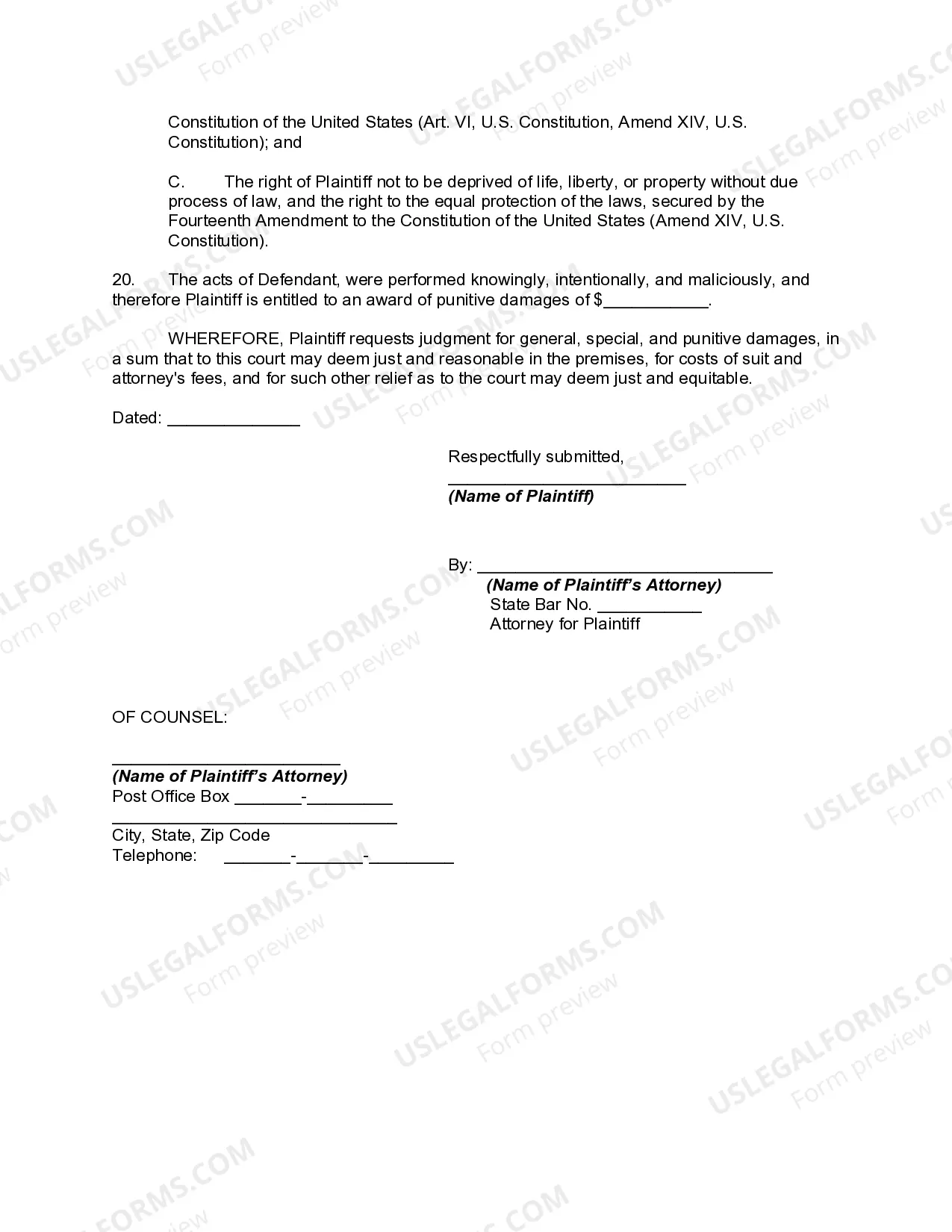
How to fill out Complaint Against Police Officer For Unlawful Arrest, Search, And Incarceration Resulting In Personal Injuries - Police Brutality And Unlawful Detainment?
The Illegal Detention Document you observe on this page is a versatile legal template crafted by experienced attorneys in accordance with national and regional regulations.
For over 25 years, US Legal Forms has delivered individuals, entities, and legal practitioners with more than 85,000 authentic, state-specific documents for every business and personal need.
Subscribe to US Legal Forms to gain access to verified legal templates for every situation life may present.
- Search for the needed document and review it. Scan through the sample you located and preview it or verify the form details to ensure it meets your needs. If it doesn't, use the search bar to discover the suitable one.
- Select and sign in. Choose the payment plan that fits you and establish an account. Use PayPal or a credit card for a swift transaction. If you already have an account, Log In and verify your subscription to proceed.
- Acquire the editable template. Select the format you prefer for your Illegal Detention Document (PDF, Word, RTF) and download the specimen onto your device.
- Fill out and sign the paperwork. Print the template to complete it by hand. Alternatively, employ an online versatile PDF editor to quickly and accurately fill out and sign your form with a legally-binding electronic signature.
- Redownload your documents if necessary. Access the same document again whenever needed. Open the My documents section in your account to retrieve any previously downloaded forms.
Form popularity
FAQ
In California, false imprisonment can be classified as either a misdemeanor or a felony, depending on the circumstances. If the act involves violence, threats, or harm, it may be treated more seriously. This classification links closely to unlawful incarceration force, which highlights the severity of denying someone's liberty. If you find yourself involved in a case of false imprisonment, seeking legal assistance is crucial to navigate the complexities.
An estate is only eligible for a small estate affidavit if it meets state requirements and qualifications which are as follows: Thirty (30) days have passed since the deceased's date of death. The estate is valued at $30,000 or less.
How to Fill Out Affidavit of Heirship | PDFRUN - YouTube YouTube Start of suggested clip End of suggested clip Read the clause above the signature. Lines. Once you have understood this clause. And have confirmedMoreRead the clause above the signature. Lines. Once you have understood this clause. And have confirmed the information contained in this affidavit. You may sign it a fix your signature.
If the deceased's assets are less than $30,000, and there is no real estate in his/her name alone, the Register of Wills Office issues a Small Estate Affidavit to transfer the assets of your loved one.
First, you need to wait 30 days from the date of death. After that period, you may come into the Register of Wills office to petition for the small estate affidavit. You will need to bring a CERTIFIED copy of the death certificate* and your picture I.D. (preferably a valid driver's license).
A small estate affidavit in Florida is a step in a summary administration, which allows for the distribution of a deceased person's assets without the need for probate court. This process is typically used when the deceased person's estate is valued at less than $75,000 and they did not have a will.
You can use this program if: If the decedent (the person who died) had $50,000 or less in personal property. If the decedent owned real property, he/she owned it jointly with someone else and you don't plan to sell the real estate.
A Delaware small estate affidavit is a legal document that enables an heir or beneficiary of a will to collect property that formerly belonged to a person who has died, known as a decedent. For example, it allows a person to claim ownership from a person's estate if they have a boat, ATV, or motor vehicle.
Definition of Next of Kin ? 1.) the nearest blood relatives of a person who has died, including the Surviving spouse. 2.) Anyone who would receive a portion of the estate by the laws of descent and distribution if there were no will ? blood related 3.)