Lease Storage Space
Description
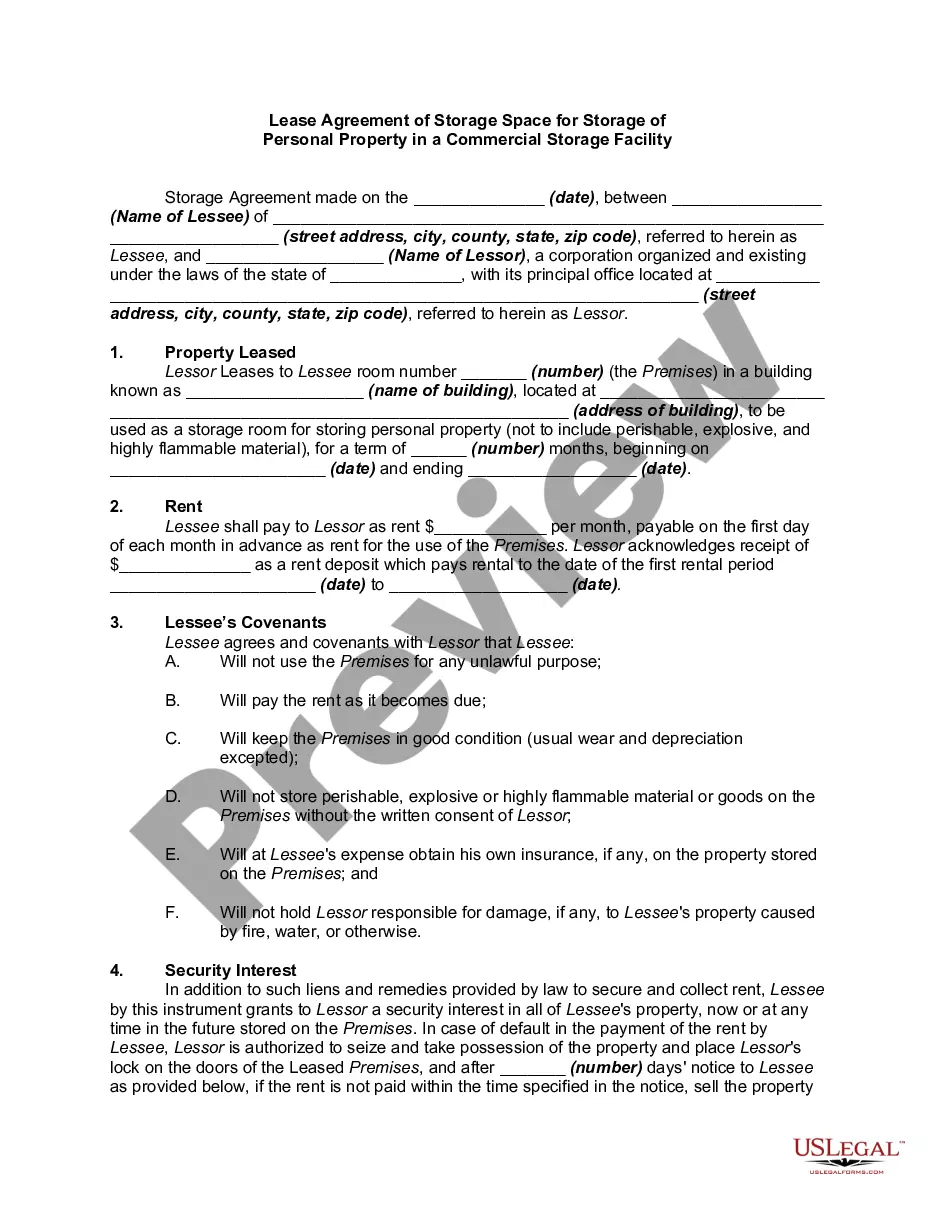
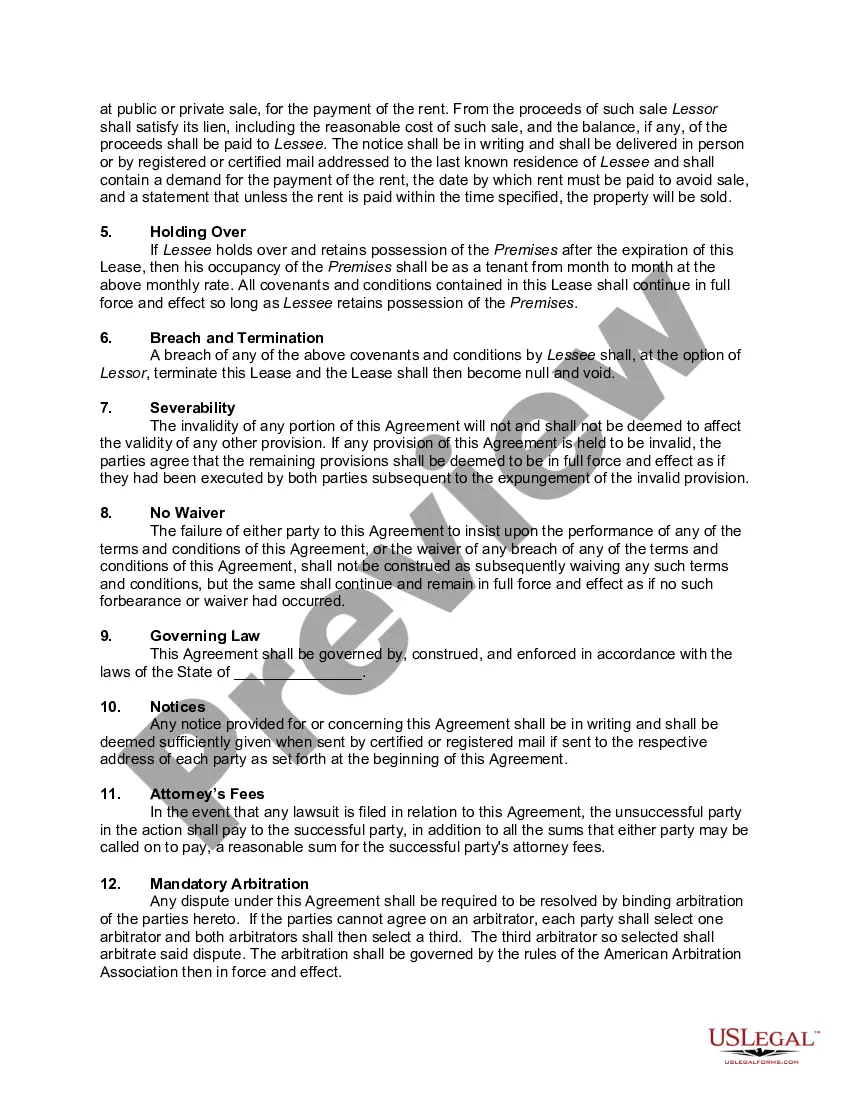
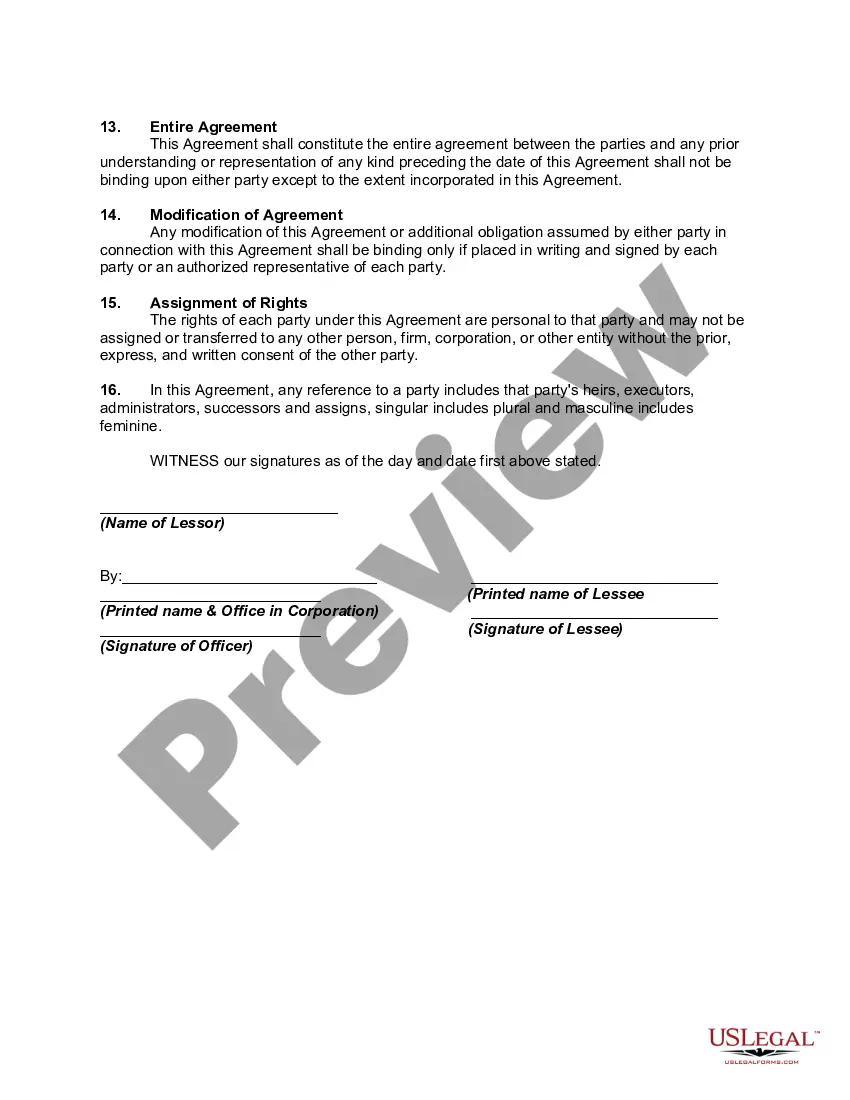
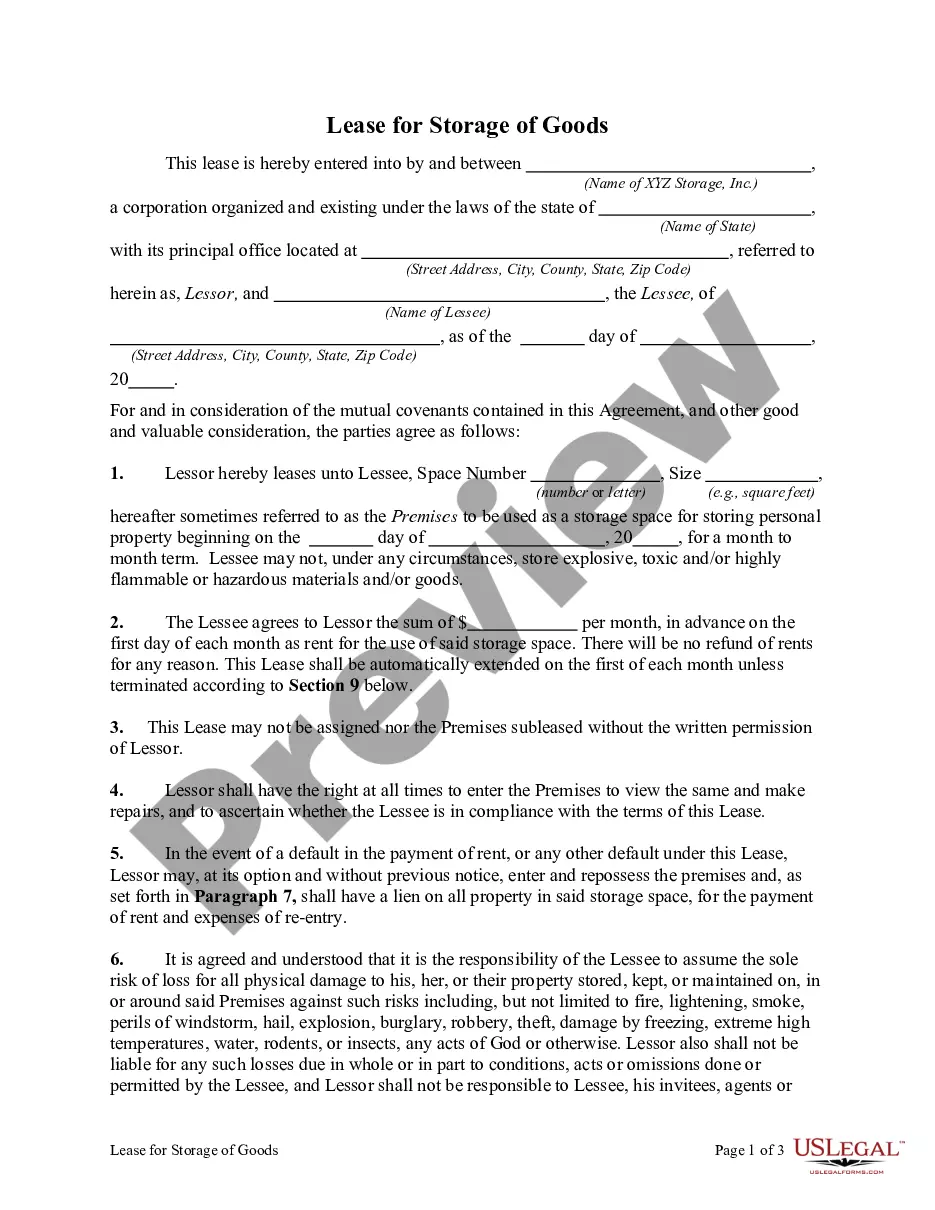
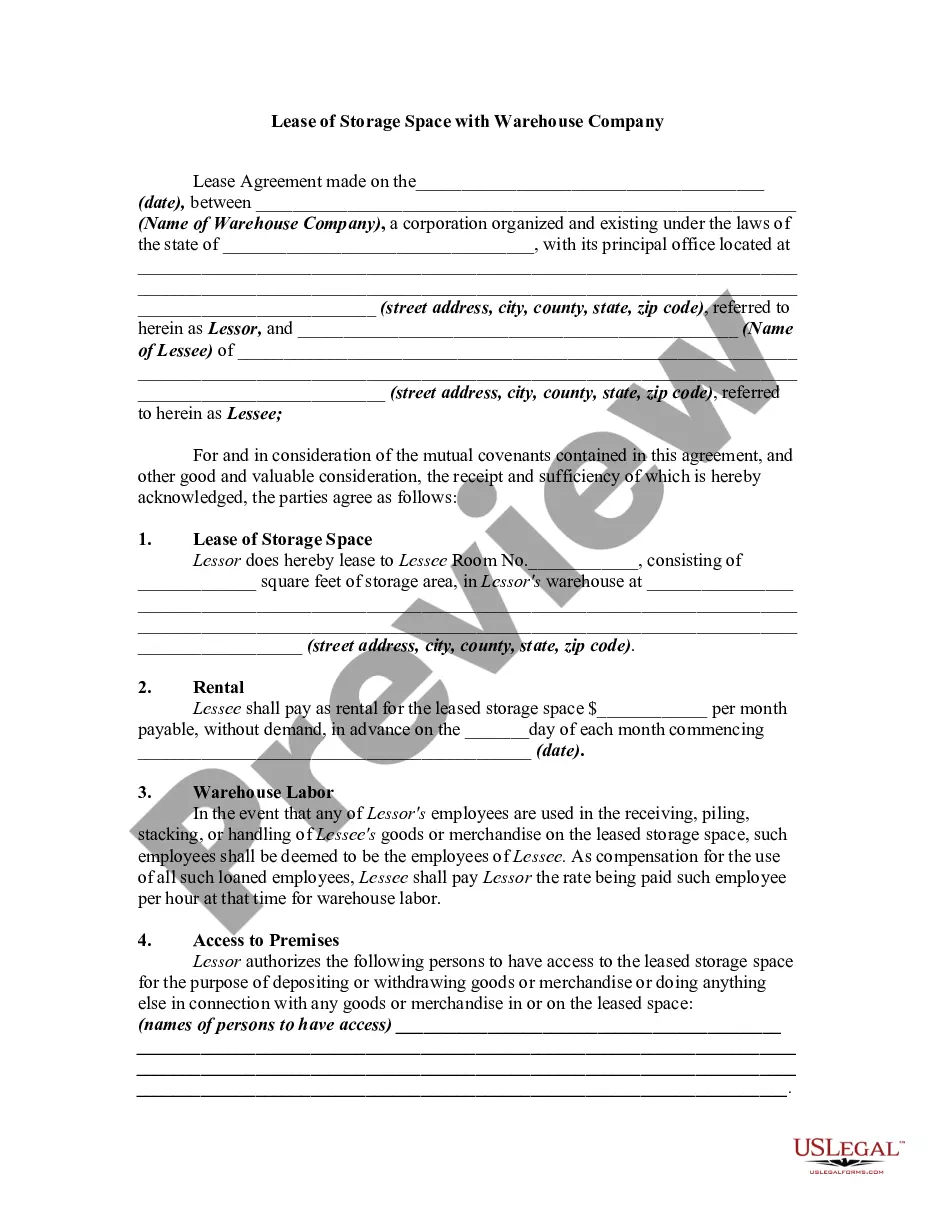
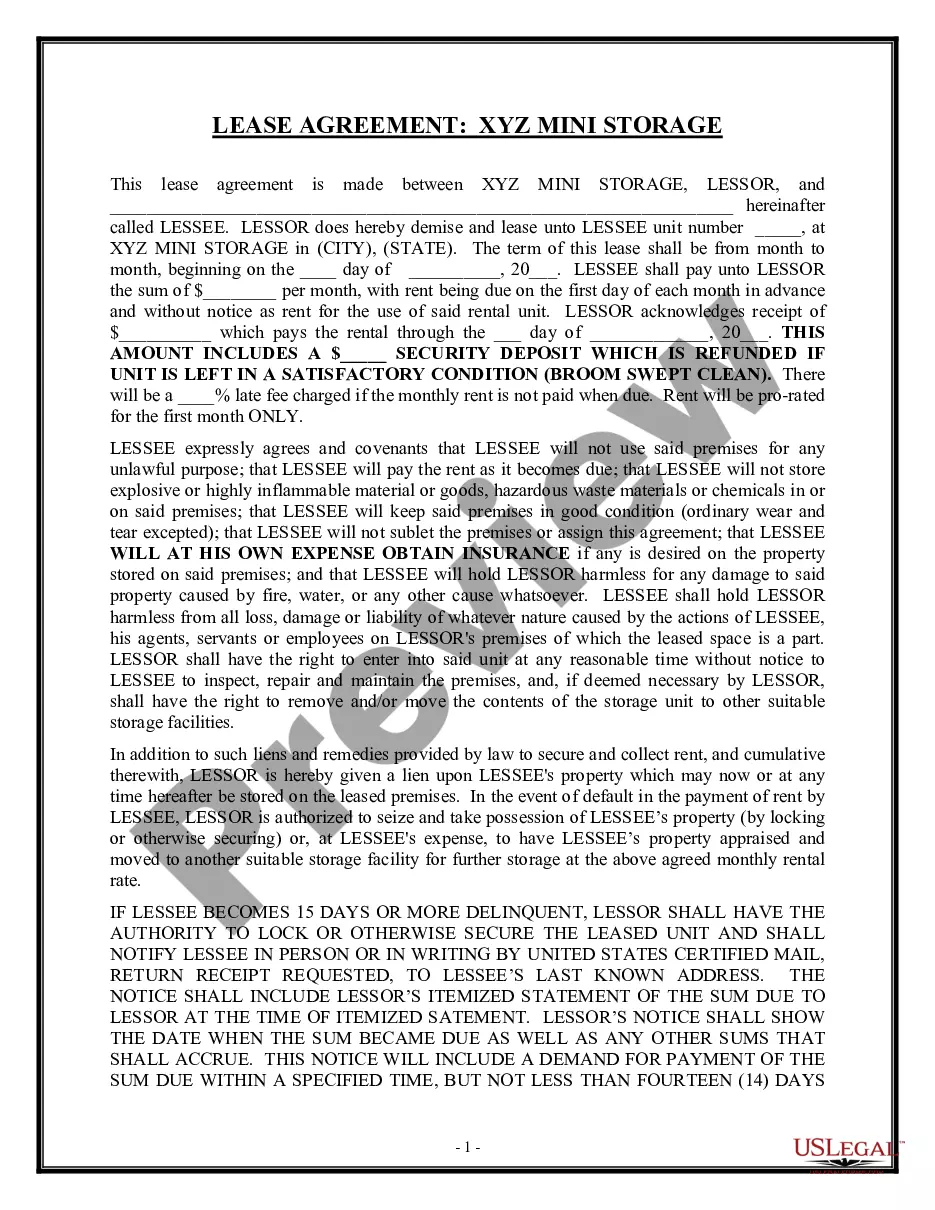
Get your form ready online
Our built-in tools help you complete, sign, share, and store your documents in one place.
Make edits, fill in missing information, and update formatting in US Legal Forms—just like you would in MS Word.
Download a copy, print it, send it by email, or mail it via USPS—whatever works best for your next step.
Sign and collect signatures with our SignNow integration. Send to multiple recipients, set reminders, and more. Go Premium to unlock E-Sign.
If this form requires notarization, complete it online through a secure video call—no need to meet a notary in person or wait for an appointment.
We protect your documents and personal data by following strict security and privacy standards.

Make edits, fill in missing information, and update formatting in US Legal Forms—just like you would in MS Word.

Download a copy, print it, send it by email, or mail it via USPS—whatever works best for your next step.

Sign and collect signatures with our SignNow integration. Send to multiple recipients, set reminders, and more. Go Premium to unlock E-Sign.

If this form requires notarization, complete it online through a secure video call—no need to meet a notary in person or wait for an appointment.

We protect your documents and personal data by following strict security and privacy standards.
Looking for another form?
How to fill out Lease Agreement Of Storage Space For Storage Of Personal Property In A Commercial Storage Facility?
It’s clear that you cannot transform into a legal authority instantly, nor can you master the swift creation of Lease Storage Space documents without a designated background.
Drafting legal documents is a lengthy task that necessitates particular education and expertise. So why not entrust the creation of the Lease Storage Space to the experts.
With US Legal Forms, one of the most extensive legal template repositories, you can find anything ranging from court documents to templates for internal business communication.
You can regain access to your documents from the My documents section at any time. If you’re a current customer, you can simply Log In and find and download the template from the same section.
Regardless of the intent behind your documents—whether they are financial, legal, or personal—our platform addresses all your needs. Experience US Legal Forms today!
- Identify the document you require using the search feature at the top of the website.
- Look at the preview (if available) and review the accompanying description to determine if Lease Storage Space is what you seek.
- Revisit your search if you need a different document.
- Sign up for a complimentary account and choose a subscription plan to acquire the template.
- Click Buy now. Once the payment is processed, you can download the Lease Storage Space, fill it out, print it, and send it to the appropriate individuals or entities.
Form popularity
FAQ
The income from renting out storage space varies based on factors like location and unit size. On average, you can earn a few hundred dollars monthly for each unit, depending on the demand in your area. In high-demand markets, profits can be significantly higher. With efficient management, many owners find that leasing storage space turns into a lucrative venture.
Writing a storage contract requires clear and concise language outlining essential terms. Include details such as the rental amount, duration of the lease, payment deadlines, and security deposit requirements. It’s crucial to cover responsibilities for both parties regarding the upkeep of the unit. If you're unsure, consider using a resource like uslegalforms to access templates and guides.
To lease a storage unit, start by identifying a nearby facility that meets your requirements. Visit the location to inspect available units, and ask about the leasing process. Once you select a unit, complete the lease agreement and review the terms carefully. After signing the contract, you can start using your leased storage space immediately.
Owning storage units can be quite profitable, provided you manage your facility well. Many owners generate a steady stream of income by leasing storage space to various customers. The demand for storage often remains high, as individuals and businesses seek extra space. Investing in the right location and maintaining your units can significantly enhance your profitability.
Leasing a space involves entering a rental agreement that grants you the right to use the space for a specified period. Typically, this agreement outlines the terms, including monthly fees and duration of the lease. To lease storage space, you'll select a unit that fits your needs and complete the necessary legal paperwork. Once the lease is signed, you gain access to your storage unit.
Bidding on a storage unit usually happens during an auction, which can take place online or in-person. To lease storage space through auction, simply register for the event, review the units available, and place your bid according to the auction rules. Keep an eye on the auctioneer's announcements and be prepared to bid competitively. Remember to inspect the unit as much as possible before placing a bid.
Yes, storage rental can be quite profitable. Many individuals and businesses look for ways to lease storage space to manage excess items or inventory. As demand for storage increases, especially in urban areas, the potential for profitability continues to grow. Investing in storage facilities or renting out space can be a wise financial decision, particularly if you manage it efficiently.
To lease storage space, you typically need some form of identification and proof of residency. Make sure to provide a valid government-issued ID and documents like a utility bill or lease agreement. Most facilities also require you to sign a rental agreement, which outlines your responsibilities and the terms of your lease. Beyond that, you may need a lock for your unit and a payment method to cover your rental fees.
You can rent out storage space on your property, but certain regulations may apply. It's crucial to check local zoning laws and homeowners' association rules before proceeding. You may also want to draft a lease agreement to protect both you and your renter. For comprehensive lease agreements, US Legal Forms offers resources that can assist you in creating a suitable contract.
In most cases, you do not need a license to lease storage space. Storage facilities typically require you to provide personal information and sign a rental agreement. It is important to read the terms carefully. Local regulations may vary, so checking with your local authorities might be beneficial.